
Ancient Greece 2013 Student Notes Respectively Submitted Gloucester
Ancient Greece 2013 Student Notes Respectively Submitted Gloucester Township Schools C. Stephen Ingraham 2013 9
Social Studies Block # ____ Name _______________ Mr. Ingraham & Mrs. Mc. Master Date __________ Ancient Greece E-mail: singraham@gloucester. k 12. nj. us WIKI: timescapers. pbworks. com
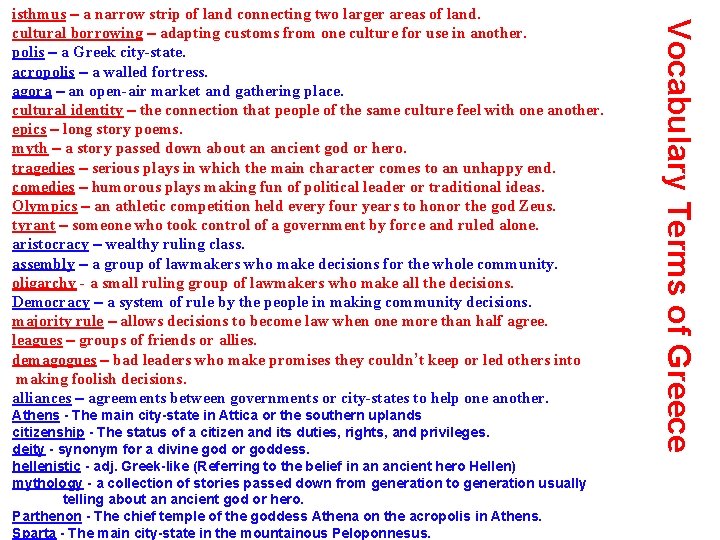
Athens - The main city-state in Attica or the southern uplands citizenship - The status of a citizen and its duties, rights, and privileges. deity - synonym for a divine god or goddess. hellenistic - adj. Greek-like (Referring to the belief in an ancient hero Hellen) mythology - a collection of stories passed down from generation to generation usually telling about an ancient god or hero. Parthenon - The chief temple of the goddess Athena on the acropolis in Athens. Sparta - The main city-state in the mountainous Peloponnesus. Vocabulary Terms of Greece isthmus – a narrow strip of land connecting two larger areas of land. cultural borrowing – adapting customs from one culture for use in another. polis – a Greek city-state. acropolis – a walled fortress. agora – an open-air market and gathering place. cultural identity – the connection that people of the same culture feel with one another. epics – long story poems. myth – a story passed down about an ancient god or hero. tragedies – serious plays in which the main character comes to an unhappy end. comedies – humorous plays making fun of political leader or traditional ideas. Olympics – an athletic competition held every four years to honor the god Zeus. tyrant – someone who took control of a government by force and ruled alone. aristocracy – wealthy ruling class. assembly – a group of lawmakers who make decisions for the whole community. oligarchy - a small ruling group of lawmakers who make all the decisions. Democracy – a system of rule by the people in making community decisions. majority rule – allows decisions to become law when one more than half agree. leagues – groups of friends or allies. demagogues – bad leaders who make promises they couldn’t keep or led others into making foolish decisions. alliances – agreements between governments or city-states to help one another.
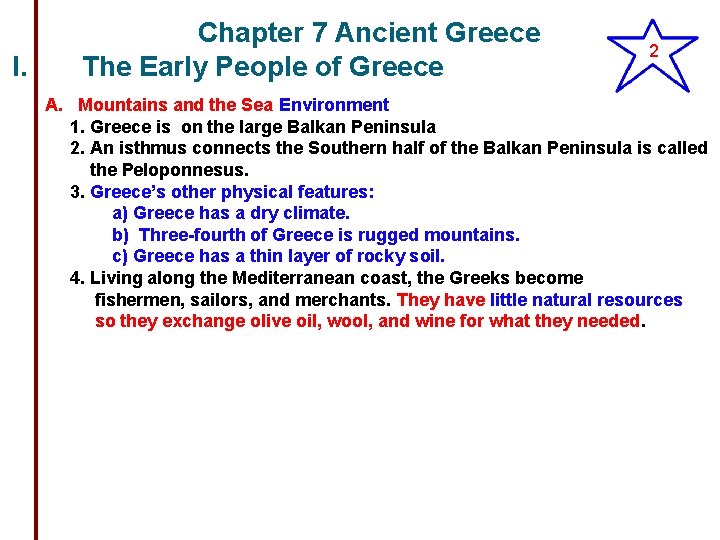
I. Chapter 7 Ancient Greece The Early People of Greece 2 A. Mountains and the Sea Environment 1. Greece is on the large Balkan Peninsula 2. An isthmus connects the Southern half of the Balkan Peninsula is called the Peloponnesus. 3. Greece’s other physical features: a) Greece has a dry climate. b) Three-fourth of Greece is rugged mountains. c) Greece has a thin layer of rocky soil. 4. Living along the Mediterranean coast, the Greeks become fishermen, sailors, and merchants. They have little natural resources so they exchange olive oil, wool, and wine for what they needed.
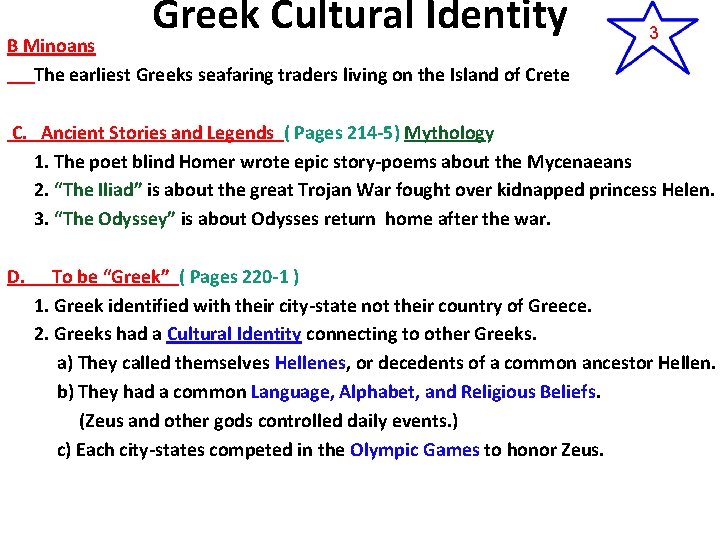
Greek Cultural Identity B Minoans The earliest Greeks seafaring traders living on the Island of Crete 3 C. Ancient Stories and Legends ( Pages 214 -5) Mythology 1. The poet blind Homer wrote epic story-poems about the Mycenaeans 2. “The Iliad” is about the great Trojan War fought over kidnapped princess Helen. 3. “The Odyssey” is about Odysses return home after the war. D. To be “Greek” ( Pages 220 -1 ) 1. Greek identified with their city-state not their country of Greece. 2. Greeks had a Cultural Identity connecting to other Greeks. a) They called themselves Hellenes, or decedents of a common ancestor Hellen. b) They had a common Language, Alphabet, and Religious Beliefs. (Zeus and other gods controlled daily events. ) c) Each city-states competed in the Olympic Games to honor Zeus.
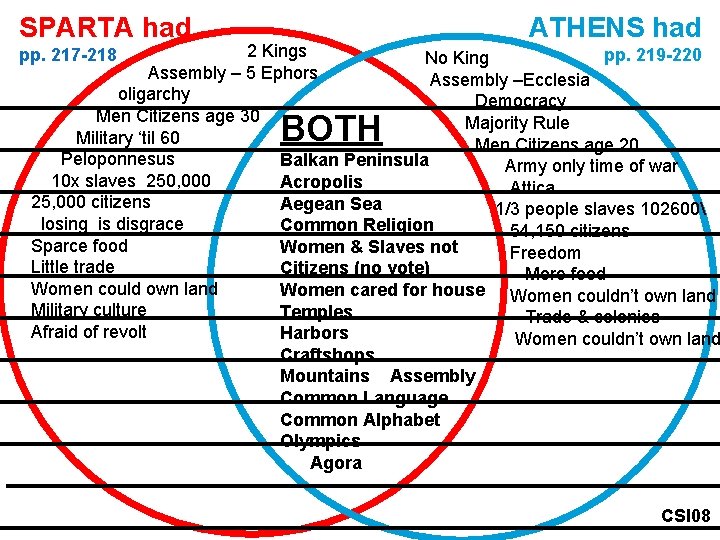
SPARTA had ATHENS had 2 Kings pp. 219 -220 No King Assembly – 5 Ephors Assembly –Ecclesia oligarchy Democracy Men Citizens age 30 Majority Rule Military ‘til 60 Men Citizens age 20 Peloponnesus Balkan Peninsula Army only time of war 10 x slaves 250, 000 Acropolis Attica 25, 000 citizens Aegean Sea 1/3 people slaves 102600 losing is disgrace Common Religion 54, 150 citizens Sparce food Women & Slaves not Freedom Little trade Citizens (no vote) More food Women could own land Women cared for house Women couldn’t own land Military culture Temples Trade & colonies Afraid of revolt Harbors Women couldn’t own land Craftshops Mountains Assembly Common Language Common Alphabet Olympics Agora pp. 217 -218 BOTH CSI 08
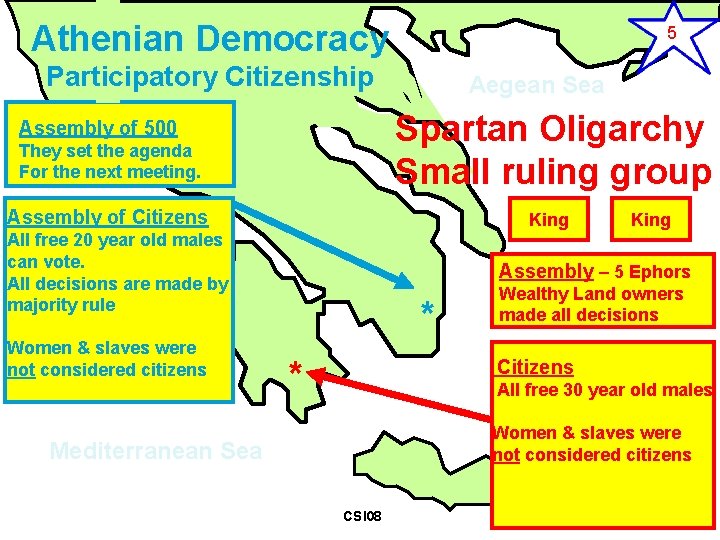
Athenian Democracy 5 Participatory Citizenship Aegean Sea Spartan Oligarchy Small ruling group Assembly of 500 They set the agenda For the next meeting. Assembly of Citizens King All free 20 year old males can vote. All decisions are made by majority rule Women & slaves were not considered citizens King Assembly – 5 Ephors * * Wealthy Land owners made all decisions Citizens All free 30 year old males Women & slaves were not considered citizens Mediterranean Sea CSI 08
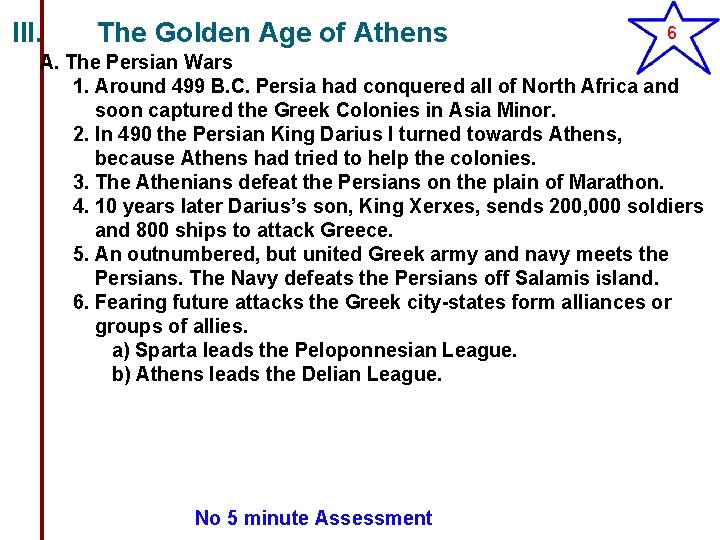
III. The Golden Age of Athens 6 A. The Persian Wars 1. Around 499 B. C. Persia had conquered all of North Africa and soon captured the Greek Colonies in Asia Minor. 2. In 490 the Persian King Darius I turned towards Athens, because Athens had tried to help the colonies. 3. The Athenians defeat the Persians on the plain of Marathon. 4. 10 years later Darius’s son, King Xerxes, sends 200, 000 soldiers and 800 ships to attack Greece. 5. An outnumbered, but united Greek army and navy meets the Persians. The Navy defeats the Persians off Salamis island. 6. Fearing future attacks the Greek city-states form alliances or groups of allies. a) Sparta leads the Peloponnesian League. b) Athens leads the Delian League. No 5 minute Assessment
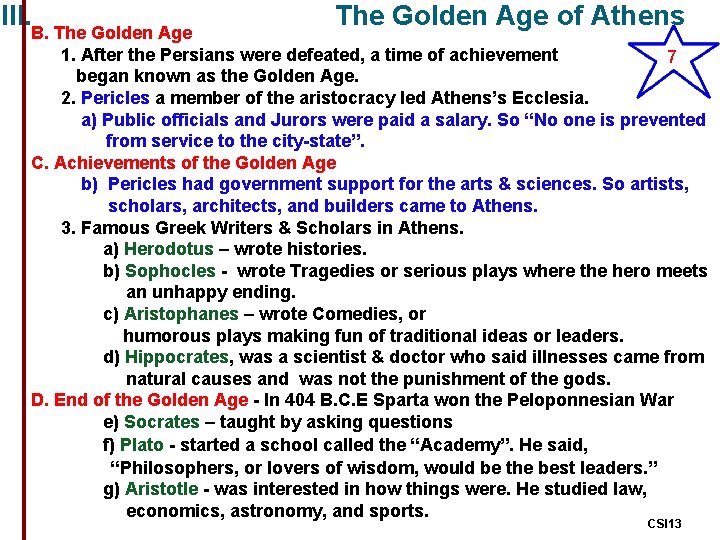
III. The Golden Age of Athens B. The Golden Age 1. After the Persians were defeated, a time of achievement 7 began known as the Golden Age. 2. Pericles a member of the aristocracy led Athens’s Ecclesia. a) Public officials and Jurors were paid a salary. So “No one is prevented from service to the city-state”. C. Achievements of the Golden Age b) Pericles had government support for the arts & sciences. So artists, scholars, architects, and builders came to Athens. 3. Famous Greek Writers & Scholars in Athens. a) Herodotus – wrote histories. b) Sophocles - wrote Tragedies or serious plays where the hero meets an unhappy ending. c) Aristophanes – wrote Comedies, or humorous plays making fun of traditional ideas or leaders. d) Hippocrates, was a scientist & doctor who said illnesses came from natural causes and was not the punishment of the gods. D. End of the Golden Age - In 404 B. C. E Sparta won the Peloponnesian War e) Socrates – taught by asking questions f) Plato - started a school called the “Academy”. He said, “Philosophers, or lovers of wisdom, would be the best leaders. ” g) Aristotle - was interested in how things were. He studied law, economics, astronomy, and sports. CSI 13
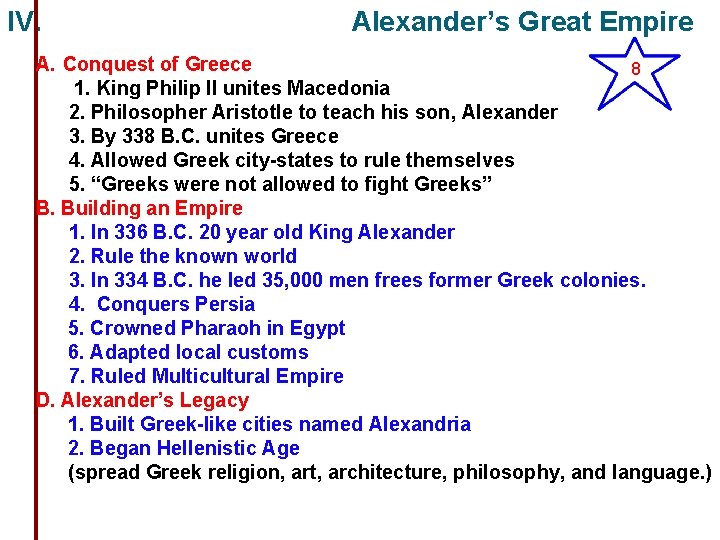
IV. Alexander’s Great Empire A. Conquest of Greece 8 1. King Philip II unites Macedonia 2. Philosopher Aristotle to teach his son, Alexander 3. By 338 B. C. unites Greece 4. Allowed Greek city-states to rule themselves 5. “Greeks were not allowed to fight Greeks” B. Building an Empire 1. In 336 B. C. 20 year old King Alexander 2. Rule the known world 3. In 334 B. C. he led 35, 000 men frees former Greek colonies. 4. Conquers Persia 5. Crowned Pharaoh in Egypt 6. Adapted local customs 7. Ruled Multicultural Empire D. Alexander’s Legacy 1. Built Greek-like cities named Alexandria 2. Began Hellenistic Age (spread Greek religion, art, architecture, philosophy, and language. )
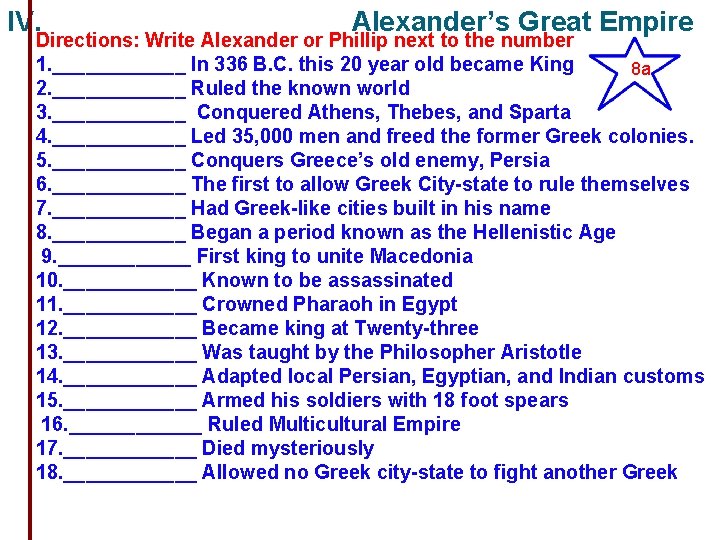
IV. Alexander’s Great Empire Directions: Write Alexander or Phillip next to the number 1. ______ In 336 B. C. this 20 year old became King 8 a 2. ______ Ruled the known world 3. ______ Conquered Athens, Thebes, and Sparta 4. ______ Led 35, 000 men and freed the former Greek colonies. 5. ______ Conquers Greece’s old enemy, Persia 6. ______ The first to allow Greek City-state to rule themselves 7. ______ Had Greek-like cities built in his name 8. ______ Began a period known as the Hellenistic Age 9. ______ First king to unite Macedonia 10. ______ Known to be assassinated 11. ______ Crowned Pharaoh in Egypt 12. ______ Became king at Twenty-three 13. ______ Was taught by the Philosopher Aristotle 14. ______ Adapted local Persian, Egyptian, and Indian customs 15. ______ Armed his soldiers with 18 foot spears 16. ______ Ruled Multicultural Empire 17. ______ Died mysteriously 18. ______ Allowed no Greek city-state to fight another Greek
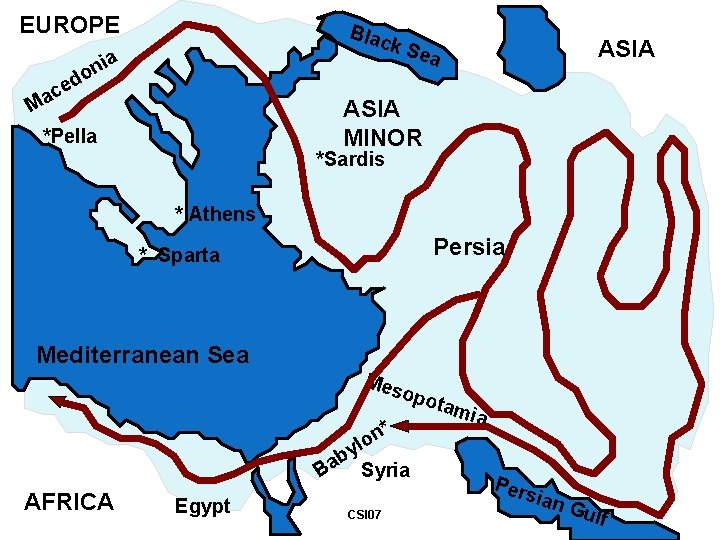
EUROPE ed c a o Blac k Se ASIA a nia ASIA MINOR M *Pella *Sardis * Athens Persia * Sparta Mediterranean Sea Mes opo tam * n o yl b Ba Syria AFRICA Egypt CSI 07 ia Pers ian Gul f
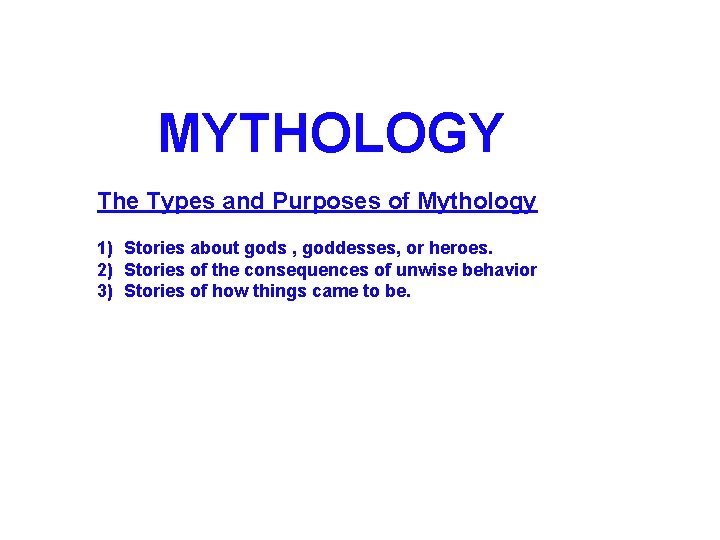
MYTHOLOGY The Types and Purposes of Mythology 1) Stories about gods , goddesses, or heroes. 2) Stories of the consequences of unwise behavior 3) Stories of how things came to be.

Additional Material
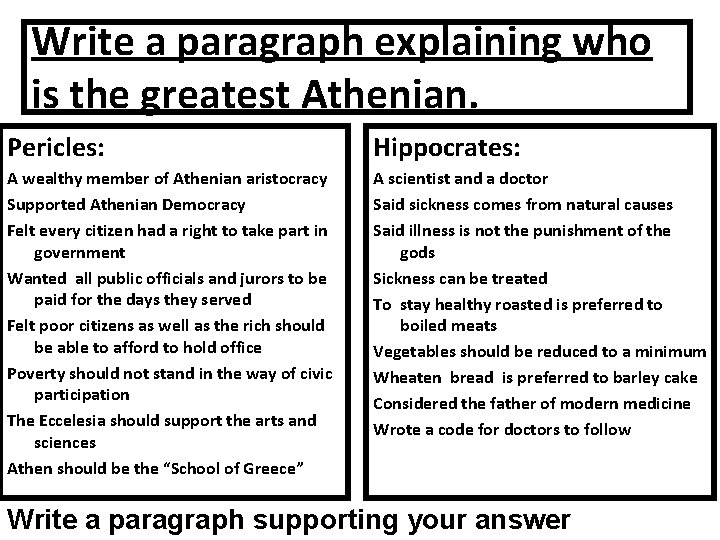
Write a paragraph explaining who is the greatest Athenian. Pericles: Hippocrates: A wealthy member of Athenian aristocracy Supported Athenian Democracy Felt every citizen had a right to take part in government Wanted all public officials and jurors to be paid for the days they served Felt poor citizens as well as the rich should be able to afford to hold office Poverty should not stand in the way of civic participation The Eccelesia should support the arts and sciences Athen should be the “School of Greece” A scientist and a doctor Said sickness comes from natural causes Said illness is not the punishment of the gods Sickness can be treated To stay healthy roasted is preferred to boiled meats Vegetables should be reduced to a minimum Wheaten bread is preferred to barley cake Considered the father of modern medicine Wrote a code for doctors to follow Write a paragraph supporting your answer
Prediction: (India) Asoka Maurya will be a cruel ruler. Why does this prediction seem correct? What Actually Happened Why does this prediction not seem correct?
Prediction: (China) The Qin Shi Haungdi will be remembered as a great ruler. Why does this prediction seem correct? What Actually Happened Why does this prediction not seem correct?
Prediction: (Egypt) The Egyptian belief in mummification and the afterlife will result in the tombs of the pharaoh to be undisturbed. Why does this prediction seem correct? What Actually Happened Why does this prediction not seem correct?
Prediction: (Mesopotamia) Hammurabi’s code of 282 laws will be soon forgotten after his death. Why does this prediction seem correct? What Actually Happened Why does this prediction not seem correct?
Prediction: (Egypt) There will never be a woman leader of Egypt. Why does this prediction seem correct? What Actually Happened Why does this prediction not seem correct?
Prediction: (Mesopotamia) Sennacherib will be remembered as a great leader of Assyria. Why does this prediction seem correct? What Actually Happened Why does this prediction not seem correct?
Prediction: (India) In the social structure of India the leaders or ruler will be the head (at the top). Why does this prediction seem correct? What Actually Happened Why does this prediction not seem correct?
Prediction: (China) The Nobles of China will follow the teachings of Confucius. Why does this prediction seem correct? What Actually Happened Why does this prediction not seem correct?
SPARTA had pp. 217 -218 ATHENS had pp. 219 -220 CSI 08
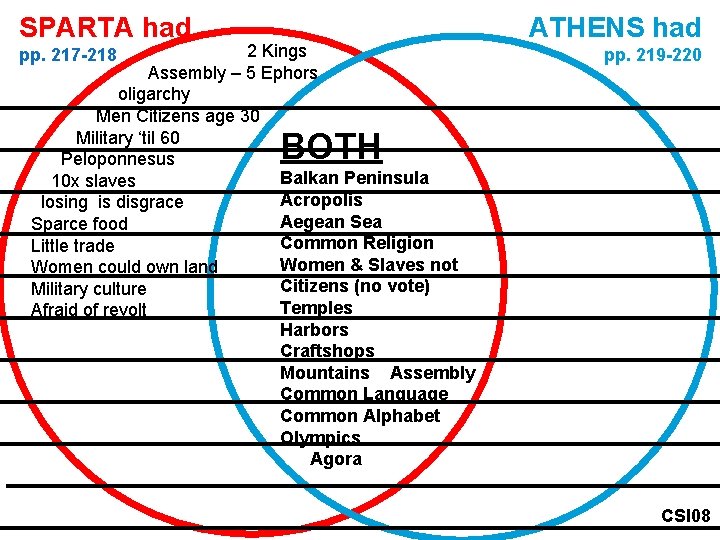
SPARTA had 2 Kings Assembly – 5 Ephors oligarchy Men Citizens age 30 Military ‘til 60 Peloponnesus Balkan Peninsula 10 x slaves Acropolis losing is disgrace Aegean Sea Sparce food Common Religion Little trade Women & Slaves not Women could own land Citizens (no vote) Military culture Temples Afraid of revolt Harbors Craftshops Mountains Assembly Common Language Common Alphabet Olympics Agora pp. 217 -218 ATHENS had pp. 219 -220 BOTH CSI 08
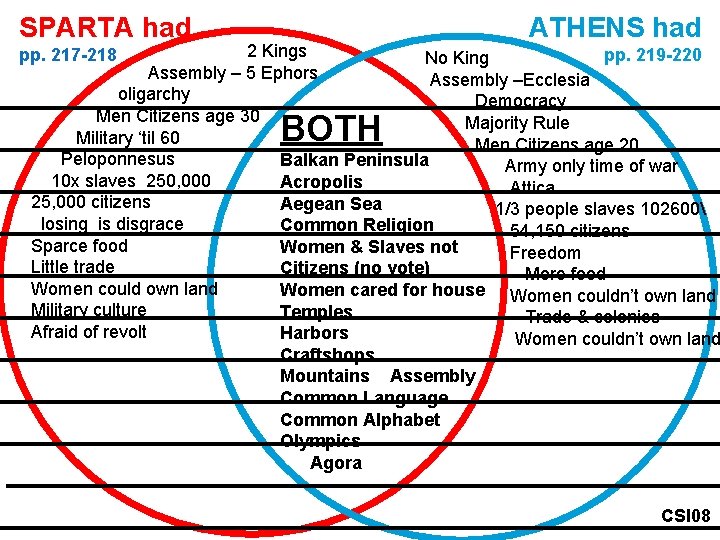
SPARTA had ATHENS had 2 Kings pp. 219 -220 No King Assembly – 5 Ephors Assembly –Ecclesia oligarchy Democracy Men Citizens age 30 Majority Rule Military ‘til 60 Men Citizens age 20 Peloponnesus Balkan Peninsula Army only time of war 10 x slaves 250, 000 Acropolis Attica 25, 000 citizens Aegean Sea 1/3 people slaves 102600 losing is disgrace Common Religion 54, 150 citizens Sparce food Women & Slaves not Freedom Little trade Citizens (no vote) More food Women could own land Women cared for house Women couldn’t own land Military culture Temples Trade & colonies Afraid of revolt Harbors Women couldn’t own land Craftshops Mountains Assembly Common Language Common Alphabet Olympics Agora pp. 217 -218 BOTH CSI 08
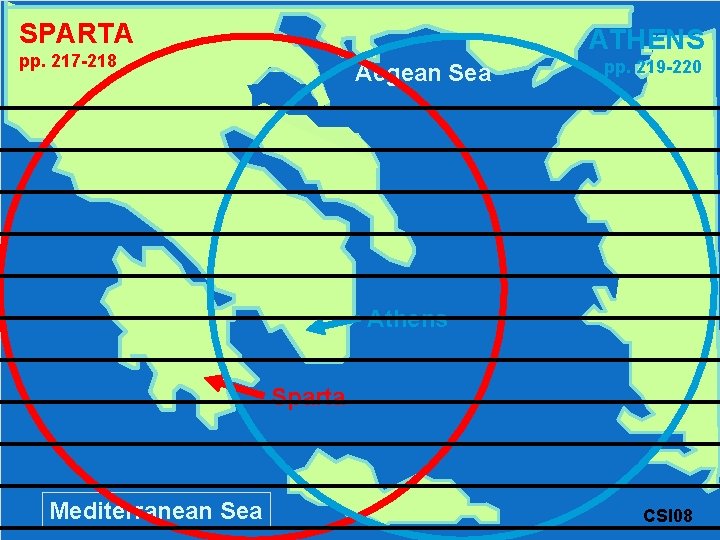
SPARTA ATHENS pp. 217 -218 Aegean Sea pp. 219 -220 Athens Sparta Mediterranean Sea CSI 08
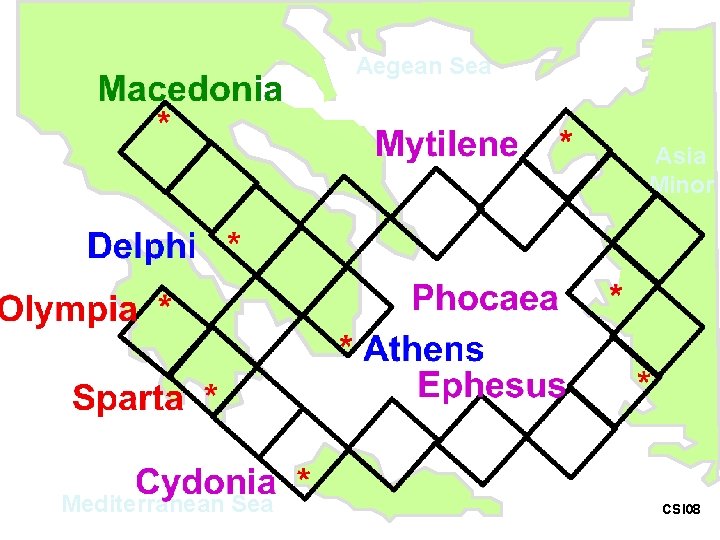
Aegean Sea Asia Minor Mediterranean Sea CSI 08
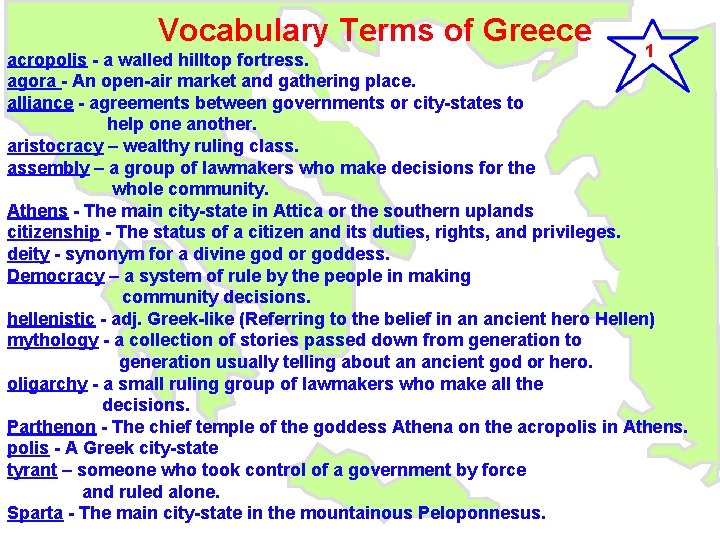
Vocabulary Terms of Greece 1 acropolis - a walled hilltop fortress. agora - An open-air market and gathering place. alliance - agreements between governments or city-states to help one another. aristocracy – wealthy ruling class. assembly – a group of lawmakers who make decisions for the whole community. Athens - The main city-state in Attica or the southern uplands citizenship - The status of a citizen and its duties, rights, and privileges. deity - synonym for a divine god or goddess. Democracy – a system of rule by the people in making community decisions. hellenistic - adj. Greek-like (Referring to the belief in an ancient hero Hellen) mythology - a collection of stories passed down from generation to generation usually telling about an ancient god or hero. oligarchy - a small ruling group of lawmakers who make all the decisions. Parthenon - The chief temple of the goddess Athena on the acropolis in Athens. polis - A Greek city-state tyrant – someone who took control of a government by force and ruled alone. Sparta - The main city-state in the mountainous Peloponnesus.
- Slides: 29