
Ancient Greece 2000 B C E 1000 B
Ancient Greece 2000 B. C. E. -1000 B. C. E.
Overview of Greece • Physical Setting – – – Northeast End of the Mediterranean Consists of Small Peninsulas Geography • • • – No clear river system • • – Short mountain ranges cut through mainland Separate communities Prevents Unity among Greeks No unifying meeting place Prevents Unity Mild climate, good soil, sufficient rainfall • • • Farmers can grow grain, grapes, olives Sheeps, Goats raised in mountains Not enough to live on
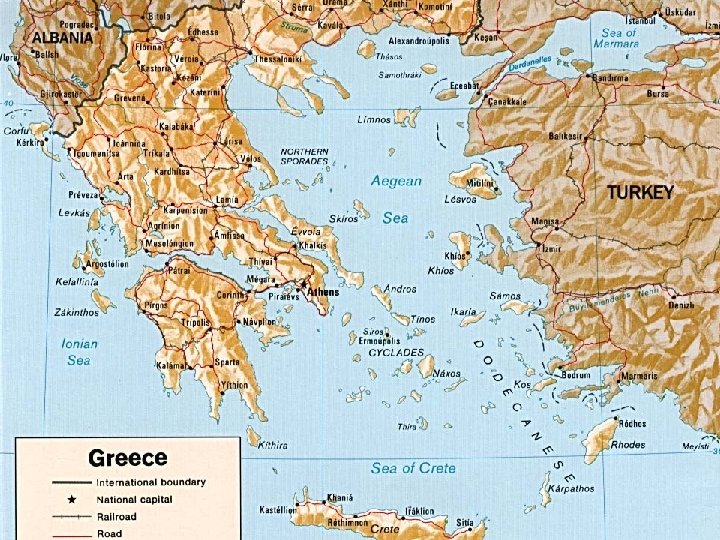
The Importance of Geography • Geography encourages trade – Long coastline allows all of mainland to be near sea – Islands surrounding have many good harbors • Question: What types of occupations might Greek citizens develop? – (Farmers, fishermen, sailors, traders, explorers)
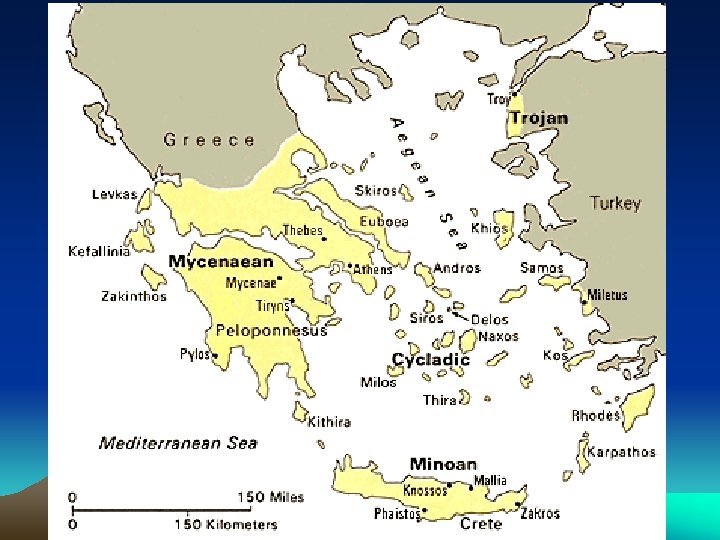
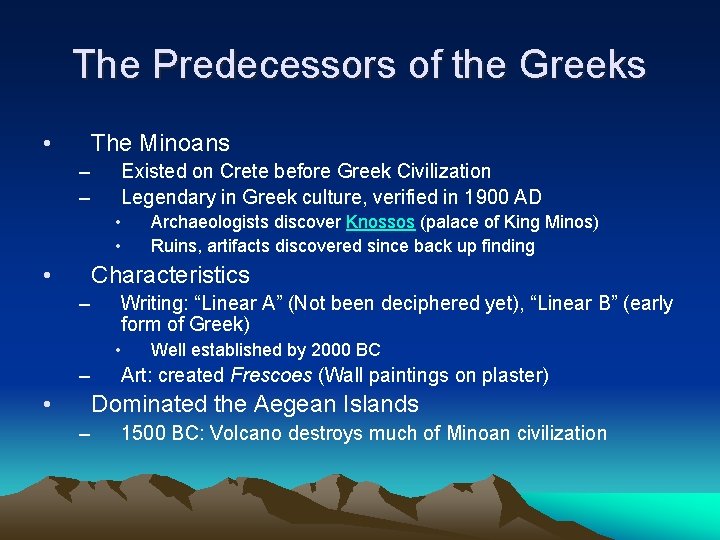
The Predecessors of the Greeks • The Minoans – – Existed on Crete before Greek Civilization Legendary in Greek culture, verified in 1900 AD • • • Archaeologists discover Knossos (palace of King Minos) Ruins, artifacts discovered since back up finding Characteristics – Writing: “Linear A” (Not been deciphered yet), “Linear B” (early form of Greek) • – • Well established by 2000 BC Art: created Frescoes (Wall paintings on plaster) Dominated the Aegean Islands – 1500 BC: Volcano destroys much of Minoan civilization
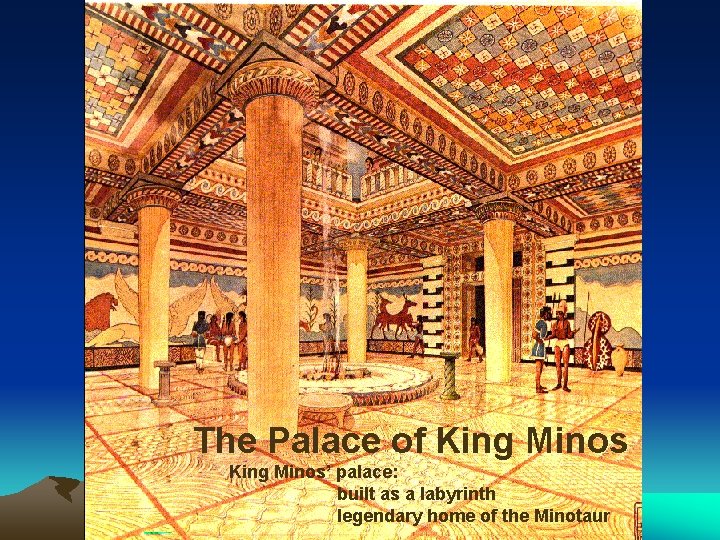
The Palace of King Minos’ palace: built as a labyrinth legendary home of the Minotaur
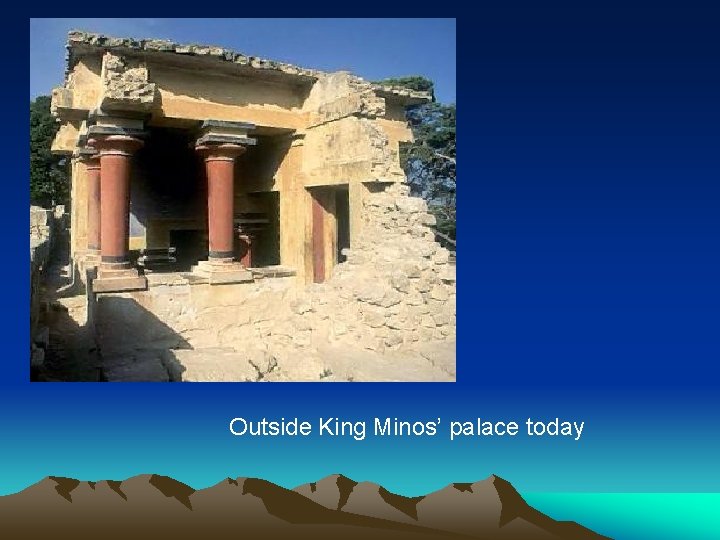
Outside King Minos’ palace today
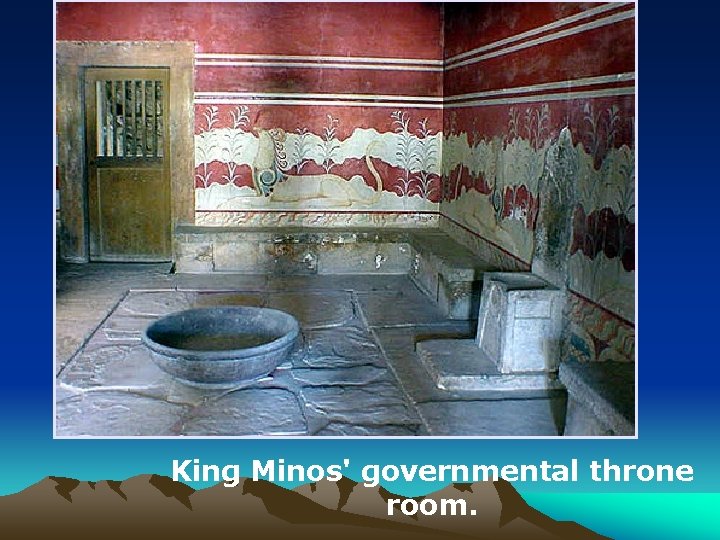
King Minos' governmental throne room.
The Mycenaeans • 2000 BC: Groups from the North (Indo. European) • Culture develops around 1600 BC-1200 BC • Warlike group, conquered other areas • Conquered Crete, adopted much of Minoan civilization • 1200 BC: Earthquakes destroy much of civilization
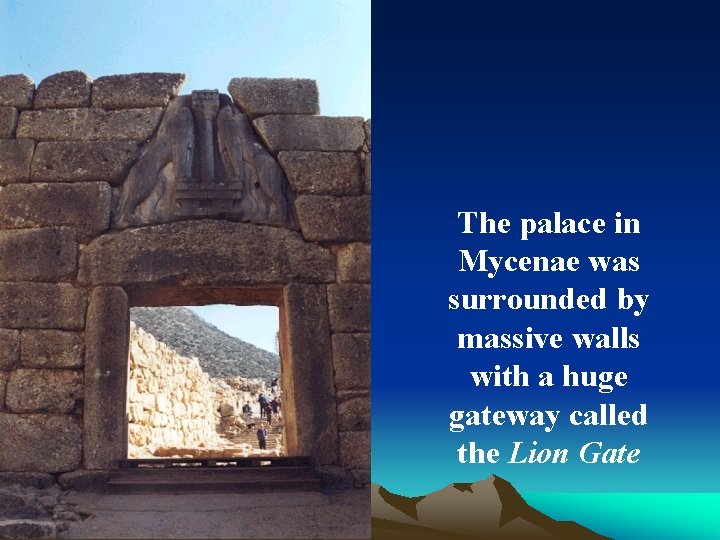
The palace in Mycenae was surrounded by massive walls with a huge gateway called the Lion Gate
Mycenaen Civilization • Palaces in the city of Mycenae – served as the centers for government and economy • Government – Role of Tax collectors: • kept track of the wealth of the people living in the kingdom • collected taxes on: wheat, livestock, honey etc.
Mycenaen Civilization • Economy – tanned leather, sewed clothes, made jars for honey and olive oil, created bronze shields etc. • What did they learn from the Minoans? – used Minoan architecture as a model for their palaces – Metalworking----shipbuilding – navigation------lead by the sun and stars – Religion- worshipped Earth Mother
Mycenaen Civilization • Why does the civilization come to an end? – Two Theories: 1. Infighting amongst the kingdoms 2. Invasion by the Dorians
Dorians • Came in armed with iron weapons • called the “dark age”: – Why? • Trade ended, poverty increased, literacy declined • refugees fled to Ionia • 750 B. C. - reintroduced culture, crafts, etc. • Founding of Hellenic Civilization – 700’s B. C. - 350 B. C.
- Slides: 15