
Ancient Egypt The development of mummification Minilesson for

- Slides: 12
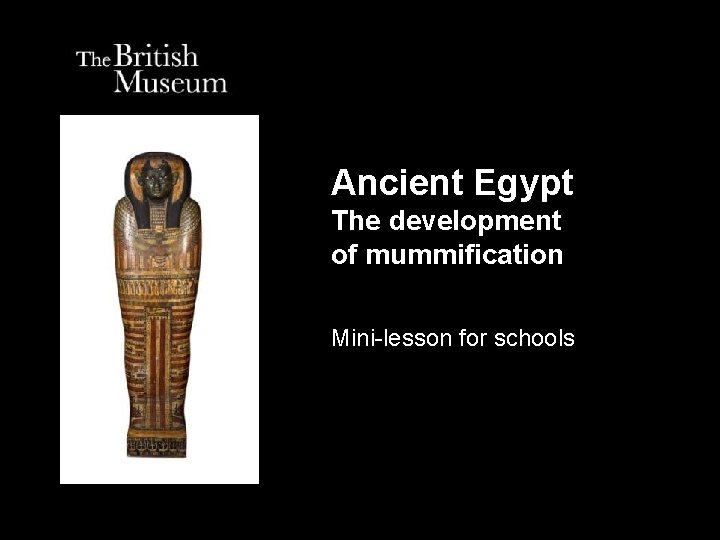
Ancient Egypt The development of mummification Mini-lesson for schools
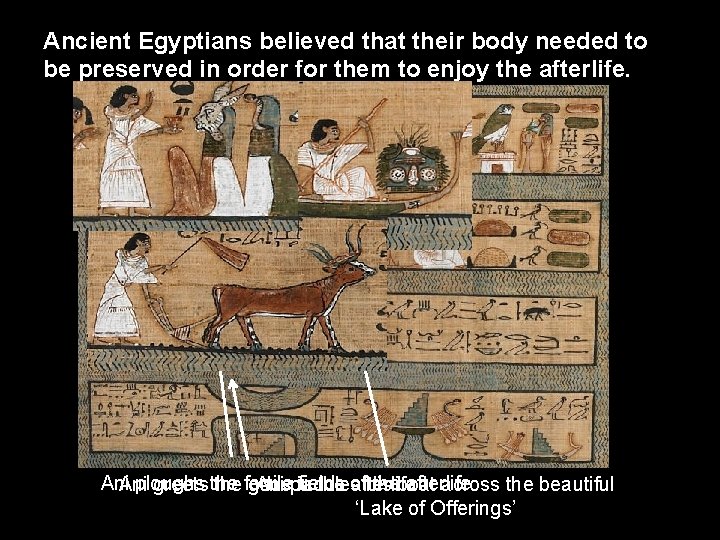
Ancient Egyptians believed that their body needed to be preserved in order for them to enjoy the afterlife. Ani ploughs fields theboat afterlife Ani paddles his across the beautiful Ani greets the fertile gods in the of afterlife ‘Lake of Offerings’
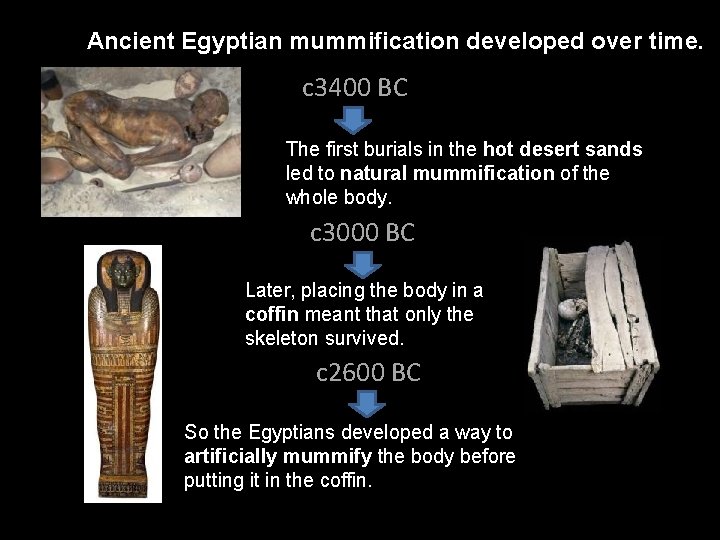
Ancient Egyptian mummification developed over time. c 3400 BC The first burials in the hot desert sands led to natural mummification of the whole body. c 3000 BC Later, placing the body in a coffin meant that only the skeleton survived. c 2600 BC So the Egyptians developed a way to artificially mummify the body before putting it in the coffin.
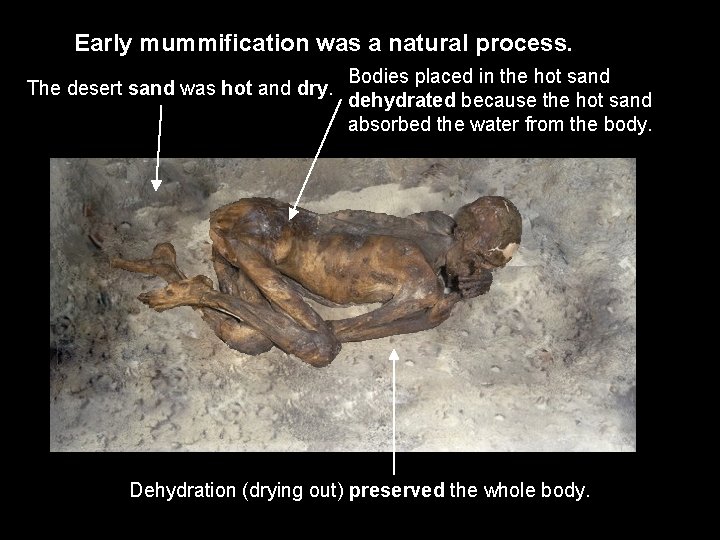
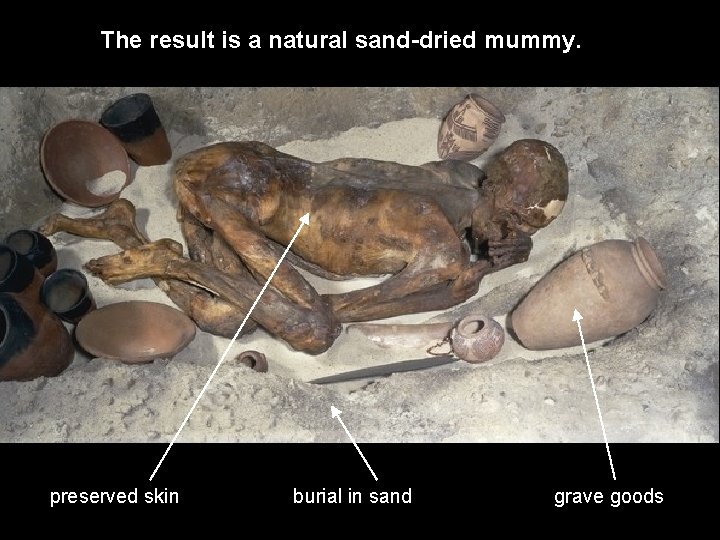
Early mummification was a natural process. The desert sand was hot and dry. Bodies placed in the hot sand dehydrated because the hot sand absorbed the water from the body. Dehydration (drying out) preserved the whole body.
The result is a natural sand-dried mummy. preserved skin burial in sand grave goods
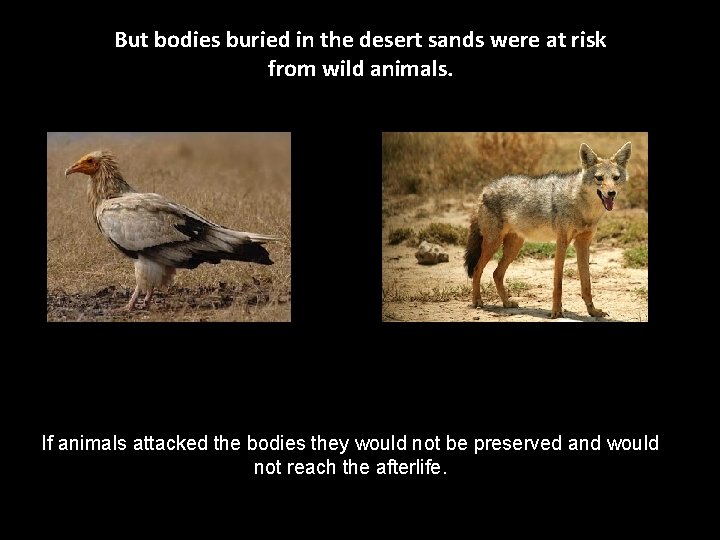
But bodies buried in the desert sands were at risk from wild animals. If animals attacked the bodies they would not be preserved and would not reach the afterlife.
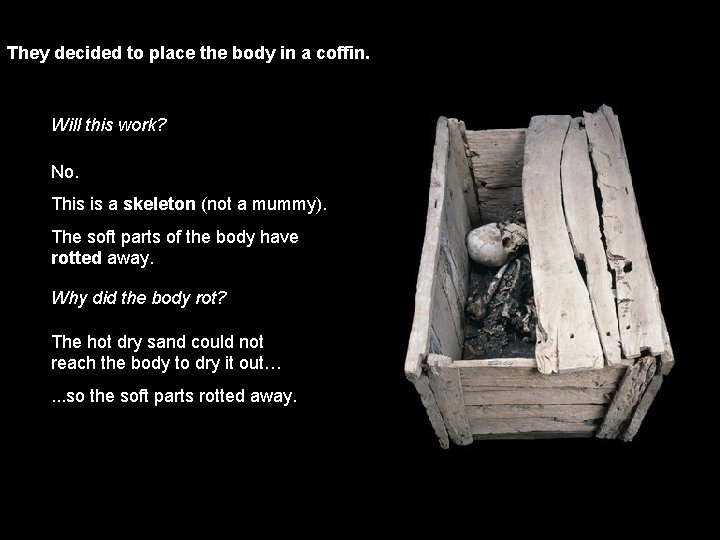
They decided to place the body in a coffin. Will this work? No. This is a skeleton (not a mummy). The soft parts of the body have rotted away. Why did the body rot? The hot dry sand could not reach the body to dry it out…. . . so the soft parts rotted away.
The ancient Egyptians realised they needed to mummify the dead body artificially before they placed it in the coffin. They dehydrated the body and the internal organs by covering them in salt. Then they wrapped the body in linen bandages.
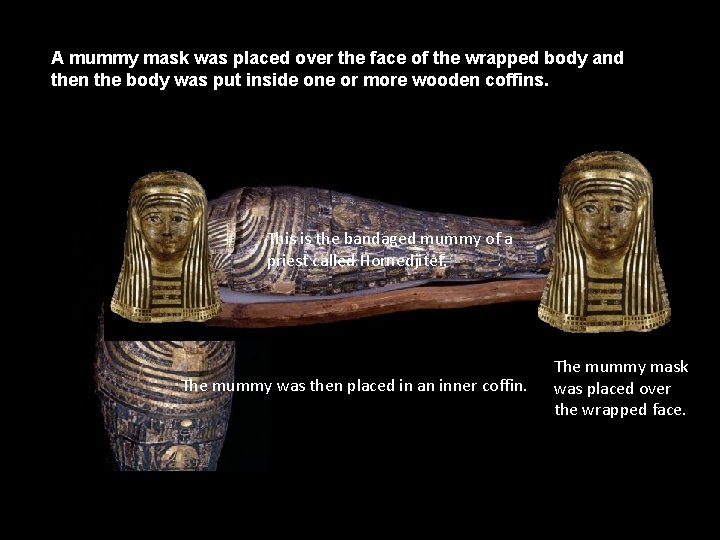
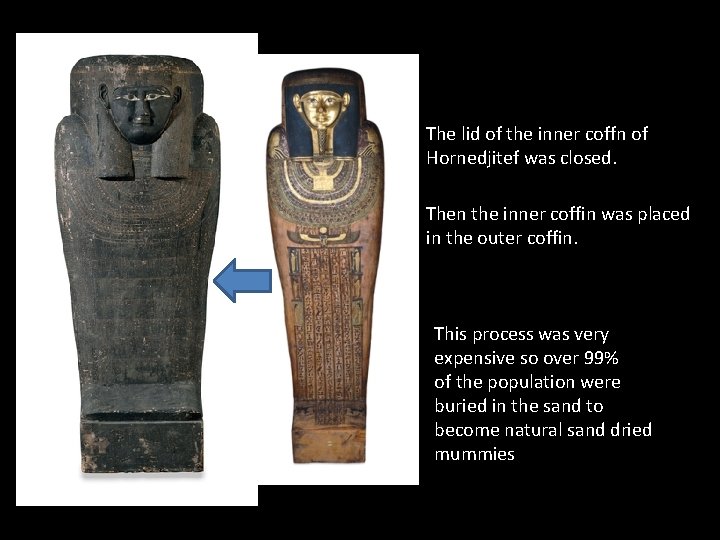
A mummy mask was placed over the face of the wrapped body and then the body was put inside one or more wooden coffins. This is the bandaged mummy of a priest called Hornedjitef. The mummy was then placed in an inner coffin. The mummy mask was placed over the wrapped face.
The lid of the inner coffn of Hornedjitef was closed. Then the inner coffin was placed in the outer coffin. This process was very expensive so over 99% of the population were buried in the sand to become natural sand dried mummies
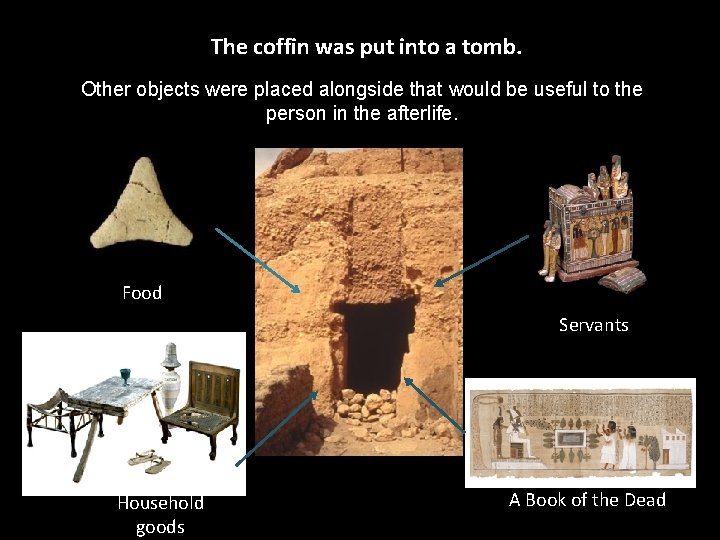
The coffin was put into a tomb. Other objects were placed alongside that would be useful to the person in the afterlife. Food Servants Household goods A Book of the Dead
Now you have finished… Find out more about ancient Egyptian mummies on Young Explorers www. britishmuseum. org/explore/young_explorers 1. aspx