
Ancient Egypt Social Structure Pharaoh Egyptians elevated some



- Slides: 18
Ancient Egypt Social Structure
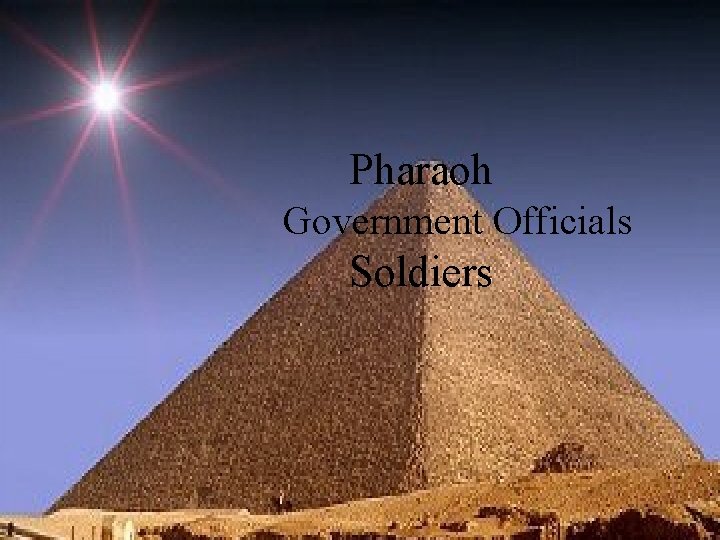
Pharaoh
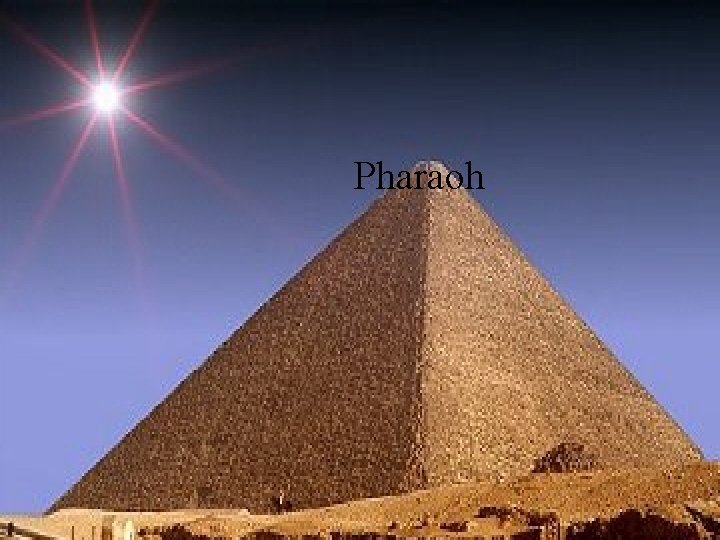
Egyptians elevated some human beings to gods. Their Leaders, called Pharaohs , were believed to be gods in human form. After Pharaohs died, huge stone Pyramids As their tombs. were built The people of Egypt entrusted their rulers with the following Responsibilities: Protection Laws Food in event of Famine
Pharaoh Government Officials
Government Officials • Right below the pharaoh in status were powerful Government Officials. Only nobles could hold government post. Priests were responsible for pleasing the gods. • Nobles enjoyed great status and grew wealthy from donations to the gods. • The pharaoh appointed a chief minister called a VIZIER as a supervisor.
Pharaoh Government Officials Soldiers
Soldiers • SOLDIERS fought in wars or quelled domestic uprisings. During long periods of peace, soldiers also supervised the peasants, farmers, and slaves who were involved in building such structures as pyramids
Pharaoh Government Officials Soldiers Scribes
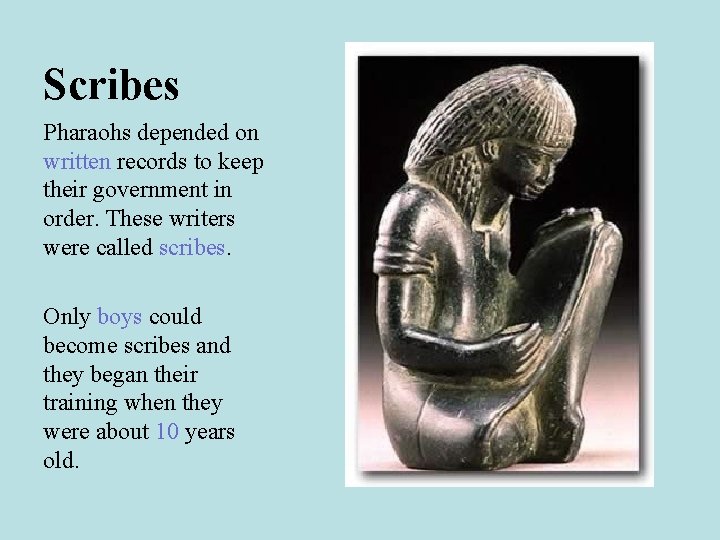
Scribes Pharaohs depended on written records to keep their government in order. These writers were called scribes. Only boys could become scribes and they began their training when they were about 10 years old.
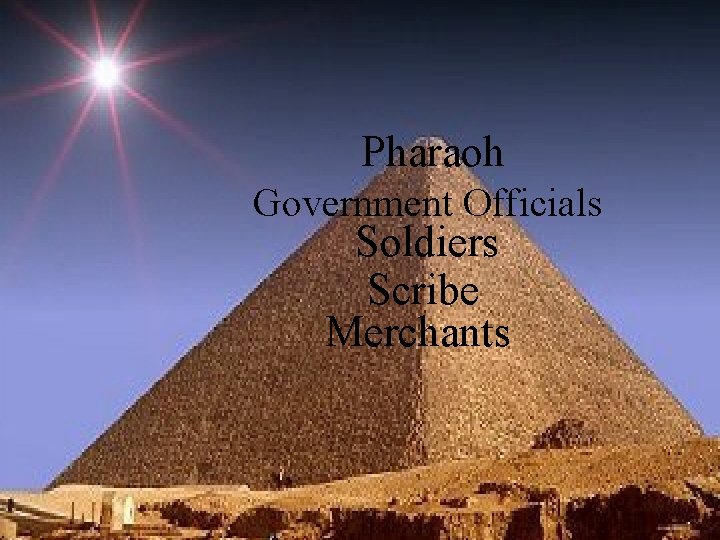
Pharaoh Government Officials Soldiers Scribe Merchants
Merchants • There were people needed to buy goods from artisans and traders. These were the MERCHANTS and storekeepers who sold these goods to the public.
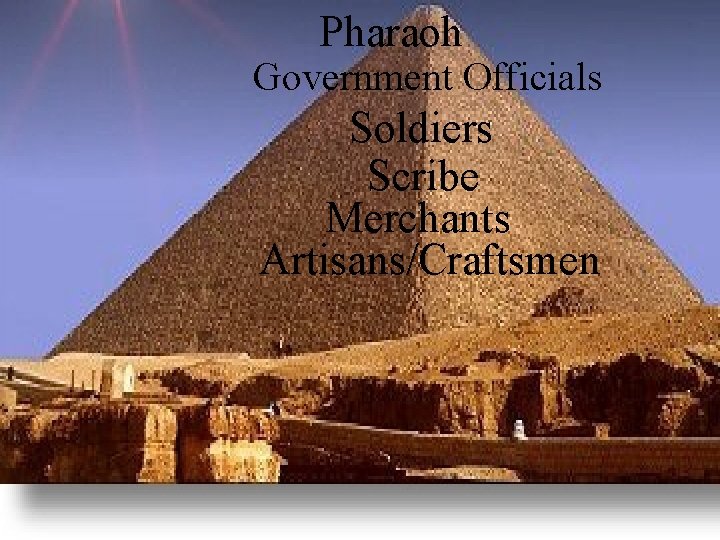
Pharaoh Government Officials Soldiers Scribe Merchants Artisans/Craftsmen
Artisans/Craftsmen • SKILLED WORKERS such as physicians and craftsmen made up the middle class. CRAFTSMEN made and sold jewelry, pottery, papyrus products, tools, and other useful things.
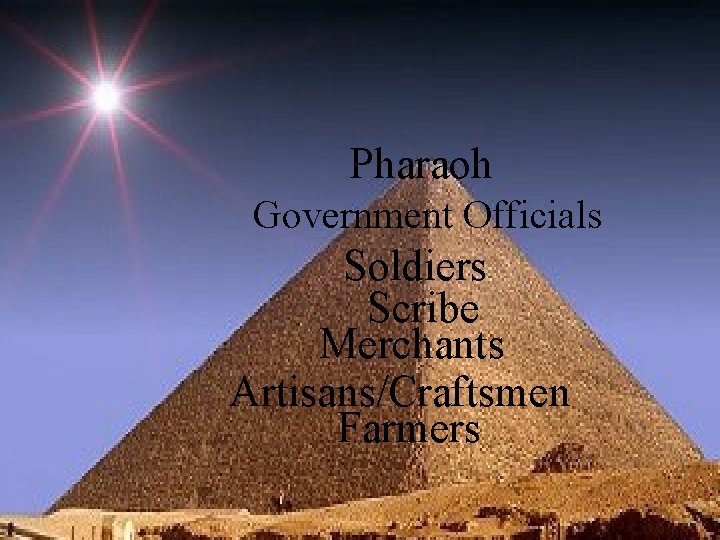
Pharaoh Government Officials Soldiers Scribe Merchants Artisans/Craftsmen Farmers
Farmers • Farmers tended the fields, raised animals, kept canals and reservoirs in good order, worked in the stone quarries, and built the royal monuments. Farmers paid taxes that could be as much as 60 percent of their yearly harvest — that's a lot of hay!
Pharaoh Government Officials Soldiers Scribe Merchants Artisans/Craftsmen Farmers Slaves
Slaves • At the bottom of the social structure were SLAVES. Slavery became the fate of those captured as prisoners of war. In addition to being forced to work on building projects, slaves toiled at the discretion of the pharaoh or nobles.
Social Mobility • SOCIAL MOBILITY was not impossible. • Families saved money to send their sons to village schools to learn trades. • Boys who learned to read and write could become scribes, then go on to gain employment in the government.