
Ancient Egypt Benefits of the Nile River Provided
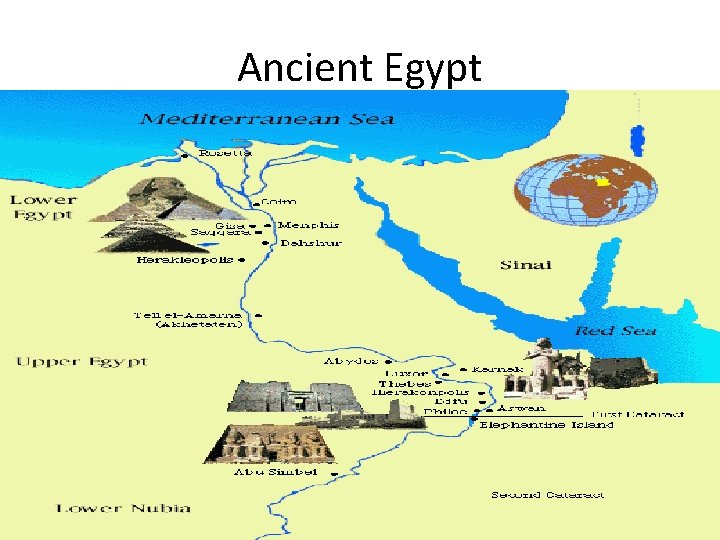
Ancient Egypt
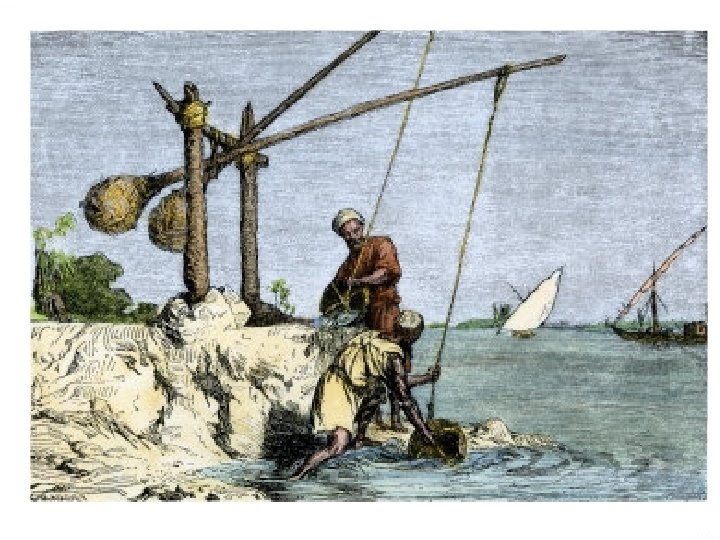
Benefits of the Nile River • Provided water – Drinking, bathing, cooking, cleaning, fishing – Built irrigation canals & basins – Shadoof – Papyrus • Provided a barrier for invading armies – Cataracts- blocked boats from coming North – Delta – no harbors for invading armies
Benefits of the Nile River • Transportation – Used to travel to other villages – Trade – developed friendly relations with others along the Nile • Rich soil – Kemet- “the black lands” – Rich soil left behind from floods – Allowed the people to become skilled farmers

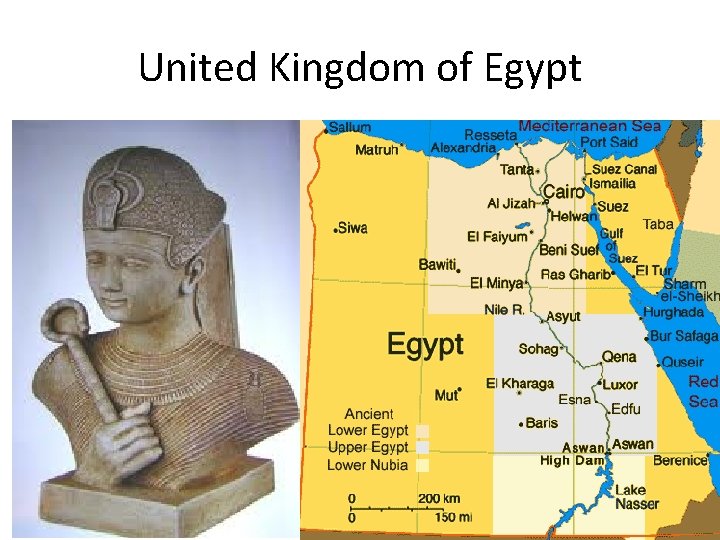
United Kingdom of Egypt
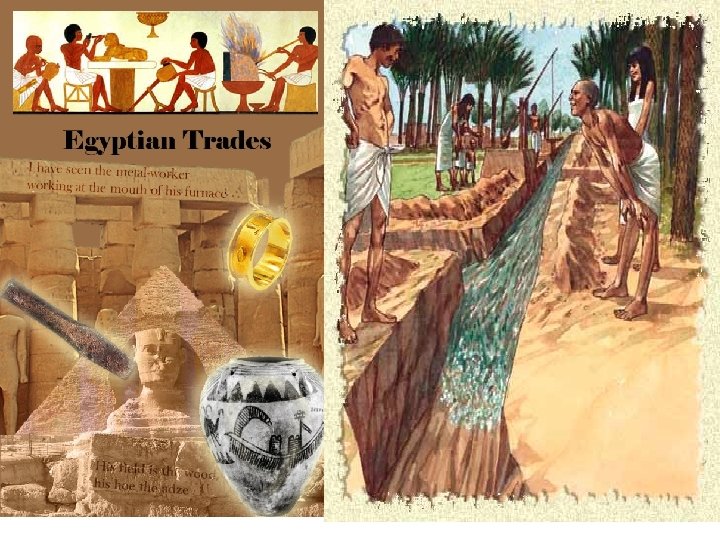
United Egypt • Skillful farming leads to a surplus • Less workers needed in the fields and skilled workers develop( artisans make pottery, cloth, copper tools and weapons, and carved statues) • Trading develops because of an excess of goods( agricultural and manufactured)
United Egypt • Government needed to: – Build and maintain irrigation systems, store and distribute grain, and settle land disagreements • Earliest rulers were chiefs from villagesstronger chiefs take over weaker ones • 4000 B. C. - Egypt is consolidated into two large Kingdoms- Upper and Lower • 3100 B. C. – Namer leads armies North and takes control of Lower Egypt
Narmer’s Rule • Formed a dynasty( line of rulers from one family) • Egypt had - 31 dynasties – 2, 800 years • Historians divide dynasties into 3 groups – Old Kingdom – Middle Kingdom – New Kingdom
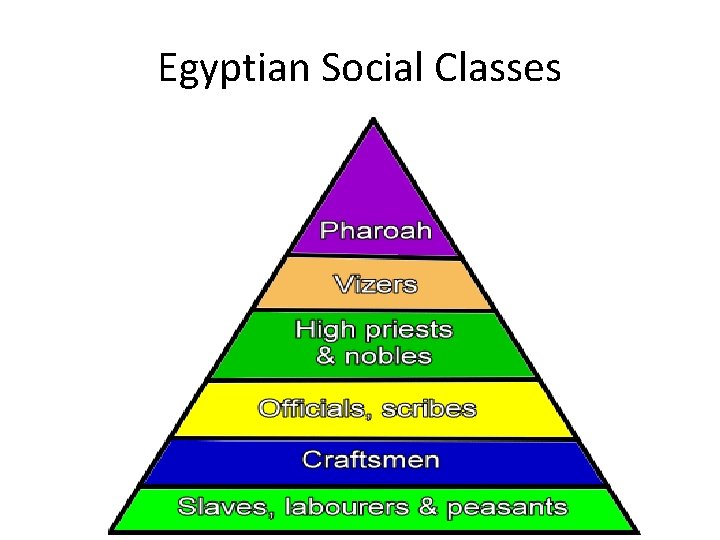
Egyptian Social Classes
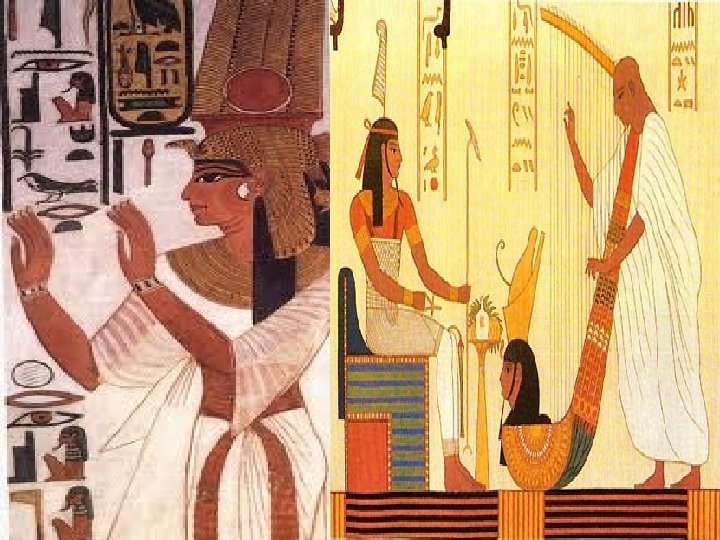
Egypt’s Social Classes • Pharaoh and family – Lived in large palaces with servants • Vizer – Closest advisor to the Pharaoh • Upper Class- high priests, nobles and army commanders – Lived in city estates along the Nile, elegant homes and gardens, servants, dressed in white linen and wore heavy make-up and jewlery
Egypt’s Social Classes • Middle Class- skilled workers, traders, artisans and scribes – Smaller homes, dressed simply – Provided many goods for society ( linens, jewelry, pottery and metal goods) • Farmers – Largest group, most worked for nobles, lived in villages along the Nile in small huts
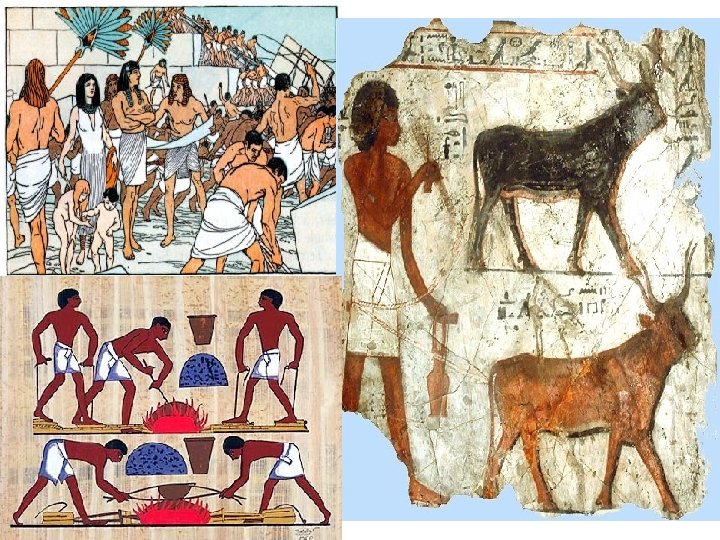
Egypt’s Social Classes • Unskilled workers- peasants& laborers – Provided physical labor – Lived in crowded city neighborhoods – Small houses with flat roofs( played games, women worked )
Family Life in Egypt • Father – Head of the family – Taught sons to be farmers or skilled artisans • Mother – Taught daughters to sew, cook, and run the household – Women had many rights – Upper class women in charge of temples • Children – Did not attend school – Played board games, dolls, spinning tops and with stuffed leather balls
- Slides: 17