
Ancient Egypt 3900 BC 1069 AD How did
Ancient Egypt 3900 BC – 1069 AD
How did geography affect the Egyptians?
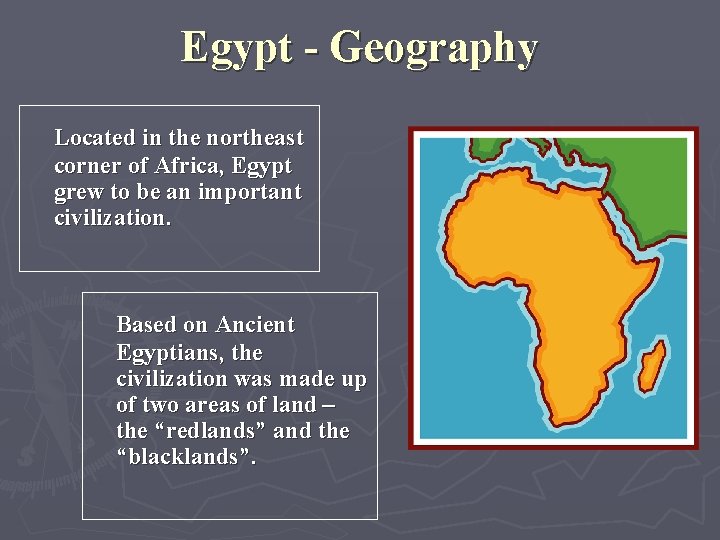
Egypt - Geography Located in the northeast corner of Africa, Egypt grew to be an important civilization. Based on Ancient Egyptians, the civilization was made up of two areas of land – the “redlands” and the “blacklands”.
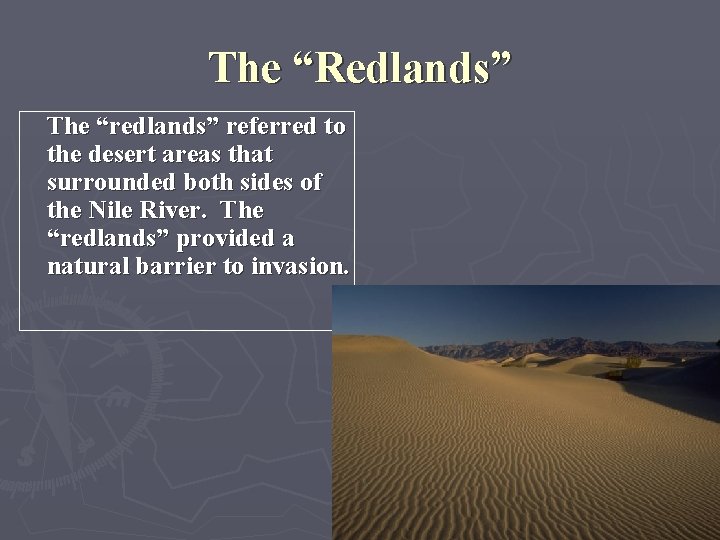
The “Redlands” The “redlands” referred to the desert areas that surrounded both sides of the Nile River. The “redlands” provided a natural barrier to invasion.
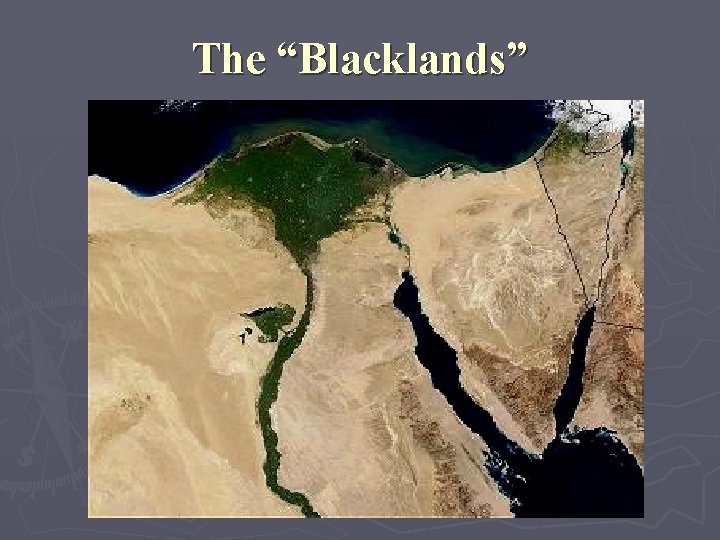
The “Blacklands”
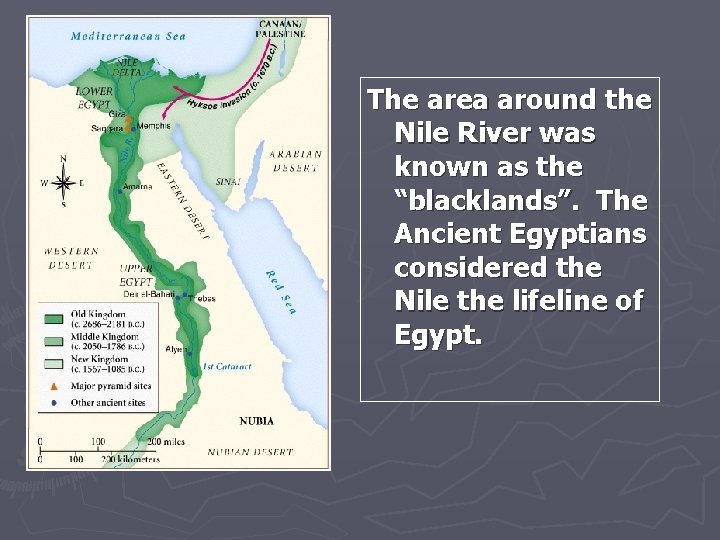
The area around the Nile River was known as the “blacklands”. The Ancient Egyptians considered the Nile the lifeline of Egypt.
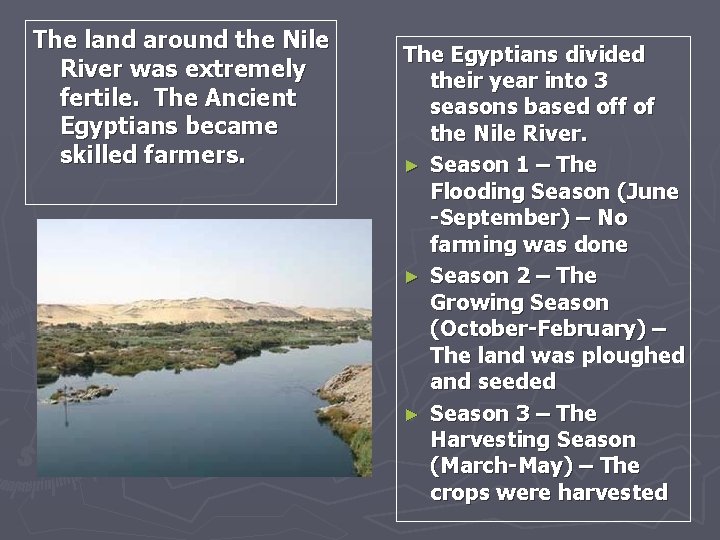
The land around the Nile River was extremely fertile. The Ancient Egyptians became skilled farmers. The Egyptians divided their year into 3 seasons based off of the Nile River. ► Season 1 – The Flooding Season (June -September) – No farming was done ► Season 2 – The Growing Season (October-February) – The land was ploughed and seeded ► Season 3 – The Harvesting Season (March-May) – The crops were harvested
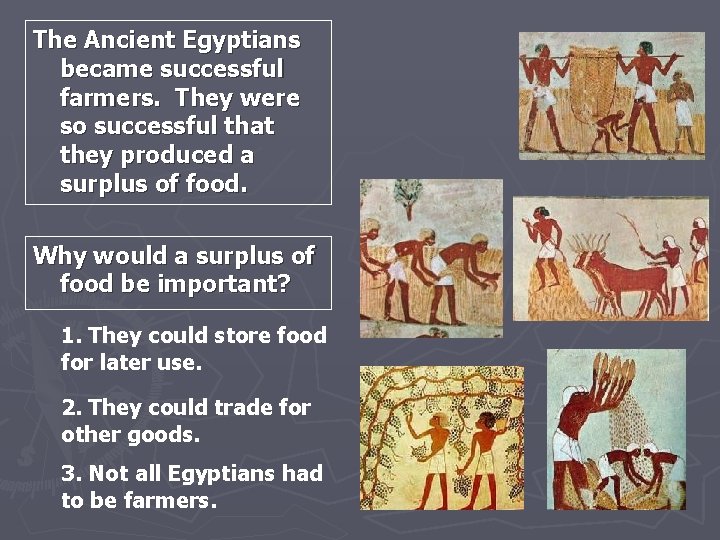
The Ancient Egyptians became successful farmers. They were so successful that they produced a surplus of food. Why would a surplus of food be important? 1. They could store food for later use. 2. They could trade for other goods. 3. Not all Egyptians had to be farmers.
Sentence Synthesis Use two of the following words in one sentence: redlands fertile blacklands Nile River farming invasion *Your sentence must show meaning!
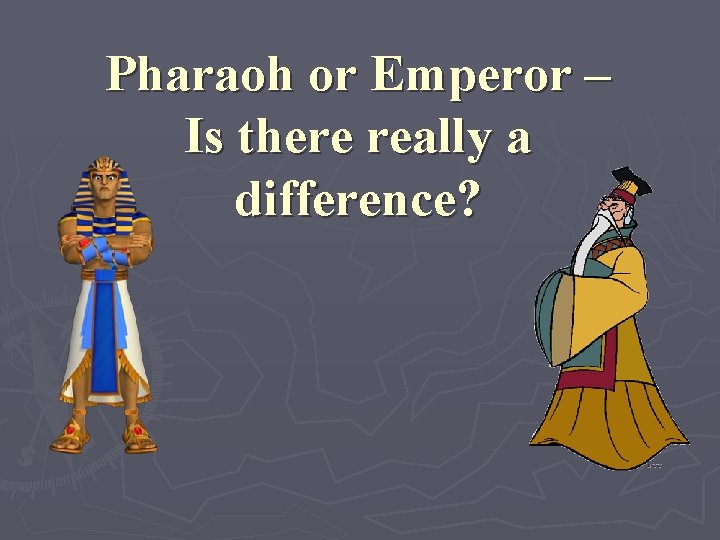
Pharaoh or Emperor – Is there really a difference?
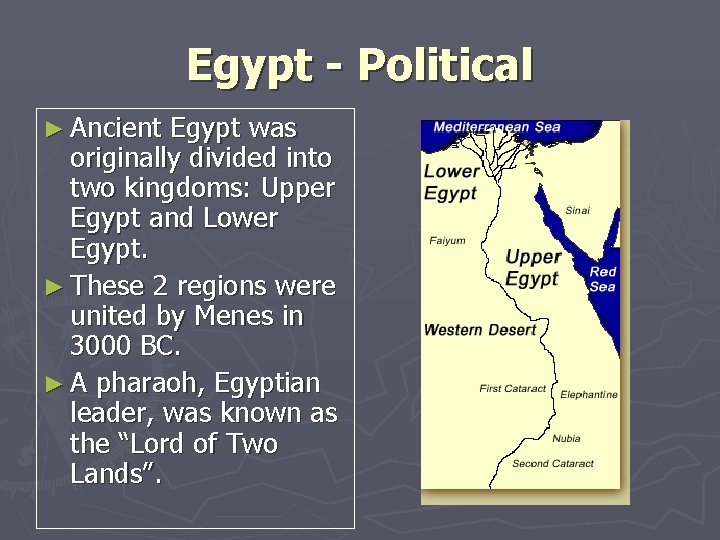
Egypt - Political ► Ancient Egypt was originally divided into two kingdoms: Upper Egypt and Lower Egypt. ► These 2 regions were united by Menes in 3000 BC. ► A pharaoh, Egyptian leader, was known as the “Lord of Two Lands”.
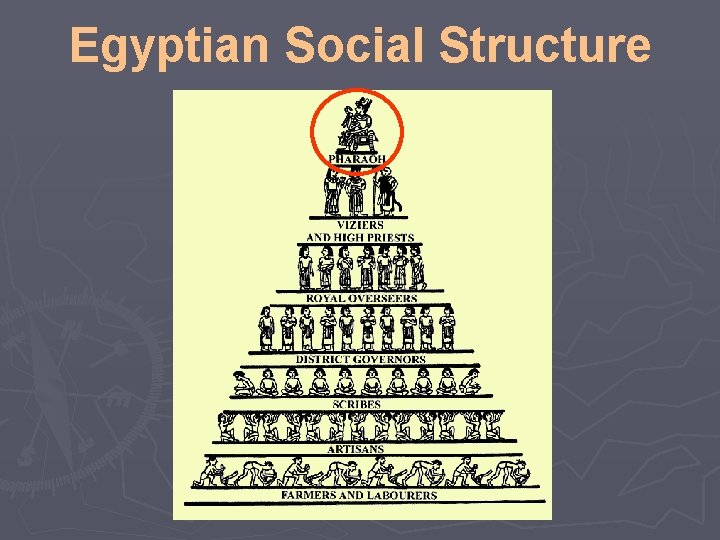
Egyptian Social Structure
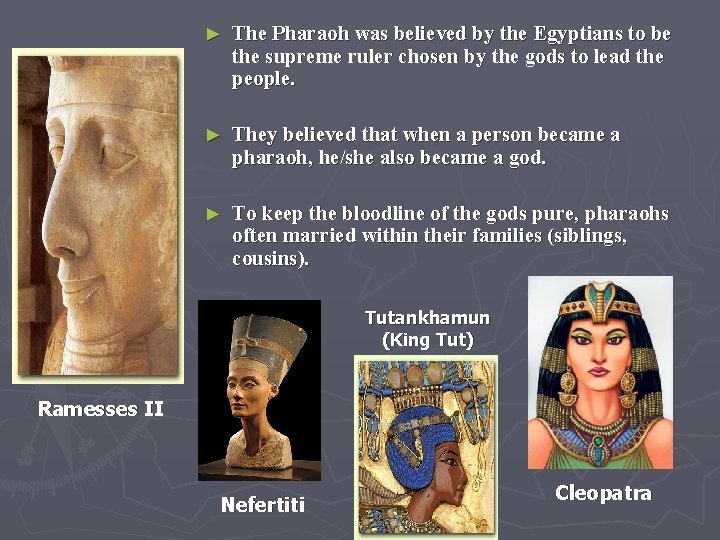
► The Pharaoh was believed by the Egyptians to be the supreme ruler chosen by the gods to lead the people. ► They believed that when a person became a pharaoh, he/she also became a god. ► To keep the bloodline of the gods pure, pharaohs often married within their families (siblings, cousins). Tutankhamun (King Tut) Ramesses II Nefertiti Cleopatra
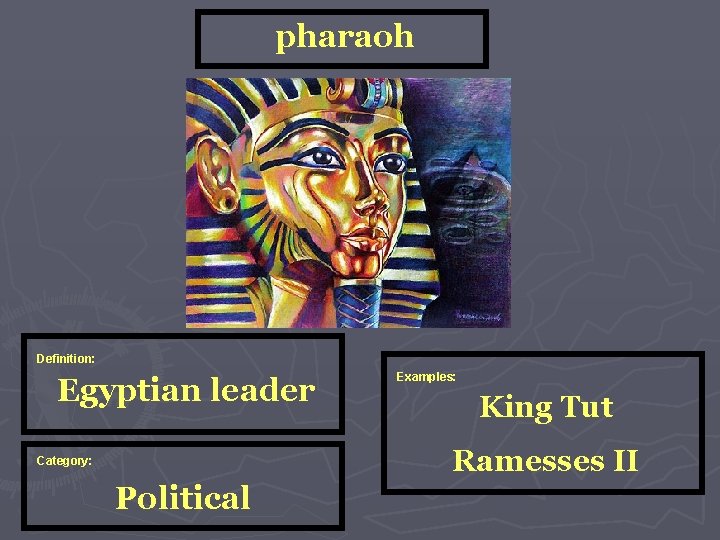
pharaoh Definition: Egyptian leader Examples: King Tut Ramesses II Category: Political

One-Sentence Summary One thing that I found interesting is. . .
Pharaoh Headdress Directions Index Card 1. Name of Pharaoh 2. Birth Year – Death Year 3. List of 5 Facts about the Pharaoh 4. Grade Your Pharaoh – Based on government decisions and cultural achievements, give your pharaoh a grade and explain why you graded him/her that way. Correctly Colored Headdress (Blue, Yellow – No Marker; No Pencil) Spelling & Grammar Neatness
did they do to a dead body? &
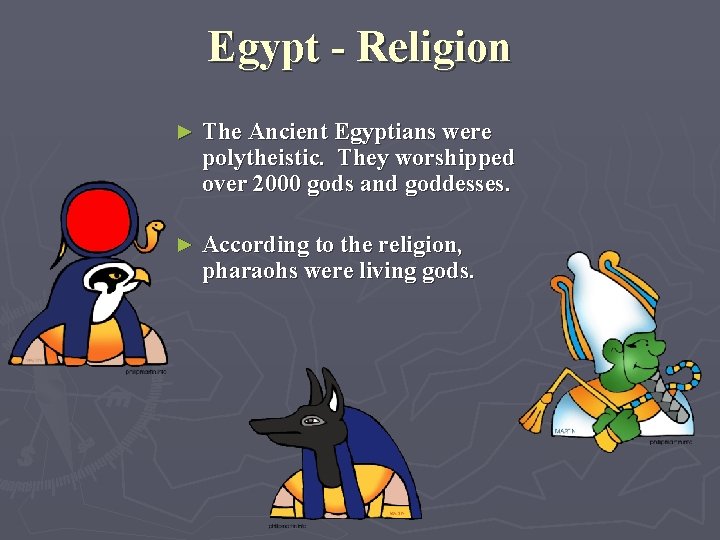
Egypt - Religion ► The Ancient Egyptians were polytheistic. They worshipped over 2000 gods and goddesses. ► According to the religion, pharaohs were living gods.
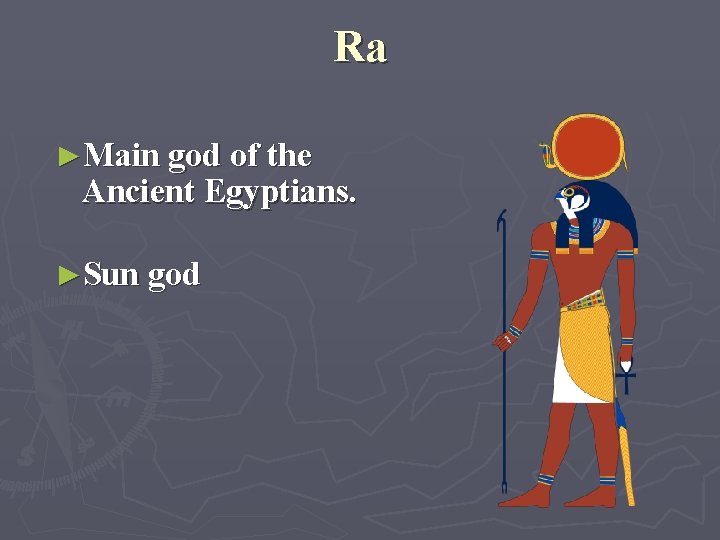
Ra ►Main god of the Ancient Egyptians. ►Sun god
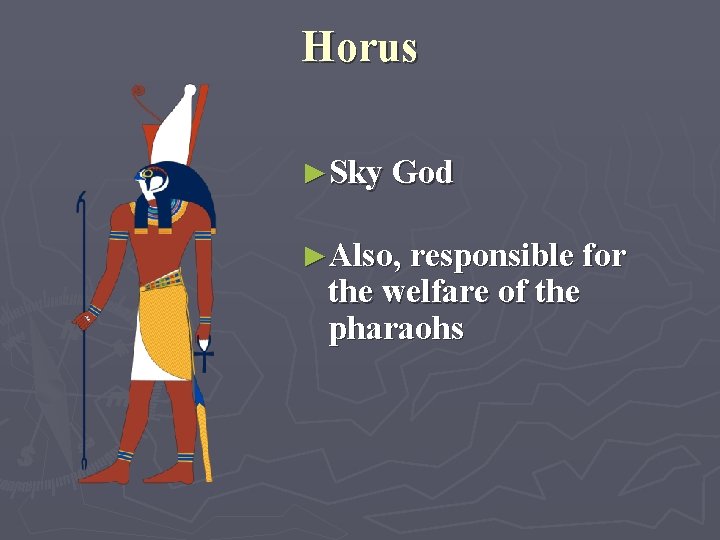
Horus ►Sky God ►Also, responsible for the welfare of the pharaohs
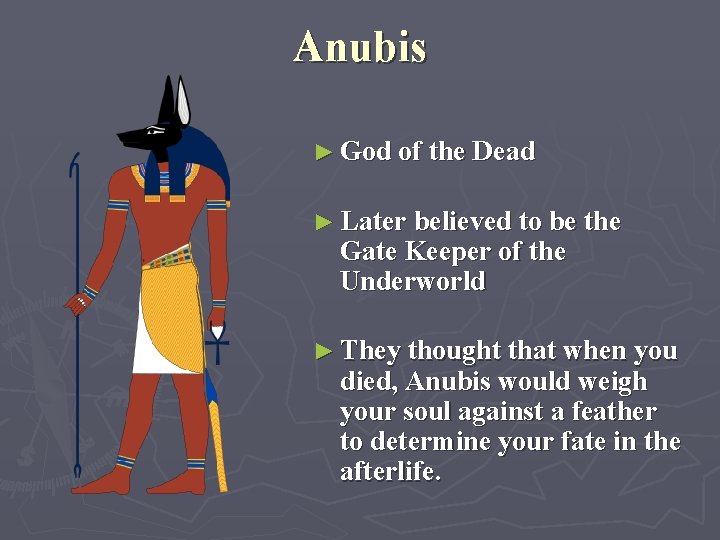
Anubis ► God of the Dead ► Later believed to be the Gate Keeper of the Underworld ► They thought that when you died, Anubis would weigh your soul against a feather to determine your fate in the afterlife.
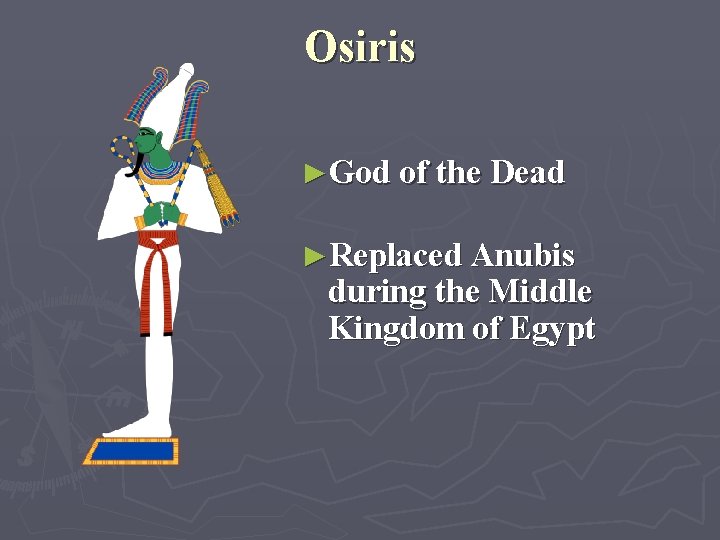
Osiris ►God of the Dead ►Replaced Anubis during the Middle Kingdom of Egypt
Life after Death • • The ancient Egyptians believed in an afterlife of beauty, peace, and contentment. Since most of their lives were filled with hard work, they looked forward to death as a release from this lifetime. They believed their souls would need to use their bodies again, so the Egyptians invented a process to embalm their bodies called mummification. Wealthy could afford better mummification than the poor
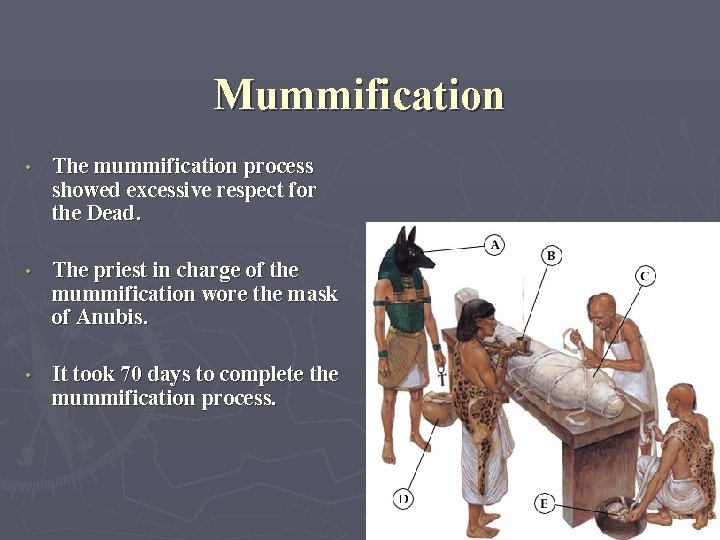
Mummification • The mummification process showed excessive respect for the Dead. • The priest in charge of the mummification wore the mask of Anubis. • It took 70 days to complete the mummification process.
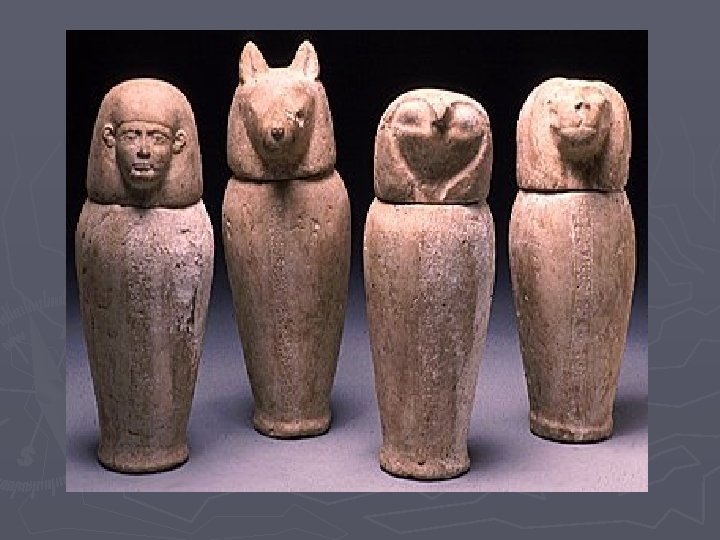
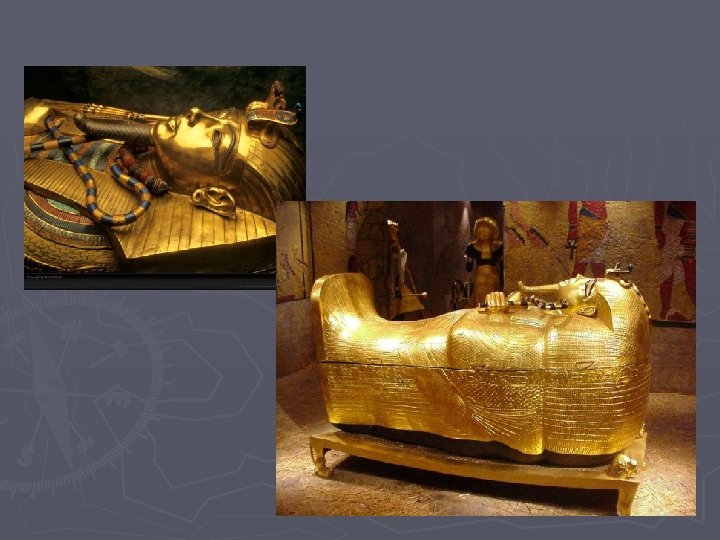
Steps of Mummification Step #1 – Body is washed and covered in oils. Various organs, including the brain, were removed. Some of the organs were placed in canopic jars. These jars would later be placed in the coffin. The heart was not removed, because it was considered the “home of the soul”. • Step #2 – The body was wrapped in either linen or rough cotton strips and a sticky tar-like mixture was poured over the cloth strips. • Step #3 - When the mixture hardened, the mummy was placed in a sarcophagus, which was carved and painted to resemble a person. • Step #4 - Then the mummy was laid in its tomb, along with objects the Egyptians thought would be needed for daily use in the next lifetime, such as tools, jewelry, furniture, religious statues, and food. •
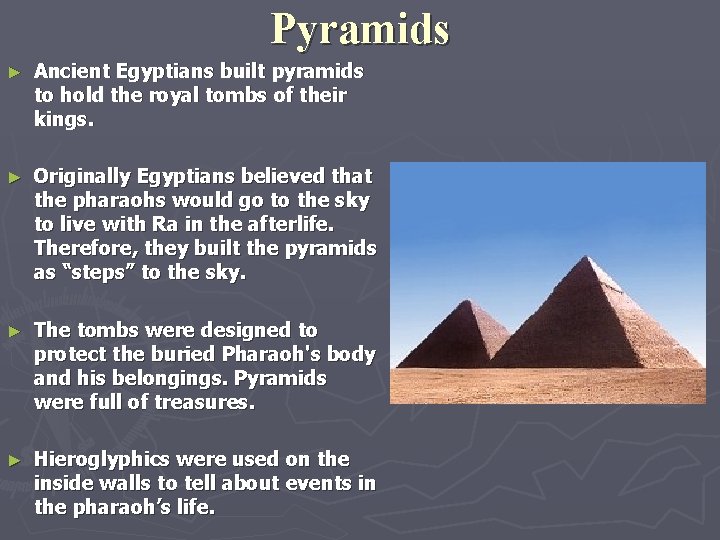
Pyramids ► Ancient Egyptians built pyramids to hold the royal tombs of their kings. ► Originally Egyptians believed that the pharaohs would go to the sky to live with Ra in the afterlife. Therefore, they built the pyramids as “steps” to the sky. ► The tombs were designed to protect the buried Pharaoh's body and his belongings. Pyramids were full of treasures. ► Hieroglyphics were used on the inside walls to tell about events in the pharaoh’s life.
One-Sentence Summary A _________ is a. . .
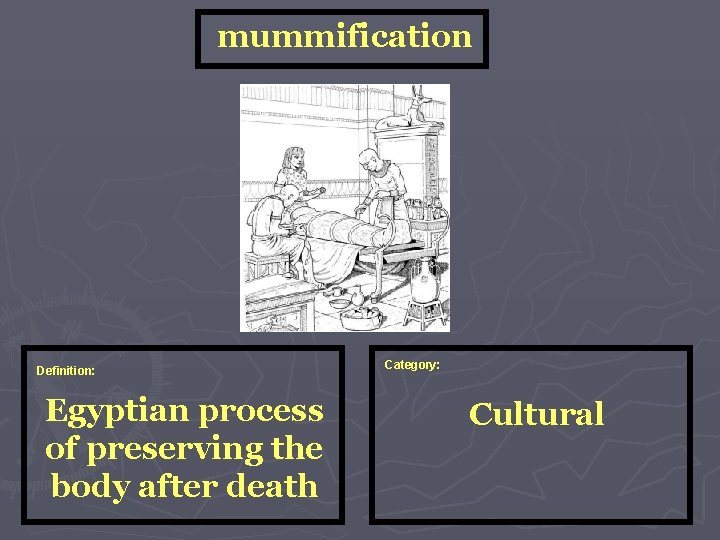
mummification Definition: Egyptian process of preserving the body after death Category: Cultural
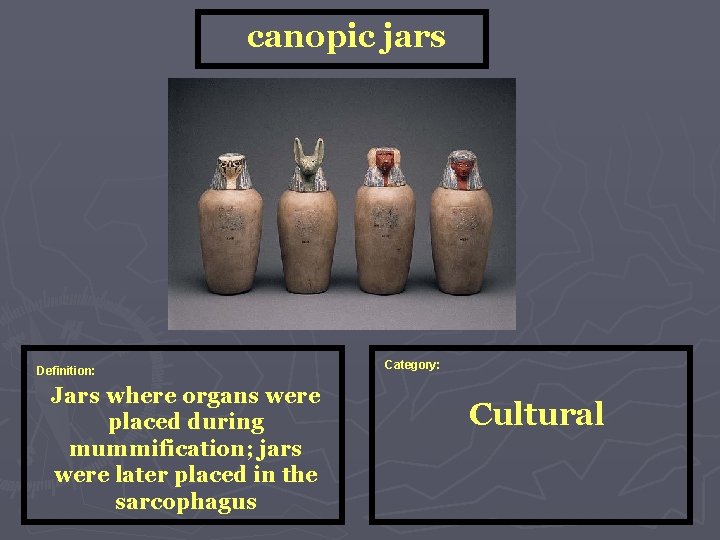
canopic jars Definition: Jars where organs were placed during mummification; jars were later placed in the sarcophagus Category: Cultural
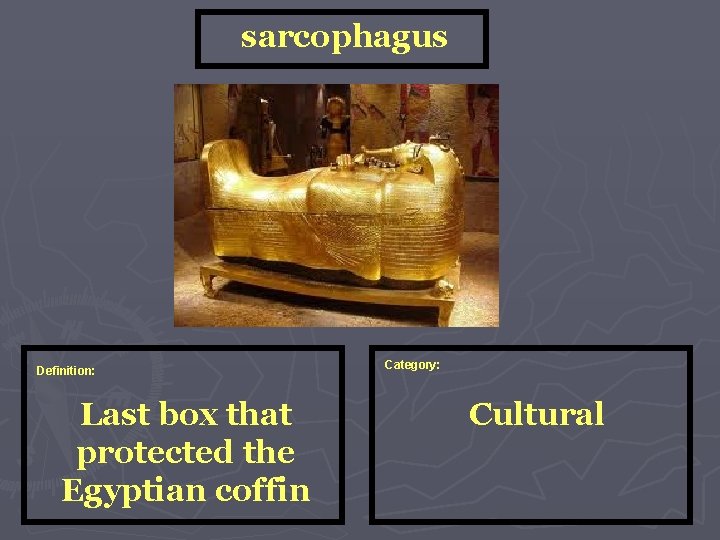
sarcophagus Definition: Last box that protected the Egyptian coffin Category: Cultural
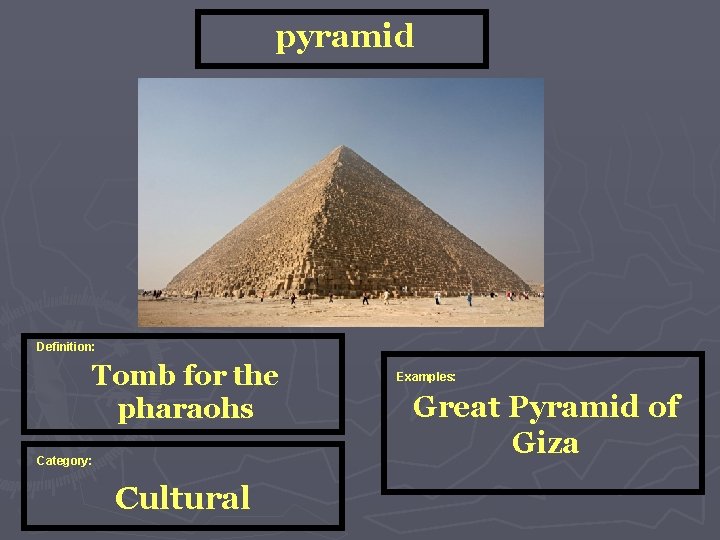
pyramid Definition: Tomb for the pharaohs Category: Cultural Examples: Great Pyramid of Giza
Pyramid Directions Color (No Marker; No Pencil Light Brown) Paragraphs & Age (3 -5 sentences) on Each Pyramid Side (4 Paragraphs) Spelling & Grammar Neatness
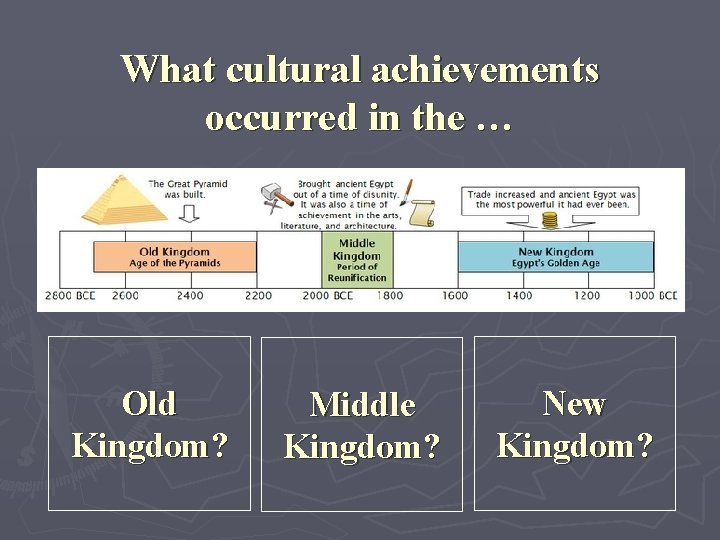
What cultural achievements occurred in the … Old Kingdom? Middle Kingdom? New Kingdom?
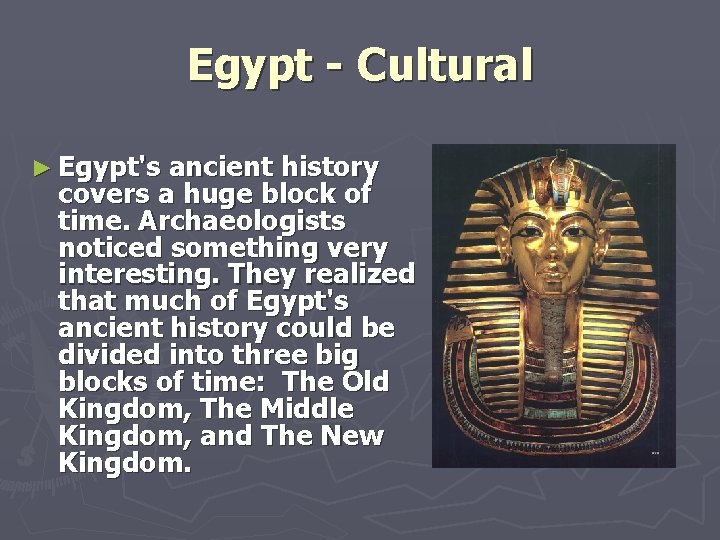
Egypt - Cultural ► Egypt's ancient history covers a huge block of time. Archaeologists noticed something very interesting. They realized that much of Egypt's ancient history could be divided into three big blocks of time: The Old Kingdom, The Middle Kingdom, and The New Kingdom.
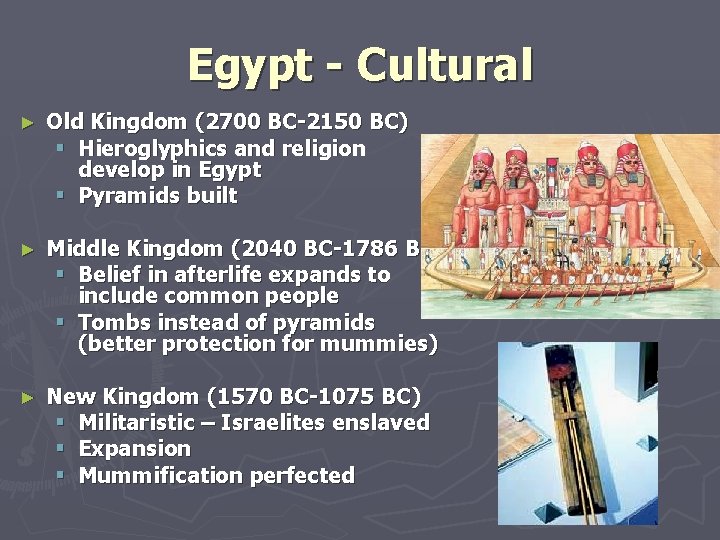
Egypt - Cultural ► Old Kingdom (2700 BC-2150 BC) § Hieroglyphics and religion develop in Egypt § Pyramids built ► Middle Kingdom (2040 BC-1786 BC) § Belief in afterlife expands to include common people § Tombs instead of pyramids (better protection for mummies) ► New Kingdom (1570 BC-1075 BC) § Militaristic – Israelites enslaved § Expansion § Mummification perfected
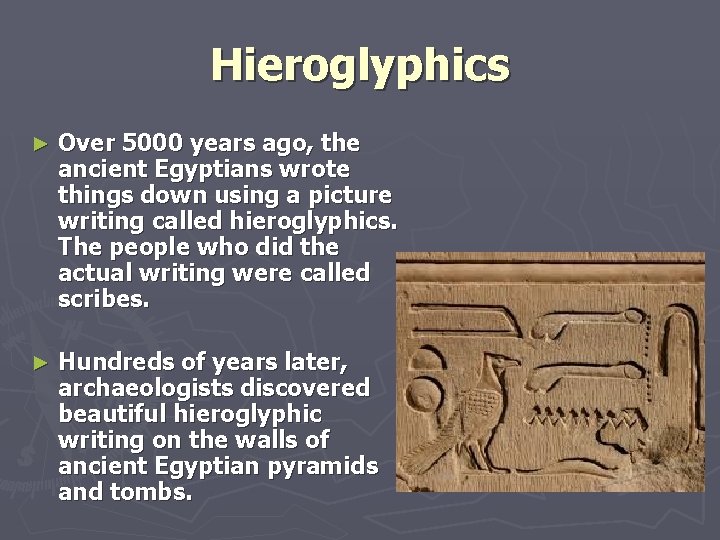
Hieroglyphics ► Over 5000 years ago, the ancient Egyptians wrote things down using a picture writing called hieroglyphics. The people who did the actual writing were called scribes. ► Hundreds of years later, archaeologists discovered beautiful hieroglyphic writing on the walls of ancient Egyptian pyramids and tombs.
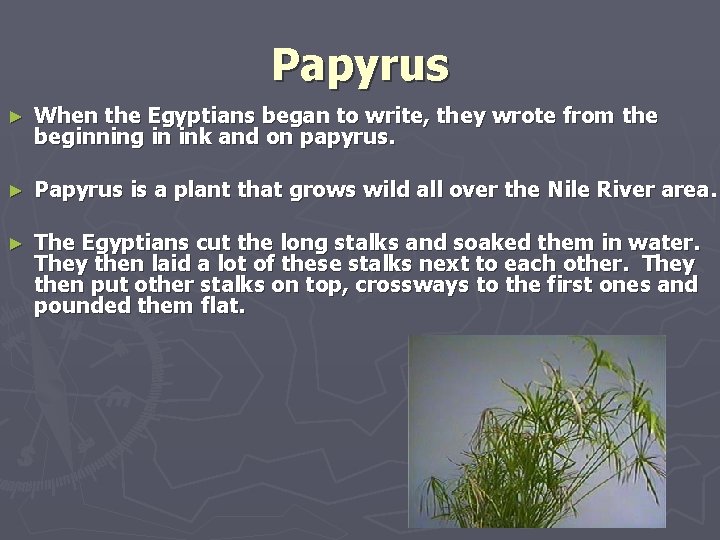
Papyrus ► When the Egyptians began to write, they wrote from the beginning in ink and on papyrus. ► Papyrus is a plant that grows wild all over the Nile River area. ► The Egyptians cut the long stalks and soaked them in water. They then laid a lot of these stalks next to each other. They then put other stalks on top, crossways to the first ones and pounded them flat.
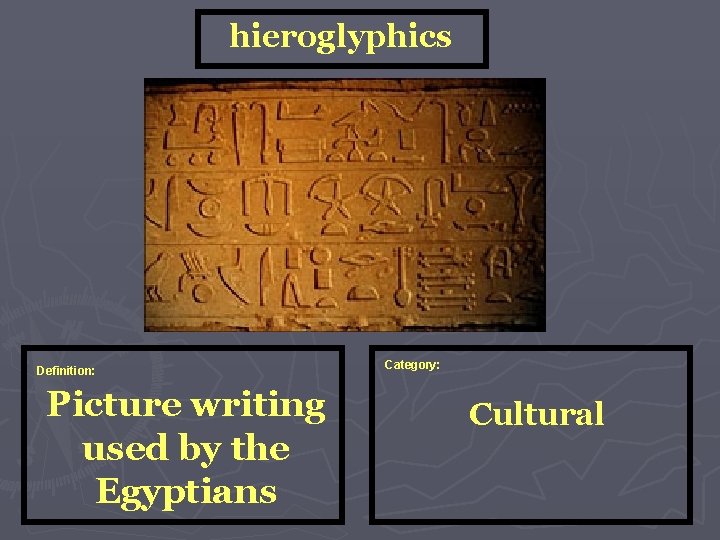
hieroglyphics Definition: Picture writing used by the Egyptians Category: Cultural
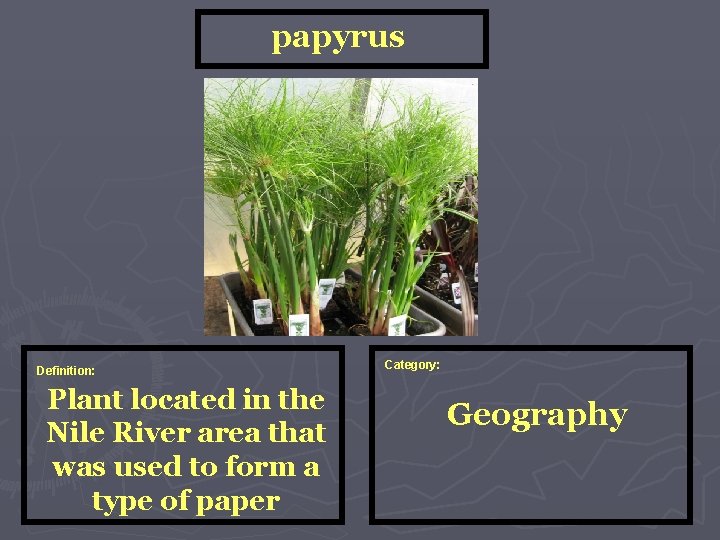
papyrus Definition: Plant located in the Nile River area that was used to form a type of paper Category: Geography
1 -Minute Pause ► 1 minute to think about the following: § 1 thing that you learned § 1 thing that you were interested in
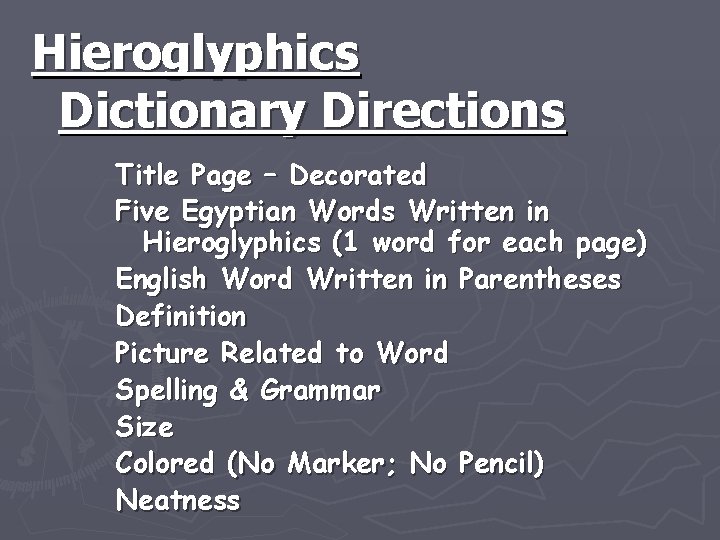
Hieroglyphics Dictionary Directions Title Page – Decorated Five Egyptian Words Written in Hieroglyphics (1 word for each page) English Word Written in Parentheses Definition Picture Related to Word Spelling & Grammar Size Colored (No Marker; No Pencil) Neatness
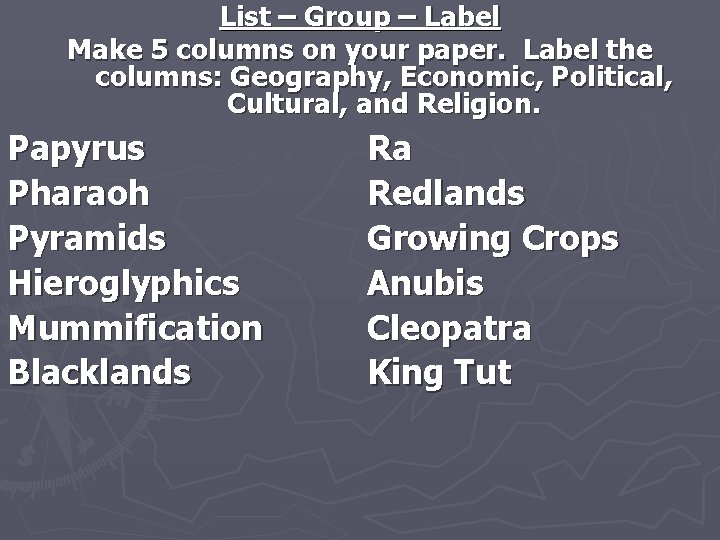
List – Group – Label Make 5 columns on your paper. Label the columns: Geography, Economic, Political, Cultural, and Religion. Papyrus Pharaoh Pyramids Hieroglyphics Mummification Blacklands Ra Redlands Growing Crops Anubis Cleopatra King Tut
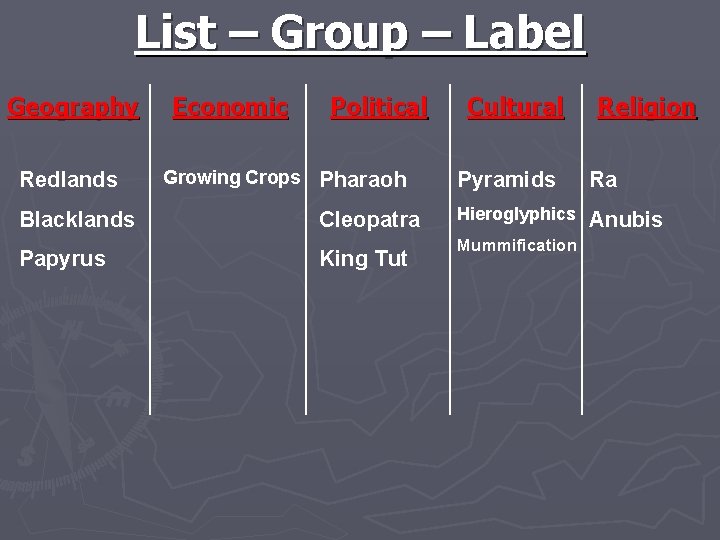
List – Group – Label Geography Redlands Blacklands Papyrus Economic Political Growing Crops Pharaoh Cleopatra King Tut Cultural Religion Pyramids Ra Hieroglyphics Anubis Mummification
- Slides: 45