
Ancient Civilizations Toward Civilizations Old Stone AgePaleolithic Period


- Slides: 13
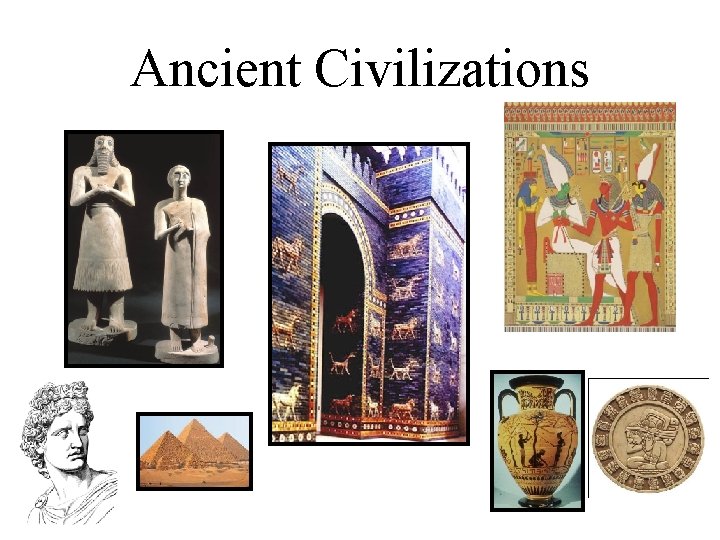
Ancient Civilizations
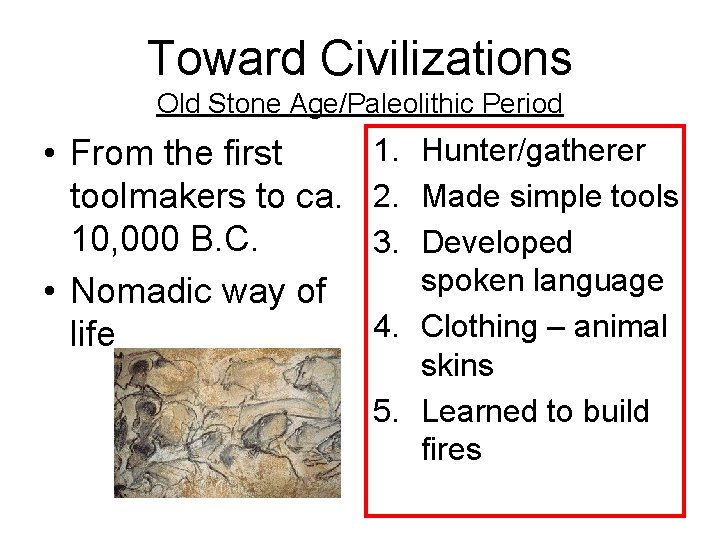
Toward Civilizations Old Stone Age/Paleolithic Period • From the first toolmakers to ca. 10, 000 B. C. • Nomadic way of life 1. Hunter/gatherer 2. Made simple tools 3. Developed spoken language 4. Clothing – animal skins 5. Learned to build fires
The Growth of Farming • 10, 000 year ago – beginning of the New Stone Age = Neolithic Period • From nomadic → settled farming life 1. Established permanent villages 2. Tamed animals 3. Growing population
Beginnings of Civilization • Almost all major world civilizations developed near rivers. Why? • Sumer – between Tigris and Euphrate • Egypt – Nile River • Indus civilization – Indus River • Exceptions: Inca, Olmec, and Maya
What is a civilization? • A civilization is a complex, highly organized social order. • The rise of cities was the main feature of civilization.
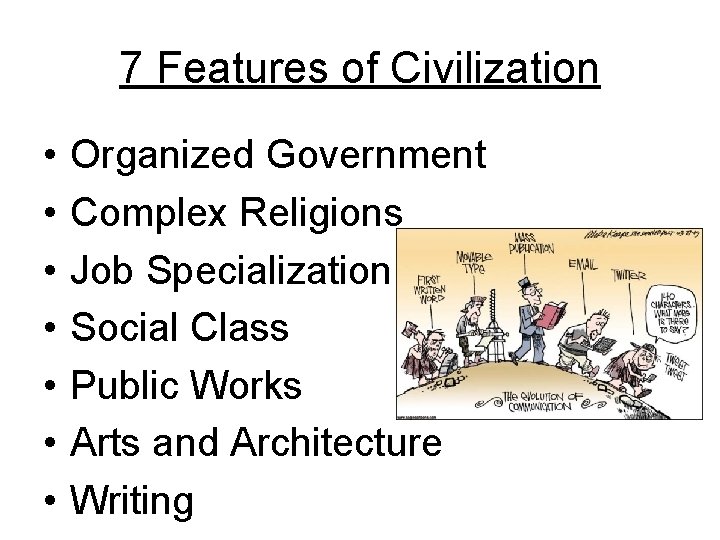
7 Features of Civilization • • Organized Government Complex Religions Job Specialization Social Class Public Works Arts and Architecture Writing
7 Features of a Civilization • Organized Government • Councils of elders • Priests • Warrior kings
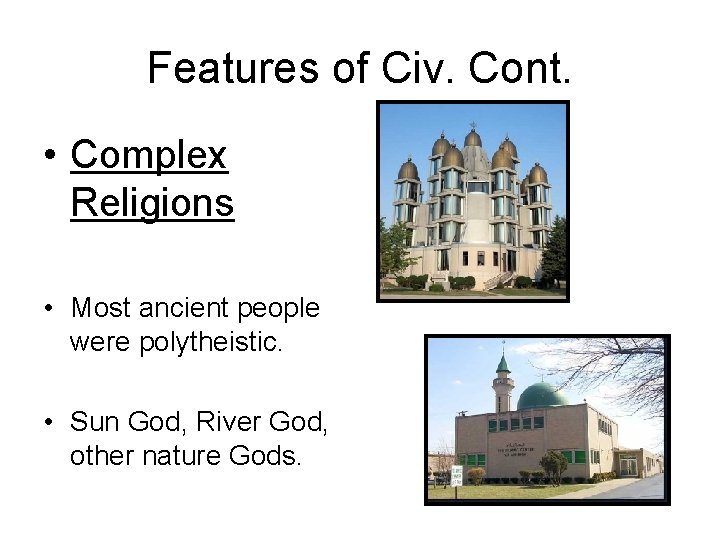
Features of Civ. Cont. • Complex Religions • Most ancient people were polytheistic. • Sun God, River God, other nature Gods.
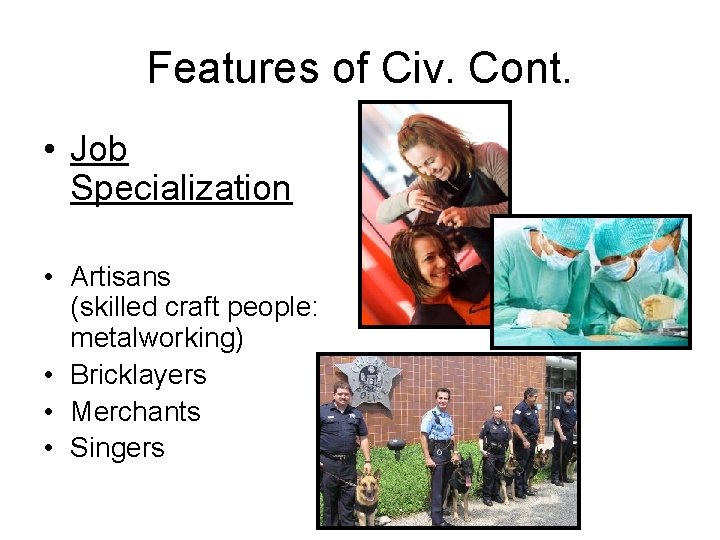
Features of Civ. Cont. • Job Specialization • Artisans (skilled craft people: metalworking) • Bricklayers • Merchants • Singers
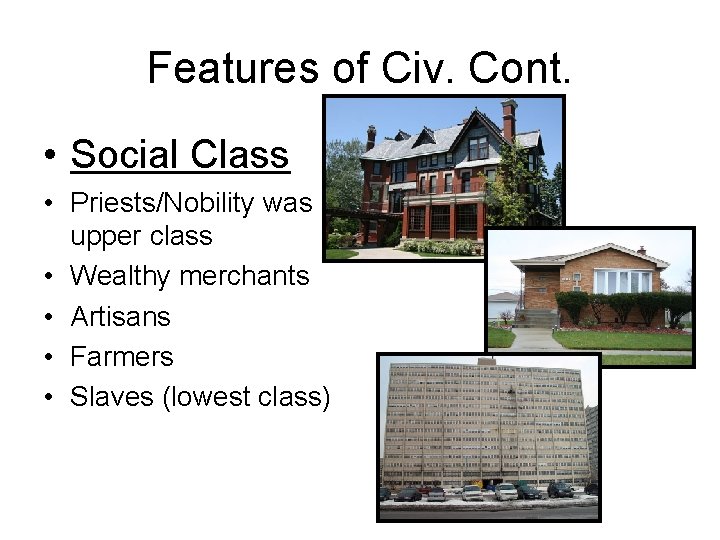
Features of Civ. Cont. • Social Class • Priests/Nobility was upper class • Wealthy merchants • Artisans • Farmers • Slaves (lowest class)
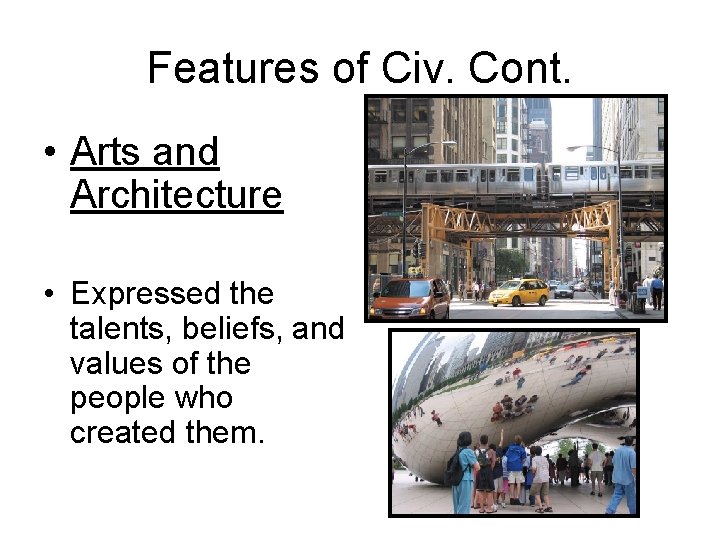
Features of Civ. Cont. • Arts and Architecture • Expressed the talents, beliefs, and values of the people who created them.
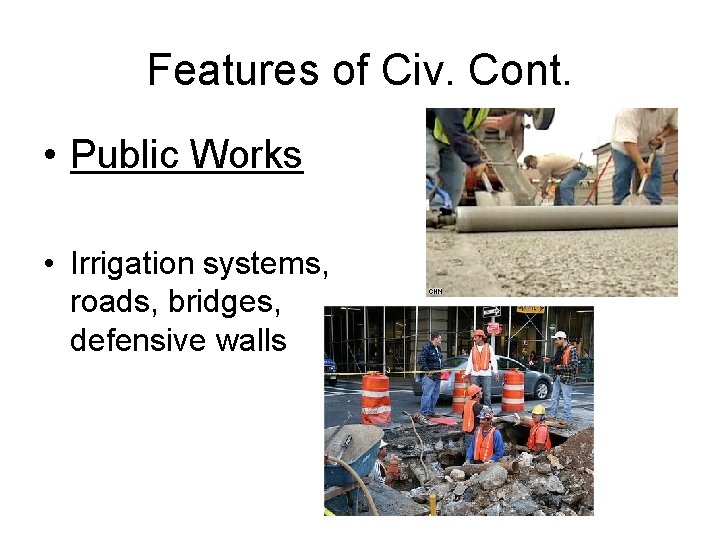
Features of Civ. Cont. • Public Works • Irrigation systems, roads, bridges, defensive walls
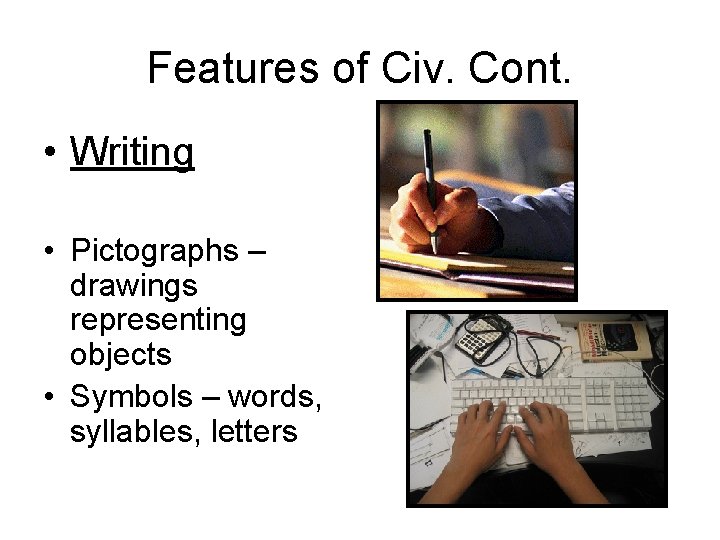
Features of Civ. Cont. • Writing • Pictographs – drawings representing objects • Symbols – words, syllables, letters