
ANCIENT CIVILIZATIONS OF THE AMERICAS The Maya Aztec



- Slides: 67
ANCIENT CIVILIZATIONS OF THE AMERICAS The Maya, Aztec and Inca 1400 B. C – 1570 C. E.
Where did they originate? How did they get to the Americas? • As early as 30, 000 years ago, small groups of Paleolithic hunters and gatherers reached North America from Asia. • The migration took place during the last ice age when so much water froze into thick ice sheets that the sea level dropped exposing a land bridge between Siberia (Russia) and Alaska. • It is believed that they followed herds of bison and mammoths across the land bridge.
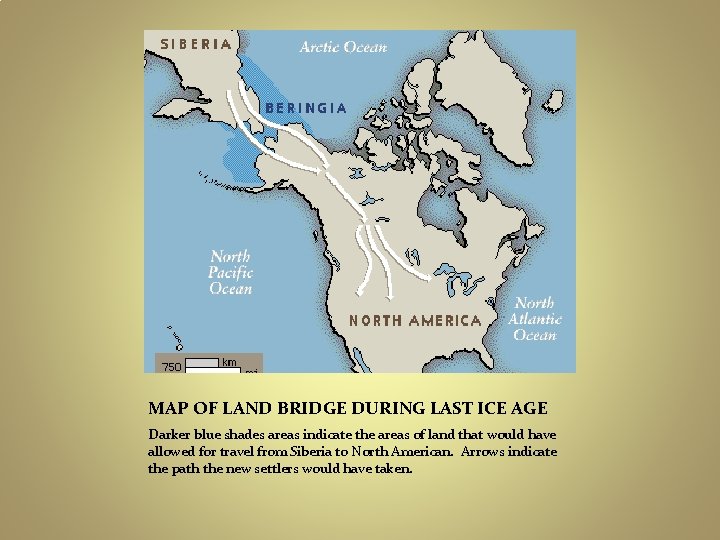
MAP OF LAND BRIDGE DURING LAST ICE AGE Darker blue shades areas indicate the areas of land that would have allowed for travel from Siberia to North American. Arrows indicate the path the new settlers would have taken.
The Maya “Greeks of the New World” The Mayans flourished politically and culturally from 250 -950 C. E. creating a calendar, a sophisticated written language, superior textiles and elegant art.
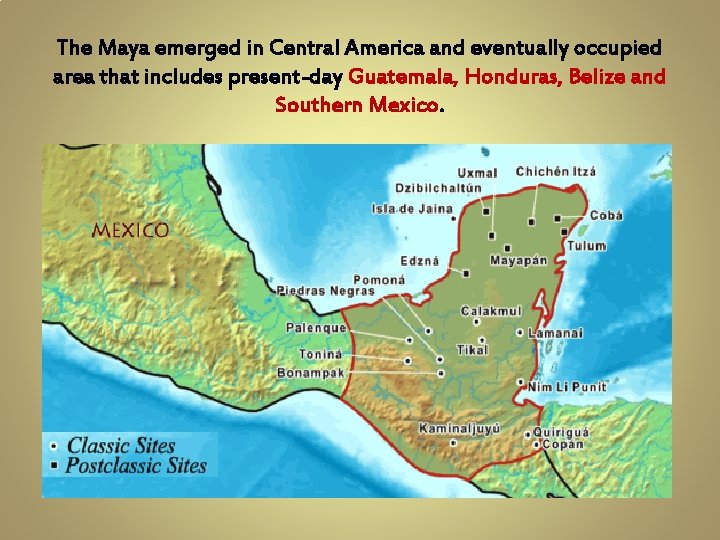
The Maya emerged in Central America and eventually occupied area that includes present-day Guatemala, Honduras, Belize and Southern Mexico.
SOCIAL STRUCTURE of Mayan Civilization • Ruling class tended to come from the same family and directed the activities of the scribes and priests. • Nobles held positions as scribes and priests and administered the affairs of the state. • Priests held great power as only they could conduct the elaborate ceremonies needed to ensure good harvests and success in war. • Most Mayans were farmers – to support the cities farmers paid taxes in food and helped build temples.
Mayan GOVERNMENT • The Mayans were ruled by a theocracy that combined civic and religious authority over the people. • Each Mayan city had its own ruling chief. He was surrounded by nobles who served as military leaders and officials who managed public works, collected taxes, and enforced laws.
Mayan Religion Mayan priests lived in temple cities such as Tikal. There peasants brought them food and the priests were able to spend all day studying the heavens. Priests were required to spill their own blood. The more important the priest the more blood he was required to give. Mayas believed that the earth needed human blood in order to make the crops grow.
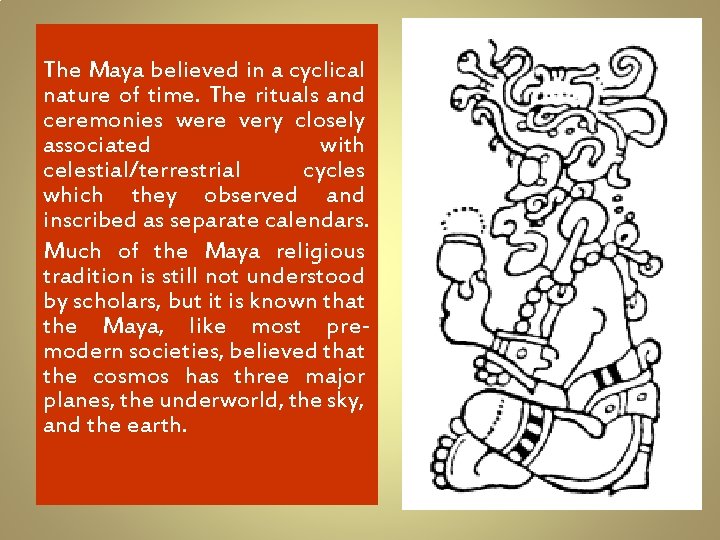
The Maya believed in a cyclical nature of time. The rituals and ceremonies were very closely associated with celestial/terrestrial cycles which they observed and inscribed as separate calendars. Much of the Maya religious tradition is still not understood by scholars, but it is known that the Maya, like most premodern societies, believed that the cosmos has three major planes, the underworld, the sky, and the earth.
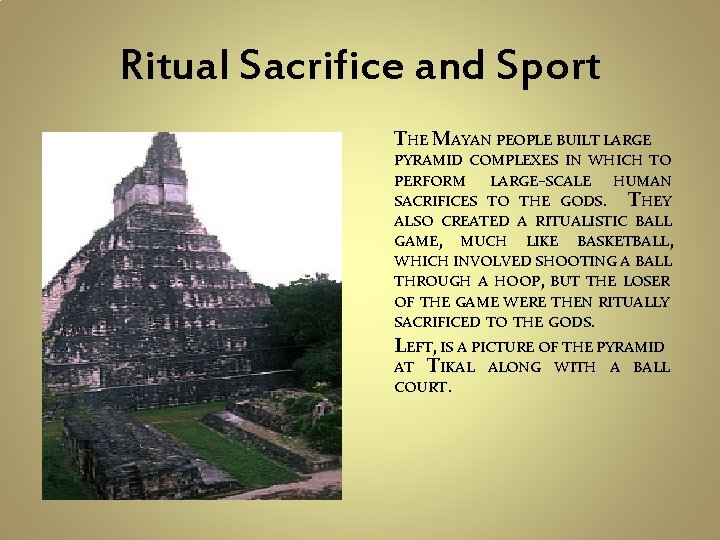
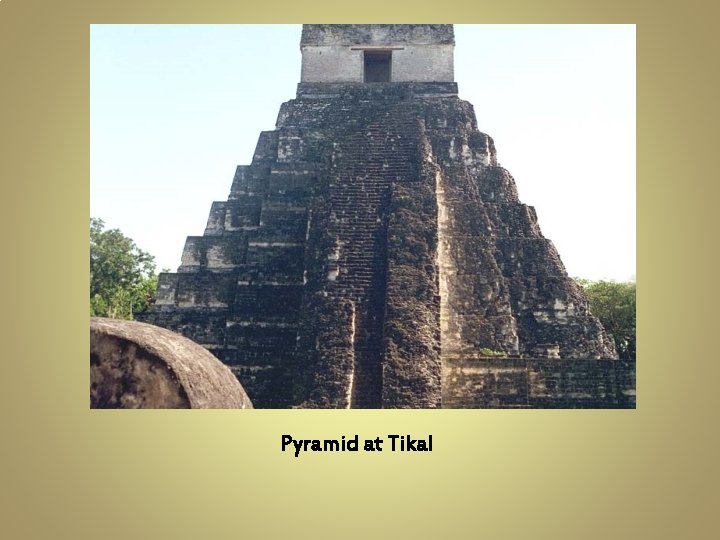
Ritual Sacrifice and Sport THE MAYAN PEOPLE BUILT LARGE PYRAMID COMPLEXES IN WHICH TO PERFORM LARGE-SCALE HUMAN SACRIFICES TO THE GODS. THEY ALSO CREATED A RITUALISTIC BALL GAME, MUCH LIKE BASKETBALL, WHICH INVOLVED SHOOTING A BALL THROUGH A HOOP, BUT THE LOSER OF THE GAME WERE THEN RITUALLY SACRIFICED TO THE GODS. LEFT, IS A PICTURE OF THE PYRAMID AT TIKAL ALONG WITH A BALL COURT.
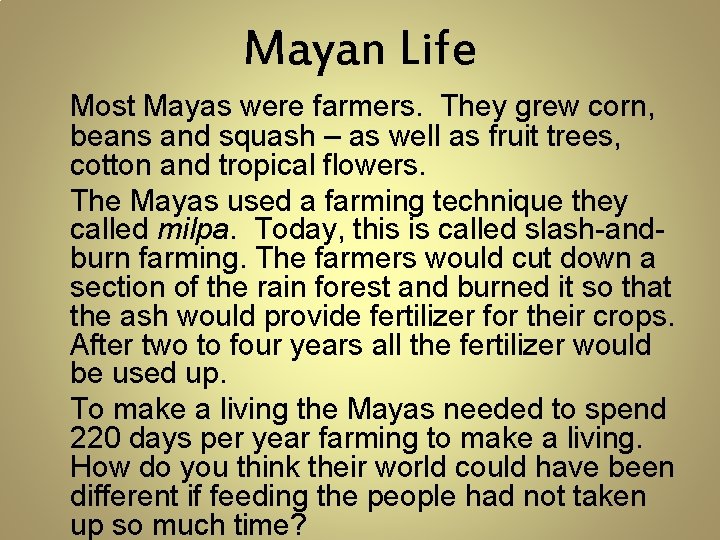
Mayan Life Most Mayas were farmers. They grew corn, beans and squash – as well as fruit trees, cotton and tropical flowers. The Mayas used a farming technique they called milpa. Today, this is called slash-andburn farming. The farmers would cut down a section of the rain forest and burned it so that the ash would provide fertilizer for their crops. After two to four years all the fertilizer would be used up. To make a living the Mayas needed to spend 220 days per year farming to make a living. How do you think their world could have been different if feeding the people had not taken up so much time?
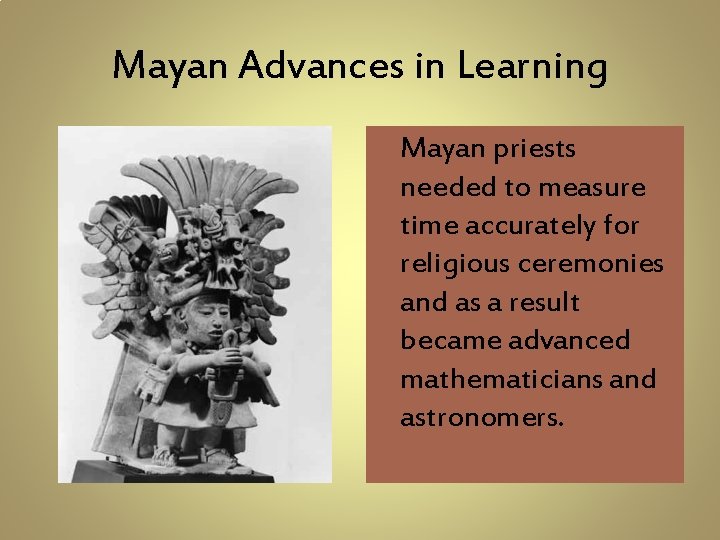
Mayan Advances in Learning Mayan priests needed to measure time accurately for religious ceremonies and as a result became advanced mathematicians and astronomers.
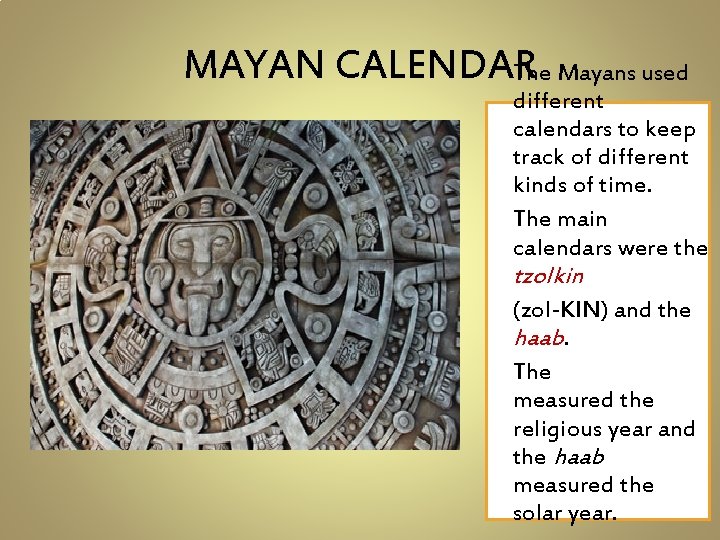
MAYAN CALENDAR The Mayans used different calendars to keep track of different kinds of time. The main calendars were the tzolkin (zol-KIN) and the haab. The tzolkin measured the religious year and the haab measured the solar year.
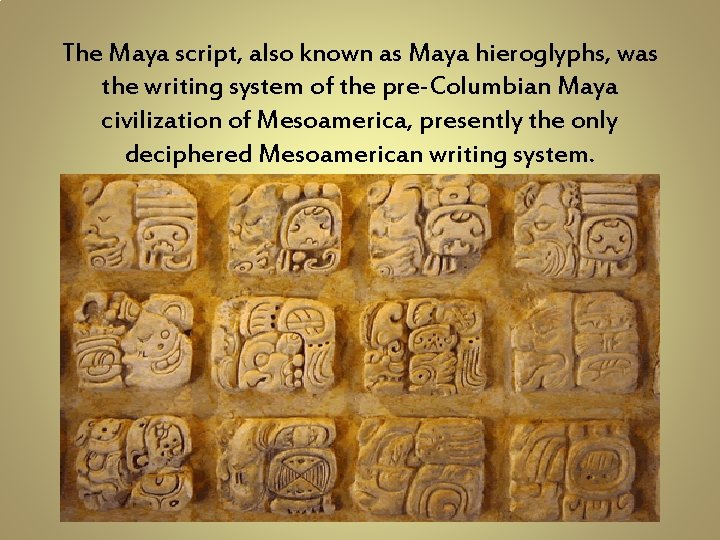
The Maya script, also known as Maya hieroglyphs, was the writing system of the pre-Columbian Maya civilization of Mesoamerica, presently the only deciphered Mesoamerican writing system.
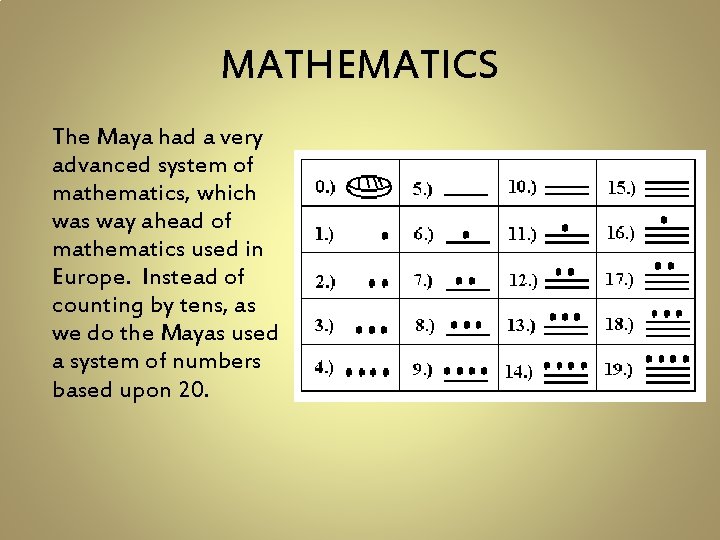
MATHEMATICS The Maya had a very advanced system of mathematics, which was way ahead of mathematics used in Europe. Instead of counting by tens, as we do the Mayas used a system of numbers based upon 20.
MAYAN RUINS Pyramid temples dominated the largest Mayan City of Tikal. The Mayan pyramids were the tallest structures in the Americas until 1903.
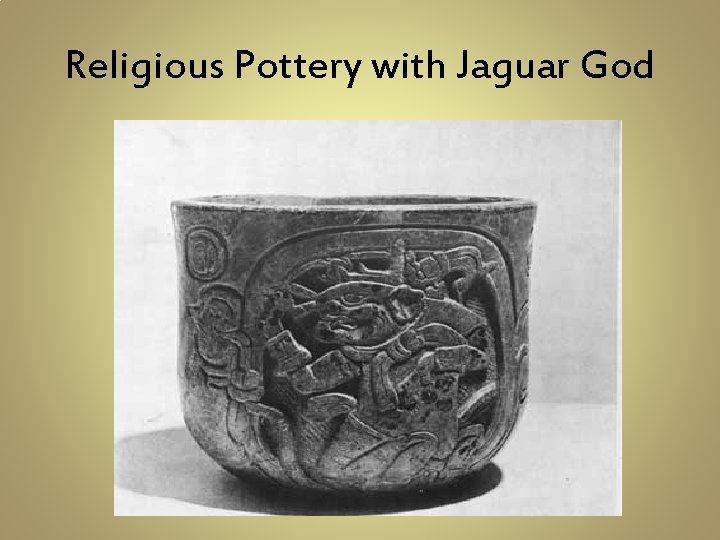
Religious Pottery with Jaguar God
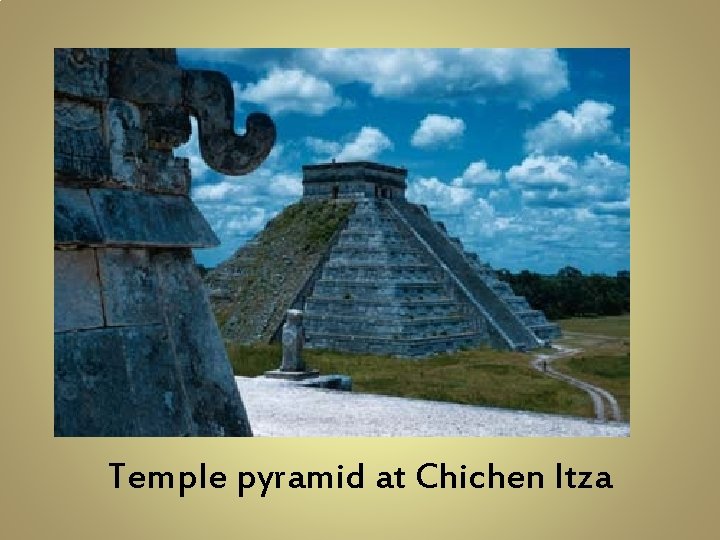
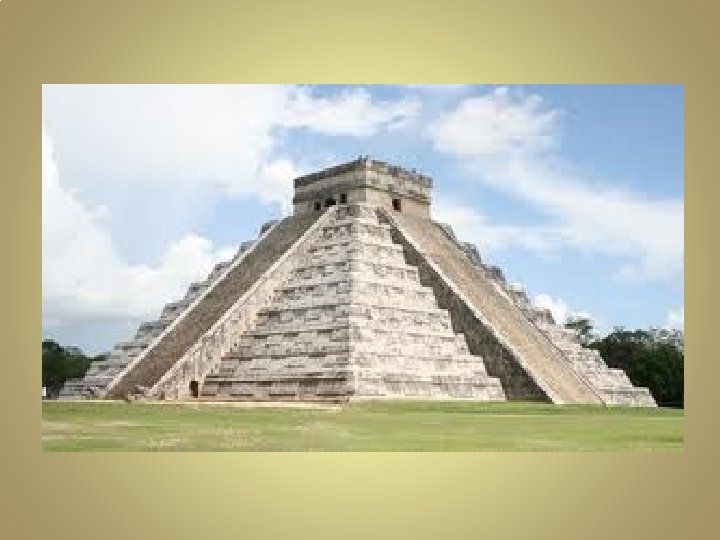
Temple pyramid at Chichen Itza
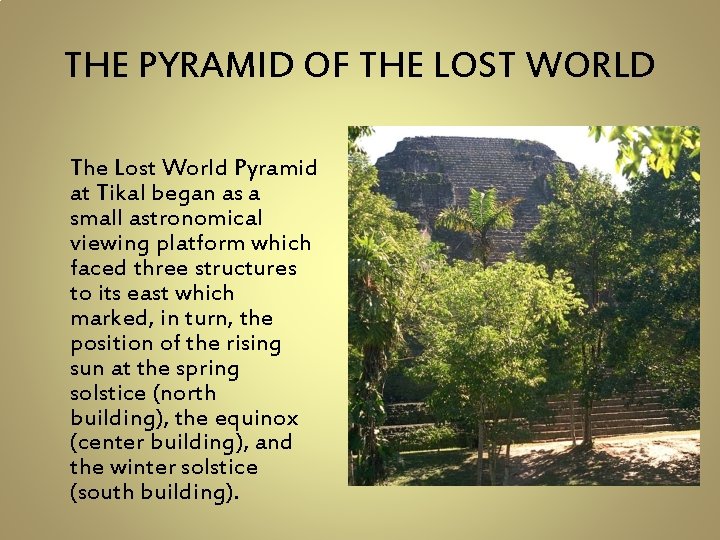
THE PYRAMID OF THE LOST WORLD The Lost World Pyramid at Tikal began as a small astronomical viewing platform which faced three structures to its east which marked, in turn, the position of the rising sun at the spring solstice (north building), the equinox (center building), and the winter solstice (south building).
Pyramid at Tikal
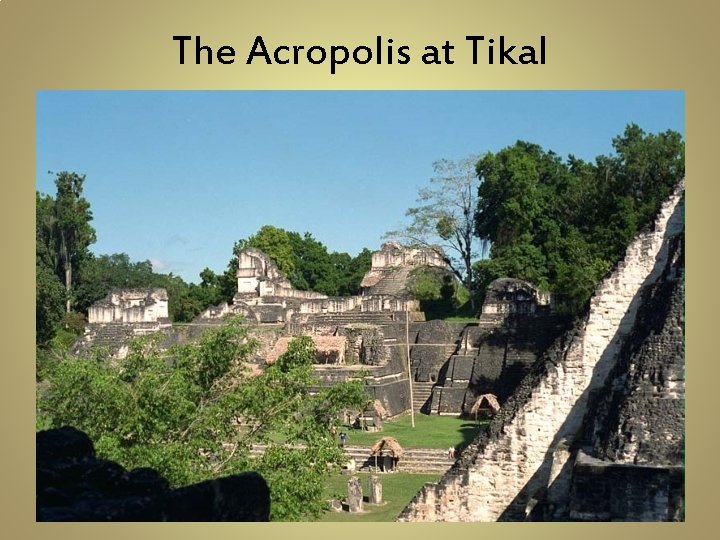
The Acropolis at Tikal
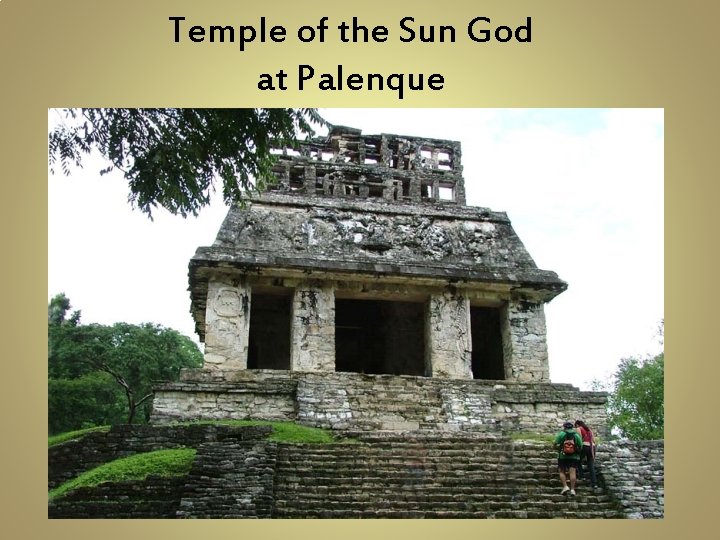
Temple of the Sun God at Palenque
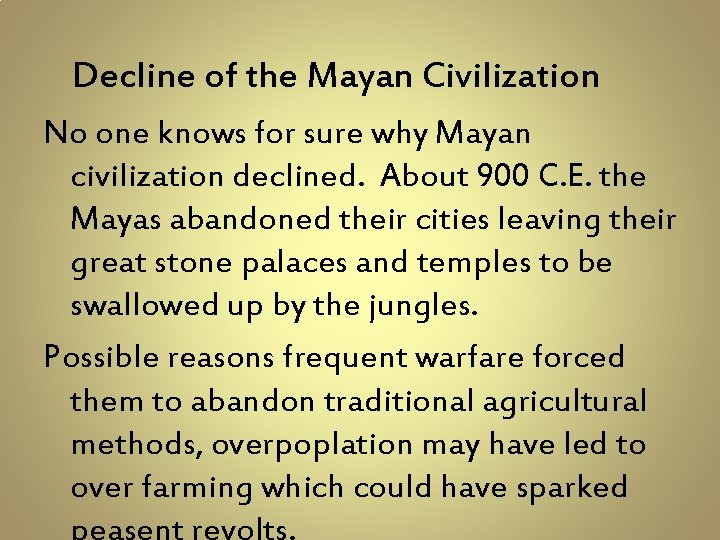
Decline of the Mayan Civilization No one knows for sure why Mayan civilization declined. About 900 C. E. the Mayas abandoned their cities leaving their great stone palaces and temples to be swallowed up by the jungles. Possible reasons frequent warfare forced them to abandon traditional agricultural methods, overpoplation may have led to over farming which could have sparked
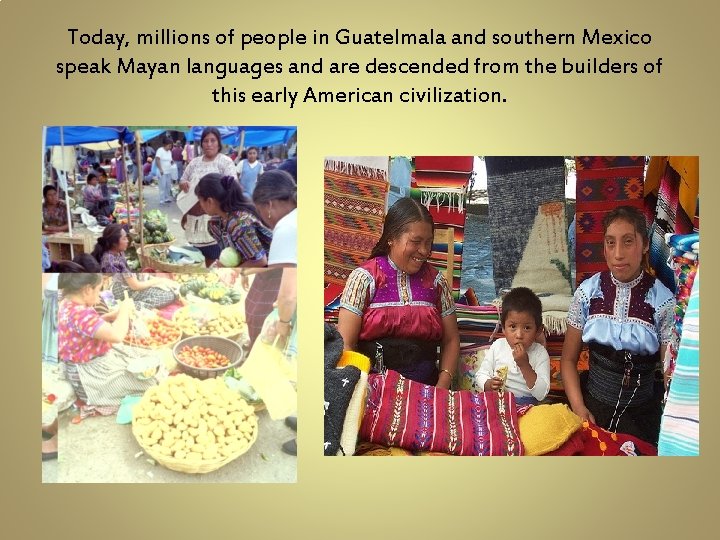
Today, millions of people in Guatelmala and southern Mexico speak Mayan languages and are descended from the builders of this early American civilization.
ANCIENT CIVILIZATIONS OF THE AMERICAS The Maya, Aztec and Inca 1400 B. C – 1570 C. E.
The Aztec
The Aztecs • Although their origins are not altogether clear, the Aztecs were part of a nomadic group referred to as the “Mexica”. • The tribe, which spoke Nahautl, the language of the Toltecs, migrated to the shores of Lake Texcoco in the central valley of Mexico around 1325.
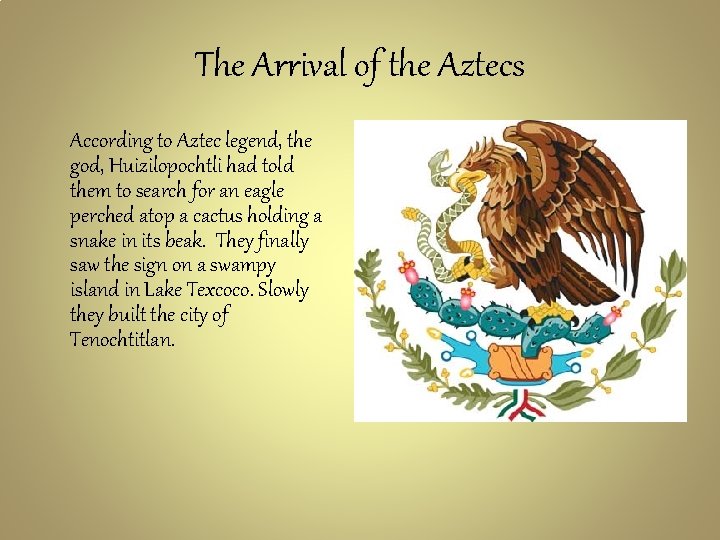
The Arrival of the Aztecs According to Aztec legend, the god, Huizilopochtli had told them to search for an eagle perched atop a cactus holding a snake in its beak. They finally saw the sign on a swampy island in Lake Texcoco. Slowly they built the city of Tenochtitlan.
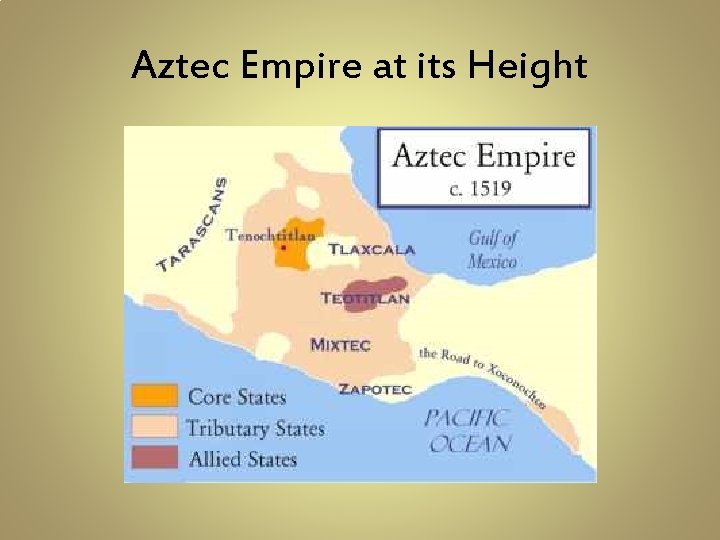
Aztec Empire at its Height
Social Structure of the Aztecs • At the top were the King and his family, who were representatives of gods on Earth. • The nobility, which made up a majority of the military, were next in line. • Warriors could become nobility by killing or capturing enemy soldiers. • Below the nobility were the scribes, artisans and healers. • There was also the pochteca, or special merchant class, that traded in luxury item that the Aztec command economy did not control. • The lower class was the peasantry, which worked in the fields to feed the empire. • Slaves were mostly prisioners or criminals.
Aztec Religion THE ANCIENT AZTEC RELIGION WAS HIGHLY FOCUSED ON KEEPING NATURE IN BALANCE. ONE FALSE STEP COULD LEAD TO NATURAL DISASTER. THE WEAK SUN COULD STOP MOVING. IN EITHERE WOULD BE RITUAL BLOOD-LETTING, OR ACTUAL PEOPLE WOULD BE SACRIFICED. THOSE SACRIFICED WOULD RISE TO FIGHT WITH HIM. AND SO HUMAN THE SKY WAS A CONSTANT BATTLE SACRIFICES BECAME MORE AND MORE BETWEEN LIGHT AND DARKNESS, A COMMON IN MEXICO. BATTLE THAT WOULD SOMEDAY BE WOULD BE FOUGHT JUST TO CAPTURE LOST. PRISONERS TO SACRIFICE HUITZILOPOCHTLI WAS THE WARRIOR SUN GOD. HUITZILOPOCHTLI NEEDED BLOOD SACRIFICE IN ORDER TO WIN THE BATTLE AGAINST DARKNESS. OFTEN BATTLES
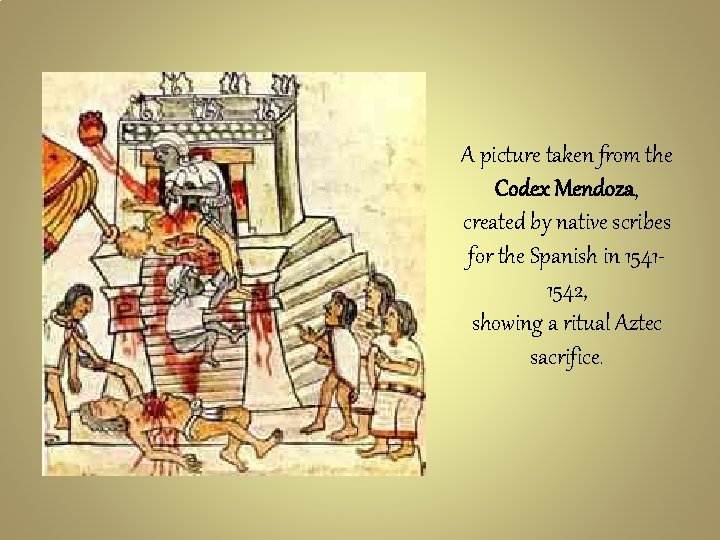
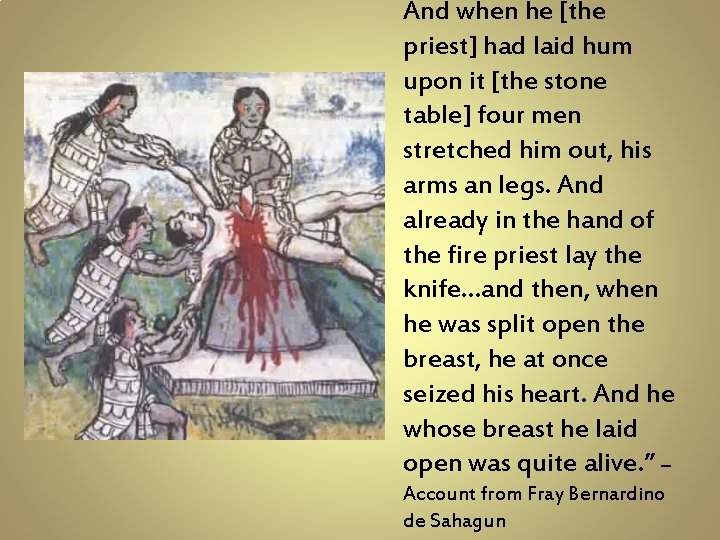
A picture taken from the Codex Mendoza, created by native scribes for the Spanish in 15411542, showing a ritual Aztec sacrifice.
THE AZTEC AFTERLIFE THE AFTERLIFE OF A PERSON WAS BASED MOSTLY ONHOW THEY DIED. SOME, SUCH AS THOSE SACRIFICED TOHUITZILOPOCHTLI, WOULD JOIN THE BATTLE AGAINST THE DARKNESS. IN ANCIENT AZTEC RELIGION, SOME WOULD EVENTUALLY BE REINCARNATED AS BIRDS OR BUTTERFLIES, OR EVENTUALLY HUMANS. SOME WOULD BE, FOR A TIME, DISEMBODIED SPIRITS ROAMING THE EARTH. MOST AT SOME POINT WOULD HAVE TO MAKE THE LONG JOURNEY THROUGH THE 9 LEVELS OF THE UNDERWORLD. PEOPLE WOULD BE BURIED IN A SQUATTING POSITION, WITH ITEMS THAT WOULD HELP THEM IN THEIR JOURNEY. IN THE END THEY WOULD LIVE IN DARKNESS.
And when he [the priest] had laid hum upon it [the stone table] four men stretched him out, his arms an legs. And already in the hand of the fire priest lay the knife…and then, when he was split open the breast, he at once seized his heart. And he whose breast he laid open was quite alive. ” – Account from Fray Bernardino de Sahagun
THE DAILY LIFE OF AN AZTEC • Aztec food included maize (corn), beans and squash. To add to these three, the Mexicas (people of the Aztec Empire) ate chilies, tomatoes, limes, cashews, potatoes, sweet potatoes, peanuts, and of course chocolate. • The Mexicas domesticated bees for honey, and turkeys for meat and eggs, also dogs and duck. They hunted and fished as well, and used animals such as deer, rabbits, iguana, fish and shrimp for food.
FLOATING FARMS THE CHINAMPAS THE AZTECS BUILT THEIR GREAT CITY OFTENOCHTITLAN IN THE MIDDLE OF A SWAMP. THE CITY WAS SURROUNDED ON ALL SIDES BY WATER, WHICH MADE IT EASY TO DEFEND, BUT NOT SO EASY TO FARM IN THE SWAMP. TO GET MORE USABLE FARMLAND, THE AZTECS CREATED FLOATING FARMS CALLEDCHINAMPAS WERE BUILT ON A WOVEN BED OF TREE TRUNKS WHICH FLOATED ON THE WATER. THEY COVERED THIS MAT WITH SOIL WHICH THEY DREDGED FROM THE BOTTOM OF THE SWAMP. THEY WERE HELD IN PLACE BY STAKES OR TREES PLANTED IN THE SWAMP. CROPS GROWN ON THE CHINAMPAS MADE UP OF ONE-HALF TO TWOTHIRDS OF THE FOOD EATEN BY THE PEOPLE OFTENOCHTITLAN.
Chocolate One of the greatest gifts to the world from Mexico is chocolate The cocoa bean was highly treasured in the Aztec Empire. In fact, the bean was used as a currency, as well as Aztec food. Or, in this case, drink. The word chocolate even comes from an Aztec/Mayan word chocolatl. The cocoa beans were used to make a thick chocolate drink, but far different than the hot chocolate we know today. Since they didn't use sugar, the Mexicas added peppers, corn meal and spices. A similar hot drink is still found in Mexico today with corn, known as atole. Though Columbus brought cocoa to Europe in the early 1500 s, it was mostly ignored. Hernan Cortes was more interested, and substituted sugar and vanilla for the spices. It became a commercial success.
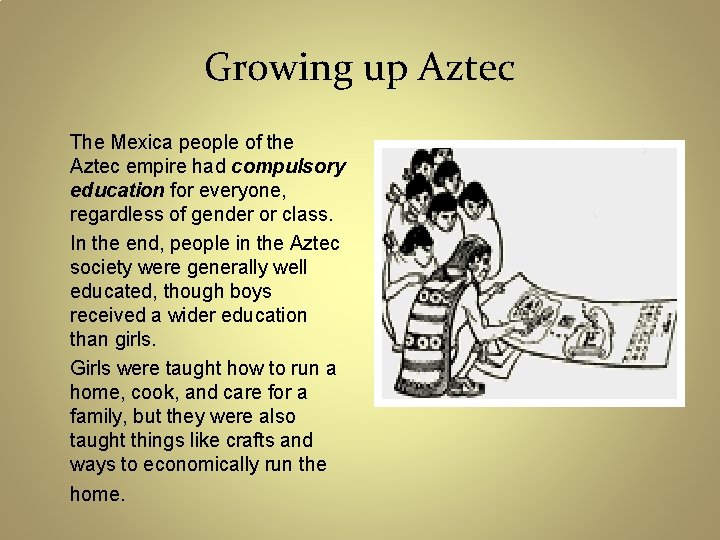
Growing up Aztec The Mexica people of the Aztec empire had compulsory education for everyone, regardless of gender or class. In the end, people in the Aztec society were generally well educated, though boys received a wider education than girls. Girls were taught how to run a home, cook, and care for a family, but they were also taught things like crafts and ways to economically run the home.
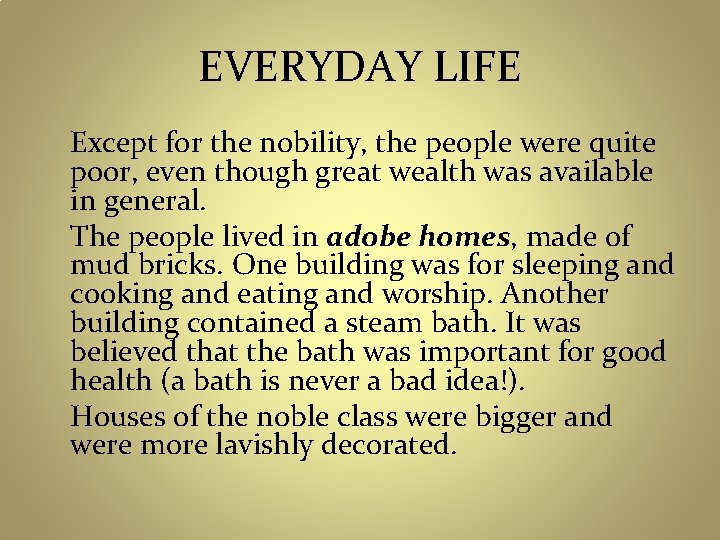
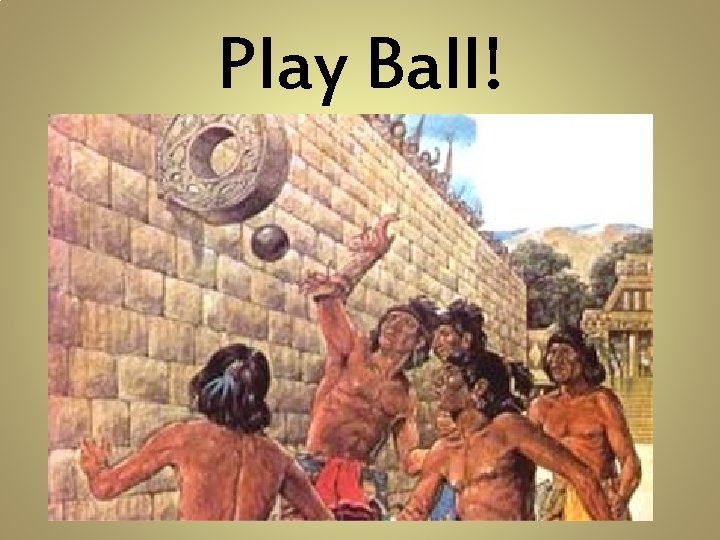
EVERYDAY LIFE Except for the nobility, the people were quite poor, even though great wealth was available in general. The people lived in adobe homes, made of mud bricks. One building was for sleeping and cooking and eating and worship. Another building contained a steam bath. It was believed that the bath was important for good health (a bath is never a bad idea!). Houses of the noble class were bigger and were more lavishly decorated.
Drawings and Replica of typical Aztec House
Play Ball!
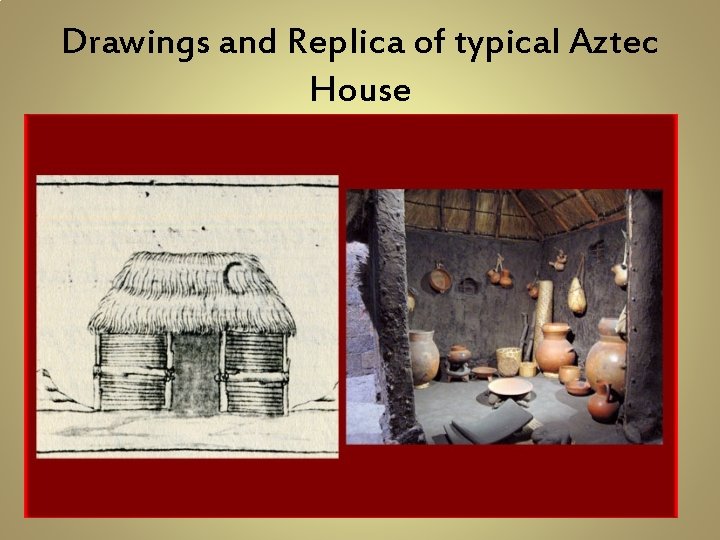
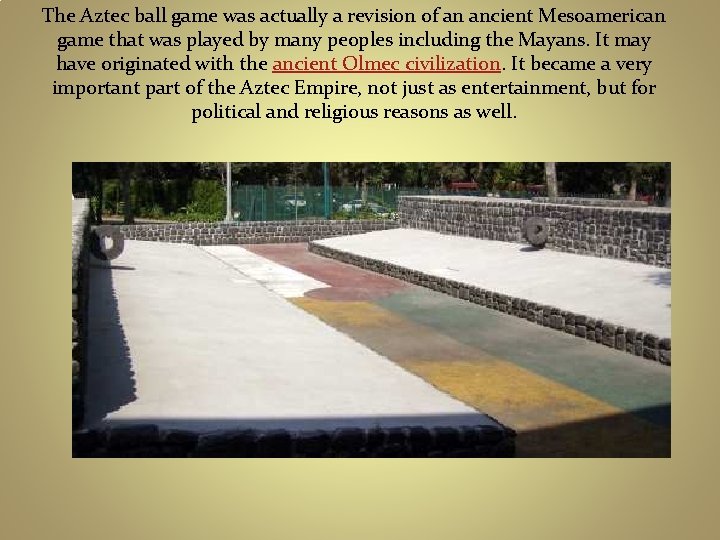
The Aztec ball game was actually a revision of an ancient Mesoamerican game that was played by many peoples including the Mayans. It may have originated with the ancient Olmec civilization. It became a very important part of the Aztec Empire, not just as entertainment, but for political and religious reasons as well.
You might be playing for your life! • Teams would face each other on the court. The object in the end was to get the ball through the stone hoop. This was extremely difficult, and so if it actually happened the game would be over. • Players couldn't hold or even touch the ball with their hands - only the elbows, knees, hips and head were used. • The Aztec ball game had a lot of ritual significance. It was mean to mirror the ball court of the heavens, It is said that the ball represented the head of a sacrificed victim. In Tenochtitlan, the ball court was at the foot of the bloodstained stairs of the temple, and the ball game itself would often be a scene of sacrifice. It is believed that the losing coach, or even the whole team, might be sacrificed.
Weapons and Disease • In 1478 some 20, 000 Aztec captives were executed for the benefit of the Sun God. Members of tribes who did not send tribute could be enslaved or sacrificed. • The Aztec were constantly at war with their neighbors. Thus when the Spaniards under Hernando Cortes invaded in 1519 many tribes joined the Spaniards against the Aztecs.
Decline of Aztec Civilization • The superior Spanish weapons combined with the assistance of the Aztec’s enemies, led in just a few years to the overthrow of the Aztec Empire. • A major factor in the success of the Spanish conquests of the Aztecs in Mexico and the Incas in Peru was smallpox. • An estimated population of Mexico in 1500 was 25 million people; by 1600, the native population of Mexico was one million people.
The Inca Empire 1200 -1535
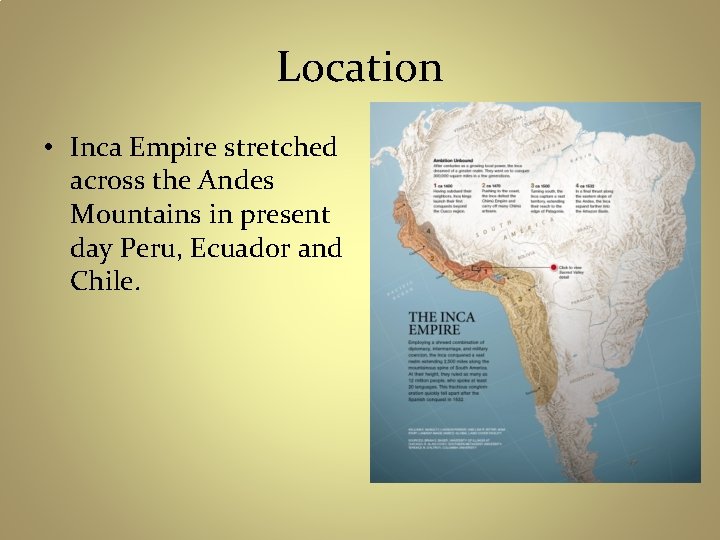
Location • Inca Empire stretched across the Andes Mountains in present day Peru, Ecuador and Chile.
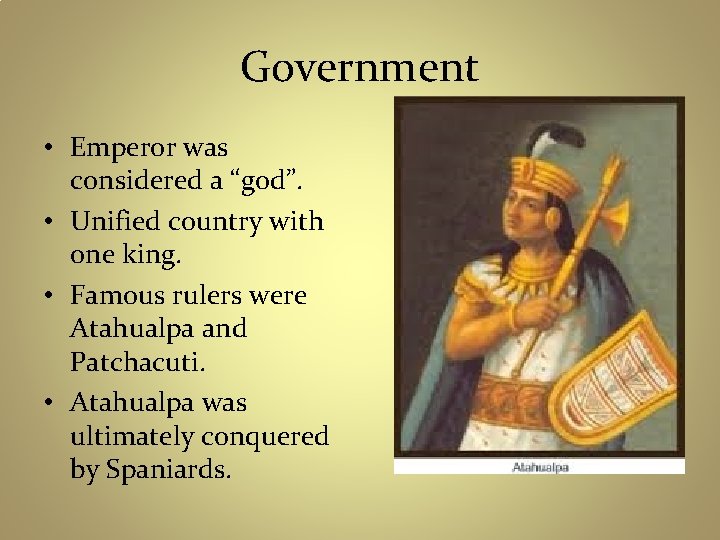
Government • Emperor was considered a “god”. • Unified country with one king. • Famous rulers were Atahualpa and Patchacuti. • Atahualpa was ultimately conquered by Spaniards.
Advances in Incan Culture • Build stone roads stretching over 10, 000 miles to unite the kingdom. • Food was preserved and stored in storehouses along the roads. • Inca never developed carts with wheels most likely because the terrain was not suited for such vehicles. • Inca never had form of writing.
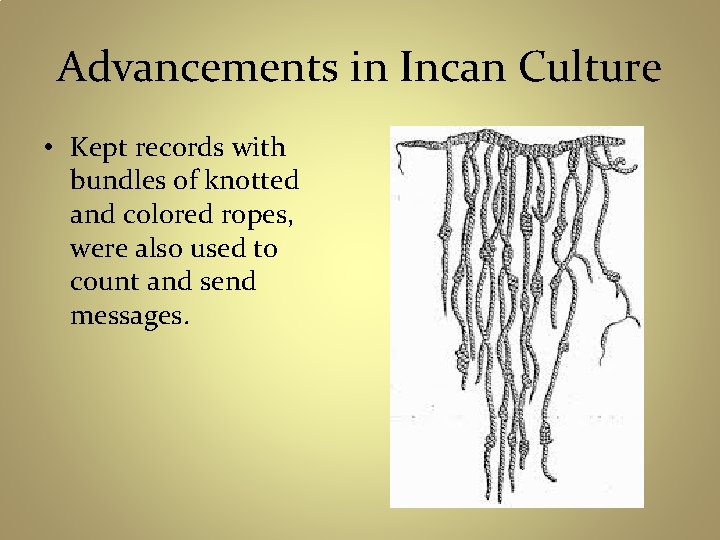
Advancements in Incan Culture • Kept records with bundles of knotted and colored ropes, were also used to count and send messages.
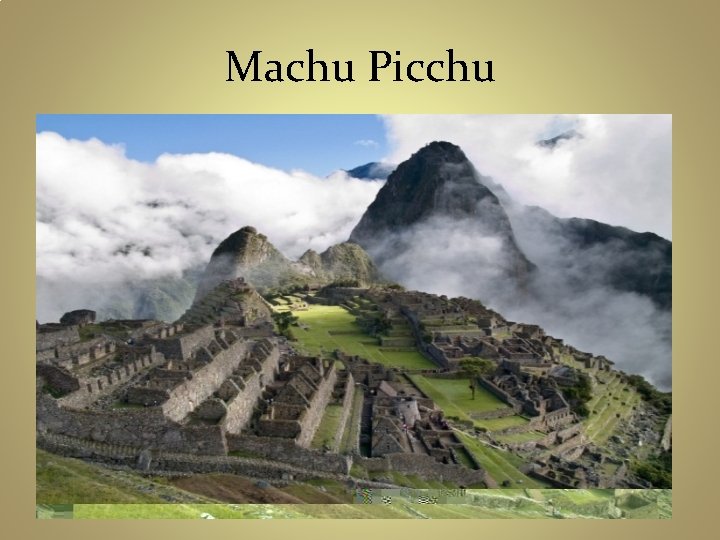
Machu Picchu
Conquest of Peru • In 1530 Fransisco Pizzaro set sail from Panama to conquer the Inca. • Pizzaro and a handful of soldiers were able to conquer the Incas with advanced technology such as horses, swords and guns. • Indians were forced to accept Christianity and to labor for the new rulers.
Latin American History
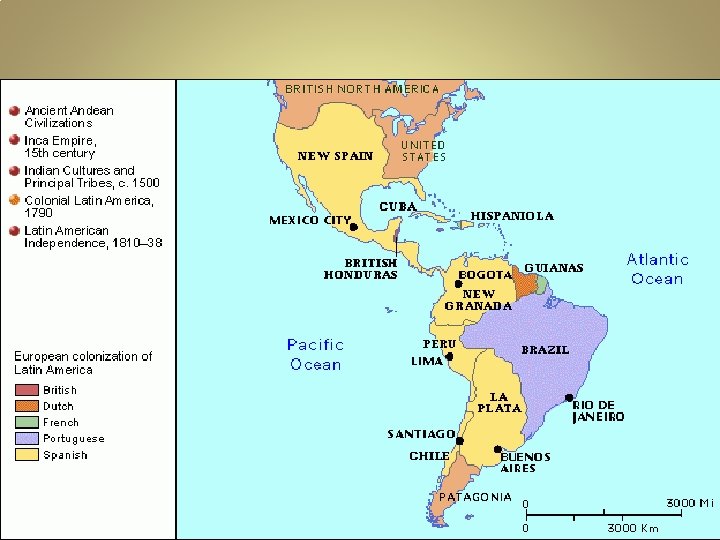
Colonialism • “America’s” were discovered by Christopher Columbus …. Landing in the Bahamas and Puerto Rico • Spain and Portugal dominated colonization
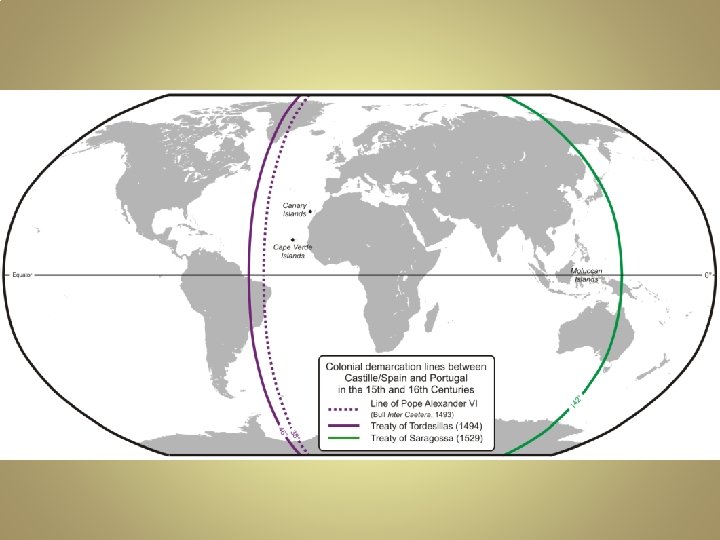
Colonialism • Line of Demarcation (1493)
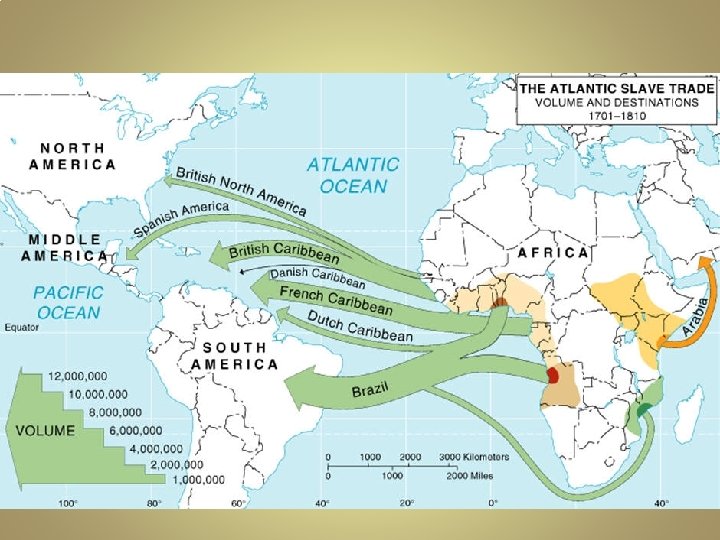
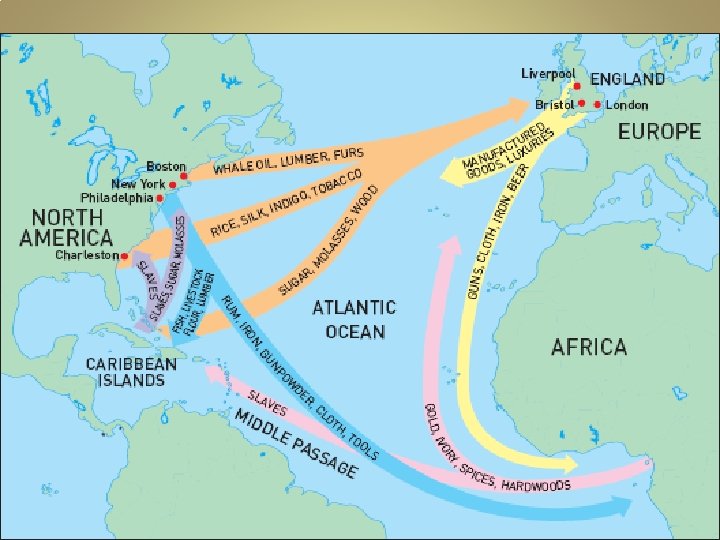
Slavery • Import of slave labor into the America’s to work on plantations for cash crops • Most were sent to Brazil • Influence can still be seen today
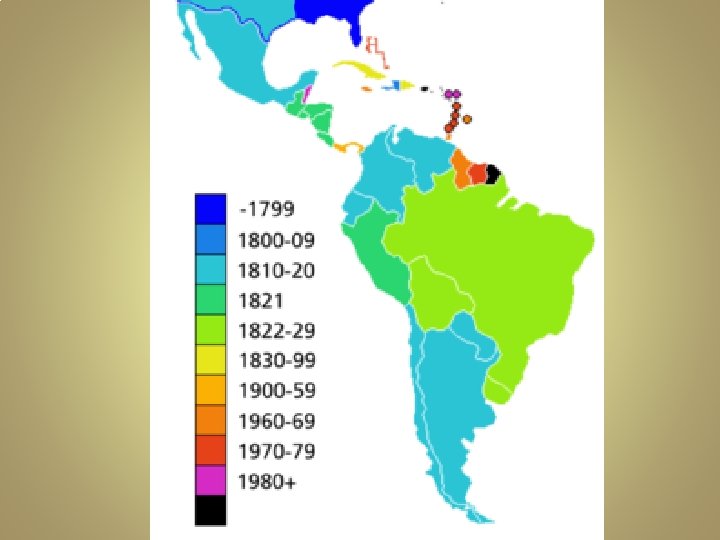
Revolution / Independence • Spurred by the American Revolution • Most were violent wars to overthrow colonial rulers • 1780’s-1914 • Many times wealthy land owners took power
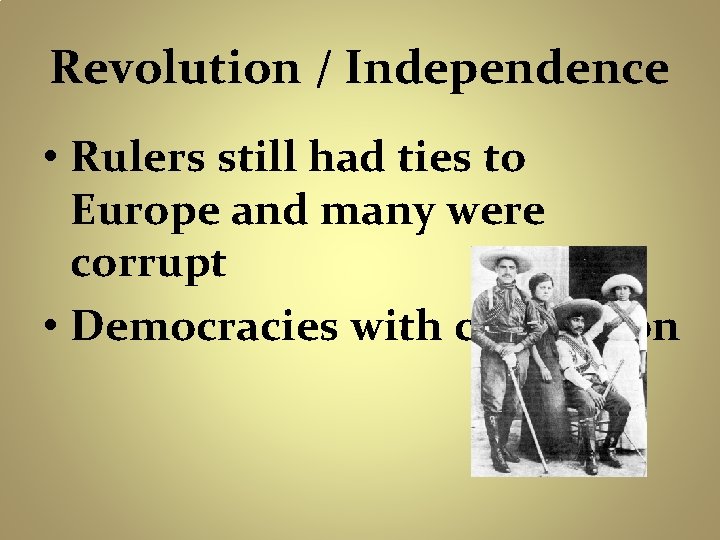
Revolution / Independence • Rulers still had ties to Europe and many were corrupt • Democracies with corruption
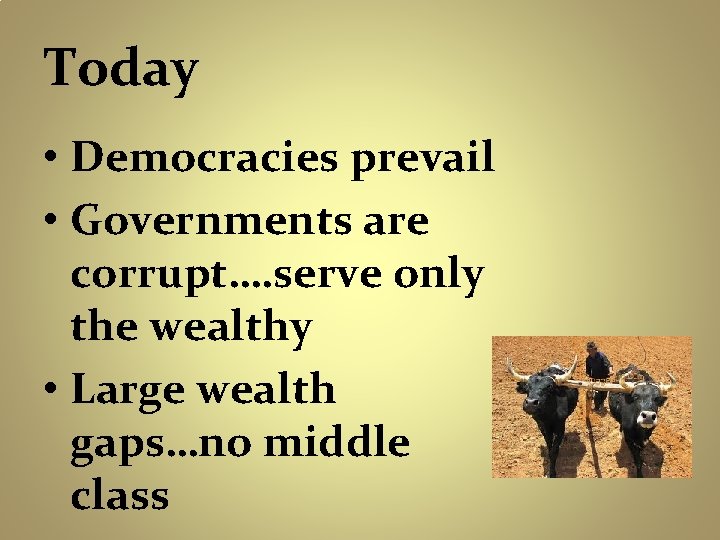
Today • Democracies prevail • Governments are corrupt…. serve only the wealthy • Large wealth gaps…no middle class
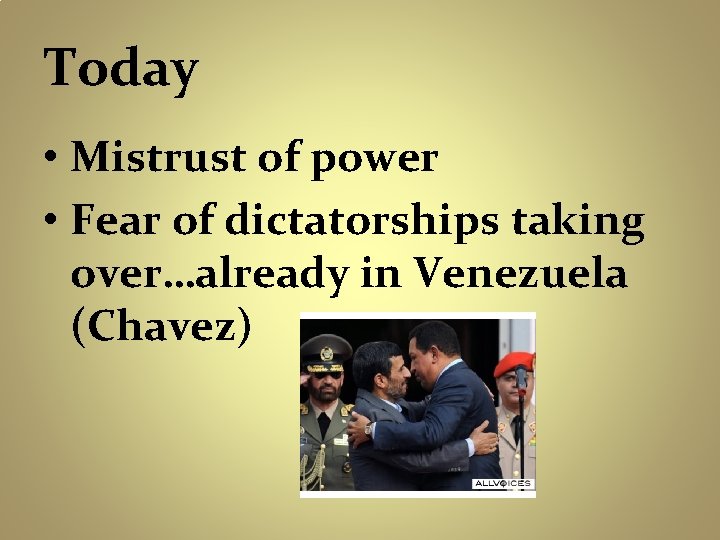
Today • Mistrust of power • Fear of dictatorships taking over…already in Venezuela (Chavez)
Regional Mc. Donalds Uruguay Brazil