
Ancient Civilizations Civilization Paleolithic Era Old Stone Age
- Slides: 29
Ancient Civilizations
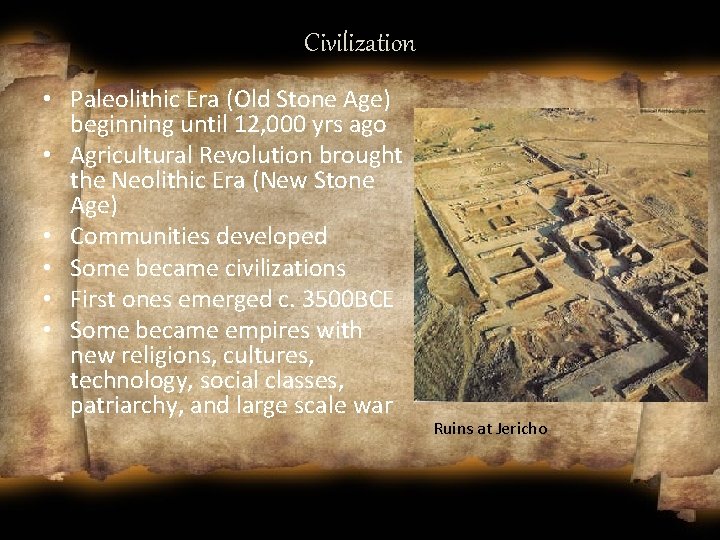
Civilization • Paleolithic Era (Old Stone Age) beginning until 12, 000 yrs ago • Agricultural Revolution brought the Neolithic Era (New Stone Age) • Communities developed • Some became civilizations • First ones emerged c. 3500 BCE • Some became empires with new religions, cultures, technology, social classes, patriarchy, and large scale war Ruins at Jericho
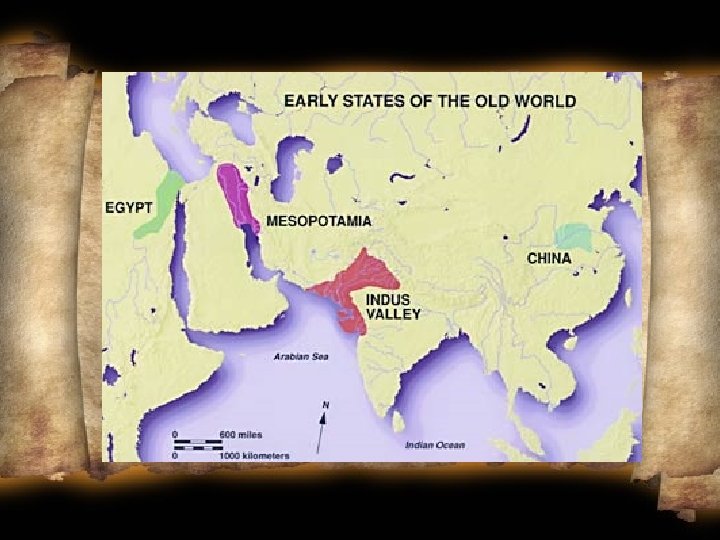
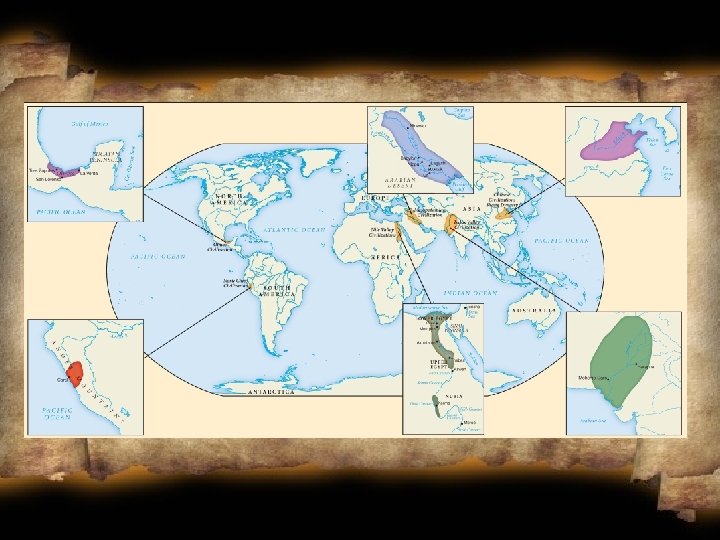
The six major civilizations • 3500 BCE-3000 BCE – Sumer – Mesopotamia – Egypt • 3000 BCE-1800 BCE – Norte Chico - Peru • C. 2000 BCE – Indus River Valley – Pakistan • C. 2200 BCE – Huang He – China (Xia Dynasty) • C. 1200 BCE – Olmec – Gulf Coast of Mexico
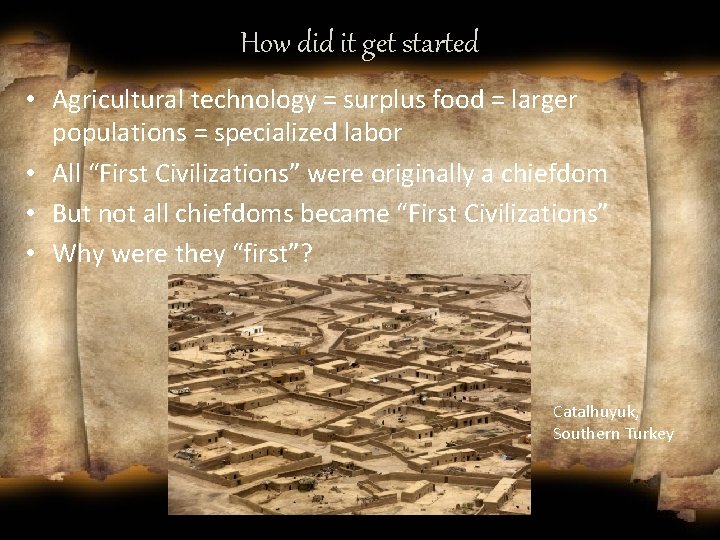
How did it get started • Agricultural technology = surplus food = larger populations = specialized labor • All “First Civilizations” were originally a chiefdom • But not all chiefdoms became “First Civilizations” • Why were they “first”? Catalhuyuk, Southern Turkey
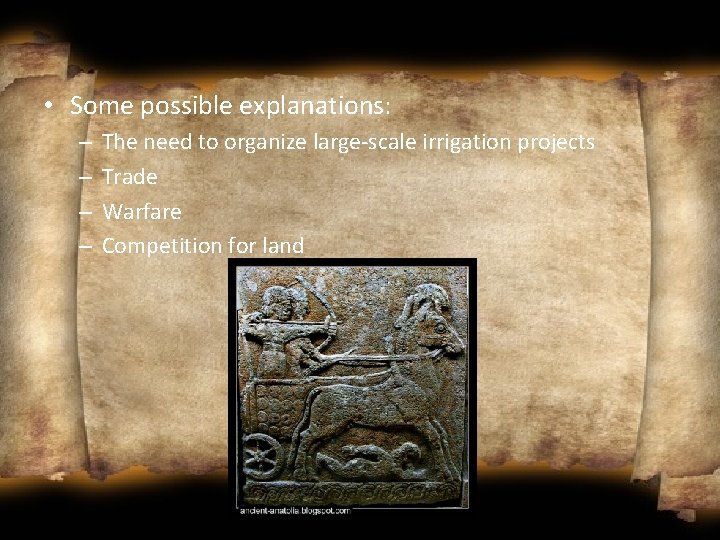
• Some possible explanations: – – The need to organize large-scale irrigation projects Trade Warfare Competition for land
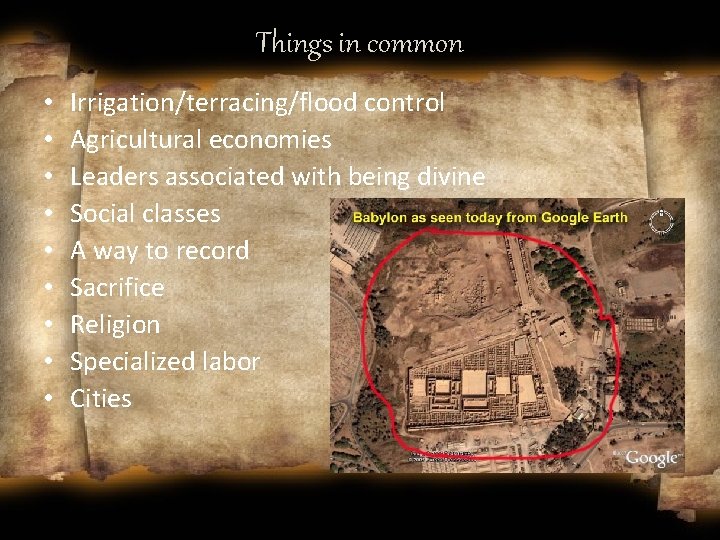
Things in common • • • Irrigation/terracing/flood control Agricultural economies Leaders associated with being divine Social classes A way to record Sacrifice Religion Specialized labor Cities
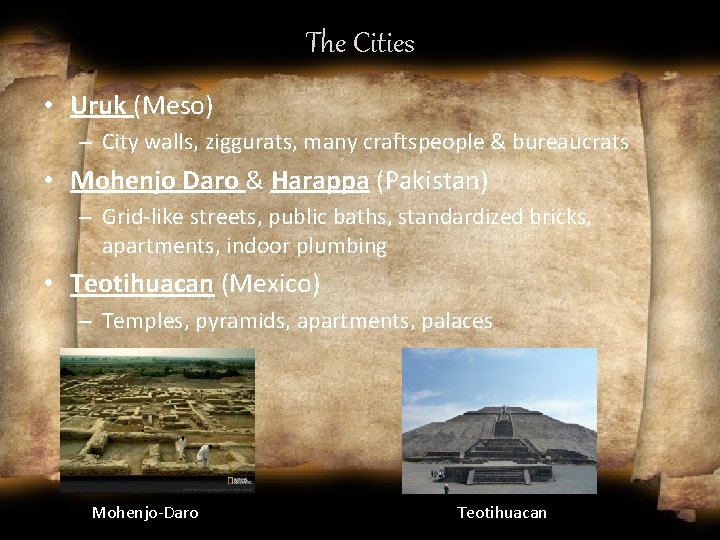
The Cities • Uruk (Meso) – City walls, ziggurats, many craftspeople & bureaucrats • Mohenjo Daro & Harappa (Pakistan) – Grid-like streets, public baths, standardized bricks, apartments, indoor plumbing • Teotihuacan (Mexico) – Temples, pyramids, apartments, palaces Mohenjo-Daro Teotihuacan
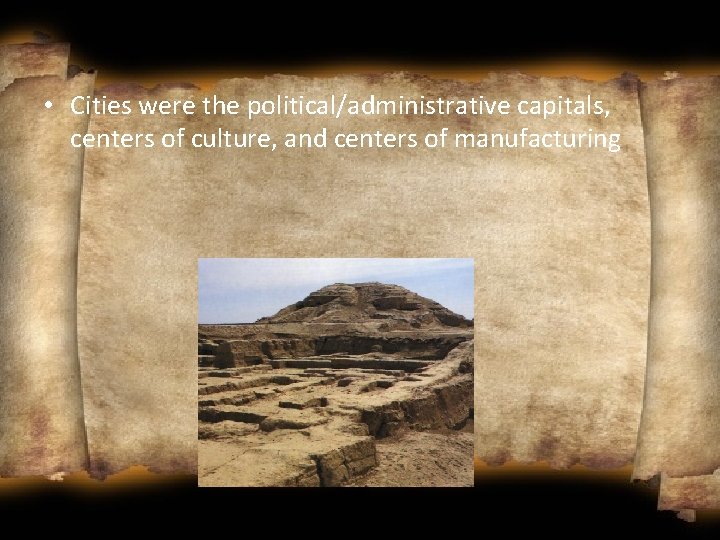
• Cities were the political/administrative capitals, centers of culture, and centers of manufacturing
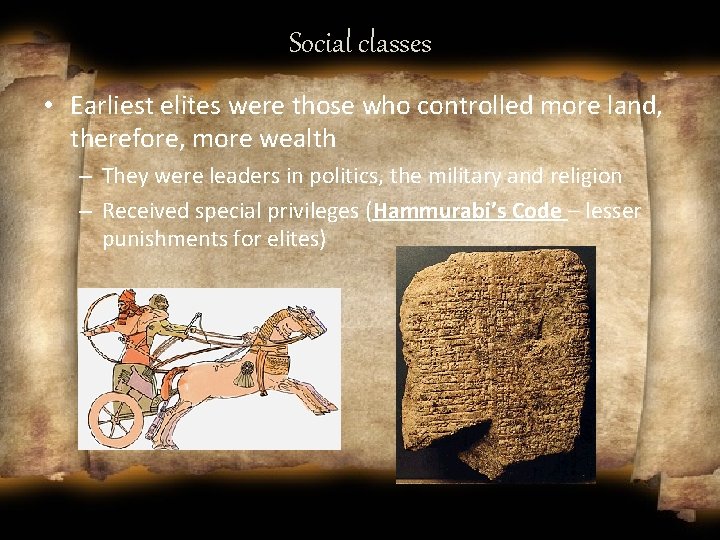
Social classes • Earliest elites were those who controlled more land, therefore, more wealth – They were leaders in politics, the military and religion – Received special privileges (Hammurabi’s Code – lesser punishments for elites)
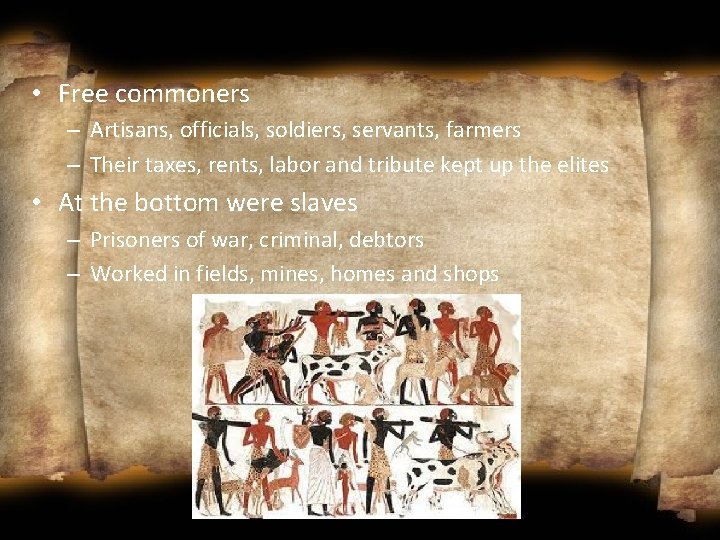
• Free commoners – Artisans, officials, soldiers, servants, farmers – Their taxes, rents, labor and tribute kept up the elites • At the bottom were slaves – Prisoners of war, criminal, debtors – Worked in fields, mines, homes and shops
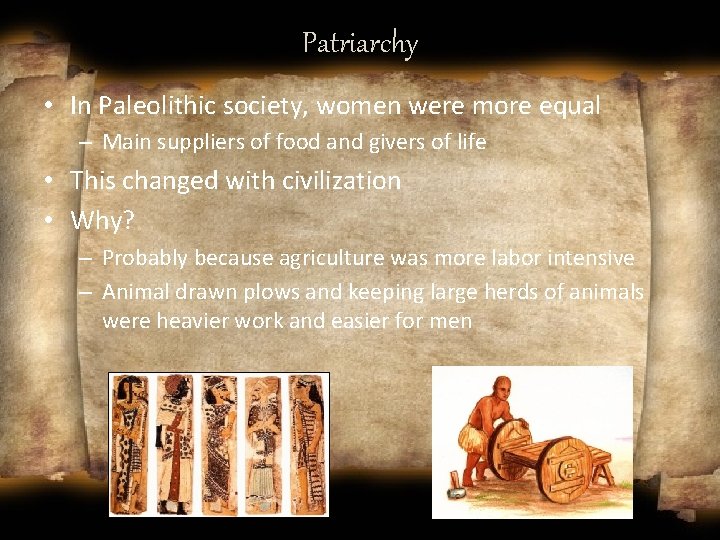
Patriarchy • In Paleolithic society, women were more equal – Main suppliers of food and givers of life • This changed with civilization • Why? – Probably because agriculture was more labor intensive – Animal drawn plows and keeping large herds of animals were heavier work and easier for men
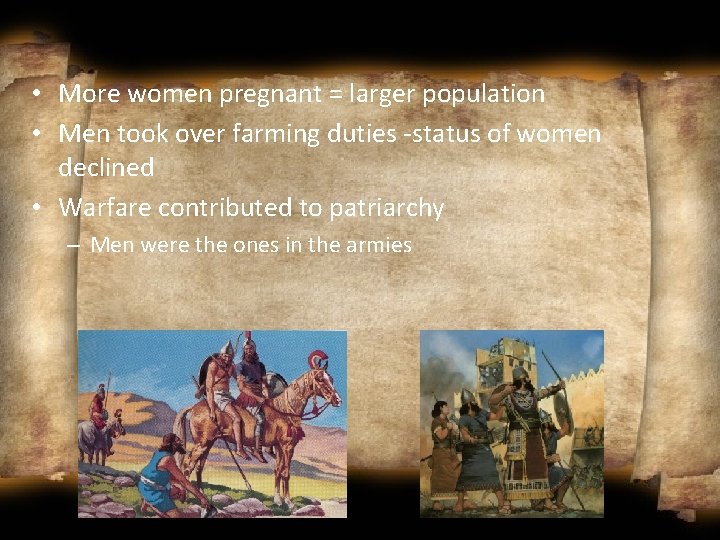
• More women pregnant = larger population • Men took over farming duties -status of women declined • Warfare contributed to patriarchy – Men were the ones in the armies
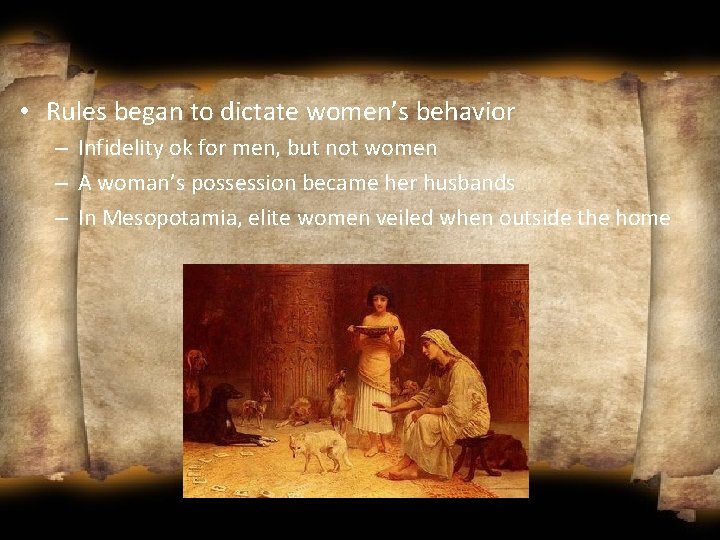
• Rules began to dictate women’s behavior – Infidelity ok for men, but not women – A woman’s possession became her husbands – In Mesopotamia, elite women veiled when outside the home
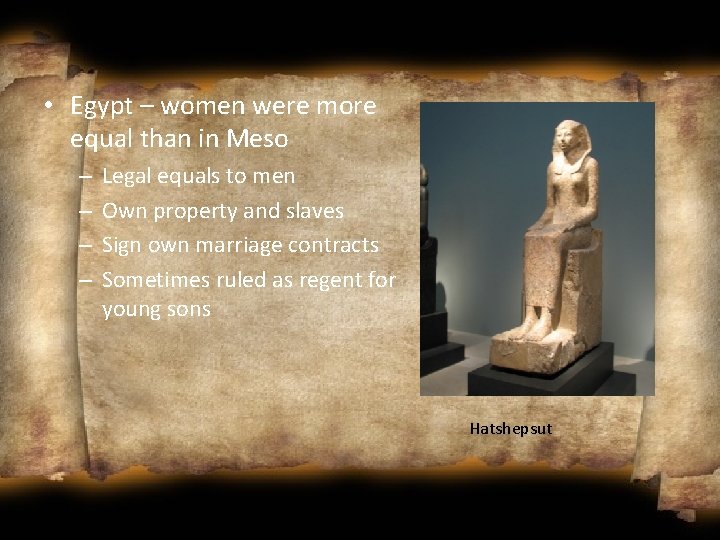
• Egypt – women were more equal than in Meso – – Legal equals to men Own property and slaves Sign own marriage contracts Sometimes ruled as regent for young sons Hatshepsut
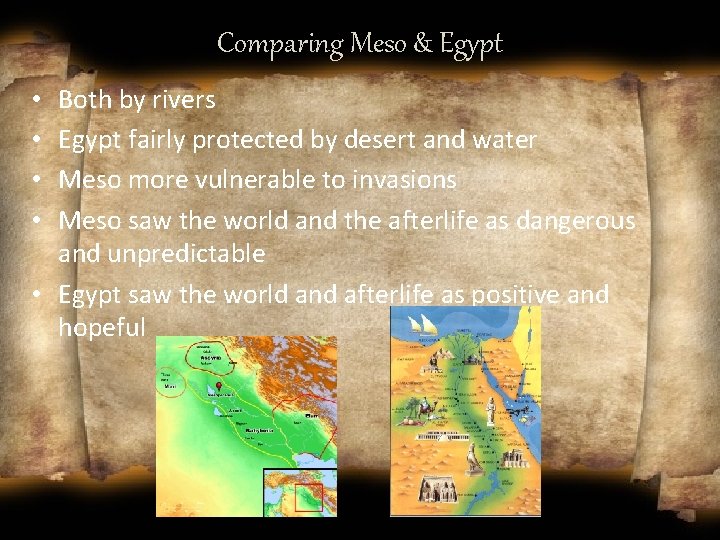
Comparing Meso & Egypt Both by rivers Egypt fairly protected by desert and water Meso more vulnerable to invasions Meso saw the world and the afterlife as dangerous and unpredictable • Egypt saw the world and afterlife as positive and hopeful • •
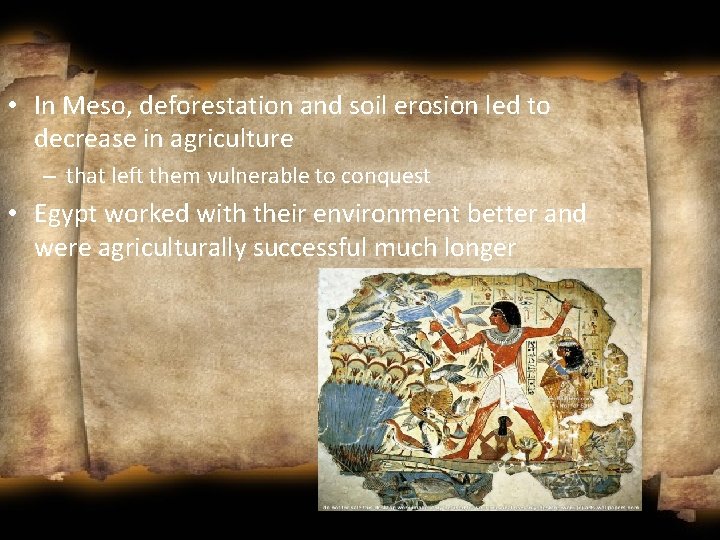
• In Meso, deforestation and soil erosion led to decrease in agriculture – that left them vulnerable to conquest • Egypt worked with their environment better and were agriculturally successful much longer
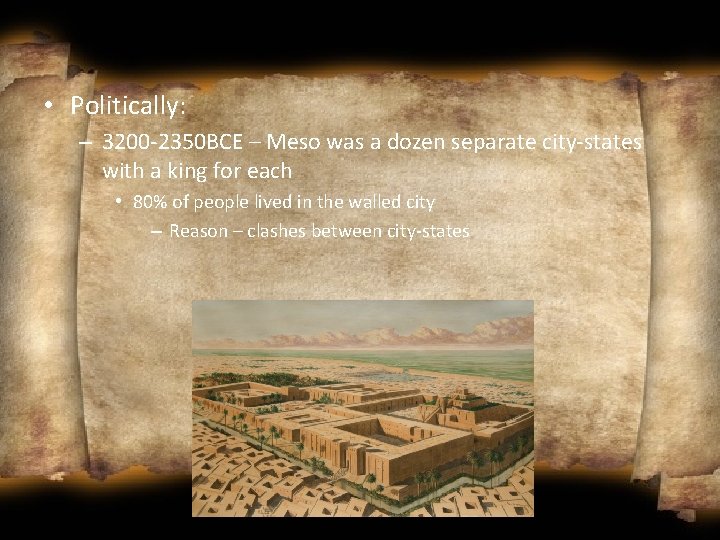
• Politically: – 3200 -2350 BCE – Meso was a dozen separate city-states with a king for each • 80% of people lived in the walled city – Reason – clashes between city-states
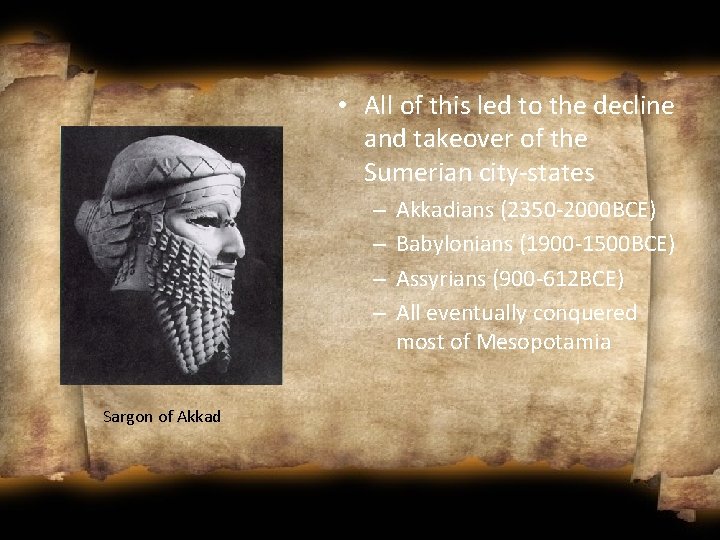
• All of this led to the decline and takeover of the Sumerian city-states – – Sargon of Akkadians (2350 -2000 BCE) Babylonians (1900 -1500 BCE) Assyrians (900 -612 BCE) All eventually conquered most of Mesopotamia
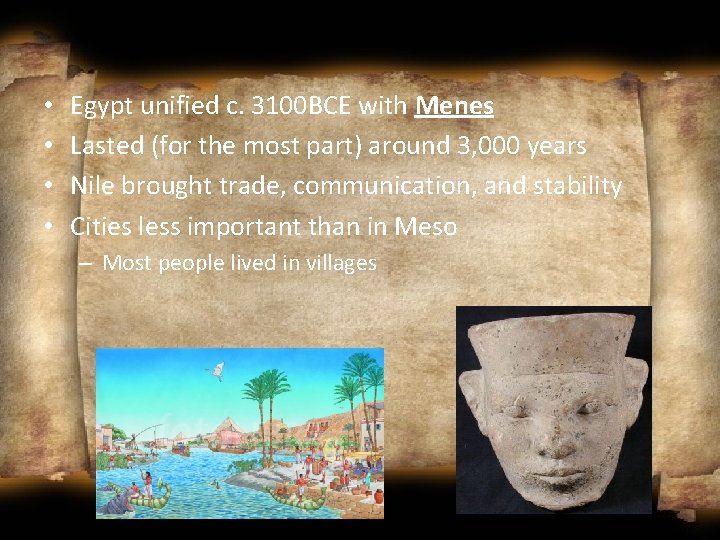
• • Egypt unified c. 3100 BCE with Menes Lasted (for the most part) around 3, 000 years Nile brought trade, communication, and stability Cities less important than in Meso – Most people lived in villages
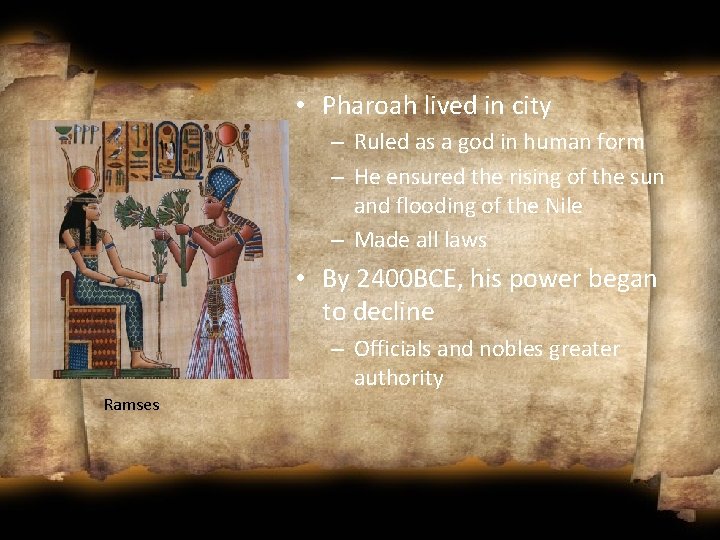
• Pharoah lived in city – Ruled as a god in human form – He ensured the rising of the sun and flooding of the Nile – Made all laws • By 2400 BCE, his power began to decline – Officials and nobles greater authority Ramses
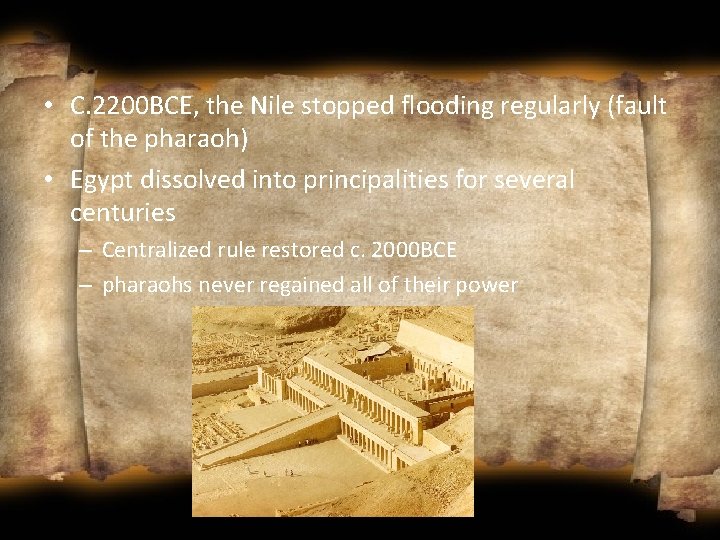
• C. 2200 BCE, the Nile stopped flooding regularly (fault of the pharaoh) • Egypt dissolved into principalities for several centuries – Centralized rule restored c. 2000 BCE – pharaohs never regained all of their power
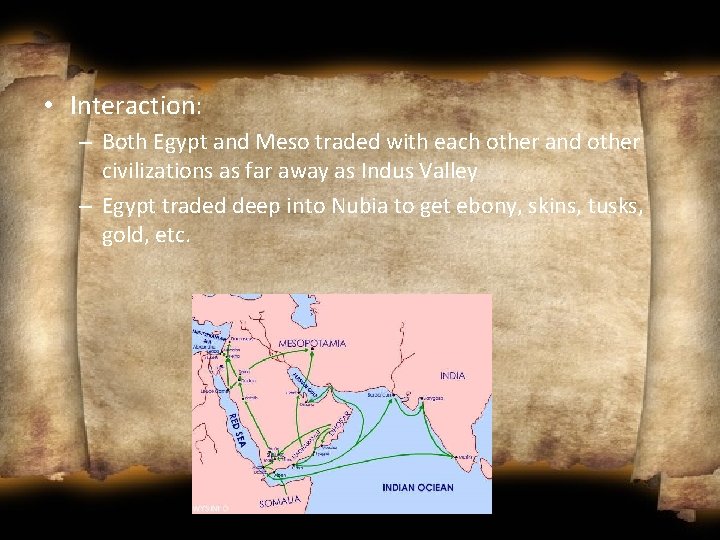
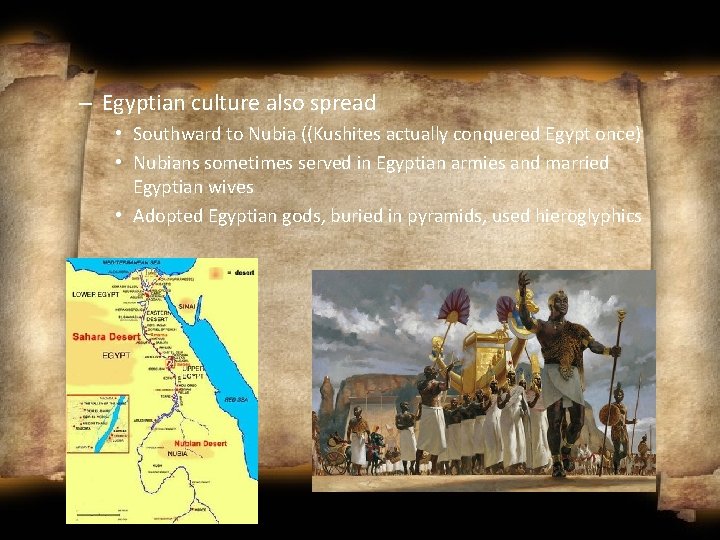
• Interaction: – Both Egypt and Meso traded with each other and other civilizations as far away as Indus Valley – Egypt traded deep into Nubia to get ebony, skins, tusks, gold, etc.
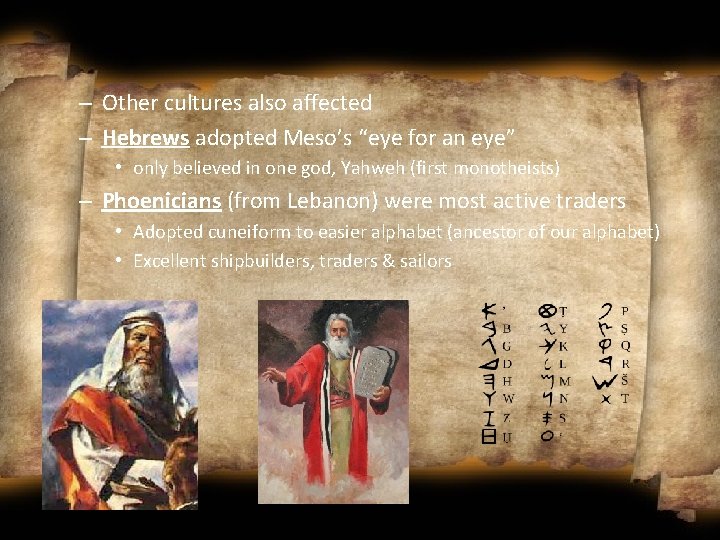
– Other cultures also affected – Hebrews adopted Meso’s “eye for an eye” • only believed in one god, Yahweh (first monotheists) – Phoenicians (from Lebanon) were most active traders • Adopted cuneiform to easier alphabet (ancestor of our alphabet) • Excellent shipbuilders, traders & sailors
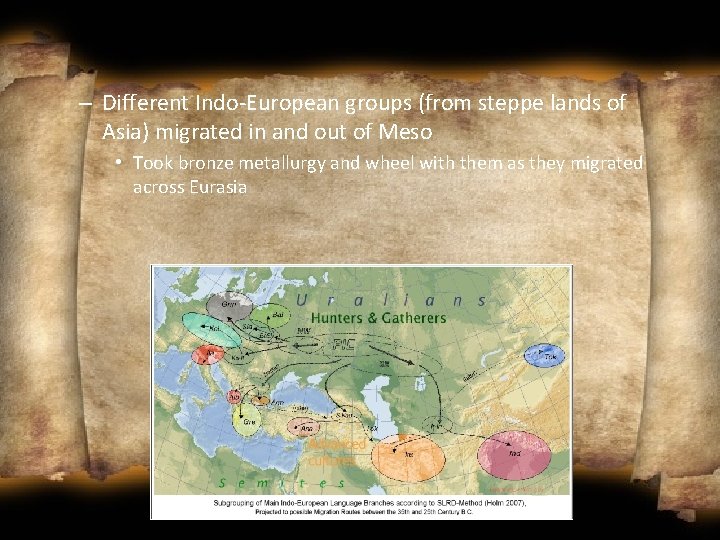
– Different Indo-European groups (from steppe lands of Asia) migrated in and out of Meso • Took bronze metallurgy and wheel with them as they migrated across Eurasia
– Egyptian culture also spread • Southward to Nubia ((Kushites actually conquered Egypt once) • Nubians sometimes served in Egyptian armies and married Egyptian wives • Adopted Egyptian gods, buried in pyramids, used hieroglyphics
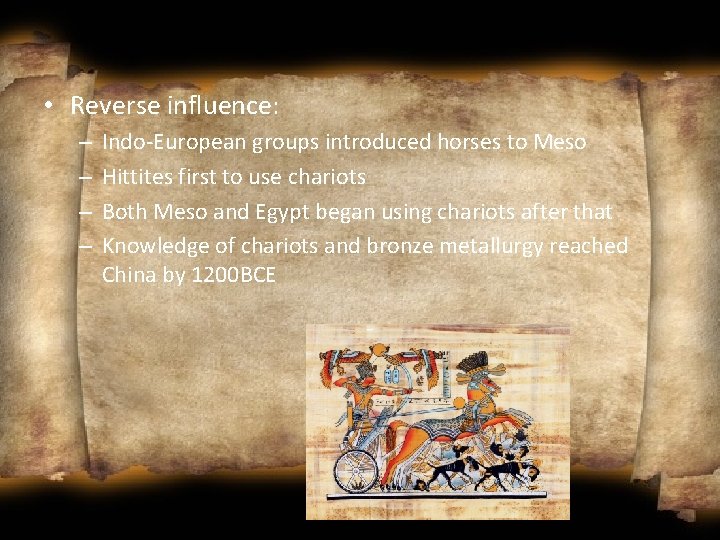
• Reverse influence: – – Indo-European groups introduced horses to Meso Hittites first to use chariots Both Meso and Egypt began using chariots after that Knowledge of chariots and bronze metallurgy reached China by 1200 BCE
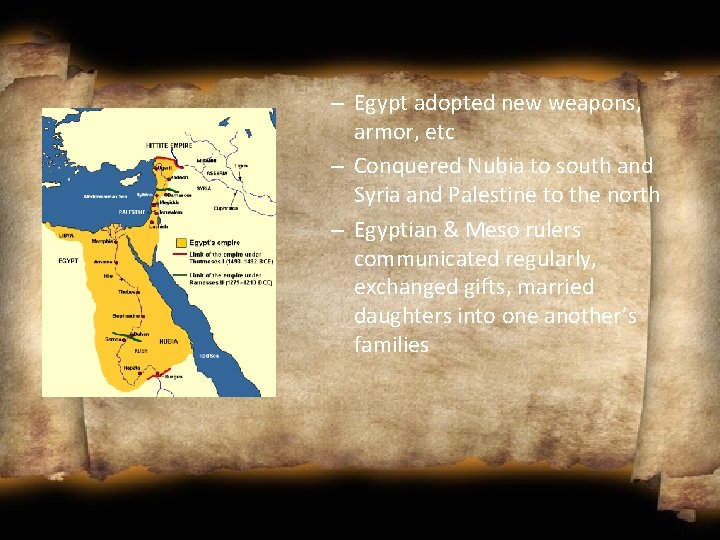
– Egypt adopted new weapons, armor, etc – Conquered Nubia to south and Syria and Palestine to the north – Egyptian & Meso rulers communicated regularly, exchanged gifts, married daughters into one another’s families