
Ancient Civilizations China and India The Indus River
- Slides: 11
Ancient Civilizations: China and India
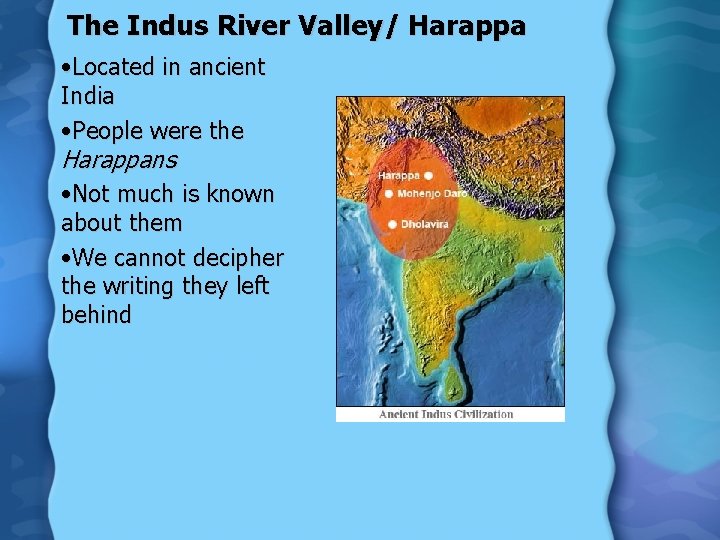
The Indus River Valley/ Harappa • Located in ancient India • People were the Harappans • Not much is known about them • We cannot decipher the writing they left behind
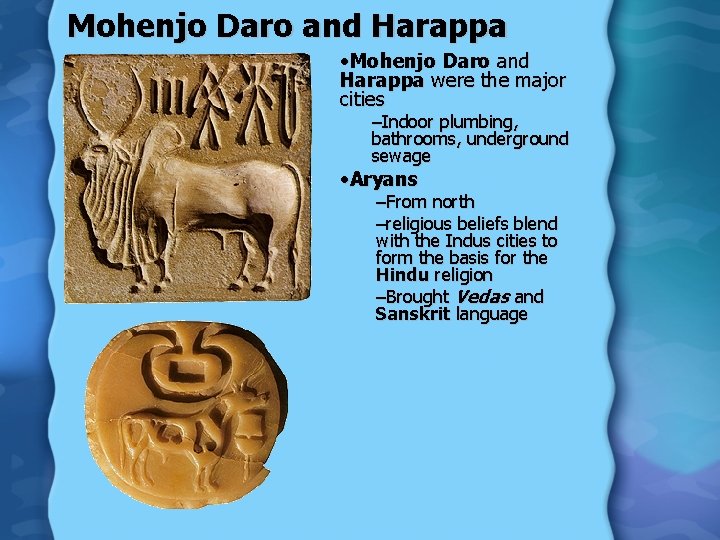
Mohenjo Daro and Harappa • Mohenjo Daro and Harappa were the major cities –Indoor plumbing, bathrooms, underground sewage • Aryans –From north –religious beliefs blend with the Indus cities to form the basis for the Hindu religion –Brought Vedas and Sanskrit language
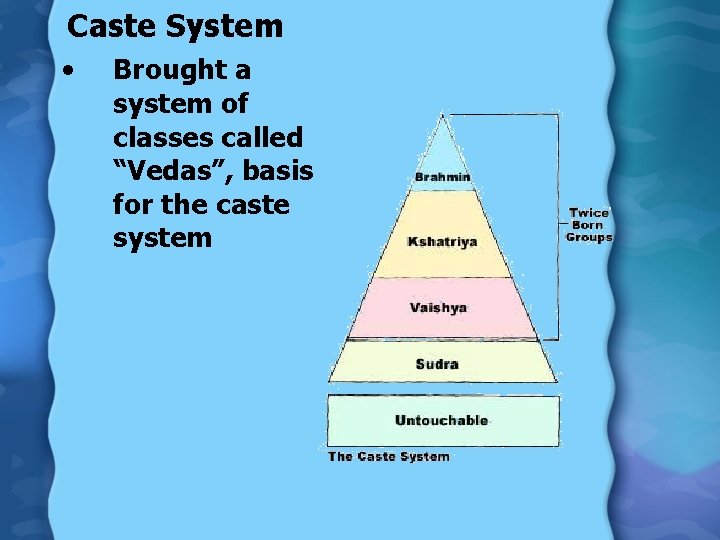
Caste System • Brought a system of classes called “Vedas”, basis for the caste system
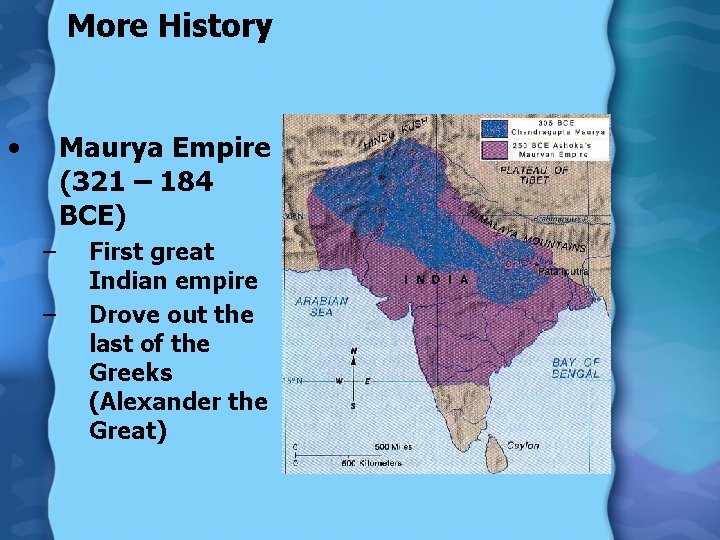
More History • Maurya Empire (321 – 184 BCE) – – First great Indian empire Drove out the last of the Greeks (Alexander the Great)
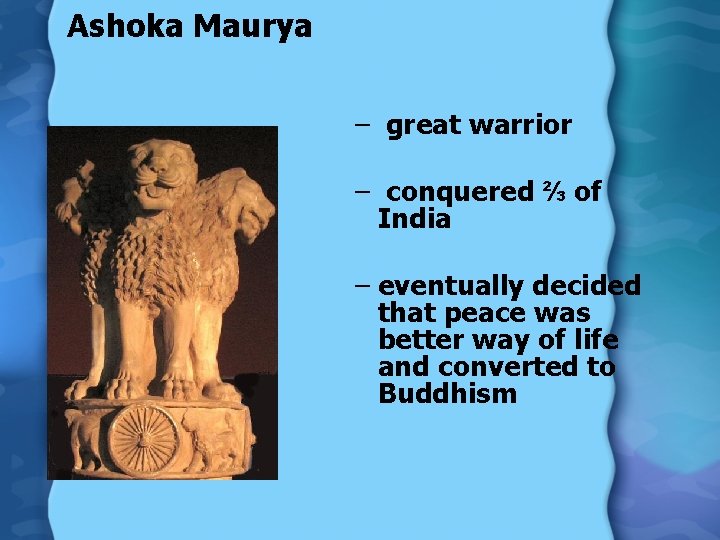
Ashoka Maurya – great warrior – conquered ⅔ of India – eventually decided that peace was better way of life and converted to Buddhism
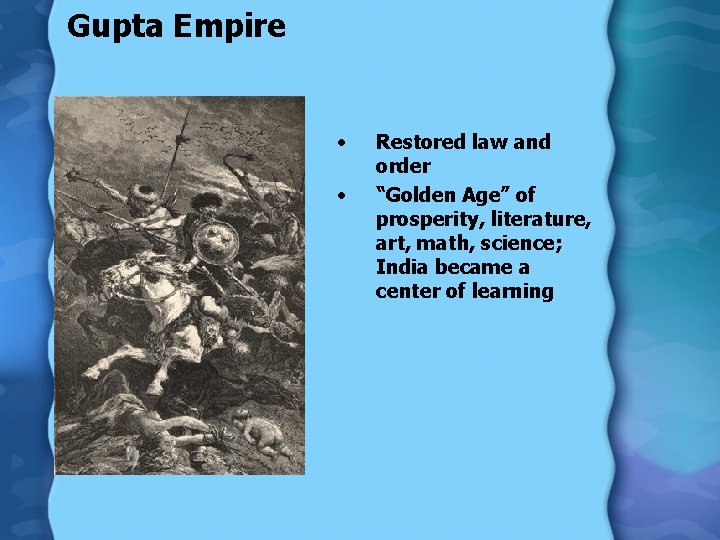
Gupta Empire • • Restored law and order “Golden Age” of prosperity, literature, art, math, science; India became a center of learning
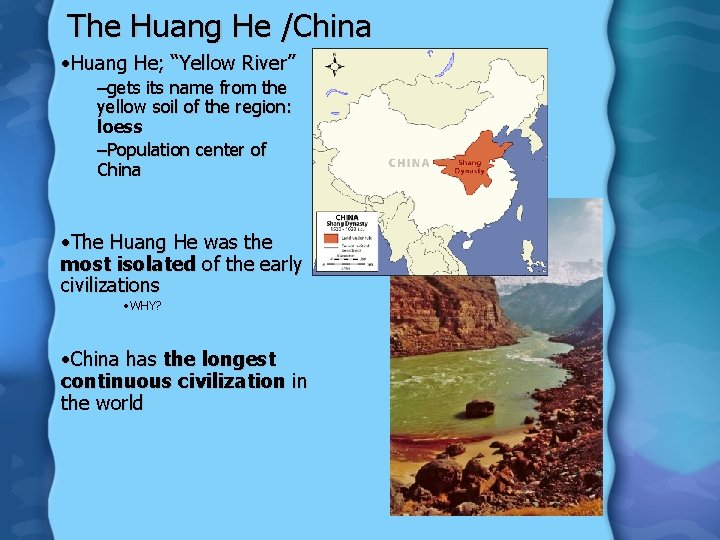
The Huang He /China • Huang He; “Yellow River” –gets its name from the yellow soil of the region: loess –Population center of China • The Huang He was the most isolated of the early civilizations • WHY? • China has the longest continuous civilization in the world
Chinese Dynasties (ruling families) • Shang Dynasty is first to unite China –And WRITE about it • Zhou Dynasty –During the Zhou Dynastywar among rivals…BUT also economic growth • TRADE • Chinese Philosphers –Confuscious alive during the Zhou Dynasty • Not well known until much later • China no longer united –Dynastic Cycle
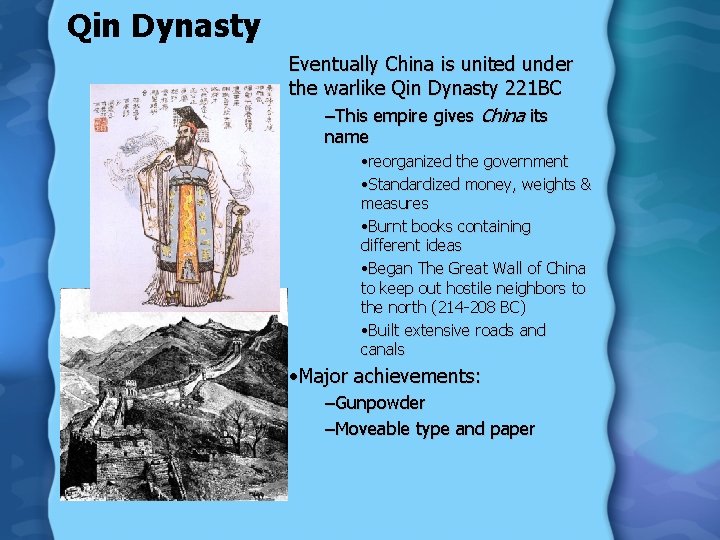
Qin Dynasty Eventually China is united under the warlike Qin Dynasty 221 BC –This empire gives China its name • reorganized the government • Standardized money, weights & measures • Burnt books containing different ideas • Began The Great Wall of China to keep out hostile neighbors to the north (214 -208 BC) • Built extensive roads and canals • Major achievements: –Gunpowder –Moveable type and paper
“ A common marvels at uncommon things; a wise man marvels at the commonplace. ” - Confucius