
Ancient Astronomy HOW HAVE HUMANS COME TO OBSERVEREVERE
Ancient Astronomy HOW HAVE HUMANS COME TO OBSERVE/REVERE THE HEAVENS, AND HOW HAS IT AFFECTED HUMANITY?
Early Astronomy Humans have been fascinated by the sky for all time. Constellations have helped people navigate, tell stories, are the gods that look over humanity. Constellations are groupings of stars that form images, much like seeing shaps in clouds Each culture has different images/histories with constellations
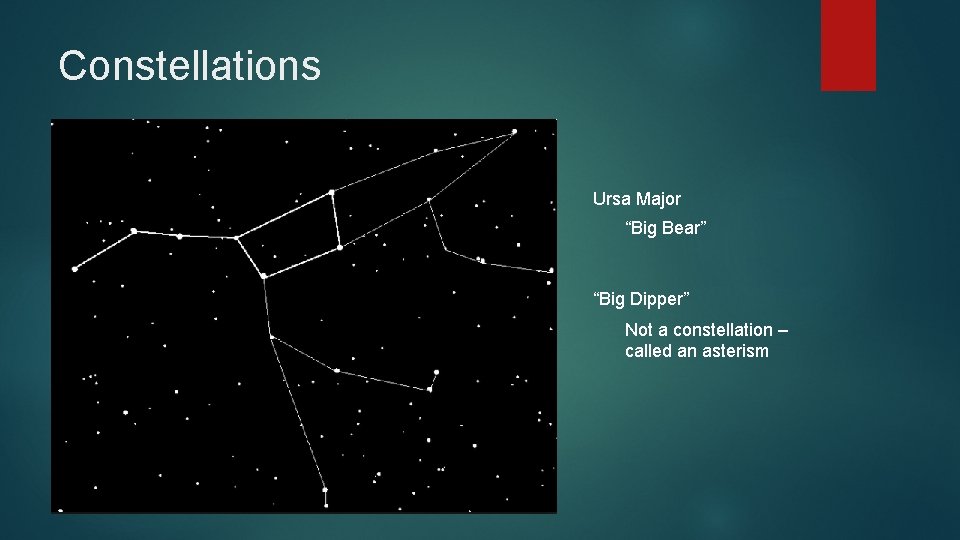
Constellations Ursa Major “Big Bear” “Big Dipper” Not a constellation – called an asterism
Constellations There are 88 recognized constellations in Astronomy today Some are only visible from the Northern Hemisphere, some only visible from the Southern Hemisphere Some of the more recognizable ones in Northern Hemisphere are… Ursa Major Ursa Minor Orion Canis Major Ecliptic/Zodiac https: //in-the-sky. org/data/constellations_map_equ 11012. pdf
Constellations The constellations rise and fall at specific times on specific days in a yearly pattern Their “motion” per day is due to the rotation of the Earth Their “motion” per year is due to the revolution of the Earth about the Sun Ancient Astronomers would be able to tell people when to plant/harvest crops, based on the where the constellations were located.
"When great Orion rises, set your slaves to winnowing Demeter's holy grain upon the windy, well-worn threshing floor. Then give your slaves a rest; unyoke your team. But when Orion and the Dog Star move into the mid-sky, and Arcturus sees The rosy-fingered dawn, then Perseus, pluck The clustered grapes, and bring your harvest home. “ Hesiod - Approx. 500 B. C.
Winter Constellations http: //webhome. phy. duke. edu/~hsg/134/observation/winter-sky-stars. jpg http: //webhome. phy. duke. edu/~hsg/134/observation/winter-sky-mapschematic. jpg
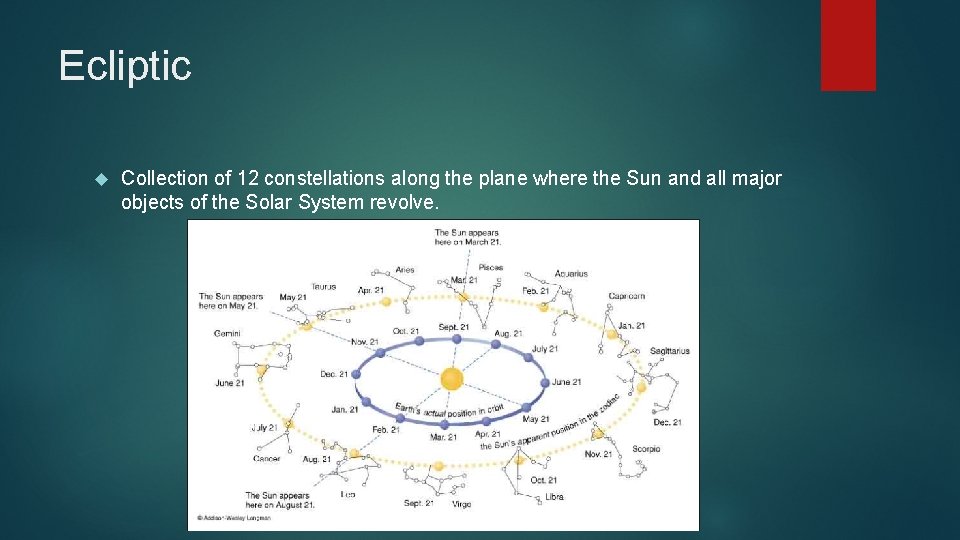
Ecliptic Collection of 12 constellations along the plane where the Sun and all major objects of the Solar System revolve.
Astrology A pseudo-science that attempts to explain human behaviors based on where the sun/planets are in relation to the constellations of the zodiac There is absolutely NO evidence that the positions of the planets has any bearing on our experiences/life history The constellations, however, have historical significance and are maintained in modern astronomy.
Ancient Civilizations Astronomy is one of the oldest sciences, and has been used by Humans for as long as history as been recorded There have been several major contributors to Ancient Astronomy Ancient Greeks Arab Indian Chinese Native American Ancient European Just to name a few!!!
Mesoamerican Astronomy Mayan 400 A. D. Could predict eclipses, recorded positions of planets. Astronomy was state-sponsored, and played a role in war, marriage, etc. Their calendar was more accurate than the one the Europeans were using when they were conquered in the 1500’s “New Year’s Day” was on July 26 th, An observatory in Edzna, the sun passed directly overhead on this day. Chichén Itzá - Mayan city in the Yucatan Peninsula
Chichén Itzá El Castillo – “the snake” https: //www. youtube. com/watch? v=q 0 k. Oy. GZx. Kh 4 El Caracol – “The Observatory” Windows in El Caracol line up with positions of Venus in the sky on an 8 year cycle. Of 29 possible astronomical events (eclipses, equinoxes, solstices, etc. . ), there are 20 of them found in the structure.
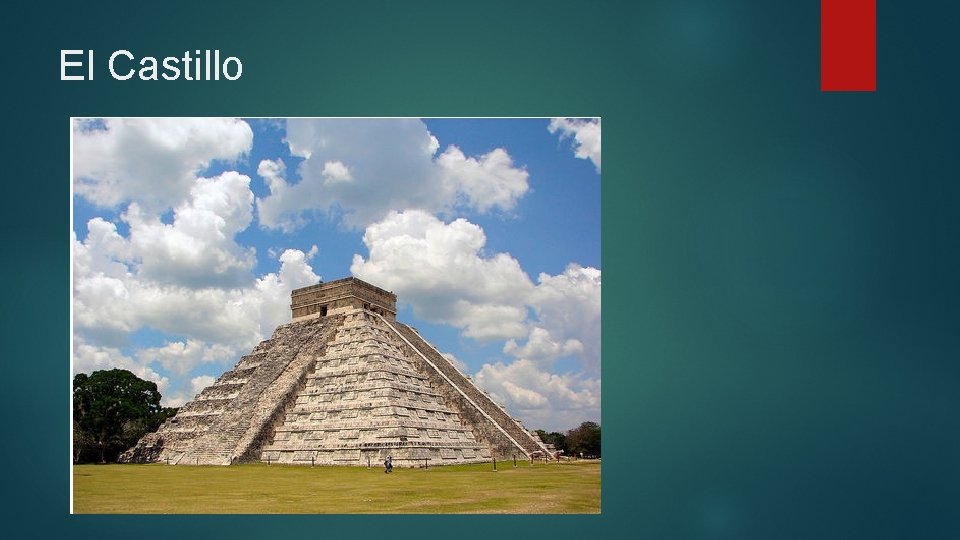
El Castillo
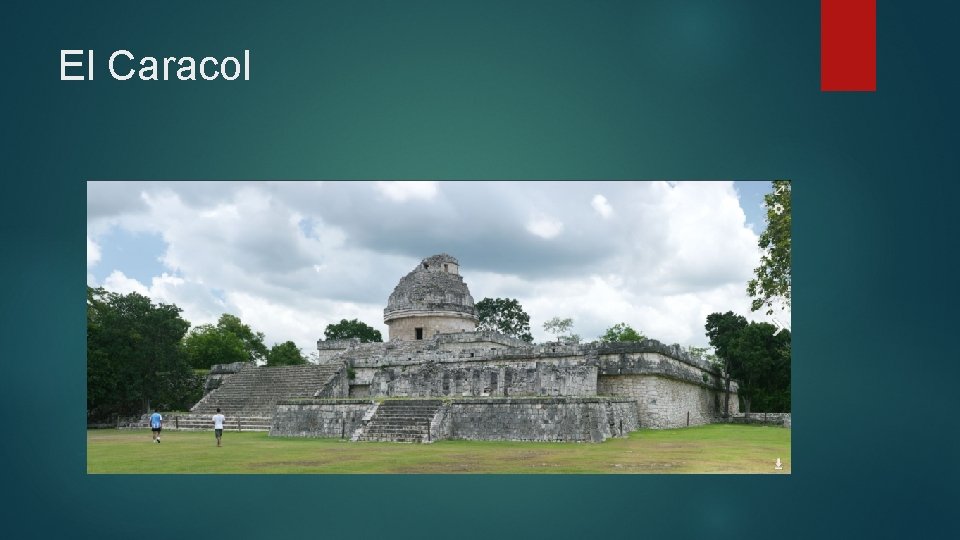
El Caracol
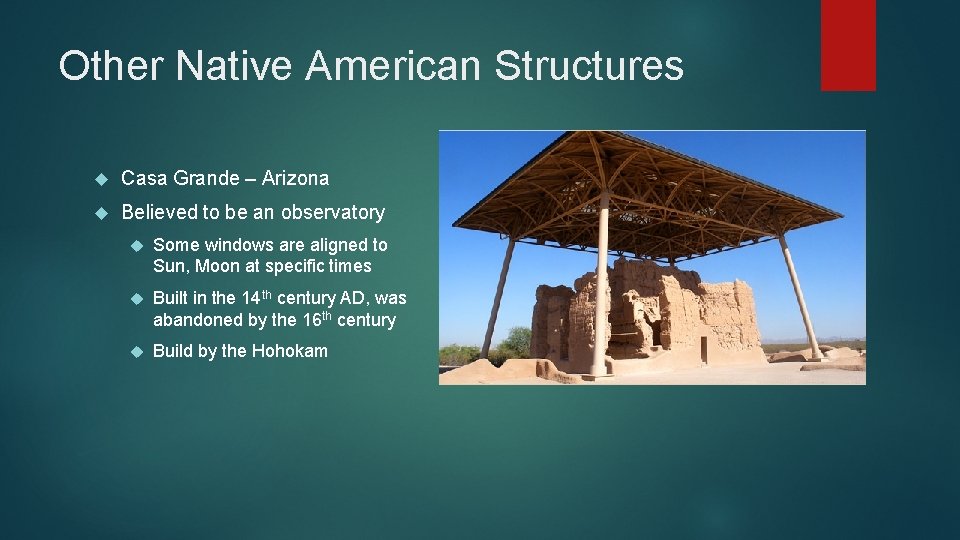
Other Native American Structures Casa Grande – Arizona Believed to be an observatory Some windows are aligned to Sun, Moon at specific times Built in the 14 th century AD, was abandoned by the 16 th century Build by the Hohokam

Aztec Astronomy was strongly associated with religion and their moral code Major cities were built based on astronomical observations The center of their beliefs was the Sun The orientations of structures were as well Our Sun was the “fifth” one, the others having been destroyed by other events The calendar stone -------
Incan Astronomy Religion and Astronomy were closely linked The Sun and the Moon were both seen as God. The Inca grouped stars into Constellations They had both light and dark constellations (only civilization to do this!!!) The Light constellations were inanimate The Dark constellations were animate animals
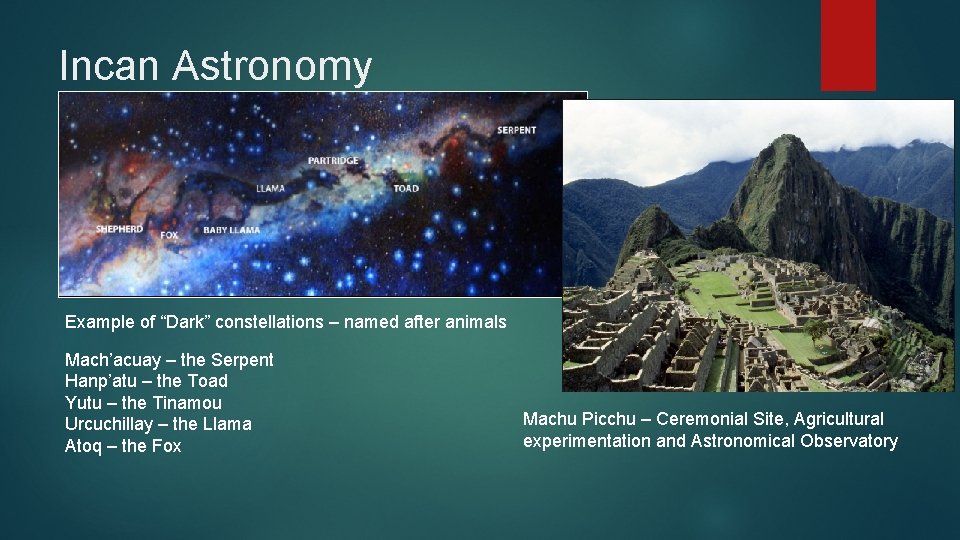
Incan Astronomy Example of “Dark” constellations – named after animals Mach’acuay – the Serpent Hanp’atu – the Toad Yutu – the Tinamou Urcuchillay – the Llama Atoq – the Fox Machu Picchu – Ceremonial Site, Agricultural experimentation and Astronomical Observatory
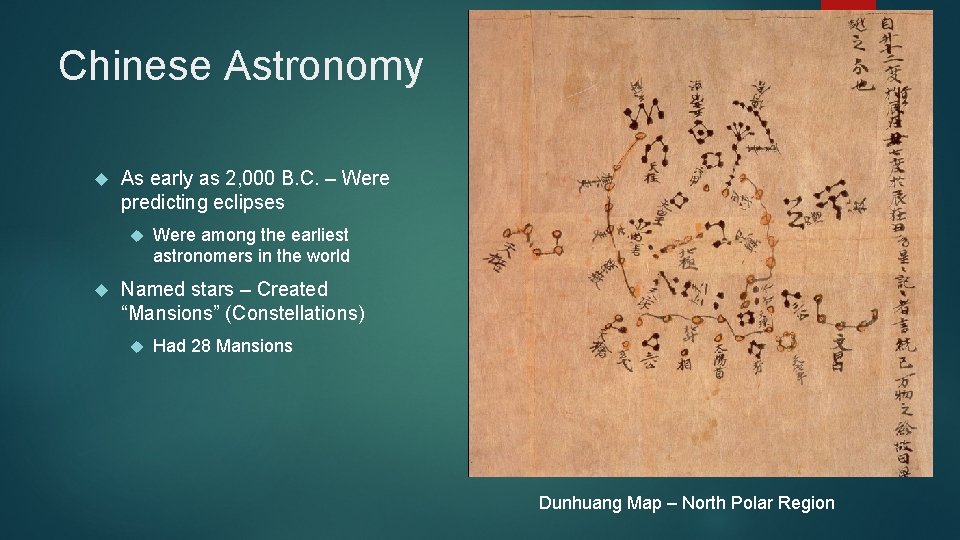
Chinese Astronomy As early as 2, 000 B. C. – Were predicting eclipses Were among the earliest astronomers in the world Named stars – Created “Mansions” (Constellations) Had 28 Mansions Dunhuang Map – North Polar Region
Chinese Astonomy Had records of Halley’s Comet and “guest stars”, which were supernovas Had extensive records of the supernova that caused the Crab Nebula (SN 1054) Worked with Indian Astronomers during the Tang Dynasty (600 -900 A. D. ) as well as with Arab Astronomers during the Yuan Dynasty (1200 -1400 A. D. ) Were open to the idea that the Earth was in motion, but no formal research was undertaken.
Greek Astonomy Archaic Greek Astronomy Literary references to stars and constellations Bootes, Orion, Ursa Major, Sirius, etc… Works of Homer and Hesiod – 700 -800 B. C. Some cosmic speculation Anaximander – 600 B. C. Cylindrical Earth, suspended – surrounded by fire Philolaus – 400 B. C. Cosmos with Sun, Moon, Earth, and anti-Earth (Antichthon) circling an unseen central fire Early Greeks knew of the planets and their special place in our solar system Orphism (religion) – 5 th century B. C. Earth is round, has an axis, rotates in a day, climate zones, etc…
Greek Astronomy Greek Planets 5 planets or “wanderers” can be seen with the Naked Eye from Earth Mercury – Hermes (messenger god) Venus – Aphrodite (goddess of love) Mars – Ares (god of war) Jupiter – Zeus (king of the gods) Saturn – Cronus (father of Zeus) Careful observations are needed to determine the planets and their locations Early Greeks thought Venus was two different planets (one in the morning, one in the evening) Hesperius (“evening star”) and Phosphorus (“light-bringer”) – Pythagoras realized they were the same star.
Eudoxan Astonomy The Pythagoreans placed astronomy among the 4 mathematical arts Arithmetic, Geometry, Music and Astronomy The Eudoxan system involved… A shift from stellar to planetary concerns The creation of the “two-sphere” model The establishment of theories for planetary observations
Two Sphere Model Geocentric (Earth centered) model Two Regions Spherical Earth – central and motionless Heavenly realm – centered on Earth, made of multiple rotating spheres of aether. Plato – 8 heavenly spheres carrying the 7 planets and the fixed stars Eudoxus – Used concentric spheres, tilting axes, and different periods of revolutions – was able to approximate the celestial appearances. Unfortunately all his work was lost, so we only have secondary sources
Two Sphere Model Callippus – Added more spheres (up to 34 now!) to better describe the motion Aristotle – Added “unrolling” spheres between each set to cancel the motions of the outer set, otherwise he believed the motion would be transferred to the inner planets Had many critical flaws Could not predict motions exactly Could not explain why the planets changed apparent speed Could not explain changes in brightness of planets
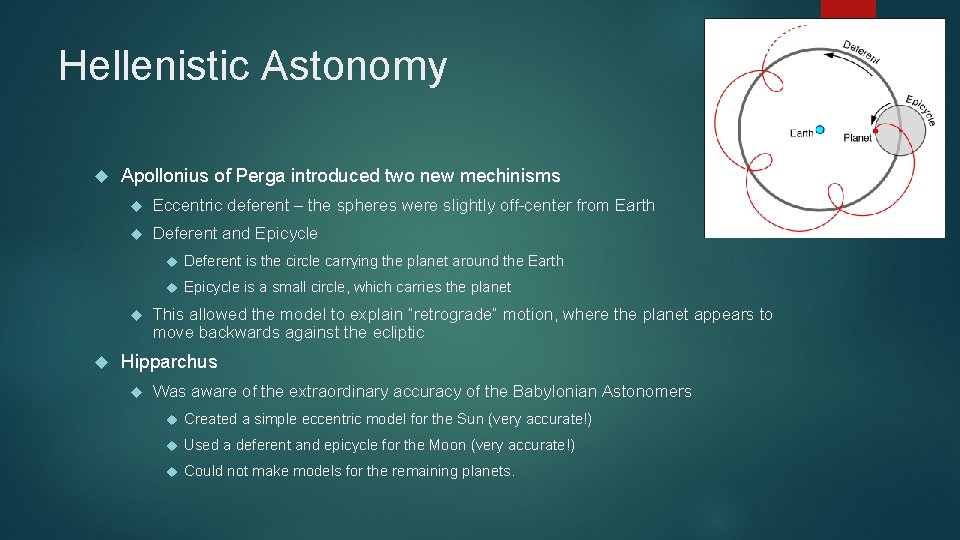
Hellenistic Astonomy Apollonius of Perga introduced two new mechinisms Eccentric deferent – the spheres were slightly off-center from Earth Deferent and Epicycle Deferent is the circle carrying the planet around the Earth Epicycle is a small circle, which carries the planet This allowed the model to explain “retrograde” motion, where the planet appears to move backwards against the ecliptic Hipparchus Was aware of the extraordinary accuracy of the Babylonian Astonomers Created a simple eccentric model for the Sun (very accurate!) Used a deferent and epicycle for the Moon (very accurate!) Could not make models for the remaining planets.
Hipparchus Also created a star catalogue Observed a nova (new star) Discovered Precession, the slow motion of the stars over the course of many, many years. Attributed this to the motion of the stellar sphere (previously thought to be completely motionless) Precession is real, but has a different mechanism
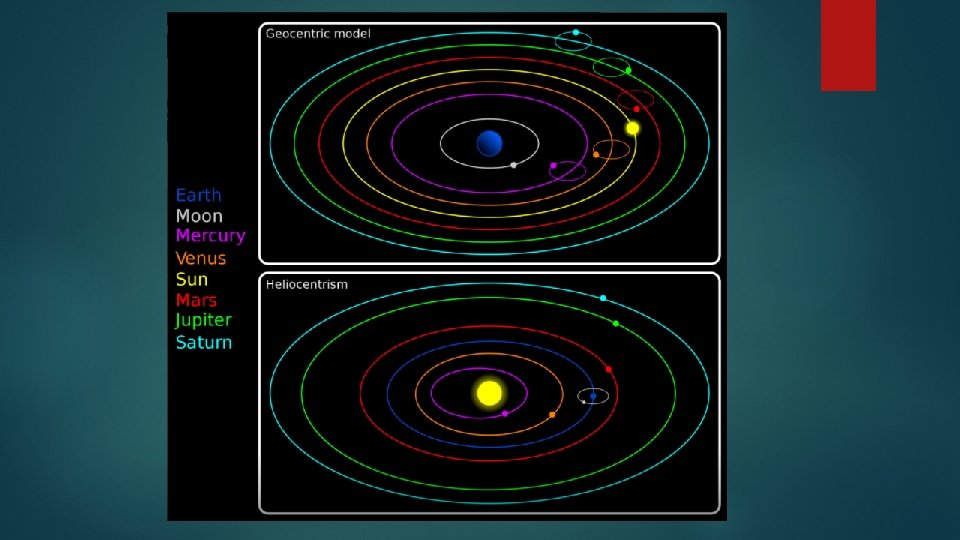
Heliocentrism Aristarchus of Samos Proposed a heliocentric (sun-centered) cosmos. Ideas were not well received, only one known follower Calculated the sizes of the Earth and the Moon, as well as their distances in Earth radii (didn’t know the size of the Earth) Shortly later – Eratosthenes calculated the size of the Earth, so a value could be plugged in Hipparchus also calculated the size of the Sun and Moon Both guys greatly underestimated the distance of the Sun from the Earth. They were fairly close on the Moon though!!
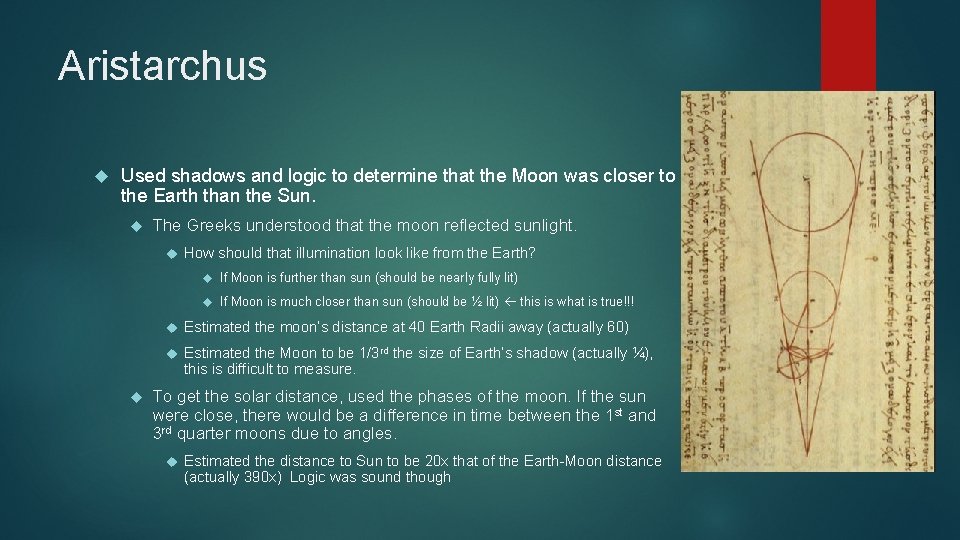
Aristarchus Used shadows and logic to determine that the Moon was closer to the Earth than the Sun. The Greeks understood that the moon reflected sunlight. How should that illumination look like from the Earth? If Moon is further than sun (should be nearly fully lit) If Moon is much closer than sun (should be ½ lit) this is what is true!!! Estimated the moon’s distance at 40 Earth Radii away (actually 60) Estimated the Moon to be 1/3 rd the size of Earth’s shadow (actually ¼), this is difficult to measure. To get the solar distance, used the phases of the moon. If the sun were close, there would be a difference in time between the 1 st and 3 rd quarter moons due to angles. Estimated the distance to Sun to be 20 x that of the Earth-Moon distance (actually 390 x) Logic was sound though
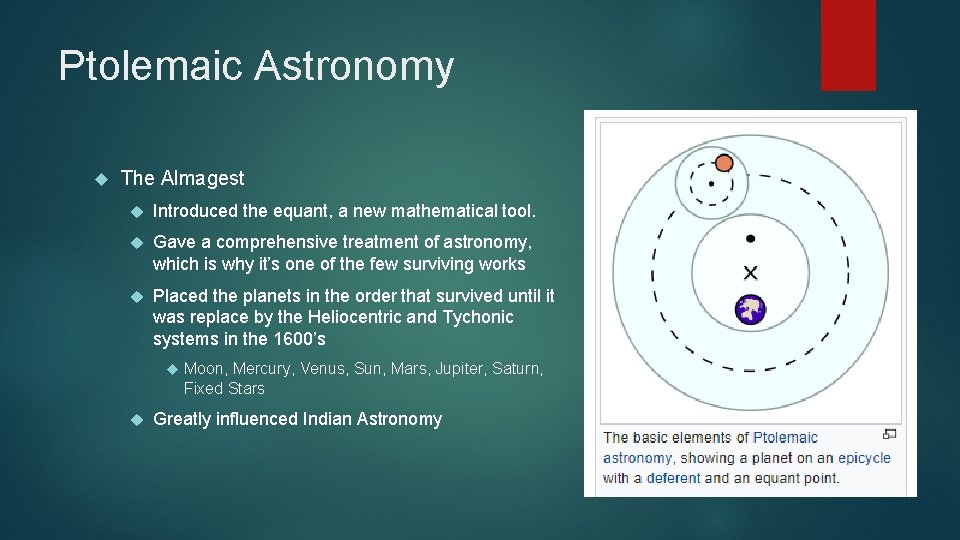
Ptolemaic Astronomy The Almagest Introduced the equant, a new mathematical tool. Gave a comprehensive treatment of astronomy, which is why it’s one of the few surviving works Placed the planets in the order that survived until it was replace by the Heliocentric and Tychonic systems in the 1600’s Moon, Mercury, Venus, Sun, Mars, Jupiter, Saturn, Fixed Stars Greatly influenced Indian Astronomy
Indian Astronomy and Hinduism (primary religion of India) are tightly interwoven Had extensive contact with Greek civilization, so heavily influenced by them Indian Astronomer Aryabhata described motions of planets and eclipses in 600 A. D. Proposed a Heliocentric (Sun-centered model) of the solar system. Believed that the moon reflected sunlight, and that the Earth moved. (ALL OF THESE ARE TRUE!!!) Unfortunately, many early record have been destroyed and lost due to invasion/climate
Arab (Islamic) Astronomy Mostly a continuation of Greek Astronomy Many of our records of Greek Astronomy are those saved by the Arabic Cultures Ptolemy’s work was saved in an Arabic translation called al-Magiste 820 A. D. – Measured the circumference of the Earth to within 4% of it’s true value 850 A. D. – al-Farghani corrected many errors in Ptolemy’s work. Improved measurements of the Earth’s orbital tilt and the precession of the Earth’s axis Advanced the field of Optics, and used it to make better observations of the sky, building observatories
Arab (Islamic) Astronomy Invented the Pinhole camera, used to measure stellar positions However, they created no new cosmological models because pictorial representations of the heavens are forbidden by the Koran The prefix ‘al-’ means “the” in Arabic, and it influences many of the names in Astronomy and other fields Algebra, algorithm, Algol, Alcor, Aldebaran, etc… Many Arabic manuscripts have not even been read or even catalogued at this time, so there may be more fascinating discoveries they made that we don’t know about.
Egyptian Astronomy By 3000 B. C. E – Egyptian Astronomers had developed The 365 day calendar Alignments of the pyramids to the pole star (Thuban) The pole star moves because of Precession – the slow “wobble” of Earth’s axis over a 26, 000 year period Temple of Amun-Re at Karnak was aligned to the rising of the midwinter sun It no longer is, because of the obliquity of the Earth’s axis (The 23. 5 degree tilt is slowly changing over a 41, 000 year period) Religious festivals were timed to Astronomical events Predicting the flooding of the Nile river.
- Slides: 35