
Ancient Astronomers Perspectives from the Greek Golden Age
- Slides: 9
Ancient Astronomers Perspectives from the Greek Golden Age
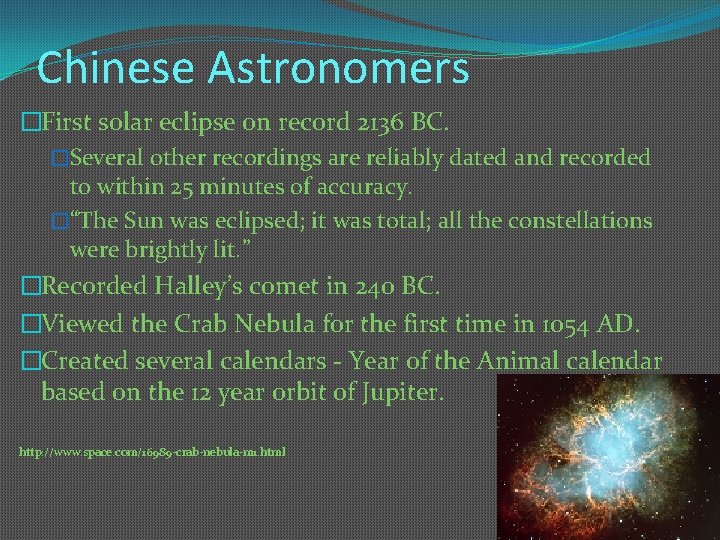
Chinese Astronomers �First solar eclipse on record 2136 BC. �Several other recordings are reliably dated and recorded to within 25 minutes of accuracy. �“The Sun was eclipsed; it was total; all the constellations were brightly lit. ” �Recorded Halley’s comet in 240 BC. �Viewed the Crab Nebula for the first time in 1054 AD. �Created several calendars - Year of the Animal calendar based on the 12 year orbit of Jupiter. http: //www. space. com/16989 -crab-nebula-m 1. html
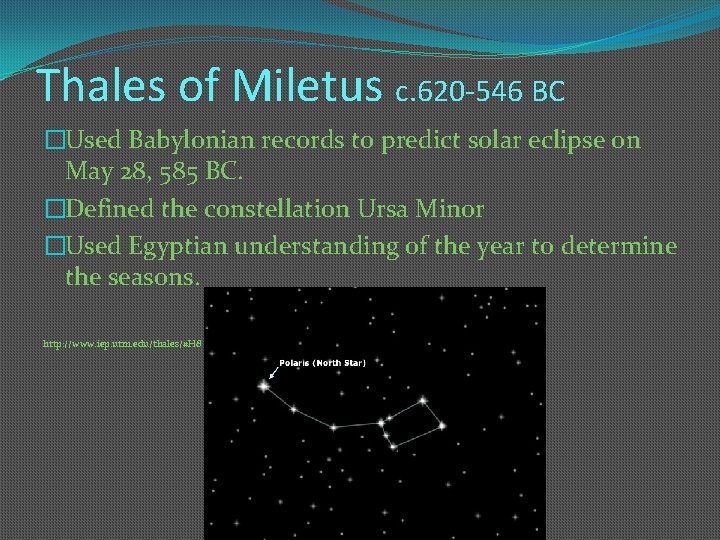
Thales of Miletus c. 620 -546 BC �Used Babylonian records to predict solar eclipse on May 28, 585 BC. �Defined the constellation Ursa Minor �Used Egyptian understanding of the year to determine the seasons. http: //www. iep. utm. edu/thales/#H 8
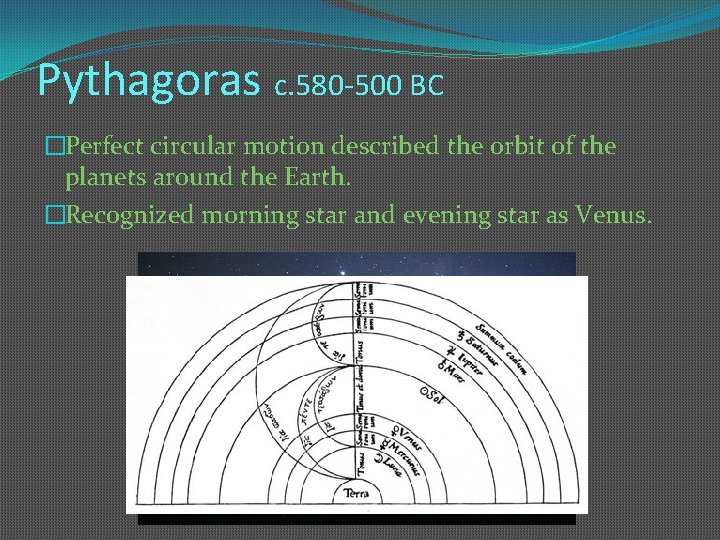
Pythagoras c. 580 -500 BC �Perfect circular motion described the orbit of the planets around the Earth. �Recognized morning star and evening star as Venus.
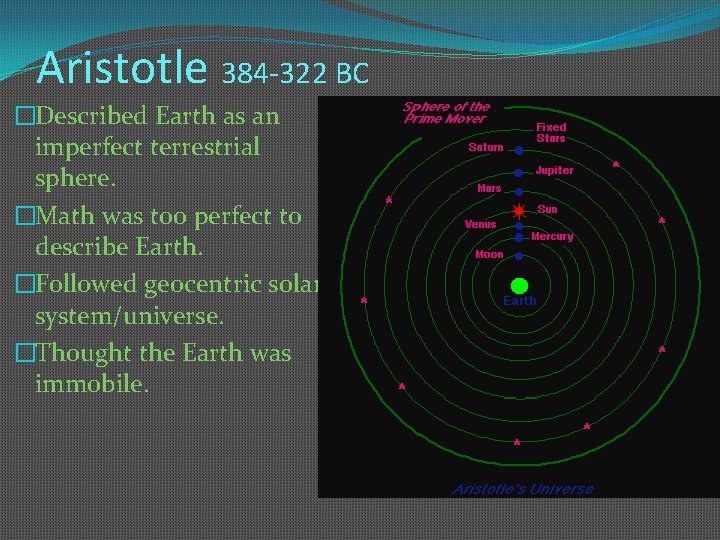
Aristotle 384 -322 BC �Described Earth as an imperfect terrestrial sphere. �Math was too perfect to describe Earth. �Followed geocentric solar system/universe. �Thought the Earth was immobile.
Aristarchus 310 -230 BC �Calculated Sun to be 20 X farther than Moon, 20 X larger than Moon, and 10 X larger than Earth. �Concluded that solar system is heliocentric.
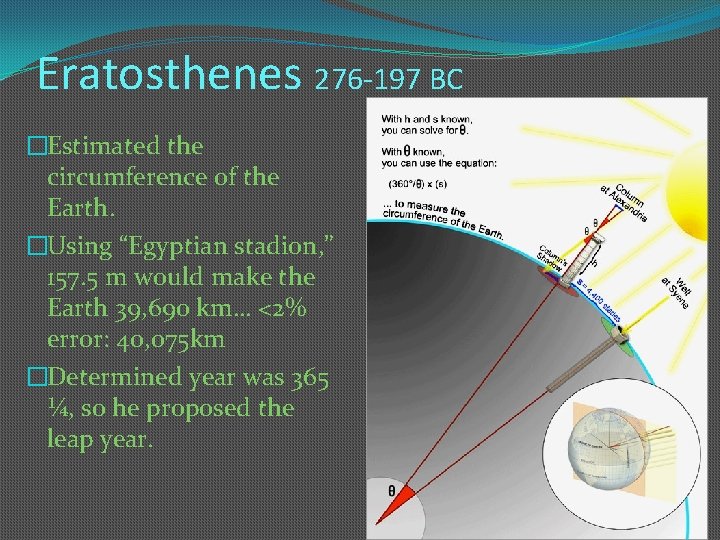
Eratosthenes 276 -197 BC �Estimated the circumference of the Earth. �Using “Egyptian stadion, ” 157. 5 m would make the Earth 39, 690 km… <2% error: 40, 075 km �Determined year was 365 ¼, so he proposed the leap year.
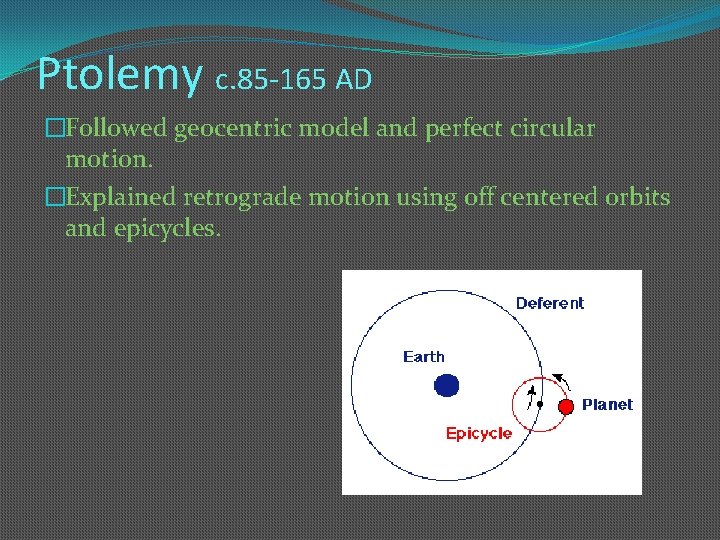
Ptolemy c. 85 -165 AD �Followed geocentric model and perfect circular motion. �Explained retrograde motion using off centered orbits and epicycles.
Questions to Ponder… �Are there more stars in the visible universe than grains of sand on Earth? �Can you hear sounds in space? �What kind of cheese is the moon made of? ?