
Ancient African Kingdoms The Kingdom of Kush Kush

- Slides: 29
Ancient African Kingdoms
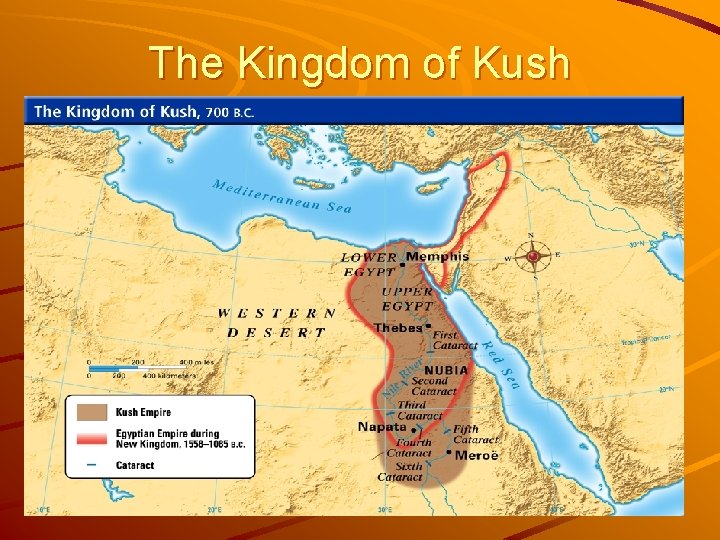
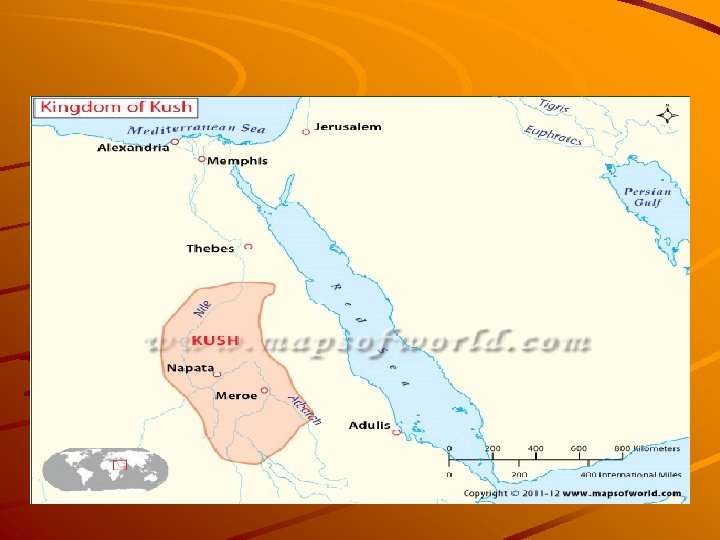
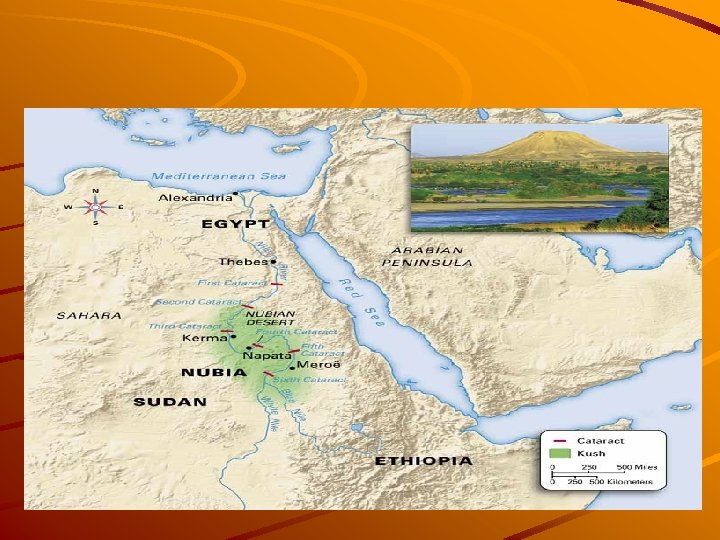
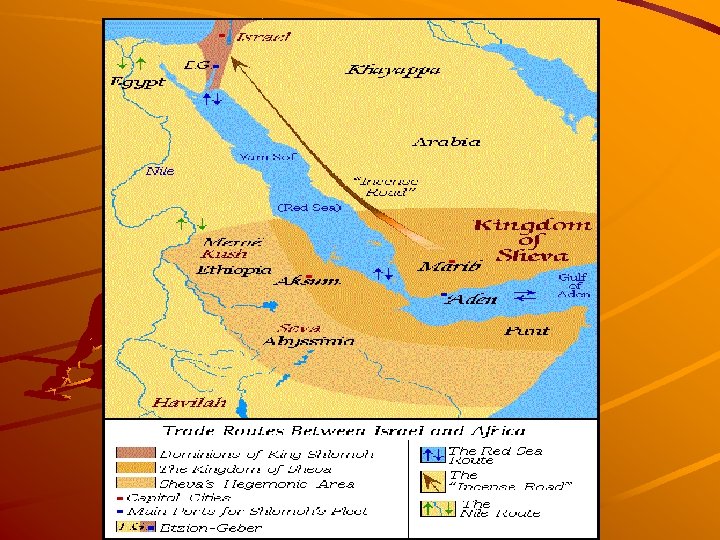
The Kingdom of Kush
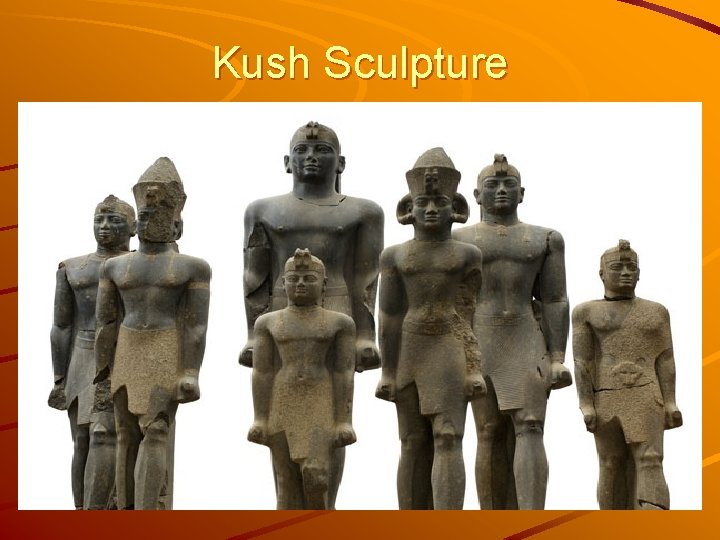
Kush Sculpture
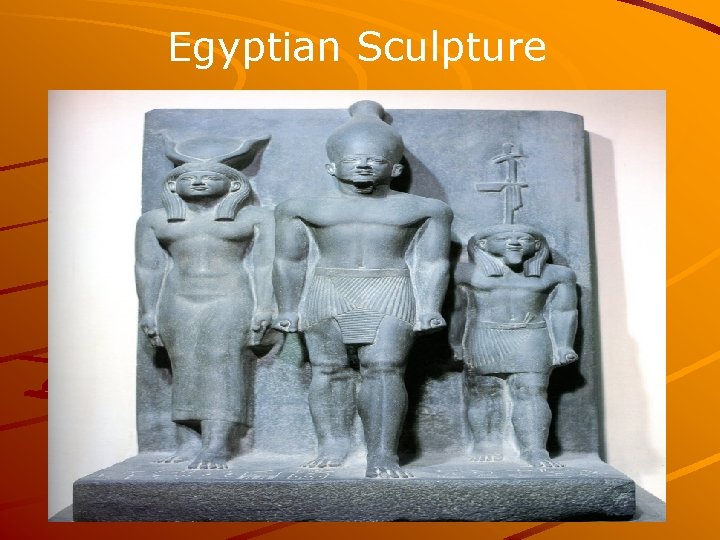
Egyptian Sculpture
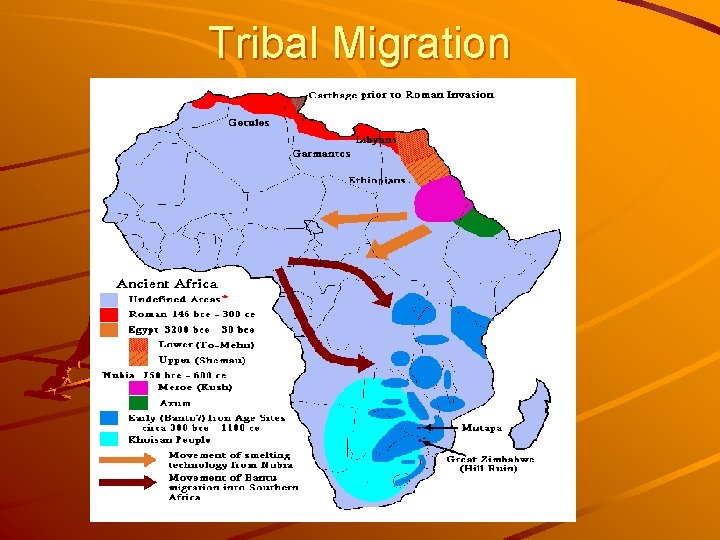
Tribal Migration
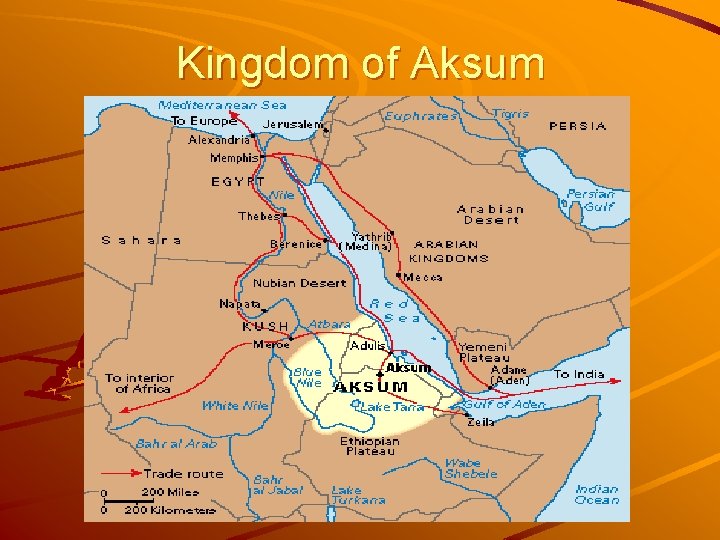
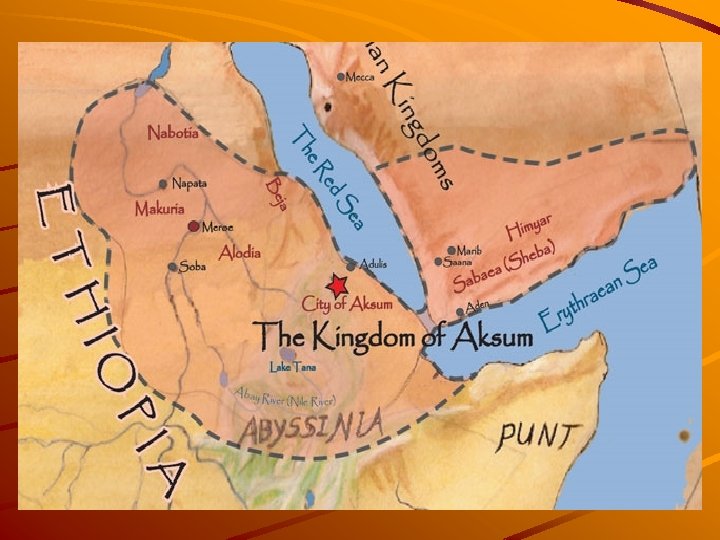
Kingdom of Aksum
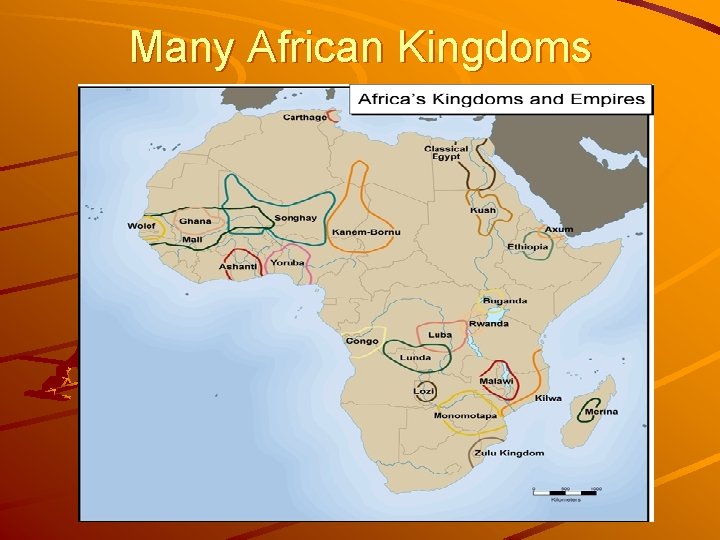
Many African Kingdoms
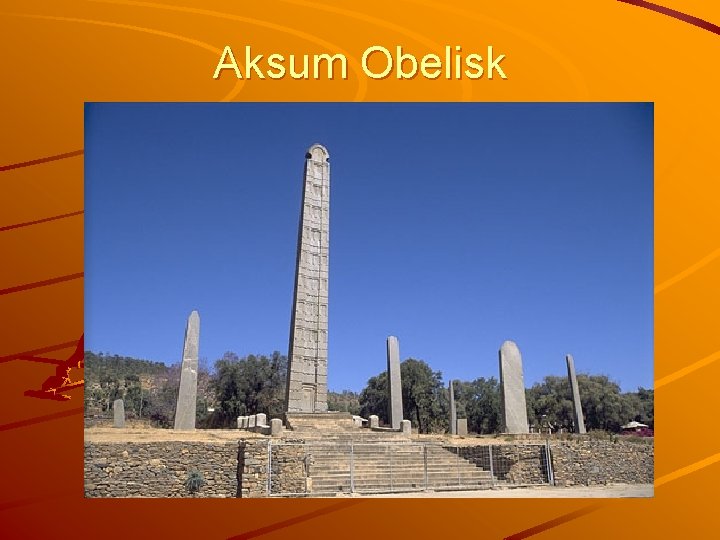
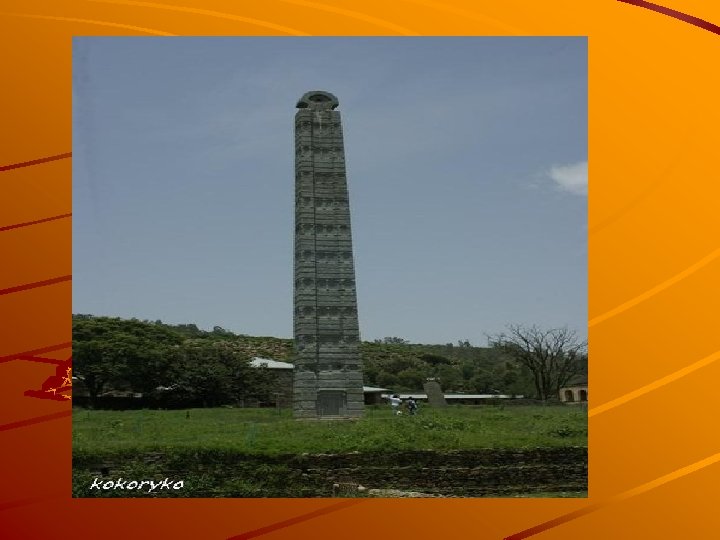
Aksum Obelisk
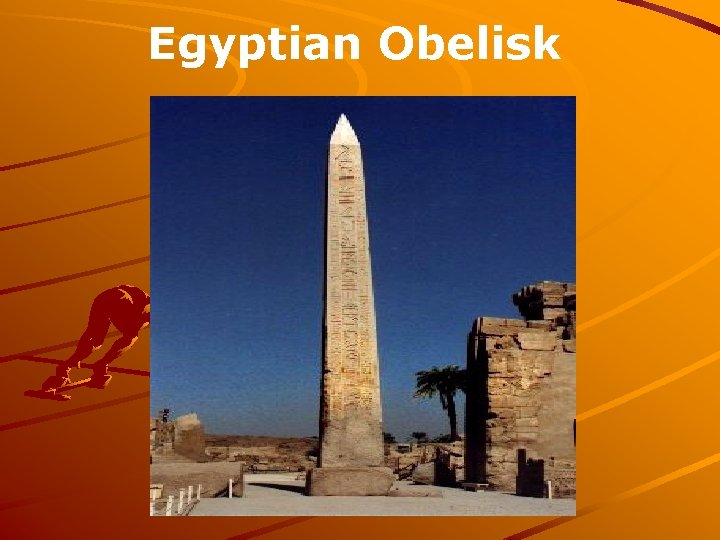
Egyptian Obelisk
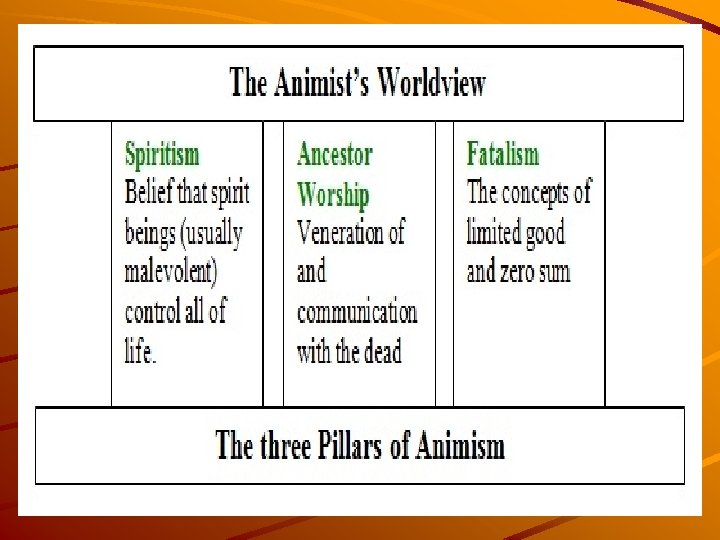
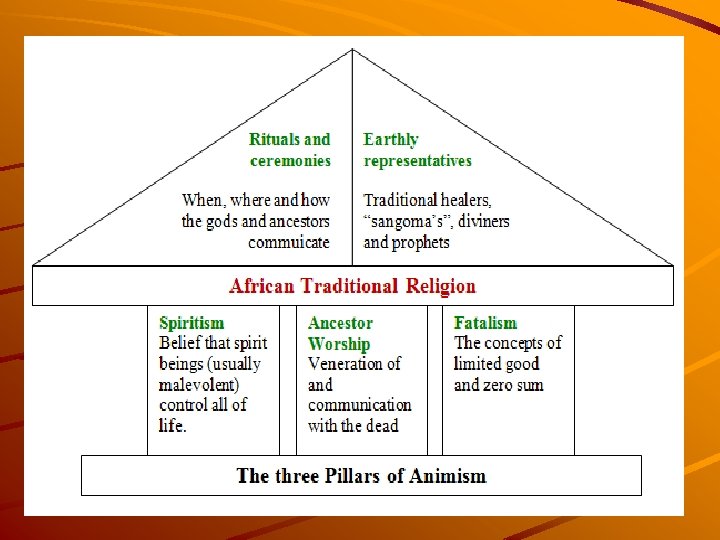
African Animism is on most continents and is usually associated with nomadic or pastoral cultures. Animists are similar to Shamanists They believe in one supreme God But they also believe there are many lesser gods and spirits in nature Animism has no founder or religious text to read They have no fixed place of worship
Animist practice or worship in nature: waterfalls, beautiful trees, sunny skies Their beliefs are passed on orally from generation to generation The Griot or storyteller passes on the beliefs and tells stories about important ancestors Dances, songs, rituals are all part of their worship They sometimes wear particular masks during their ceremonies
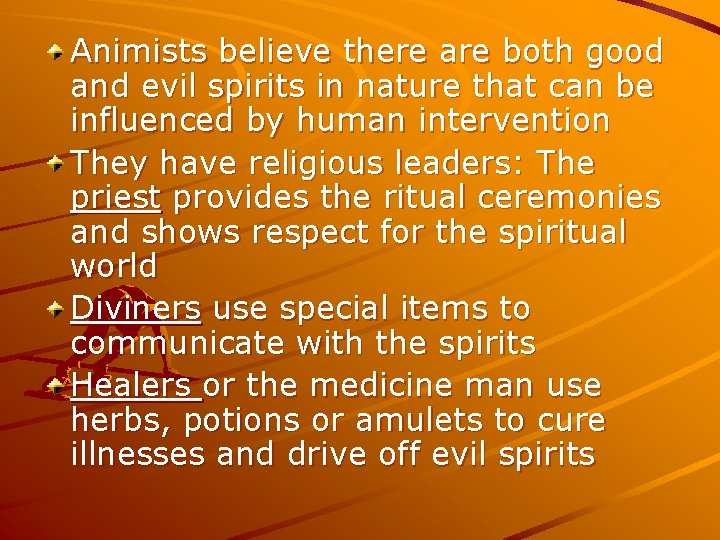
Animists believe there are both good and evil spirits in nature that can be influenced by human intervention They have religious leaders: The priest provides the ritual ceremonies and shows respect for the spiritual world Diviners use special items to communicate with the spirits Healers or the medicine man use herbs, potions or amulets to cure illnesses and drive off evil spirits
The Rain Maker performs songs and dances to bring needed rain for their crops and animals. Animists believe in both good and bad magic. Magic can bring you good luck and magic can also put a curse on you
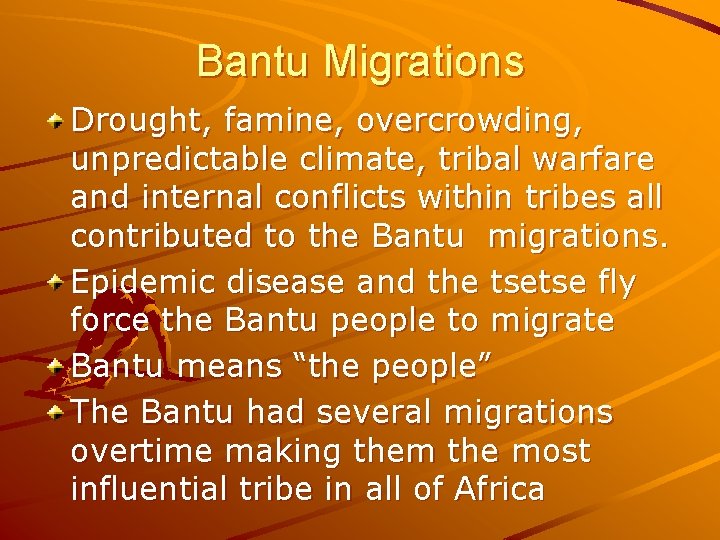
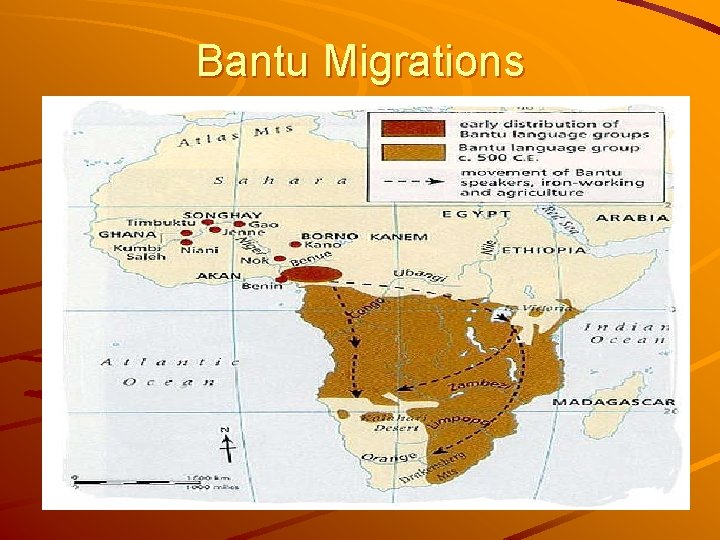
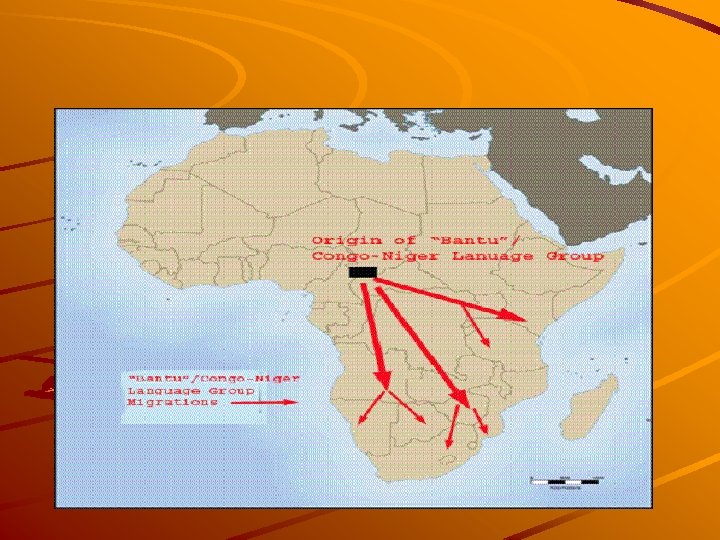
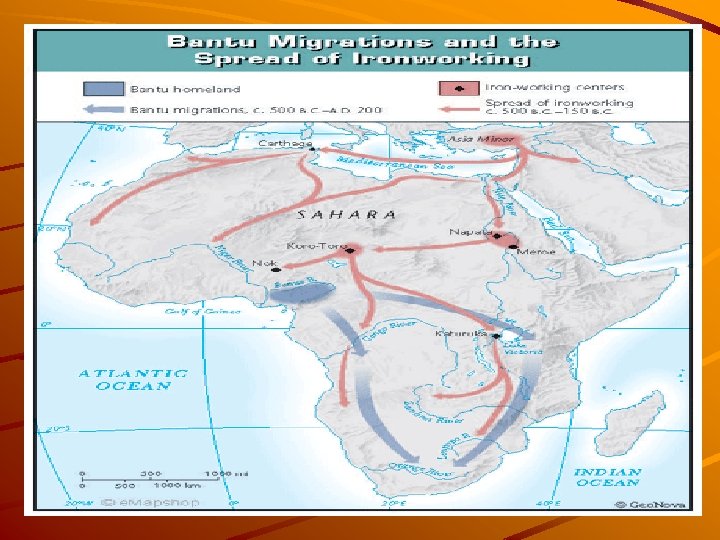
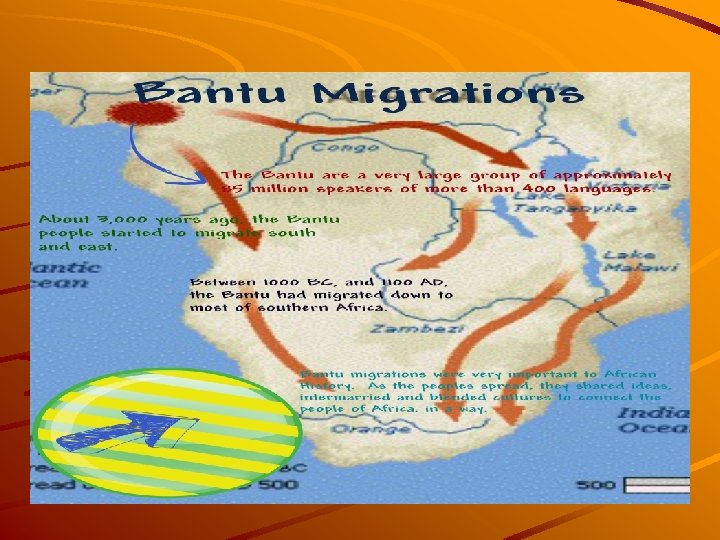
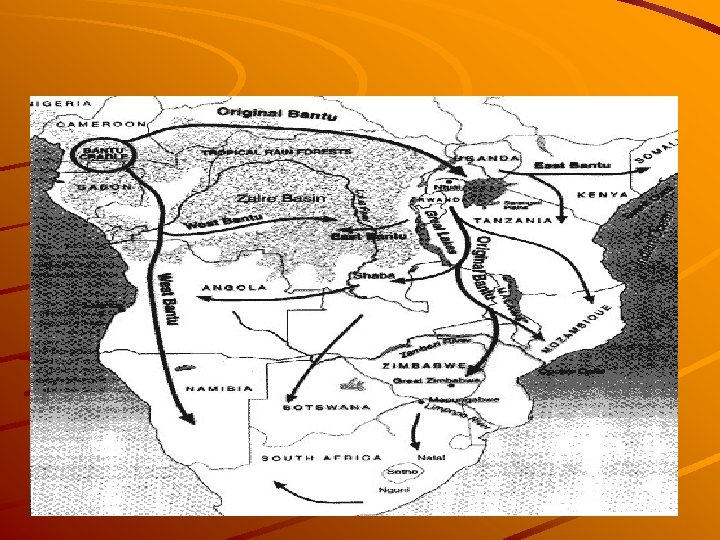
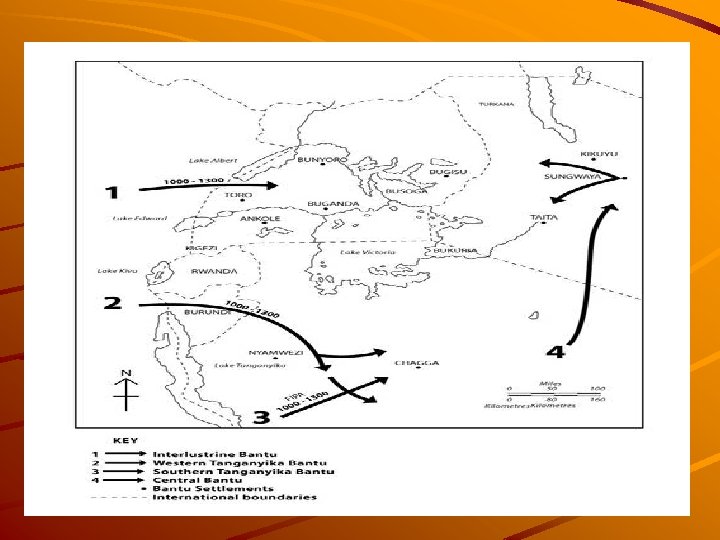
Bantu Migrations Drought, famine, overcrowding, unpredictable climate, tribal warfare and internal conflicts within tribes all contributed to the Bantu migrations. Epidemic disease and the tsetse fly force the Bantu people to migrate Bantu means “the people” The Bantu had several migrations overtime making them the most influential tribe in all of Africa
The Bantu tribe had contacts with the Kingdoms of Kush and city of Meroe Those Kingdoms had contact with Mediterranean civilization The diffusion that had the biggest influence on the Bantu was iron casting Iron led to better farming tools and weapons making the Bantu tribe the most powerful and important tribe in Africa
The Bantu migrations diffused better agricultural techniques and introduced new crops to Africa Yams and bananas They brought about the idea of centralized government or the idea of a chief or king They opened up more lands to settlements They influenced many of the spoken languages in Africa
Bantu Migrations