
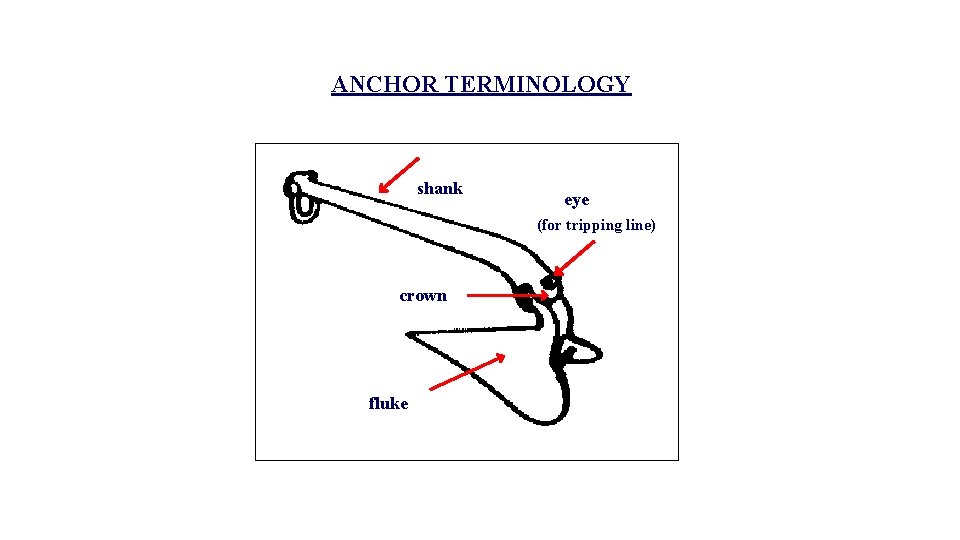
ANCHOR TERMINOLOGY shank eye for tripping line crown


- Slides: 34
ANCHOR TERMINOLOGY shank eye (for tripping line) crown fluke
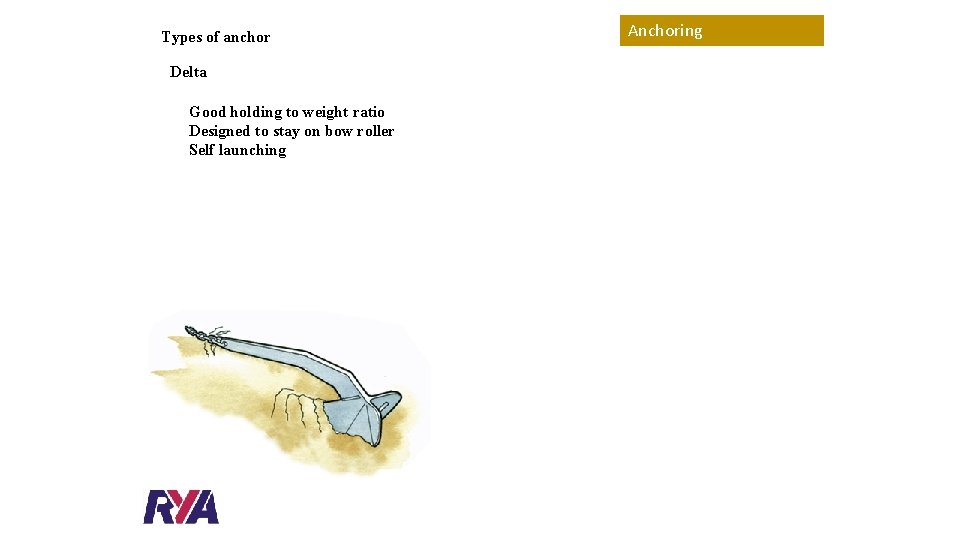
Types of anchor Delta Good holding to weight ratio Designed to stay on bow roller Self launching Anchoring
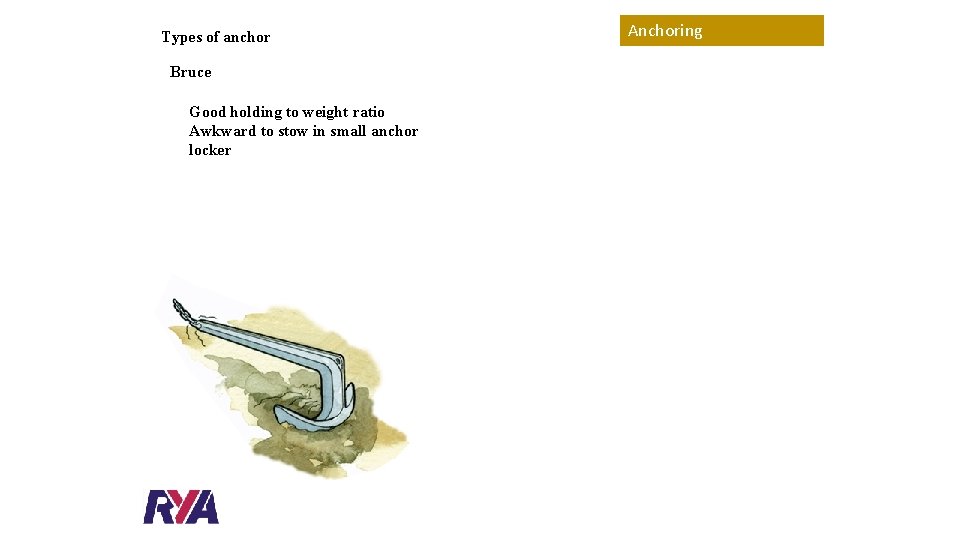
Types of anchor Bruce Good holding to weight ratio Awkward to stow in small anchor locker Anchoring
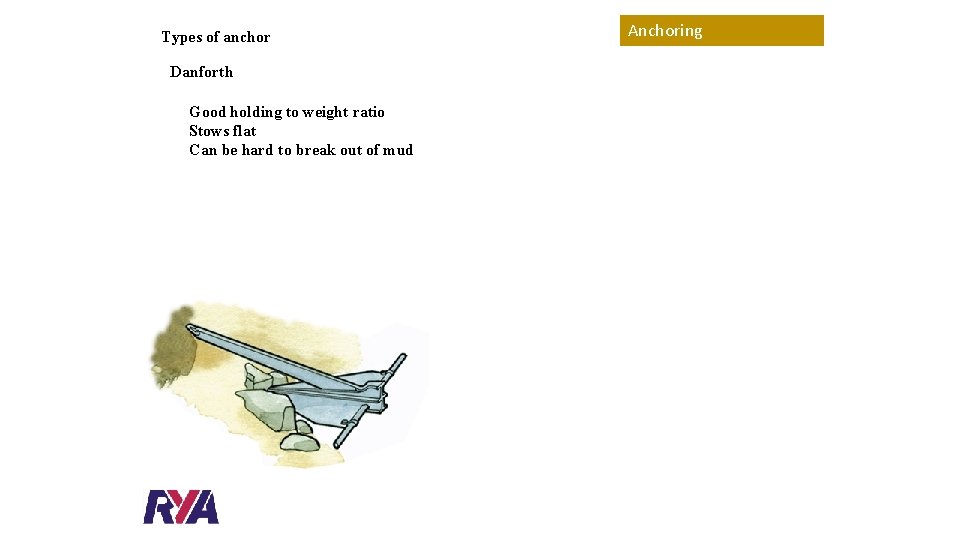
Types of anchor Danforth Good holding to weight ratio Stows flat Can be hard to break out of mud Anchoring
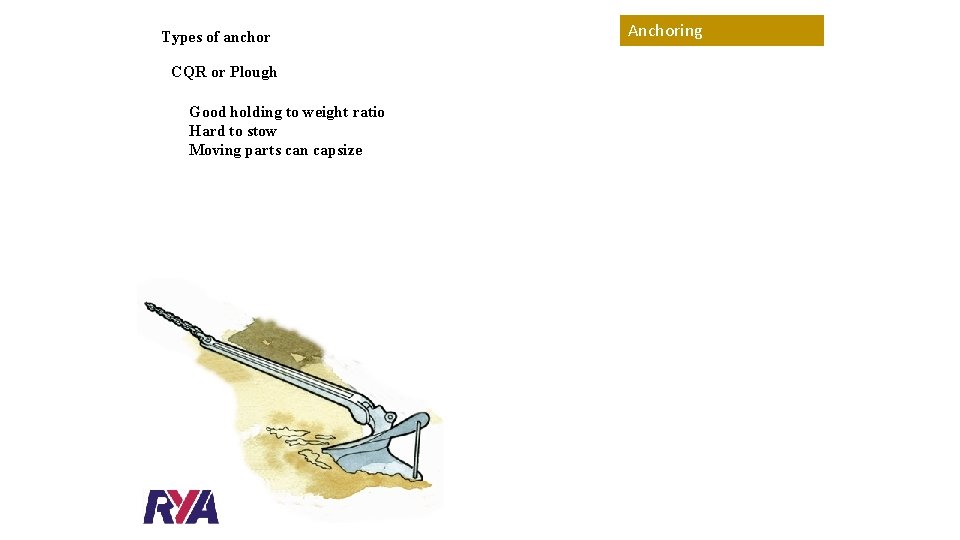
Types of anchor CQR or Plough Good holding to weight ratio Hard to stow Moving parts can capsize Anchoring
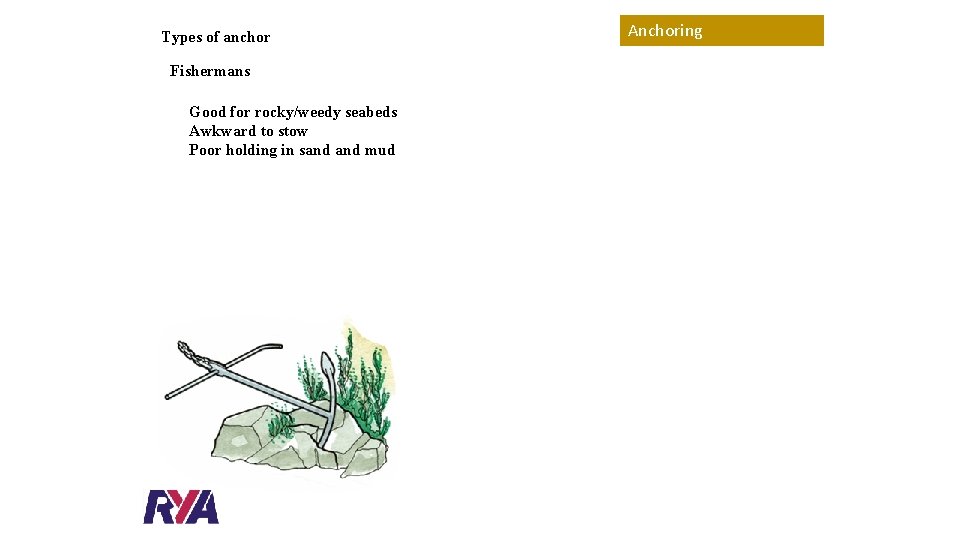
Types of anchor Fishermans Good for rocky/weedy seabeds Awkward to stow Poor holding in sand mud Anchoring
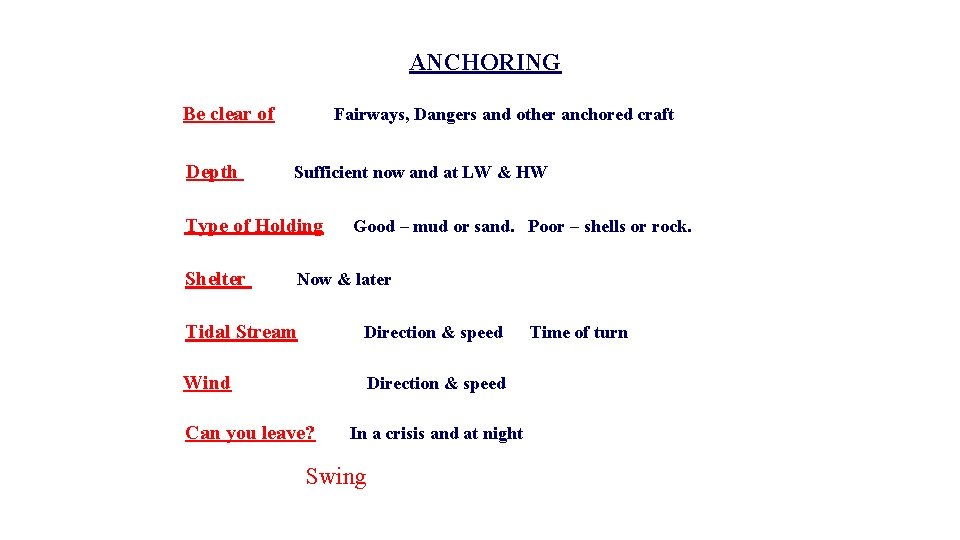
ANCHORING Be clear of Depth Fairways, Dangers and other anchored craft Sufficient now and at LW & HW Type of Holding Shelter Good – mud or sand. Poor – shells or rock. Now & later Tidal Stream Direction & speed Wind Direction & speed Can you leave? In a crisis and at night Swing Time of turn
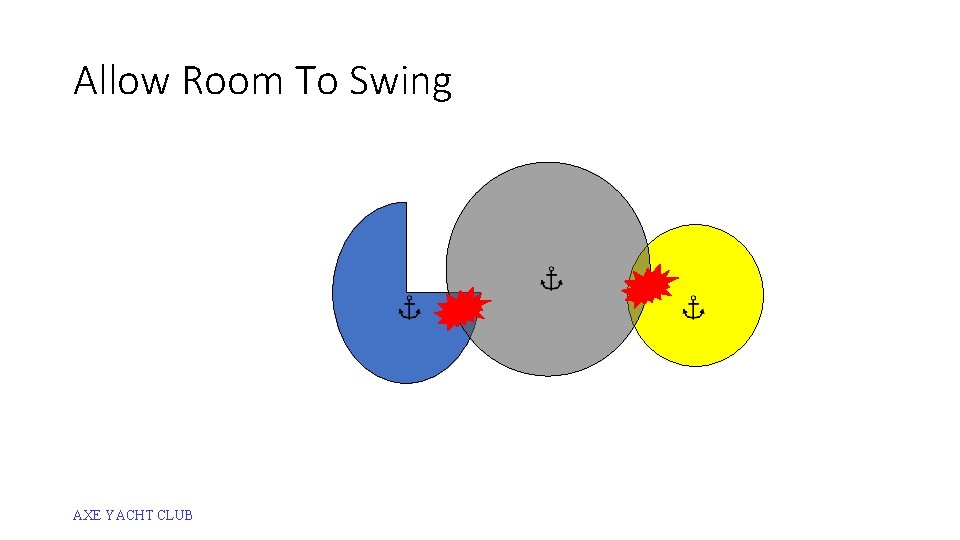
Allow Room To Swing AXE YACHT CLUB
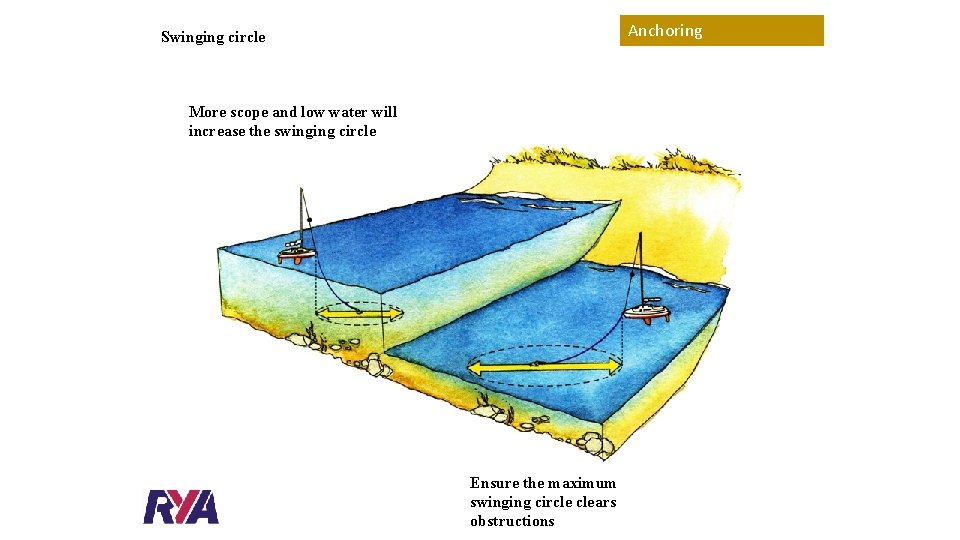
Anchoring Swinging circle More scope and low water will increase the swinging circle Ensure the maximum swinging circle clears obstructions
Movement at anchor and on a buoy
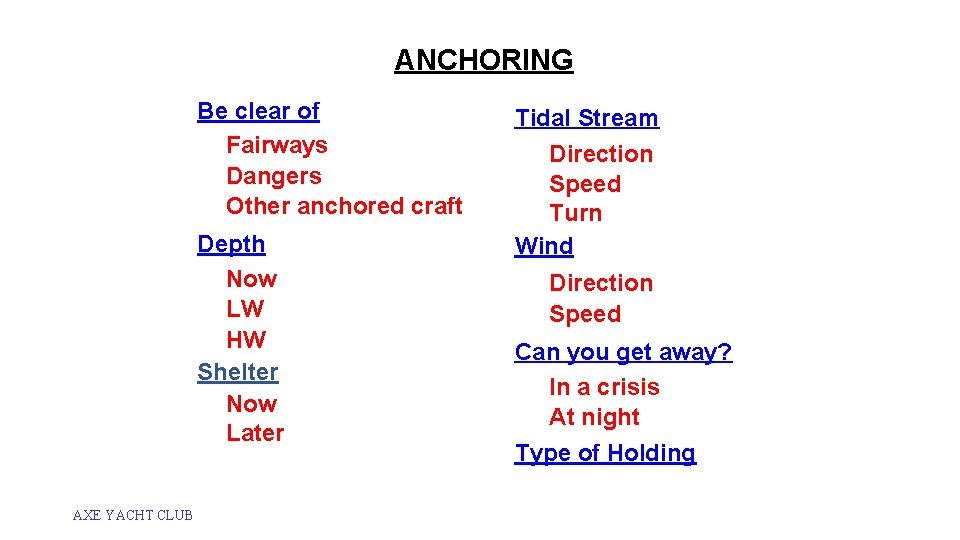
ANCHORING Be clear of Fairways Dangers Other anchored craft Depth Now LW HW Shelter Now Later AXE YACHT CLUB Tidal Stream Direction Speed Turn Wind Direction Speed Can you get away? In a crisis At night Type of Holding
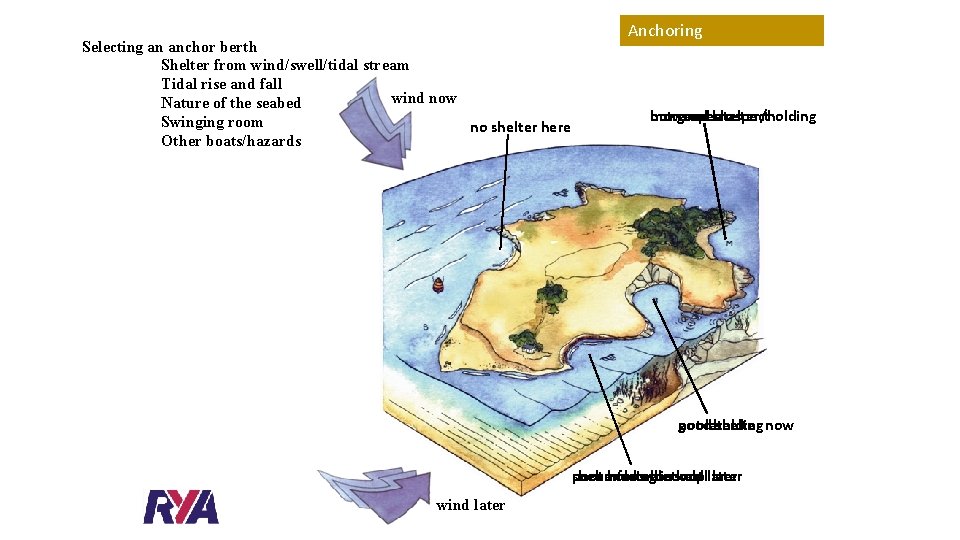
Selecting an anchor berth Shelter from wind/swell/tidal stream Tidal rise and fall wind now Nature of the seabed Swinging room no shelter here Other boats/hazards Anchoring more now but good and open later shelter/holding aspect goodlater not poor holding shelter now shelter uncomfortable poor holding now but in swell kelp not later wind later
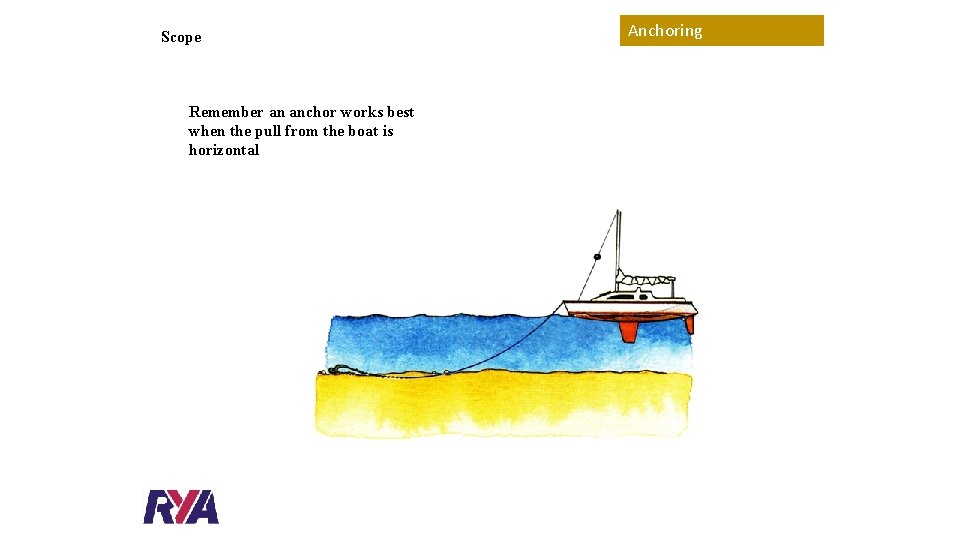
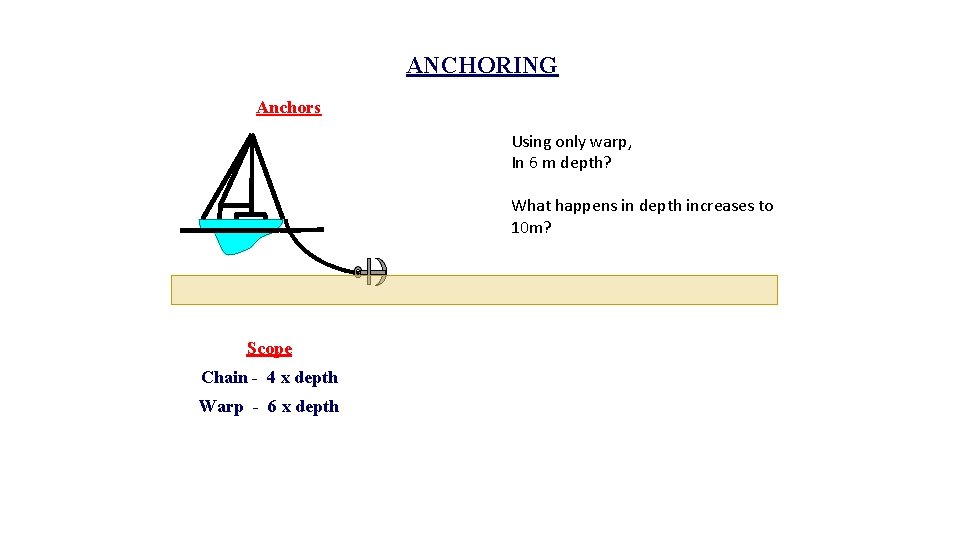
Scope Remember an anchor works best when the pull from the boat is horizontal Anchoring
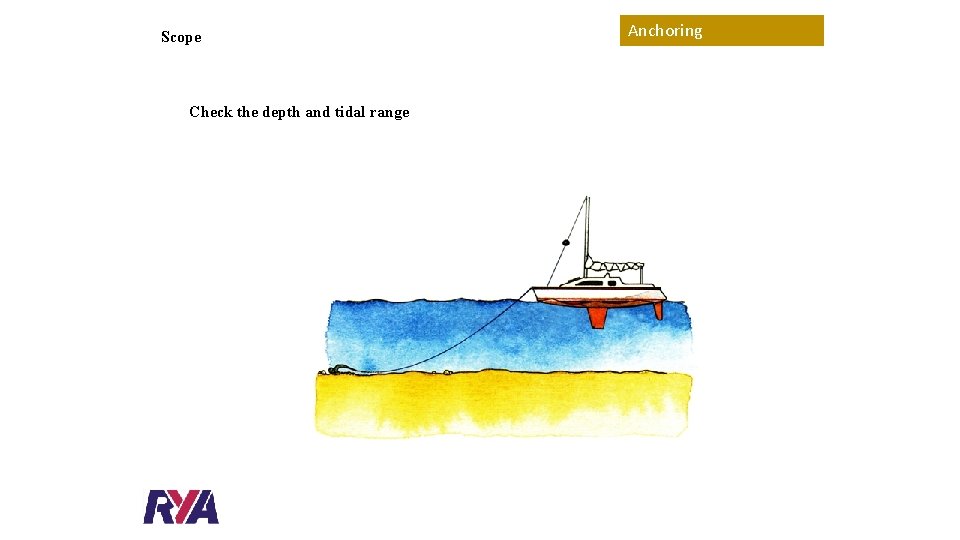
Scope Check the depth and tidal range Anchoring
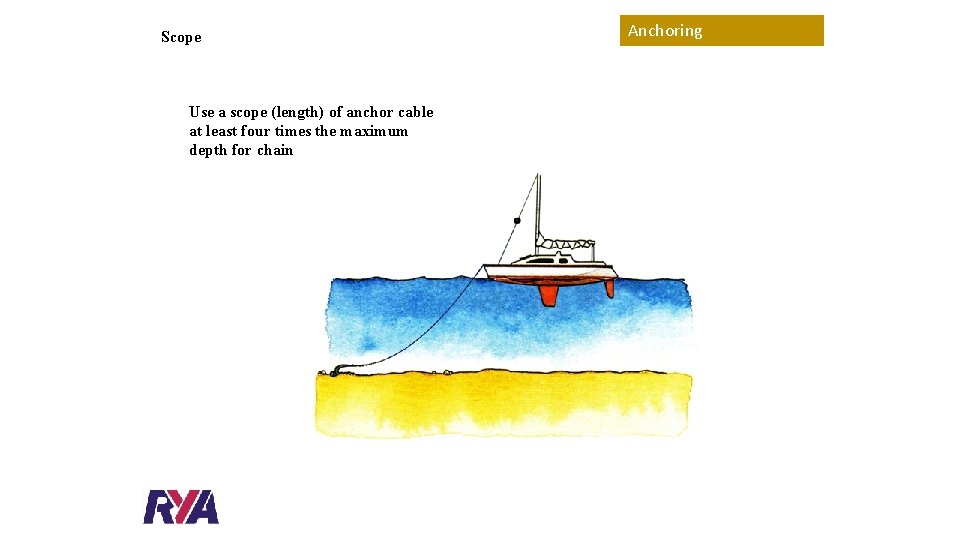
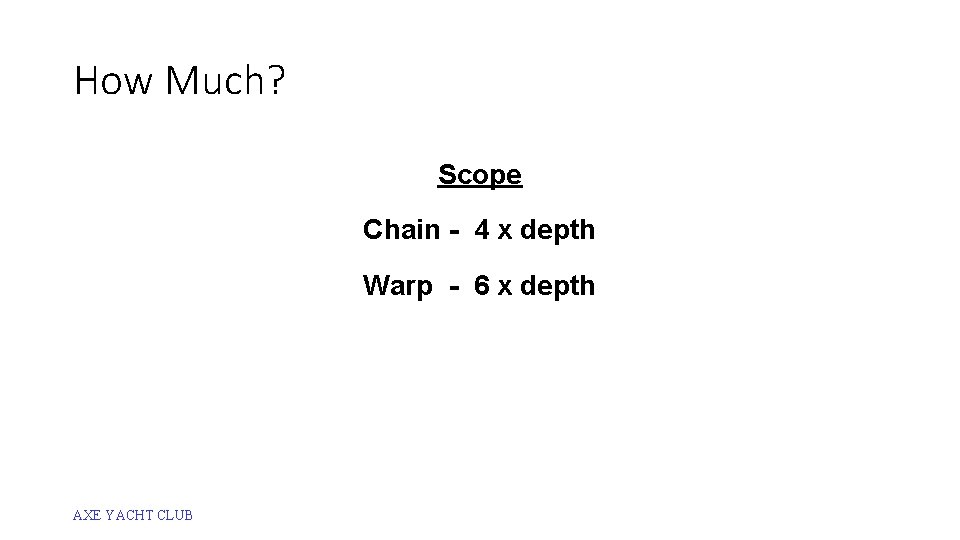
Scope Use a scope (length) of anchor cable at least four times the maximum depth for chain Anchoring
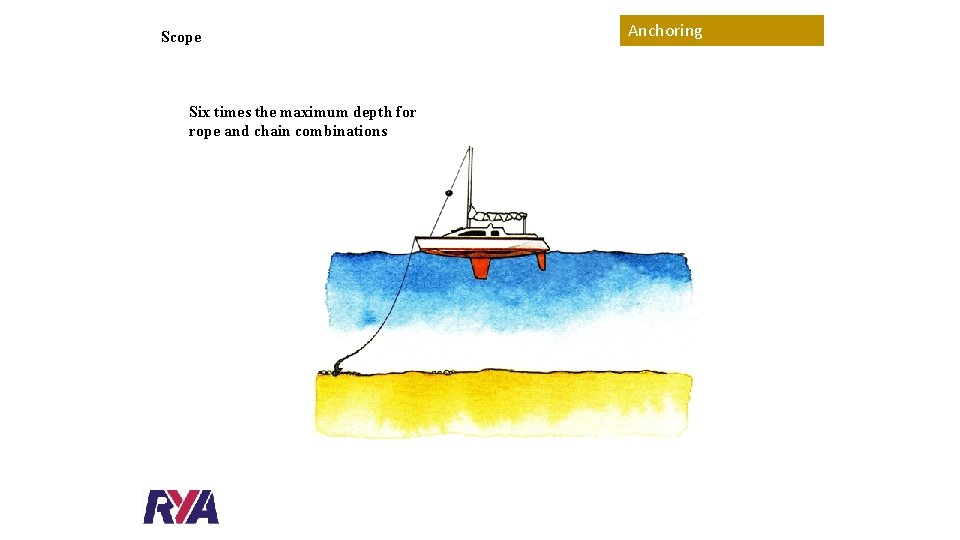
Scope Six times the maximum depth for rope and chain combinations Anchoring
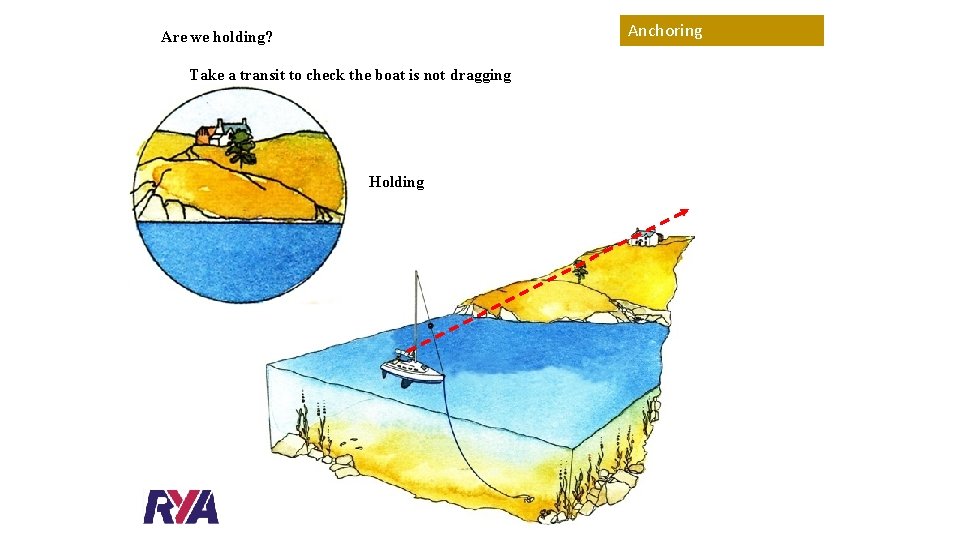
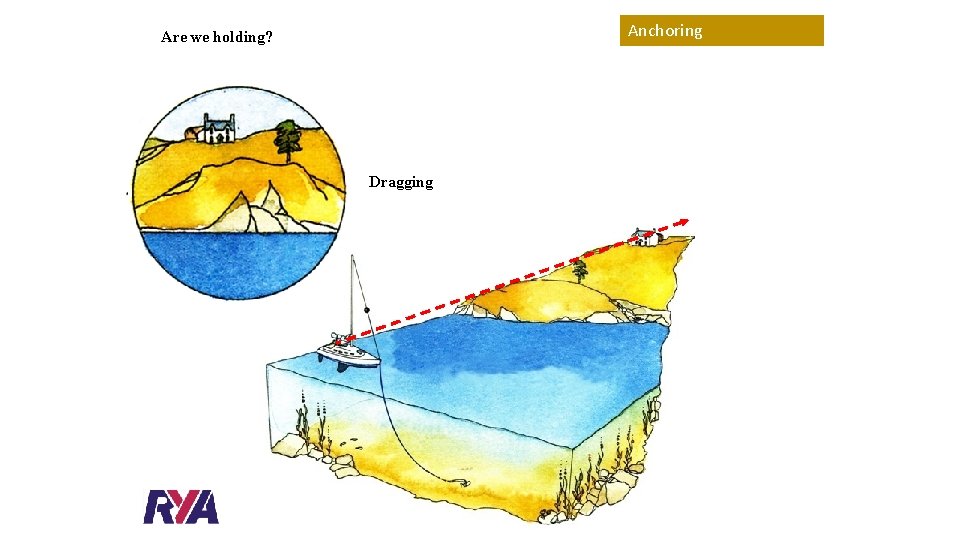
Anchoring Are we holding? Take a transit to check the boat is not dragging Holding
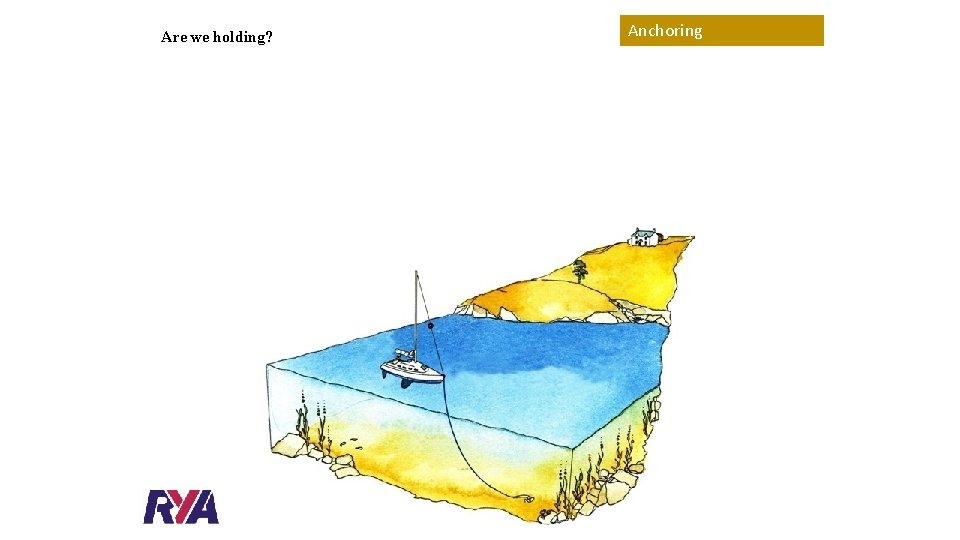
Are we holding? Anchoring
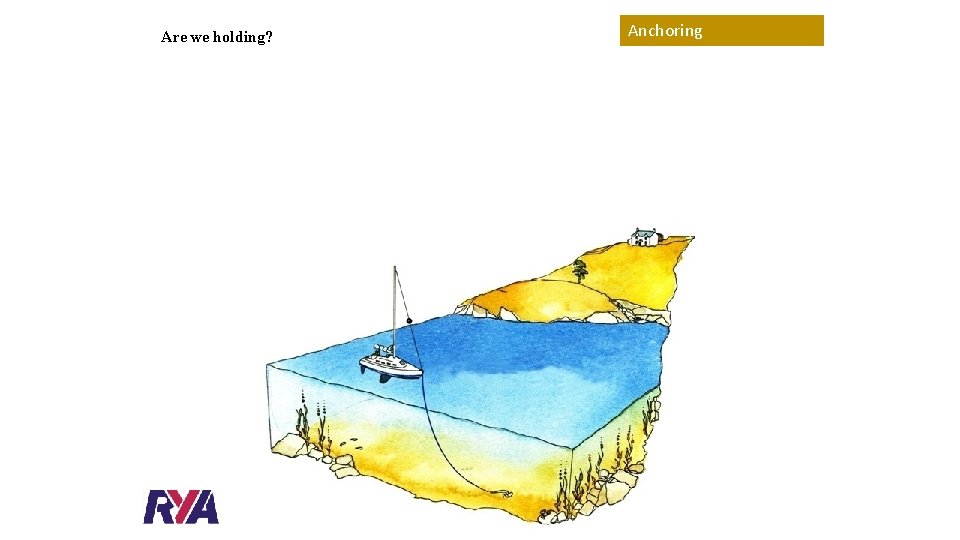
Are we holding? Anchoring
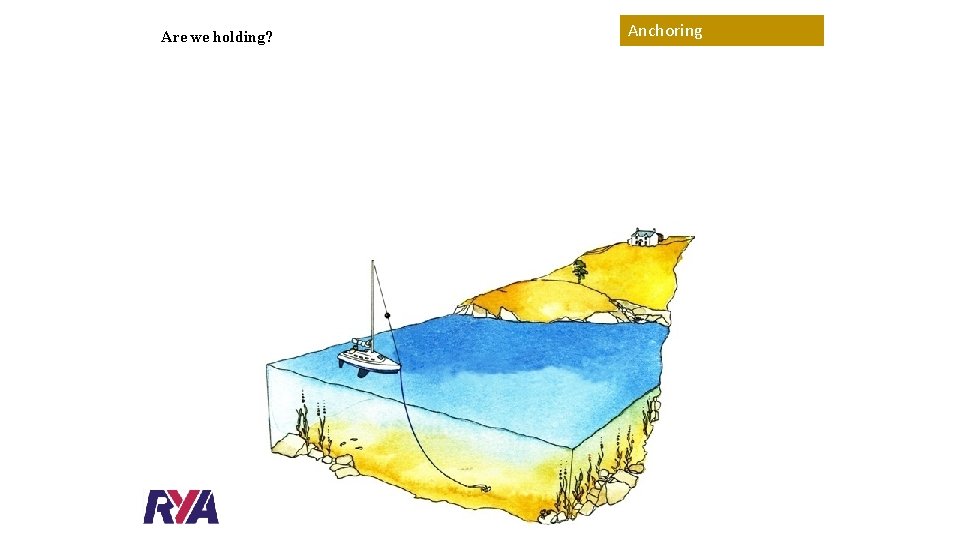
Are we holding? Anchoring
Anchoring Are we holding? Dragging
How Much? Scope Chain - 4 x depth Warp - 6 x depth AXE YACHT CLUB
ANCHORING Anchors Using only warp, In 6 m depth? What happens in depth increases to 10 m? Scope Chain - 4 x depth Warp - 6 x depth
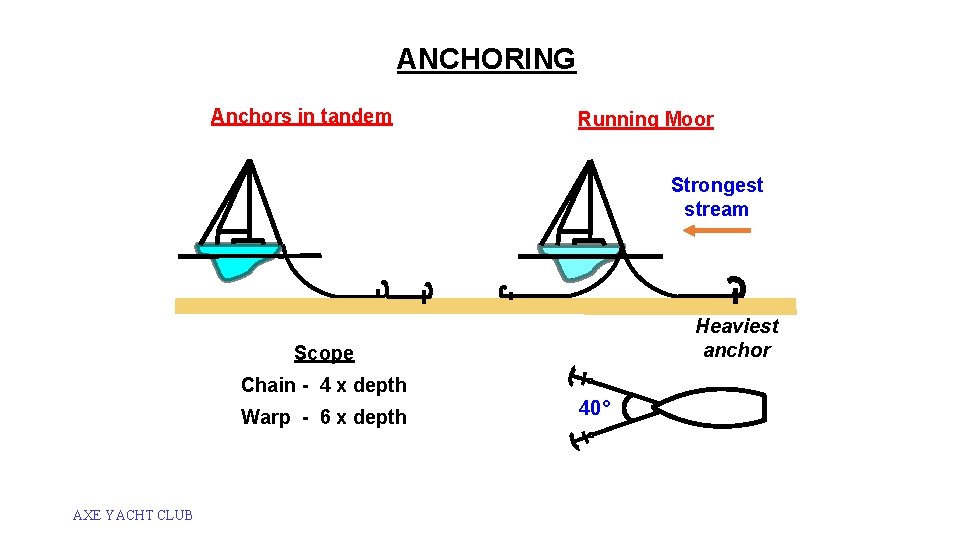
ANCHORING Anchors in tandem Running Moor Strongest stream Heaviest anchor Scope Chain - 4 x depth Warp - 6 x depth AXE YACHT CLUB 40°
Exercise 5
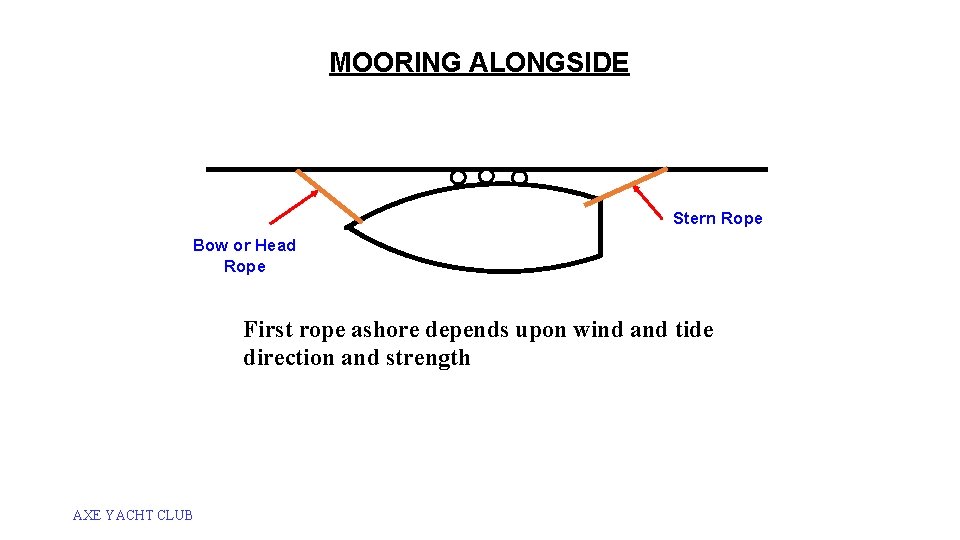
MOORING ALONGSIDE Stern Rope Bow or Head Rope First rope ashore depends upon wind and tide direction and strength AXE YACHT CLUB
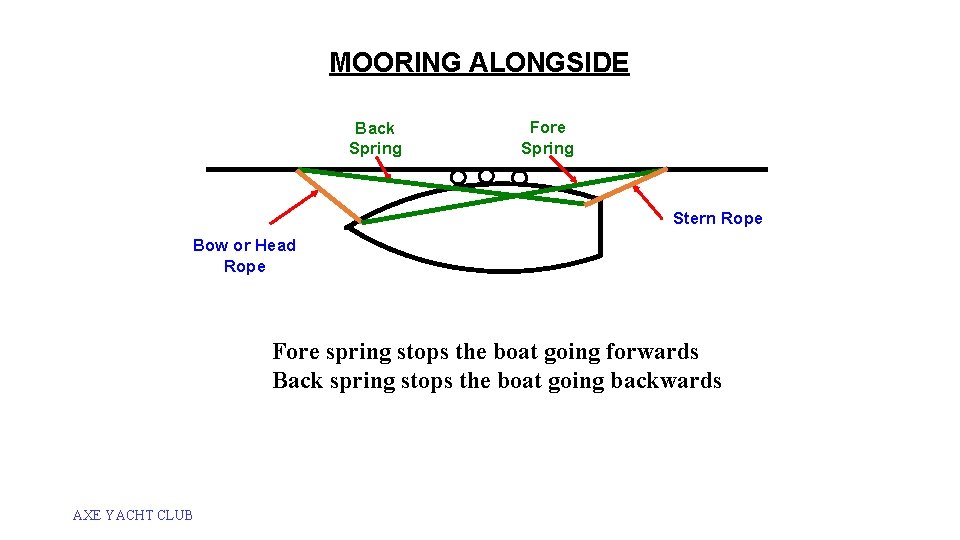
MOORING ALONGSIDE Back Spring Fore Spring Stern Rope Bow or Head Rope Fore spring stops the boat going forwards Back spring stops the boat going backwards AXE YACHT CLUB
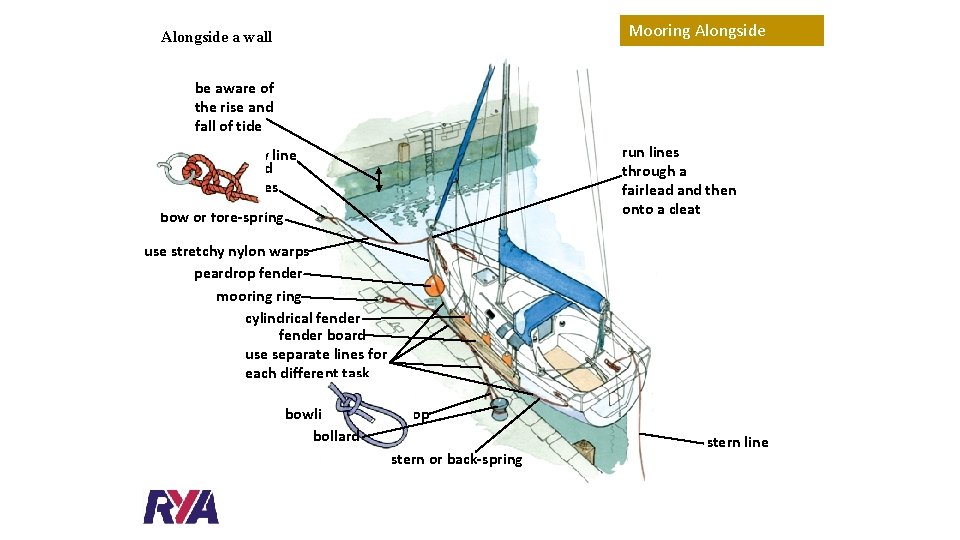
Mooring Alongside a wall be aware of the rise and fall of tide bow line round turn and two half hitches bow or fore-spring run lines through a fairlead and then onto a cleat use stretchy nylon warps peardrop fender mooring cylindrical fender board use separate lines for each different task bowline makes a loop bollard stern or back-spring stern line
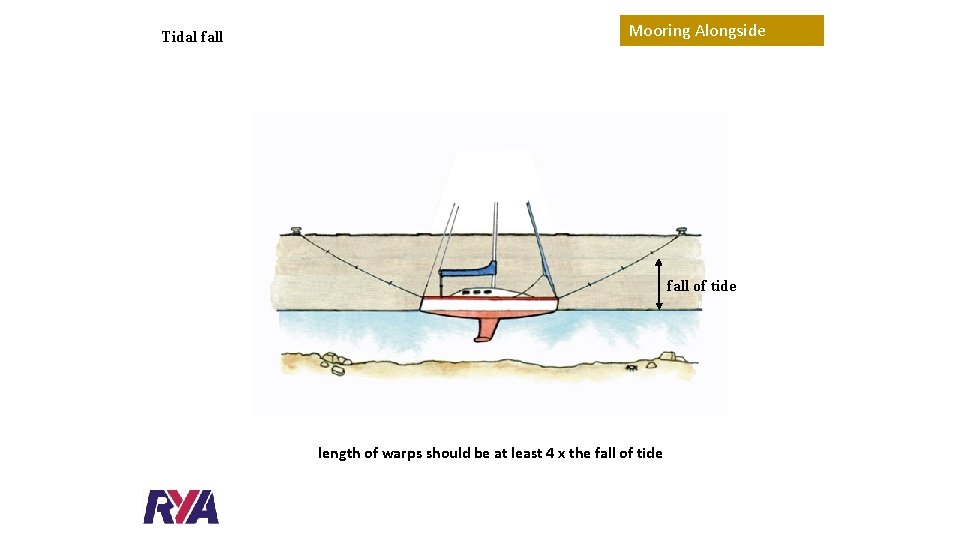
Tidal fall Mooring Alongside fall of tide length of warps should be at least 4 x the fall of tide
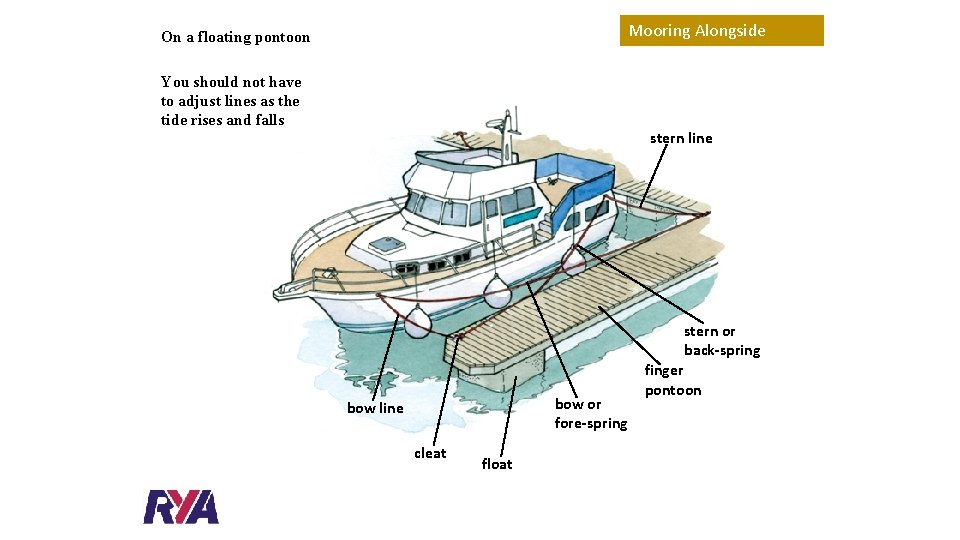
Mooring Alongside On a floating pontoon You should not have to adjust lines as the tide rises and falls stern line stern or back-spring bow or fore-spring bow line cleat float finger pontoon
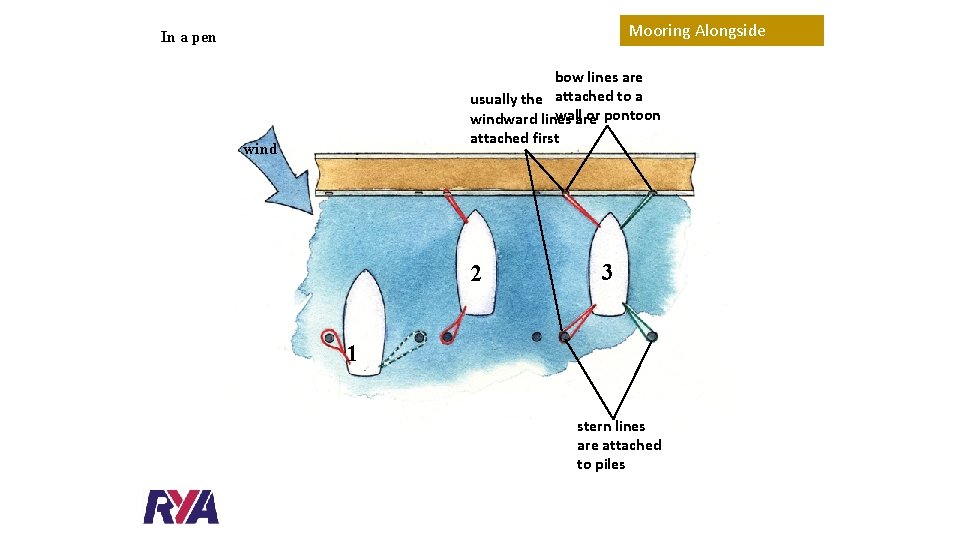
Mooring Alongside In a pen bow lines are usually the attached to a wallare or pontoon windward lines attached first wind 2 3 1 stern lines are attached to piles
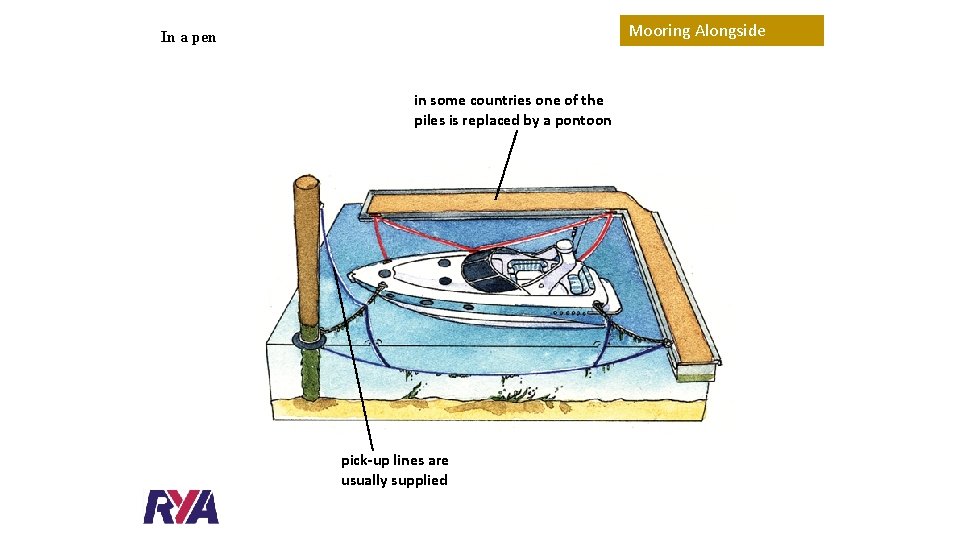
Mooring Alongside In a pen in some countries one of the piles is replaced by a pontoon pick-up lines are usually supplied
That’s all folks