
Anatomy Tissue Level of Organization FIVE TYPES OF

- Slides: 31
Anatomy Tissue Level of Organization
FIVE TYPES OF TISSUE • Epithelia • Connective • Membranes • Muscle • Neural
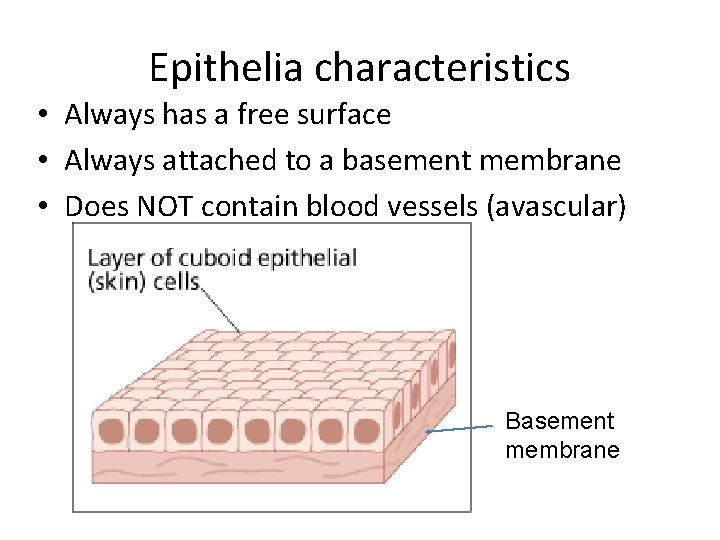
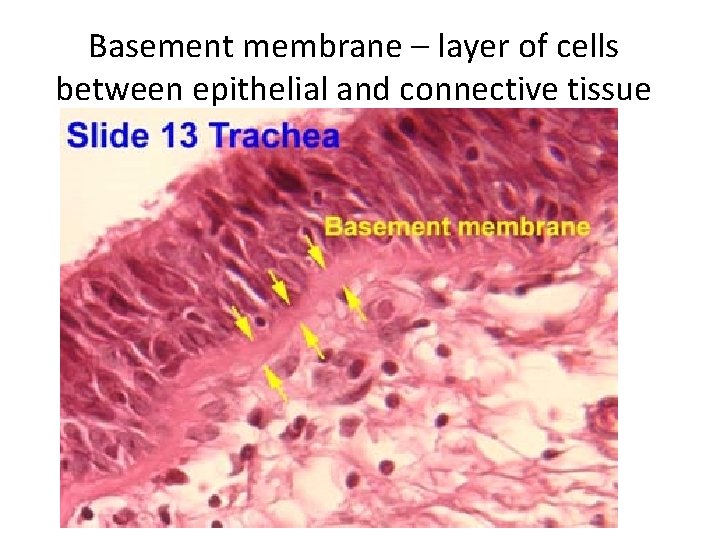
Epithelia characteristics • Always has a free surface • Always attached to a basement membrane • Does NOT contain blood vessels (avascular) Basement membrane
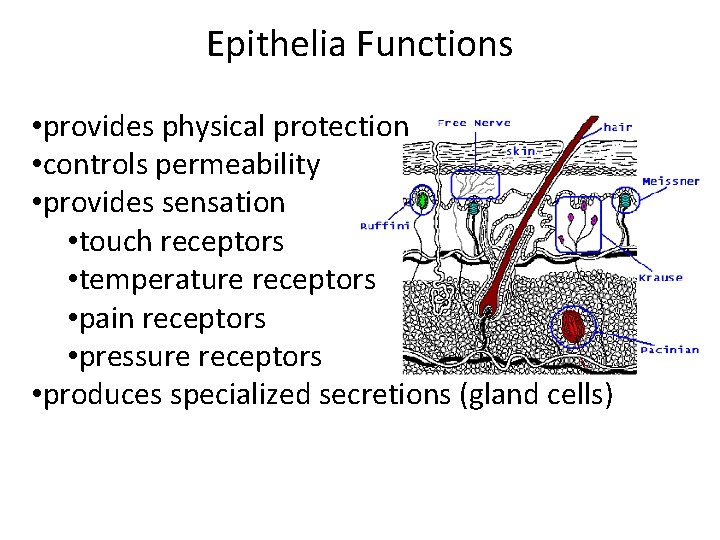
Epithelia Functions • provides physical protection • controls permeability • provides sensation • touch receptors • temperature receptors • pain receptors • pressure receptors • produces specialized secretions (gland cells)
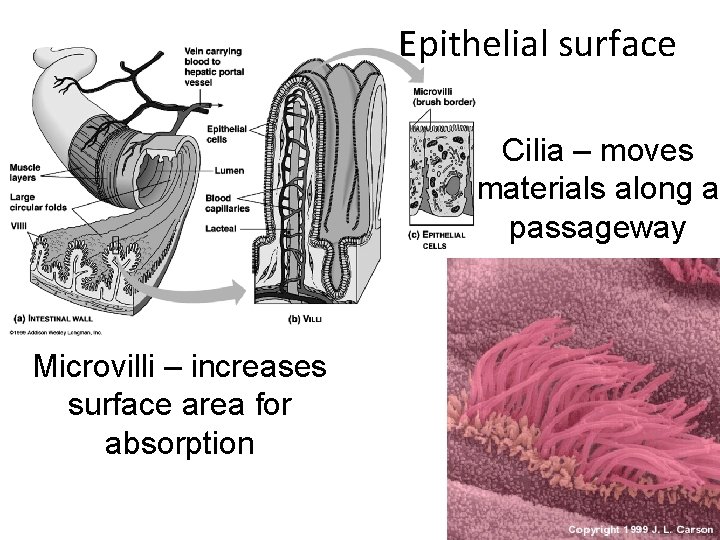
Epithelial surface Cilia – moves materials along a passageway Microvilli – increases surface area for absorption
Basement membrane – layer of cells between epithelial and connective tissue
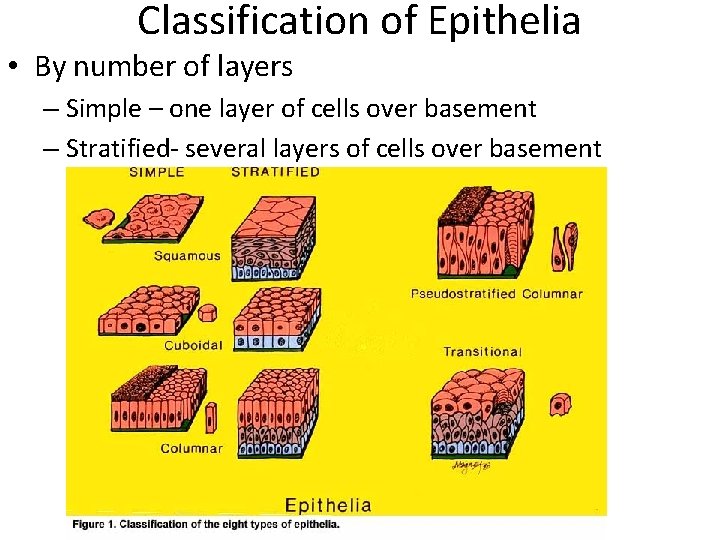
Classification of Epithelia • By number of layers – Simple – one layer of cells over basement – Stratified- several layers of cells over basement
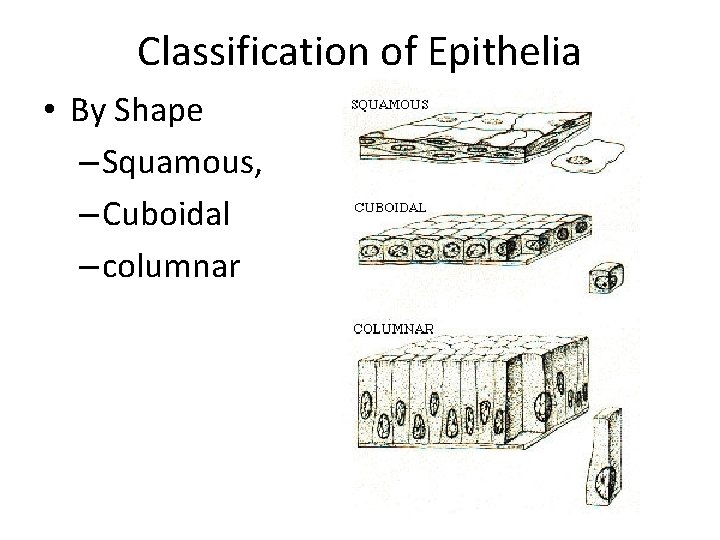
Classification of Epithelia • By Shape – Squamous, – Cuboidal – columnar
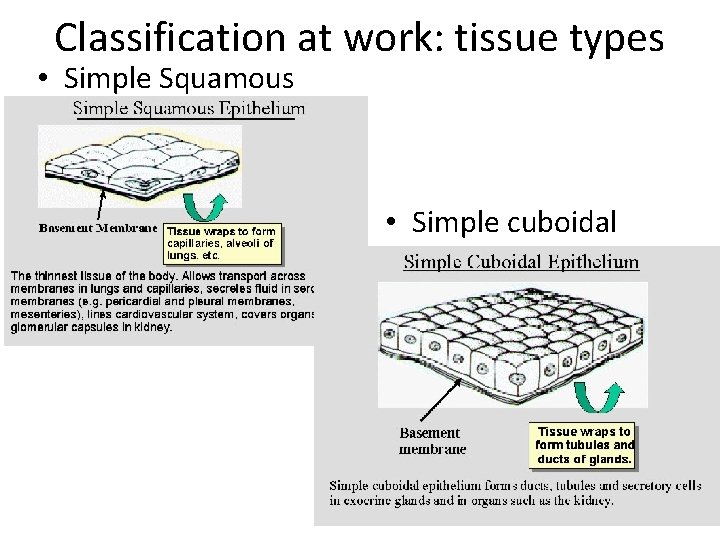
Classification at work: tissue types • Simple Squamous • Simple cuboidal
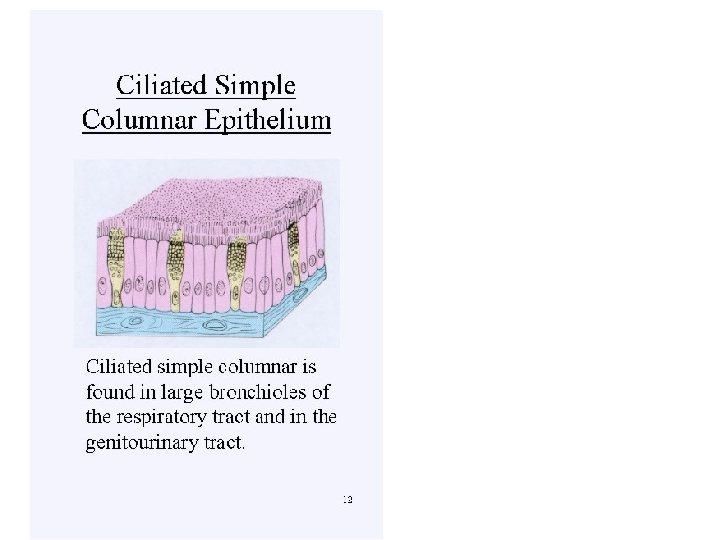
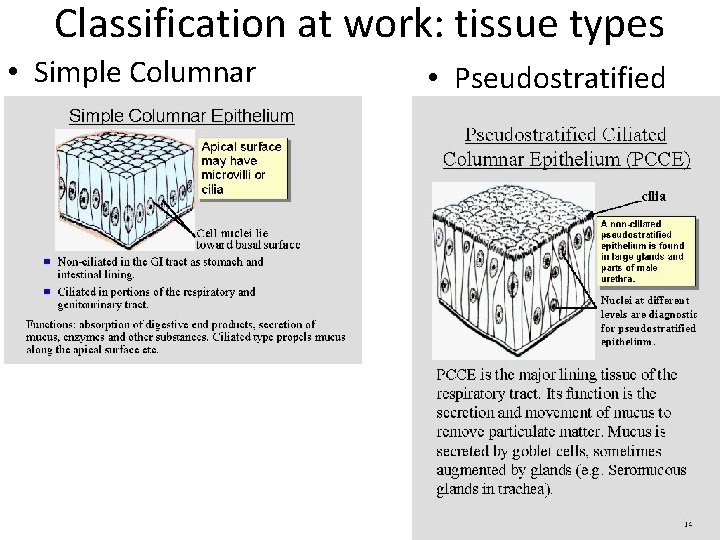
Classification at work: tissue types • Simple Columnar • Pseudostratified
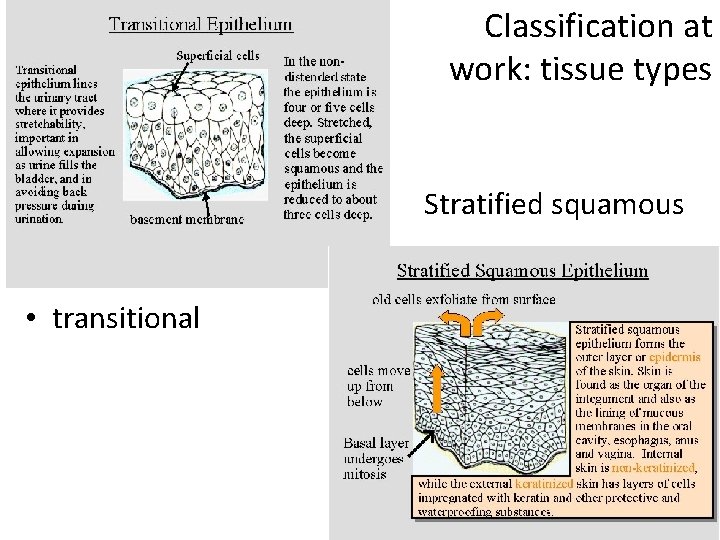
Classification at work: tissue types • Stratified squamous • transitional
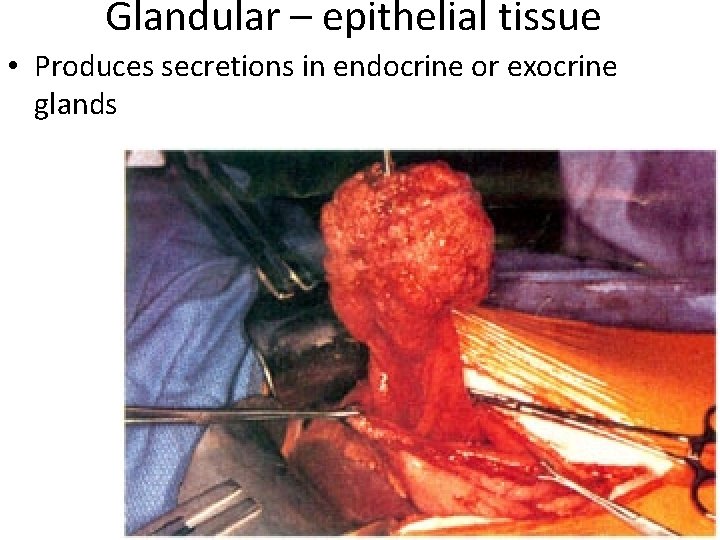
Glandular – epithelial tissue • Produces secretions in endocrine or exocrine glands
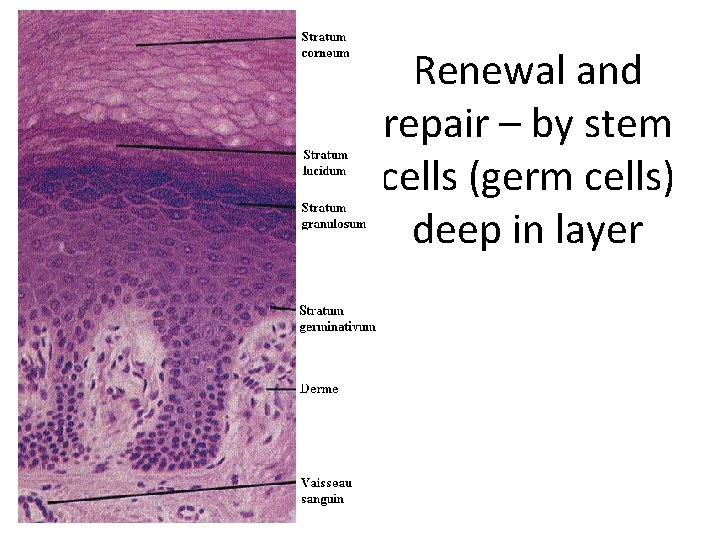
Renewal and repair – by stem cells (germ cells) deep in layer
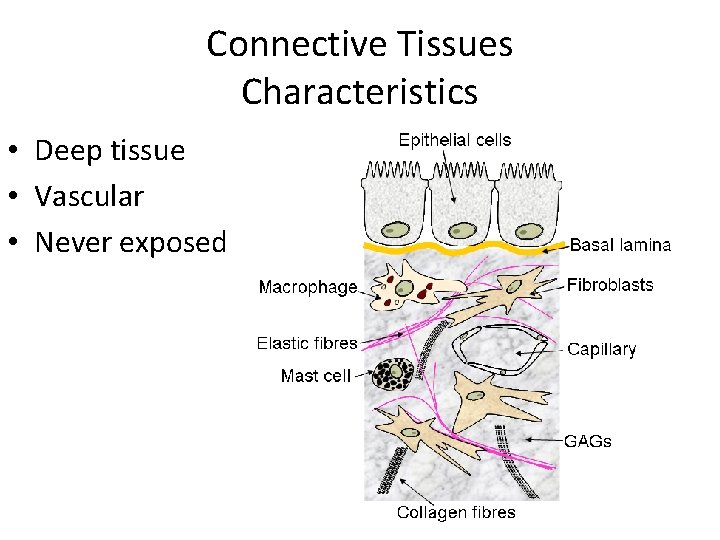
Connective Tissues Characteristics • Deep tissue • Vascular • Never exposed
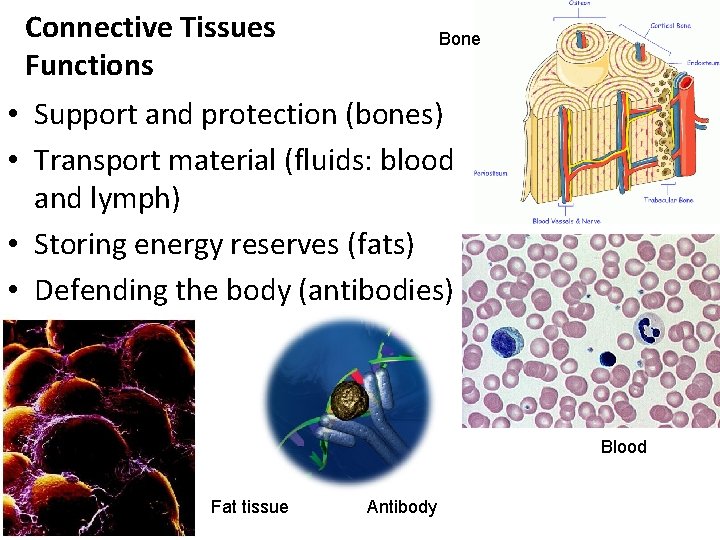
Connective Tissues Functions Bone • Support and protection (bones) • Transport material (fluids: blood and lymph) • Storing energy reserves (fats) • Defending the body (antibodies) Blood Fat tissue Antibody
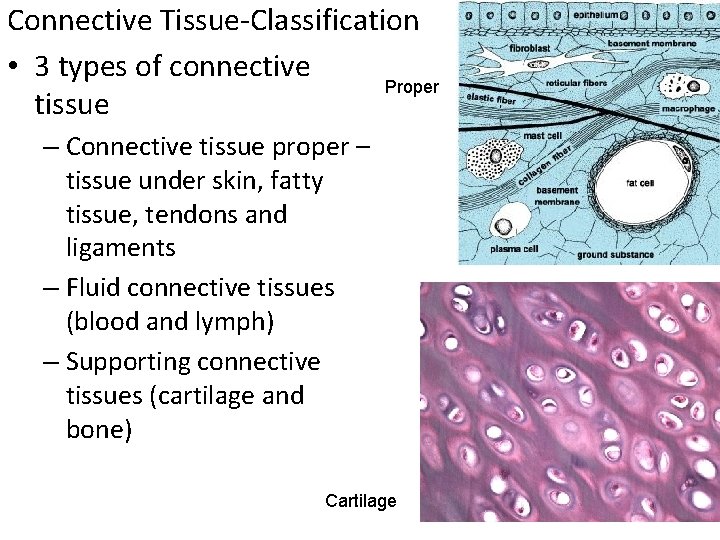
Connective Tissue-Classification • 3 types of connective Proper tissue – Connective tissue proper – tissue under skin, fatty tissue, tendons and ligaments – Fluid connective tissues (blood and lymph) – Supporting connective tissues (cartilage and bone) Cartilage
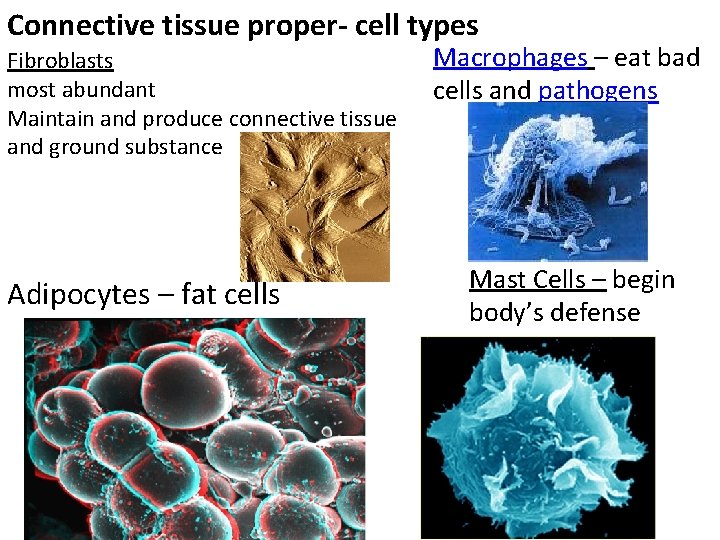
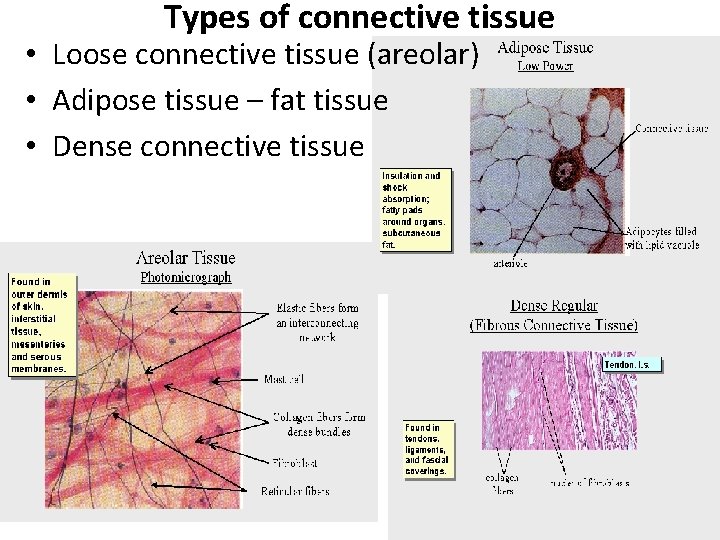
Connective tissue proper- cell types Fibroblasts most abundant Maintain and produce connective tissue and ground substance Adipocytes – fat cells Macrophages – eat bad cells and pathogens Mast Cells – begin body’s defense
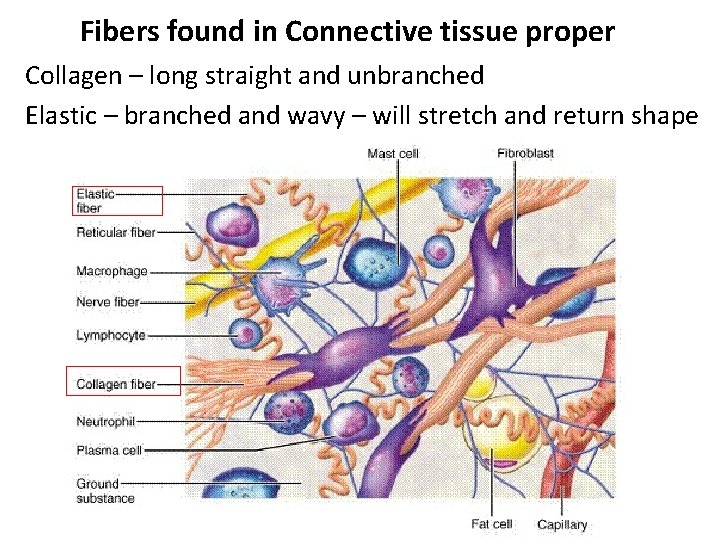
Fibers found in Connective tissue proper Collagen – long straight and unbranched Elastic – branched and wavy – will stretch and return shape
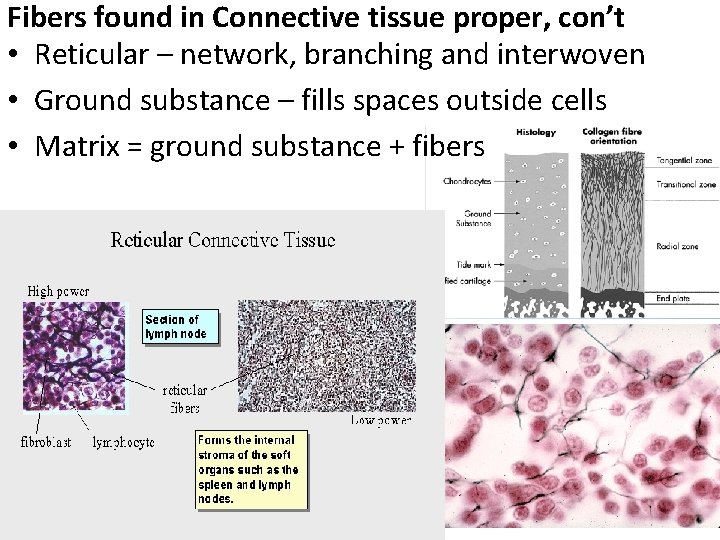
Fibers found in Connective tissue proper, con’t • Reticular – network, branching and interwoven • Ground substance – fills spaces outside cells • Matrix = ground substance + fibers
Types of connective tissue • Loose connective tissue (areolar) • Adipose tissue – fat tissue • Dense connective tissue
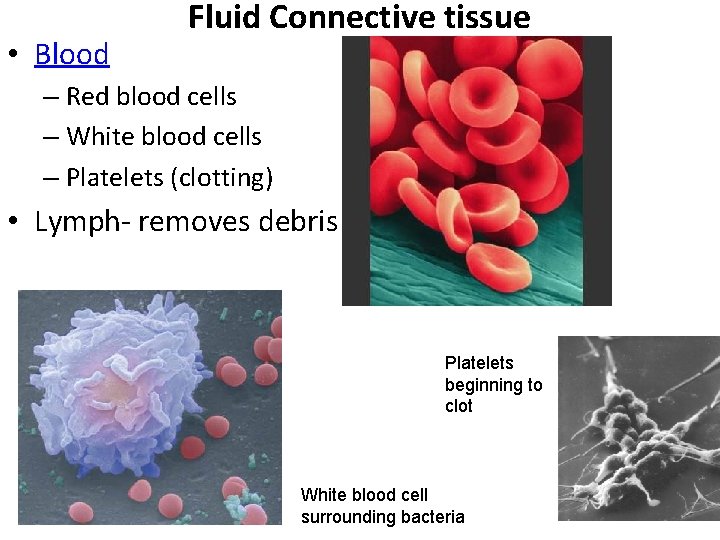
• Blood Fluid Connective tissue – Red blood cells – White blood cells – Platelets (clotting) • Lymph- removes debris Platelets beginning to clot White blood cell surrounding bacteria
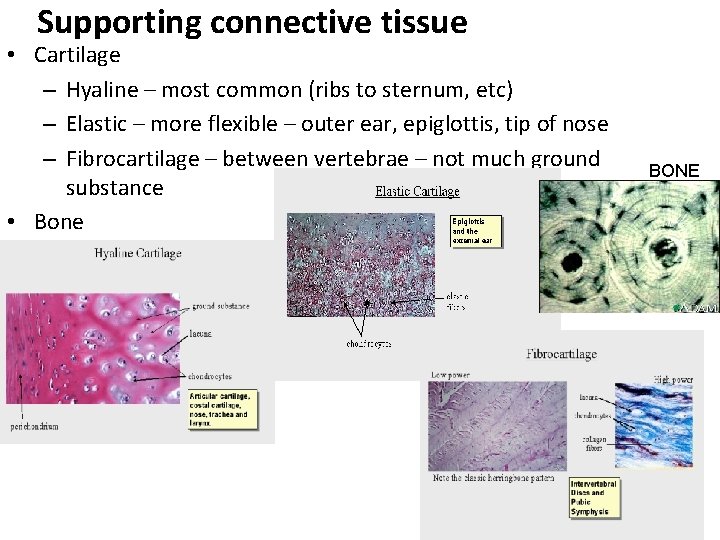
Supporting connective tissue • Cartilage – Hyaline – most common (ribs to sternum, etc) – Elastic – more flexible – outer ear, epiglottis, tip of nose – Fibrocartilage – between vertebrae – not much ground substance • Bone BONE
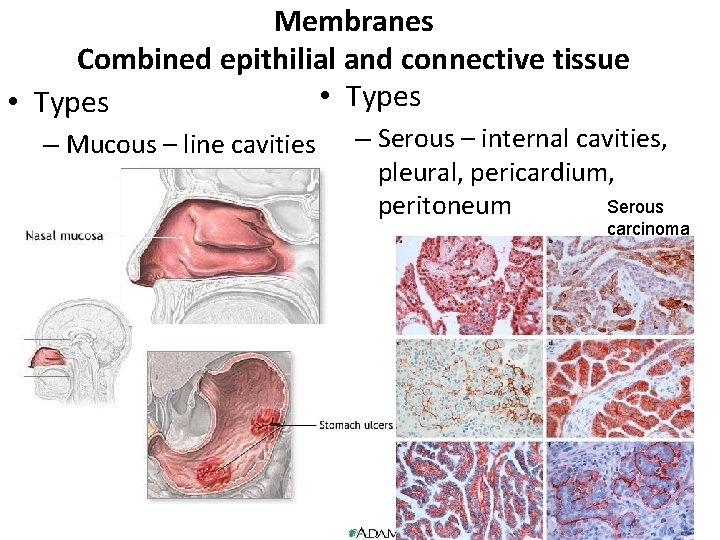
Membranes Combined epithilial and connective tissue • Types – Mucous – line cavities – Serous – internal cavities, pleural, pericardium, Serous peritoneum carcinoma
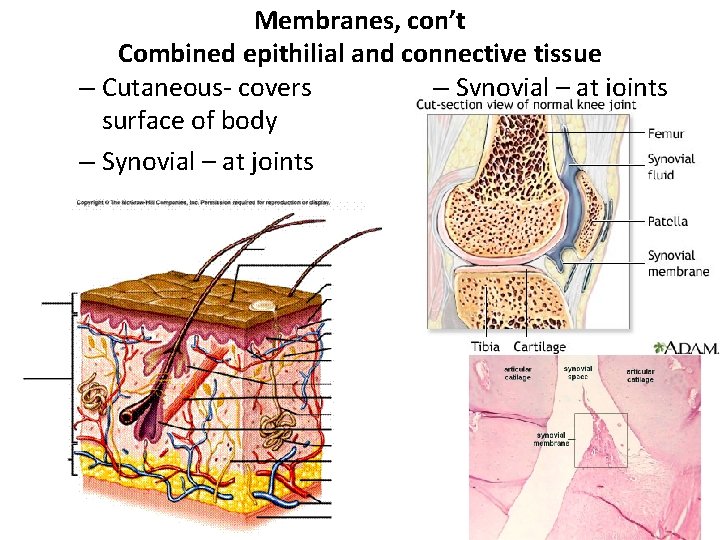
Membranes, con’t Combined epithilial and connective tissue – Synovial – at joints – Cutaneous- covers surface of body – Synovial – at joints
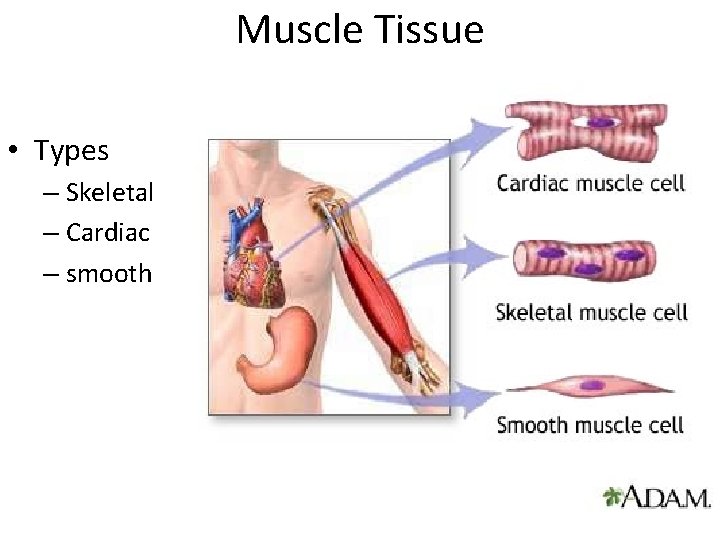
Muscle Tissue • Types – Skeletal – Cardiac – smooth
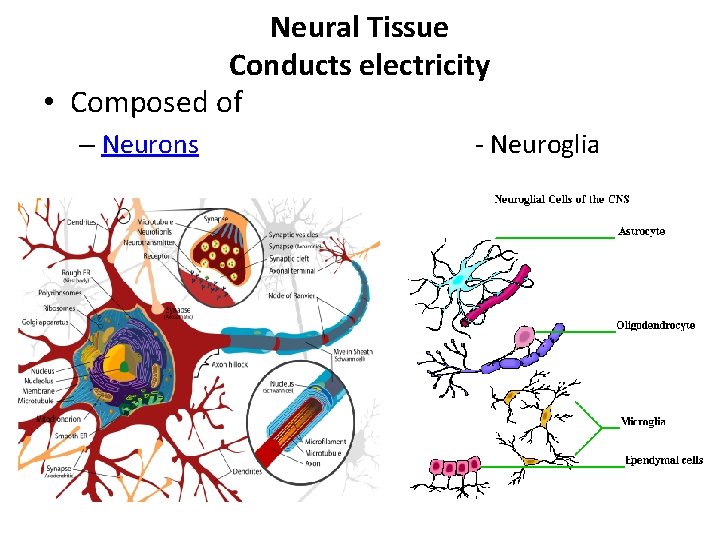
Neural Tissue Conducts electricity • Composed of – Neurons - Neuroglia
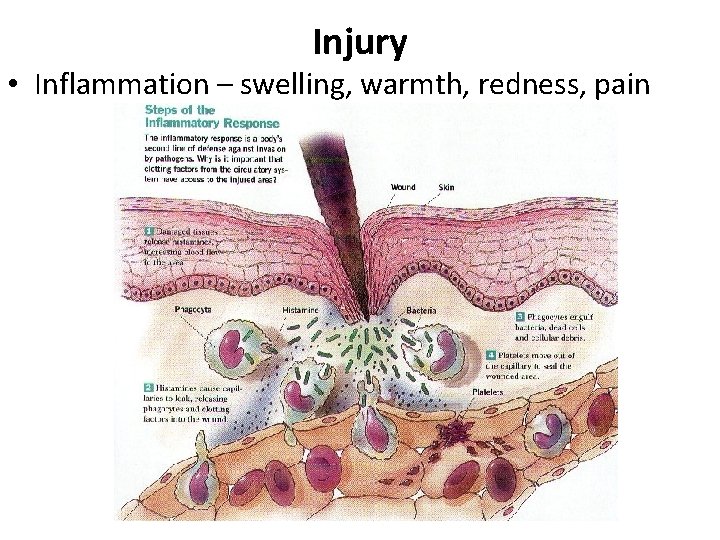
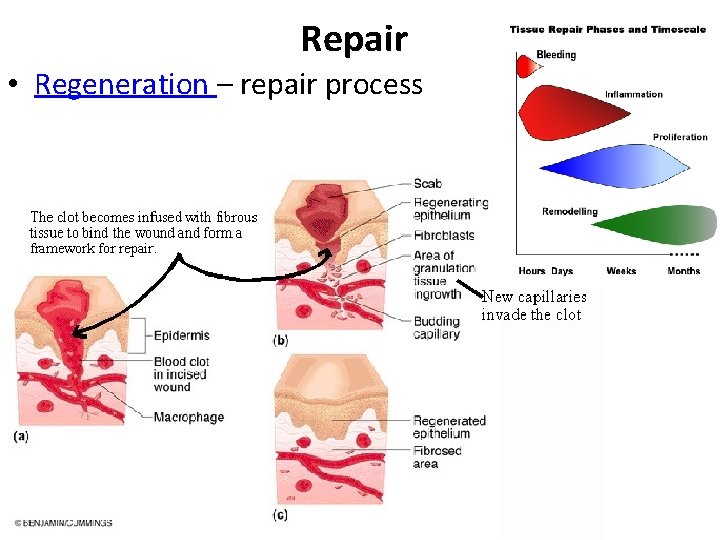
Injury • Inflammation – swelling, warmth, redness, pain
Repair • Regeneration – repair process
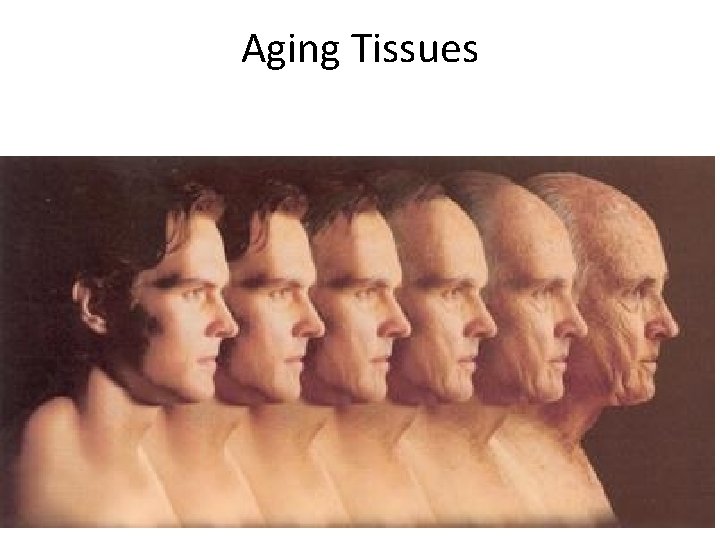
Aging Tissues
Fabulous web pages to practice – These are hyperlinks – you must be in the slide mode to access them! http: //www. tvcc. edu/depts/biology/Hot. Pot/A&P/cells_tissues. htm Histology topics use the “quiz mode to practice More Practice EVEN MORE PRACTICE One more – some good reading and picture review I don’t think I included this one above!!