
Anatomy recap Superior vena cava drains deoxygenated blood
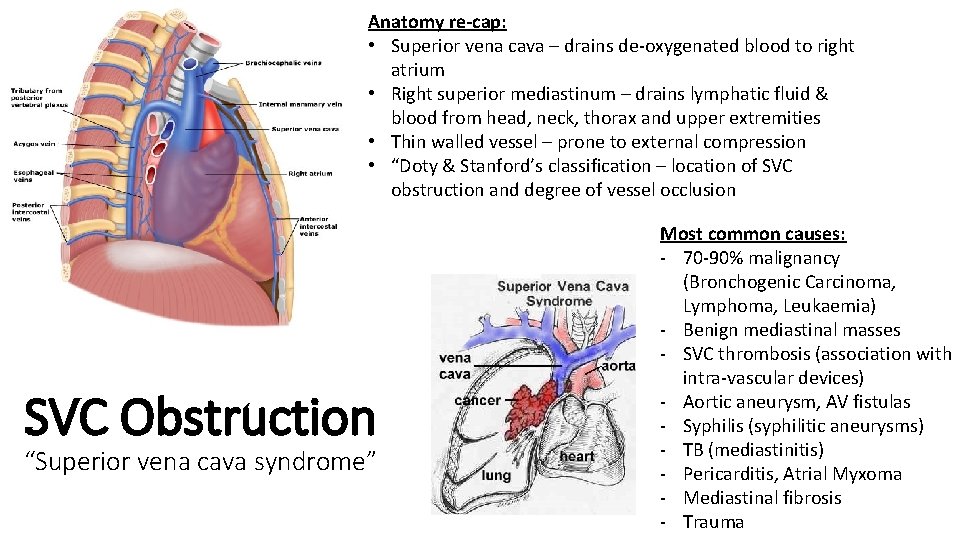
Anatomy re-cap: • Superior vena cava – drains de-oxygenated blood to right atrium • Right superior mediastinum – drains lymphatic fluid & blood from head, neck, thorax and upper extremities • Thin walled vessel – prone to external compression • “Doty & Stanford’s classification – location of SVC obstruction and degree of vessel occlusion SVC Obstruction “Superior vena cava syndrome” Most common causes: - 70 -90% malignancy (Bronchogenic Carcinoma, Lymphoma, Leukaemia) - Benign mediastinal masses - SVC thrombosis (association with intra-vascular devices) - Aortic aneurysm, AV fistulas - Syphilis (syphilitic aneurysms) - TB (mediastinitis) - Pericarditis, Atrial Myxoma - Mediastinal fibrosis - Trauma
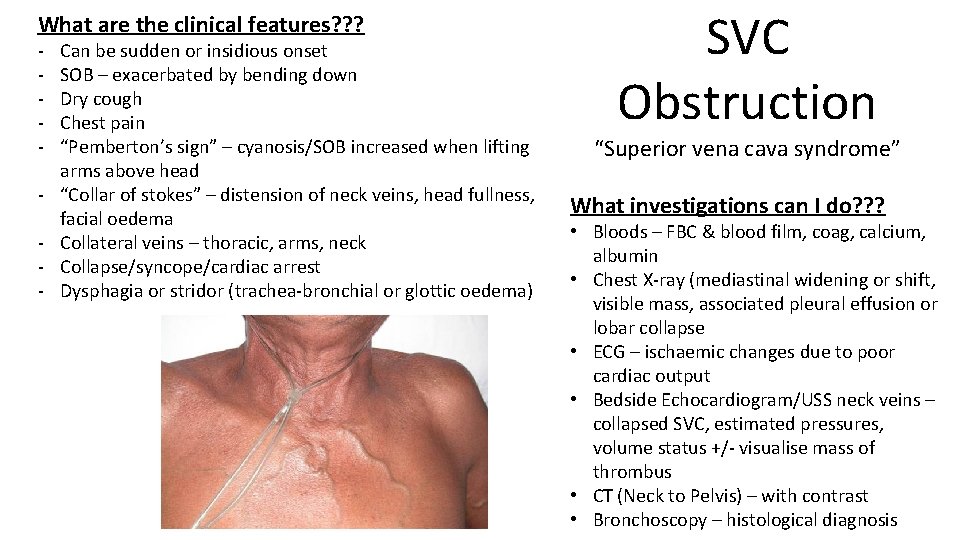
What are the clinical features? ? ? - Can be sudden or insidious onset SOB – exacerbated by bending down Dry cough Chest pain “Pemberton’s sign” – cyanosis/SOB increased when lifting arms above head “Collar of stokes” – distension of neck veins, head fullness, facial oedema Collateral veins – thoracic, arms, neck Collapse/syncope/cardiac arrest Dysphagia or stridor (trachea-bronchial or glottic oedema) SVC Obstruction “Superior vena cava syndrome” What investigations can I do? ? ? • Bloods – FBC & blood film, coag, calcium, albumin • Chest X-ray (mediastinal widening or shift, visible mass, associated pleural effusion or lobar collapse • ECG – ischaemic changes due to poor cardiac output • Bedside Echocardiogram/USS neck veins – collapsed SVC, estimated pressures, volume status +/- visualise mass of thrombus • CT (Neck to Pelvis) – with contrast • Bronchoscopy – histological diagnosis

SVC Obstruction “Superior vena cava syndrome” Management – oncological emergency, ABC approach Escalate to a senior ED clinician immediately Contact Radiology for support re: imaging Interventional Radiology – consider endovascular stenting if available Discuss with Haem-oncology: - Consider steroids - Radiotherapy or Chemotherapy - Discuss anticoagulation • Consider ICU referral • • * Beware positive pressure ventilation – may exacerbate SVC obstruction * Endovascular Stenting – NICE approved, best evidence for adults with Ca lung, less evidence in children. Systematic review 95% relief of obstruction, 92% long-term SVC patency, more rapid relief of obstruction than steroids/radiotherapy. Issues related to long-term anticoagulation post-procedure and role of stenting when underlying diagnosis unclear (is cause likely to improve with alternative therapy? )
- Slides: 3