
Anatomy Physiology Unit 6 Human Evolution Mader Biology
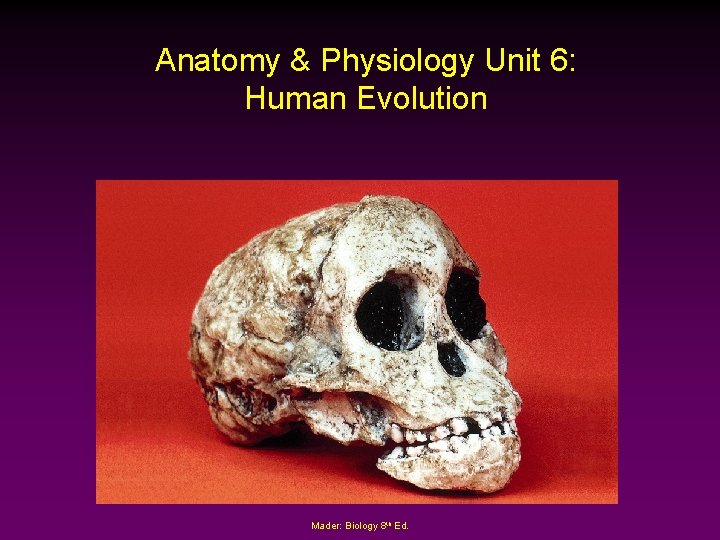
Anatomy & Physiology Unit 6: Human Evolution Mader: Biology 8 th Ed.
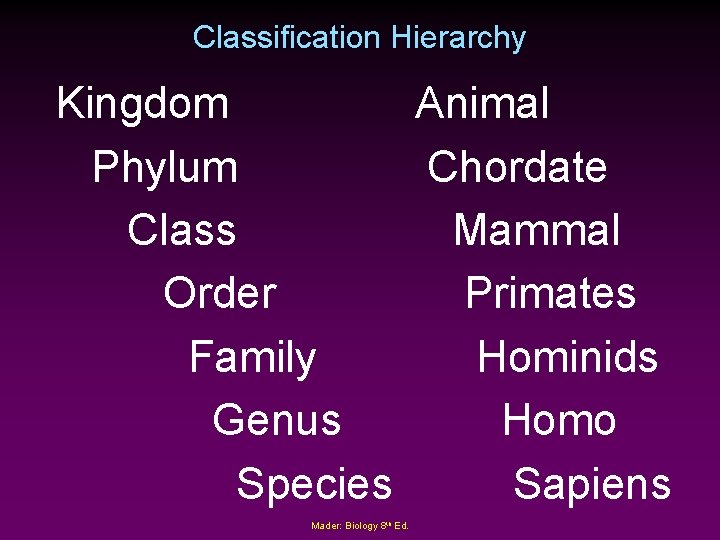
Classification Hierarchy Kingdom Animal Phylum Chordate Class Mammal Order Primates Family Hominids Genus Homo Species Sapiens Mader: Biology 8 th Ed.
Evolution of Primates • The evolution of primates is characterized by trends towards: – mobile limbs – grasping hands (with opposable thumbs) – a flattened face – binocular vision – a large, complex brain (for learned behavior) – a reduced reproductive rate Mader: Biology 8 th Ed.
Mobile Limbs • • Most primates have flat nails as well as sensitive pads on the undersides of fingers and toes. – Many also have both an opposable big toe and thumb. Mobile limbs and clawless opposable digits allow primates to freely grasp and release tree limbs. Mader: Biology 8 th Ed.
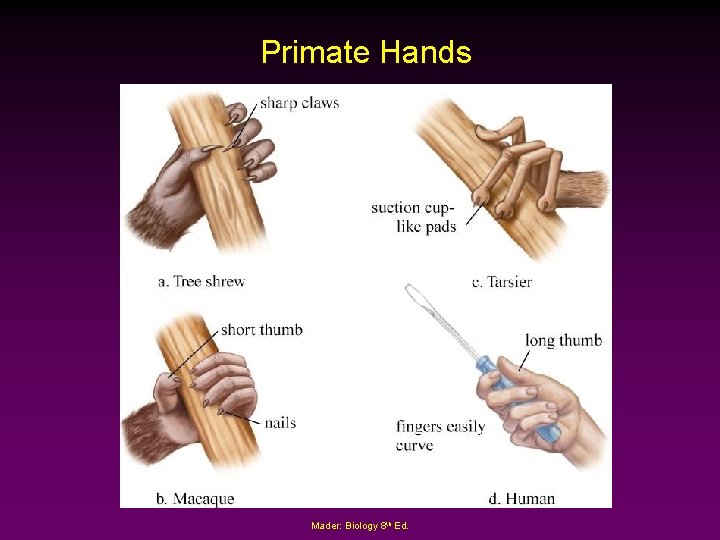
Primate Hands Mader: Biology 8 th Ed.
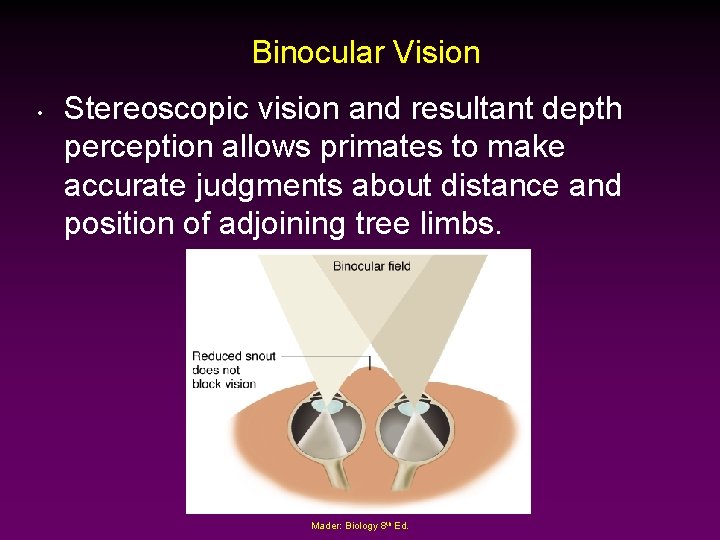
Binocular Vision • Stereoscopic vision and resultant depth perception allows primates to make accurate judgments about distance and position of adjoining tree limbs. Mader: Biology 8 th Ed.
Evolution of Primates • • Prosimians were the first type of primate to diverge from the ancestral primate line. Surviving anthropoids are classified into three superfamilies. – – – New World monkeys Old World monkeys Hominoids Mader: Biology 8 th Ed.
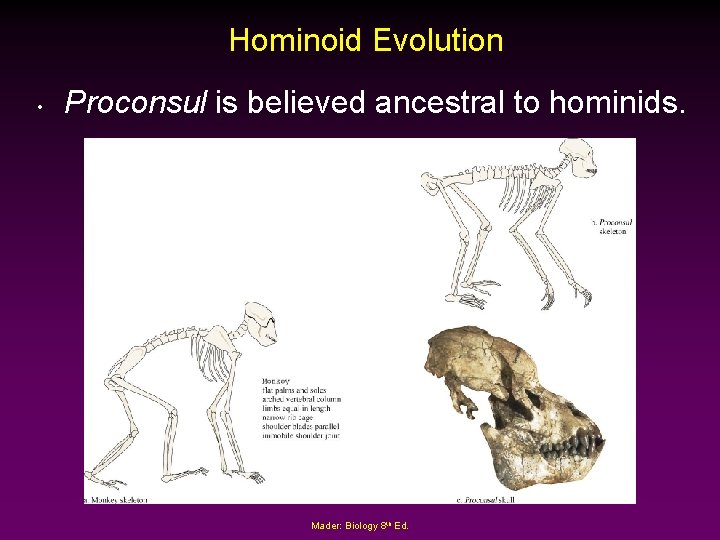
Hominoid Evolution • Proconsul is believed ancestral to hominids. Mader: Biology 8 th Ed.
Mader: Biology 8 th Ed.
Evolution of Hominids • Phylogenetic tree indicates humans are most closely related to African apes. – Last common ancestor appears to have lived about 5 -7 million years ago (mya) v Genetic changes used as a molecular clock to measure relatedness of different groups. Mader: Biology 8 th Ed.
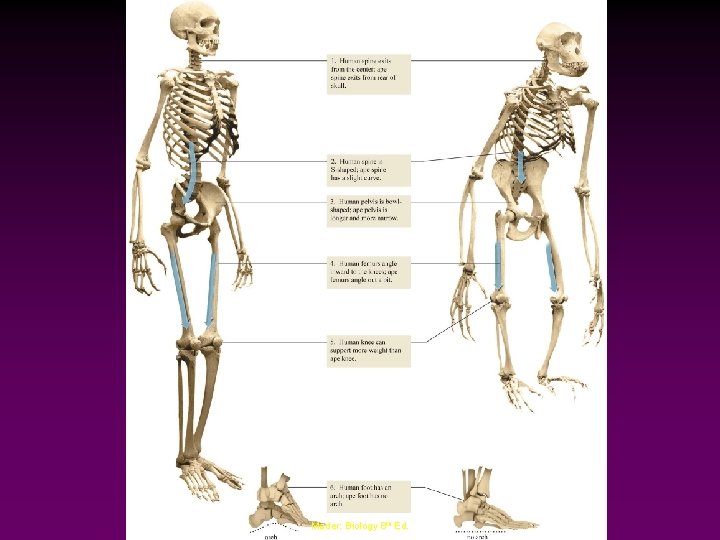
Hominids • To be a hominid, a fossil must have an anatomy suitable for standing erect and walking on two feet. – Bipedalism v Human anatomy differs from that of an ape largely because humans are bipedal while apes are quadrupedal. Mader: Biology 8 th Ed.
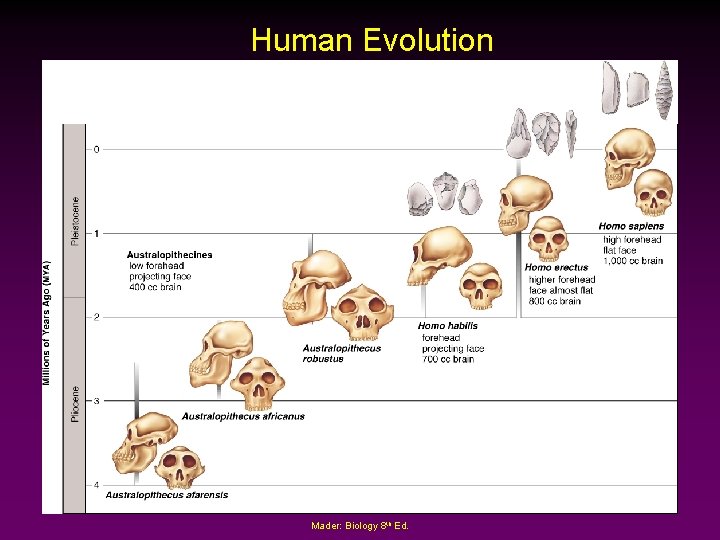
Australopithecines • It is possible that one of the australopithecines that evolved and diversified in Africa 4 mya is a direct ancestor of humans. – Southern Africa v Australopithecus africanus – Eastern Africa v Australopithecus afarensis (Lucy) Mader: Biology 8 th Ed.
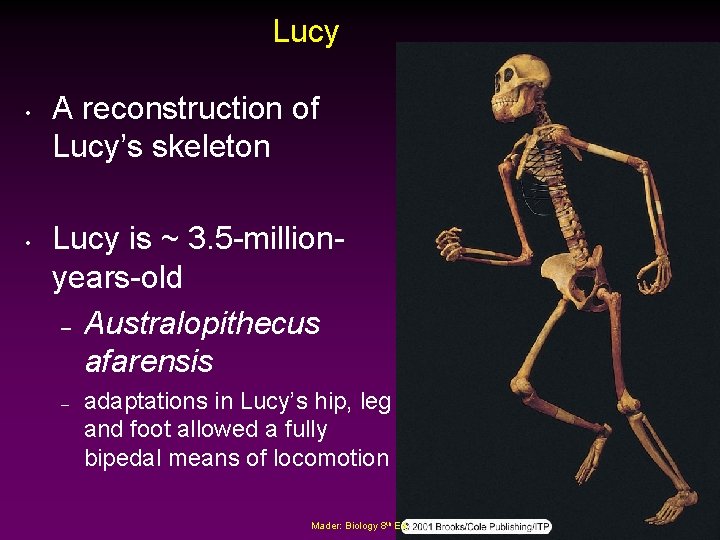
Lucy • • A reconstruction of Lucy’s skeleton Lucy is ~ 3. 5 -millionyears-old – Australopithecus afarensis – adaptations in Lucy’s hip, leg and foot allowed a fully bipedal means of locomotion Mader: Biology 8 th Ed.
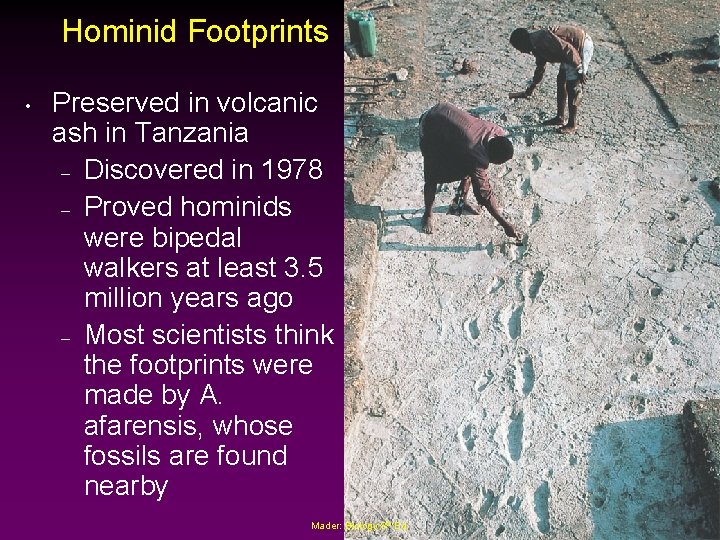
Hominid Footprints • Preserved in volcanic ash in Tanzania – Discovered in 1978 – Proved hominids were bipedal walkers at least 3. 5 million years ago – Most scientists think the footprints were made by A. afarensis, whose fossils are found nearby Mader: Biology 8 th Ed.
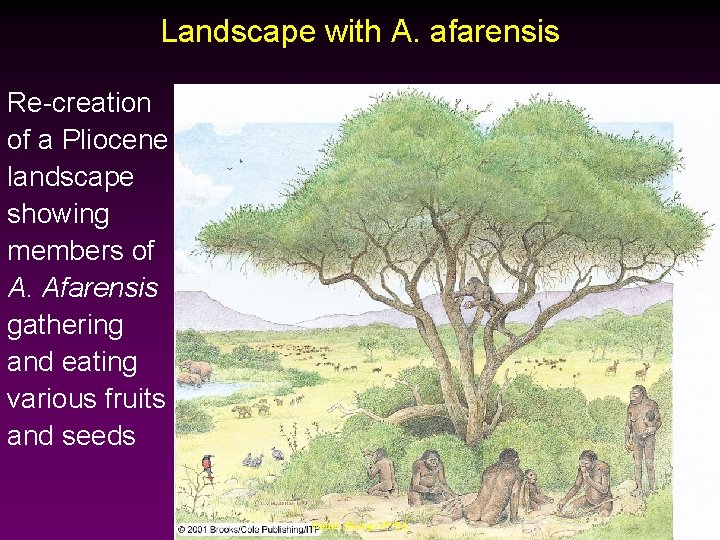
Landscape with A. afarensis Re-creation of a Pliocene landscape showing members of A. Afarensis gathering and eating various fruits and seeds Mader: Biology 8 th Ed.
Evolution of Early Homo • Homo habilis, dated between 2. 0 an 1. 9 mya, may be ancestral to modern humans. – Skulls suggest portions of the brain associated with speech were enlarged. v Ability to speak may have led to hunting cooperatively and the advent of culture. Mader: Biology 8 th Ed.
Human Evolution Mader: Biology 8 th Ed.
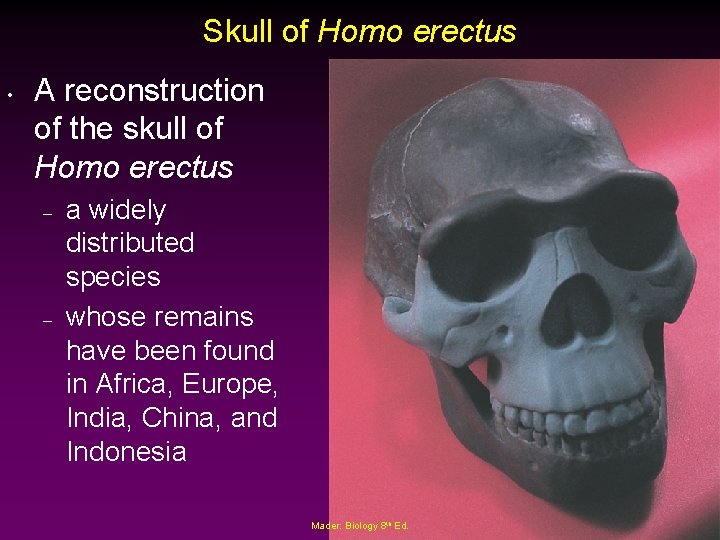
Skull of Homo erectus • A reconstruction of the skull of Homo erectus – – a widely distributed species whose remains have been found in Africa, Europe, India, China, and Indonesia Mader: Biology 8 th Ed.
Homo erectus • Homo erectus and like fossils are found in Africa, Asia, and Europe and are dated between 1. 9 and 0. 3 mya. – Larger brain and flatter face than Homo habilis. – Much taller than previous hominids. – Believed to have first appeared in Africa and then migrated into Asia and Europe. – First hominid to use fire. Mader: Biology 8 th Ed.
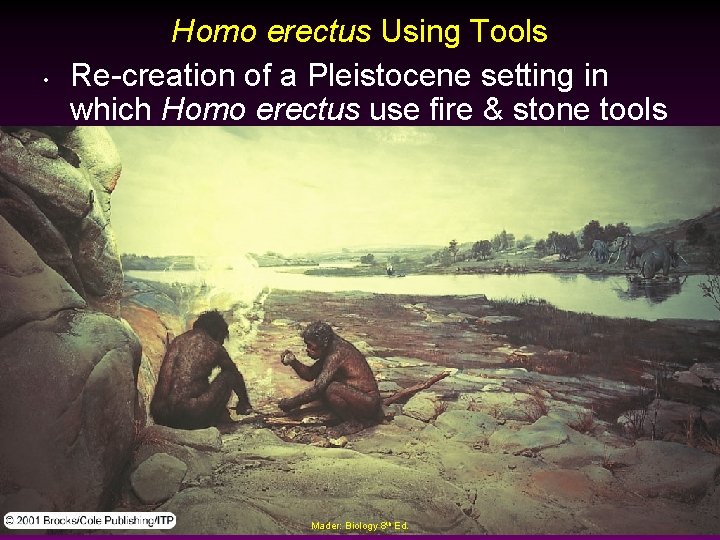
• Homo erectus Using Tools Re-creation of a Pleistocene setting in which Homo erectus use fire & stone tools Mader: Biology 8 th Ed.
Evolution of Modern Humans • Most researchers believe Homo sapiens evolved from Homo erectus. – Multiregional Continuity Hypothesis v Similar evolution occurred in many different places. – Out-of-Africa Hypothesis v H. sapiens evolved from H. erectus only in Africa, and thereafter migrated to Europe. Mader: Biology 8 th Ed.
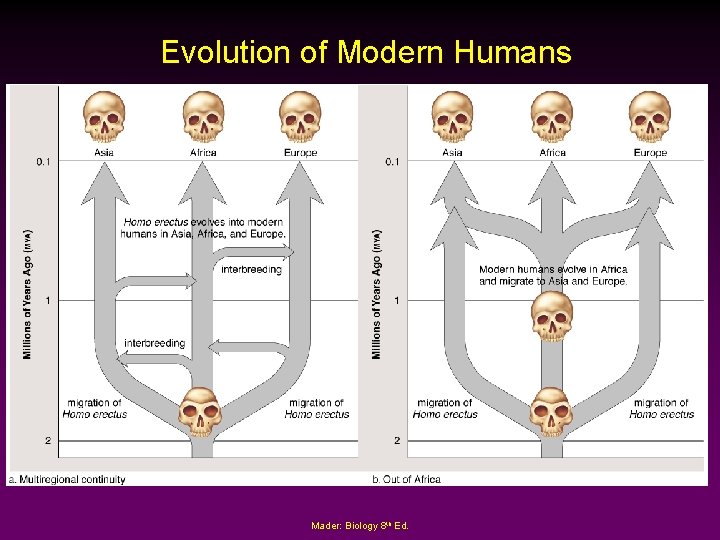
Evolution of Modern Humans Mader: Biology 8 th Ed.
Neanderthals • Neanderthal (H. neanderthalensis) skeletons were first discovered in Germany’s Neander Valley. – Skeletons date back 200, 000 years. v Massive brow ridges with protruding nose, jaws, and teeth. v Heavily muscled. v Culturally advanced. Ø Manufactured variety of tools. Mader: Biology 8 th Ed.
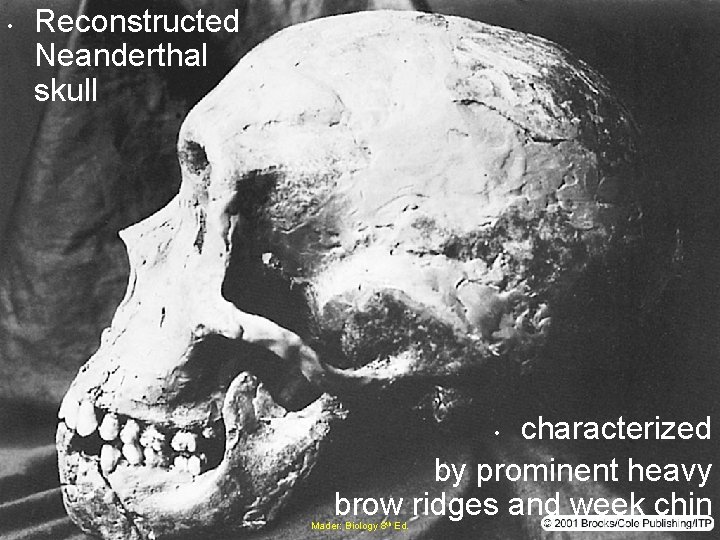
• Reconstructed Neanderthal skull characterized by prominent heavy brow ridges and week chin • Mader: Biology 8 th Ed.

Burial Ceremony in a Cave Neanderthals lived in caves and had ritual burials, such as this depiction from Shanidar Cave, Iraq Mader: Biology 8 th Ed.
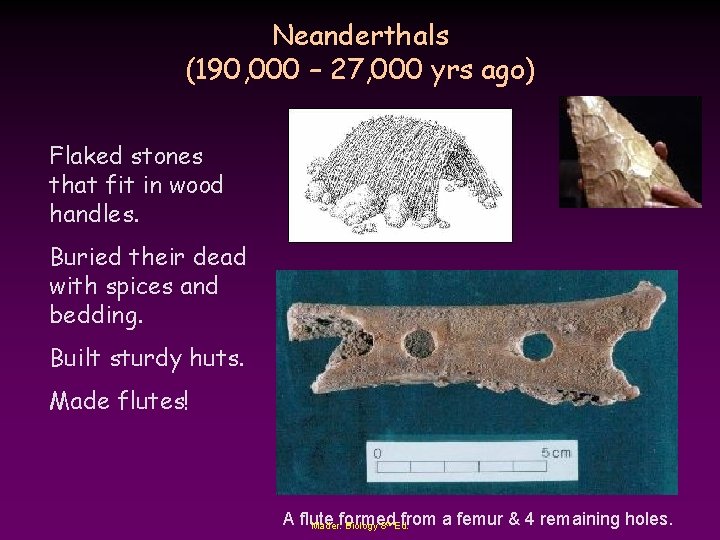
Neanderthals (190, 000 – 27, 000 yrs ago) Flaked stones that fit in wood handles. Buried their dead with spices and bedding. Built sturdy huts. Made flutes! A flute from a femur & 4 remaining holes. Mader: formed Biology 8 Ed. th
Cro-Magnons – Homo sapiens • • Oldest fossils to be designated H. sapiens. Modern humans who entered Asia and Europe from Africa 100, 000 years ago. – – – Made advanced stone tools. Accomplished hunters. v Hunted cooperatively. First to have complex language? Mader: Biology 8 th Ed.
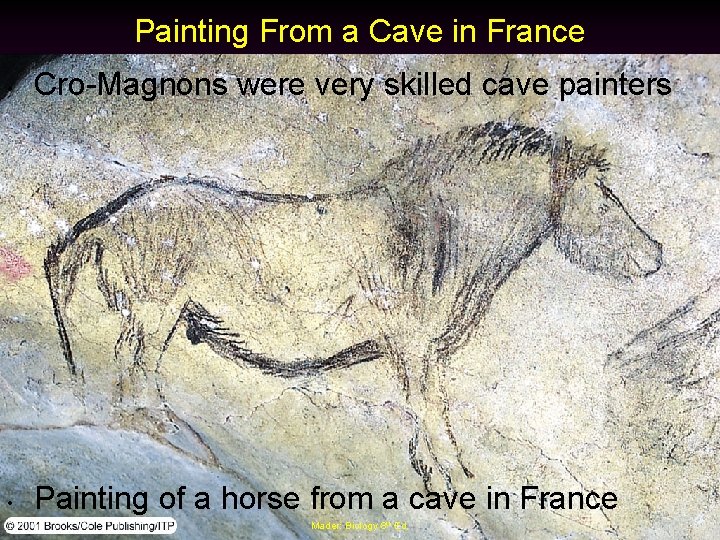
Painting From a Cave in France • Cro-Magnons were very skilled cave painters • Painting of a horse from a cave in France Mader: Biology 8 th Ed.
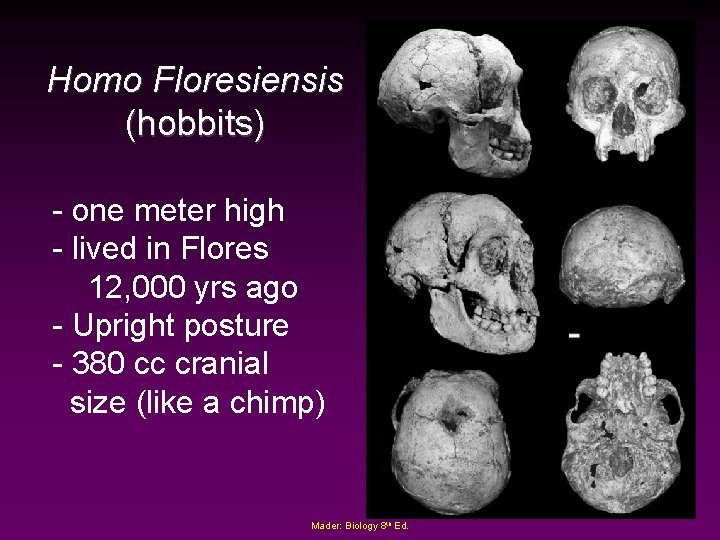
Homo Floresiensis (hobbits) - one meter high - lived in Flores 12, 000 yrs ago - Upright posture - 380 cc cranial size (like a chimp) Mader: Biology 8 th Ed.
The shapes & sizes of hominid heads can be seen to evolve with time. Mader: Biology 8 th Ed.
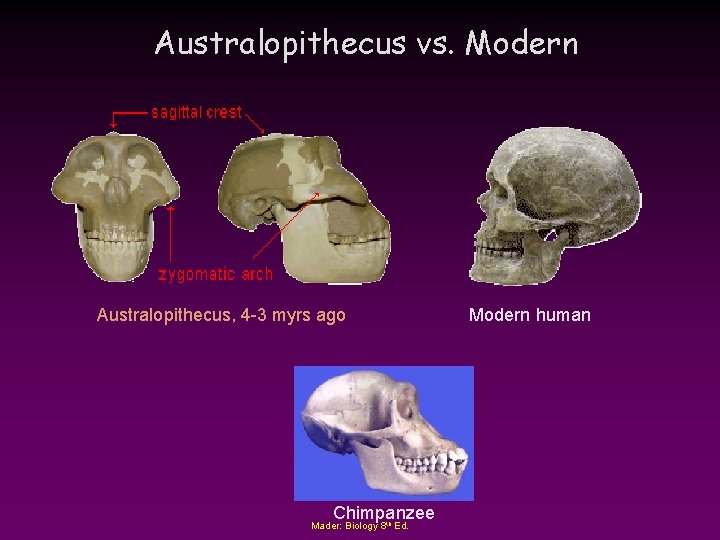
Australopithecus vs. Modern Australopithecus, 4 -3 myrs ago Chimpanzee Mader: Biology 8 th Ed. Modern human
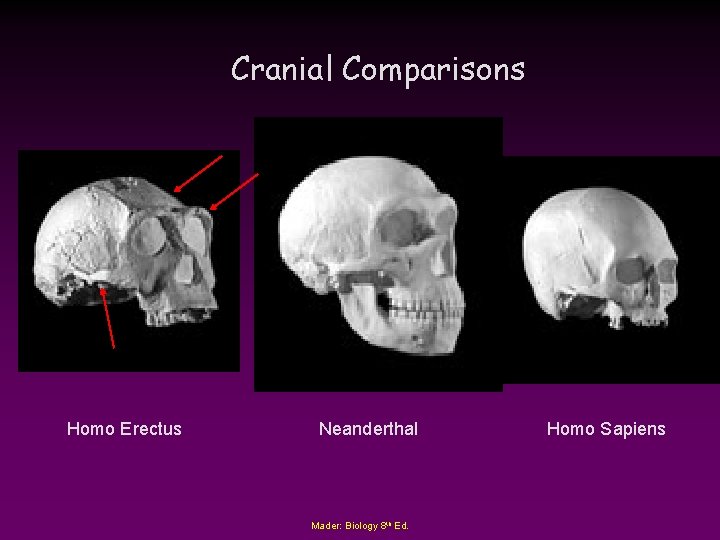
Cranial Comparisons Homo Erectus Neanderthal Mader: Biology 8 th Ed. Homo Sapiens
Cultural Evolution • • With the appearance of Cro-Magnons, – human evolution has become almost entirely cultural rather than biological Humans have spread throughout the world – by devising means to deal with a broad range of environmental conditions Mader: Biology 8 th Ed.
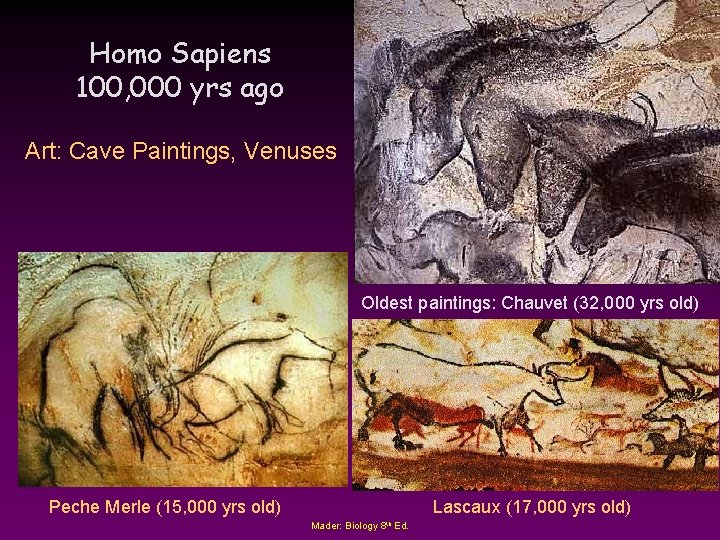
Homo Sapiens 100, 000 yrs ago Art: Cave Paintings, Venuses Oldest paintings: Chauvet (32, 000 yrs old) Peche Merle (15, 000 yrs old) Lascaux (17, 000 yrs old) Mader: Biology 8 th Ed.

Mader: Biology 8 th Ed.
- Slides: 35