
Anatomy Physiology The Upper Lower Respiratory Tract Aims
- Slides: 16
Anatomy &Physiology The Upper &Lower Respiratory Tract
Aims • To provide a general refresher or introduction to the upper and lower airway • To create a greater understanding of the tasks we undertake • To stay awake
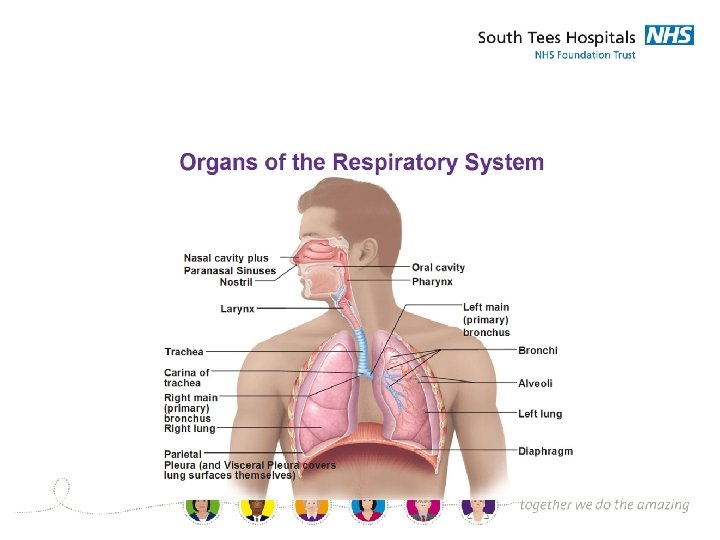
The Upper Airway • The nose warms filters and moistens the air we breathe in • Cilia are hair like structures in the nose which trap dust particles and prevent them from entering the lungs • The pharynx is a common passageway for air food and fluid • The epiglottis or Adam’s apple closes off the trachea when food or fluid is swallowed to prevent it from entering the trachea and lungs
• The larynx houses the vocal chords which are responsible for sound production and speech
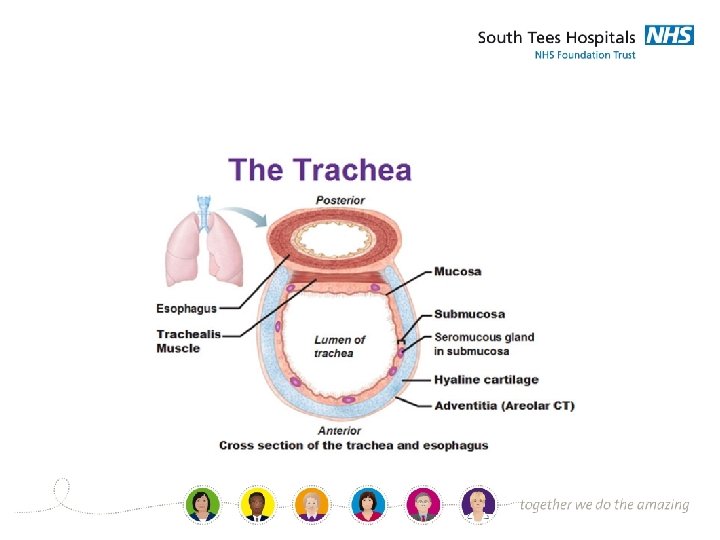
Lower airway • The trachea or windpipe is formed by 15 -20 C shaped pieces of cartilage which protect the airway. • The trachea acts as a passageway for air to flow to and from the lungs • The back of the trachea is floppy to allow the easy passage of food down the oesophagus • The trachea then branches into the right and left bronchus •
• The bottom of the trachea where the right and left bronchus divide is the carina
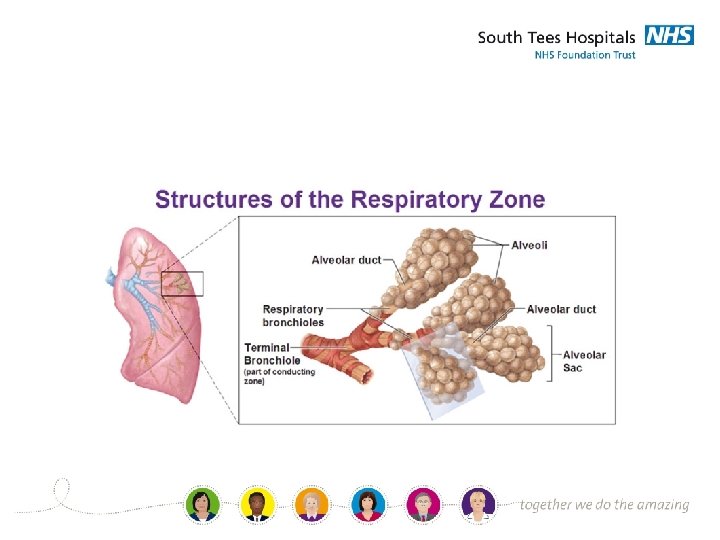
• The main function of the bronchi and bronchioles is to carry air into the lungs • The right bronchus is shorter and more vertical than the left which is why more foreign particles enter the right • Each bronchus enters the lungs then branch off into smaller sections called bronchioles and then into terminal bronchioles • Finally the terminal bronchioles conduct air into
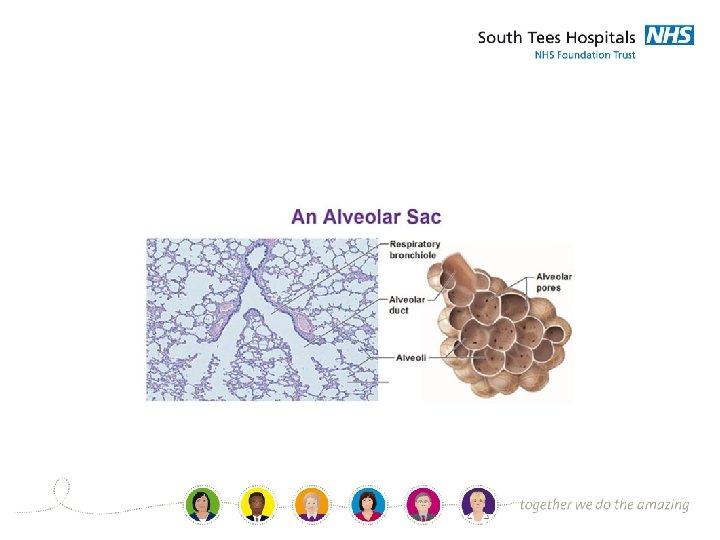
• the alveoli which are the tiny air sacs in the lungs where gas exchange takes place
The oxygen rich air is drawn from the alveoli into capillaries and transported back to the heart. Carbon dioxide is drawn from the capillaries into the alveoli and exhaled back into the air. Carbon dioxide is a waste product and a build up of this can be very harmful
• Thank you for listening • Any Questions ?