
Anatomy Physiology The Human Body An Orientation Introduction
Anatomy & Physiology The Human Body: An Orientation

Introduction: �Anatomy: the study of structure and shape of the body (and its parts) and their relationship to each other. �Physiology: (physio= nature; ology= study of) the study of the function of the body and its parts. �These compliment each other and allow us to study the body’s structures and functions.

Levels of Structural Organization (of Humans): �Atoms (building blocks of matter; combine to make molecules) �Cells (smallest unit of life) �Tissues (groups of similar cells performing a common function) �Organs (groups of tissues working together for a specific function) �Organ Systems (groups of organs working collectively for a greater good) �Organism
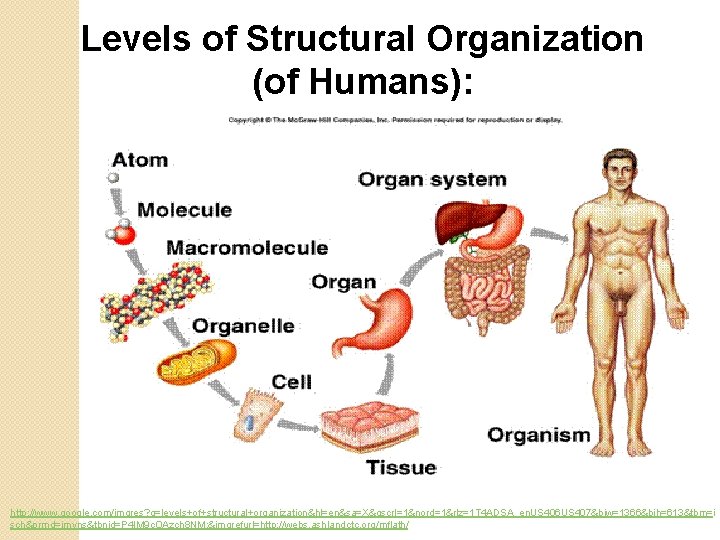
Levels of Structural Organization (of Humans): http: //www. google. com/imgres? q=levels+of+structural+organization&hl=en&sa=X&qscrl=1&nord=1&rlz=1 T 4 ADSA_en. US 406 US 407&biw=1366&bih=613&tbm=i sch&prmd=imvns&tbnid=P 4 l. M 9 c. OAzch 8 NM: &imgrefurl=http: //webs. ashlandctc. org/mflath/
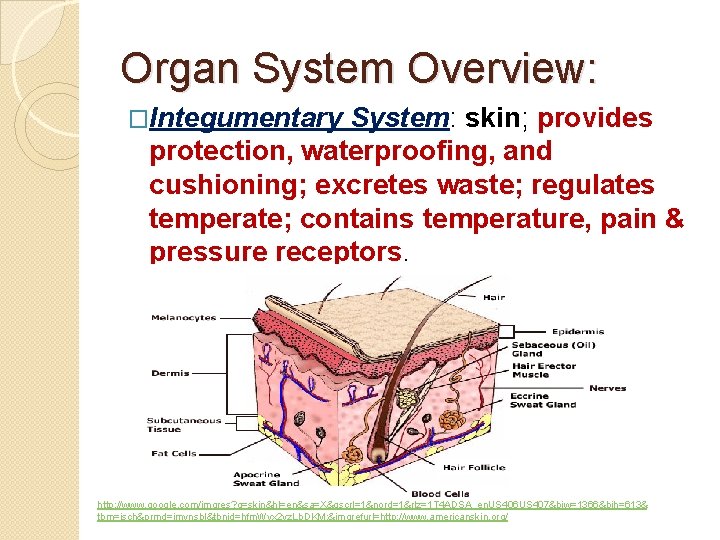
Organ System Overview: �Integumentary System: skin; provides protection, waterproofing, and cushioning; excretes waste; regulates temperate; contains temperature, pain & pressure receptors. http: //www. google. com/imgres? q=skin&hl=en&sa=X&qscrl=1&nord=1&rlz=1 T 4 ADSA_en. US 406 US 407&biw=1366&bih=613& tbm=isch&prmd=imvnsbl&tbnid=hfm. Wyx 2 vz. Lb. DKM: &imgrefurl=http: //www. americanskin. org/
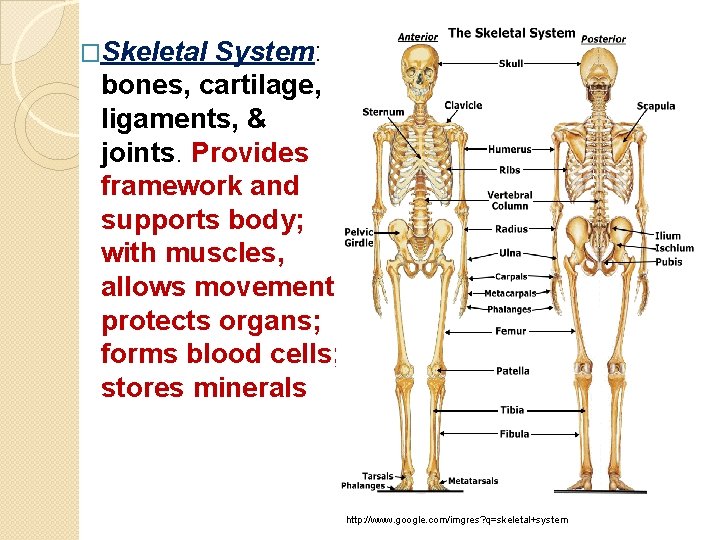
�Skeletal System: bones, cartilage, ligaments, & joints. Provides framework and supports body; with muscles, allows movement; protects organs; forms blood cells; stores minerals http: //www. google. com/imgres? q=skeletal+system
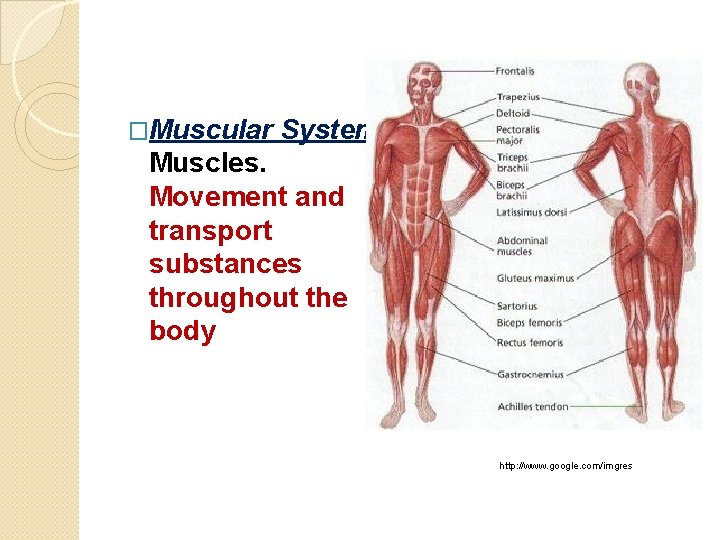
�Muscular System: Muscles. Movement and transport substances throughout the body http: //www. google. com/imgres
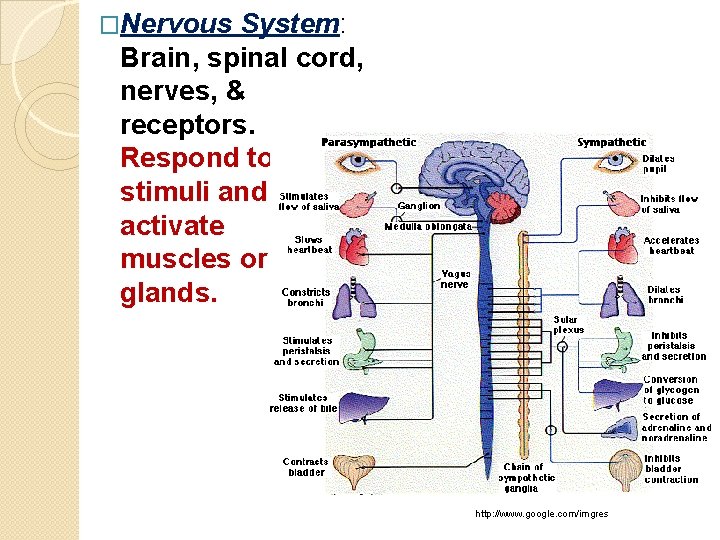
�Nervous System: Brain, spinal cord, nerves, & receptors. Respond to stimuli and activate muscles or glands. http: //www. google. com/imgres
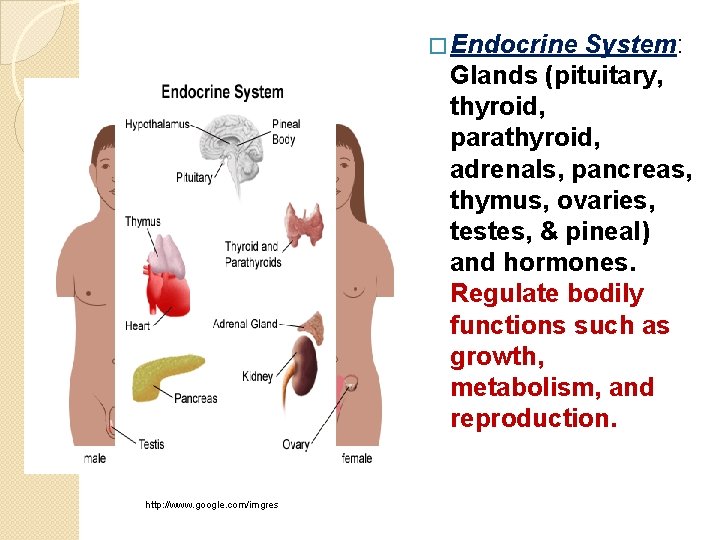
� Endocrine System: Glands (pituitary, thyroid, parathyroid, adrenals, pancreas, thymus, ovaries, testes, & pineal) and hormones. Regulate bodily functions such as growth, metabolism, and reproduction. http: //www. google. com/imgres
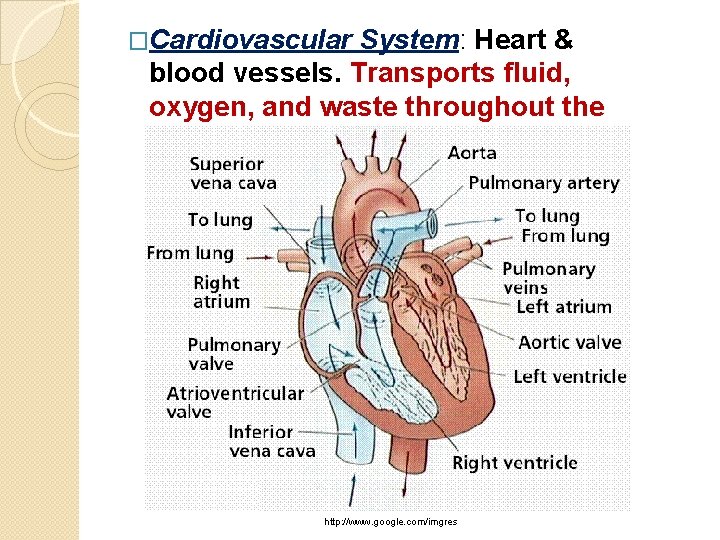
�Cardiovascular System: Heart & blood vessels. Transports fluid, oxygen, and waste throughout the body. http: //www. google. com/imgres
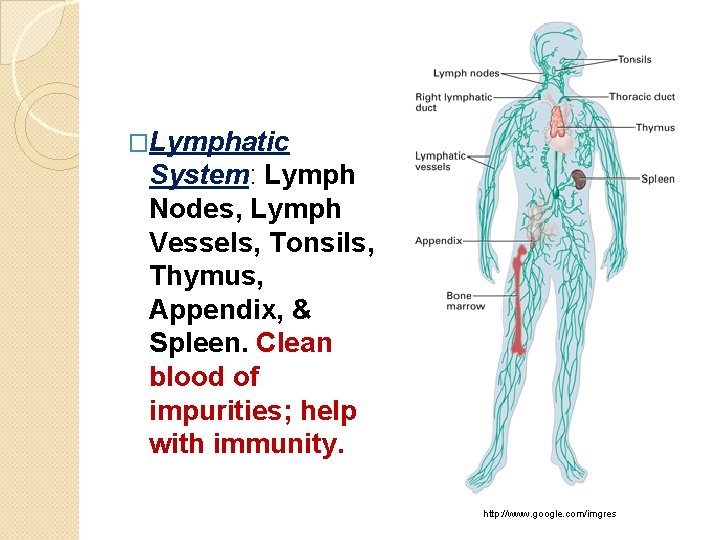
�Lymphatic System: Lymph Nodes, Lymph Vessels, Tonsils, Thymus, Appendix, & Spleen. Clean blood of impurities; help with immunity. http: //www. google. com/imgres
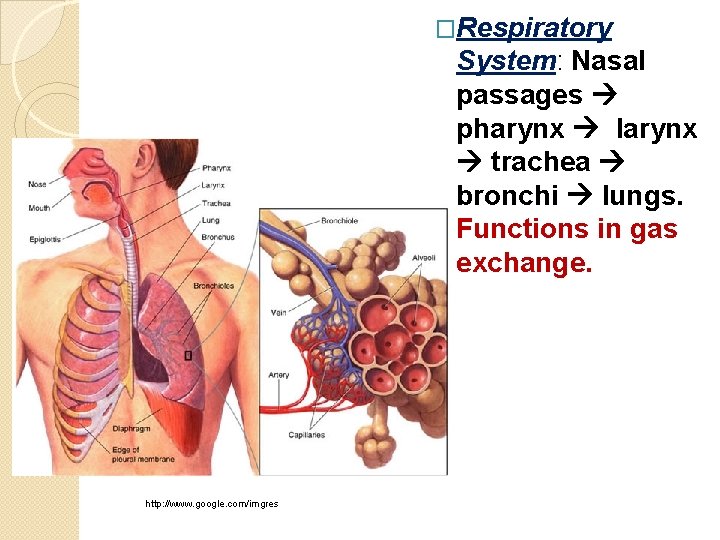
�Respiratory System: Nasal passages pharynx larynx trachea bronchi lungs. Functions in gas exchange. http: //www. google. com/imgres
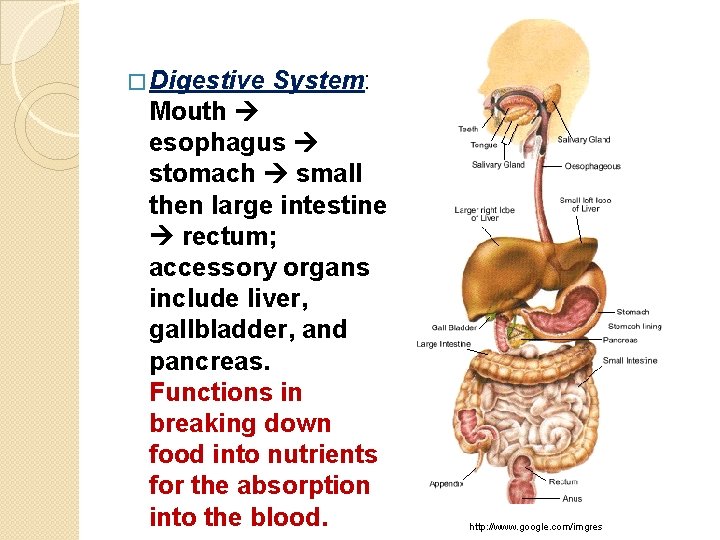
� Digestive System: Mouth esophagus stomach small then large intestine rectum; accessory organs include liver, gallbladder, and pancreas. Functions in breaking down food into nutrients for the absorption into the blood. http: //www. google. com/imgres
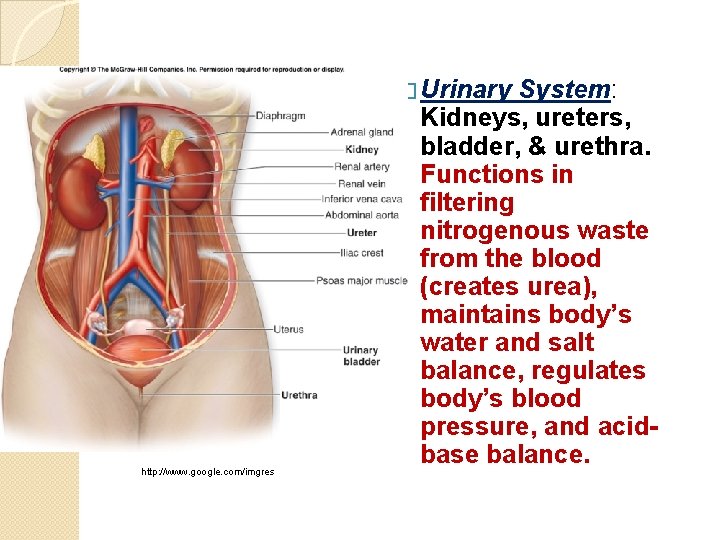
� Urinary http: //www. google. com/imgres System: Kidneys, ureters, bladder, & urethra. Functions in filtering nitrogenous waste from the blood (creates urea), maintains body’s water and salt balance, regulates body’s blood pressure, and acidbase balance.
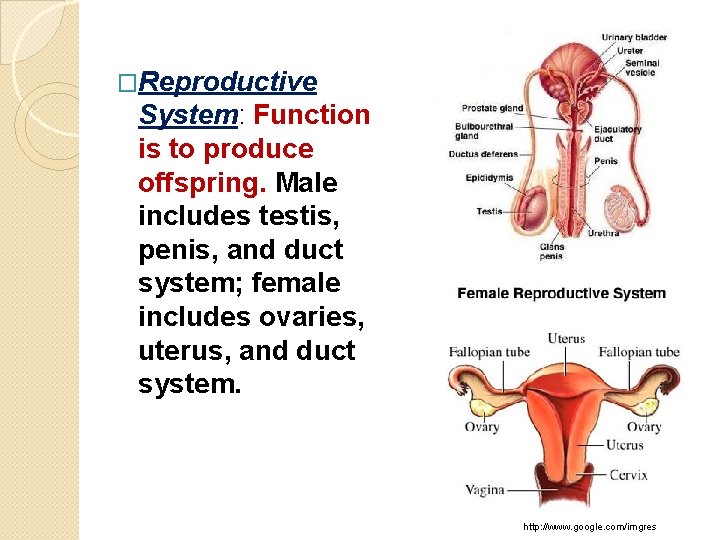
�Reproductive System: Function is to produce offspring. Male includes testis, penis, and duct system; female includes ovaries, uterus, and duct system. http: //www. google. com/imgres
Maintaining Life: There are 8 characteristics that maintain, or enable, life. �Maintaining boundaries: separation of life from outside environment (from a cell membrane to skin) �Movement: internal & external �Responsiveness: sense the environment and react to it accordingly �Digestion: break down food
�Metabolism: all chemical reactions within the body: decomposition (break down) and synthesis (build up) �Excretion: removal of wastes �Reproduction: produce more like self (this can occur on the cellular level for growth, maintenance, and repair) �Growth: increase in size

Survival Needs: There are 5 survival needs, or requirements for life: �Nutrients: food �Oxygen: needed to break down food (releases energy from food) �Water: transports, regulates, & needed for chemical reactions (most abundant chemical in our bodies) �Normal Body Temperature: determines rate of reactions �Atmospheric Pressure: force exerted on body by weight of air (enables gas
Homeostasis: �Homeostasis is the body’s ability to maintain a stable internal environment (temp. , bp). �Homeo �There = same; stasis = stand still are 2 types of control: Negative & Positive Feedback Mechanisms.
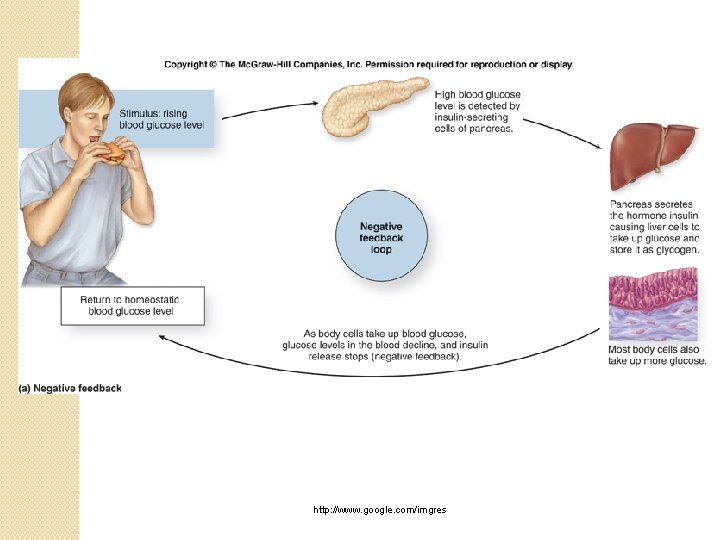
http: //www. google. com/imgres
The Language of Anatomy: � Superior: above, or toward the head (cranial) � Inferior: below, or away from the head (caudal) � Ventral: front of the body (anterior) � Dorsal: backside (behind) of the body (posterior) � Medial: middle � Lateral: outer side of body � Proximal: close to the origin point of attachment to a limb � Distal: farther from the point of attachment to a limb � Superficial: surface

Body Planes & Sections: �Sagittal Section: cutting the body lengthwise �Median (midsagittal) Section: sagittal section that is equal �Frontal Section: cutting the body into anterior and posterior parts. �Transverse Section: (a. k. a. cross section) cutting the body into superior & inferior sections
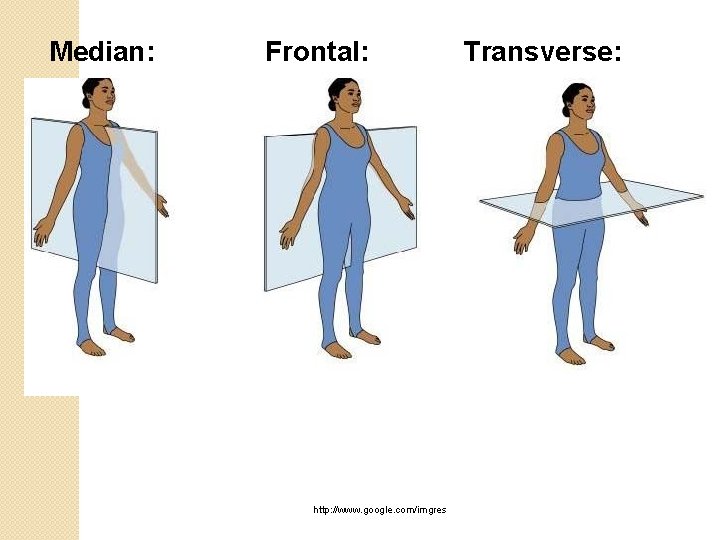
Median: Frontal: http: //www. google. com/imgres Transverse:
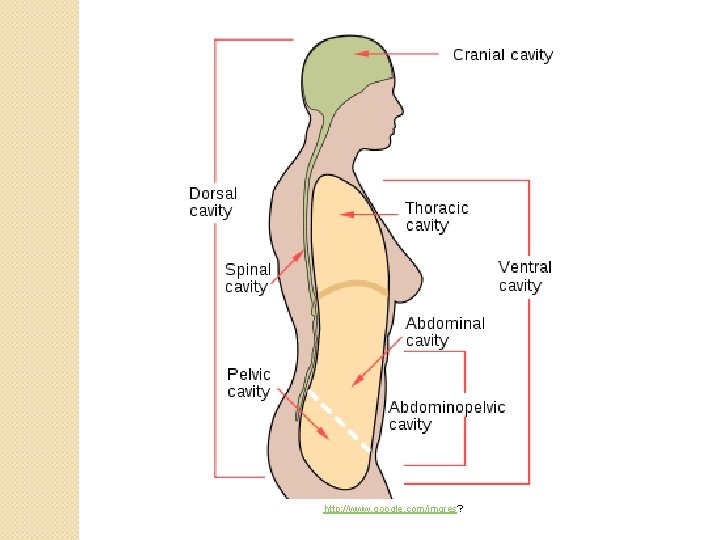
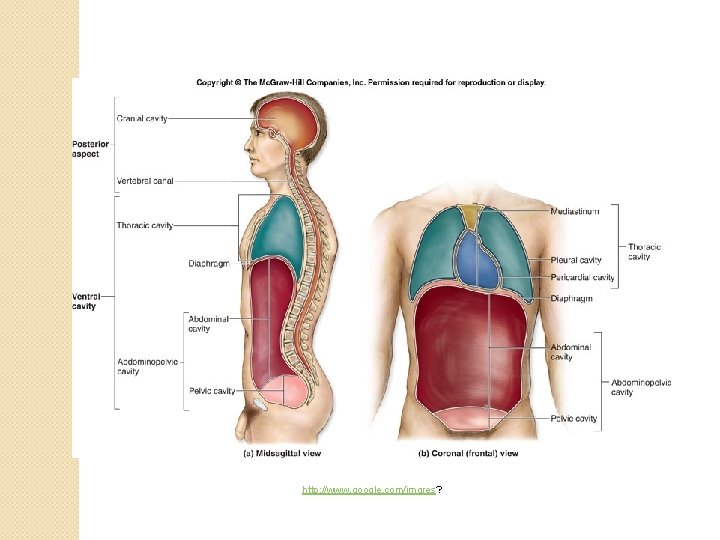
Body Cavities: � Dorsal Cavity: ◦ Cranial Cavity: skull & brain ◦ Spinal Cavity: spinal cord & backbone (vertebrate) � Ventral Cavity: ◦ Thoracic Cavity: upper part of trunk ◦ Abdominopelvic Cavity: lower trunk � The ventral cavity is separated by the diaphragm (thin muscle).
http: //www. google. com/imgres?
Ventral Cavity: Thoracic Cavity: �The mediastinum separates the left & right sides (separates the lungs). �The viscera: lungs, heart, espohagus, trachea, & thymus gland (all except lungs are w/in mediastinum). Abdominopelvic Cavity: � This is from the diaphragm to the pelvic floor. Contains 2 cavities: � Abdominal Cavity (below diaphragm): viscera: stomach, liver, spleen, kidneys, gall bladder, and small & large intestines (majority) � Pelvic Cavity (below diaphragm): viscera: large intestines (lower end), bladder, & reproductive organs
http: //www. google. com/imgres?
Other Body Cavities:
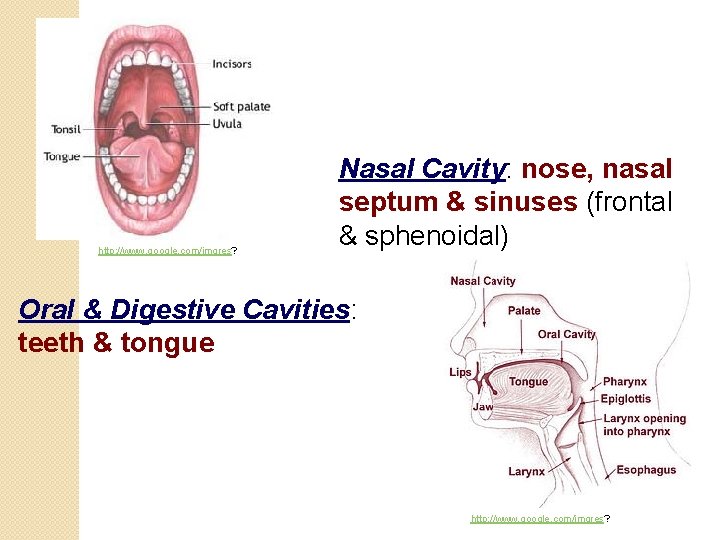
http: //www. google. com/imgres? Nasal Cavity: nose, nasal septum & sinuses (frontal & sphenoidal) Oral & Digestive Cavities: teeth & tongue http: //www. google. com/imgres?
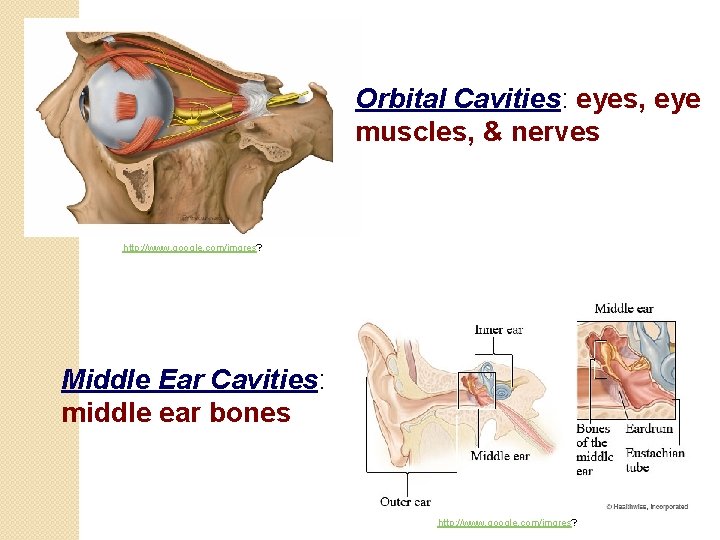
Orbital Cavities: eyes, eye muscles, & nerves http: //www. google. com/imgres? Middle Ear Cavities: middle ear bones http: //www. google. com/imgres?
This slide show was developed by Dana Halloran, Cardinal Mooney High School, Sarasota, FL. Used with her personal permission, adapted and amended by Rosa Whiting, Manatee School for the Arts, Palmetto, FL.
- Slides: 31