
Anatomy Physiology The Digestive System Body Metabolism GAME
Anatomy & Physiology The Digestive System & Body Metabolism GAME: https: //www. brainpop. com/games/buildabodydigestivesyst em/
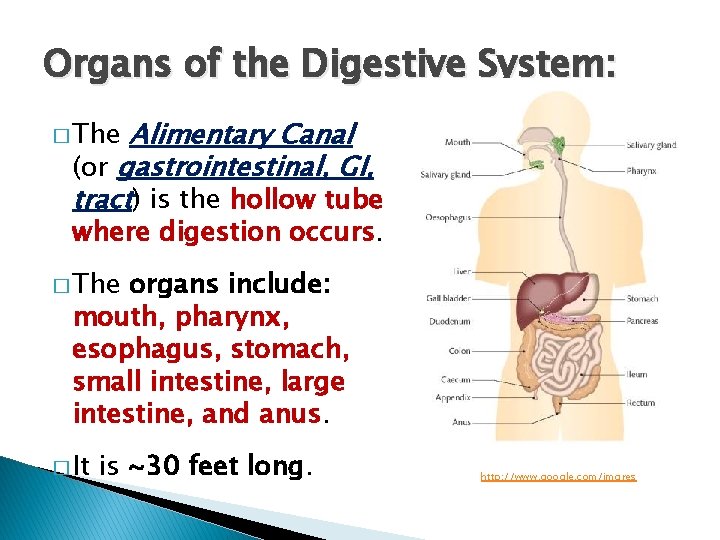
Organs of the Digestive System: Alimentary Canal (or gastrointestinal, GI, tract) is the hollow tube � The where digestion occurs. � The organs include: mouth, pharynx, esophagus, stomach, small intestine, large intestine, and anus. � It is ~30 feet long. http: //www. google. com/imgres
� Digestion is the decomposition (breakdown) of food for the body’s use. � This is both chemical and mechanical. � Mastication: chewing food.
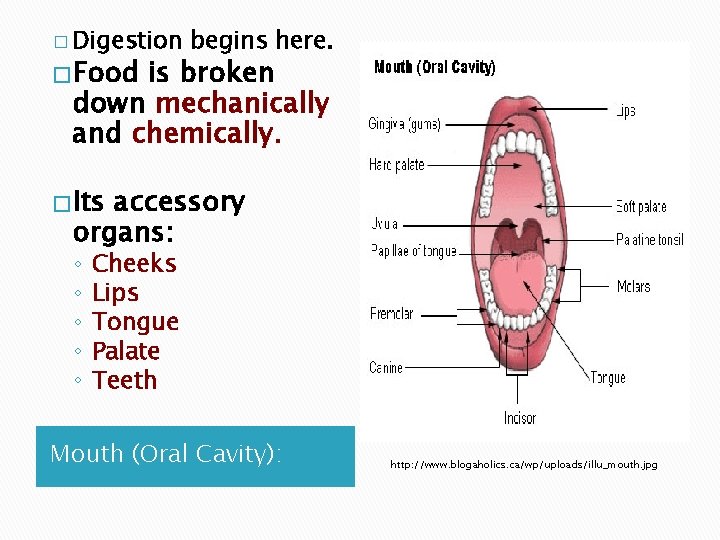
� Digestion � Food begins here. is broken down mechanically and chemically. � Its accessory organs: ◦ ◦ ◦ Cheeks Lips Tongue Palate Teeth Mouth (Oral Cavity): http: //www. blogaholics. ca/wp/uploads/illu_mouth. jpg
Swallowing: Swallowing occurs in 3 stages: ◦ Voluntary: food is chewed & consciously swallowed ◦ Swallowing reflex is triggered: through a variety of steps, food is moved by peristalsis to the esophagus ◦ Peristalsis: food moves through the esophagus � While swallowing, breathing does not occur.
� From the stomach, food passes thru to the pharynx. � It contains 3 parts: ◦ Nasopharynx (air passageway) ◦ Oropharynx (food passageway) ◦ Laryngopharynx (passageway to the esophagus) Pharynx: �A tube that runs ~25 cm (10”) long � Allows peristalsis to continue � Just before the esophagus meets the stomach is a circular section of smooth muscle called the cardiac sphincter (a. k. a. lower esophageal sphincter) which controls the movement of food into the stomach. Usually this sphincter is closed (until food reaches it). Esophagus:
The Four Layers of Tissue: ◦ Mucosa (mucous membrane): contains glands that secrete mucus & digestive enzymes �serves as protection (underlying tissues) ◦ Submucosa ◦ Muscular layer: smooth muscle and some nerves �function is movement. ◦ Serosa (serous layer)
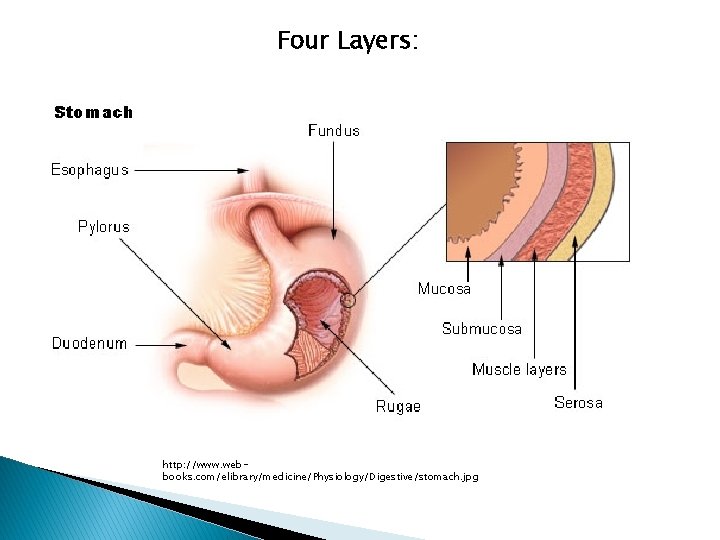
Four Layers: http: //www. webbooks. com/elibrary/medicine/Physiology/Digestive/stomach. jpg
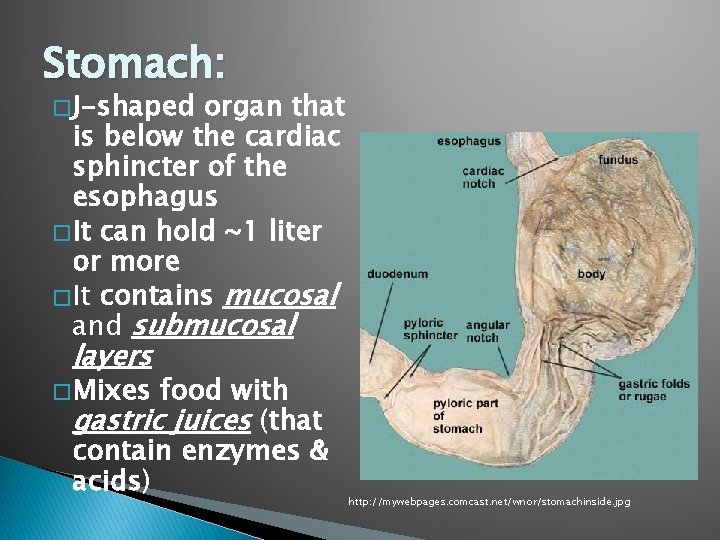
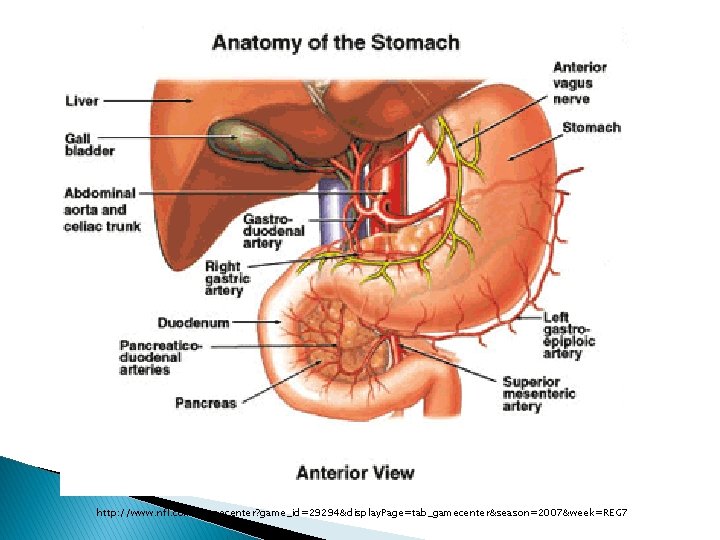
Stomach: � J-shaped organ that is below the cardiac sphincter of the esophagus � It can hold ~1 liter or more � It contains mucosal and submucosal layers � Mixes food with gastric juices (that contain enzymes & acids) http: //mywebpages. comcast. net/wnor/stomachinside. jpg
http: //www. nfl. com/gamecenter? game_id=29294&display. Page=tab_gamecenter&season=2007&week=REG 7
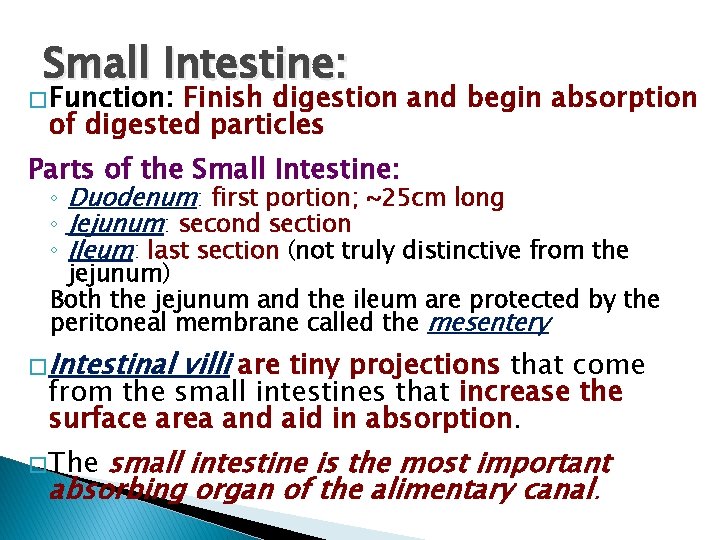
Small Intestine: � Function: Finish digestion and begin absorption of digested particles Parts of the Small Intestine: ◦ Duodenum: first portion; ~25 cm long ◦ Jejunum: second section ◦ Ileum: last section (not truly distinctive from the jejunum) Both the jejunum and the ileum are protected by the peritoneal membrane called the mesentery � Intestinal villi are tiny projections that come from the small intestines that increase the surface area and aid in absorption. small intestine is the most important absorbing organ of the alimentary canal. � The
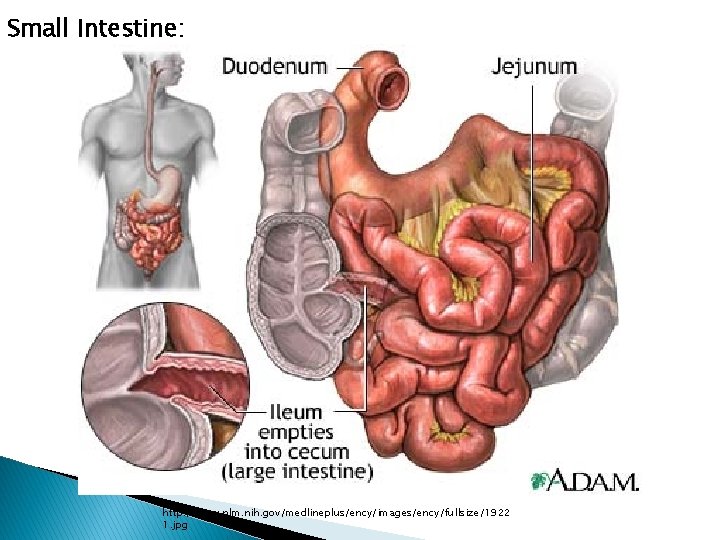
Small Intestine: http: //www. nlm. nih. gov/medlineplus/ency/images/ency/fullsize/1922 1. jpg
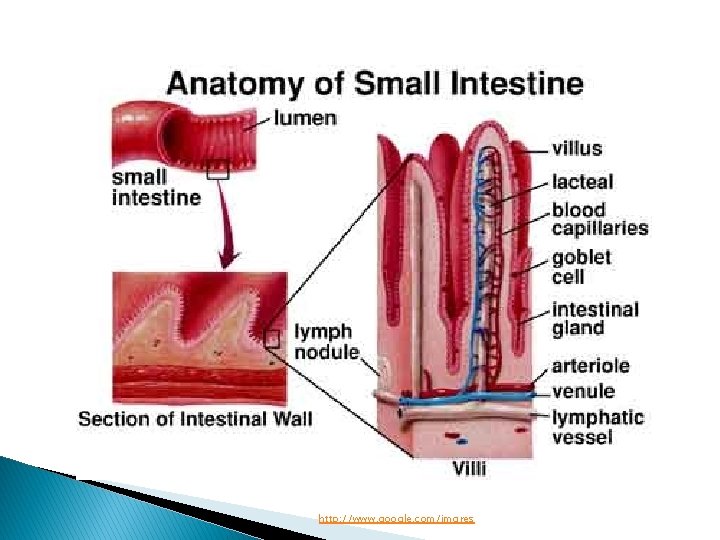
http: //www. google. com/imgres
Large Intestine: � Chyme moves from the small intestine into the large intestine � Much shorter than the small intestine but is larger in its diameter � “surrounds” � absorbs � the small intestine water & electrolytes from chyme remaining material becomes feces. ◦ This is ~75% water while the remaining is anything that was not digested or absorbed (electrolytes, mucus, intestinal cells, bacteria & bile pigments which give feces its color). ◦ Its odor comes from bacteria products.
� Does not contain villi � Parts of the Large Intestine: ◦ Cecum: 1 st part of the large intestine which is directly below the ileocecal sphincter. �Below this is the vermiform appendix (a. k. a. appendix). This has no known function but has been discovered to have some lymphatic tissue. ◦ Colon: has 4 portions: �Ascending colon: upward �Transverse colon: below the stomach; largest section �Descending colon: downward �Sigmoid colon: twists into an S-shape, becoming this; the sigmoid reaches the rectum.
◦ Rectum: ends at ~5 cm below the tip of the coccyx ◦ Anal Canal: an opening to the external environment; feces exits the body. � The anus is guarded by 2 sphincters: ◦ The internal anal sphincter muscle: involuntary control (smooth muscle) ◦ External anal sphincter muscle: voluntary control (skeletal muscle)
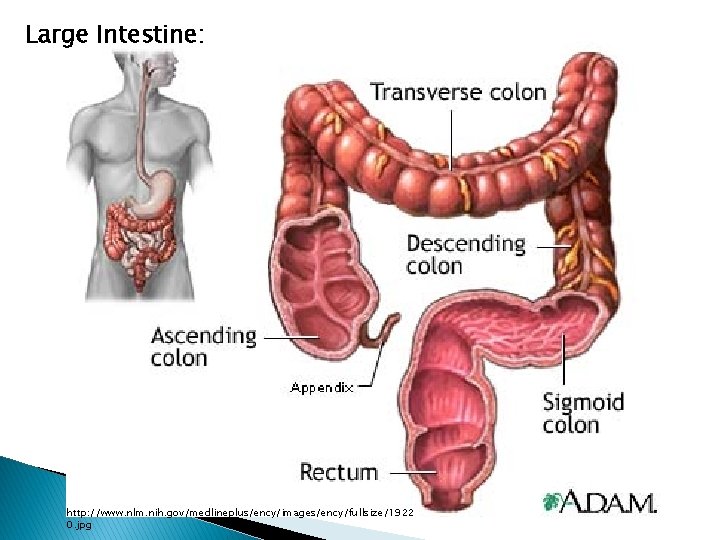
Large Intestine: http: //www. nlm. nih. gov/medlineplus/ency/images/ency/fullsize/1922 0. jpg
Accessory Digestive Organs
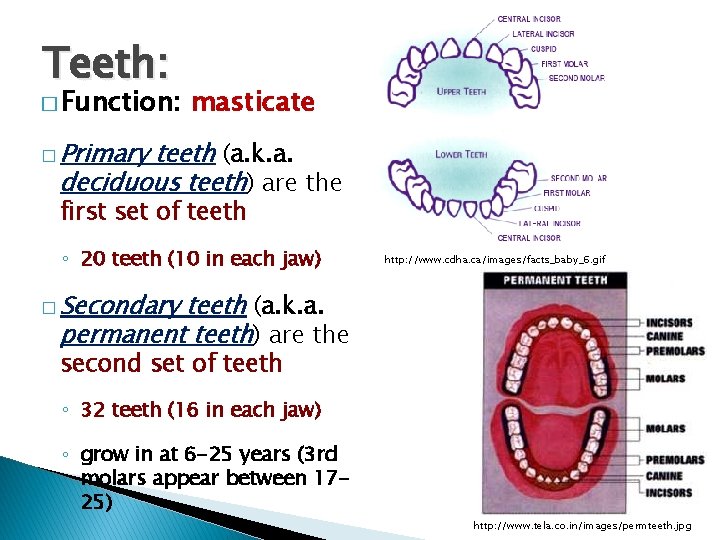
Teeth: � Function: masticate � Primary teeth (a. k. a. deciduous teeth) are the first set of teeth ◦ 20 teeth (10 in each jaw) http: //www. cdha. ca/images/facts_baby_6. gif � Secondary teeth (a. k. a. permanent teeth) are the second set of teeth ◦ 32 teeth (16 in each jaw) ◦ grow in at 6 -25 years (3 rd molars appear between 1725) http: //www. tela. co. in/images/permteeth. jpg
Classification of Teeth: �incisors (front teeth) have sharp edges to bite off food �cuspids (eye teeth) are sharp, sometimes pointed for biting, grabbing & tearing food �biscuspids (behind cuspids) and molars (back teeth) are flat for grinding food
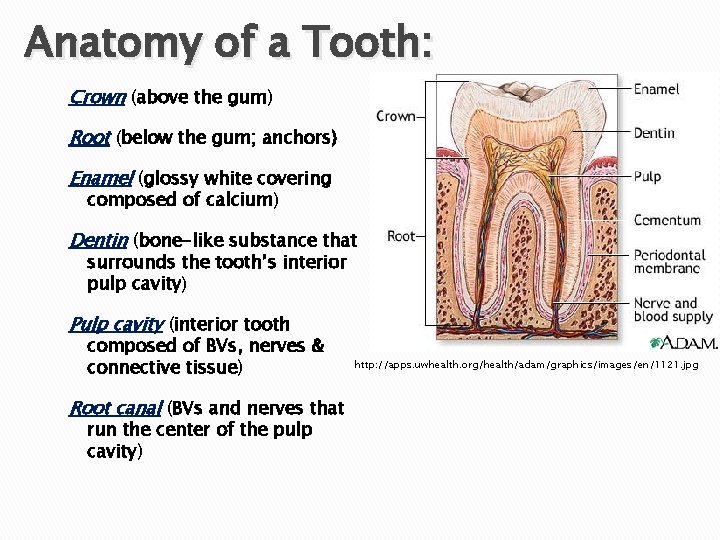
Anatomy of a Tooth: Crown (above the gum) Root (below the gum; anchors) Enamel (glossy white covering composed of calcium) Dentin (bone-like substance that surrounds the tooth’s interior pulp cavity) Pulp cavity (interior tooth composed of BVs, nerves & connective tissue) Root canal (BVs and nerves that run the center of the pulp cavity) http: //apps. uwhealth. org/health/adam/graphics/images/en/1121. jpg
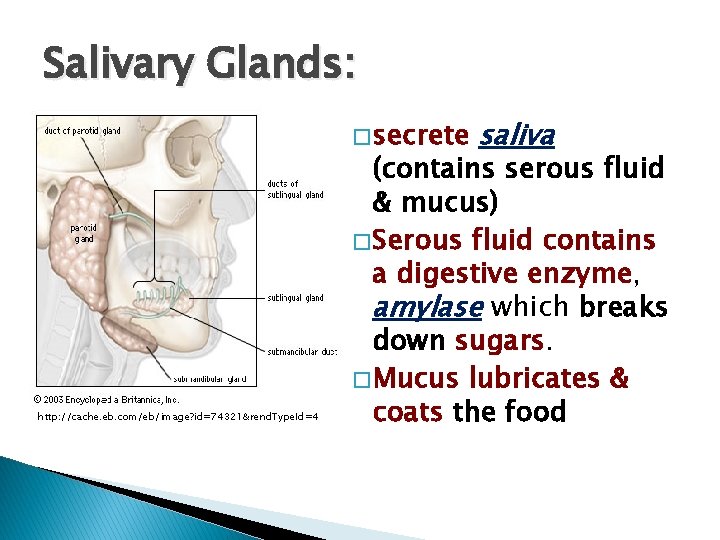
Salivary Glands: � secrete http: //cache. eb. com/eb/image? id=74321&rend. Type. Id=4 saliva (contains serous fluid & mucus) � Serous fluid contains a digestive enzyme, amylase which breaks down sugars. � Mucus lubricates & coats the food
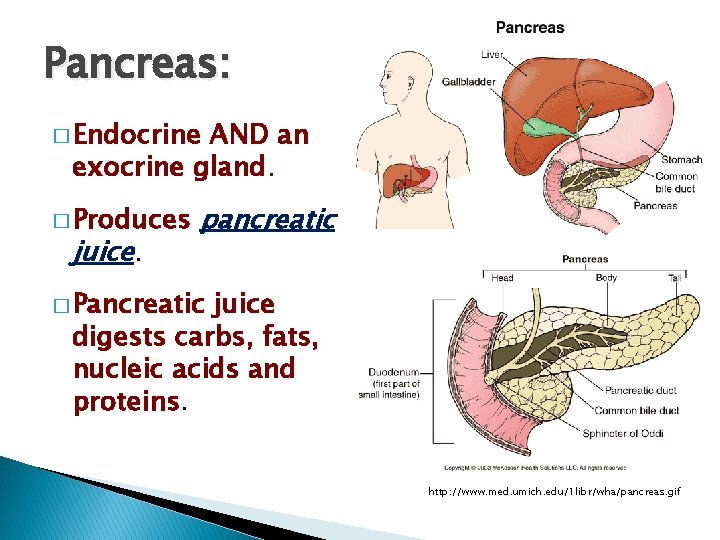
Pancreas: � Endocrine AND an exocrine gland. � Produces juice. pancreatic � Pancreatic juice digests carbs, fats, nucleic acids and proteins. http: //www. med. umich. edu/1 libr/wha/pancreas. gif
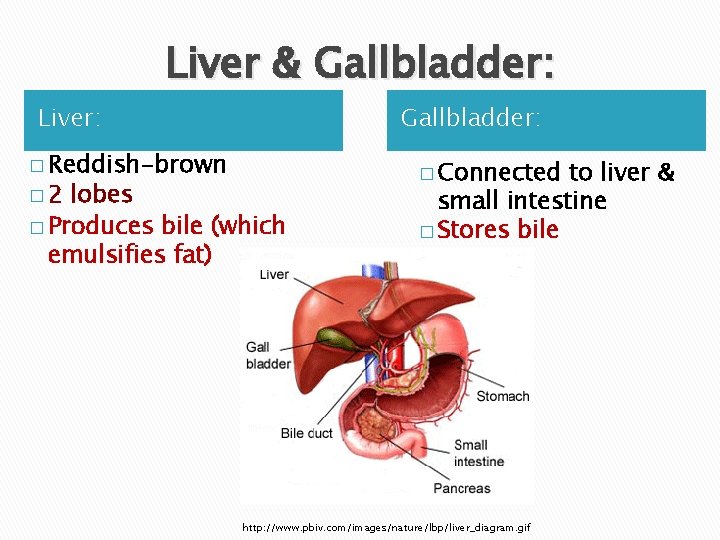
Liver & Gallbladder: Liver: � Reddish-brown � 2 Gallbladder: lobes � Produces bile (which emulsifies fat) � Connected to liver & small intestine � Stores bile http: //www. pbiv. com/images/nature/lbp/liver_diagram. gif
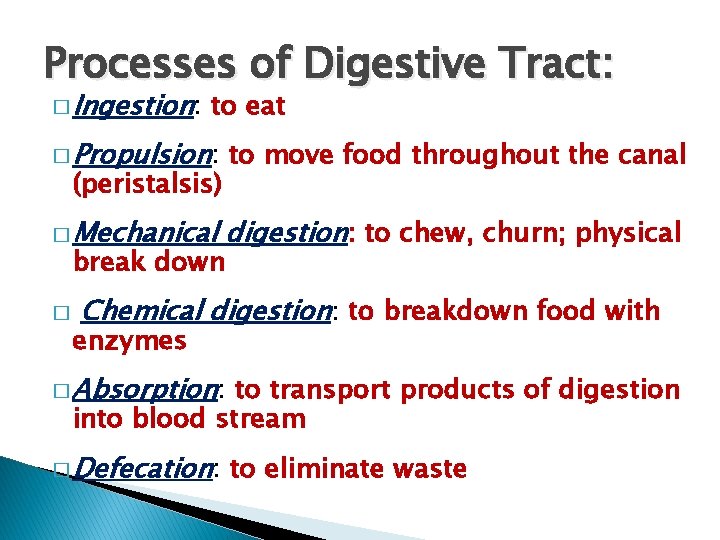
Processes of Digestive Tract: � Ingestion: to eat � Propulsion: to move food throughout the canal � Mechanical digestion: to chew, churn; physical (peristalsis) break down � Chemical digestion: to breakdown food with enzymes � Absorption: to transport products of digestion into blood stream � Defecation: to eliminate waste
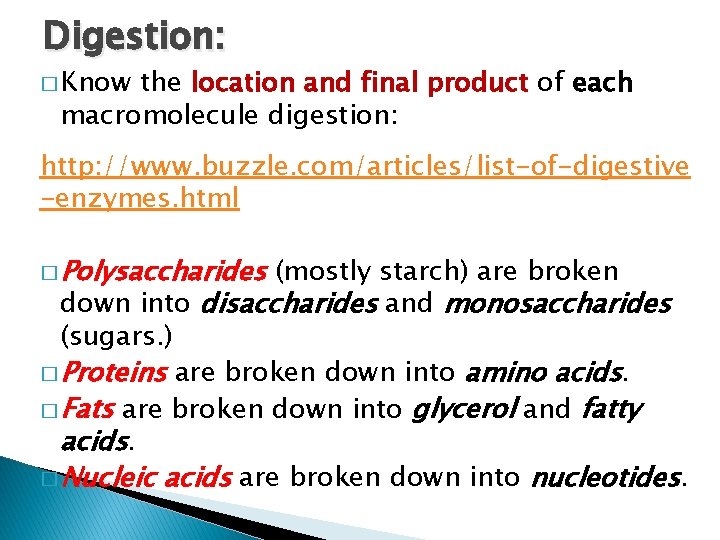
Digestion: � Know the location and final product of each macromolecule digestion: http: //www. buzzle. com/articles/list-of-digestive -enzymes. html � Polysaccharides (mostly starch) are broken down into disaccharides and monosaccharides (sugars. ) � Proteins are broken down into amino acids. � Fats are broken down into glycerol and fatty acids. � Nucleic acids are broken down into nucleotides.
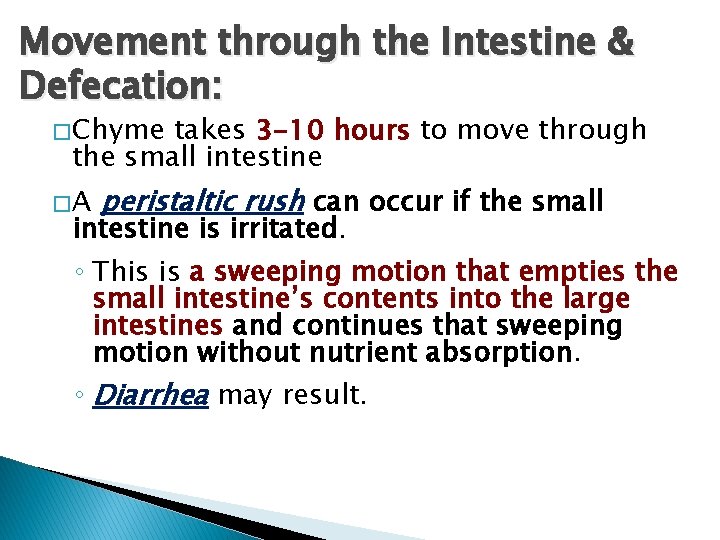
Movement through the Intestine & Defecation: � Chyme takes 3 -10 hours to move through the small intestine �A peristaltic rush can occur if the small intestine is irritated. ◦ This is a sweeping motion that empties the small intestine’s contents into the large intestines and continues that sweeping motion without nutrient absorption. ◦ Diarrhea may result.
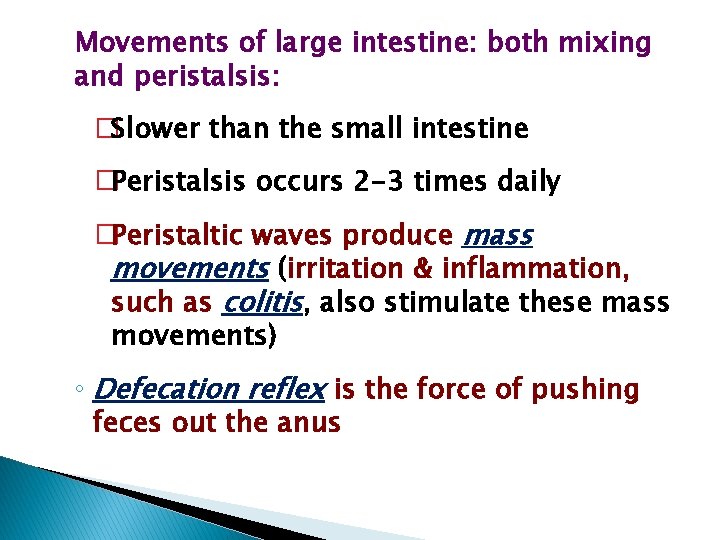
Movements of large intestine: both mixing and peristalsis: �Slower than the small intestine �Peristalsis occurs 2 -3 times daily �Peristaltic waves produce mass movements (irritation & inflammation, such as colitis, also stimulate these mass movements) ◦ Defecation reflex is the force of pushing feces out the anus
� HYPOTHYROIDISM vs HYPERTHYROIDISM http: //www. everydayhealth. com/thyroid-conditions/hypothyroidism-vshyperthyroidism-whats-the-difference. aspx Look up online or in text! gallstones, jaundice, hepatitis, cirrhosis, heartburn, hiatal hernia, vomiting, pancreatitis, peptic ulcers, diverticulosis, diarrhea, constipation, hypothermia, frostbite, hyperthermia, heat stroke, heat exhaustion, & appendicitis
Basic Metabolic Rate: � http: //dailyburn. com/life/health/how-to- calculate-bmr/
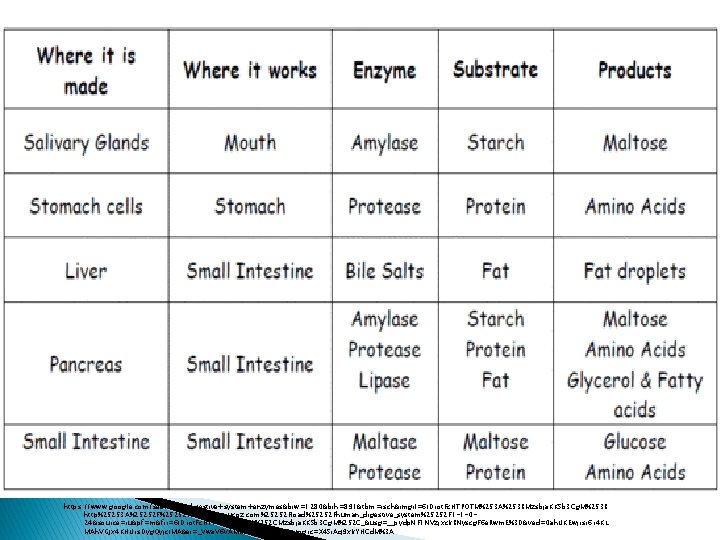
https: //www. google. com/search? q=digestive+system+enzymes&biw=1280&bih=891&tbm=isch&imgil=6 IDrot. Fc. HTPOTM%253 A%253 BMzsbja. KKSb 3 Cg. M%253 B http%25253 A%25252 Fmyscience. ucoz. com%25252 Fload%25252 Fhuman_digestive_system%25252 F 1 -1 -024&source=iu&pf=m&fir=6 IDrot. Fc. HTPOTM%253 A%252 CMzsbja. KKSb 3 Cg. M%252 C_&usg=__pydp. NF 1 NVzjxck. BNyscg. F 6 e. Rwm. E%3 D&ved=0 ah. UKEwjrsr 6 r 4 KL MAh. VGJx 4 KHUrs. Dyg. Qyjc. IMA&ei=_Vwa. V 6 v. AMMb. Oe. Mr. Yv 8 AC#imgrc=X 4 Si. Aq 9 xk. YHCd. M%3 A
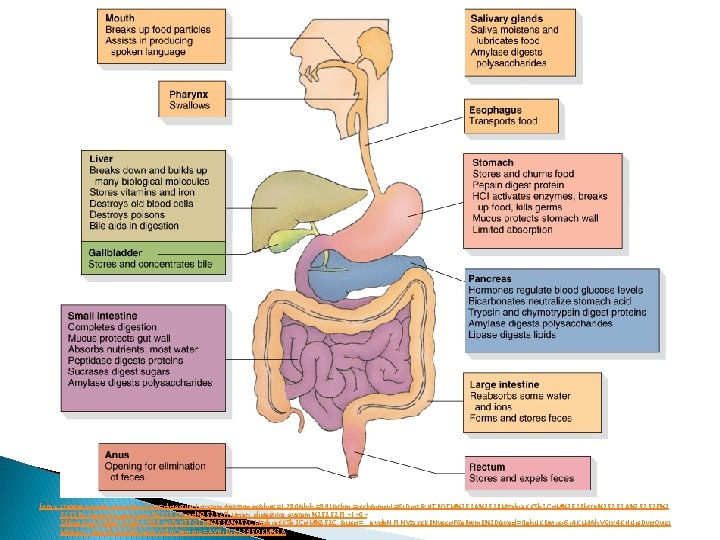
https: //www. google. com/search? q=digestive+system+enzymes&biw=1280&bih=891&tbm=isch&imgil=6 IDrot. Fc. HTPOTM%253 A%253 BMzsbja. KKSb 3 Cg. M%253 Bhttp%25253 A%25252 F%2 5252 Fmyscience. ucoz. com%25252 Fload%25252 Fhuman_digestive_system%25252 F 1 -1 -024&source=iu&pf=m&fir=6 IDrot. Fc. HTPOTM%253 A%252 CMzsbja. KKSb 3 Cg. M%252 C_&usg=__pydp. NF 1 NVzjxck. BNyscg. F 6 e. Rwm. E%3 D&ved=0 ah. UKEwjrsr 6 r 4 KLMAh. VGJx 4 KHUrs. Dyg. Qyjc. I MA&ei=_Vwa. V 6 v. AMMb. Oe. Mr. Yv 8 AC#imgrc=AVHi. EG 21395 QKM%3 A
REVIEW: https: //www. khanacademy. org/partner-content/crashcourse 1/partner-topic-crash-course-bio-ecology/crash-course -biology/v/crash-course-biology-127 THE END!
� � � This slide show was developed by Dana Halloran, Cardinal Mooney High School, Sarasota, FL. Used with her personal permission, adapted and amended by Rosa Whiting, Manatee School for the Arts, Palmetto, FL.
- Slides: 34