
Anatomy Physiology REFLEX ACTIVITY CHAPTER 13 PART 4
- Slides: 16
Anatomy &Physiology REFLEX ACTIVITY CHAPTER 13 PART 4
Reflexes �much of what body must do every day is programmed as reflexes a rapid, predictable, & involuntary response occur over neural pathways called reflex arches
Reflexes Inborn or Intrinsic 1. unlearned, unpremeditated , involuntary designed to keep you in homeostasis w/out having to think may or may not be aware of it 2. Learned or Acquired result of practice or repetition
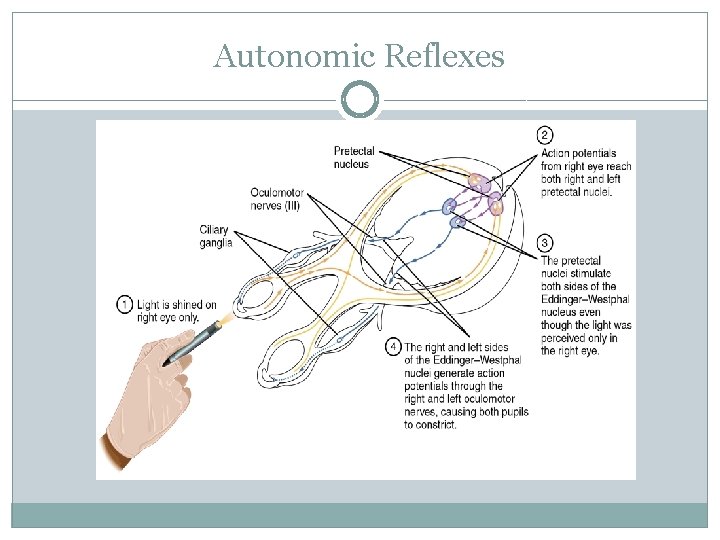
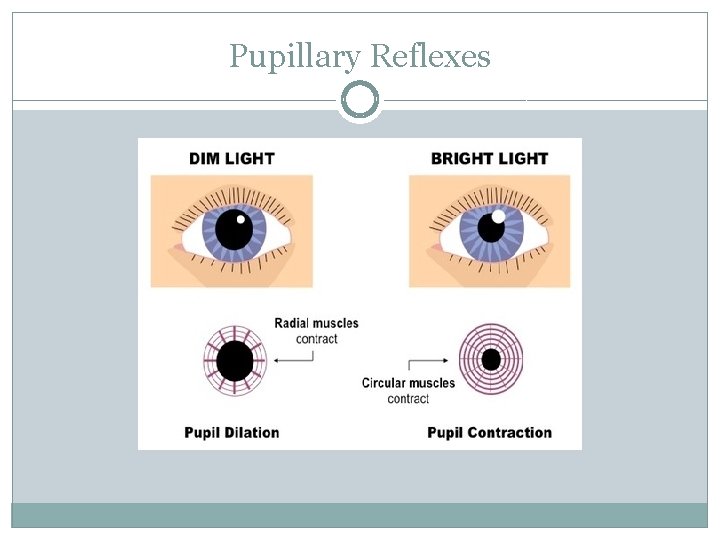
2 Types Reflexes Autonomic reflexes: 1. regulate activity of smooth muscles, heart, glands examples: salivating when smell Thanksgiving dinner cooking pupils dilating/constricting with change in amount light 2. Somatic reflexes: stimulate skeletal muscles examples: pull hand away from hot stove
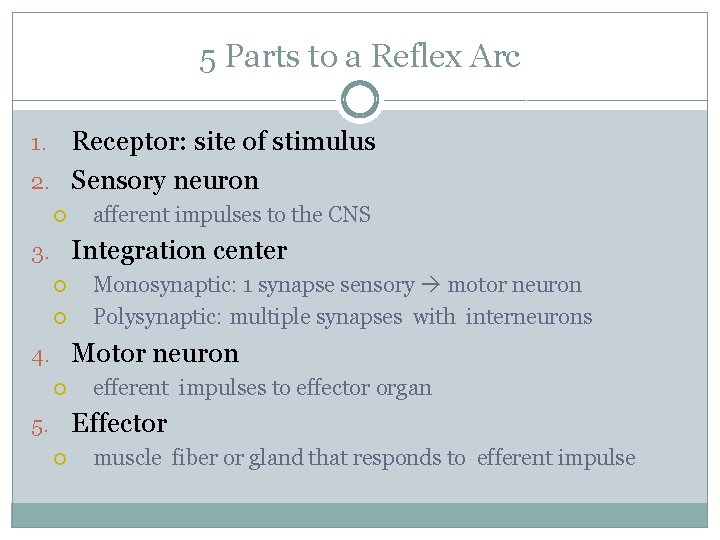
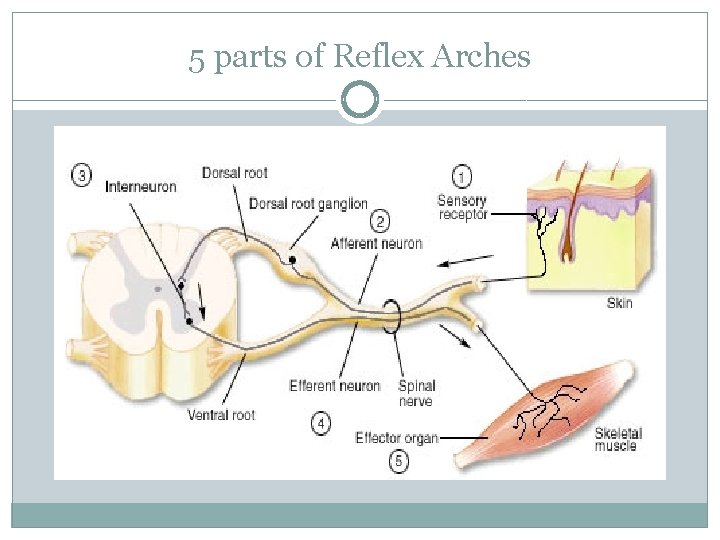
5 Parts to a Reflex Arc Receptor: site of stimulus 2. Sensory neuron 1. afferent impulses to the CNS 3. Integration center Monosynaptic: 1 synapse sensory motor neuron Polysynaptic: multiple synapses with interneurons 4. Motor neuron efferent impulses to effector organ 5. Effector muscle fiber or gland that responds to efferent impulse
5 parts of Reflex Arches
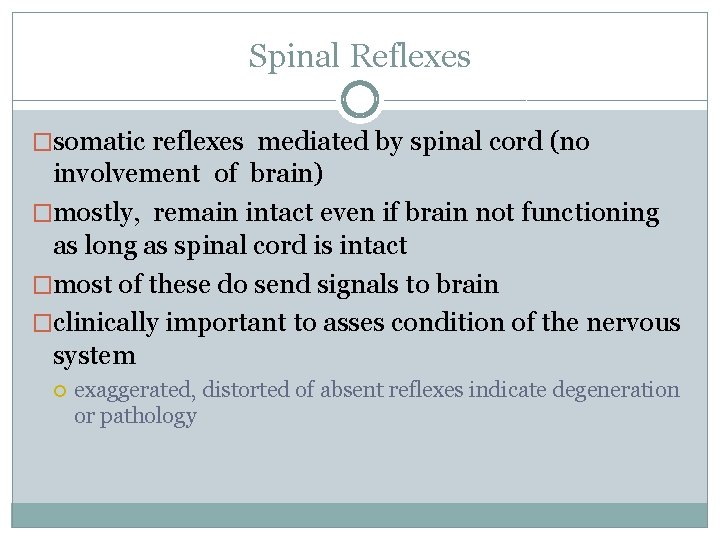
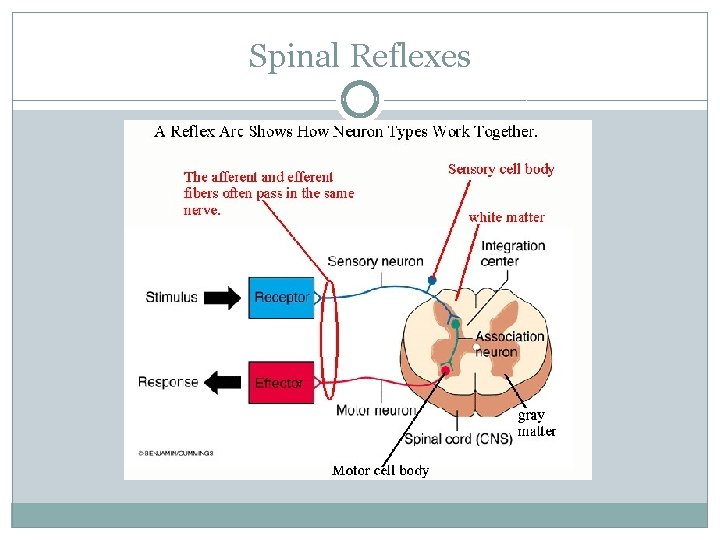
Spinal Reflexes �somatic reflexes mediated by spinal cord (no involvement of brain) �mostly, remain intact even if brain not functioning as long as spinal cord is intact �most of these do send signals to brain �clinically important to asses condition of the nervous system exaggerated, distorted of absent reflexes indicate degeneration or pathology
Spinal Reflexes
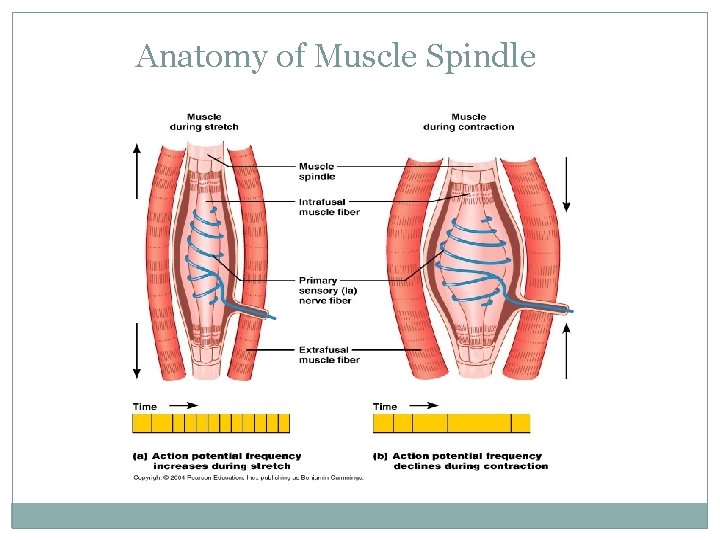
What the Nervous System Needs to Know About Skeletal Muscle so there is Coordination length of muscle 1. muscle spindles 2. amount of tension on the muscle tendon organs Both called proprioceptors important role in spinal reflexes provide essential feedback to cerebral cortex & cerebellum https: //www. youtube. com/watch? v=ob. M 1 u. Huc. Ab. M
Anatomy of Muscle Spindle
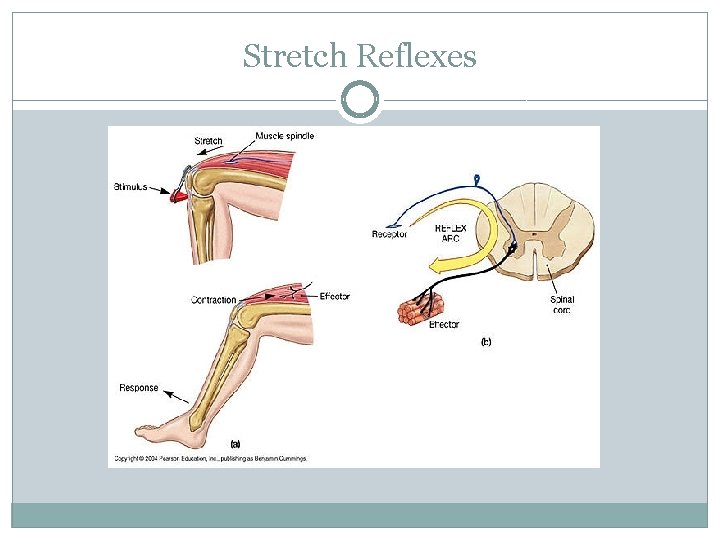
The Stretch Reflex �makes sure muscle stays at length set by motor cortex �important for maintaining muscle tone adjusts it reflexively sustains upright posture in large muscles of back https: //www. youtube. com/watch? v=nuzx 5 WJc-m. E
Stretch Reflexes
Autonomic Reflexes �https: //www. youtube. com/watch? v=krh. TPjle 7 S 8
Autonomic Reflexes
Pupillary Reflexes