
Anatomy Physiology Muscular System Review Did you know

- Slides: 14
Anatomy & Physiology Muscular System Review
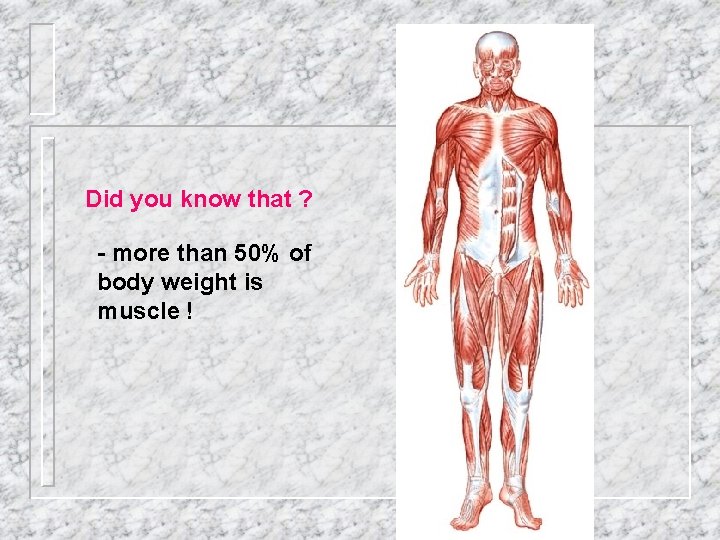
Did you know that ? - more than 50% of body weight is muscle !
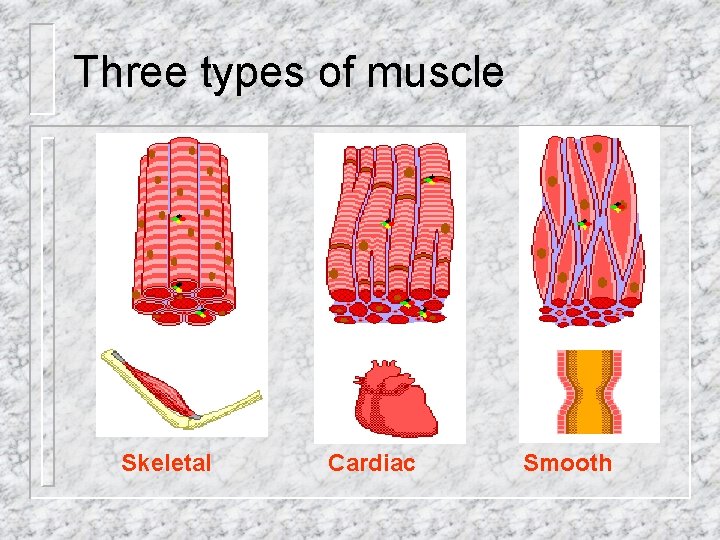
Three types of muscle Skeletal Cardiac Smooth
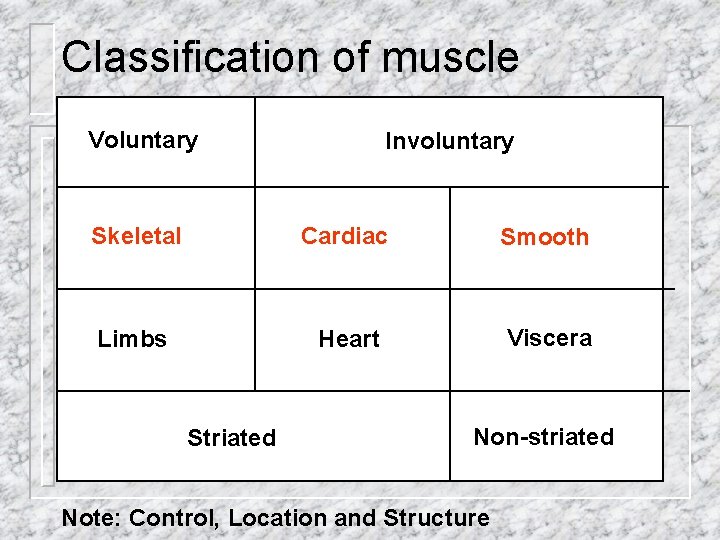
Classification of muscle Voluntary Involuntary Skeletal Cardiac Smooth Limbs Heart Viscera Striated Non-striated Note: Control, Location and Structure
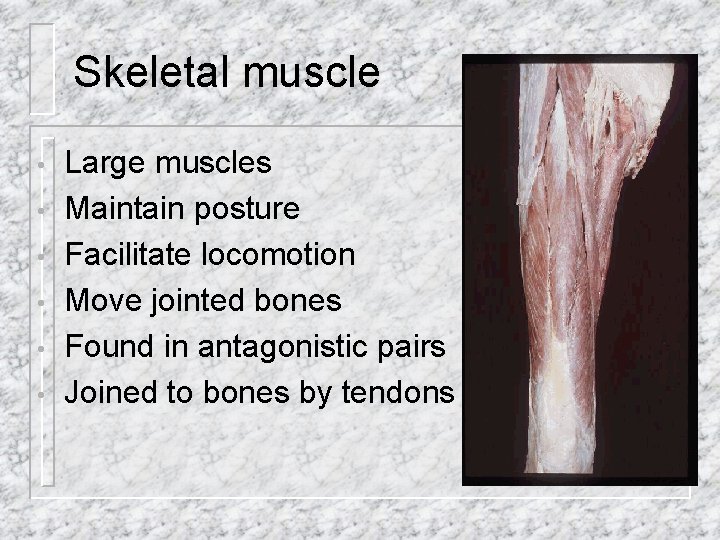
Skeletal muscle • • • Large muscles Maintain posture Facilitate locomotion Move jointed bones Found in antagonistic pairs Joined to bones by tendons
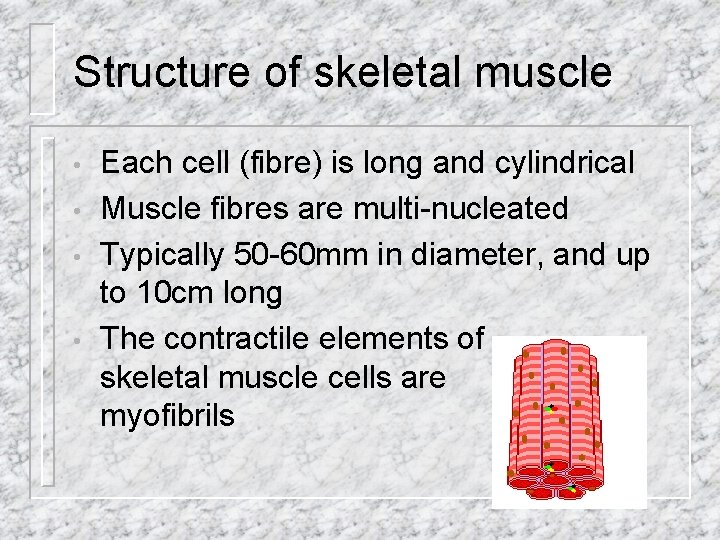
Structure of skeletal muscle • • Each cell (fibre) is long and cylindrical Muscle fibres are multi-nucleated Typically 50 -60 mm in diameter, and up to 10 cm long The contractile elements of skeletal muscle cells are myofibrils
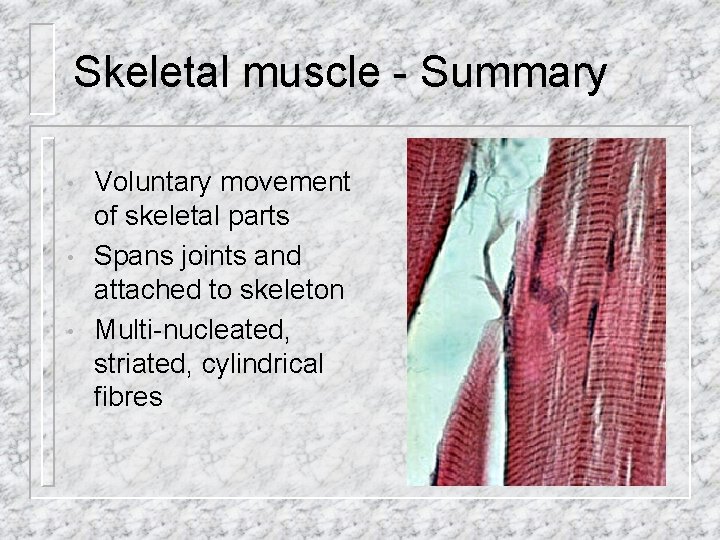
Skeletal muscle - Summary • • • Voluntary movement of skeletal parts Spans joints and attached to skeleton Multi-nucleated, striated, cylindrical fibres
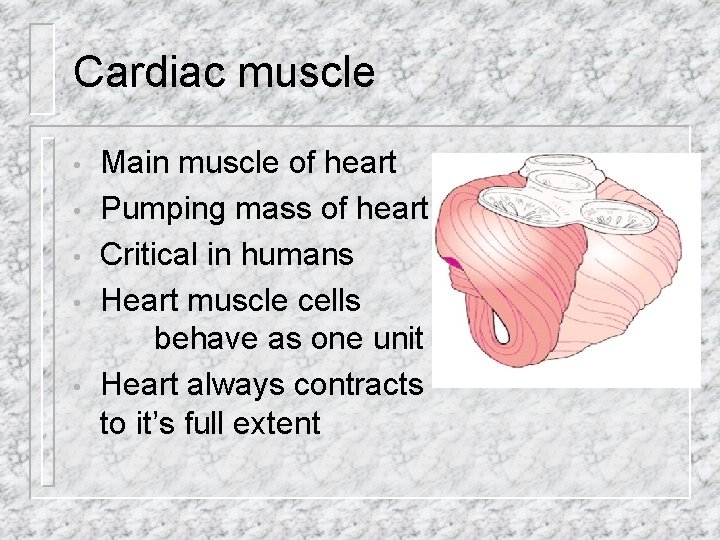
Cardiac muscle • • • Main muscle of heart Pumping mass of heart Critical in humans Heart muscle cells behave as one unit Heart always contracts to it’s full extent
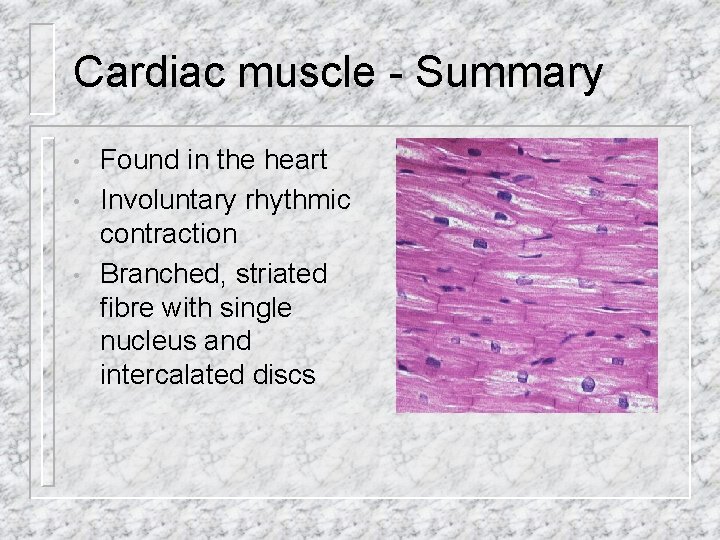
Structure of cardiac muscle • • Cardiac muscle cells (fibres) are short, branched and interconnected Cells are striated & multi-nucleated Adjacent cardiac cells joined via electrical synapses (gap junctions) These gap junctions appear as dark lines when viewed under LM, and are called intercalated discs
Cardiac muscle - Summary • • • Found in the heart Involuntary rhythmic contraction Branched, striated fibre with single nucleus and intercalated discs
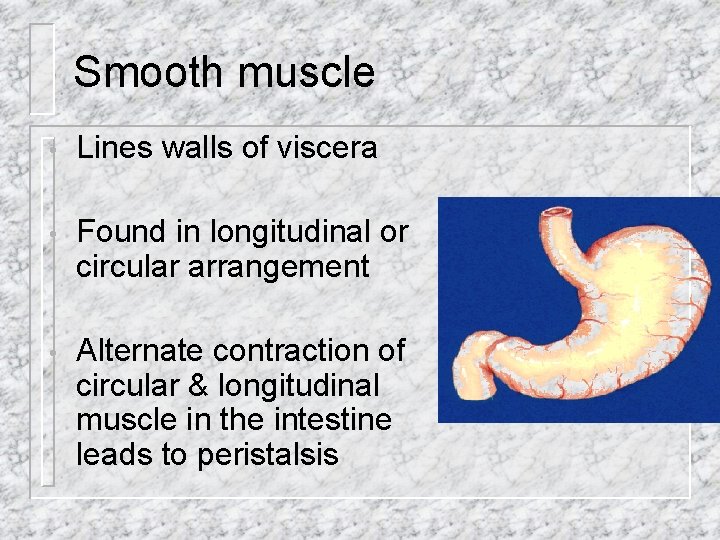
Smooth muscle • Lines walls of viscera • Found in longitudinal or circular arrangement • Alternate contraction of circular & longitudinal muscle in the intestine leads to peristalsis
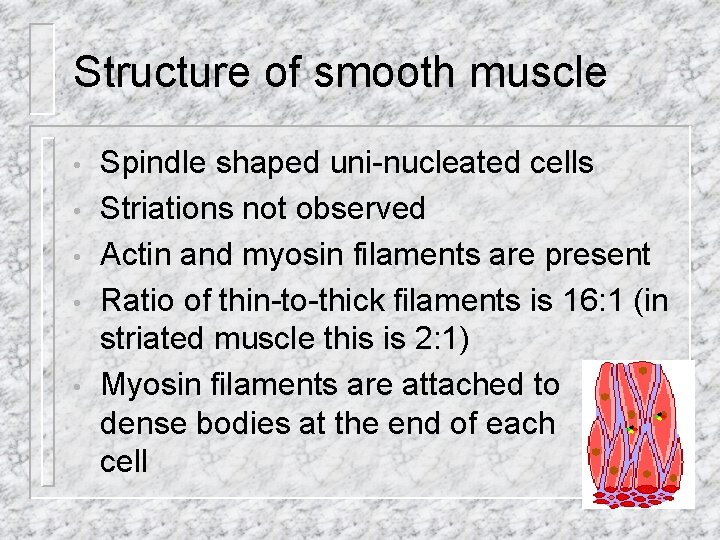
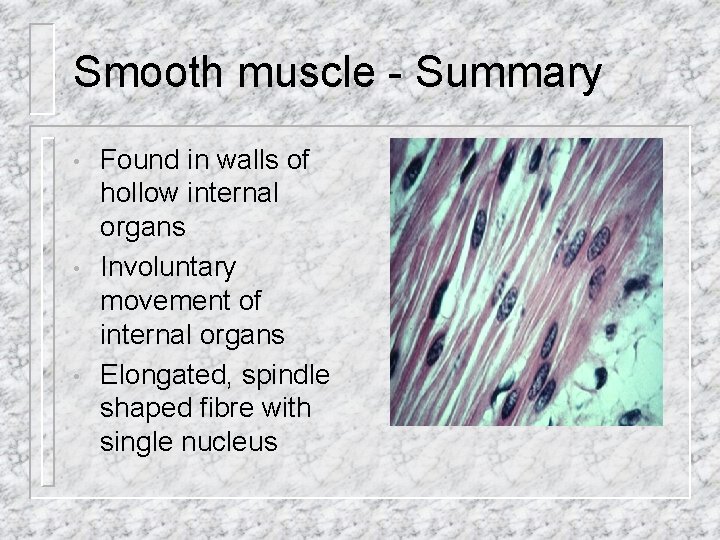
Structure of smooth muscle • • • Spindle shaped uni-nucleated cells Striations not observed Actin and myosin filaments are present Ratio of thin-to-thick filaments is 16: 1 (in striated muscle this is 2: 1) Myosin filaments are attached to dense bodies at the end of each cell
Smooth muscle - Summary • • • Found in walls of hollow internal organs Involuntary movement of internal organs Elongated, spindle shaped fibre with single nucleus
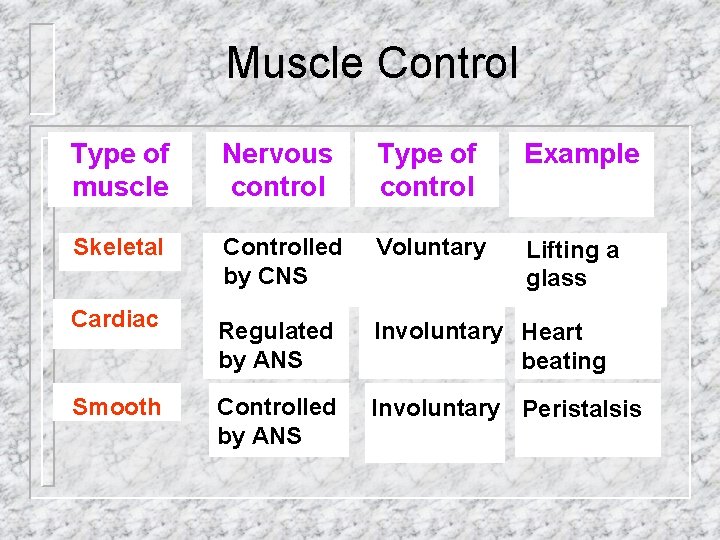
Muscle Control Type of muscle Nervous control Type of control Example Skeletal Controlled by CNS Voluntary Lifting a glass Cardiac Regulated by ANS Involuntary Heart beating Smooth Controlled by ANS Involuntary Peristalsis