
Anatomy Physiology Lecture 5 Chapter 5 The Integumentary


- Slides: 37
Anatomy & Physiology Lecture 5: Chapter 5 The Integumentary System Pages: 153 - 178 Lecturer: Dr. Barjis Room P 313 Phone: (718)2605285 E-Mail: ibarjis@citytech. cuny. edu Copyright © 2004 Pearson Education, Inc. , publishing as Benjamin Cummings Frederic H. Martini Fundamentals of
Learning Objectives • List the components of the integumentary system, including their physical relationships. • Specify the functions of the integumentary system. • Describe the main features and functions of the epidermis and dermis. • Discuss individual and racial differences in skin. • Discuss the effects of UV light on the epidermis. • Explain the structure and function of the various accessory organs of the skin. • Explain how the skin responds to injury and aging.
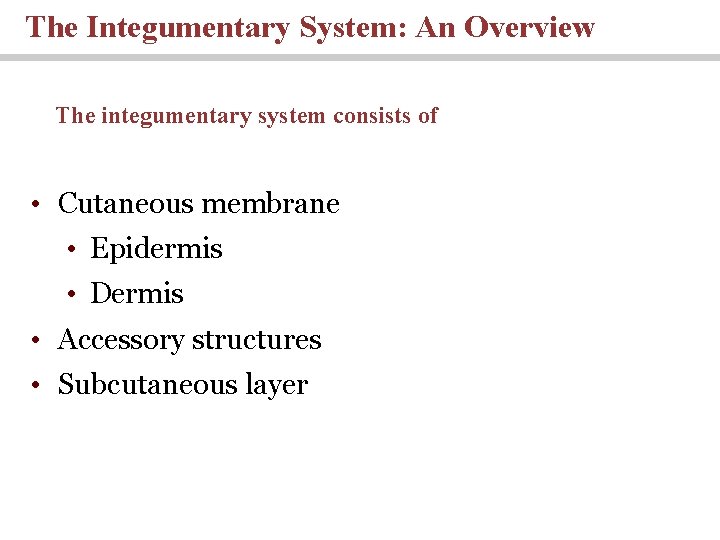
The Integumentary System: An Overview The integumentary system consists of • Cutaneous membrane • Epidermis • Dermis • Accessory structures • Subcutaneous layer
Integumentary system functions: • Protection • Excretion • Temperature maintenance • Nutrient storage • Vitamin D 3 synthesis • Sensory detection
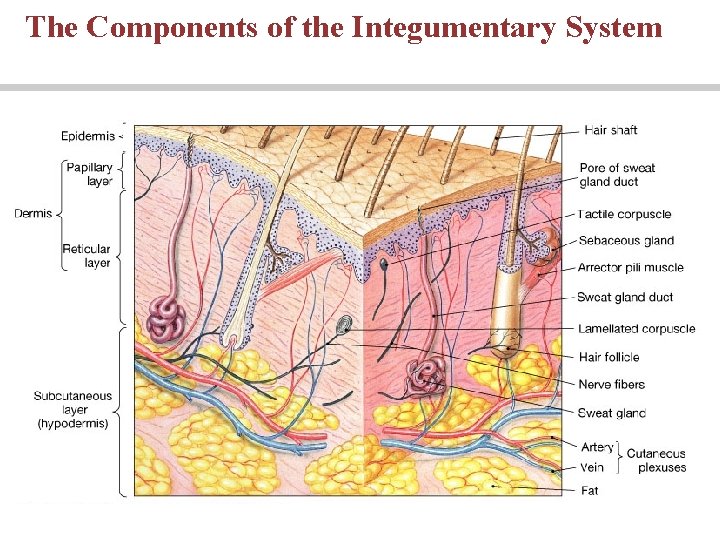
The Components of the Integumentary System
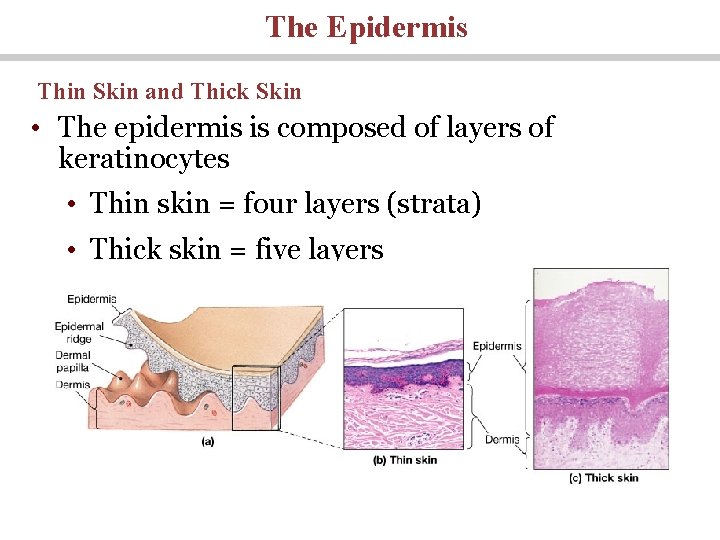
The Epidermis Thin Skin and Thick Skin • The epidermis is composed of layers of keratinocytes • Thin skin = four layers (strata) • Thick skin = five layers
The epidermis • Provides mechanical protection • Prevents fluid loss • Keeps microorganisms from invading the body
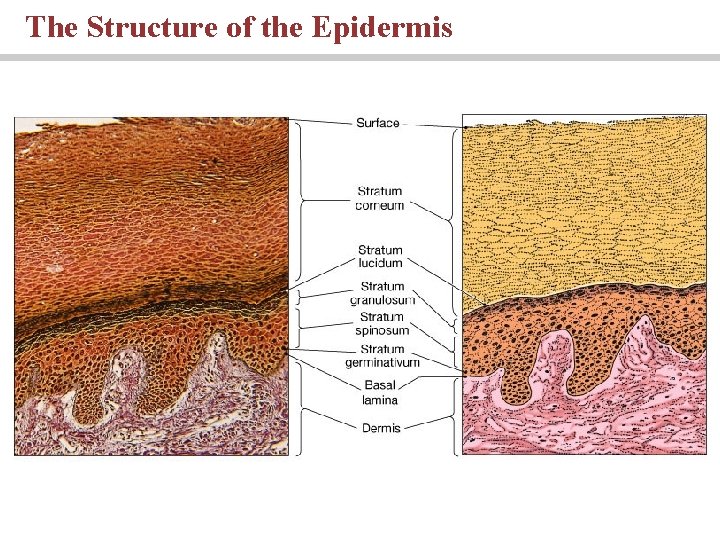
Layers of the epidermis: • Stratum germinativum • Stratum spinosum • Stratum granulosum • Stratum lucidum • Stratum corneum
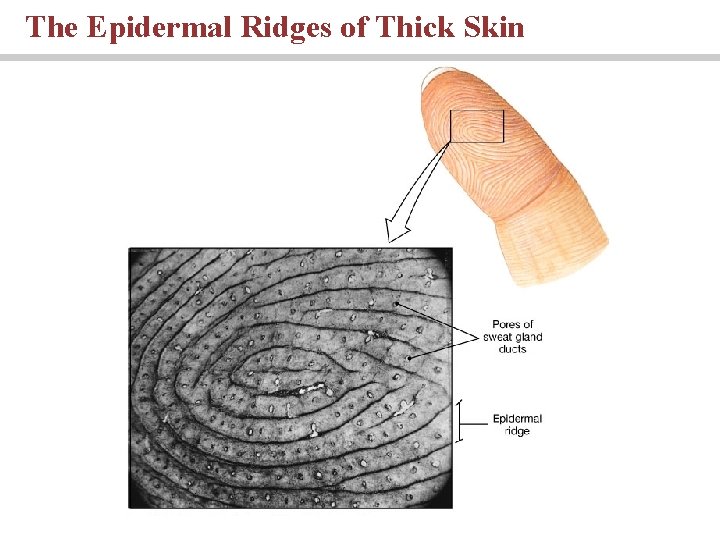
The Epidermal Ridges of Thick Skin
Epidermal characteristics: • Cells accumulate keratin and eventually are shed • Epidermal ridges are interlocked with dermal papillae • Fingerprints • Improve gripping ability • Langerhans cells (immunity) in s. spinosum • Merkel cells (sensitivity) in s. germinativum
The Structure of the Epidermis
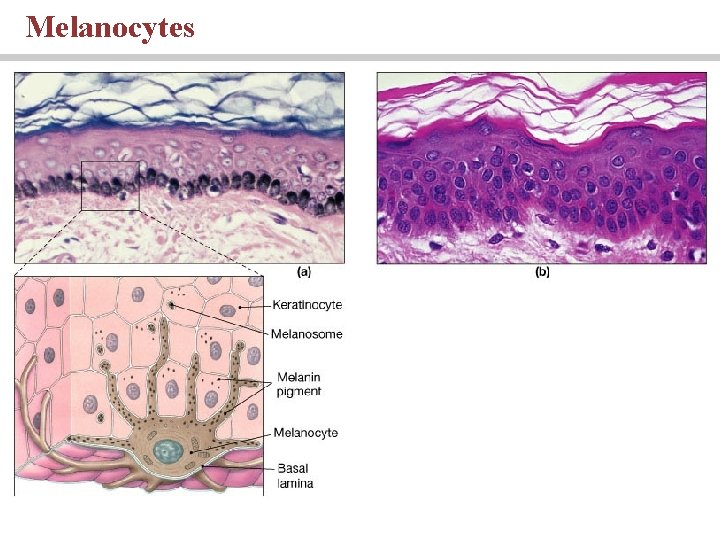
Skin color depends on • Blood supply • Carotene and melanin • Melanocytes produce melanin and protect from UV radiation • Epidermal pigmentation • Interrupted blood supply leads to cyanosis
Melanocytes
Epidermal cells • Synthesize vitamin D 3 (cholecalciferol) when exposed to UV • Respond to epidermal growth factor • Growth • Division • Repair • Secretion
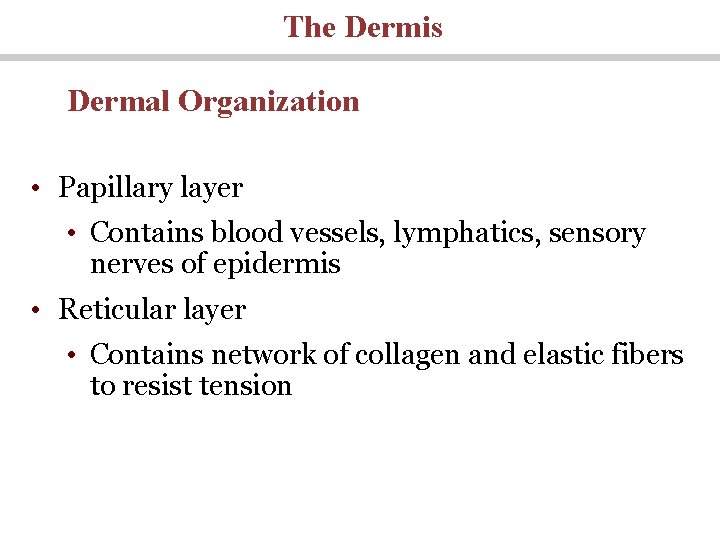
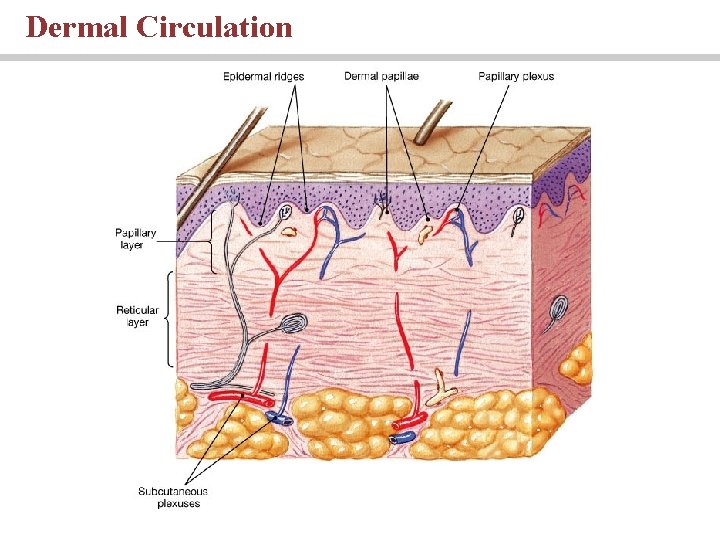
The Dermis Dermal Organization • Papillary layer • Contains blood vessels, lymphatics, sensory nerves of epidermis • Reticular layer • Contains network of collagen and elastic fibers to resist tension
Dermal Circulation
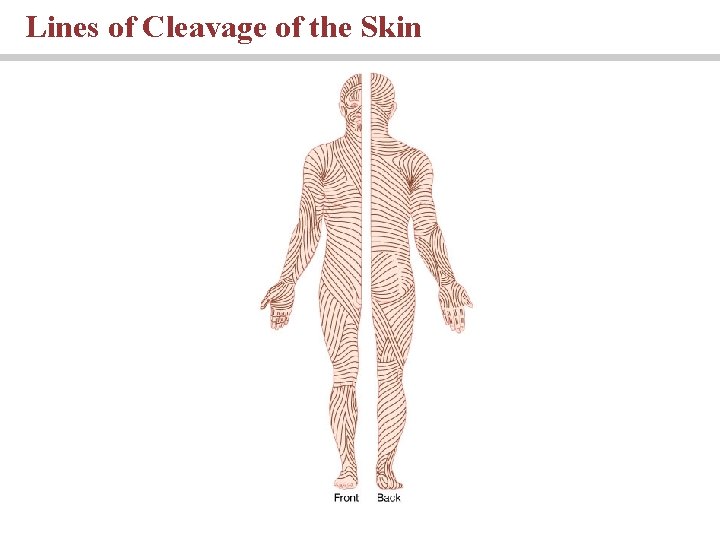
Stretch marks • Caused by excessive stretching of the dermis • Patterns of collagen and elastic fibers form lines of cleavage
Lines of Cleavage of the Skin
Dermal Circulation and innervation • Cutaneous plexus arteries found in subcutaneous layer/ papillary dermis • Cutaneous sensory receptors (light touch, pressure)
The Subcutaneous Layer Hypodermis • Stabilizes skins position against underlying organs and tissues
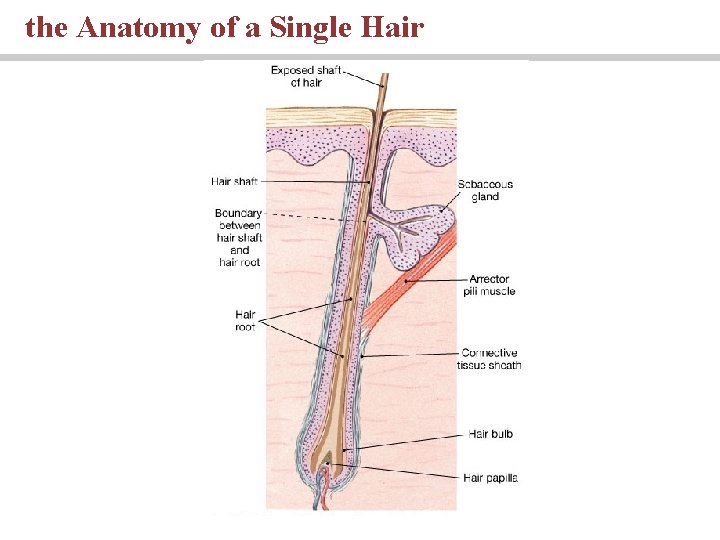
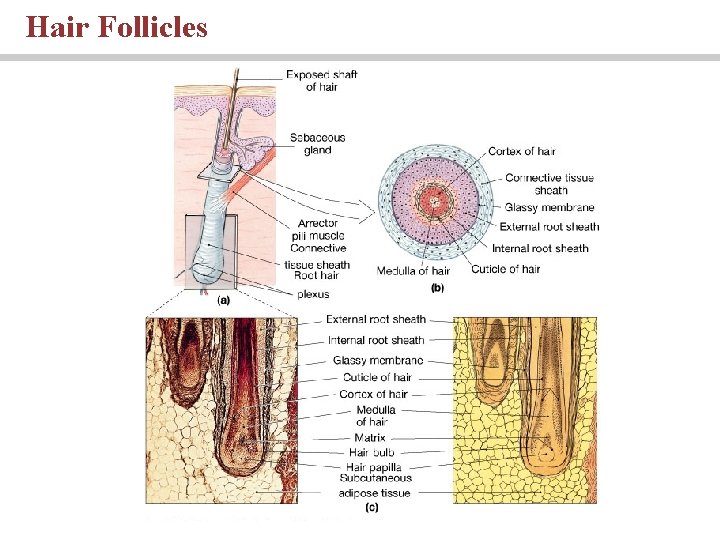
Accessory Structures Hairs • Originate in hair follicle • Composed of root and shaft • Root base (hair papilla) surrounded by hair bulb and root hair plexus • Hairs have soft medulla and hard cortex • Cuticle = superficial dead protective layer
the Anatomy of a Single Hair
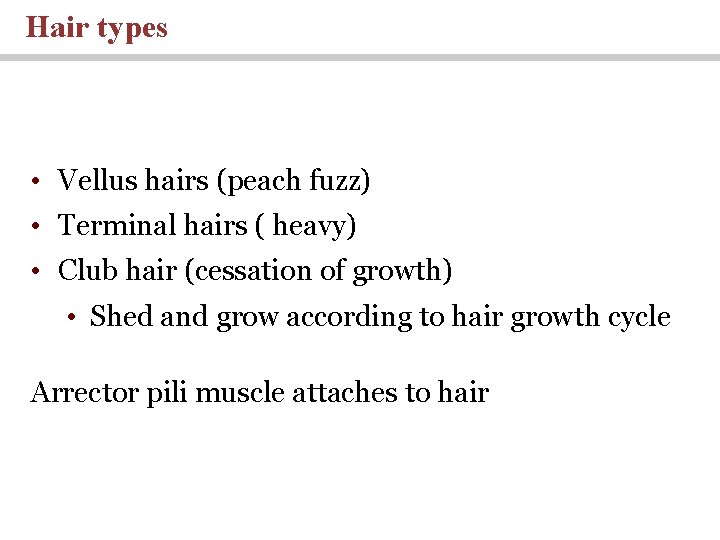
Hair types • Vellus hairs (peach fuzz) • Terminal hairs ( heavy) • Club hair (cessation of growth) • Shed and grow according to hair growth cycle Arrector pili muscle attaches to hair
Hair Follicles
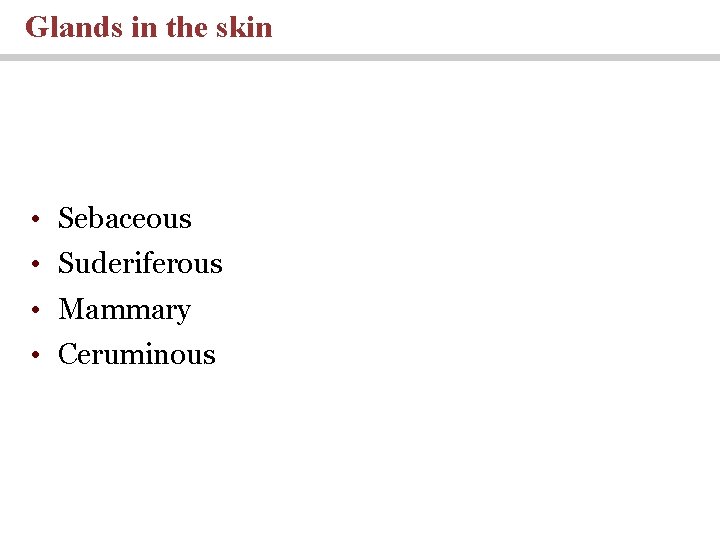
Glands in the skin • Sebaceous • Suderiferous • Mammary • Ceruminous
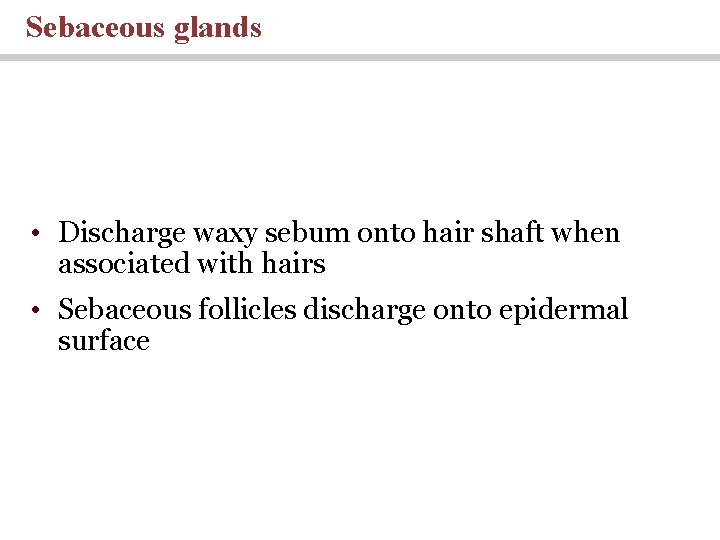
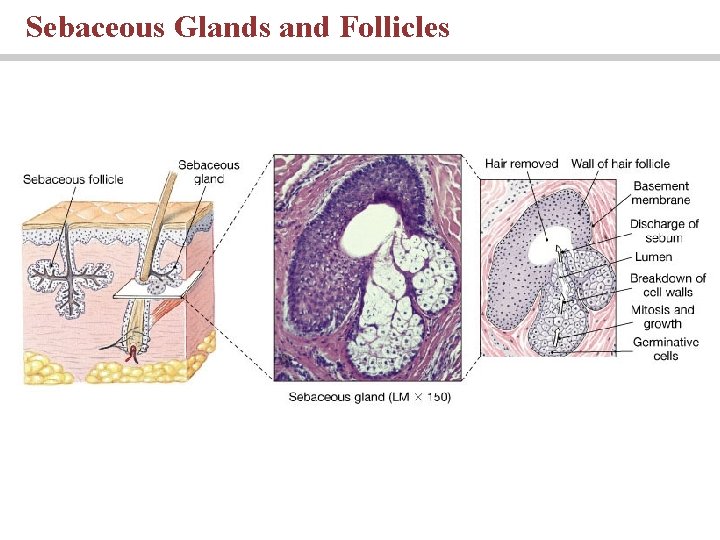
Sebaceous glands • Discharge waxy sebum onto hair shaft when associated with hairs • Sebaceous follicles discharge onto epidermal surface
Sebaceous Glands and Follicles
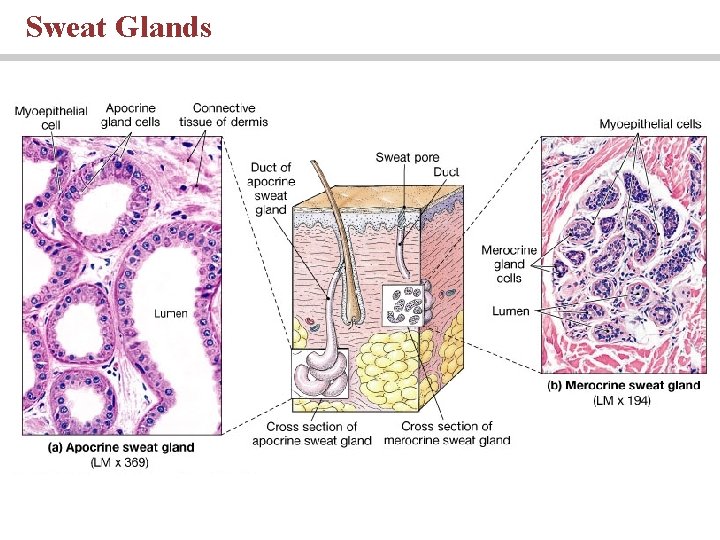
Suderiferous glands • Apocrine sweat glands • Produce odorous secretion • Merocrine (eccrine) sweat gland • Sensible perspiration
Sweat Glands
Other glands • Mammary glands • Structurally similar to apocrine sweat glands • Ceruminous glands • In ear, produce waxy cerumen
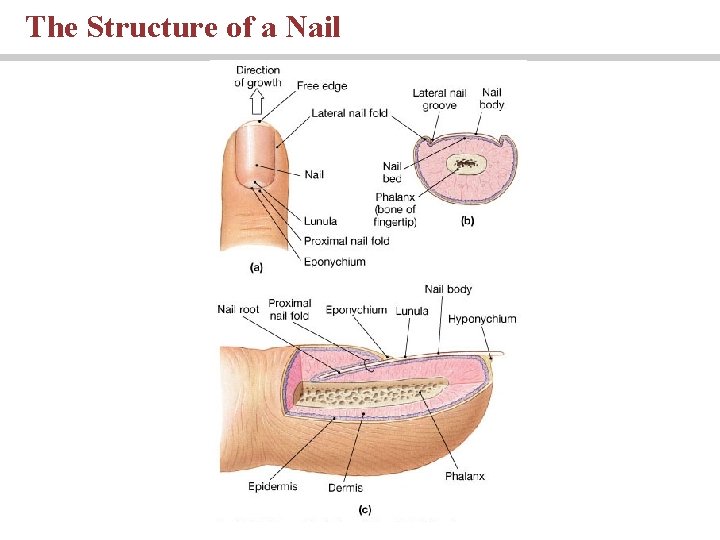
Nails • Nail body covers the nail bed • Nail production occurs at the nail root • Eponychium (cuticle) overlies root • Free edge of nail extends over hyponychium
The Structure of a Nail
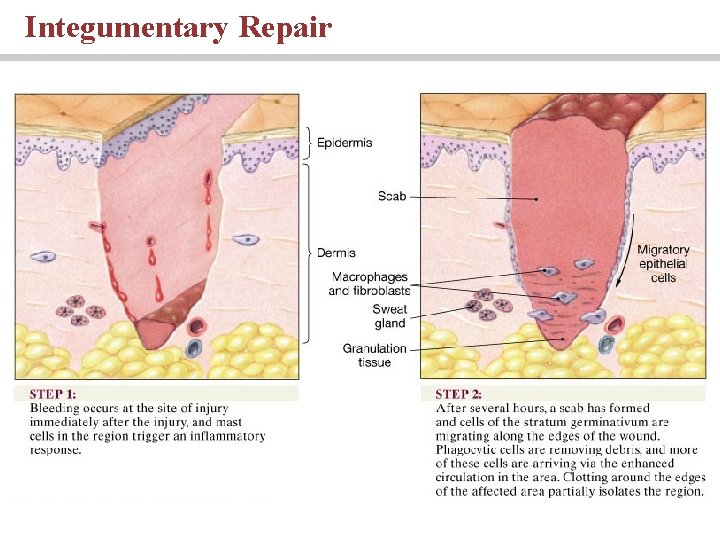
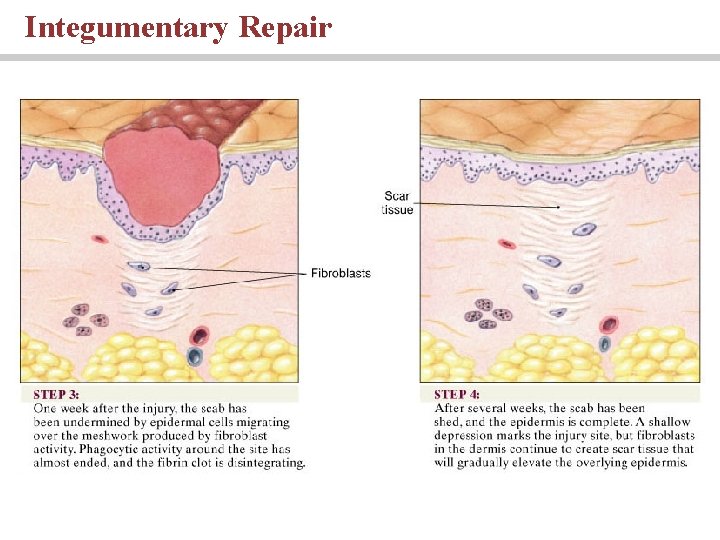
Local Control of Integumentary Function Injury and repair • Regenerates easily • Regeneration process includes formation of • Scab • Granulation tissue • Scar tissue
Integumentary Repair
Integumentary Repair
Aging and the Integumentary System With age • Integument thins • Blood flow decreases • Cellular activity decreases • Repairs occur more slowly
You should now be familiar with: • The components of the integumentary system, including their physical relationships. • The functions of the integumentary system. • The main features and functions of the epidermis and dermis. • Individual and racial differences in skin. • The effects of UV light on the epidermis. • The structure and function of the various accessory organs of the skin. • How the skin responds to aging.