
Anatomy Physiology Lecture 24 The Digestive System Lecturer
- Slides: 60
Anatomy & Physiology Lecture 24: The Digestive System Lecturer: Dr. Barjis Room P 307 Phone: (718) 260 -5285 E-Mail: ibarjis@citytech. cuny. edu Copyright © 2004 Pearson Education, Inc. , publishing as Benjamin Cummings Frederic H. Martini Fundamentals of
Learning Objectives • Identify the organs of the digestive system and their major functions • Outline the mechanisms that regulate digestion • Describe the anatomy of the organs and accessory organs of the digestive system • Discuss the functions of the major structures and regions of the digestive system and discuss the regulation of their activities
Learning Objectives • Explain the significance of the large intestine in the absorption of nutrients • Describe the events involved in the digestion of organic and inorganic nutrients • Summarize the effects of the aging process on the digestive system
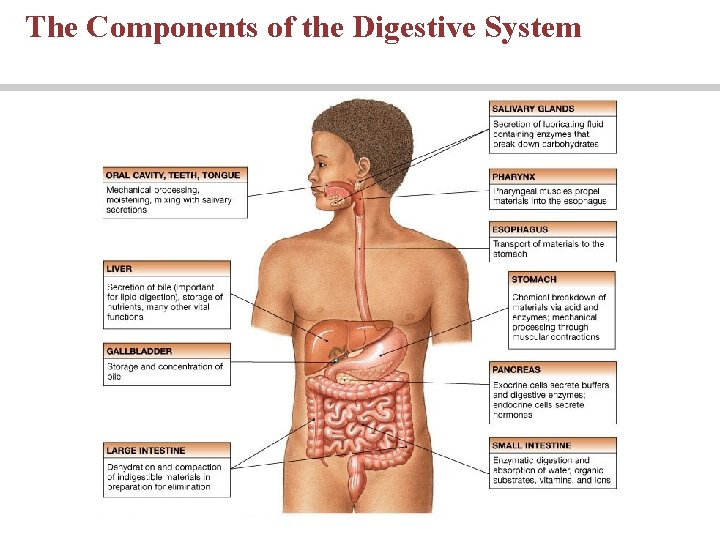
The Digestive system includes: • The muscular digestive tract • Esophagus • Stomach • Intestine • Various accessory organs • Liver • Pancreas • Oral Cavity e. g. tongue
The Components of the Digestive System
Functions of the digestive system • Functions of digestive system include: • Ingestion • Mechanical processing • Digestion • Secretion • Absorption • Excretion • Storage
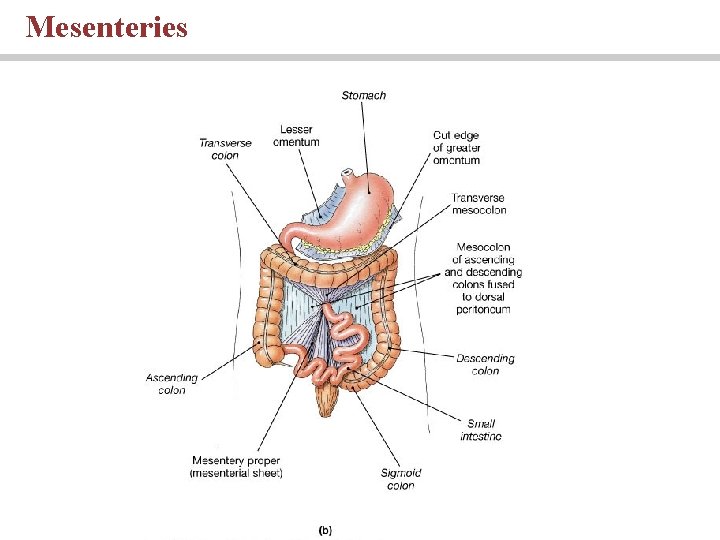
The digestive system organs and the peritoneum • Mesenteries are layers of serous membranes that supportions of the digestive tract • Provides padding, protection, insulation, and energy reserves
Mesenteries
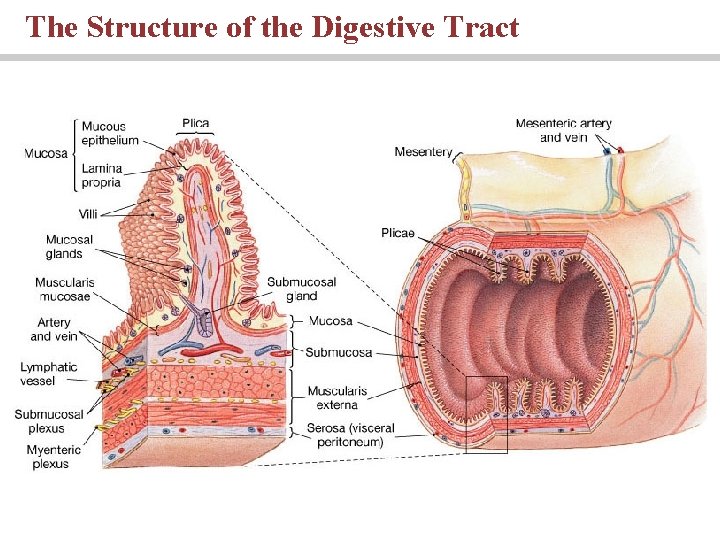
Histological organization of the digestive tract • Digestive tract consist of four layers: Mocusa, Submocusa, Muscularies and Serosa. • Mucosa lines digestive tract (mucous epithelium) • Moistened by glandular secretions • Lamina propria and epithelium form mucosa • Submucosa • Layer of dense irregular connective tissue
Histological organization of the digestive tract • Muscularis • Smooth muscle arranged in circular and longitudinal layers • Serosa • Serous membrane covering most of the muscularis
The Structure of the Digestive Tract
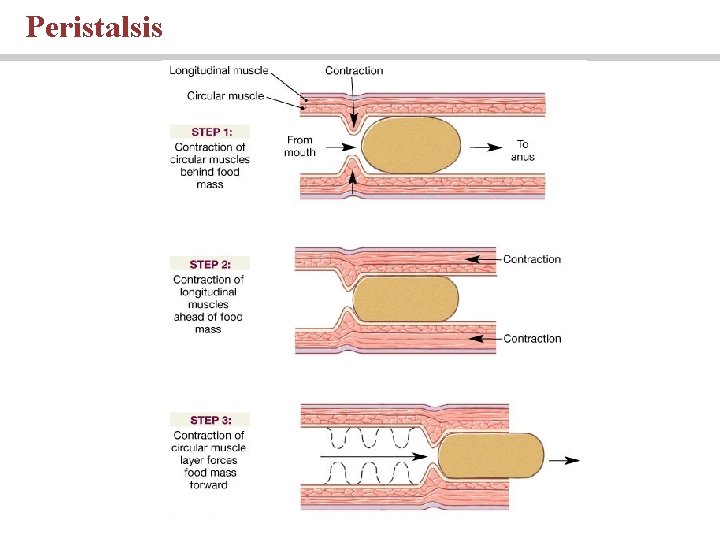
Movement of digestive materials • Smooth Muscles show rhythmic cycles of activity that generates contraction that spreads • Peristalsis is waves or contractions that move and propel food (bolus) along the GI tract • Segmentation is the contraction that is produced in small intestine and some portion of large intestine. • This contraction leads to mixing of food and fragment a bolus
Peristalsis
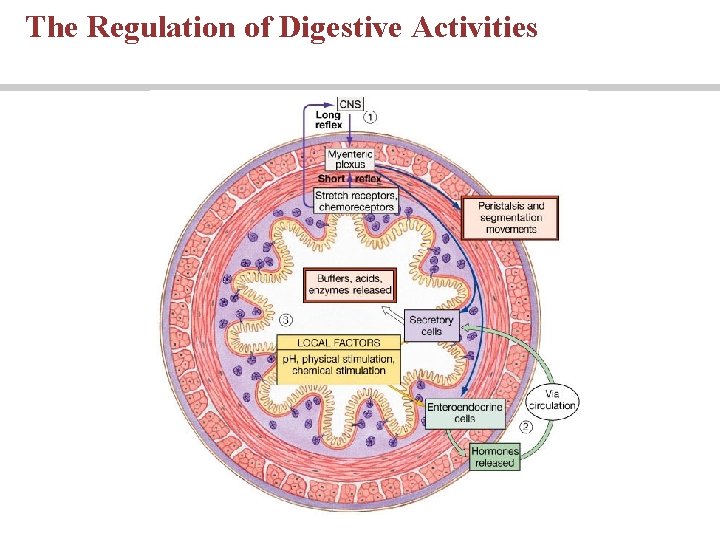
Control of the digestive system • Movement of materials along the digestive tract is controlled by: • Neural mechanisms • Parasympathetic and local reflexes • Hormonal mechanisms • Enhance or inhibit smooth muscle contraction • Local mechanisms • Coordinate response to changes in p. H or chemical stimuli
The Regulation of Digestive Activities
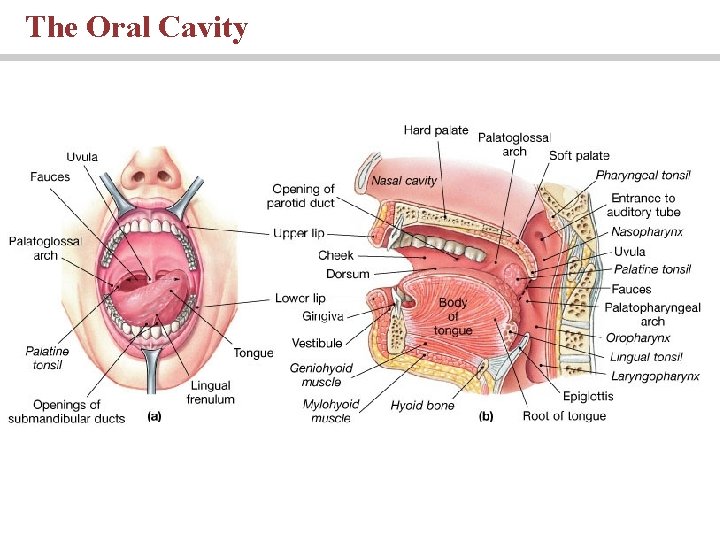
The Oral Cavity The mouth opens into the oral or buccal cavity • Its functions include: • Analysis of material before swallowing • Mechanical processing by the teeth, tongue, and palatal surfaces • Lubrication • Limited digestion e. g. salivary amylase initiates digestion of complex carbohydrates
The Oral Cavity
The tongue • primary functions include: • Mechanical processing • Assistance in chewing and swallowing • Sensory analysis by touch, temperature, and taste receptors
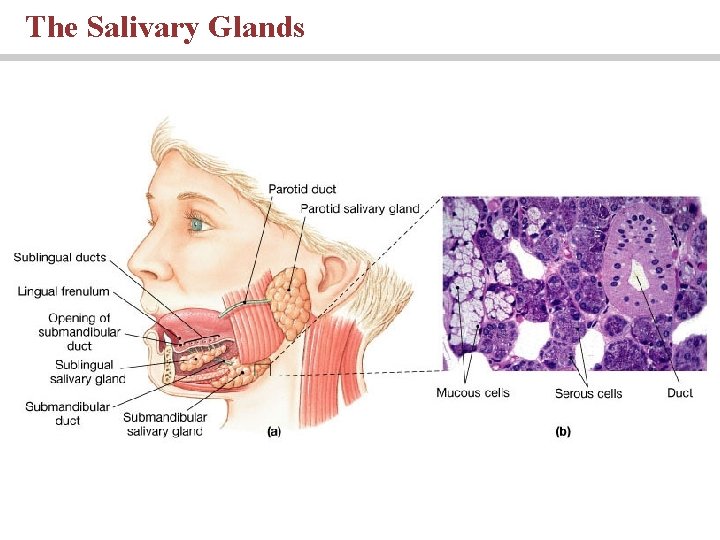
Salivary glands (three pairs) • There are 3 pairs of salivary glands: Parotid, sublingual, and submandibular • Saliva is a watery solution that contain: • 99. 4 % water and 0. 6% electrolytes, buffers, glycoproteins, antibodies, and enzymes • Functions include: • Lubrication, moistening, and dissolving • Initiation of digestion of complex carbohydrates • Help to control bacterial population in the oral cavity
The Salivary Glands
The esophagus • Carries solids and liquids from the pharynx to the stomach • Passes through esophageal hiatus in diaphragm • The wall of the esophagus contains mucosal, submucosal, and muscularis layers
stomach Functions of the stomach • Storage - bulk storage of undigested food • Mechanical processing of the food • Chemical processing of the food – e. g. disruption of chemical bonds via acids and enzymes • Secretion – e. g. production of intrinsic factor, HCl, pepsinogen and gastrin
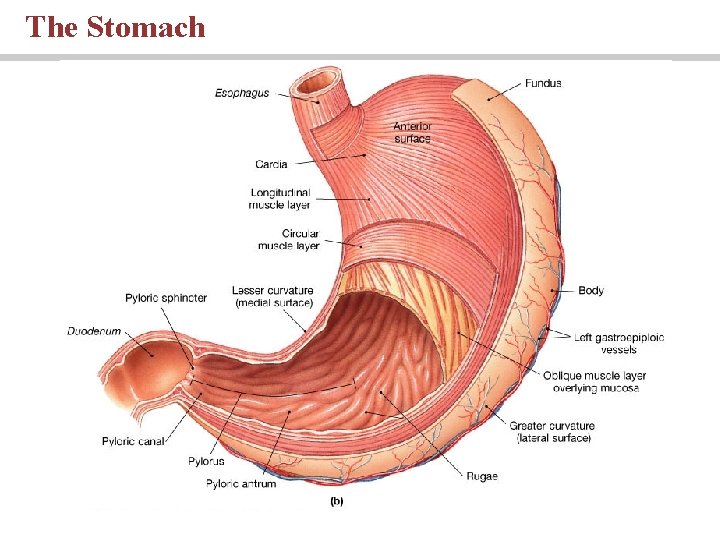
Anatomy of the stomach • Cardia – superior, medial portion (portion of the stomach that connects to the esofagous) • Fundus – portion superior to stomachesophageal junction • Body – area between the fundus and the curve of the J • Pylorus – antrum and pyloric canal adjacent to the duodenum (portion of the stomach that connects to the duadenum)
Stomach anatomy • Pyloric Sphincter • Guards exit from stomach • Pylorc sphincter regulates entry of food to the small intestine (duadenum) from the stomach • Rugae • Ridges and folds in relaxed stomach • Allow the stomach to stretch
The Stomach
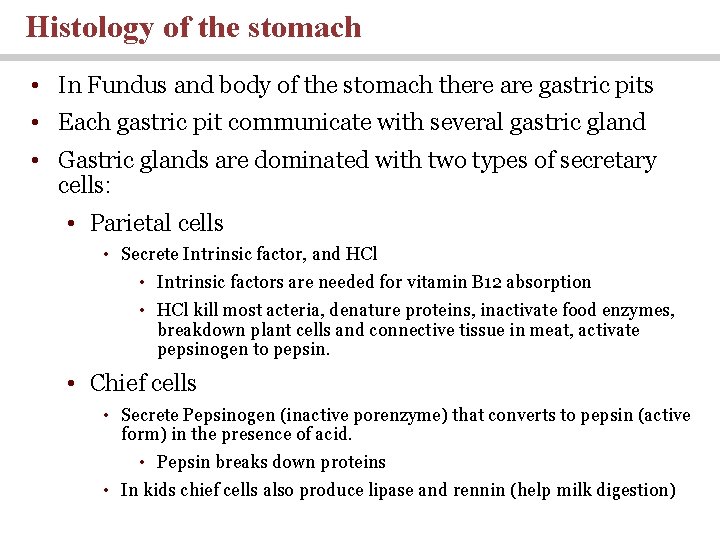
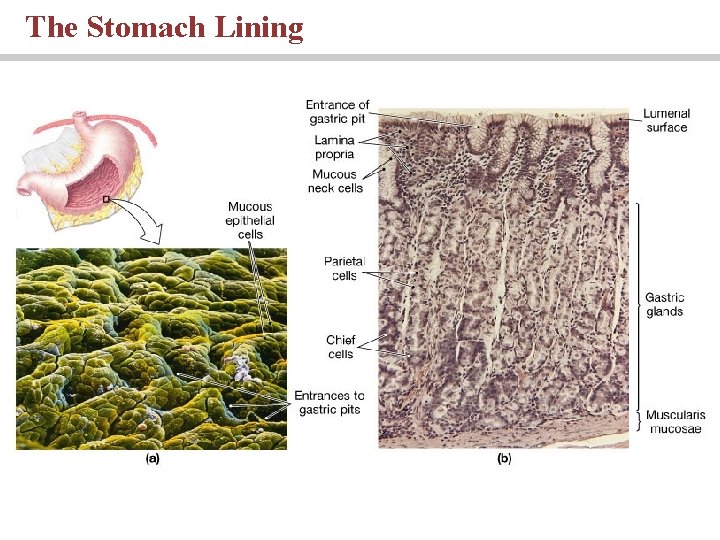
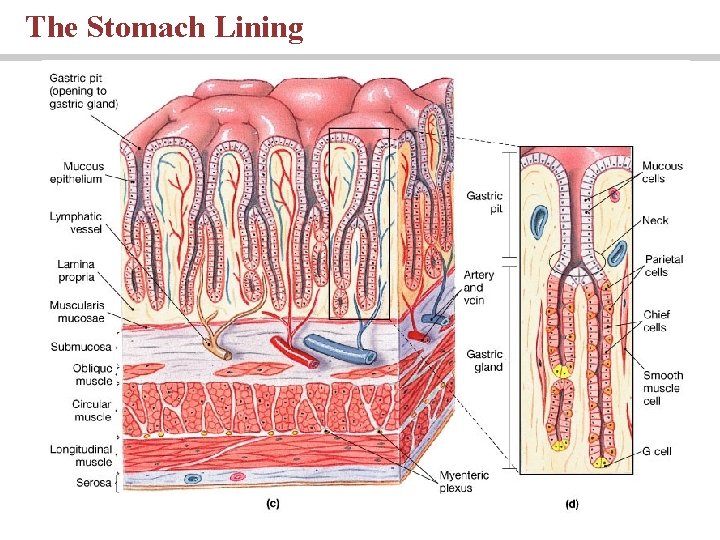
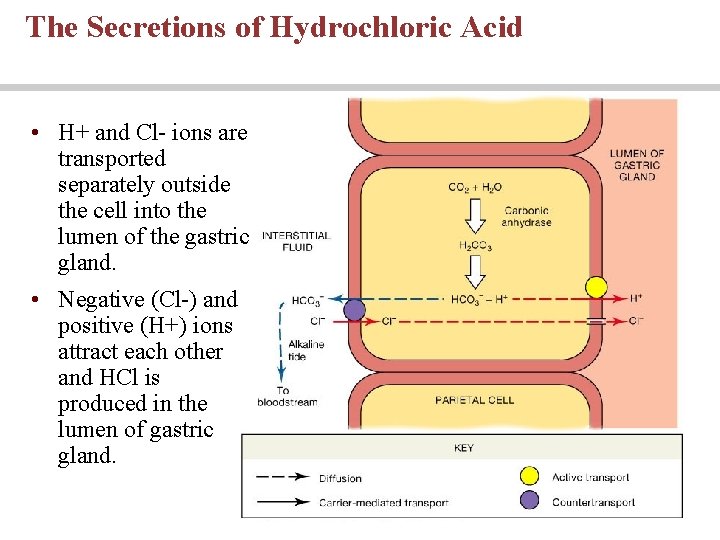
Histology of the stomach • In Fundus and body of the stomach there are gastric pits • Each gastric pit communicate with several gastric gland • Gastric glands are dominated with two types of secretary cells: • Parietal cells • Secrete Intrinsic factor, and HCl • Intrinsic factors are needed for vitamin B 12 absorption • HCl kill most acteria, denature proteins, inactivate food enzymes, breakdown plant cells and connective tissue in meat, activate pepsinogen to pepsin. • Chief cells • Secrete Pepsinogen (inactive porenzyme) that converts to pepsin (active form) in the presence of acid. • Pepsin breaks down proteins • In kids chief cells also produce lipase and rennin (help milk digestion)
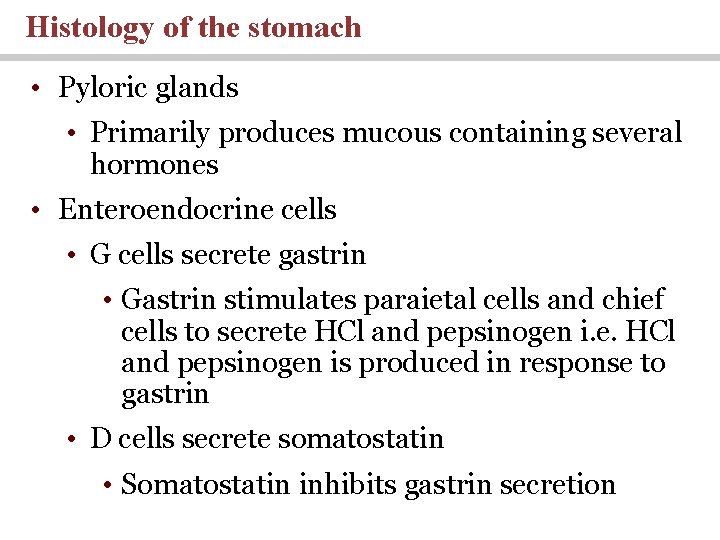
Histology of the stomach • Pyloric glands • Primarily produces mucous containing several hormones • Enteroendocrine cells • G cells secrete gastrin • Gastrin stimulates paraietal cells and chief cells to secrete HCl and pepsinogen i. e. HCl and pepsinogen is produced in response to gastrin • D cells secrete somatostatin • Somatostatin inhibits gastrin secretion
The Stomach Lining
The Stomach Lining
The Secretions of Hydrochloric Acid • H+ and Cl- ions are transported separately outside the cell into the lumen of the gastric gland. • Negative (Cl-) and positive (H+) ions attract each other and HCl is produced in the lumen of gastric gland.
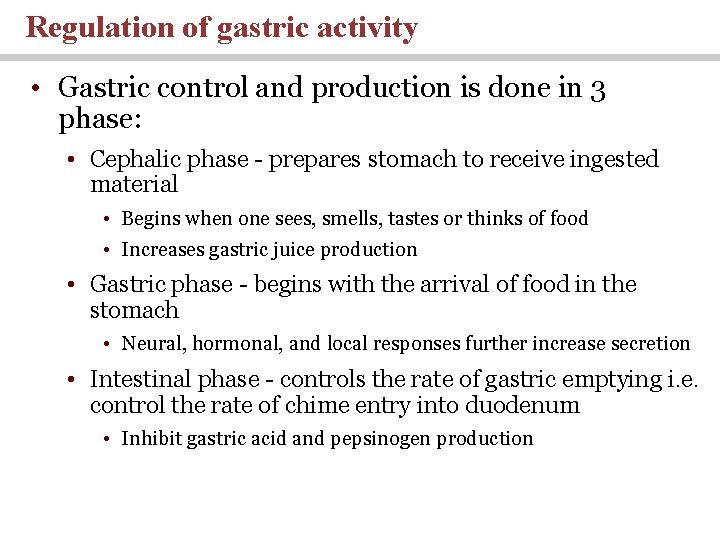
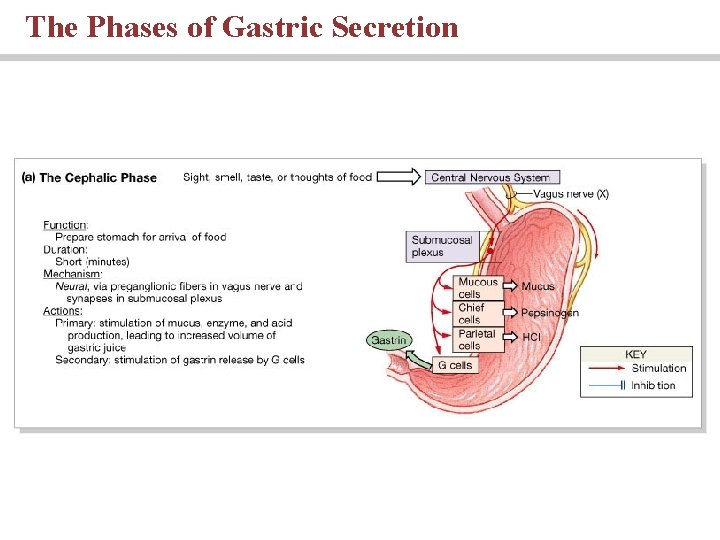
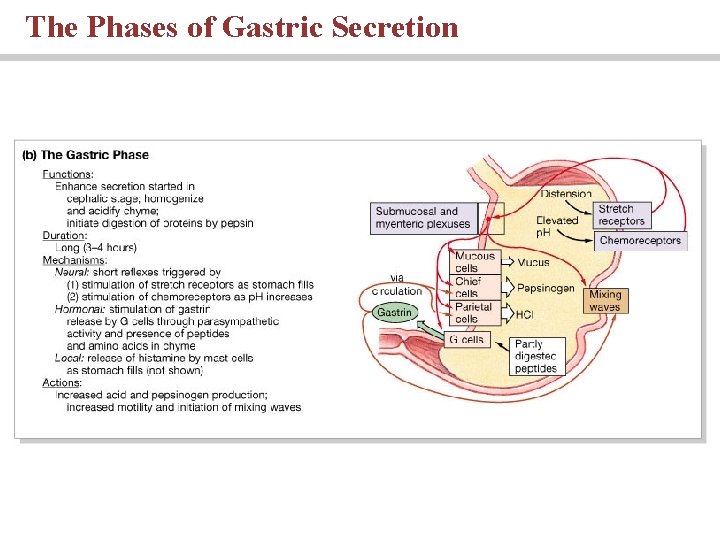
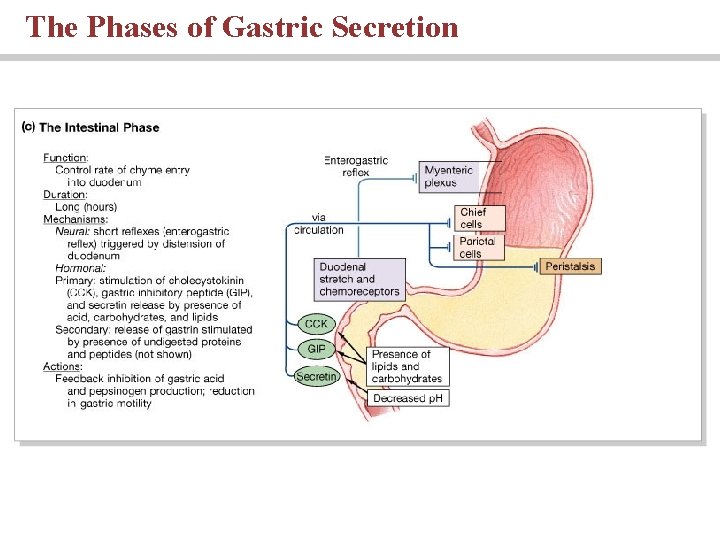
Regulation of gastric activity • Gastric control and production is done in 3 phase: • Cephalic phase - prepares stomach to receive ingested material • Begins when one sees, smells, tastes or thinks of food • Increases gastric juice production • Gastric phase - begins with the arrival of food in the stomach • Neural, hormonal, and local responses further increase secretion • Intestinal phase - controls the rate of gastric emptying i. e. control the rate of chime entry into duodenum • Inhibit gastric acid and pepsinogen production
The Phases of Gastric Secretion
The Phases of Gastric Secretion
The Phases of Gastric Secretion
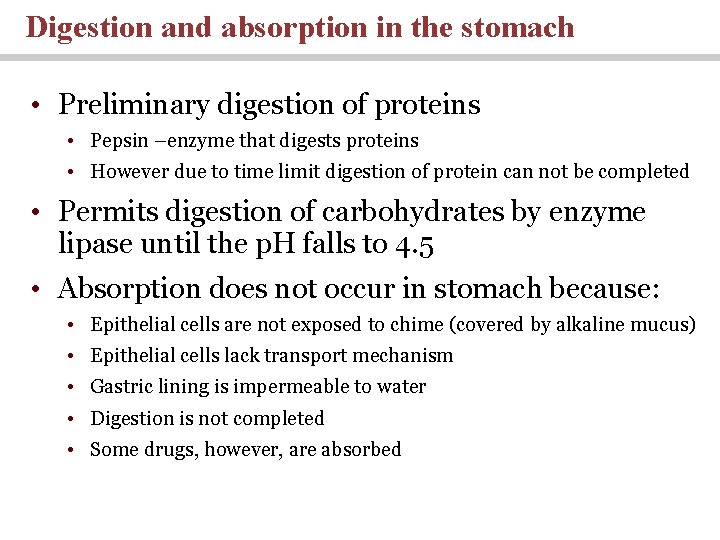
Digestion and absorption in the stomach • Preliminary digestion of proteins • Pepsin –enzyme that digests proteins • However due to time limit digestion of protein can not be completed • Permits digestion of carbohydrates by enzyme lipase until the p. H falls to 4. 5 • Absorption does not occur in stomach because: • Epithelial cells are not exposed to chime (covered by alkaline mucus) • Epithelial cells lack transport mechanism • Gastric lining is impermeable to water • Digestion is not completed • Some drugs, however, are absorbed
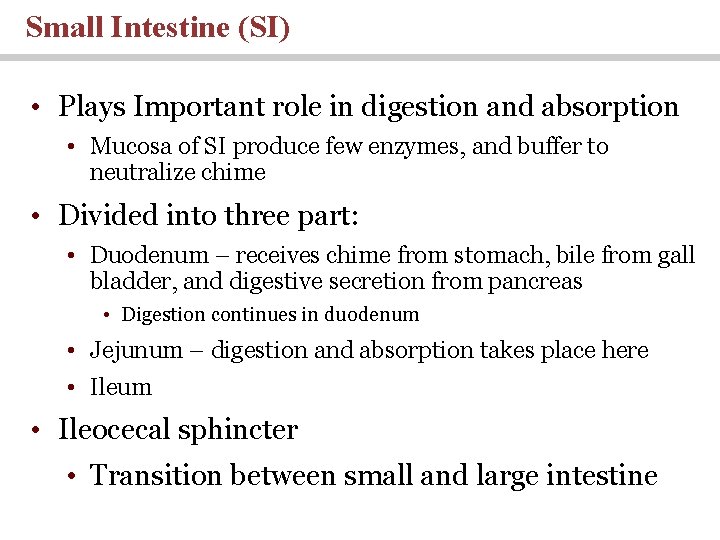
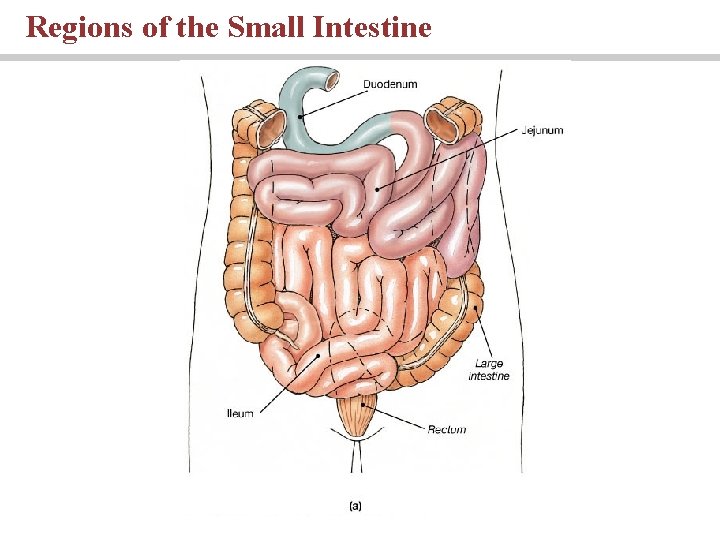
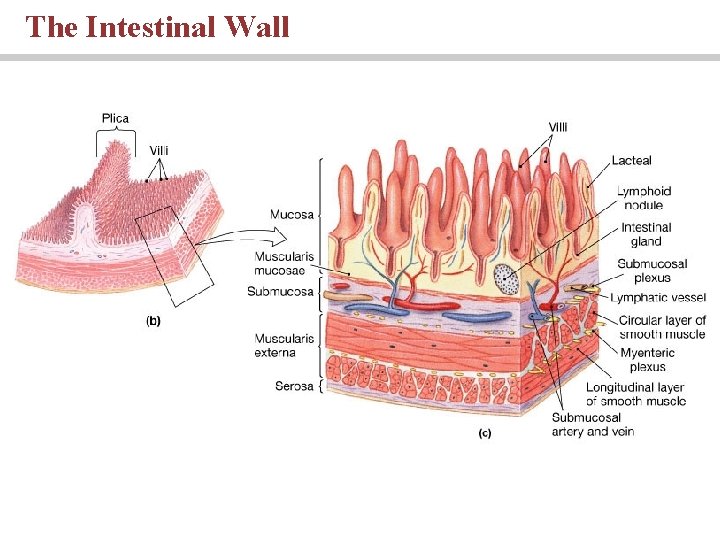
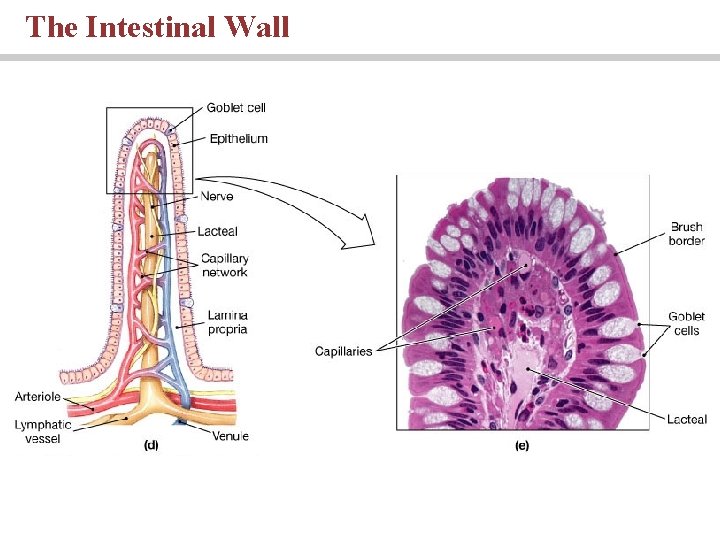
Small Intestine (SI) • Plays Important role in digestion and absorption • Mucosa of SI produce few enzymes, and buffer to neutralize chime • Divided into three part: • Duodenum – receives chime from stomach, bile from gall bladder, and digestive secretion from pancreas • Digestion continues in duodenum • Jejunum – digestion and absorption takes place here • Ileum • Ileocecal sphincter • Transition between small and large intestine
Regions of the Small Intestine
The Intestinal Wall
The Intestinal Wall
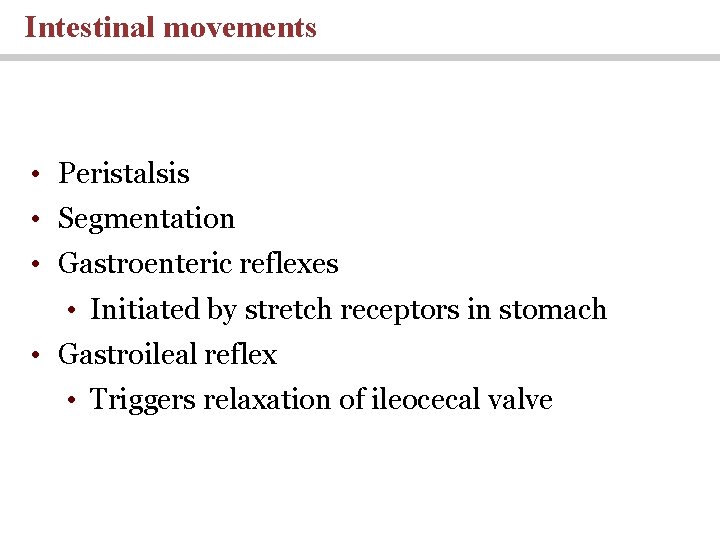
Intestinal movements • Peristalsis • Segmentation • Gastroenteric reflexes • Initiated by stretch receptors in stomach • Gastroileal reflex • Triggers relaxation of ileocecal valve
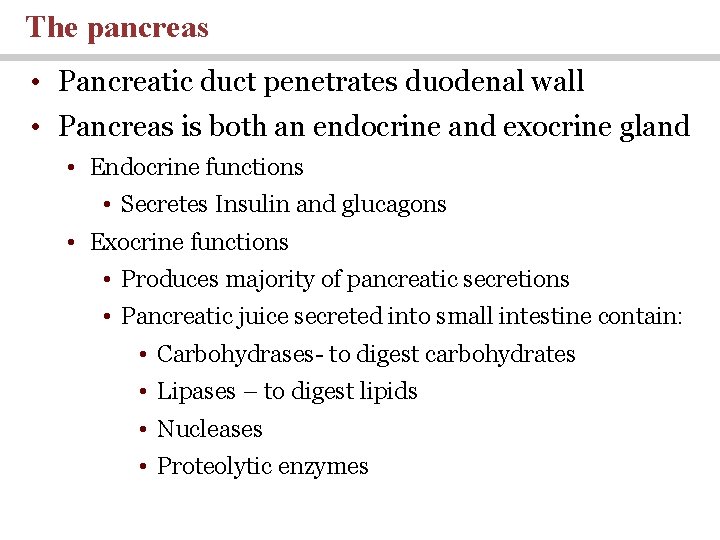
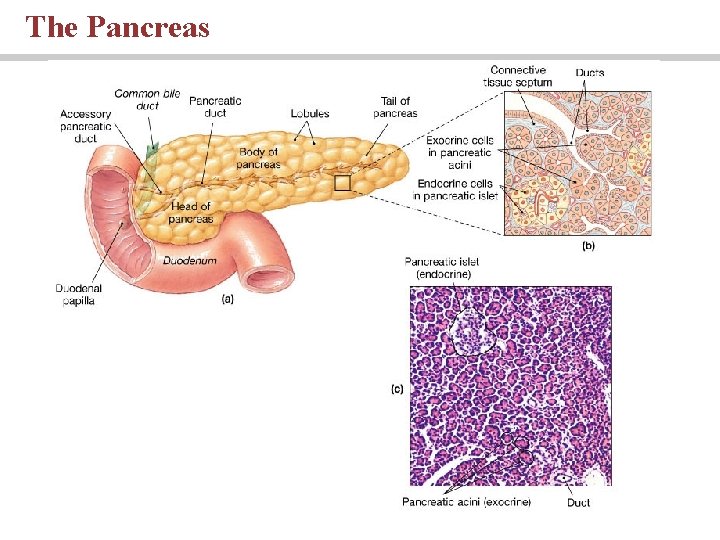
The pancreas • Pancreatic duct penetrates duodenal wall • Pancreas is both an endocrine and exocrine gland • Endocrine functions • Secretes Insulin and glucagons • Exocrine functions • Produces majority of pancreatic secretions • Pancreatic juice secreted into small intestine contain: • Carbohydrases- to digest carbohydrates • Lipases – to digest lipids • Nucleases • Proteolytic enzymes
The Pancreas
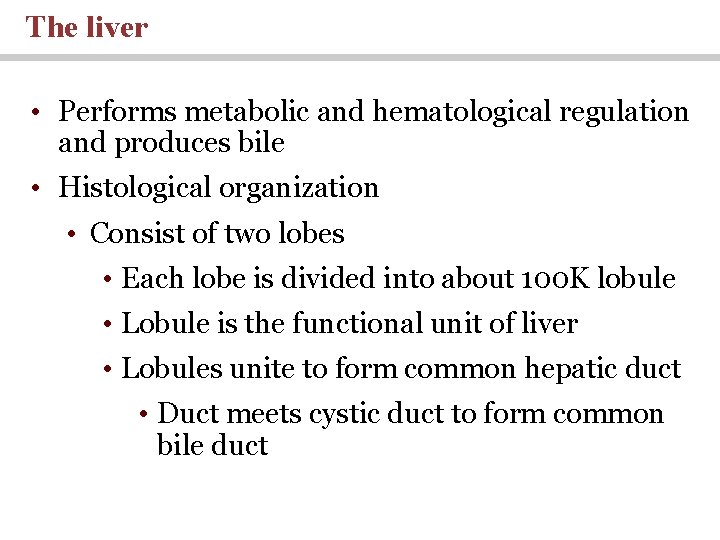
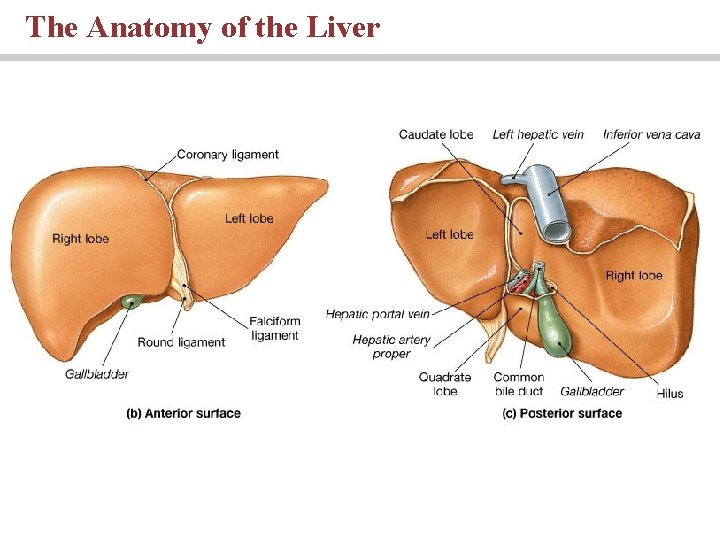
The liver • Performs metabolic and hematological regulation and produces bile • Histological organization • Consist of two lobes • Each lobe is divided into about 100 K lobule • Lobule is the functional unit of liver • Lobules unite to form common hepatic duct • Duct meets cystic duct to form common bile duct
The Anatomy of the Liver
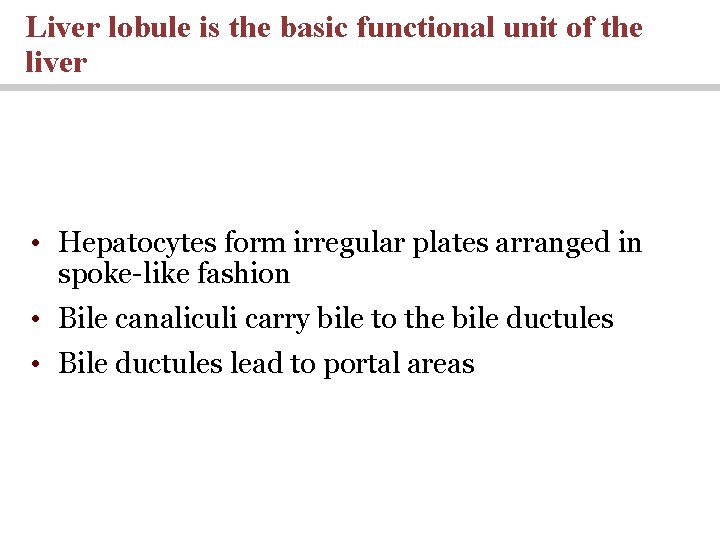
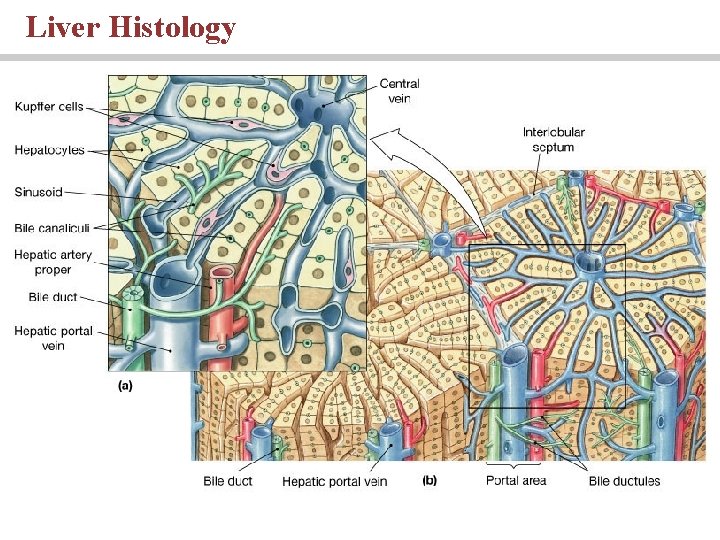
Liver lobule is the basic functional unit of the liver • Hepatocytes form irregular plates arranged in spoke-like fashion • Bile canaliculi carry bile to the bile ductules • Bile ductules lead to portal areas
Liver Histology
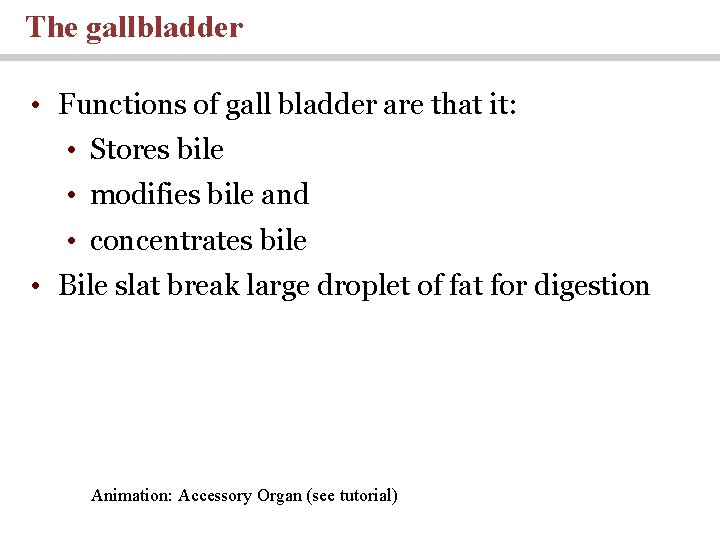
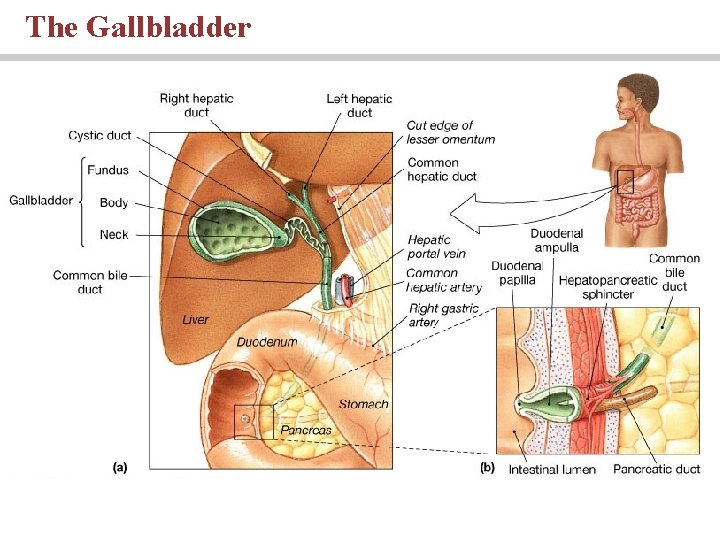
The gallbladder • Functions of gall bladder are that it: • Stores bile • modifies bile and • concentrates bile • Bile slat break large droplet of fat for digestion Animation: Accessory Organ (see tutorial)
The Gallbladder
Coordination secretion and absorption • Neural and hormonal mechanisms coordinate glands • GI activity is stimulated by parasympathetic innervation • GI activity is inhibited by sympathetic innervation
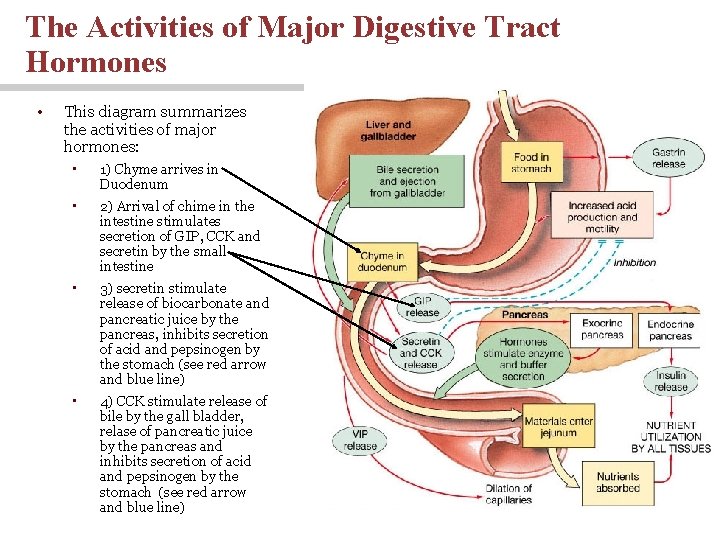
The Activities of Major Digestive Tract Hormones • This diagram summarizes the activities of major hormones: • 1) Chyme arrives in Duodenum • 2) Arrival of chime in the intestine stimulates secretion of GIP, CCK and secretin by the small intestine • 3) secretin stimulate release of biocarbonate and pancreatic juice by the pancreas, inhibits secretion of acid and pepsinogen by the stomach (see red arrow and blue line) • 4) CCK stimulate release of bile by the gall bladder, relase of pancreatic juice by the pancreas and inhibits secretion of acid and pepsinogen by the stomach (see red arrow and blue line)
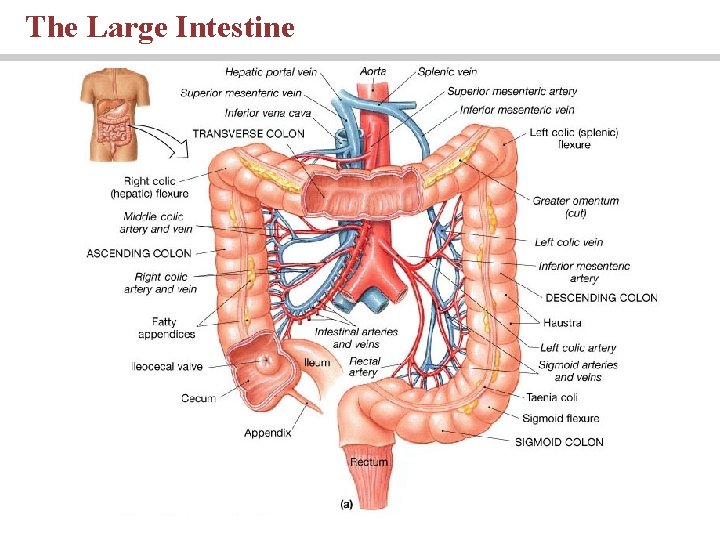
Functions of the large intestine • its major functions include: 1. absorption of water 2. absorption of vitamins produced by bacteria 3. storage of fecal material prior to defecation
Large intestine areas: • Large intestine is divided into three areas: • Cecum – collects and stores material from ileum • Colon – it consist of four regions: ascending colon, transverse colon, descending colon and sigmoid colon • Rectum – it is expandable
The Large Intestine
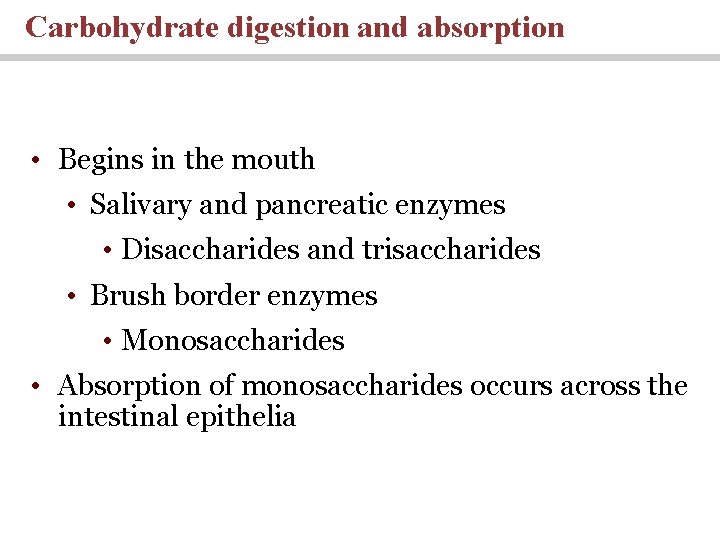
Carbohydrate digestion and absorption • Begins in the mouth • Salivary and pancreatic enzymes • Disaccharides and trisaccharides • Brush border enzymes • Monosaccharides • Absorption of monosaccharides occurs across the intestinal epithelia
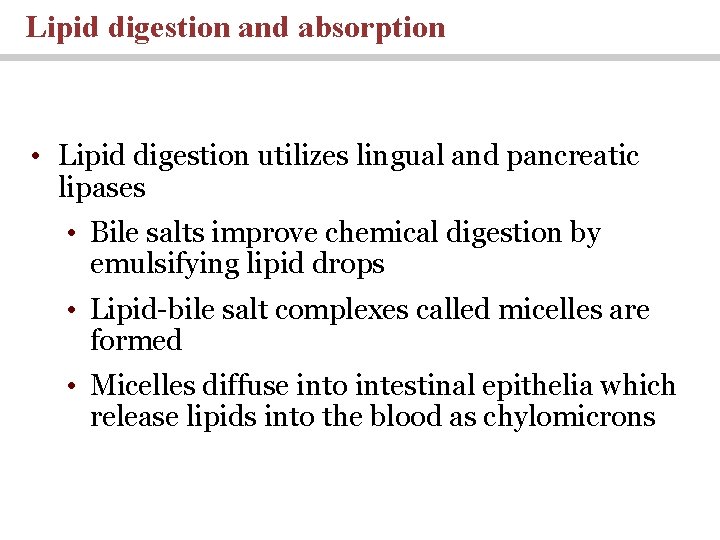
Lipid digestion and absorption • Lipid digestion utilizes lingual and pancreatic lipases • Bile salts improve chemical digestion by emulsifying lipid drops • Lipid-bile salt complexes called micelles are formed • Micelles diffuse into intestinal epithelia which release lipids into the blood as chylomicrons
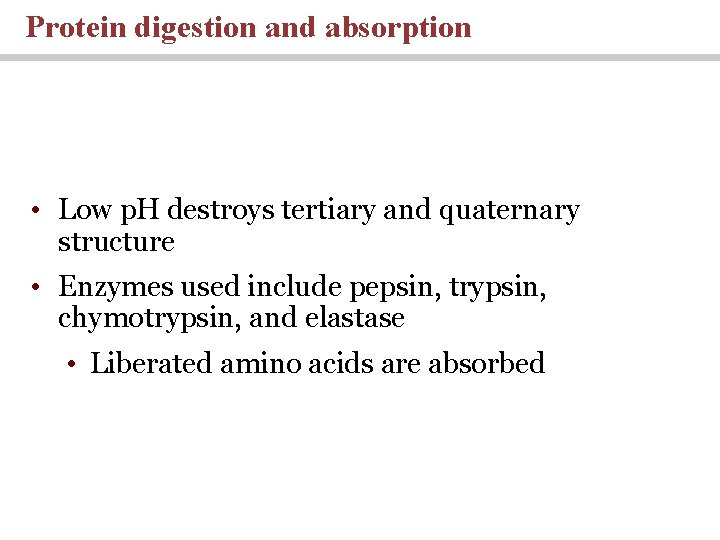
Protein digestion and absorption • Low p. H destroys tertiary and quaternary structure • Enzymes used include pepsin, trypsin, chymotrypsin, and elastase • Liberated amino acids are absorbed
Absorption • Water • Nearly all that is ingested is reabsorbed via osmosis • Ions • Absorbed via diffusion, cotransport, and active transport • Vitamins • Water soluble vitamins are absorbed by diffusion • Fat soluble vitamins are absorbed as part of micelles • Vitamin B 12 requires intrinsic factor
Age related changes in the digestive system include: • Thinner, more fragile epithelium • Reduction in epithelial stem cells • Weaker peristaltic contractions • Effects of cumulative damage • Increased cancer rates
You should now be familiar with: • The organs of the digestive system and their major functions • The mechanisms that regulate digestion • The anatomy of the organs and accessory organs of the digestive system • The functions of the major structures and regions of the digestive system and the regulation of their activities
You should now be familiar with: • The significance of the large intestine in the absorption of nutrients • The events involved in the digestion of organic and inorganic nutrients • The effects of the aging process on the digestive system