
Anatomy Physiology EQ What are the different directional








- Slides: 26
Anatomy & Physiology EQ: What are the different directional terms, planes, and body Cavities?
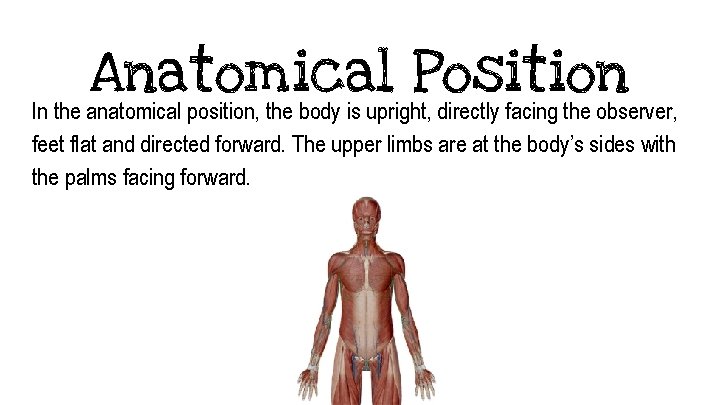
Anatomical Position In the anatomical position, the body is upright, directly facing the observer, feet flat and directed forward. The upper limbs are at the body’s sides with the palms facing forward.
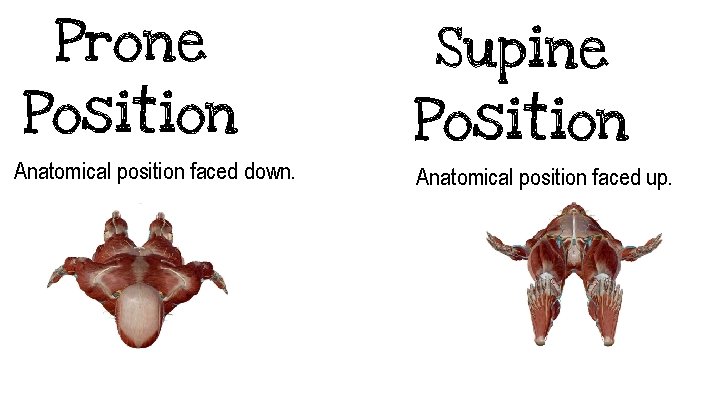
Prone Position Anatomical position faced down. Supine Position Anatomical position faced up.
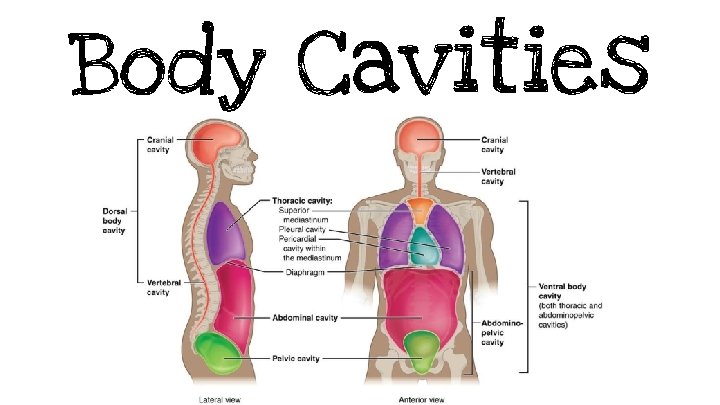
Body Cavities
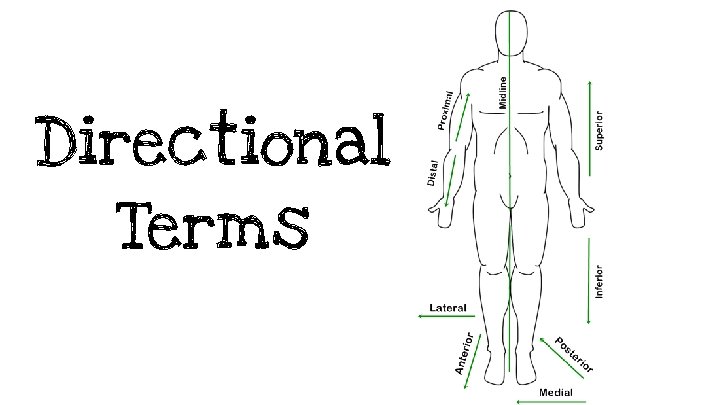
Directional Terms
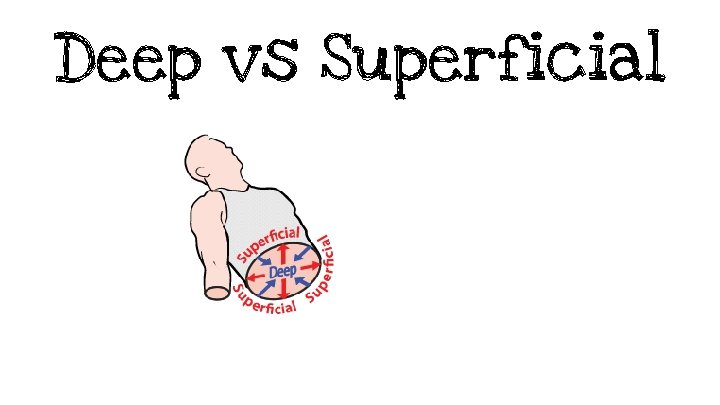
Deep vs Superficial
Skeletal System (Cont. ) EQ: What is the purpose of the Skeletal System and What are the bones of the skull & pelvic Girdle?
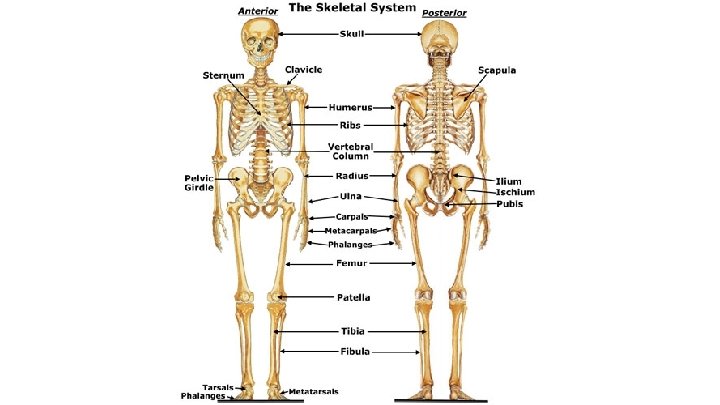
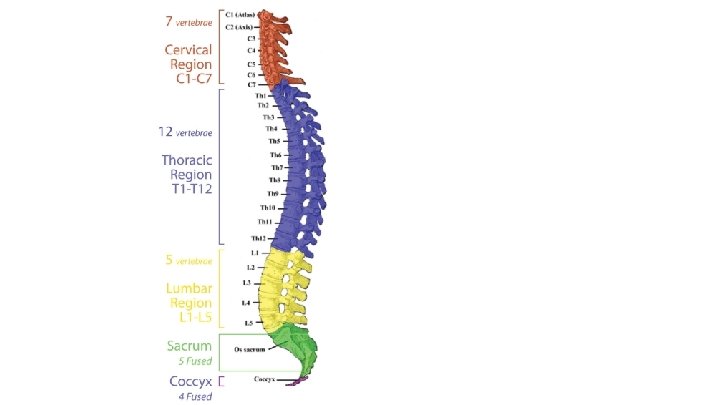
The Skeletal System • Parts of the skeletal system include: – Bones (skeleton) – Joints (area where two bones meet) – Cartilages (a resilient and smooth elastic tissue, rubber-like padding that covers and protects the ends of long bones at the joints) – Ligaments (a short band of tough, flexible, fibrous connective tissue that connects two bones or cartilages or holds together a joint) • Divided into two divisions: 1. Axial skeleton (skull, ribs and vertebra) 2. Appendicular skeleton (pelvis, extremities)
Functions of Bones • Support of the body • Protection of soft organs • Movement due to attached skeletal muscles • Storage of minerals and fats • Blood cell formation
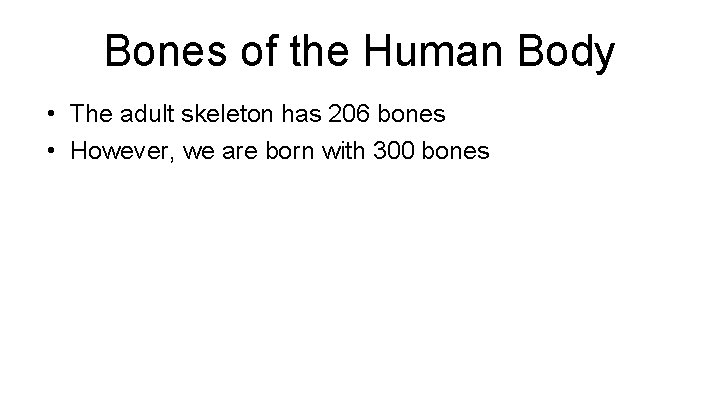
Bones of the Human Body • The adult skeleton has 206 bones • However, we are born with 300 bones
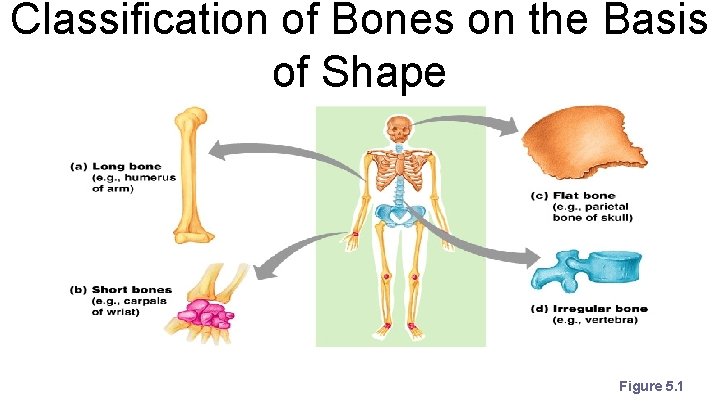
Classification of Bones on the Basis of Shape Figure 5. 1
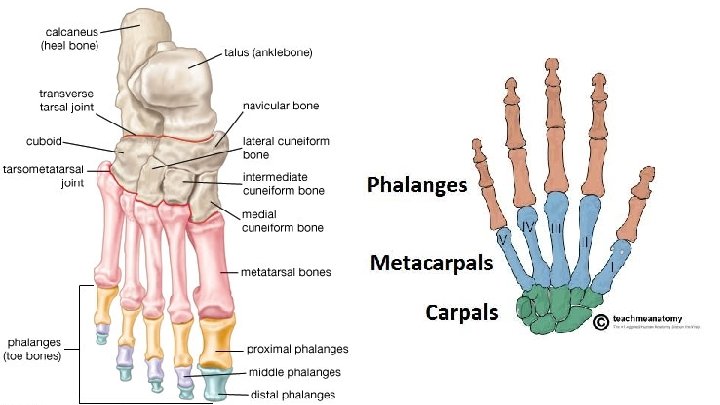
Classification of Bones • Long bones – Typically longer than wide – Have a shaft with heads at both ends – Contain mostly compact bone • Examples: Femur, humerus • Short bones –Generally cube-shape –Contain mostly spongy bone • Examples: Carpals, tarsals
Classification of Bones • Flat bones – Thin and flattened, usually curved – Thin layers of compact bone around a layer of spongy bone • Examples: Skull, ribs, sternum • Irregular bones –Irregular in shape –Do not fit into other bone classification categories • Example: Vertebrae and hip
Moving on to Medical Terminology
Bones of the Human Body • Extremities (limbs) are the parts of the body farthest from the center of the body. –When referring to any extremities, use the word root acr/o –When referring to bones use the word root oste/o –When referring to joints use the word root arthr/o
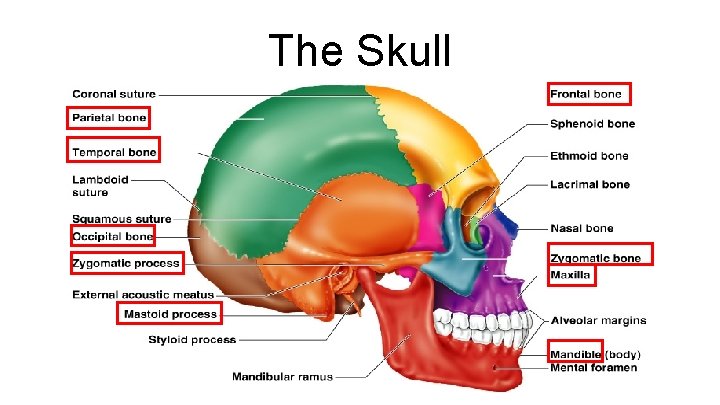
The Skull
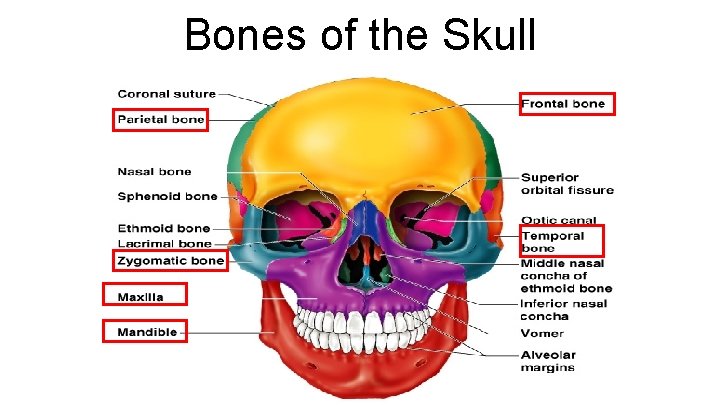
Bones of the Skull
Human Skull, Superior View
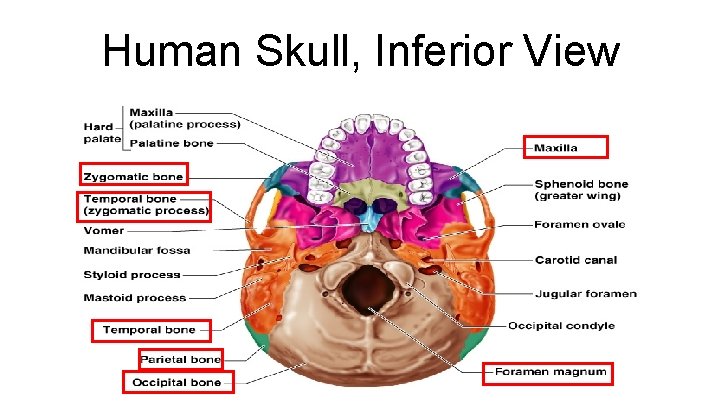
Human Skull, Inferior View
The Hyoid Bone • The only bone that does not articulate with another bone • Serves as a moveable base for the tongue
The Pelvis Pelvic Girdle
The Pelvis: Right Coxal Bone