
ANATOMY PHYSIOLOGY Directional Terms and Body Cavities y
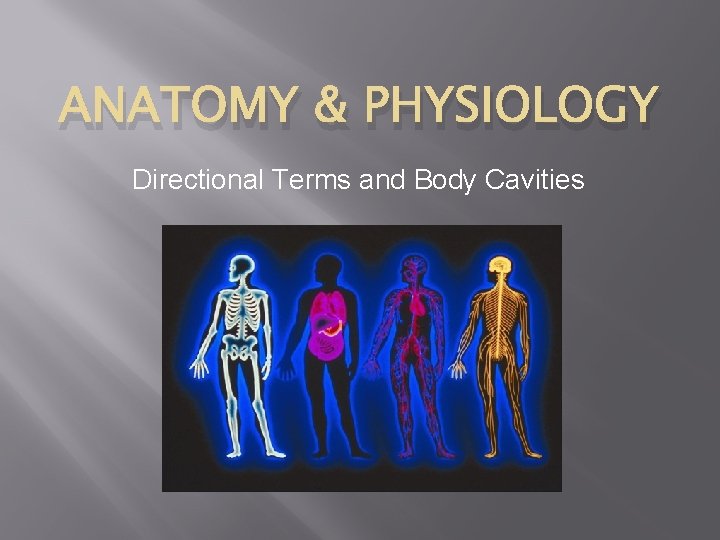
ANATOMY & PHYSIOLOGY Directional Terms and Body Cavities
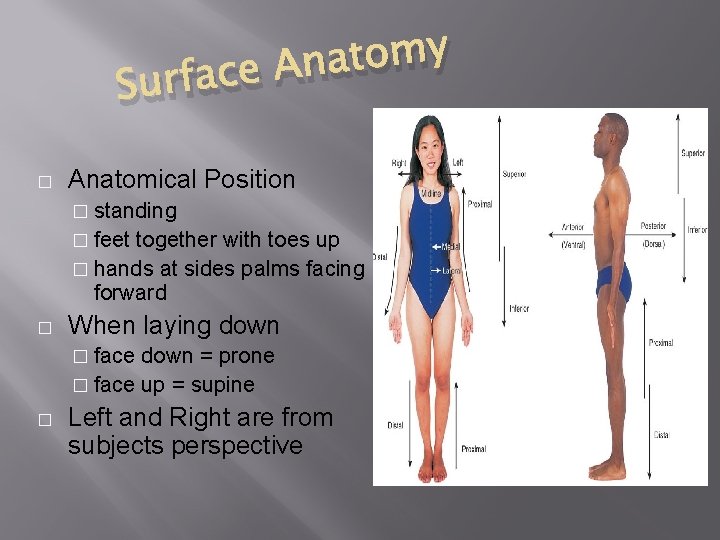
y m o t a n A e c a Surf � Anatomical Position � standing � feet together with toes up � hands at sides palms facing forward � When laying down � face down = prone � face up = supine � Left and Right are from subjects perspective
s e n a l P l a c i m o t a n A Anatomical Planes are: � a description of self-space � space immediately surrounding body that is available for movement
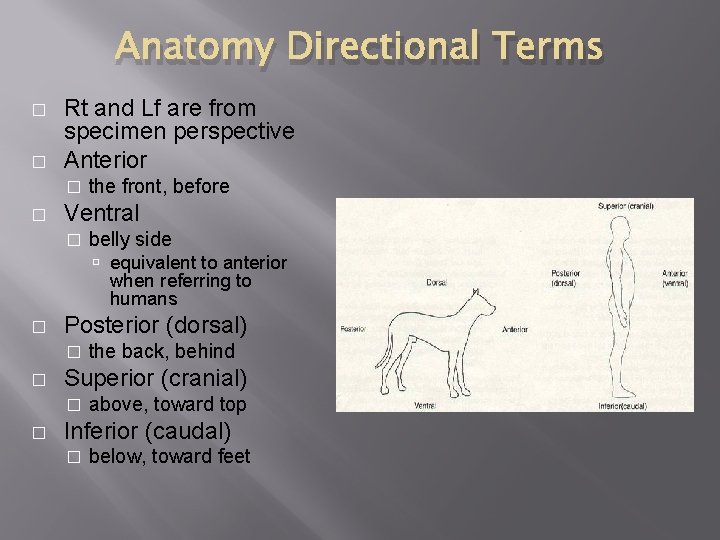
Anatomy Directional Terms � � Rt and Lf are from specimen perspective Anterior � � the front, before Ventral � belly side equivalent to anterior when referring to humans � Posterior (dorsal) � � Superior (cranial) � � the back, behind above, toward top Inferior (caudal) � below, toward feet
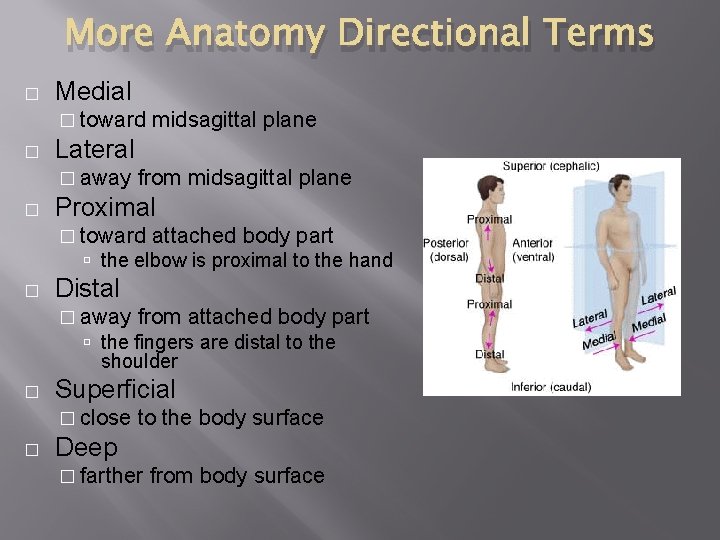
More Anatomy Directional Terms � Medial � toward � Lateral � away � midsagittal plane from midsagittal plane Proximal � toward attached body part the elbow is proximal to the hand � Distal � away from attached body part the fingers are distal to the shoulder � Superficial � close � to the body surface Deep � farther from body surface

Even More Anatomy Directional Terms � Visceral � Parietal � Medullary � Cortical
Why do we need to know about selfspace? � Defines the terms of movement � directional � joint movement � muscle movement � Using formal terms allows us to use fewer words when trying to describe movement � teaching (educational) � medicine (x-ray fims, therapy) � research (biomechanics)
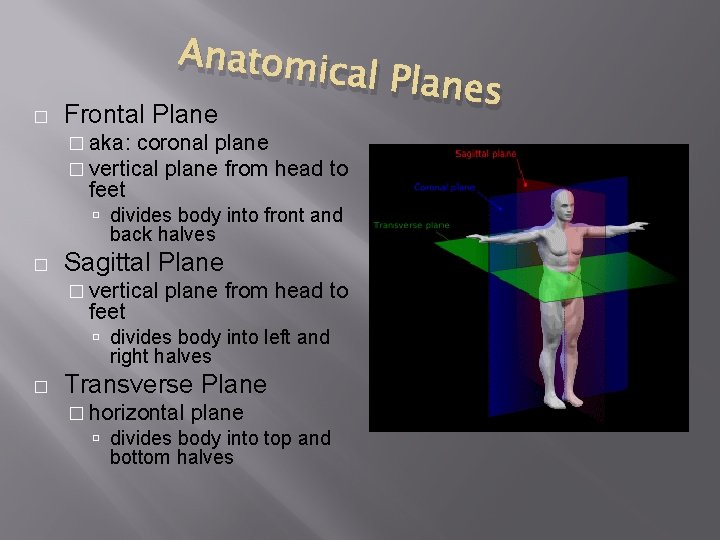
Anatomi � Frontal Plane � aka: coronal plane � vertical plane from feet cal Plane s head to divides body into front and back halves � Sagittal Plane � vertical feet plane from head to divides body into left and right halves � Transverse Plane � horizontal plane divides body into top and bottom halves

Anatomical Movement Terms � adduction (toward) � abduction (away from) � flexion (bend) � extension (lengthen)
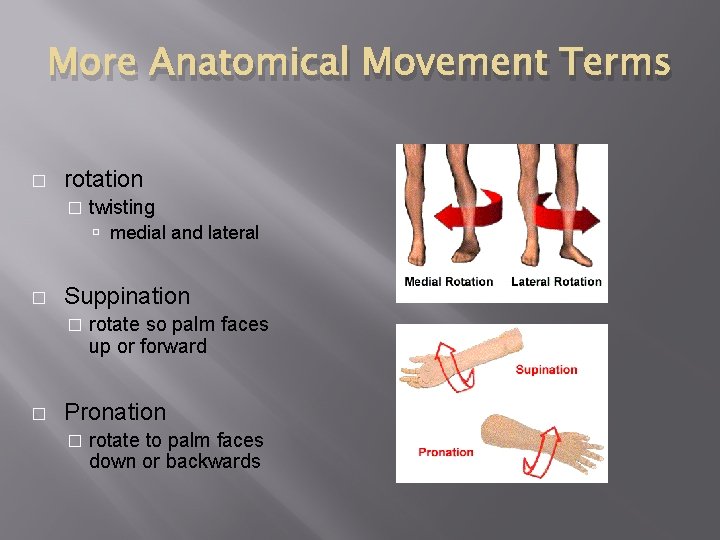
More Anatomical Movement Terms � rotation � twisting medial and lateral � Suppination � � rotate so palm faces up or forward Pronation � rotate to palm faces down or backwards
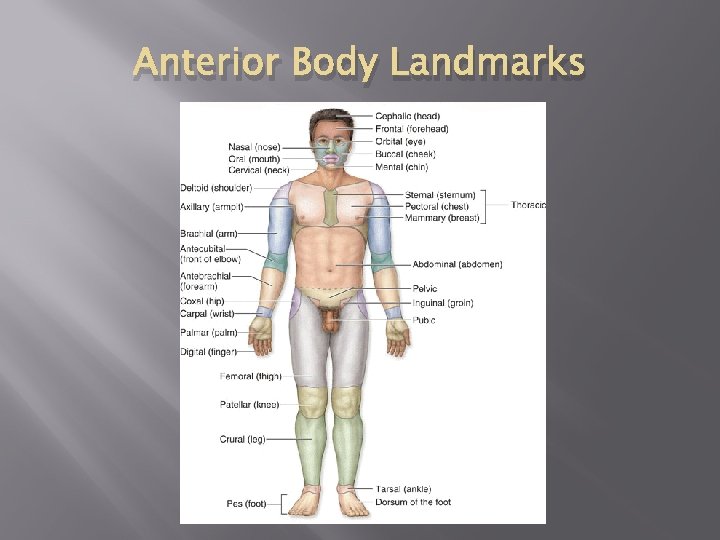
Anterior Body Landmarks
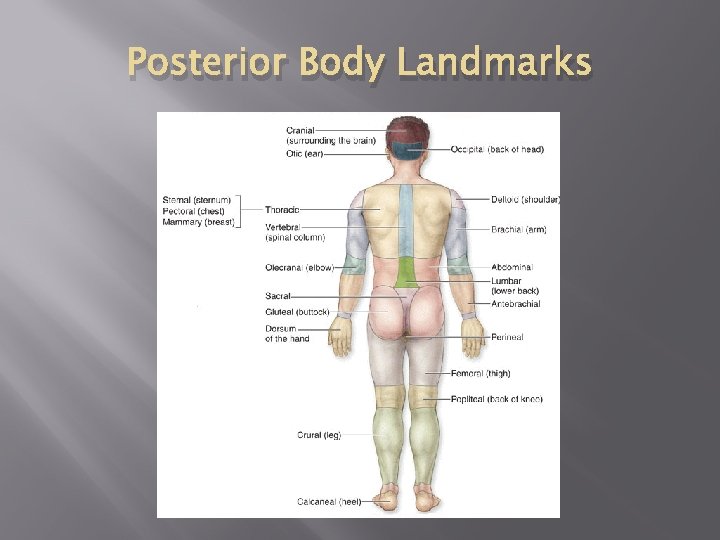
Posterior Body Landmarks
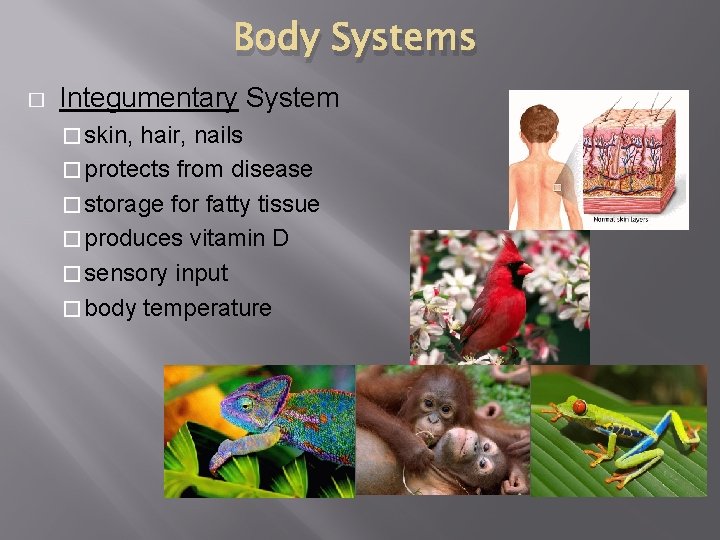
Body Systems � Integumentary System � skin, hair, nails � protects from disease � storage for fatty tissue � produces vitamin D � sensory input � body temperature
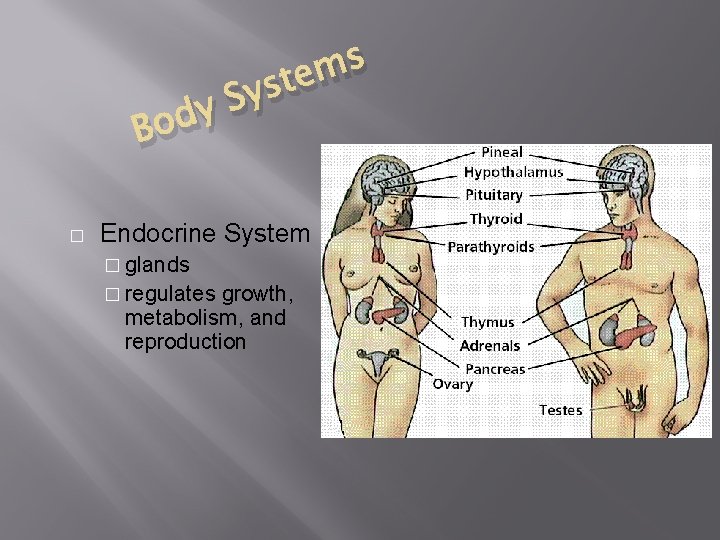
Bo � s m e t s y S dy Endocrine System � glands � regulates growth, metabolism, and reproduction
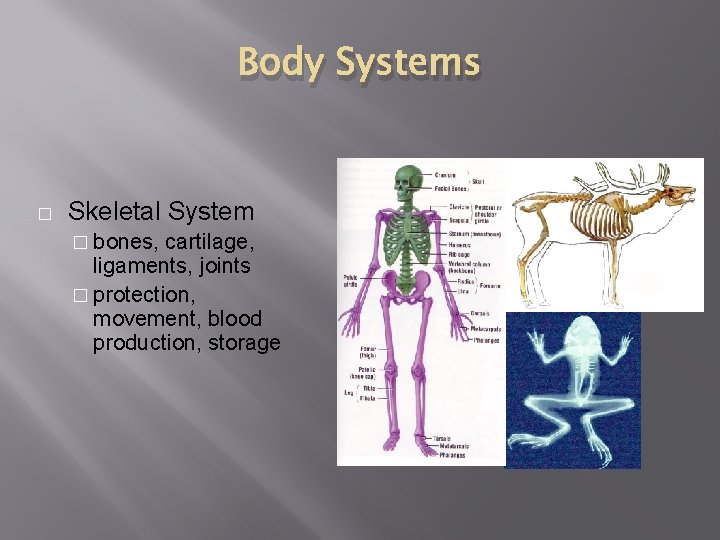
Body Systems � Skeletal System � bones, cartilage, ligaments, joints � protection, movement, blood production, storage
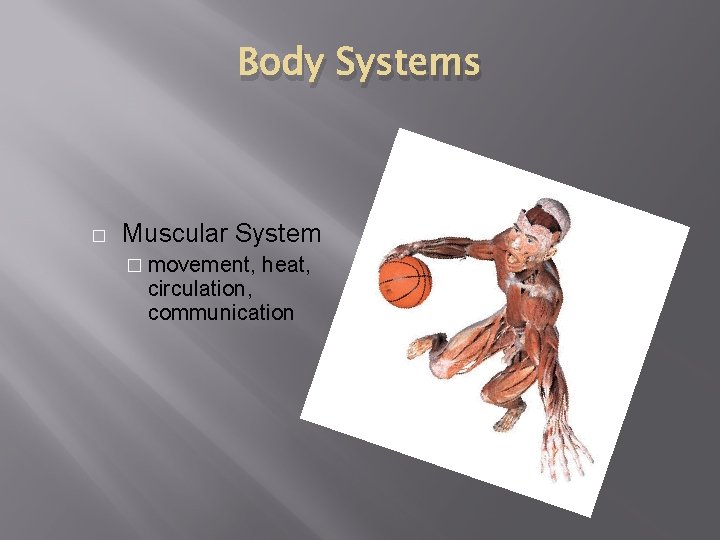
Body Systems � Muscular System � movement, heat, circulation, communication
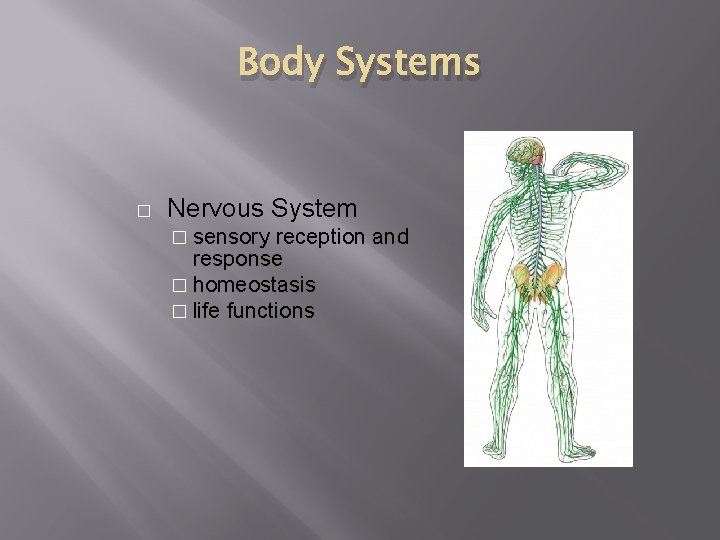
Body Systems � Nervous System � sensory reception and response � homeostasis � life functions
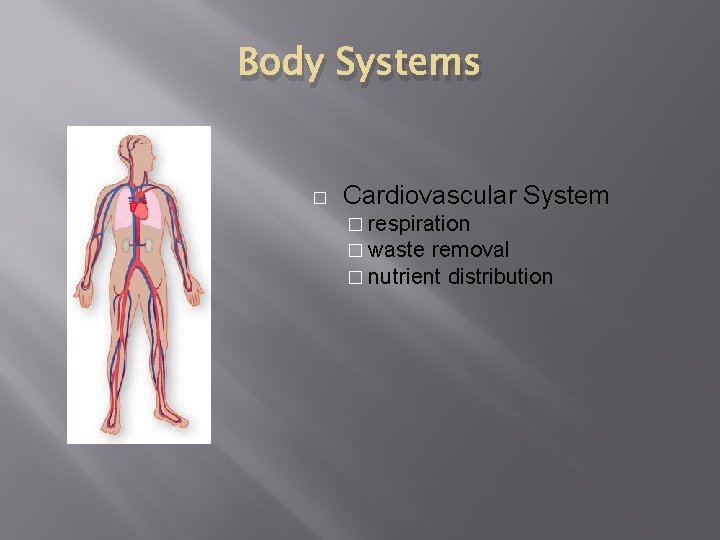
Body Systems � Cardiovascular System � respiration � waste removal � nutrient distribution
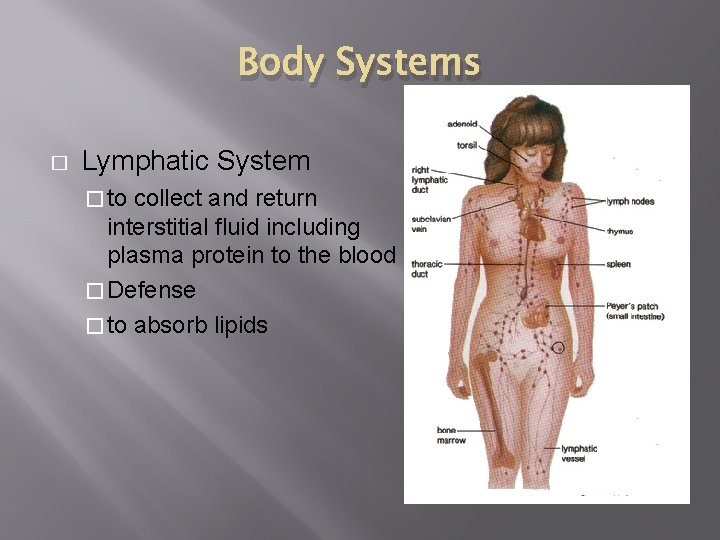
Body Systems � Lymphatic System � to collect and return interstitial fluid including plasma protein to the blood � Defense � to absorb lipids
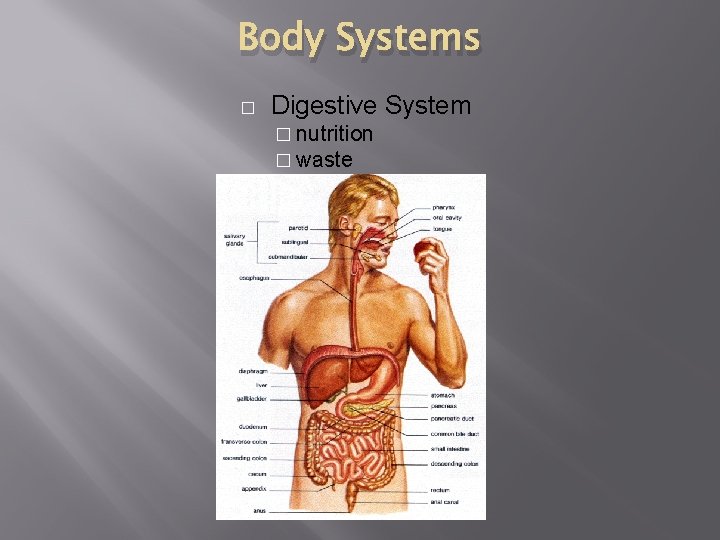
Body Systems � Digestive System � nutrition � waste
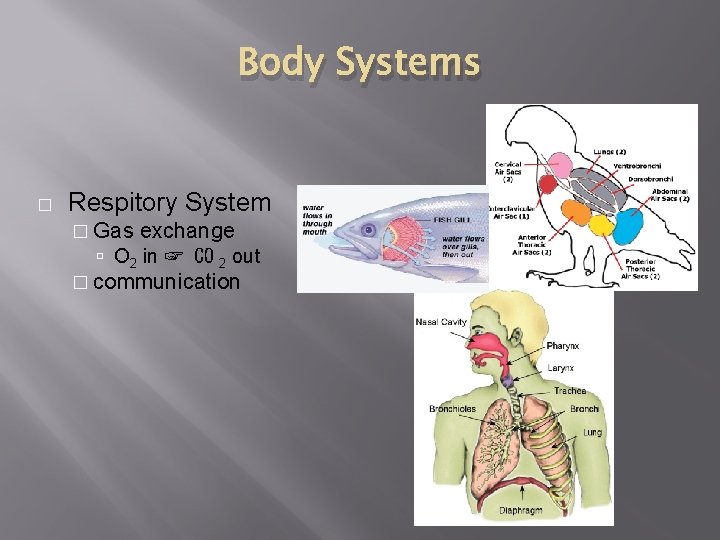
Body Systems � Respitory System � Gas exchange O 2 in ☞ CO 2 out � communication
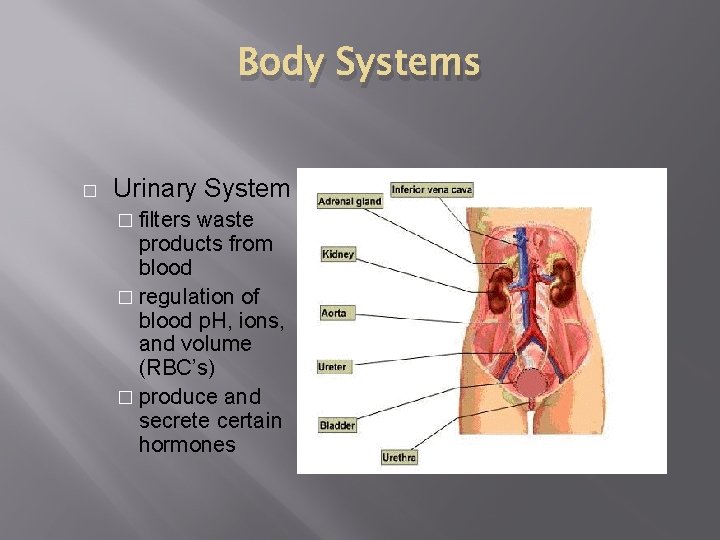
Body Systems � Urinary System � filters waste products from blood � regulation of blood p. H, ions, and volume (RBC’s) � produce and secrete certain hormones
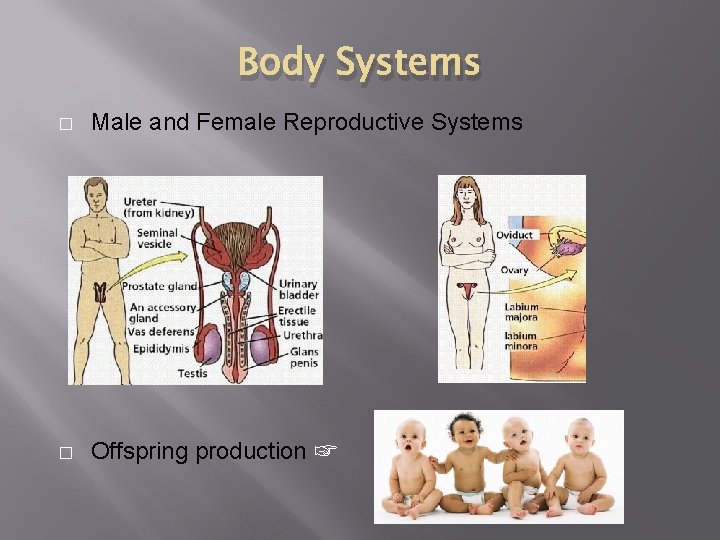
Body Systems � Male and Female Reproductive Systems � Offspring production ☞
- Slides: 23