
ANATOMY PHYSIOLOGY AND DISEASE Chapter 8 The Integumentary

- Slides: 77
ANATOMY, PHYSIOLOGY, AND DISEASE Chapter 8: The Integumentary System: The Protective Covering
Integumentary System Definition: comprised of skin and its accessory components including hair, nails, and associated glands.
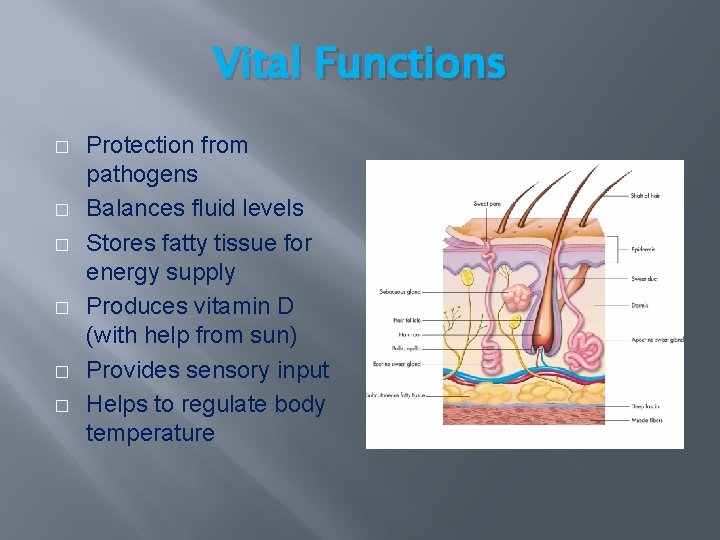
Vital Functions � � � Protection from pathogens Balances fluid levels Stores fatty tissue for energy supply Produces vitamin D (with help from sun) Provides sensory input Helps to regulate body temperature
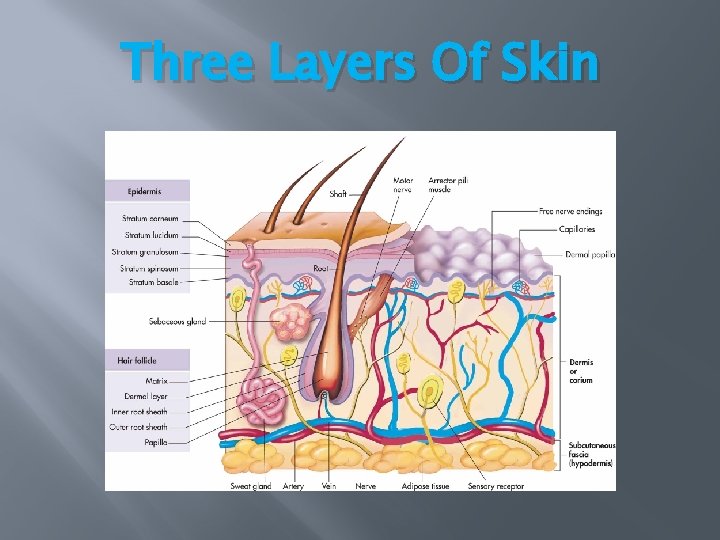
The Skin � Largest organ; weighs approximately 20 pounds; covers area about 20. 83 sq. feet on an adult � Cross section of skin has three layers: �Epidermis �Dermis �Subcutaneous Fascia
Three Layers Of Skin
Epidermis � � Outside layer; made up of five or six even smaller layers of tissue Contains no blood vessels or nerve endings Cells on surface constantly shed, being replaced with new cells from the stratum basale every 2– 4 weeks Outermost layer of dead cells, called stratum corneum, which are flat, scaly, keratinized epithelial cells
Interesting Fact � You slough off 500 million cells every day, or about 1½ pounds of dead skin a year, allowing for rapid repair in case of injuries
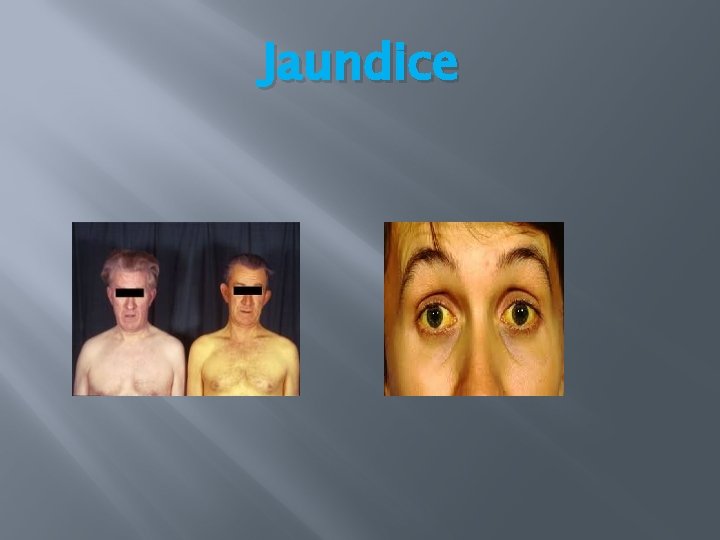
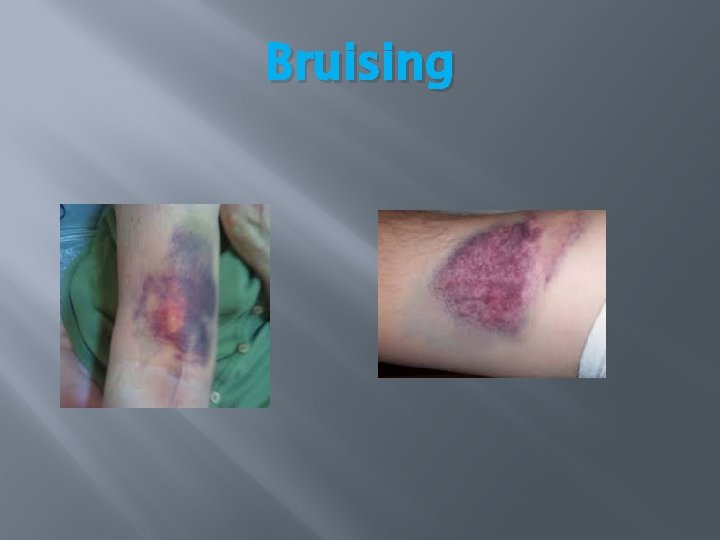
Pathology Connection: Skin Color and Disease � Skin color can indicate disease � Yellow skin (jaundice) may indicate liver disease where the liver can’t break down bilirubin � Bronze color may indicate adrenal gland disease; malfunctioning adrenal glands can cause skin to produce excessive melanin � Bruised skin could indicate skin, blood, or circulatory problems
Jaundice
Bruising
Dermis � � Layer below the epidermis is thicker dermis layer Contains: � Capillaries � Collagenous/elastic fibers � Involuntary muscles � Nerve endings � Lymph vessels � Hair follicles � Sudoriferous glands (sweat) � Sebaceous glands (oil)
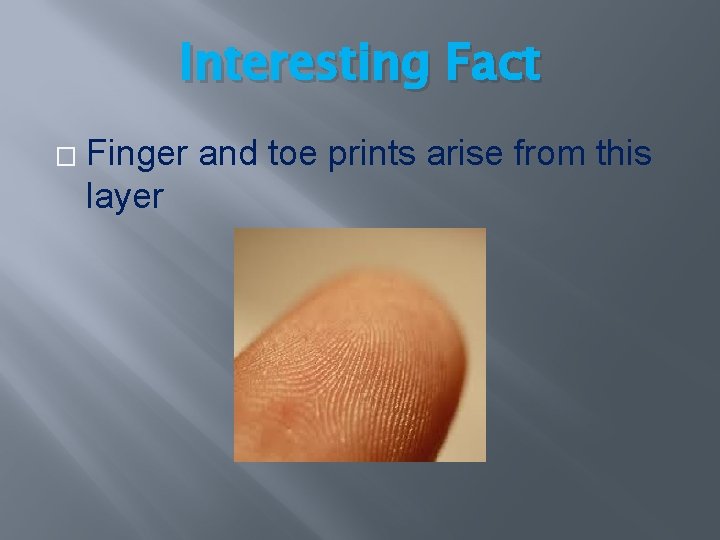
Interesting Fact � Finger and toe prints arise from this layer
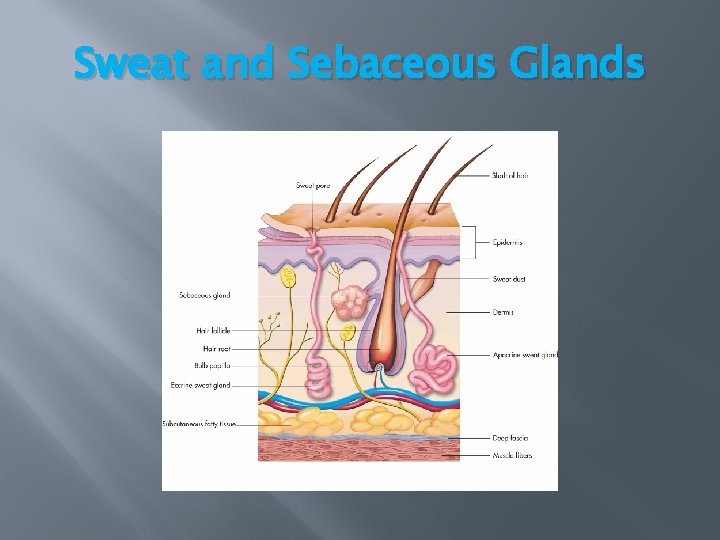
Sudoriferous Glands � � � Two main types of sudoriferous, or sweat, glands Apocrine glands: found near hair follicles in groin and armpits; become active around puberty and are believed to act as sexual attractants Eccrine glands: found in greater numbers on palms, feet, forehead, and upper lip; are important in regulation of temperature
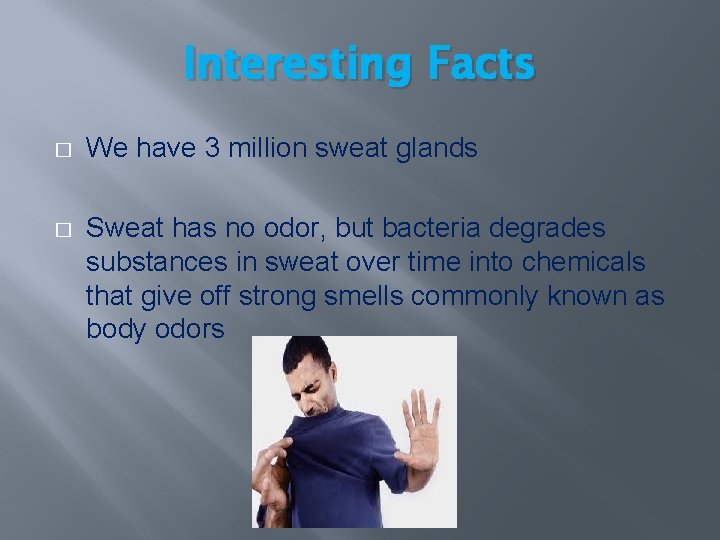
Interesting Facts � We have 3 million sweat glands � Sweat has no odor, but bacteria degrades substances in sweat over time into chemicals that give off strong smells commonly known as body odors
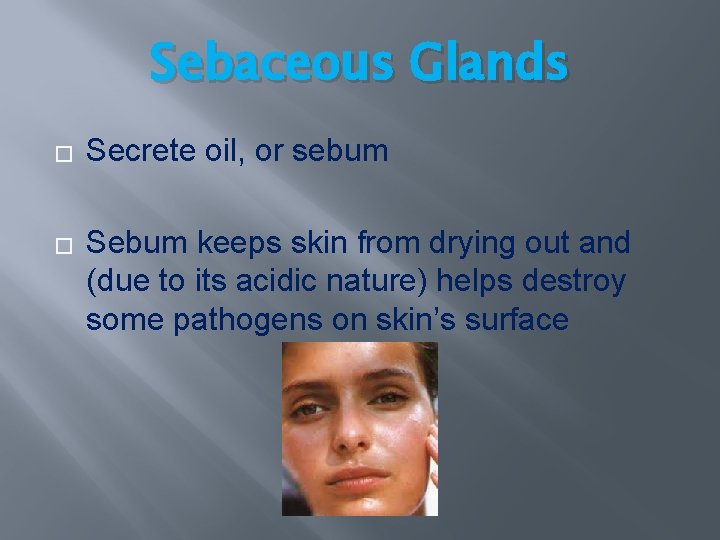
Sebaceous Glands � � Secrete oil, or sebum Sebum keeps skin from drying out and (due to its acidic nature) helps destroy some pathogens on skin’s surface
Sweat and Sebaceous Glands
Subcutaneous Fascia � � Innermost layer of skin, also known as the hypodermis Composed of elastic and fibrous connective tissue and fatty tissue Lipocytes (fat cells) produce fat that acts as padding to protect deeper tissues and act as insulation for temperature regulation Fascia attaches to muscles of body
Pathology Connection: Herpes � Lifelong viral infection that produces clusters of small fluid-filled sacs (vesicles/blisters) � Signs and symptoms usually come and go; stress and compromised immune system can lead to symptom flare � Several types of herpes
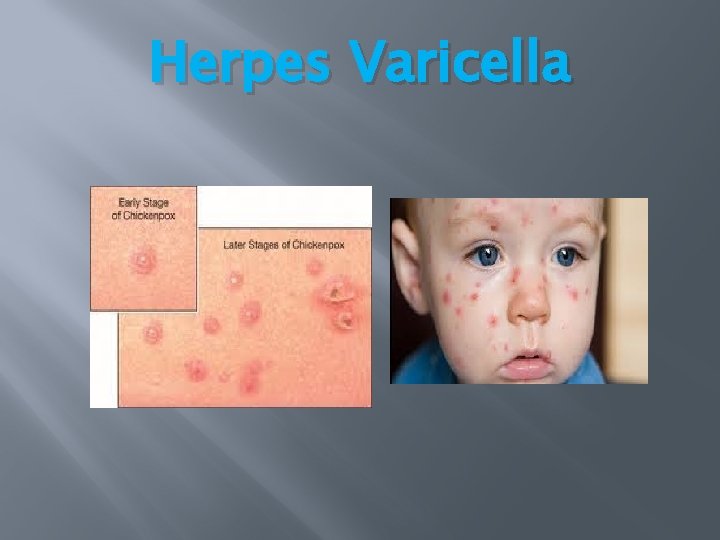
Herpes Varicella Also known as chickenpox Spread by airborne particles or direct contact Vesicles (blisters) can be found on face, trunk, and extremities Vesicles associated with intense itching
Herpes Varicella
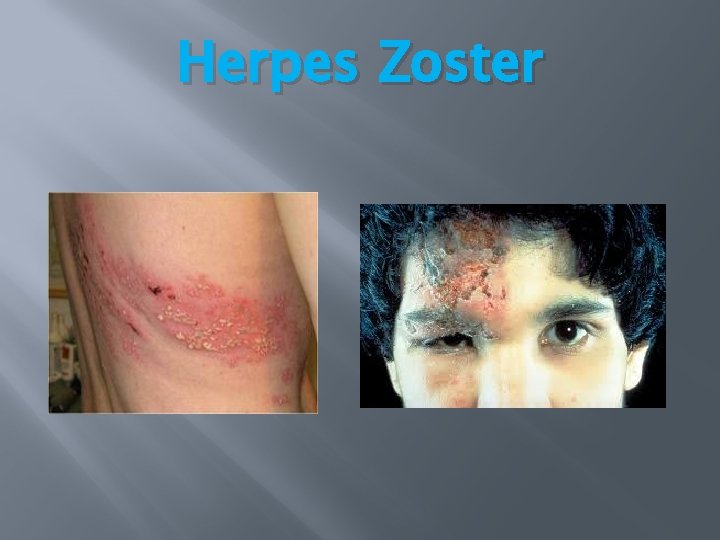
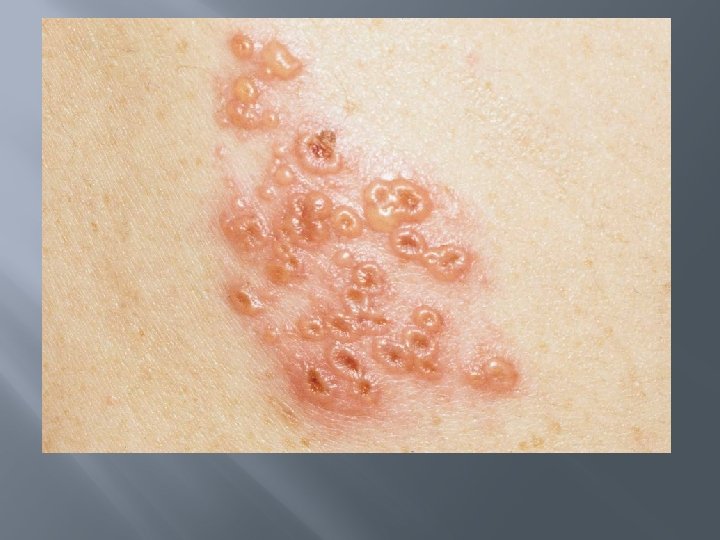
Herpes Zoster �Also known as shingles �Develops when dormant chickenpox virus re-activates �Causes extremely painful blisters/rashes that follow course of a sensory nerve �Symptoms develop when stress, disease, trauma, or aging prevent immune system from keeping virus in check
Herpes Zoster
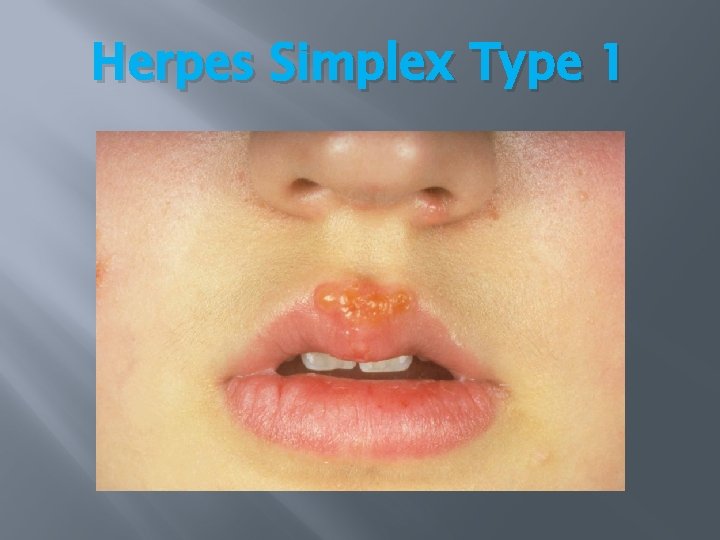
Herpes Simplex Type 1 �Causes “cold sores” or “fever blisters” around mouth or nose �Commonly develops after common cold or fever
Herpes Simplex Type 1
Herpes Simplex Type 2 �Causes genital herpes �Spread by direct contact �Most contagious when in active stage; however, can be spread during remission
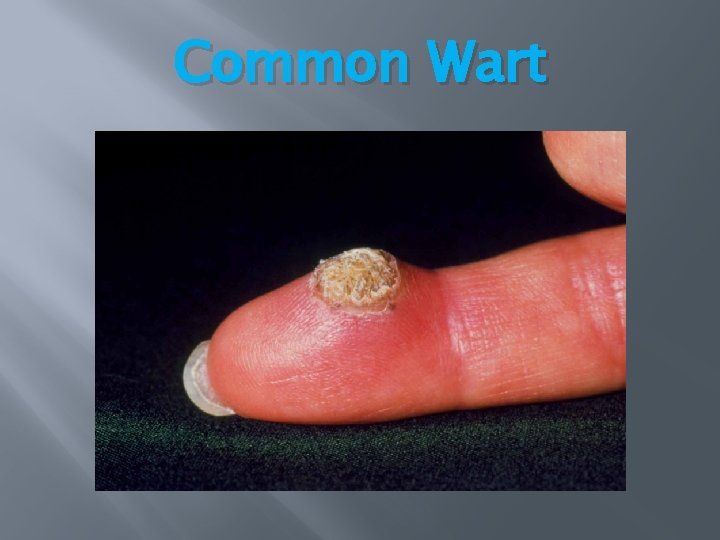
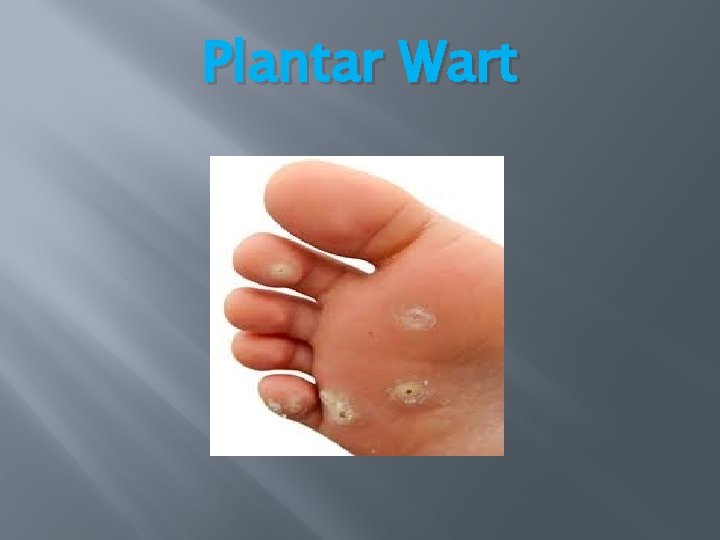
HPV: Human Papilloma Virus � Causes warts (verruca); hypertrophy of keratin cells in skin �Common warts Usually found hands and fingers Spread by scratching and direct contact Often disappear on their own �Plantar warts Found on sole of foot Tend to grow inward �Have relatively smooth appearance on surface �Can cause pain when walking �Treatment: removal by surgery or freezing
Common Wart
Plantar Wart
HPV cont. � Genital warts �Sexually transmitted and highly contagious �Associated with cervical cancer �Vaccine may help prevent cervical cancer associated with HPV
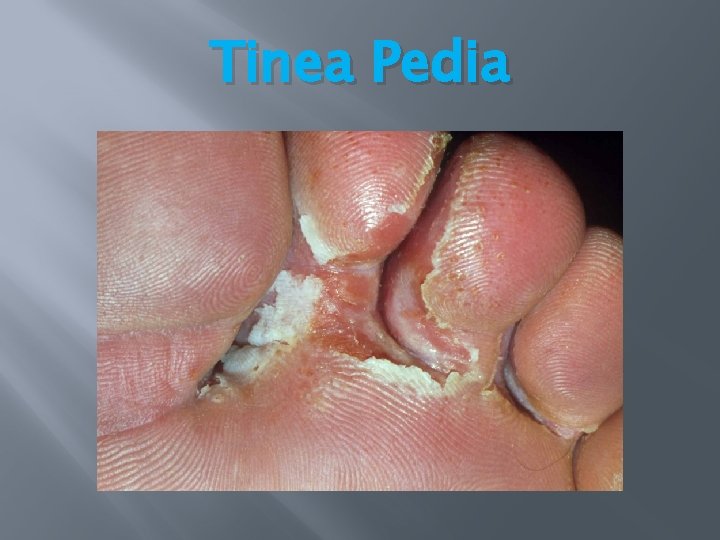
Fungal Infection: Tinea �Tinea Pedis (athlete’s foot) Fungal infection of foot Spread by direct contact with contaminated surfaces (like locker room floors) Develops in warm, moist area between toes �Tinea cruris (jock itch) Fungal infection of groin area Mainly affects men Aggravated by increased perspiration, and tight fitting garments
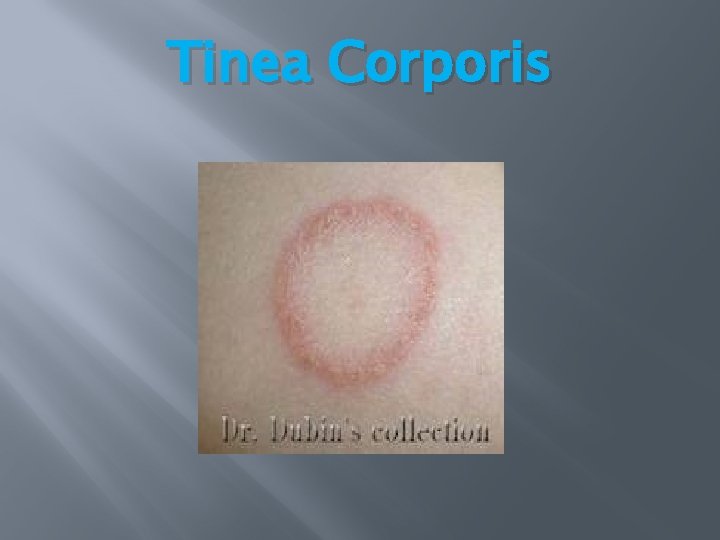
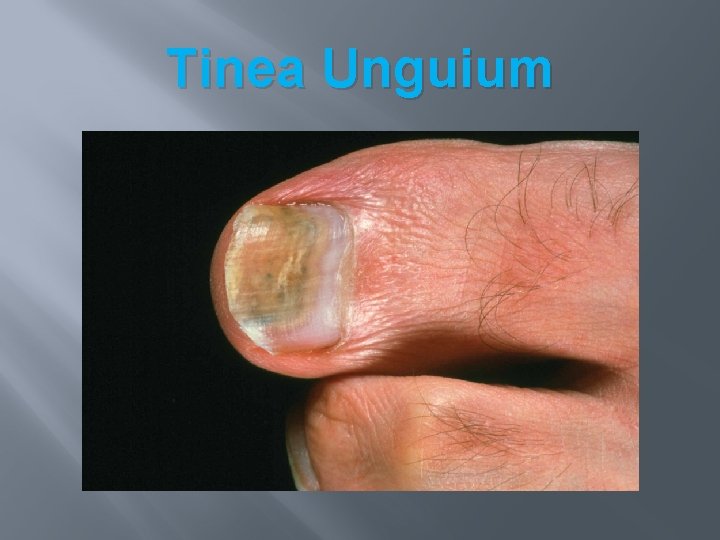
Tinea cont. Tinea corporis (ringworm) �Fungal infection of smooth skin areas �Appearance: red, ring-shaped structure with pale center �THERE IS NO ACTUAL WORM involved � Tinea unguium �Fungal infection under finger or toenails �If untreated, results overgrown and thick nails with white/brittle appearance �
Tinea Pedia
Tinea Corporis
Tinea Unguium
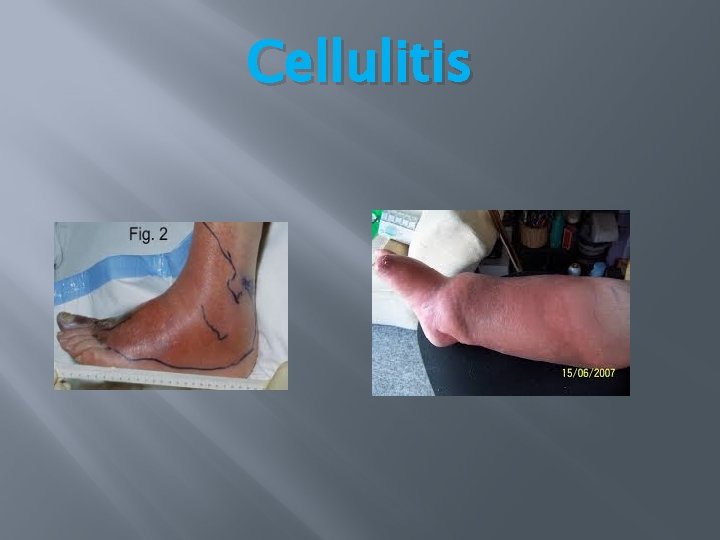
Cellulitis �Infection of skin and subcutaneous tissue �Caused by Staphylococcus �Source of infection often wound of some kind
Cellulitis
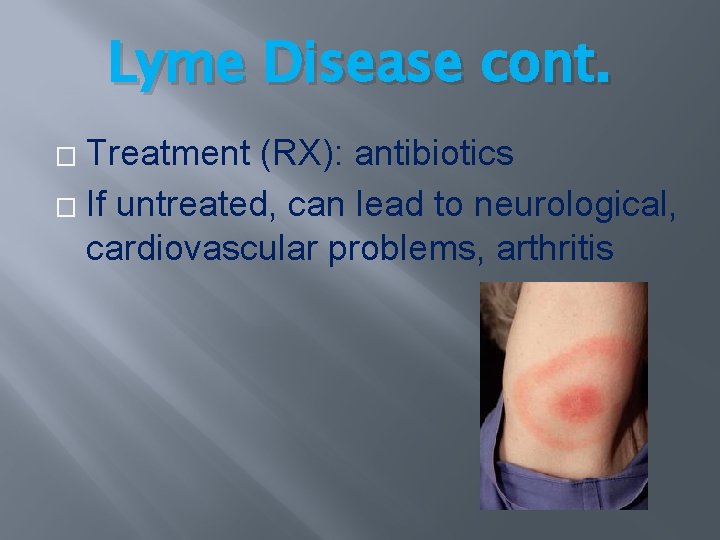
Lyme Disease �Etiology: Bacterial infection spread by deer tick bites �Signs and symptoms: “Bull’s eye” rash: red circle with lighter center; often very first presenting sign of infection; appears few days to several weeks following tick bite Flu-like symptoms, fever, and chills Malaise Joint inflammation
Lyme Disease cont. Treatment (RX): antibiotics � If untreated, can lead to neurological, cardiovascular problems, arthritis �
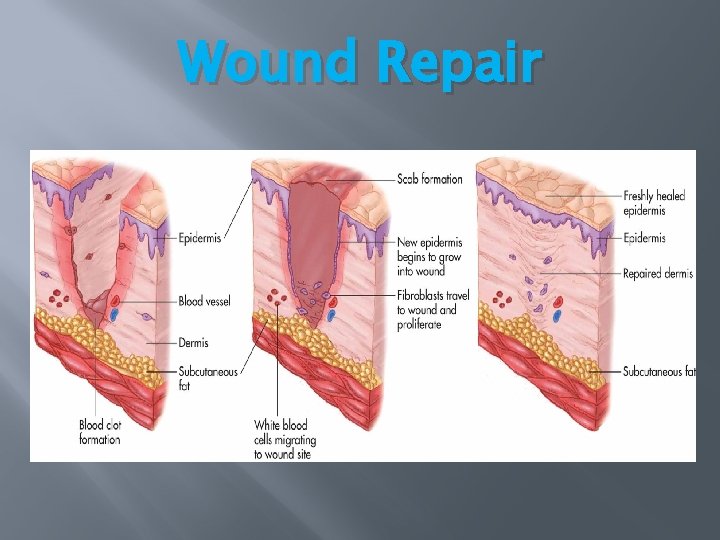
How Skin Heals � � � Injury or wound develops Wound fills with blood; blood contains clotting substances Clot forms causing scab WBCs enter and destroy any pathogens Fibroblasts come and begin pulling edges of wound together Basale layer hyper-produces cells for repair of wound
Wound Repair
Burns �Types: heat, chemicals, electricity, radiation, and thermal �Two factors affect assessments of damage: �Depth �Amount of area damaged
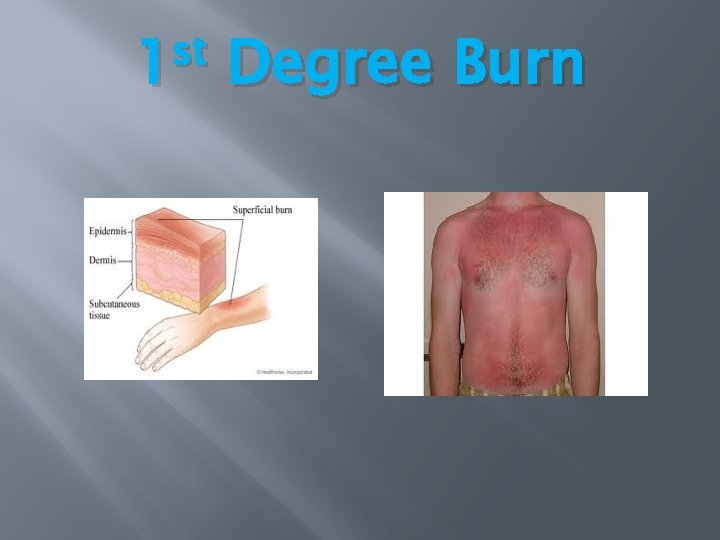
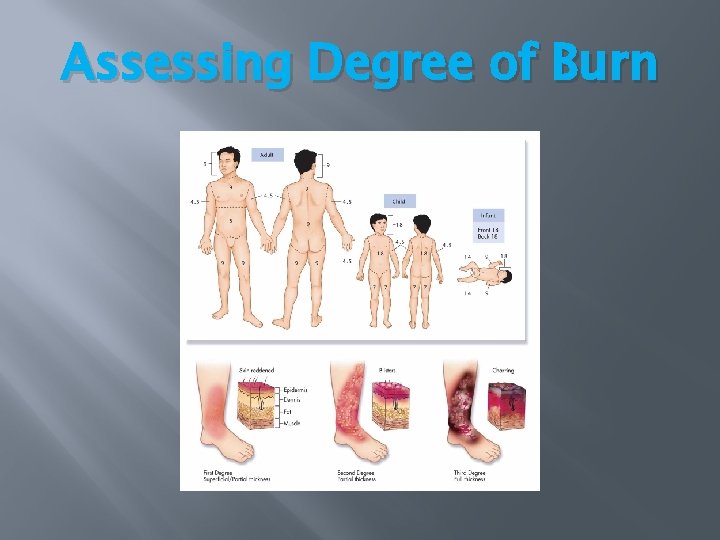
First Degree Burns � First degree burns damage only to epidermis �S/S: redness and pain, but no blister �Pain subsides in 2– 3 days; there is no scarring �Complete healing takes about one week
st 1 Degree Burn
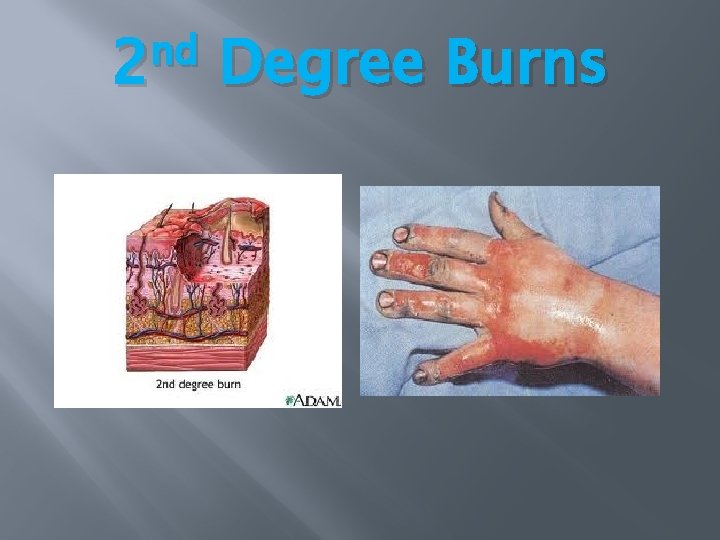
nd 2 � 2 nd Degree Burn degree burns involve entire depth of epidermis and portion of dermis �S/S: redness, pain, and blistering �Extent of blistering dependent on depth of burn �Blisters heal within 10– 14 days if no complications; deeper burns take 1– 3½ months �Scarring in second degree burns is common
nd 2 Degree Burns
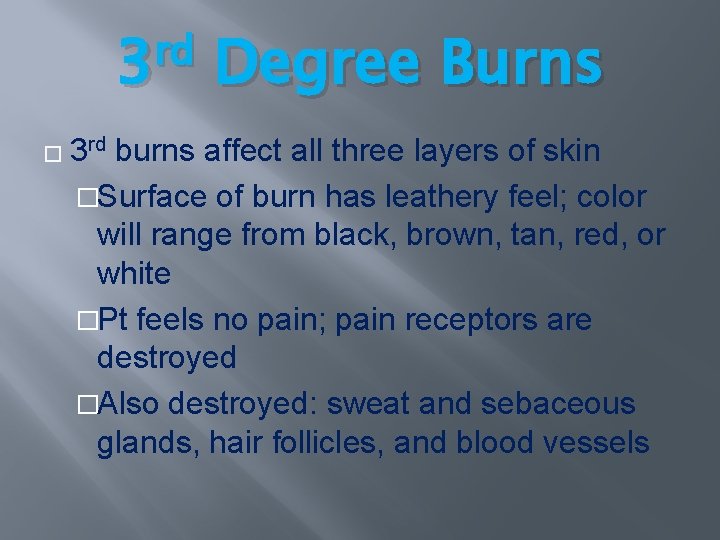
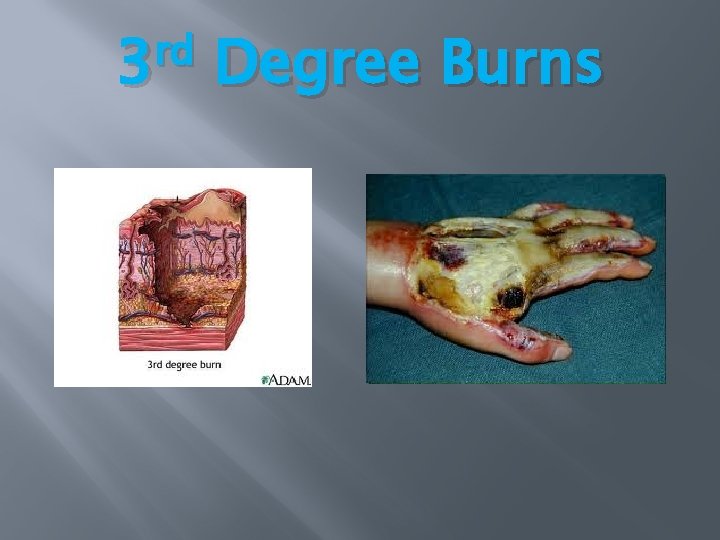
rd 3 � 3 rd Degree Burns burns affect all three layers of skin �Surface of burn has leathery feel; color will range from black, brown, tan, red, or white �Pt feels no pain; pain receptors are destroyed �Also destroyed: sweat and sebaceous glands, hair follicles, and blood vessels
rd 3 Degree Burns
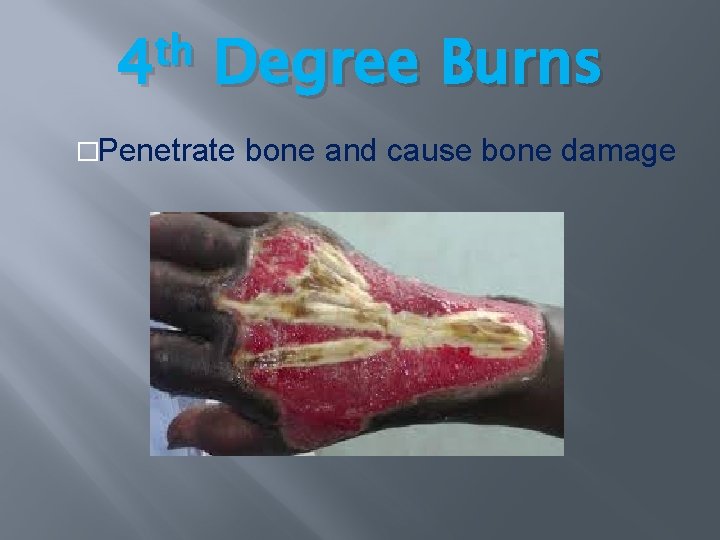
th 4 Degree Burns �Penetrate bone and cause bone damage
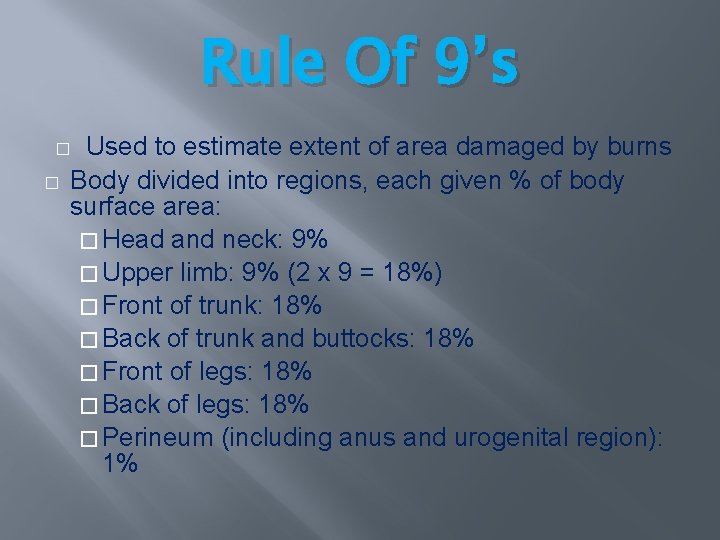
Rule Of 9’s Used to estimate extent of area damaged by burns Body divided into regions, each given % of body surface area: � Head and neck: 9% � Upper limb: 9% (2 x 9 = 18%) � Front of trunk: 18% � Back of trunk and buttocks: 18% � Front of legs: 18% � Back of legs: 18% � Perineum (including anus and urogenital region): 1% � �
Assessing Degree of Burn
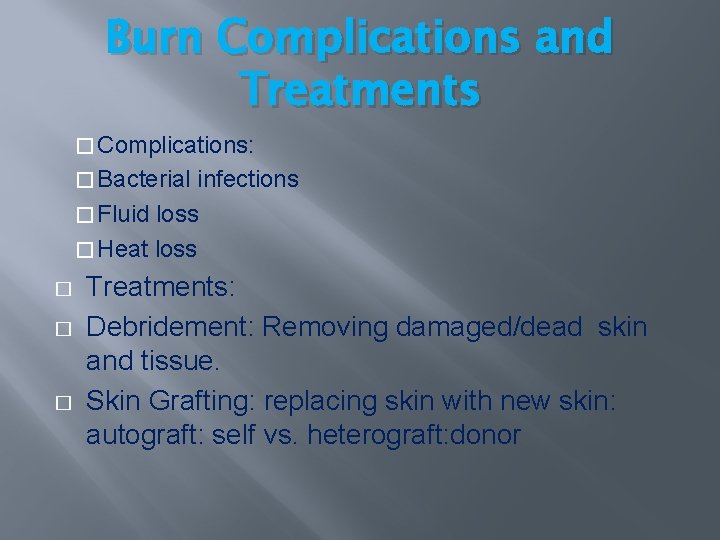
Burn Complications and Treatments � Complications: � Bacterial infections � Fluid loss � Heat loss � � � Treatments: Debridement: Removing damaged/dead skin and tissue. Skin Grafting: replacing skin with new skin: autograft: self vs. heterograft: donor
Hair composed of fibrous protein called keratin � Composed of shaft, root, and follicle � Sebaceous gland associated with each hair follicle � Color is dependent on amt. and type of melanin you produce �
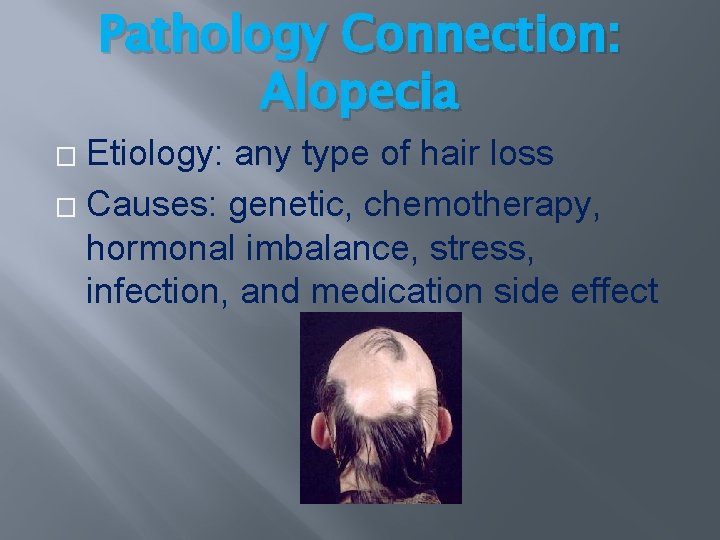
Pathology Connection: Alopecia Etiology: any type of hair loss � Causes: genetic, chemotherapy, hormonal imbalance, stress, infection, and medication side effect �
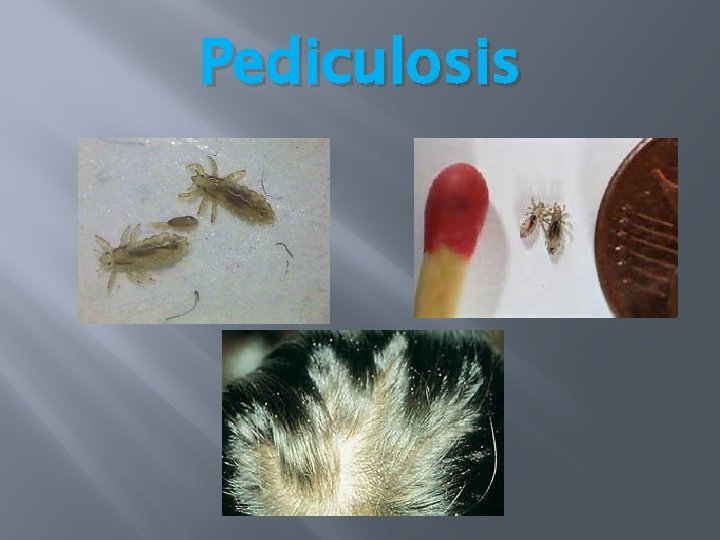
Pathology Connection: Pediculosis �Etiology: lice infestation �S/S: lice and nits (egg deposits) �DX: visual inspection �TX: Wash with medicated soap/shampoo, cleaning of all clothing, bedding, towels, combs, etc. to remove infestation
Pediculosis
Folliculitis �Etiology: bacteria (usually staphylococcus) �S/S: small pustules that form around base of hair follicle �DX: visual examination, site culture �TX: proper daily cleansing with antiseptic cleanser, oral antibiotics (chronic or severe cases)
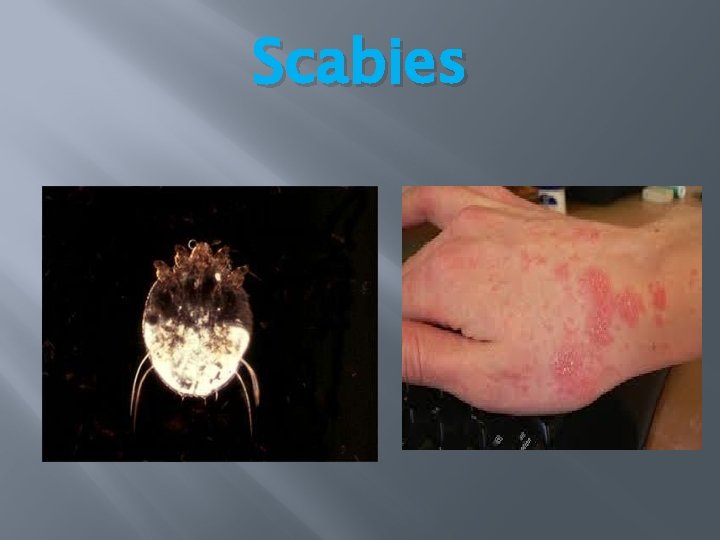
Scabies �Etiology: mites �S/S: elevated, grayish-white lines (burrows), vesicle and pustule formation (due to bite, feces, ova of offending mite), intense itching �DX: visual inspection �TX: application of medicated cream, all infected individuals must be treated to prevent re-infection
Scabies
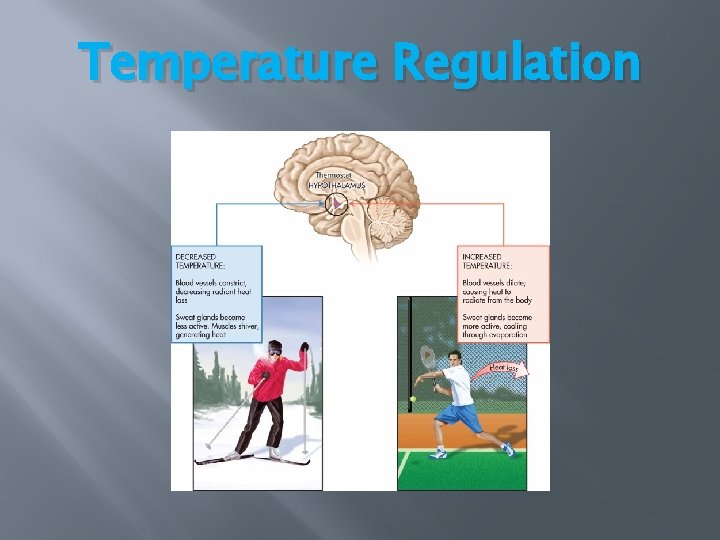
Temperature Regulation Blood vessel changes: �Vasodilation exposes heated blood to external cooling air �Vasoconstriction keeps cooling of blood to minimum when it’s cold outside � Sweat glands excrete water onto skin = cooling through evaporation � By the time you feel thirsty you’re already dehydrating; you can potentially secrete 12 liters of sweat in a 24 hour period �
Temperature Regulation (cont. ) � Shivering causes muscle activity that produces heat � Hairs on skin stand erect when arrector pili muscles contract; creates dead space insulating you, like a goose down jacket
Temperature Regulation
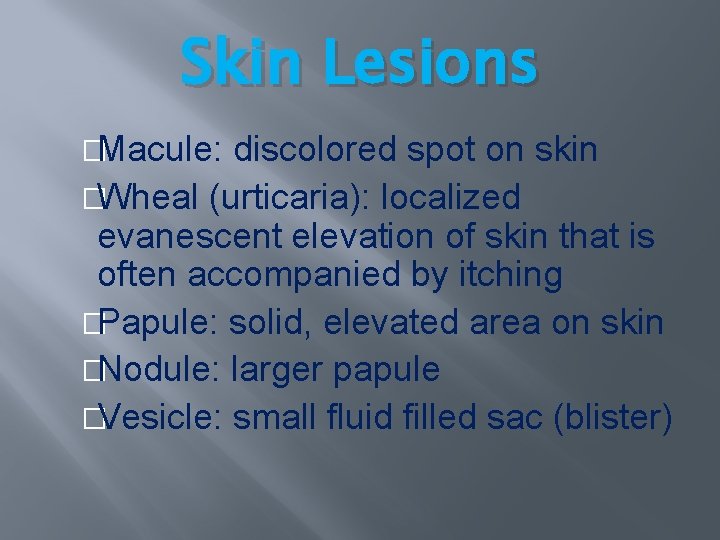
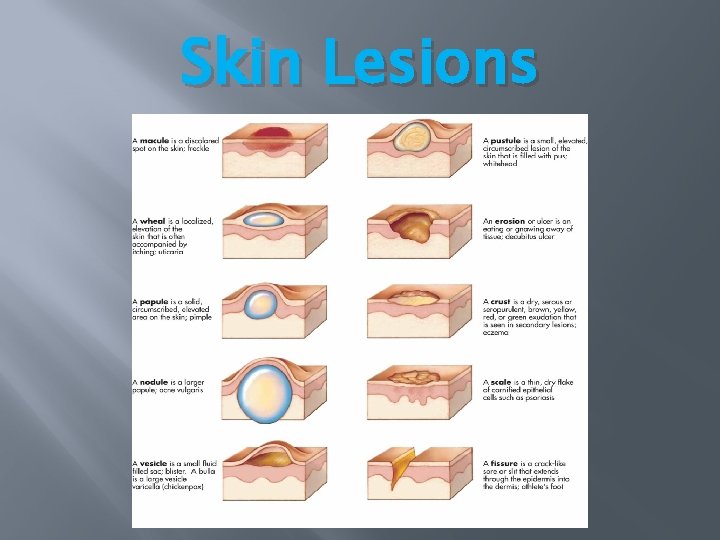
Skin Lesions �Macule: discolored spot on skin �Wheal (urticaria): localized evanescent elevation of skin that is often accompanied by itching �Papule: solid, elevated area on skin �Nodule: larger papule �Vesicle: small fluid filled sac (blister)
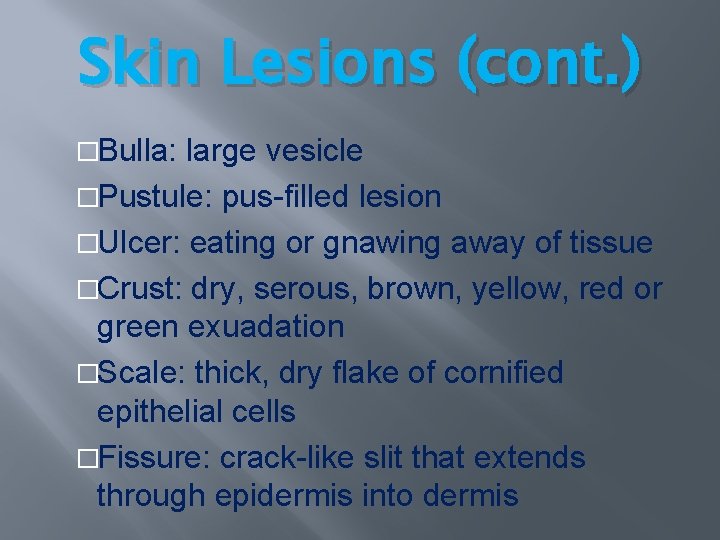
Skin Lesions (cont. ) �Bulla: large vesicle �Pustule: pus-filled lesion �Ulcer: eating or gnawing away of tissue �Crust: dry, serous, brown, yellow, red or green exuadation �Scale: thick, dry flake of cornified epithelial cells �Fissure: crack-like slit that extends through epidermis into dermis
Skin Lesions
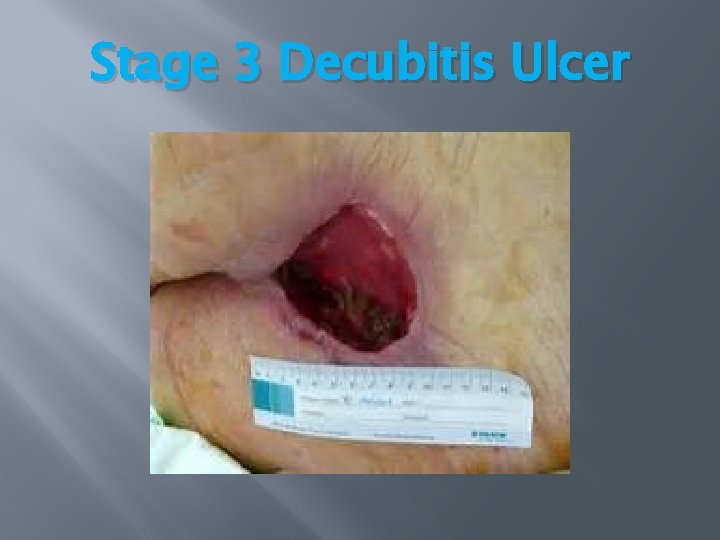
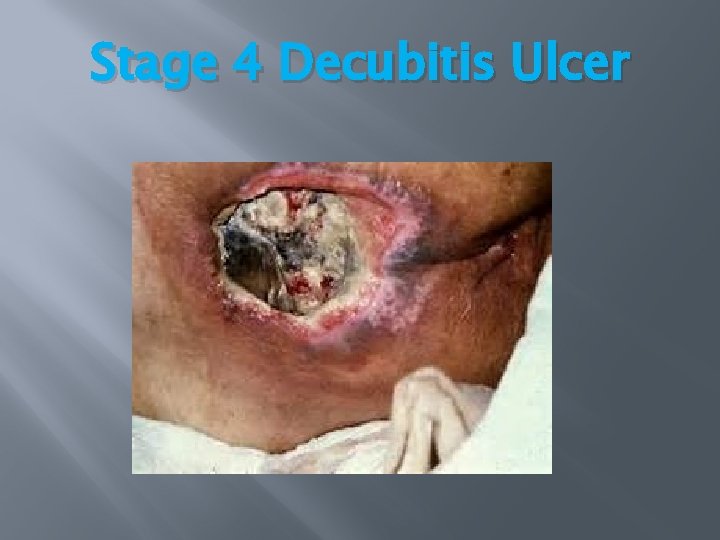
Decubitis Ulcer �Etiology: tissue injury from unrelieved pressure upon a specific area �S/S: red, inflamed, crater-like lesion usually located over bony prominence �DX: visual inspection, culturing of site for infection �TX: preventative measures such as turning and padding important; treat infection of the sore
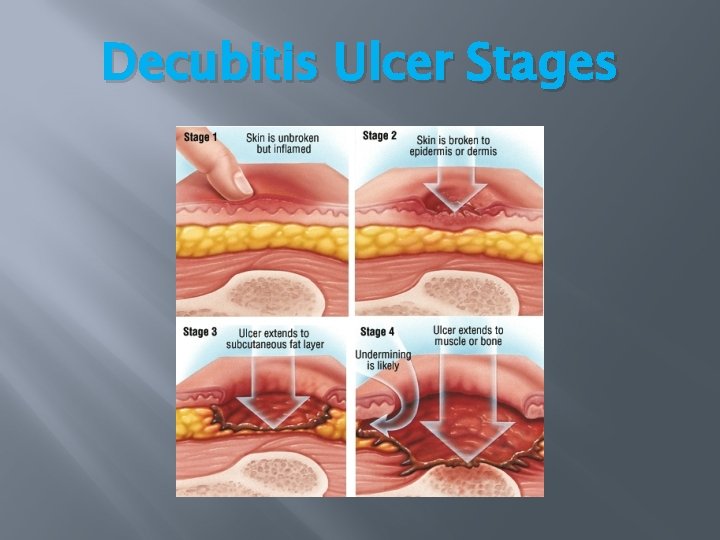
Decubitis Ulcer Stages
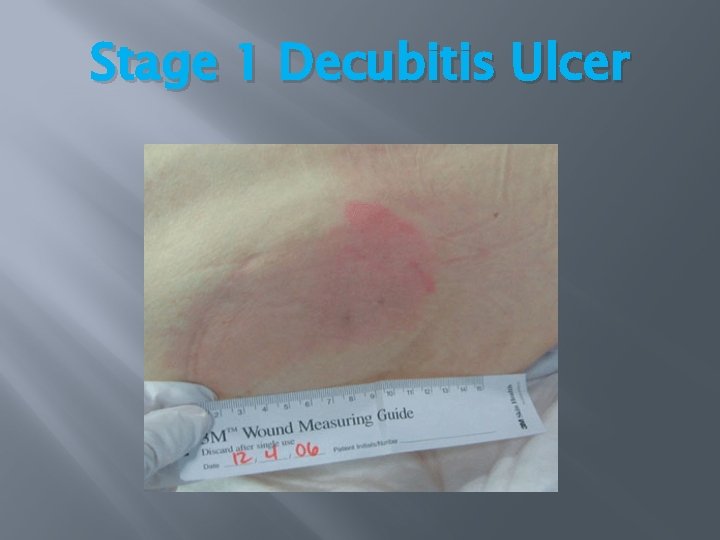
Stage 1 Decubitis Ulcer
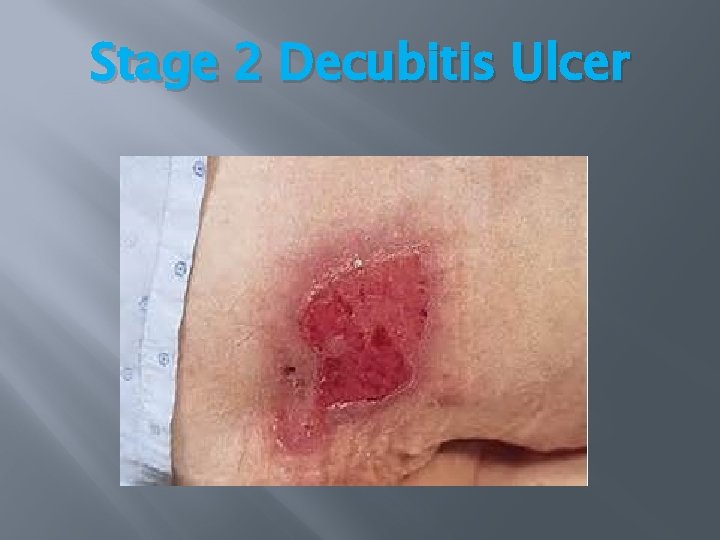
Stage 2 Decubitis Ulcer
Stage 3 Decubitis Ulcer
Stage 4 Decubitis Ulcer
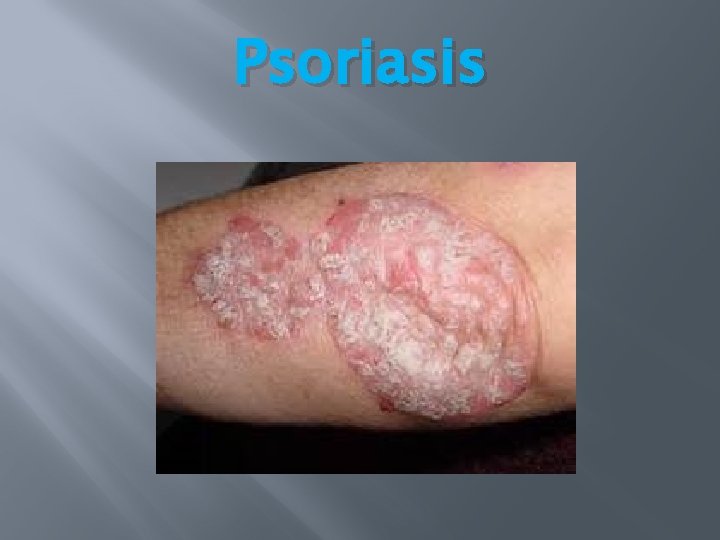
Psoriasis �Etiology: possible genetic basis with attacks triggered by emotional stress, illness, sunlight, or skin damage �S/S: red skin with silvery patches, dry cracking skin with crusting, can be painful �DX: visual exam, patient hx �TX: steroids, ultraviolet light
Psoriasis
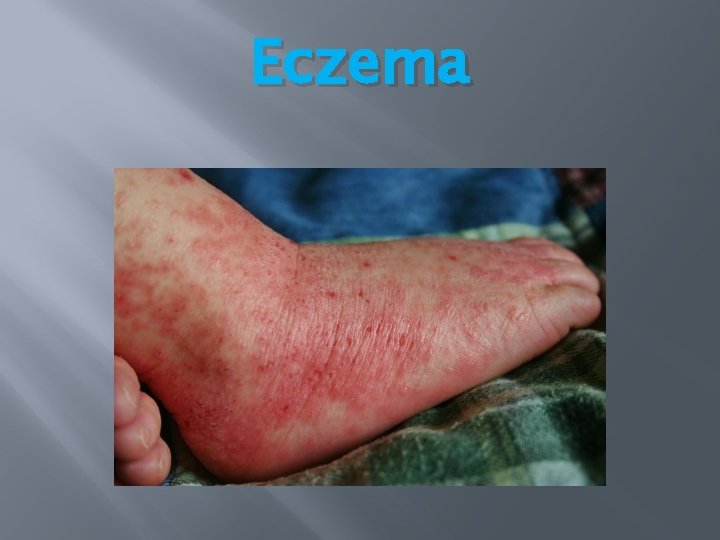
Eczema �Etiology: genetic predisposition to allergies, stress �S/S: skin inflammation, redness, vesicles, scales, crusting, pustules �DX: visual exam, pt hx �TX- no true cure: treat symptoms; eliminate allergen, reduce stress, topical cortiosteroidal creams, skin moisturizers, antihistamines
Eczema
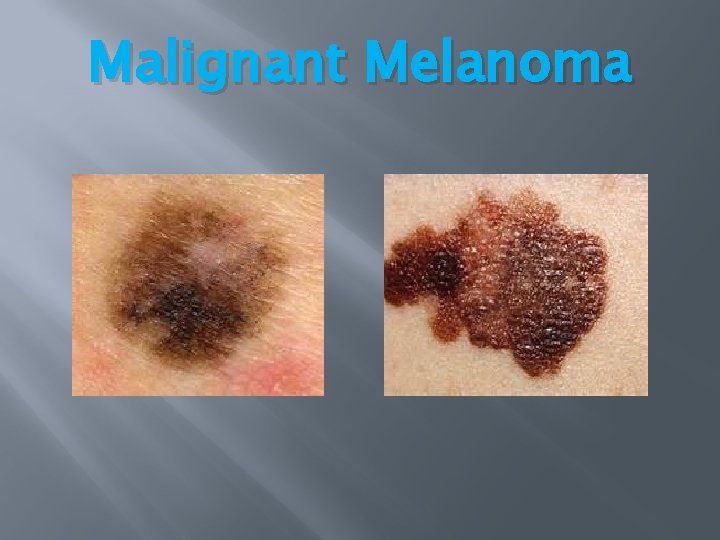
Malignant Melanoma � Malignant melanoma �Etiology: occurs in melanocytes, excessive exposure to the sun �S/S: brown or black irregular patch that appears suddenly. A color or size change in a prexisiting wart or mole may also be an indication �DX: biopsy �TX: surgical removal and the surrounding area; chemotherapy
Malignant Melanoma