
Anatomy Physiology and Disease Chapter 5 Basic Diagnostic
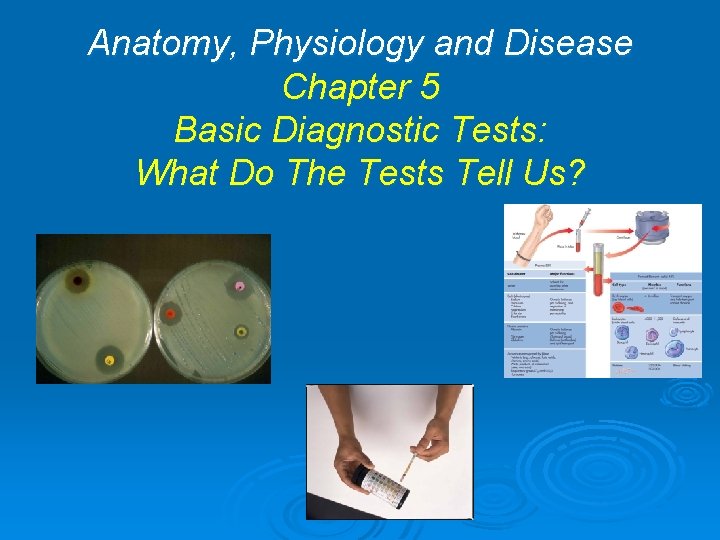
Anatomy, Physiology and Disease Chapter 5 Basic Diagnostic Tests: What Do The Tests Tell Us?
Introduction Diagnostic tests help to provide a more accurate view of patient’s overall condition and disease state including diagnosis, progression, or improvement. Ø Medical diagnostics are like advanced diagnostics for your car; tests can be used to verify the obvious or to discover where signs & symptoms are pointing. Ø
Important things to keep in mind when interpreting test results Normal values for specific tests vary slightly from lab to lab Ø Even perfectly healthy people will sometimes have abnormalities on diagnostic tests Ø Test results must be interpreted in context of patient’s overall medical history and physical exam; not every abnormal test is significant!!! Ø
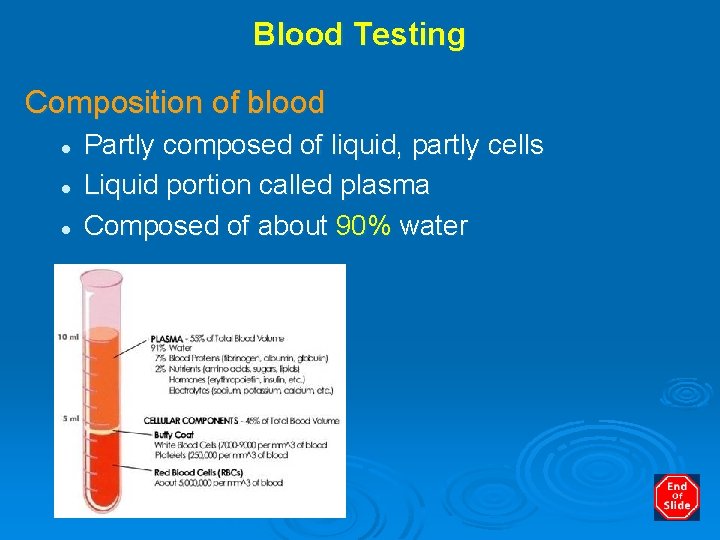
Blood Testing Composition of blood l l l Partly composed of liquid, partly cells Liquid portion called plasma Composed of about 90% water
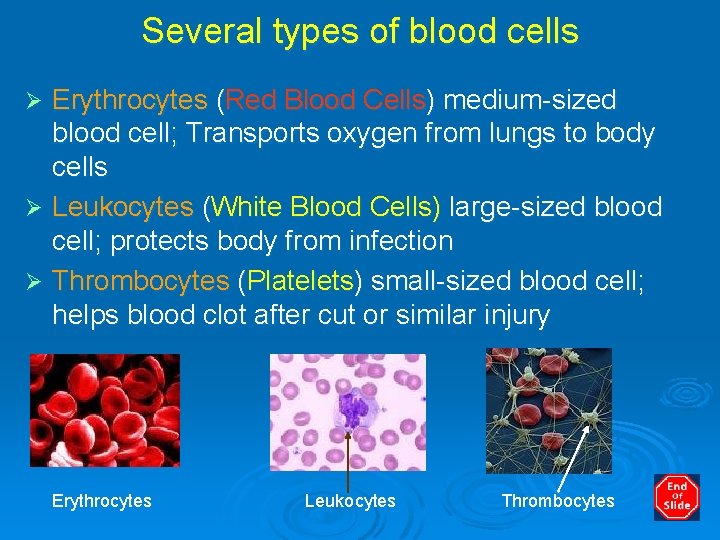
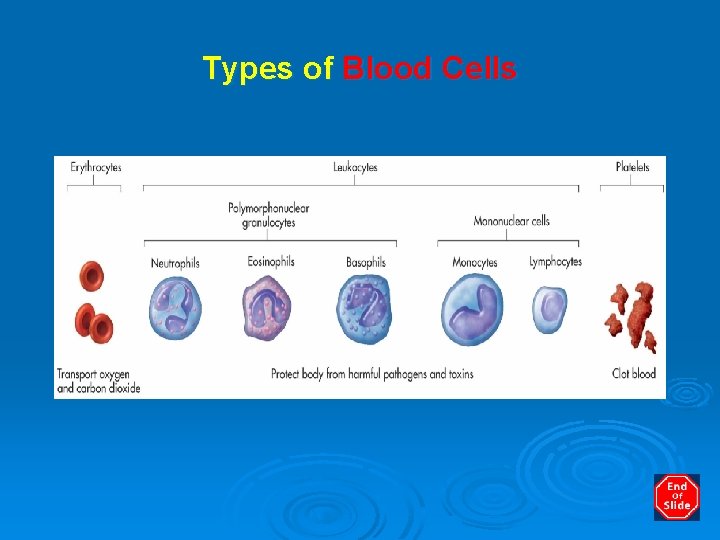
Several types of blood cells Erythrocytes (Red Blood Cells) medium-sized blood cell; Transports oxygen from lungs to body cells Ø Leukocytes (White Blood Cells) large-sized blood cell; protects body from infection Ø Thrombocytes (Platelets) small-sized blood cell; helps blood clot after cut or similar injury Ø Erythrocytes Leukocytes Thrombocytes
Types of Blood Cells
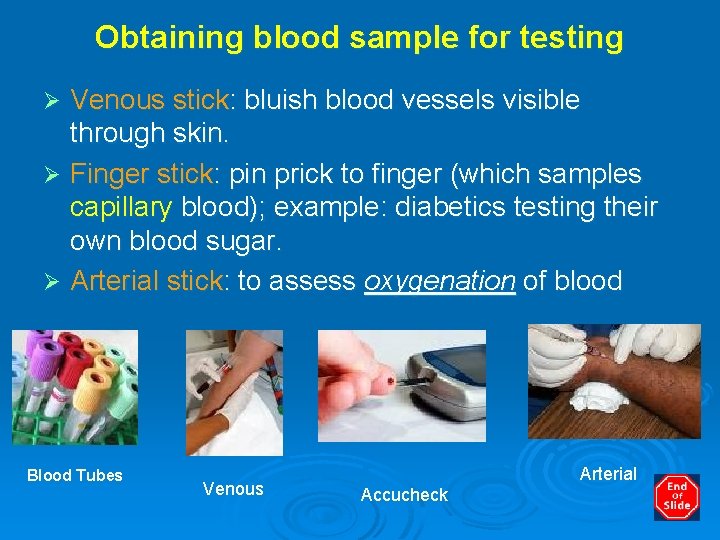
Obtaining blood sample for testing Venous stick: bluish blood vessels visible through skin. Ø Finger stick: pin prick to finger (which samples capillary blood); example: diabetics testing their own blood sugar. Ø Arterial stick: to assess oxygenation of blood Ø Blood Tubes Venous Arterial Accucheck
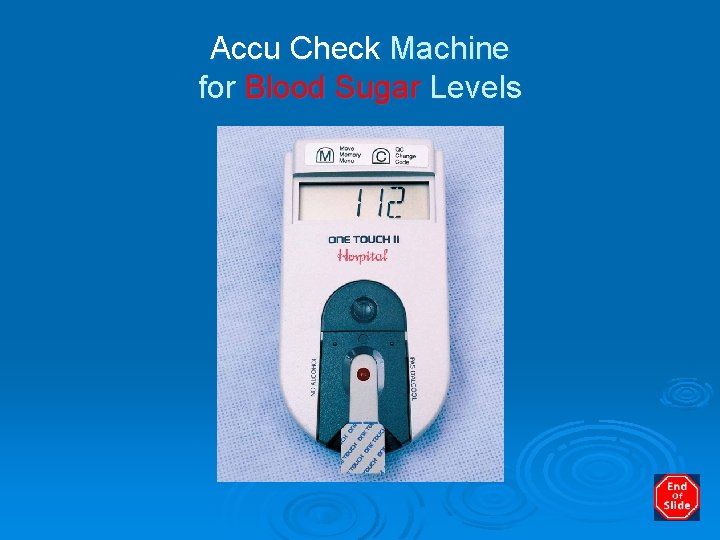
Accu Check Machine for Blood Sugar Levels
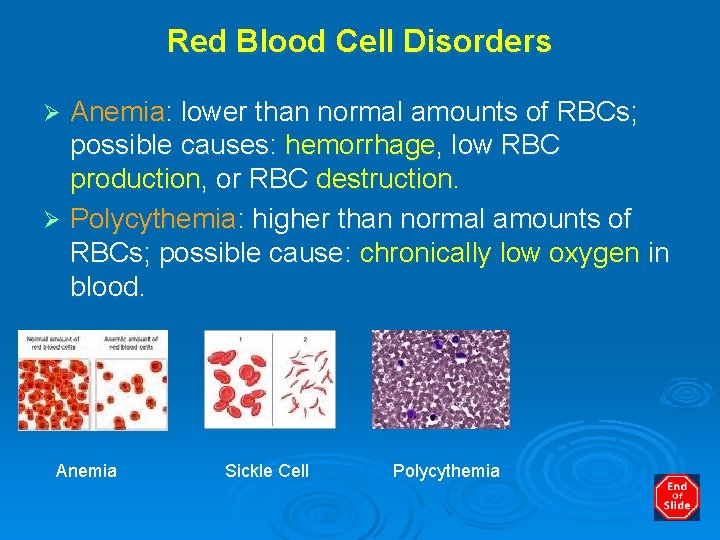
Red Blood Cell Disorders Anemia: lower than normal amounts of RBCs; possible causes: hemorrhage, low RBC production, or RBC destruction. Ø Polycythemia: higher than normal amounts of RBCs; possible cause: chronically low oxygen in blood. Ø Anemia Sickle Cell Polycythemia
White Blood Cell Disorders Leukopenia: lower than normal amounts of WBCs Ø Causes: Cancer, radiation & chemotherapy, antipsychotic medicines Ø Leukocytosis: higher than normal amounts of WBCs; possible causes: infection or leukemia Ø Causes: Massive infection Ø
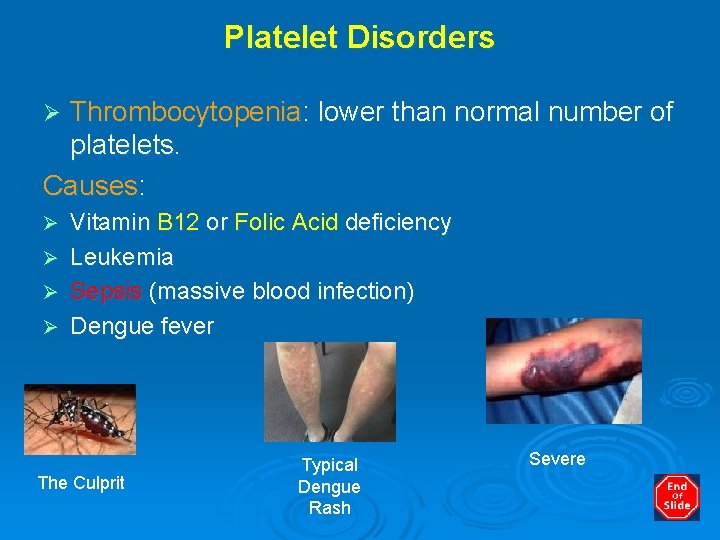
Platelet Disorders Thrombocytopenia: lower than normal number of platelets. Causes: Ø Ø Ø Vitamin B 12 or Folic Acid deficiency Leukemia Sepsis (massive blood infection) Dengue fever The Culprit Typical Dengue Rash Severe
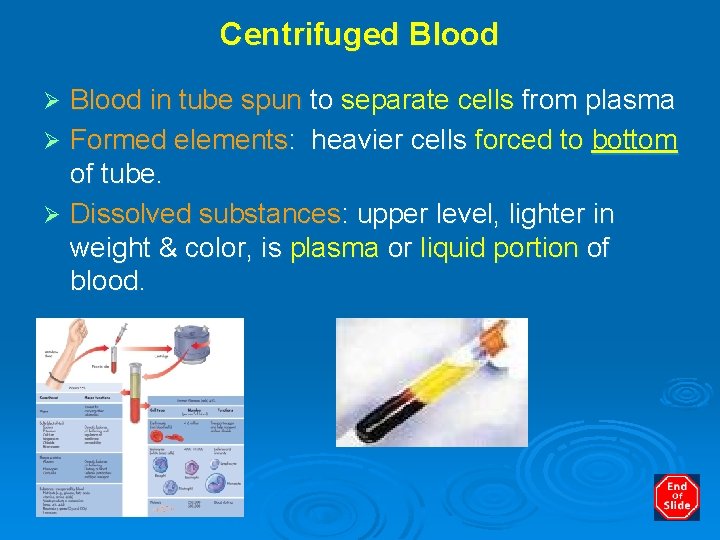
Centrifuged Blood in tube spun to separate cells from plasma Ø Formed elements: heavier cells forced to bottom of tube. Ø Dissolved substances: upper level, lighter in weight & color, is plasma or liquid portion of blood. Ø
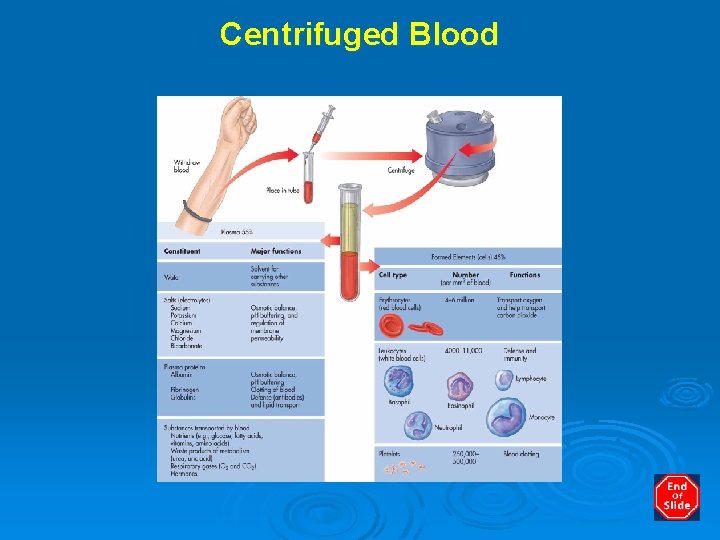
Centrifuged Blood
Blood Testing Ø Includes l l l RBC (red blood cell count) or (CBC) Hct (hematocrit) “judging blood” the proportion of blood volume that is occupied by RBCs Hgb (hemoglobin) “protein” 97% of dry content of the RBC… WBC (white blood cell count) Diff (differential white blood cell count) Platelet count
Red Blood Cell Count(RBCs) Quantity of RBCs in 1 cubic mm Normal values: men: 4. 6 -6. 2; women: 4. 2 -5. 4 Decreased numbers Caused by 1. blood loss 2. dietary insufficiency (iron, folic acid, certain vitamins) 3. decreased RBC Production 4. increased RBC destruction
Red Blood Cell Count Polycythemia: too many RBCs…. 1. dehydration, diarrhea (severe) 2. high altitude 3. over production by bone marrow 4. Smoking 5. Adrenal gland illnesses
Hematocrit (Hct) Determines what percent of the blood is composed of RBCs. Ø Normal values: men: 40 -54%; women: 38 -47% Ø Higher than normal Hct 1. dehydration 2. shock Ø Lower than normal Hct 1. anemia 2. hemorrhage, 3. hemolytic reactions (blood cell destruction – such as what occurs when incompatible blood is transfused)
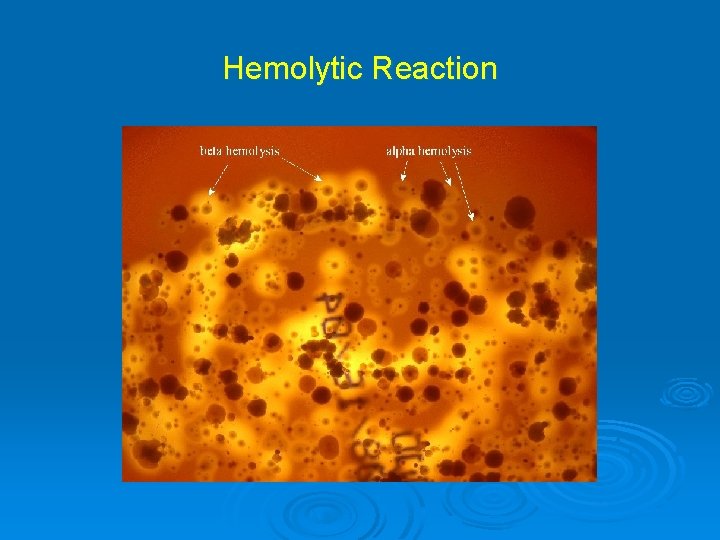
Hemolytic Reaction
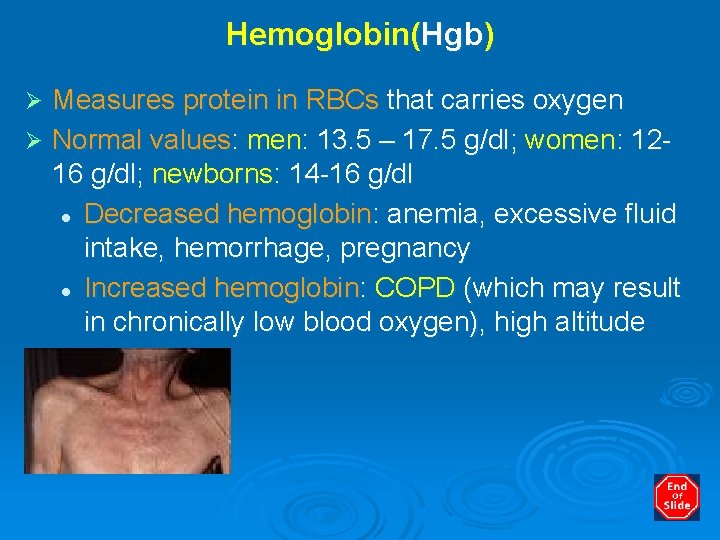
Hemoglobin(Hgb) Measures protein in RBCs that carries oxygen Ø Normal values: men: 13. 5 – 17. 5 g/dl; women: 1216 g/dl; newborns: 14 -16 g/dl l Decreased hemoglobin: anemia, excessive fluid intake, hemorrhage, pregnancy l Increased hemoglobin: COPD (which may result in chronically low blood oxygen), high altitude Ø
White Blood Cell Count (WBCs) Measures total number of white blood cells 103/mm 3 Ø Normal values: men: 4. 5 -11; women: 4. 5 -11 l (leukopenia): Decreased WBCs diagnosed with WBC < 4, 000 • May be caused by alcoholism, viral infections, any chronic infection where body is so “worn out” that it cannot continue to produce enough WBCs • “panic value, ” WBC<500 is requires “STAT” attention. Ø
White Blood Cell Count (WBCs) con’t Ø (leukocytosis) Increased WBCs l Diagnosed with WBC > 10, 000 l Usually results from an increase in just one type of WBC l May be caused by infection, malignancy/leukemia, steroid therapy, hemorrhage, coma, stress (pain/excitement), menstruation.
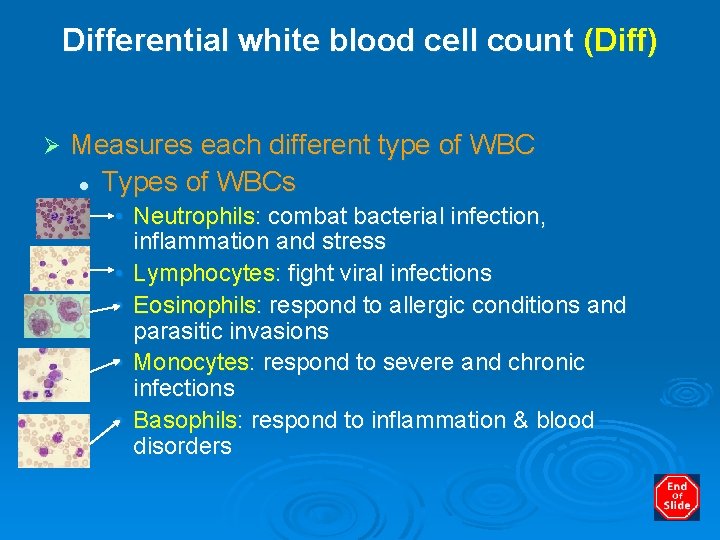
Differential white blood cell count (Diff) Ø Measures each different type of WBC l Types of WBCs • Neutrophils: combat bacterial infection, inflammation and stress • Lymphocytes: fight viral infections • Eosinophils: respond to allergic conditions and parasitic invasions • Monocytes: respond to severe and chronic infections • Basophils: respond to inflammation & blood disorders
Platelet count Determines number of platelets in blood Ø Normal values: 150, 000 -350, 000 / mm 3 Ø Thrombocytopenia: decreased platelets may be caused by blood transfusions, bone marrow lesions, cancer chemotherapy, infections/pneumonia, toxic drug effects Ø Thrombocytosis: Increased platelets may be caused by splenectomy, heart disease, high altitude living, iron deficiency, trauma, tuberculosis, cancer
PT (Prothrombin Time, Pro. Time) Timed test that measures blood’s ability to clot through use of the protein prothrombin produced by the liver. Ø Prothrombin converts to thrombin Ø Body needs Vit K to produce prothrombin Ø Normal values: 10 -14 sec Ø
PT (Prothrombin Time, Pro. Time) con’t Increased Pro. Time: suggests blood will not clot as quickly as normal; ex: patients on anticoagulant therapy such as Coumadin Ø Decreased Pro. Time: suggests increase in blood’s ability to clot; may result from excessive consumption of green, leafy vegetables (which alters vitamin K levels, and therefore alters prothrombin levels or too much Vit K. Ø Decreased Pro. Time may result in blood clots Ø
PTT (Partial Thromboplastin Time) Timed test that measures blood’s ability to clot through intrinsic thromboplastin system Ø Used to monitor administration of Heparin Ø Normal values: 30 -45 sec Ø Increased PTT: suggests blood will not clot as quickly as normal; ex: pts on anti-coagulant therapy such as heparin. Ø
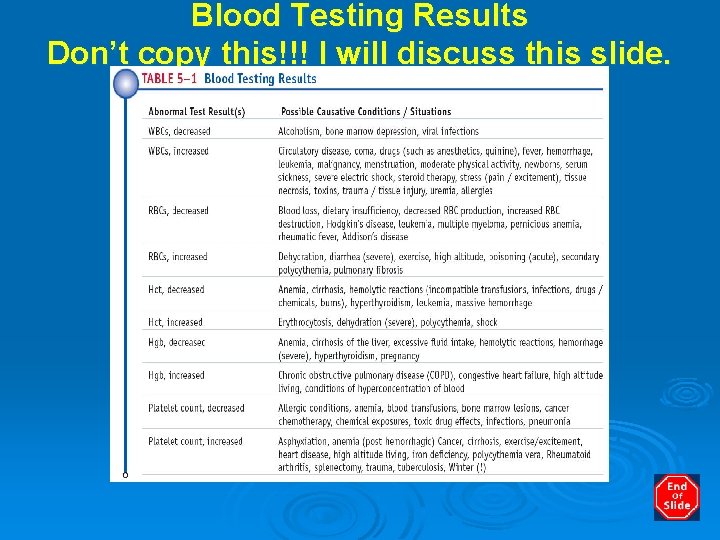
Blood Testing Results Don’t copy this!!! I will discuss this slide.
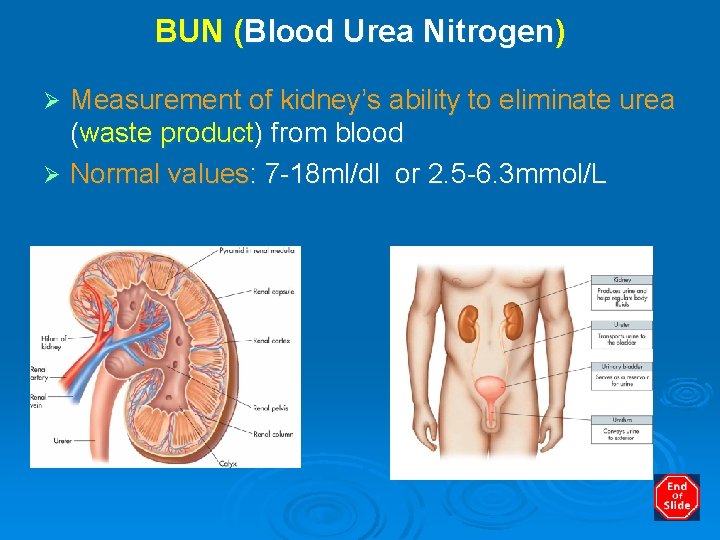
BUN (Blood Urea Nitrogen) Measurement of kidney’s ability to eliminate urea (waste product) from blood Ø Normal values: 7 -18 ml/dl or 2. 5 -6. 3 mmol/L Ø
BUN (Blood Urea Nitrogen) (cont’d) Ø Increased BUN l l May be caused by renal function impairment, non-renal causes (acute MI, chronic gout, diabetes, excessive protein consumption Signs and symptoms of increased BUN: confusion, convulsions, Hypertension
Decreased BUN Ø 1. 2. 3. 4. Ø May be caused by low protein diet/malnutrition, fluid overload, liver failure, nephrotic syndrome S/S of edema
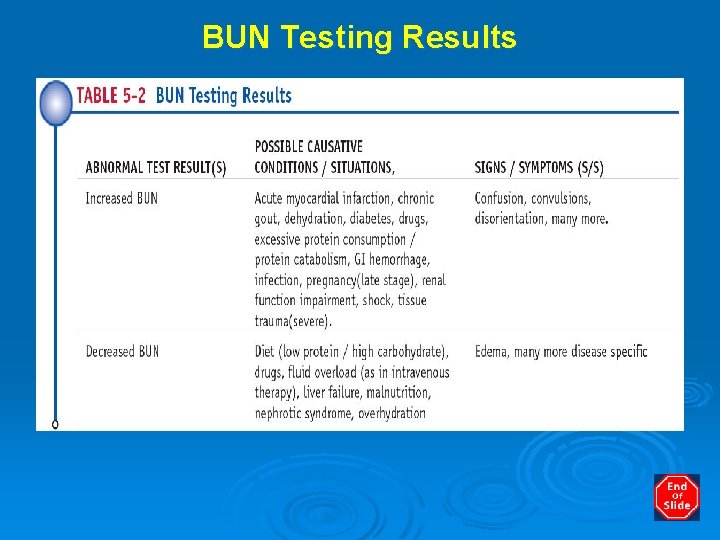
BUN Testing Results
Electrolytes Crucial for proper cellular function throughout body; body must maintain normal concentrations of various electrolytes Ø Amount of water in body (too much or too little) can affect electrolyte concentrations Ø
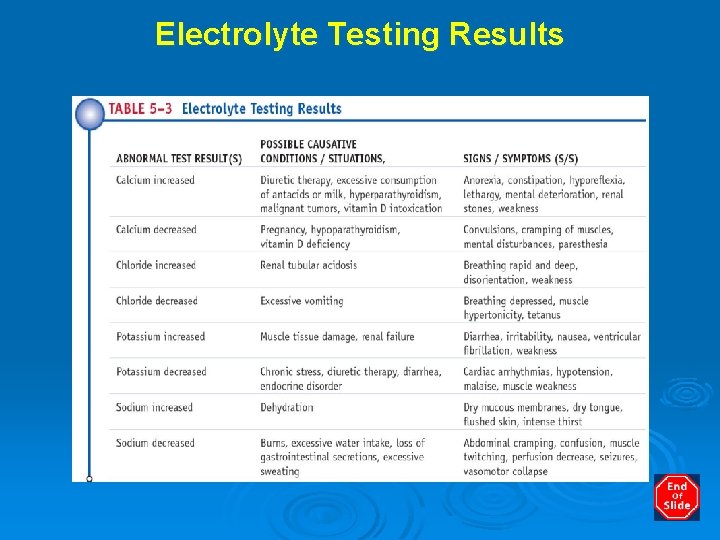
Electrolyte Testing Results
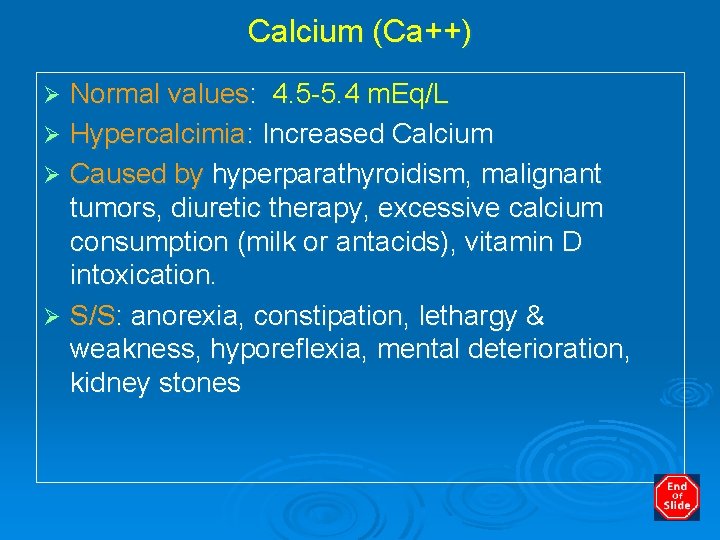
Calcium (Ca++) Normal values: 4. 5 -5. 4 m. Eq/L Ø Hypercalcimia: Increased Calcium Ø Caused by hyperparathyroidism, malignant tumors, diuretic therapy, excessive calcium consumption (milk or antacids), vitamin D intoxication. Ø S/S: anorexia, constipation, lethargy & weakness, hyporeflexia, mental deterioration, kidney stones Ø
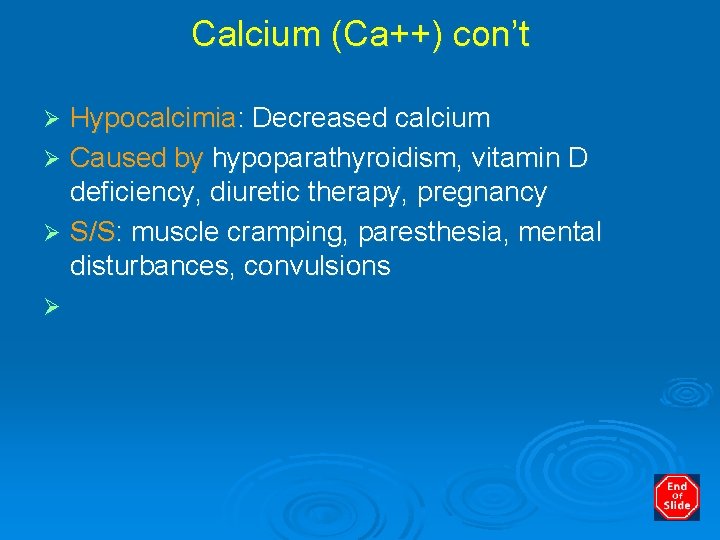
Calcium (Ca++) con’t Hypocalcimia: Decreased calcium Ø Caused by hypoparathyroidism, vitamin D deficiency, diuretic therapy, pregnancy Ø S/S: muscle cramping, paresthesia, mental disturbances, convulsions Ø Ø
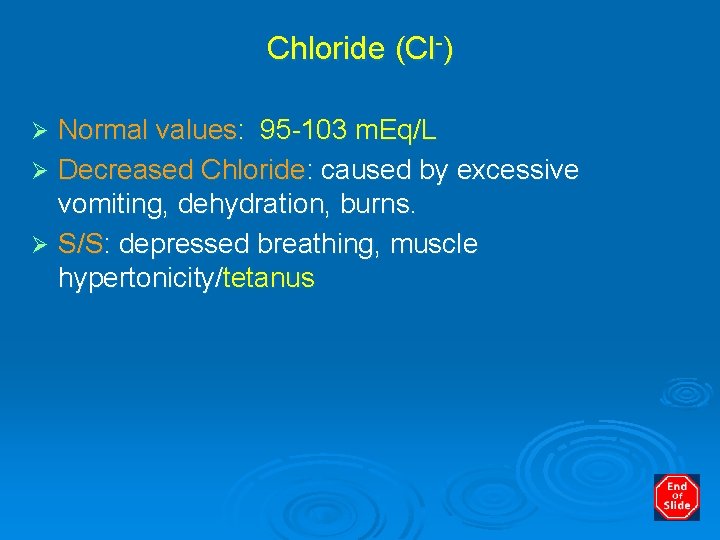
Chloride (Cl-) Normal values: 95 -103 m. Eq/L Ø Decreased Chloride: caused by excessive vomiting, dehydration, burns. Ø S/S: depressed breathing, muscle hypertonicity/tetanus Ø
Potassium (K+) Normal Values: 3. 8 -5. 0 m. Eq/L Ø Hyperkalemia-High potassium: caused by muscle tissue damage, renal failure Ø S/S: diarrhea/nausea, ventricular fibrillation (heart dysrrhythmias), irritability, weakness. confusion. Ø
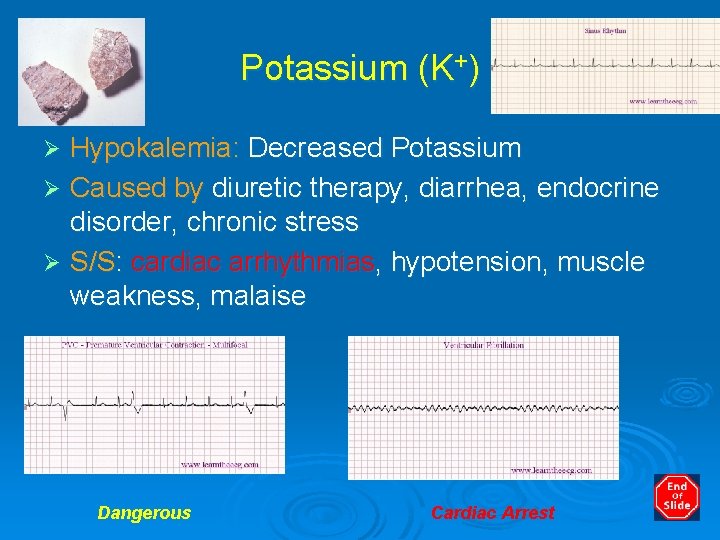
Potassium (K+) Hypokalemia: Decreased Potassium Ø Caused by diuretic therapy, diarrhea, endocrine disorder, chronic stress Ø S/S: cardiac arrhythmias, hypotension, muscle weakness, malaise Ø Dangerous Cardiac Arrest
Sodium (Na+) Normal values: 136 -142 m. Eq/L Ø Hypernatremia: Increased sodium: Ø Caused by dehydration Ø S/S: dry mucous membranes & tongue, intense thirst, flushed skin Ø
Sodium (Na+) con’t Hyponatremia: Low Sodium Level Ø Etiology: excessive water intake, loss of GI secretions, excessive sweating, burns Ø S/S: abdominal cramps, muscle twitching, confusion, seizures, vasomotor collapse Ø
Enzymes Complex proteins that facilitate chemical changes Ø Normally found inside body cells Ø May be released into bloodstream following cell injury or death; example: cardiac enzymes are released into bloodstream when cardiac tissue dies during heart attack Ø
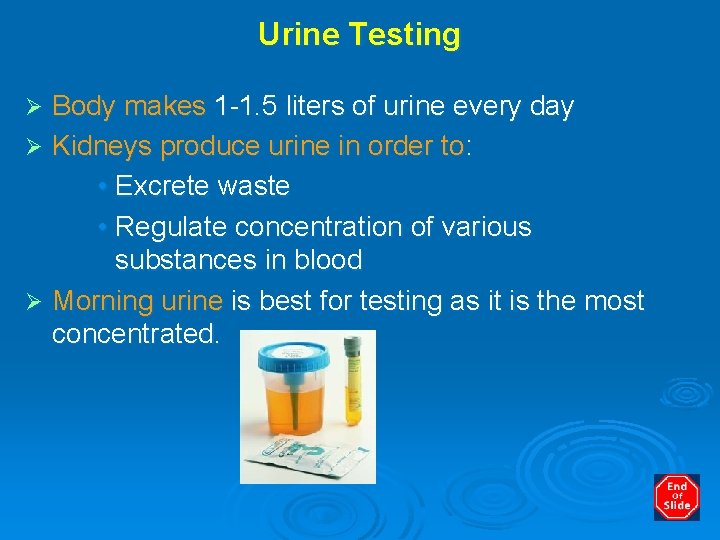
Urine Testing Body makes 1 -1. 5 liters of urine every day Ø Kidneys produce urine in order to: • Excrete waste • Regulate concentration of various substances in blood Ø Morning urine is best for testing as it is the most concentrated. Ø
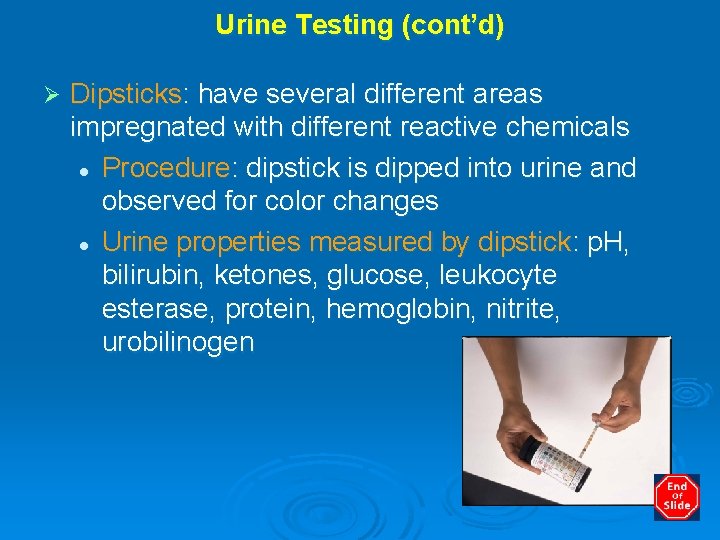
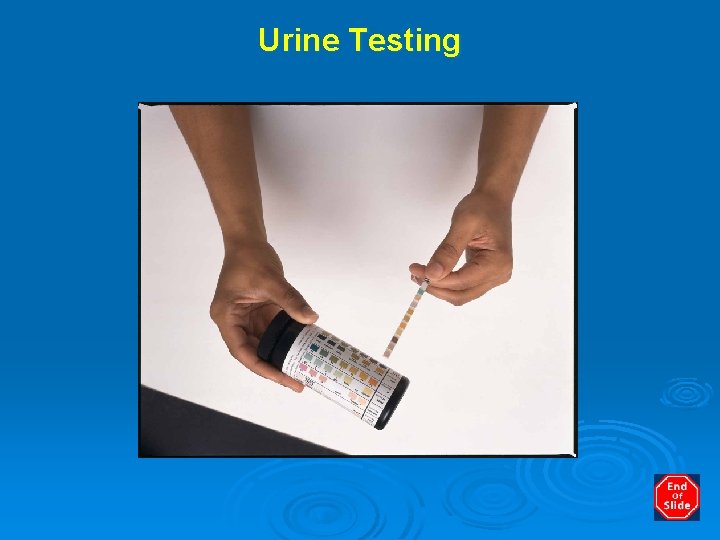
Urine Testing (cont’d) Ø Dipsticks: have several different areas impregnated with different reactive chemicals l Procedure: dipstick is dipped into urine and observed for color changes l Urine properties measured by dipstick: p. H, bilirubin, ketones, glucose, leukocyte esterase, protein, hemoglobin, nitrite, urobilinogen
Urine Testing
Specific gravity Ø Measurement of: 1. Kidney’s ability to concentrate urine Hydration of a patient Amount of solids mixed in urine 2. 3. Ø Ø Normal values: 1. 010 -1. 025 Concentrated urine = 1. 025 -1. 030+; suggests dehydration Ø Diluted urine = 1. 001 -1. 010; suggests overhydration or diuretic use
Factors that can interfere with urine test results Ø Ø Use of diuretics Hypercalcemia Potassium deficiency Liver, Bone & diseases
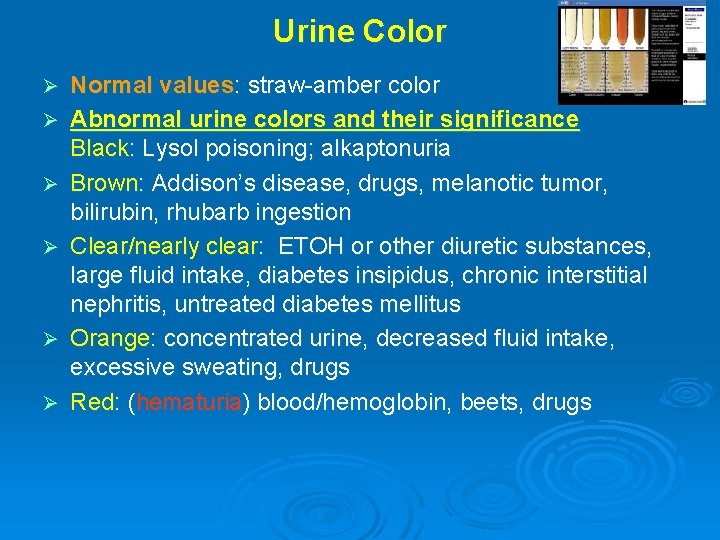
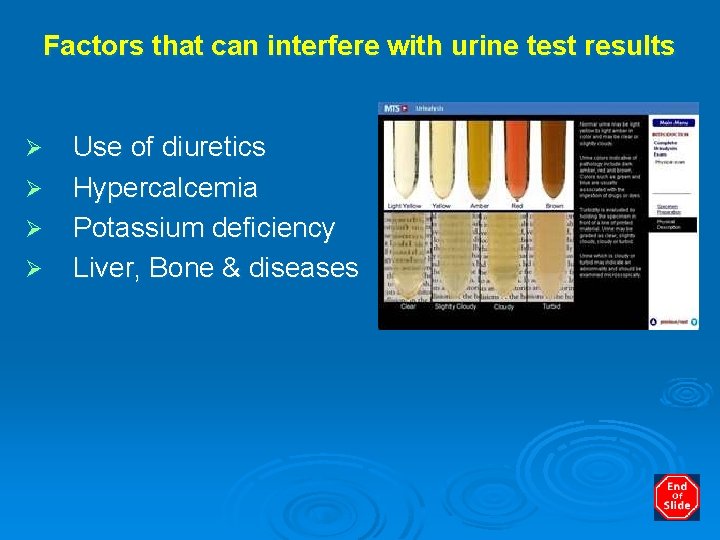
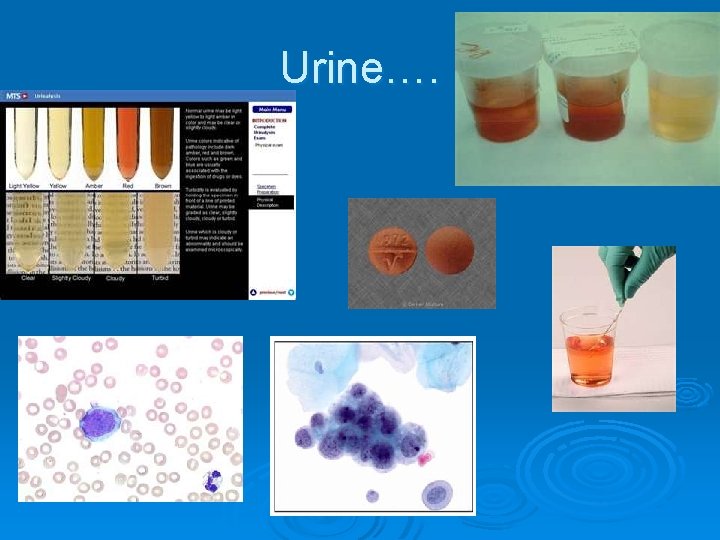
Urine Color Ø Ø Ø Normal values: straw-amber color Abnormal urine colors and their significance Black: Lysol poisoning; alkaptonuria Brown: Addison’s disease, drugs, melanotic tumor, bilirubin, rhubarb ingestion Clear/nearly clear: ETOH or other diuretic substances, large fluid intake, diabetes insipidus, chronic interstitial nephritis, untreated diabetes mellitus Orange: concentrated urine, decreased fluid intake, excessive sweating, drugs Red: (hematuria) blood/hemoglobin, beets, drugs
Urine….
Urine odor Normal urine has distinct, but non-offensive aroma Ø Unusual odors can suggest specific problems Ø • • • Ammonia scent: stale urine with bacterial activity General sweet smell: diabetic ketosis Maple syrup scent: particular metabolic disorder
Urine p. H (acidity) Controlled by kidneys to maintain homeostatic p. H in body Ø Normal values: p. H of 4. 6 -8 (with average p. H of 6) Ø Excessively acidic urine may be due to respiratory acidosis (retention of CO 2 in lungs causes extra acid in blood, which kidneys try to eliminate), diarrhea/dehydration, high protein diets, starvation Ø Excessively alkaline urine may be due to hyperventilation (body blows off too much CO 2 causing deficient acid in blood; kidneys try to correct blood p. H by eliminating less acid into urine), chronic renal failure, renal tubular acidosis, urinary tract infection (UTI), salicylate (aspirin) intoxication Ø
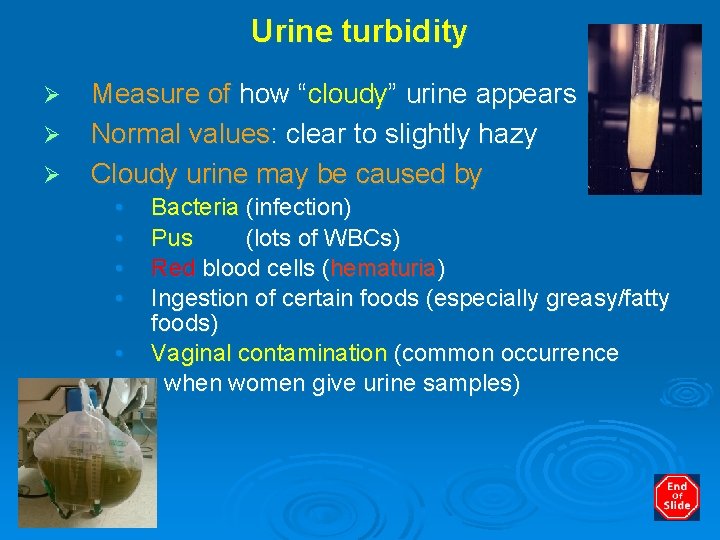
Urine turbidity Ø Ø Ø Measure of how “cloudy” urine appears Normal values: clear to slightly hazy Cloudy urine may be caused by • • • Bacteria (infection) Pus (lots of WBCs) Red blood cells (hematuria) Ingestion of certain foods (especially greasy/fatty foods) Vaginal contamination (common occurrence when women give urine samples)
Urine Sugar Glycosuria or Glucosuria Caused by: 1. un-treated or inadequately treated DM 2. emotional stress Ø 3. early Renal Failure
Urine protein (proteinuria) Normal Values: 50 -80 mg /24 hours Ø Causes of Proteinuria: Ø • activities: bathing or swimming in cold water, eating large amounts of protein, violent/intense exercise, severe emotional stress • Renal disease: kidney stones, nephritis, nephrosis, polycystic kidney, tuberculosis or cancer of the kidney
Urine ketone bodies (acetone) Ketones released as result of metabolism of fatty acids; takes place when body runs out of carbohydrates to burn Ø Normal values: negative Ø Causes of Ketonuria: DM, anorexia/starvation/ fasting, diarrhea/prolonged vomiting, fever, drugs (i. e. insulin) Ø
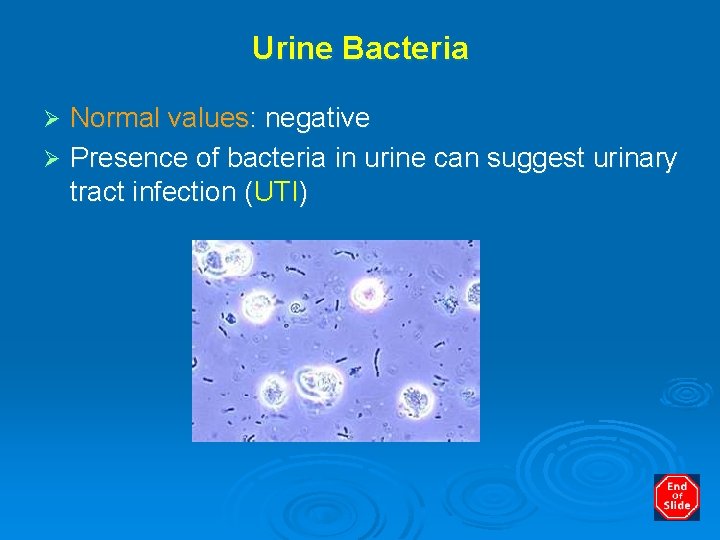
Urine Bacteria Normal values: negative Ø Presence of bacteria in urine can suggest urinary tract infection (UTI) Ø
Fecal Matter Normal stool: 100 -200 g/day, dark brown Ø Color Abnormalities: • Yellow/yellow-green: breast fed infant, bowel sterilization due to antibiotics, severe diarrhea • Green: severe diarrhea, antibiotic therapy, ingestion of chlorophyll-rich vegetables • Tan/clay: common bile duct blockage, pancreatic insufficiency, excessive fat intake • Black: upper GI bleeding, ingestion of iron, high meat diet, ingestion of charcoal or bismuth • Red: bleeding from lower GI tract; if red streaking on outer surface of stool, consider hemorrhoids or anal pathology; if blood mixed through stool, consider problem higher up GI tract Ø
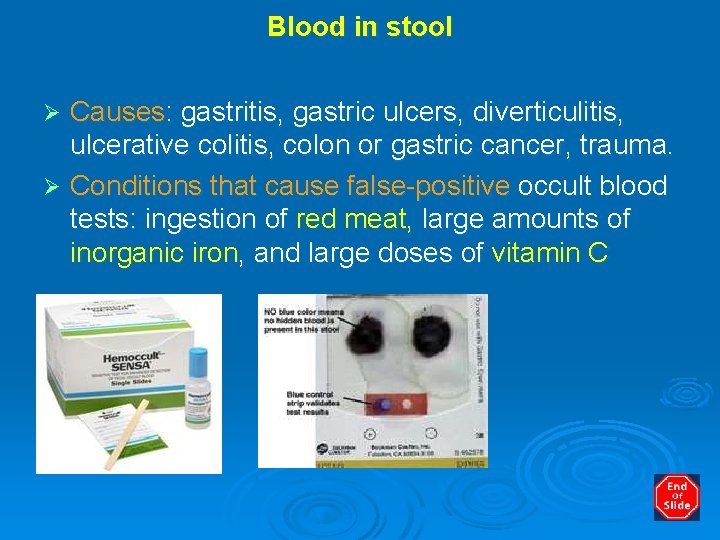
Blood in stool Causes: gastritis, gastric ulcers, diverticulitis, ulcerative colitis, colon or gastric cancer, trauma. Ø Conditions that cause false-positive occult blood tests: ingestion of red meat, large amounts of inorganic iron, and large doses of vitamin C Ø
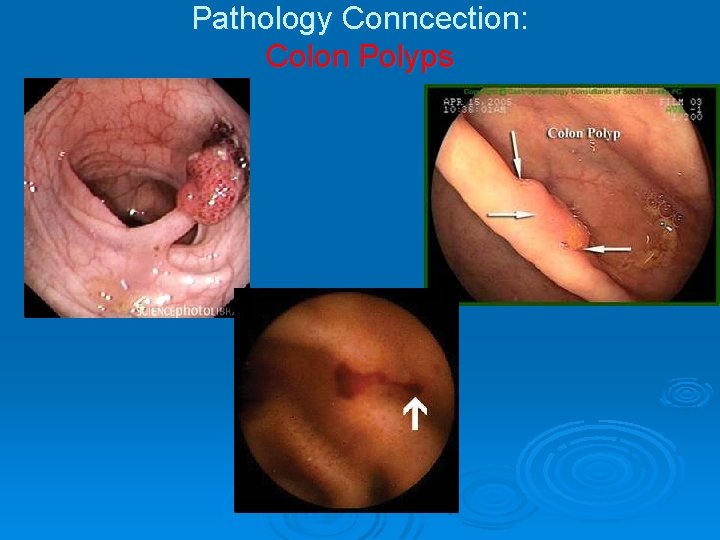
Pathology Conncection: Colon Polyps
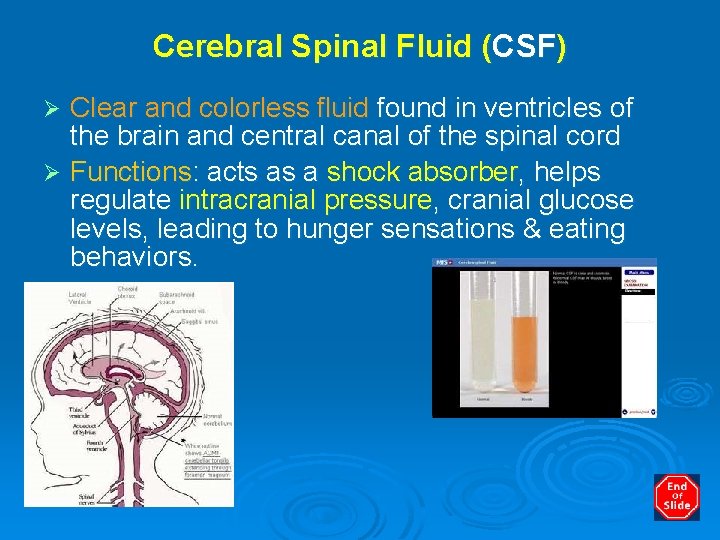
Cerebral Spinal Fluid (CSF) Clear and colorless fluid found in ventricles of the brain and central canal of the spinal cord Ø Functions: acts as a shock absorber, helps regulate intracranial pressure, cranial glucose levels, leading to hunger sensations & eating behaviors. Ø
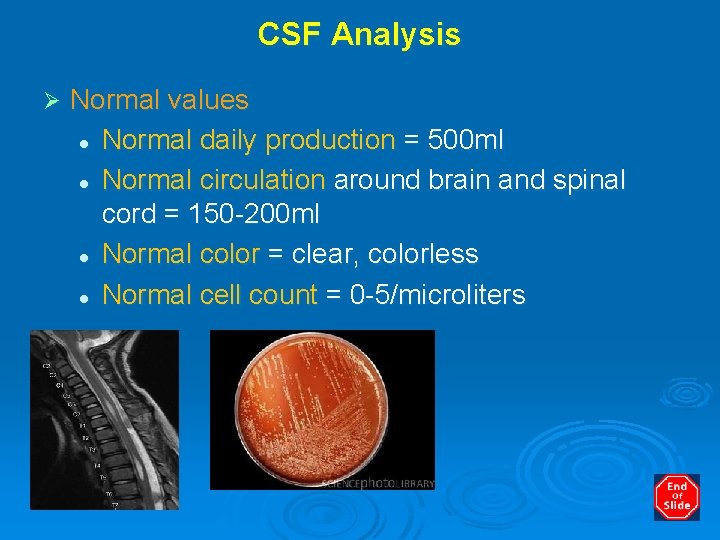
CSF Analysis Ø Normal values l Normal daily production = 500 ml l Normal circulation around brain and spinal cord = 150 -200 ml l Normal color = clear, colorless l Normal cell count = 0 -5/microliters
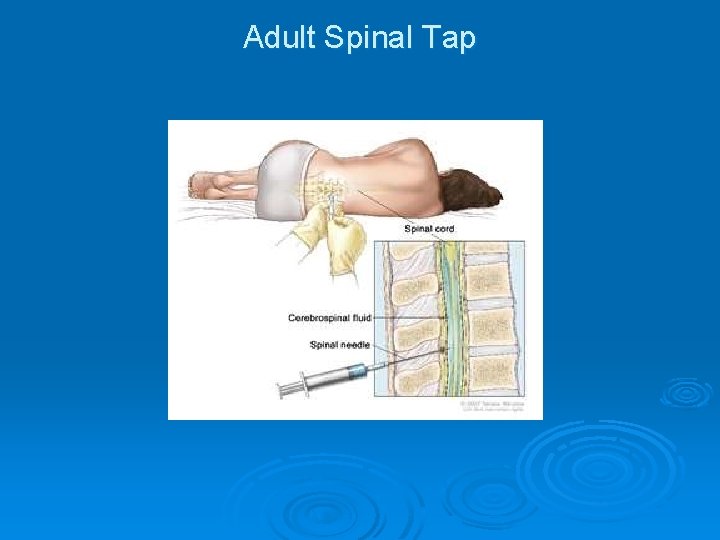
Adult Spinal Tap
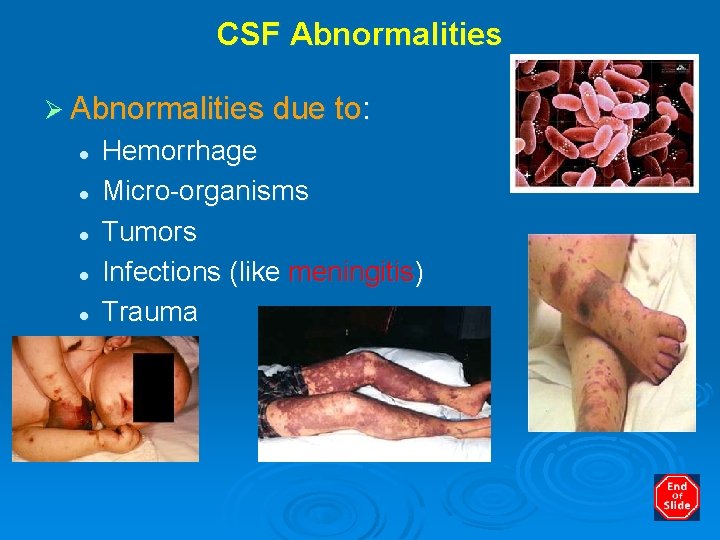
CSF Abnormalities Ø Abnormalities due to: l l l Hemorrhage Micro-organisms Tumors Infections (like meningitis) Trauma
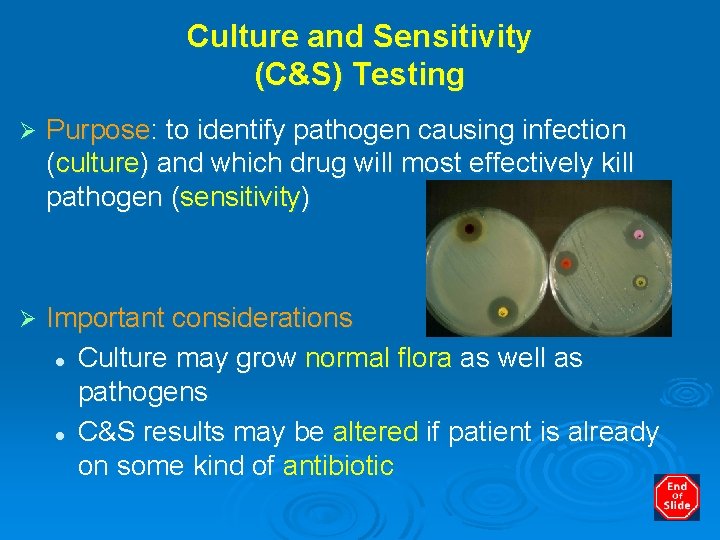
Culture and Sensitivity (C&S) Testing Ø Purpose: to identify pathogen causing infection (culture) and which drug will most effectively kill pathogen (sensitivity) Ø Important considerations l Culture may grow normal flora as well as pathogens l C&S results may be altered if patient is already on some kind of antibiotic
- Slides: 63