
Anatomy of the Spinal Cord Structure of the




- Slides: 24
Anatomy of the Spinal Cord Structure of the spinal cord v Tracts of the spinal cord v Spinal cord syndromes Won Taek Lee, M. D. , Ph. D. ﺩکﺘﺮ ﻣﻬﺮﺍﻥ ﻣﺮﺍﺩی ﺭﺯیﺪﻧﺖ ﺟﺮﺍﺣی ﻣﻐﺰ ﻭ ﺍﻋﺼﺎﺏ : ﺗﻨﻈیﻢ ﻭ ﺑﺎﺯﻧگﺮی
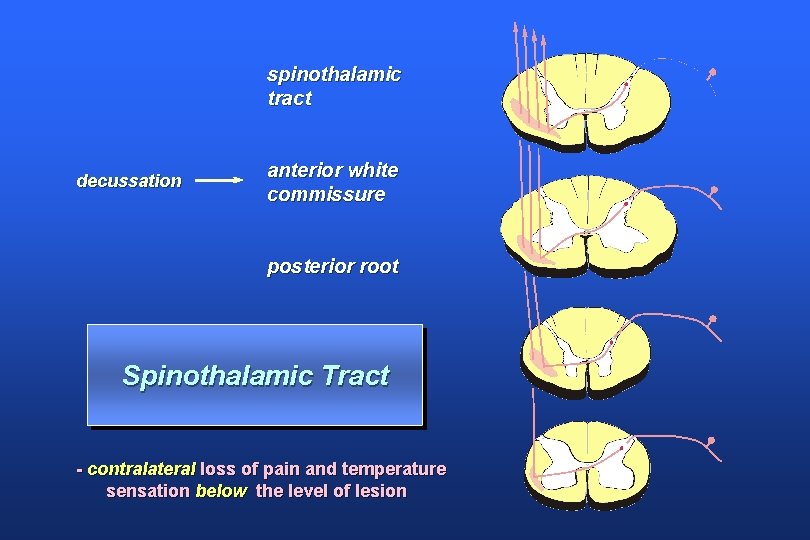
spinothalamic tract decussation anterior white commissure posterior root Spinothalamic Tract - contralateral loss of pain and temperature sensation below the level of lesion
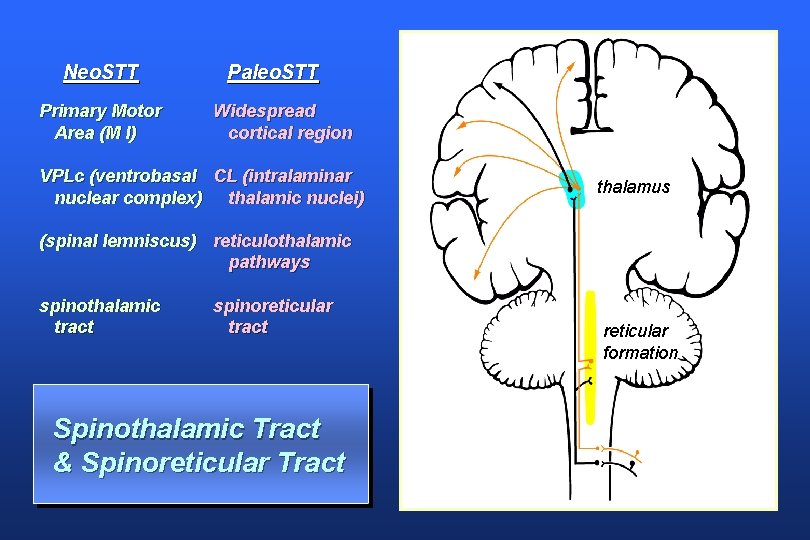
Neo. STT Primary Motor Area (M I) Paleo. STT Widespread cortical region VPLc (ventrobasal CL (intralaminar nuclear complex) thalamic nuclei) thalamus (spinal lemniscus) reticulothalamic pathways spinothalamic tract spinoreticular tract Spinothalamic Tract & Spinoreticular Tract reticular formation
Comparison of Fast and Slow Pain ------ Spinothalamic Tract Fast Pain Sharp, pricking Group III (A ) fiber Short latency Well localized Short duration Less emotional Not blocked by morphine Neospinothalamic Tract Slow Pain Dull, burning Group IV (C) fiber Slower onset Diffuse Long duration Emotional, autonomic response Blocked by morphine Paleospinothalamic Tract
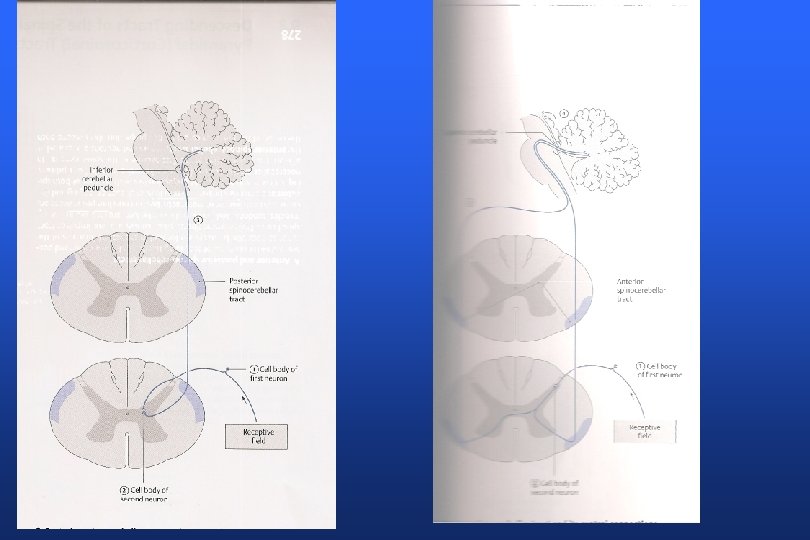
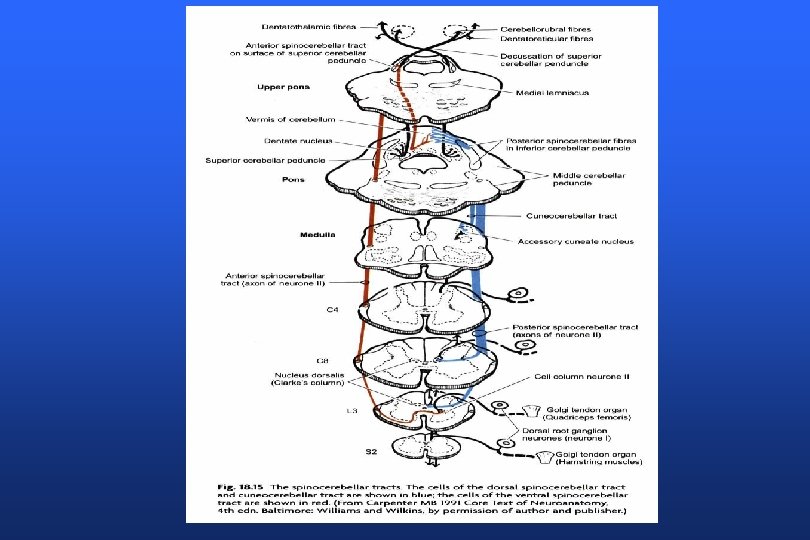
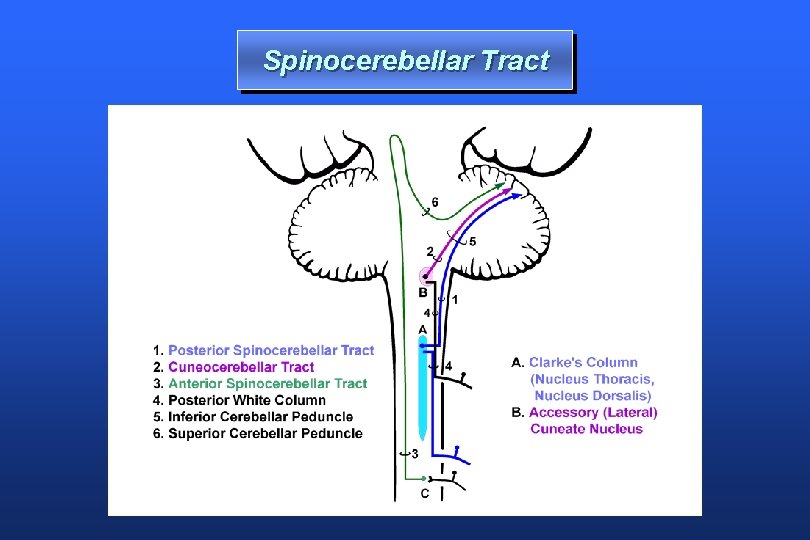
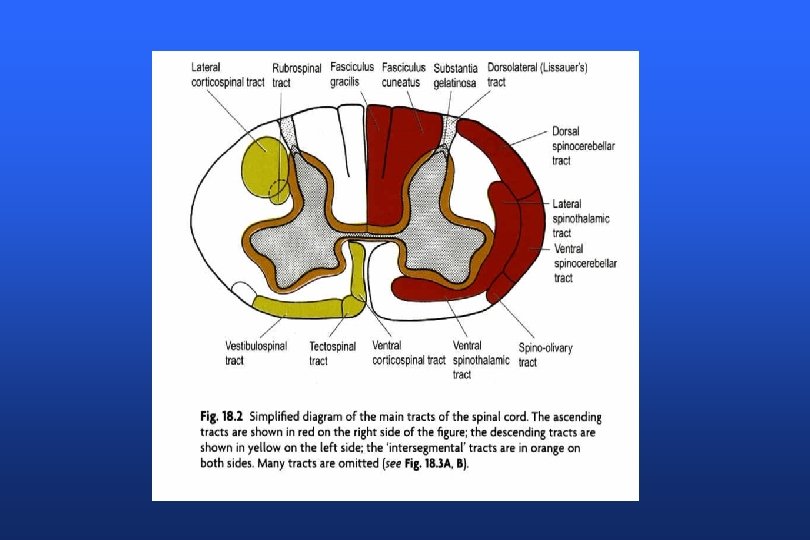
Spinal Cord Ascending Tracts Spinocerebellar Tract Modality: Unconscious Proprioception Receptor: Muscle spindle, Golgi tendon organ Ist Neuron: Dorsal Root Ganglion (Spinal Ganglion) Posterior Root , [Posterior Column] 2 nd Neuron: 1. Clarke’s column Posterior Spinocerebellar Tract 2. Accessory Cuneate Nucleus Cuneocerebellar Tract 3. Posterior Horn Anterior Spinocerebellar r Tract Termination: Cerebellar Cortex
Anterior SCbll. T Posterior SCbll. T (superior cerebellar peduncle) Inferior cerebellar peduncle anterior spinocerebellar tract cuneocerebellar tract (upper body) posterior spinocerebellar tract anterior white commissure posterior white column Clarke’s column posterior root Spinocerebellar Tract Inferior cerebellar peduncle posterior white column posterior root
Spinocerebellar Tract
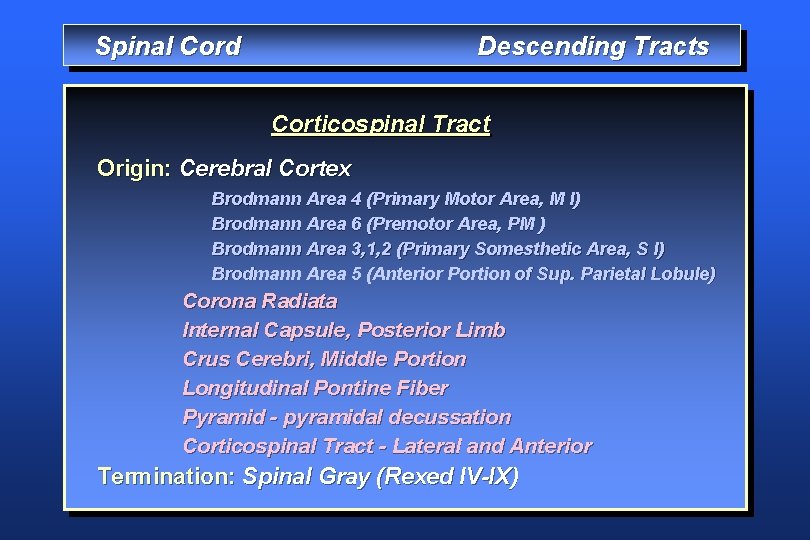
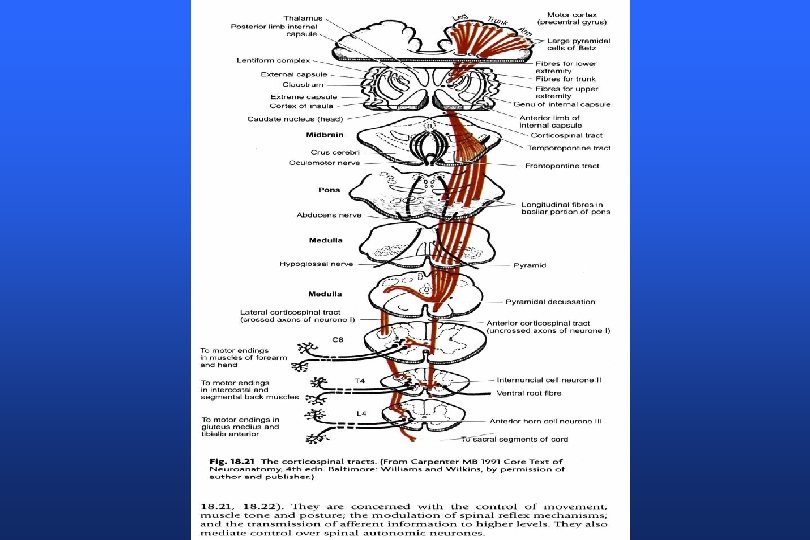
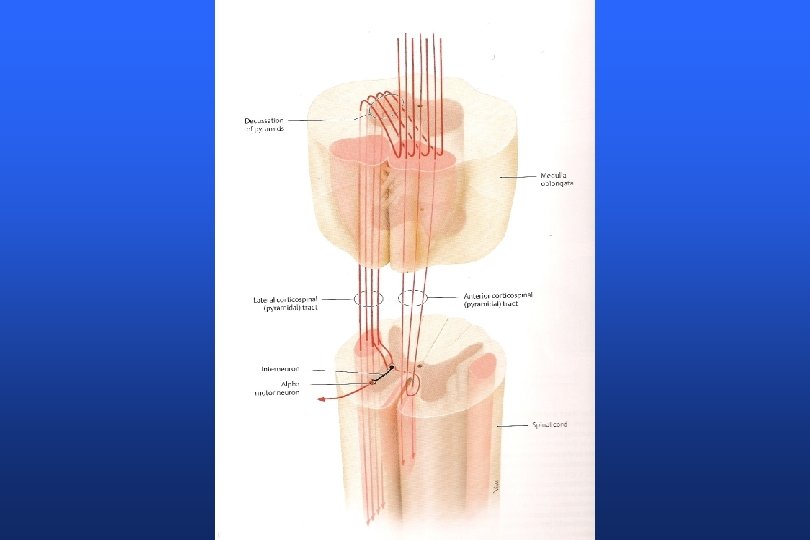
Spinal Cord Descending Tracts Corticospinal Tract Origin: Cerebral Cortex Brodmann Area 4 (Primary Motor Area, M I) Brodmann Area 6 (Premotor Area, PM ) Brodmann Area 3, 1, 2 (Primary Somesthetic Area, S I) Brodmann Area 5 (Anterior Portion of Sup. Parietal Lobule) Corona Radiata lnternal Capsule, Posterior Limb Crus Cerebri, Middle Portion Longitudinal Pontine Fiber Pyramid - pyramidal decussation Corticospinal Tract - Lateral and Anterior Termination: Spinal Gray (Rexed IV-IX)
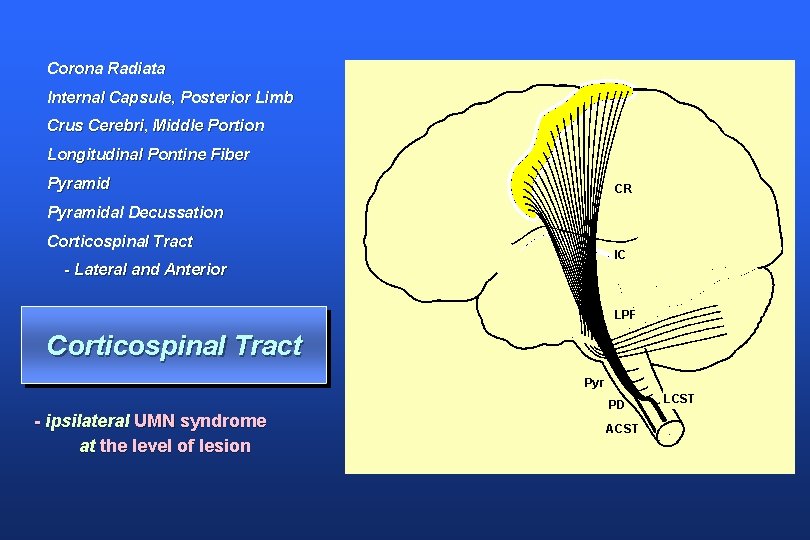
Corona Radiata lnternal Capsule, Posterior Limb Crus Cerebri, Middle Portion Longitudinal Pontine Fiber Pyramid CR Pyramidal Decussation Corticospinal Tract IC - Lateral and Anterior LPF Corticospinal Tract Pyr - ipsilateral UMN syndrome at the level of lesion PD ACST LCST
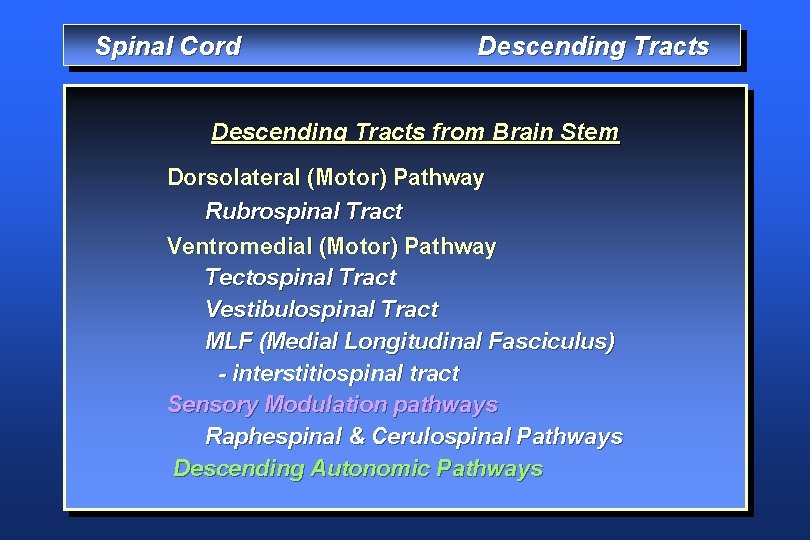
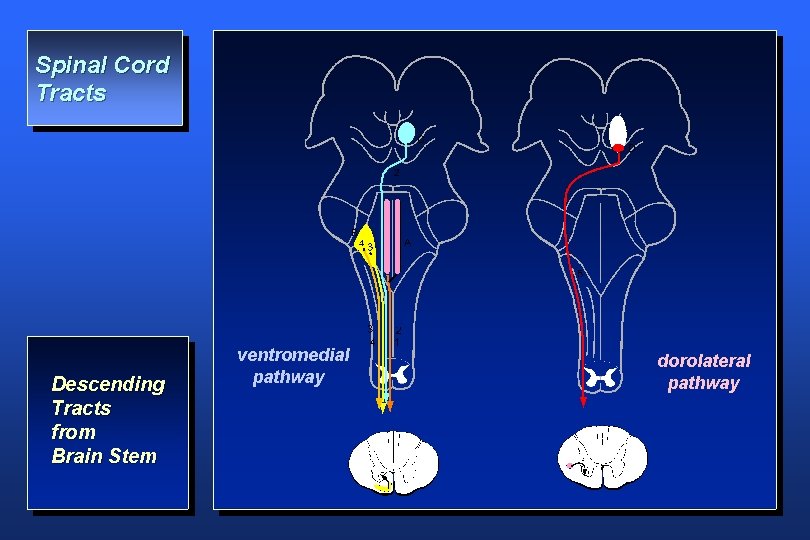
Spinal Cord Descending Tracts from Brain Stem Dorsolateral (Motor) Pathway Rubrospinal Tract Ventromedial (Motor) Pathway Tectospinal Tract Vestibulospinal Tract MLF (Medial Longitudinal Fasciculus) - interstitiospinal tract Sensory Modulation pathways Raphespinal & Cerulospinal Pathways Descending Autonomic Pathways
Spinal Cord Tracts Descending Tracts from Brain Stem ventromedial pathway dorolateral pathway
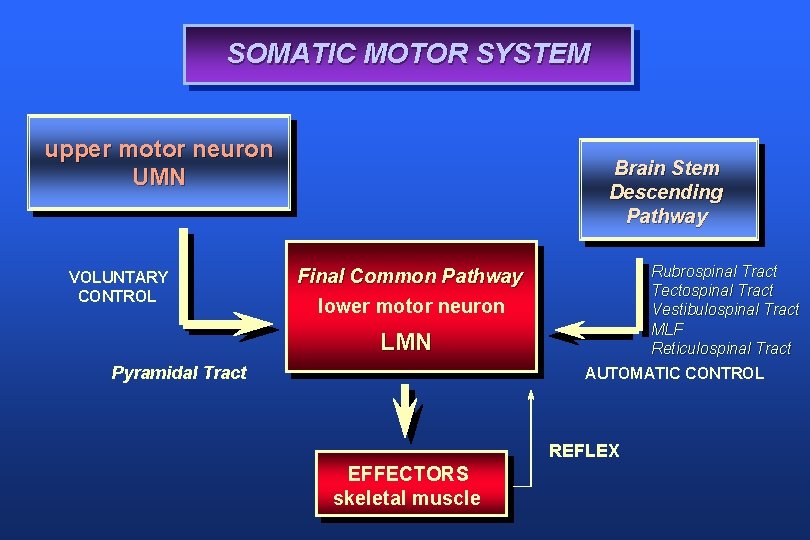
SOMATIC MOTOR SYSTEM upper motor neuron UMN VOLUNTARY CONTROL Brain Stem Descending Pathway Rubrospinal Tract Tectospinal Tract Vestibulospinal Tract MLF Reticulospinal Tract Final Common Pathway lower motor neuron LMN Pyramidal Tract AUTOMATIC CONTROL REFLEX EFFECTORS skeletal muscle
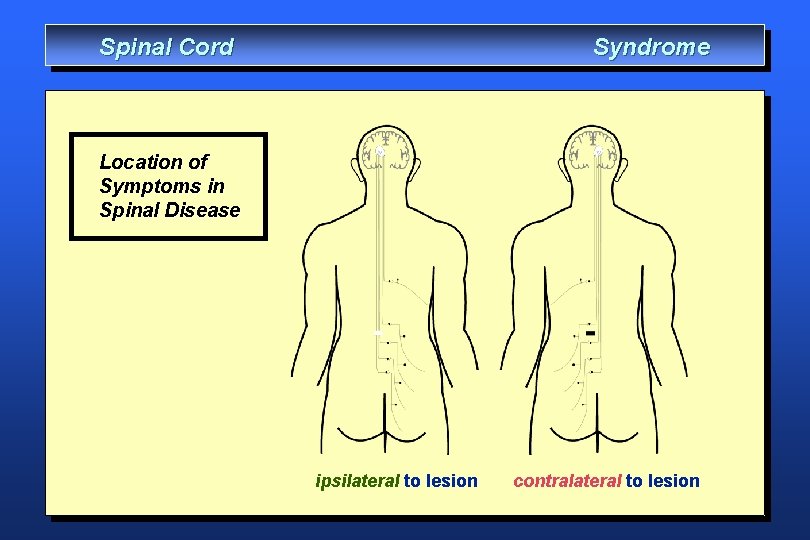
Spinal Cord Syndrome Location of Symptoms in Spinal Disease ipsilateral to lesion contralateral to lesion
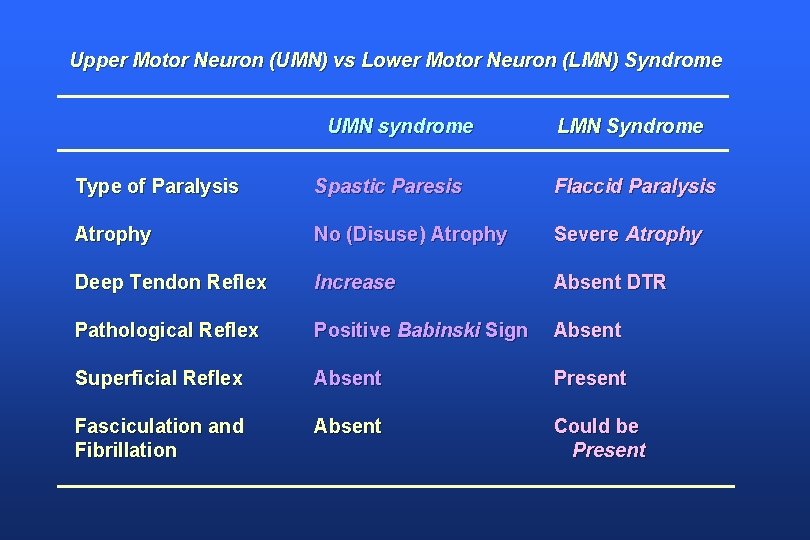
Upper Motor Neuron (UMN) vs Lower Motor Neuron (LMN) Syndrome UMN syndrome LMN Syndrome Type of Paralysis Spastic Paresis Flaccid Paralysis Atrophy No (Disuse) Atrophy Severe Atrophy Deep Tendon Reflex Increase Absent DTR Pathological Reflex Positive Babinski Sign Absent Superficial Reflex Absent Present Fasciculation and Fibrillation Absent Could be Present
Spinal Cord Syndrome Syringomyelia, Hematomyelia Lesion - central canal of spinal cord - gradually extended to peripheral part of the cord Symptom - initial symptom is bilateral loss of pain (compression of anterior white commissure) - variety of symptoms appear according to the lesion extended from central canal
Spinal Cord Syndrome Syringomyelia - Initial Symptoms
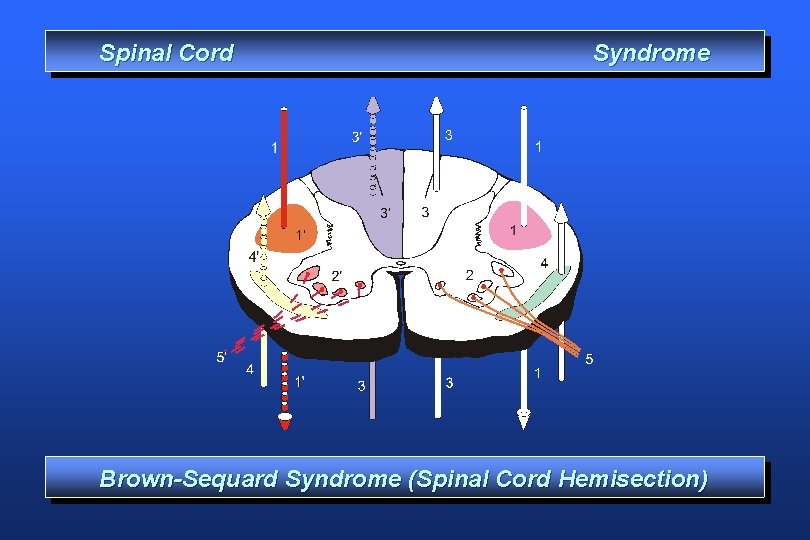
Spinal Cord Syndrome Brown-Sequard syndrome (spinal cord hemisection) Major Symptoms 1. ipsilateral UMN syndrome below the level of lesion 2. ipsilateral LMN syndrome at the level of lesion 3. ipsilateral loss of discriminative touch sensation and conscious proprioception below the level of lesion (posterior white column lesion) 4. contralateral loss of pain and temperature sensation below the level of lesion (spinothalamic tract lesion)
Spinal Cord Syndrome Brown-Sequard Syndrome (Spinal Cord Hemisection)