
Anatomy of the Nervous System Marie Stella L
- Slides: 17
Anatomy of the Nervous System Marie Stella L. Karaan, M. D.
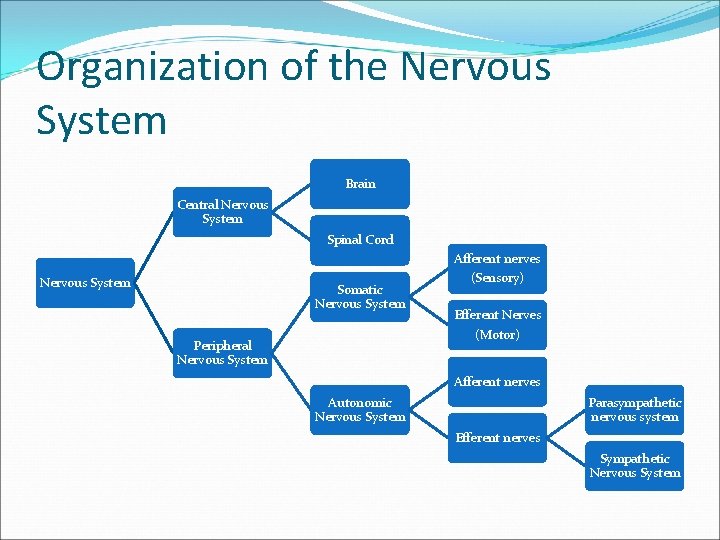
Organization of the Nervous System Brain Central Nervous System Spinal Cord Nervous System Somatic Nervous System Peripheral Nervous System Afferent nerves (Sensory) Efferent Nerves (Motor) Afferent nerves Autonomic Nervous System Parasympathetic nervous system Efferent nerves Sympathetic Nervous System
Organization of the Nervous System �Central Nervous System �Located within the skull and spine � Brain � Spinal cord
Organization of the Nervous System �Peripheral Nervous System �Outside the skull and spine � Somatic nervous system � Afferent nerves – carry sensory signals fromt eh skin, skeletal muscles, joints, eyes, ears � Efferent nerves – carry motor signals from the skeletal muscels and nerves � Autonomic nervous system � Regulates the body’s internal environment � Afferent nerves carry sensory signals from internal organs to the CNs � Efferent nerves carry motor signals from the CNS to the internal organs
Autonomic Nervous System �Sympathetic Nerves �Project from the CNS in the lumbar (small of the back) and thoracic (chest area) regions of the spinal cord �Stimulate , organize and mobilize energy resources in threatening situations �Changes initiated are indicative of psychological arousal �Fight and Flight �Parasympathetic Nerves �Project from the brain and sacral (lower back) region of the spinal cord �Act to conserve energy �Changes initiated are indicative of psychological relaxation �Digestion, Defecation, Rest and Excretion
Autonomic Nervous System � 2 -stage neural paths �First neuron from CNS to ganglia � 2 nd neuron from ganglia to internal organs �First neuron synapses with 2 nd neuron in ganglia �Sympathetic ganglia located beside the vertebral column far from their target organs �Parasympathetic ganglia near the organs �Each autonomic target organ receives opposing sympathetic and parasympathetic input
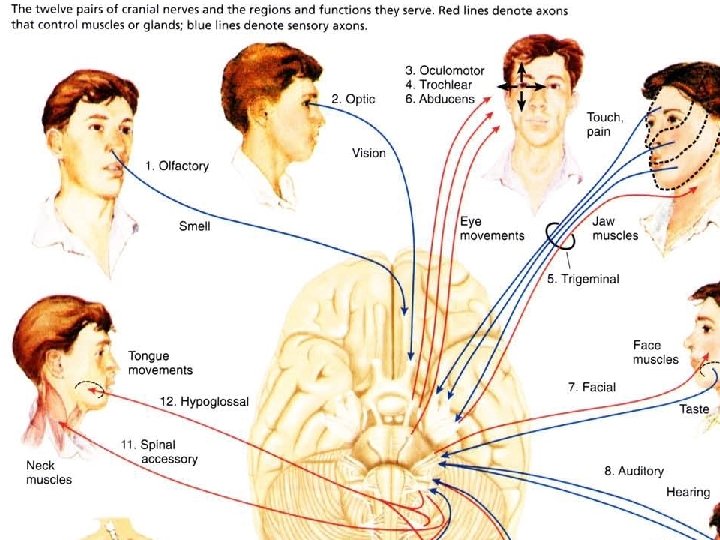
Peripheral Nervous System �Most of the nerves of the peripheral nervous system project from the spinal cord � 12 pairs of cranial nerves project form the brain �Purely sensory nerves – I olfactory (smell), II optic (vision), VIII vestibulocochlear (balance and hearing) �Others are either purely motor or mixtures of motor and sensory fibers
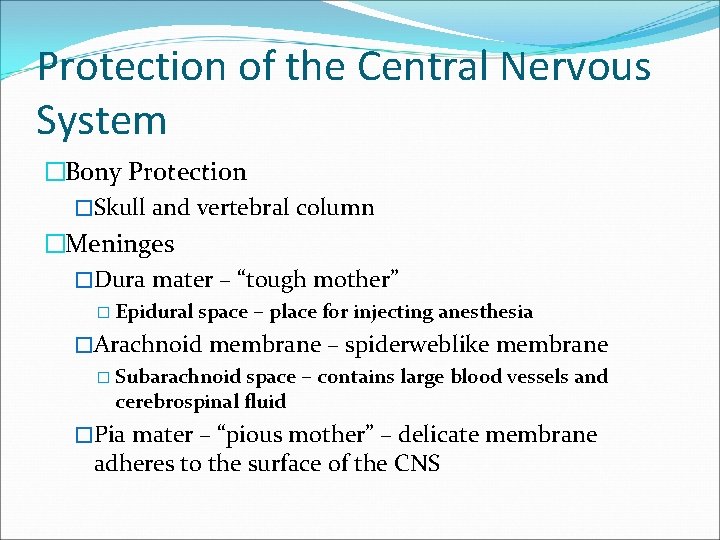
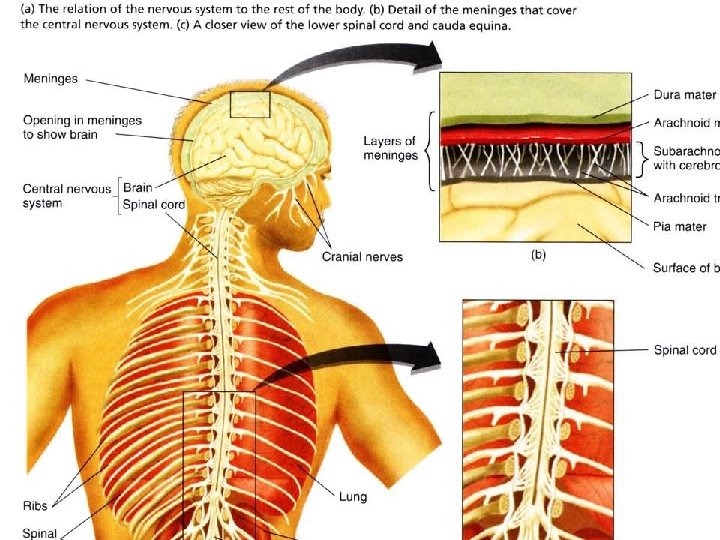
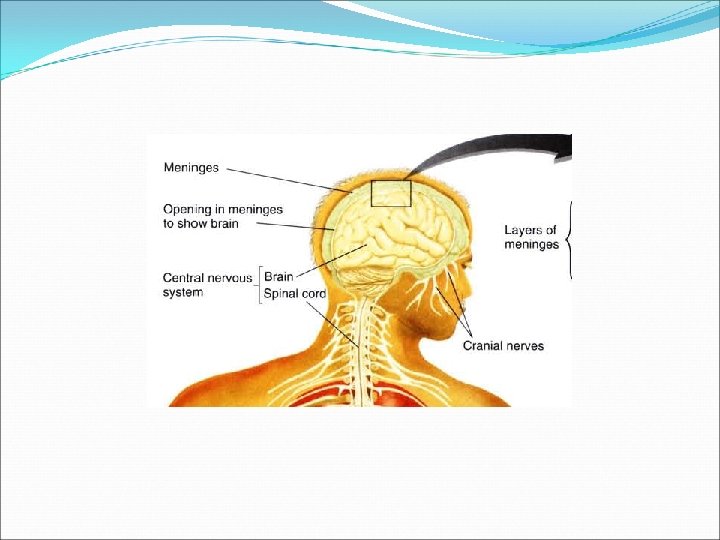
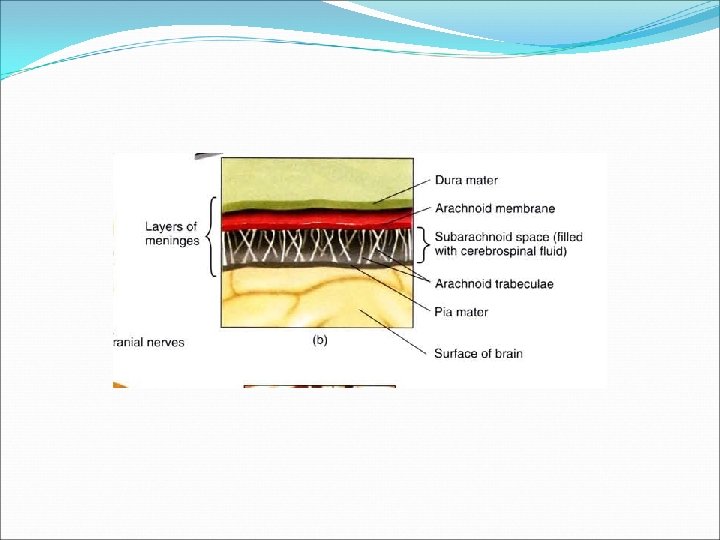
Protection of the Central Nervous System �Bony Protection �Skull and vertebral column �Meninges �Dura mater – “tough mother” � Epidural space – place for injecting anesthesia �Arachnoid membrane – spiderweblike membrane � Subarachnoid space – contains large blood vessels and cerebrospinal fluid �Pia mater – “pious mother” – delicate membrane adheres to the surface of the CNS
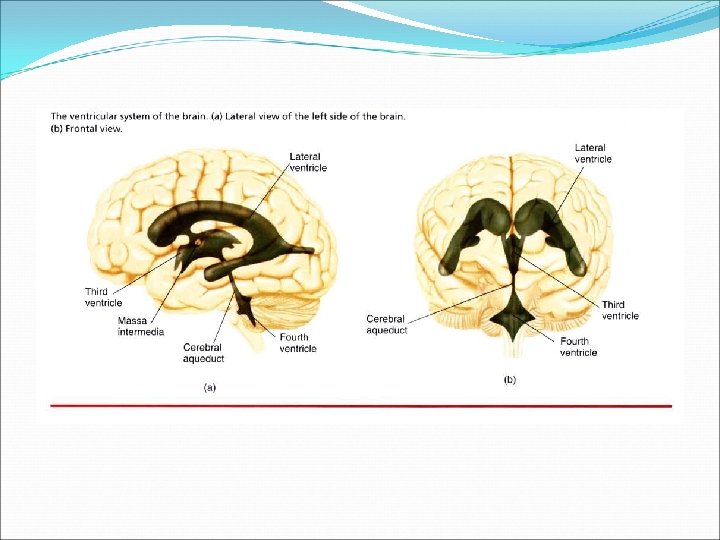
Protection of the Central Nervous System �Cerebrospinal fluid �Fills the subarachnoid space, central canal of the spinal cord and the cerebral ventricles of the brain �Central canal – small central channedl that runs the length of the spinal cord �Cerebral ventricles – four large internal chambers of the brain: two lateral ventricles, third and fourth ventricles �Subarachnoid space, central canal and ventricles interconnected by openings (aqueducts) �Fluid supports and cushions the brain
�CSF �Produced by choroid plexuses – network of capillaries that protrude into ventricles from pia mater �Excess CSF absorbed from the subarachnoid space into dural sinuses, thin walled veins that run through the dura mater and drain into the large jugular veins of the neck
�CSF �Block to its flow – maybe due to tumor near one of the channels �Build up of fluid in the ventricles causing pressure on the walls of the ventricles and on the brain �Hydrocephalus – in children with enlargement of the head, in adults with pressure on the brain tissue �Treated by draining the excess fluid and trying to remove the obstruction
Protection of the Central Nervous System �Blood-Brain Barrier �Mechanism that impedes the passage of toxic substances from the blood into the brain �Special structure of cerebral blood vessels �The cells of the blood vessel walls are tightly packed �Can still be crossed by certain lipid soluble drugs like anesthetics and recreational drugs �Allows active passage of large molecules critical for normal brain function (glucose) and certain hormones (sex hormones readily enter neurons involved in sexual behavior)