
ANATOMY OF THE MUSCULAR SYSTEM Anatomy of the
- Slides: 35
ANATOMY OF THE MUSCULAR SYSTEM
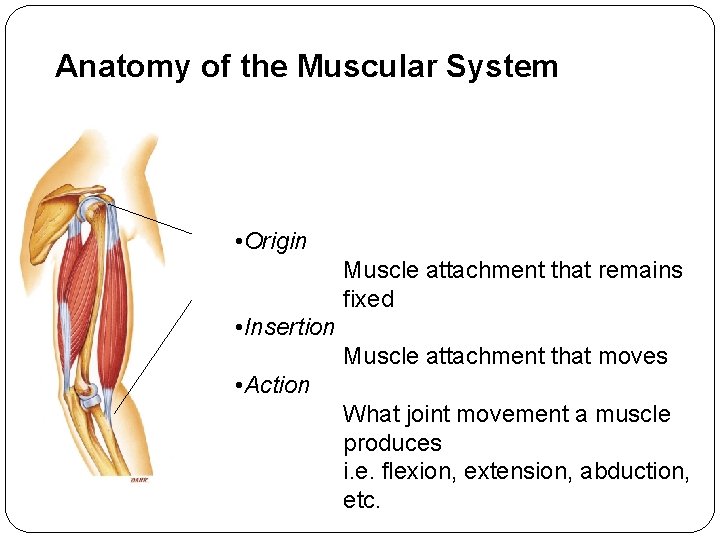
Anatomy of the Muscular System • Origin Muscle attachment that remains fixed • Insertion Muscle attachment that moves • Action What joint movement a muscle produces i. e. flexion, extension, abduction, etc.
Organization of Muscle Fibers �Four patterns of fascicle organization: �(1) Parallel muscle �(2) Convergent muscle �(3) Pennate muscle �(4) Circular muscle
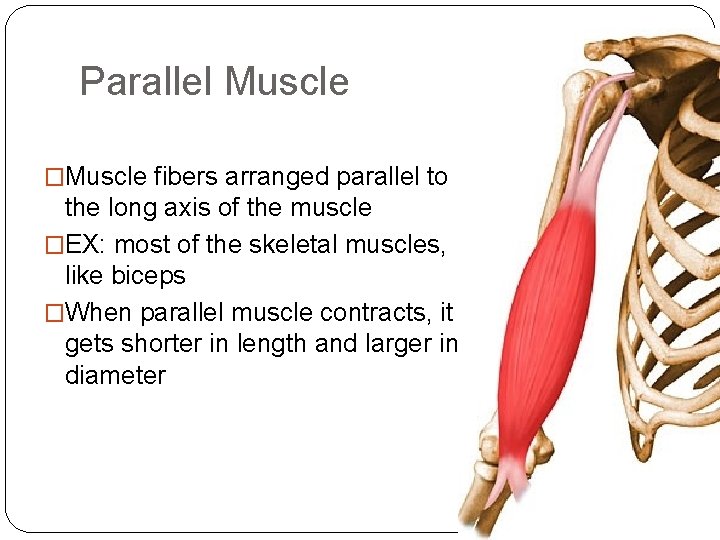
Parallel Muscle �Muscle fibers arranged parallel to the long axis of the muscle �EX: most of the skeletal muscles, like biceps �When parallel muscle contracts, it gets shorter in length and larger in diameter
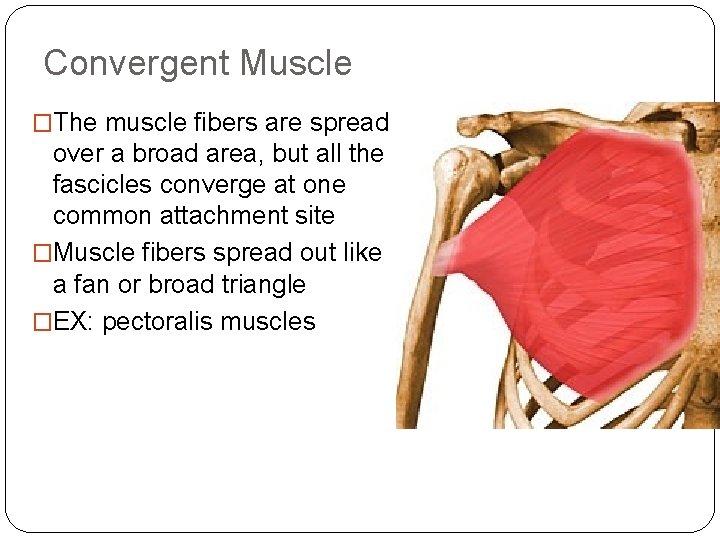
Convergent Muscle �The muscle fibers are spread over a broad area, but all the fascicles converge at one common attachment site �Muscle fibers spread out like a fan or broad triangle �EX: pectoralis muscles
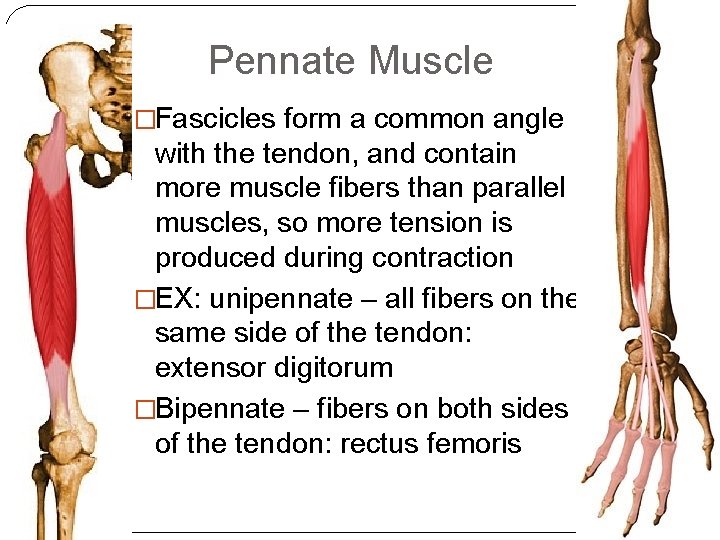
Pennate Muscle �Fascicles form a common angle with the tendon, and contain more muscle fibers than parallel muscles, so more tension is produced during contraction �EX: unipennate – all fibers on the same side of the tendon: extensor digitorum �Bipennate – fibers on both sides of the tendon: rectus femoris
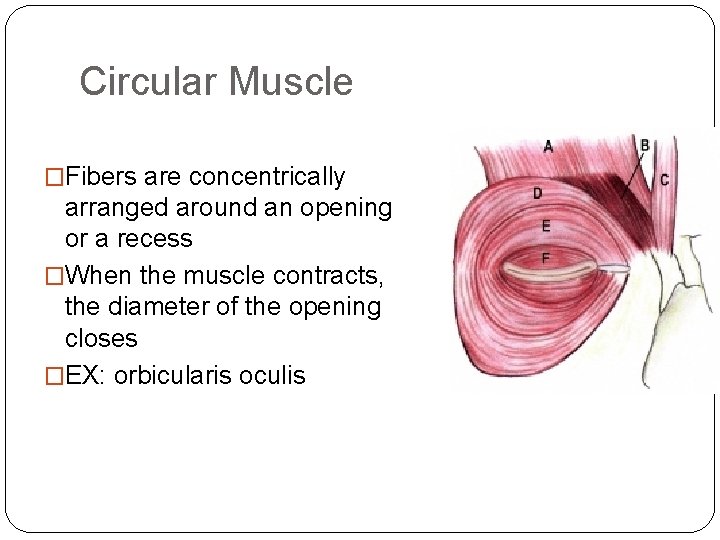
Circular Muscle �Fibers are concentrically arranged around an opening or a recess �When the muscle contracts, the diameter of the opening closes �EX: orbicularis oculis
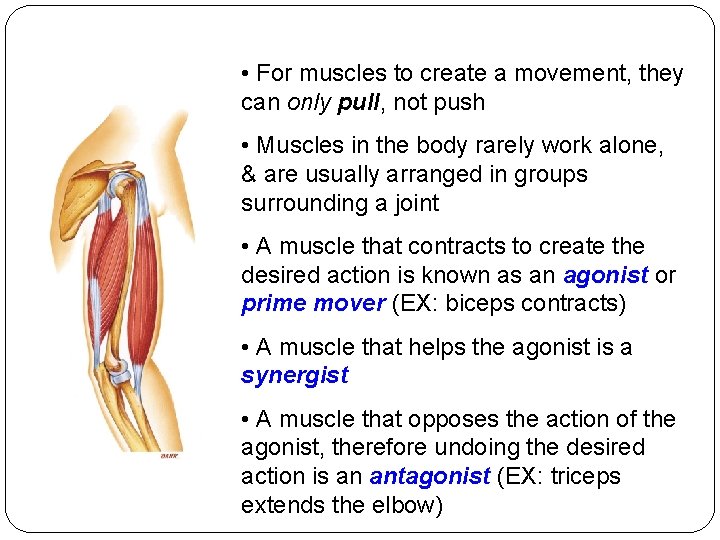
• For muscles to create a movement, they can only pull, not push • Muscles in the body rarely work alone, & are usually arranged in groups surrounding a joint • A muscle that contracts to create the desired action is known as an agonist or prime mover (EX: biceps contracts) • A muscle that helps the agonist is a synergist • A muscle that opposes the action of the agonist, therefore undoing the desired action is an antagonist (EX: triceps extends the elbow)
How Muscles are Named… � 1. Orientation of muscle fibers � 2. Location � 3. Relative Position � 4. Structure, Shape, and Size � 5. Origin and Insertion � 6. Action
How Muscles are Named… � 1. Orientation of fibers �Rectus = straight �Transversus = fibers run across the long axis of the body �Oblique = fibers run at an oblique angle to the long axis
How Muscles are Named… � 2. Location �Muscles are named for their location or body region �EX: temporalis, frontalis, femoris
How Muscles are Named… � 3. Relative Position �Muscles visible at the surface of the body are called externus or superficialis �Deeper muscles are called internus or profundis
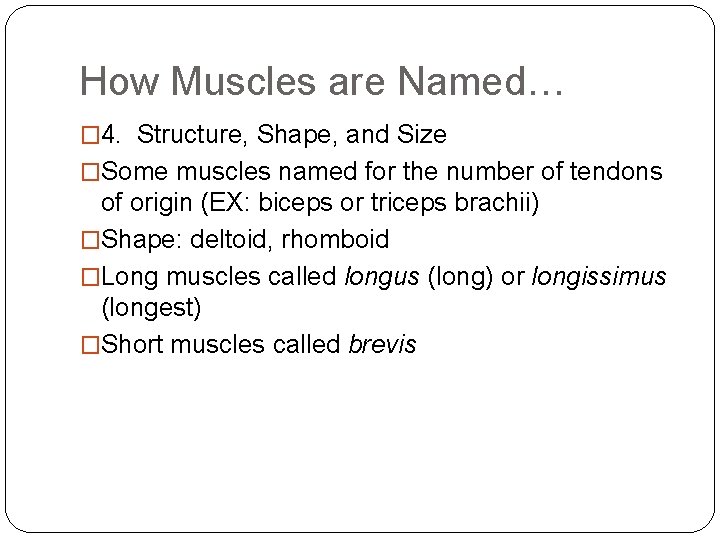
How Muscles are Named… � 4. Structure, Shape, and Size �Some muscles named for the number of tendons of origin (EX: biceps or triceps brachii) �Shape: deltoid, rhomboid �Long muscles called longus (long) or longissimus (longest) �Short muscles called brevis
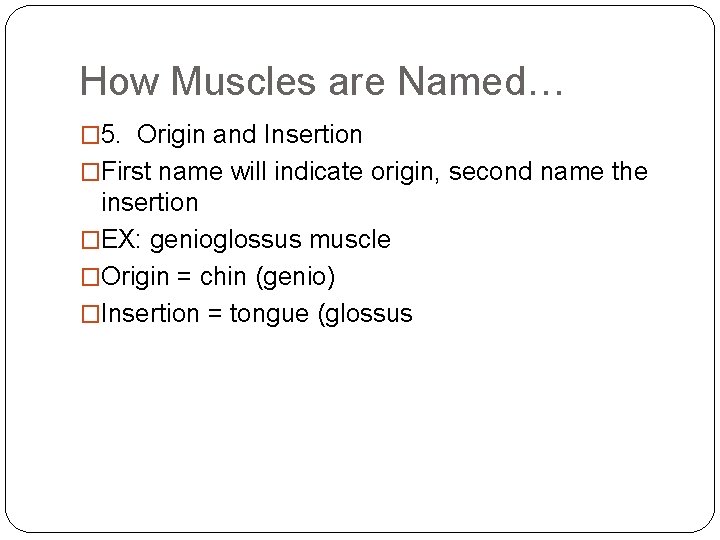
How Muscles are Named… � 5. Origin and Insertion �First name will indicate origin, second name the insertion �EX: genioglossus muscle �Origin = chin (genio) �Insertion = tongue (glossus
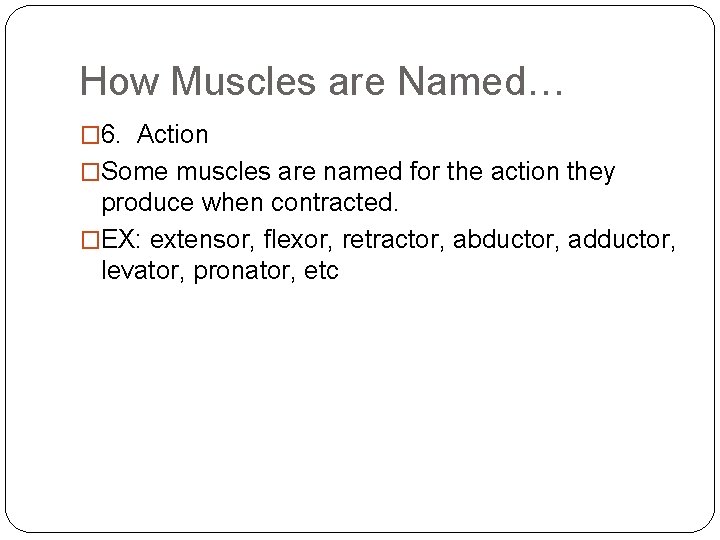
How Muscles are Named… � 6. Action �Some muscles are named for the action they produce when contracted. �EX: extensor, flexor, retractor, abductor, adductor, levator, pronator, etc
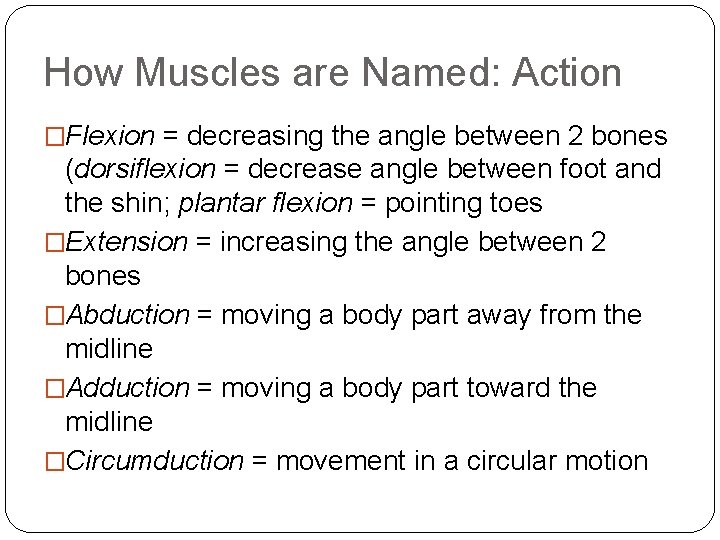
How Muscles are Named: Action �Flexion = decreasing the angle between 2 bones (dorsiflexion = decrease angle between foot and the shin; plantar flexion = pointing toes �Extension = increasing the angle between 2 bones �Abduction = moving a body part away from the midline �Adduction = moving a body part toward the midline �Circumduction = movement in a circular motion
How Muscles are Named: Action �Rotation = turning movement of a bone around its long axis �Supination = thumbs up �Pronation = thumbs down �Inversion = turning sole of foot in �Eversion = turning sole of foot out �Elevation = lifting a body part �Depression = returning body part to its pre-elevated position
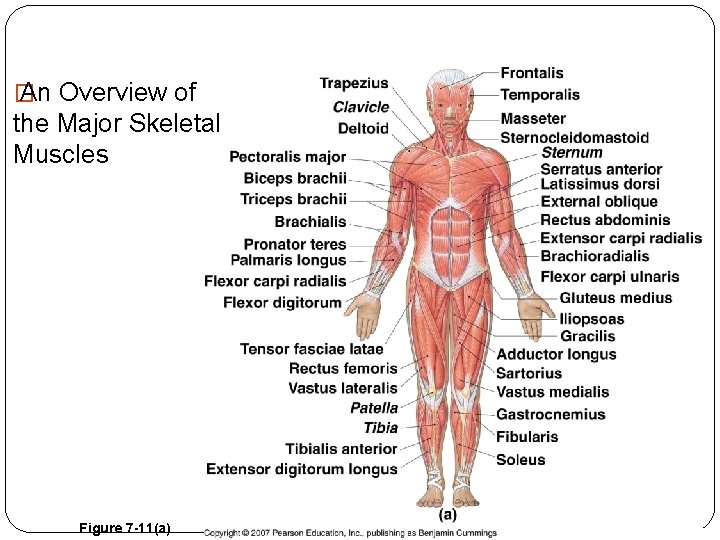
� An Overview of the Major Skeletal Muscles Figure 7 -11(a)
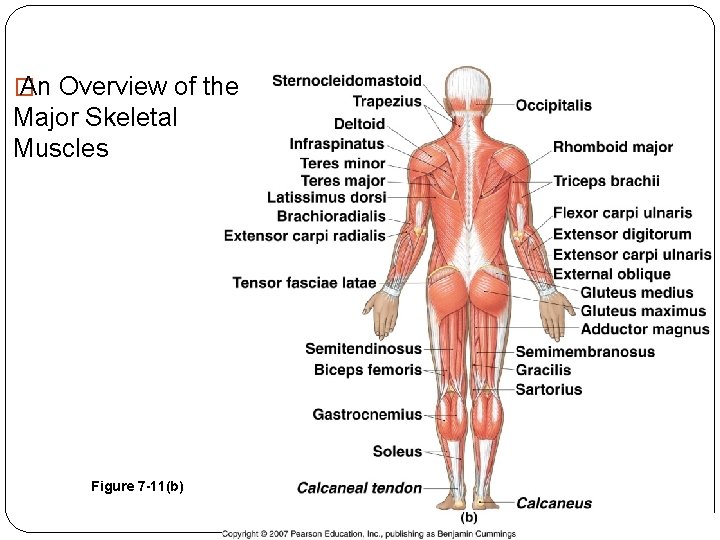
� An Overview of the Major Skeletal Muscles Figure 7 -11(b)
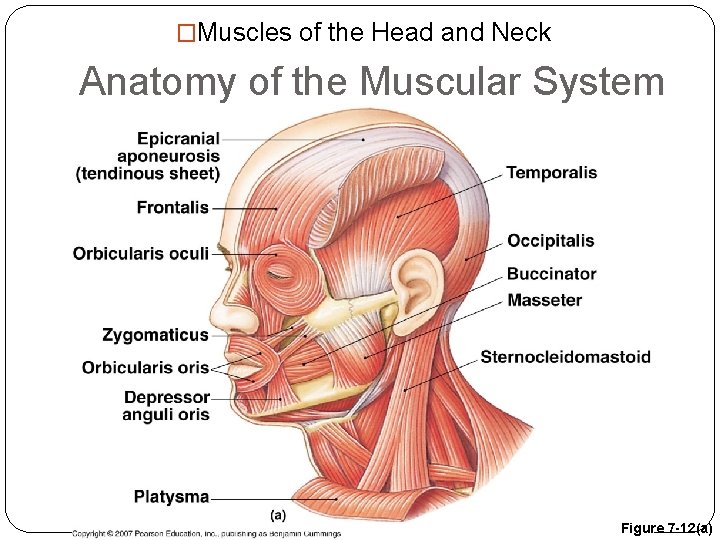
�Muscles of the Head and Neck Anatomy of the Muscular System Figure 7 -12(a)
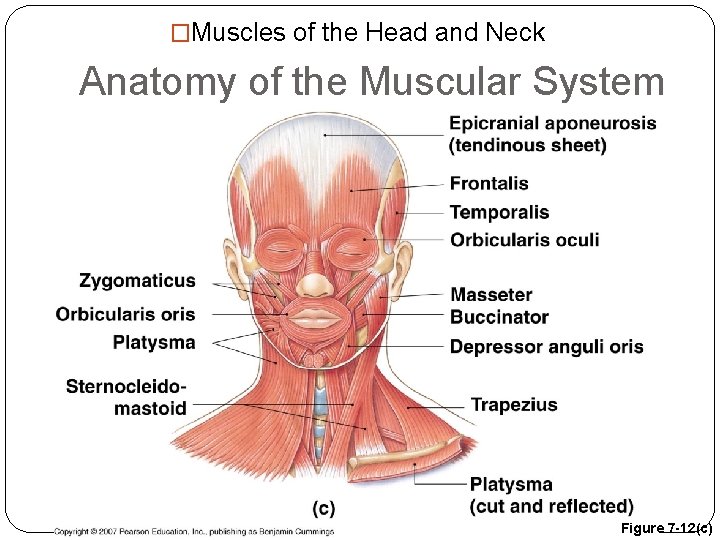
�Muscles of the Head and Neck Anatomy of the Muscular System Figure 7 -12(c)
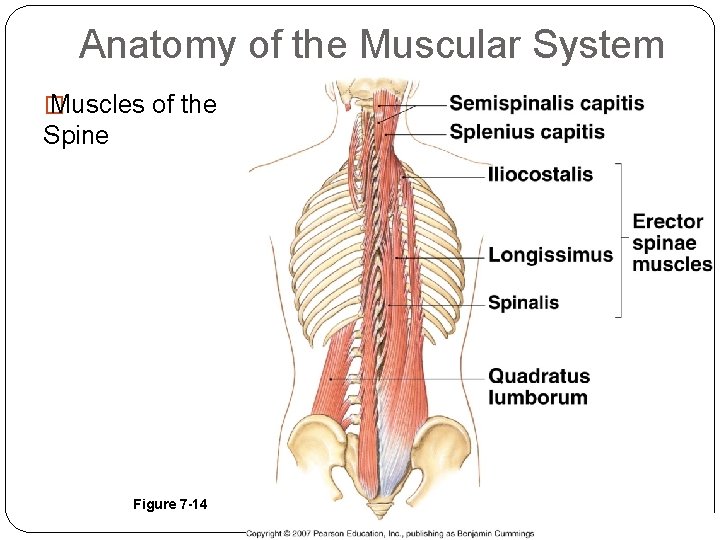
Anatomy of the Muscular System � Muscles of the Spine Figure 7 -14
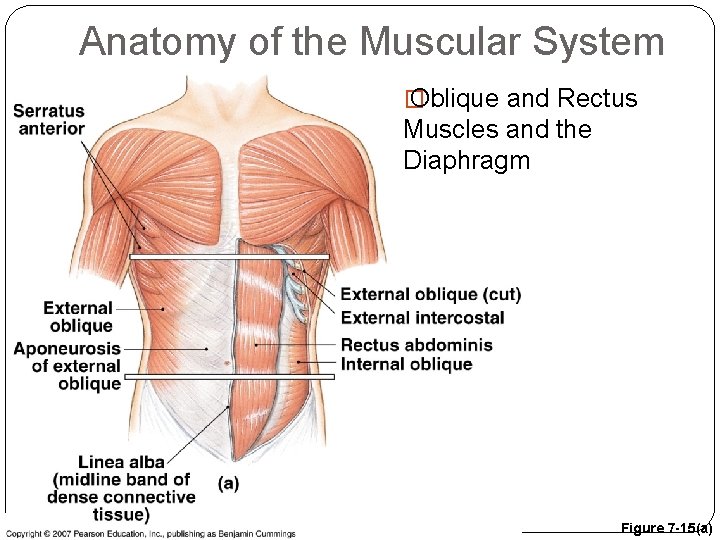
Anatomy of the Muscular System � Oblique and Rectus Muscles and the Diaphragm Figure 7 -15(a)
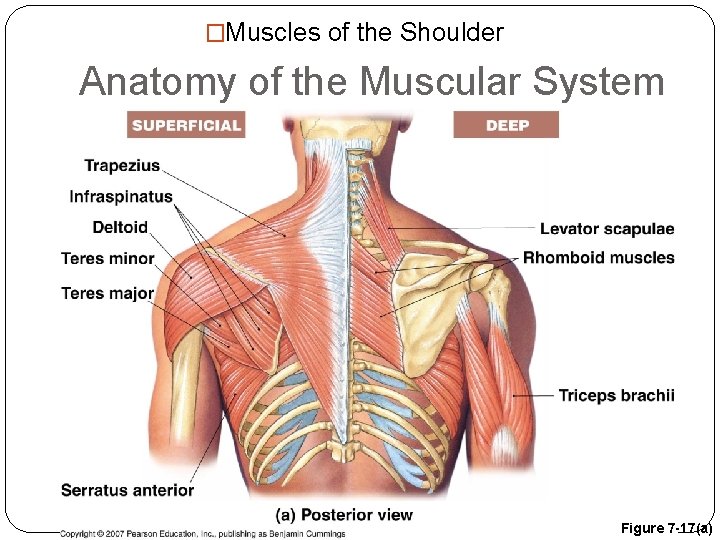
�Muscles of the Shoulder Anatomy of the Muscular System Figure 7 -17(a)
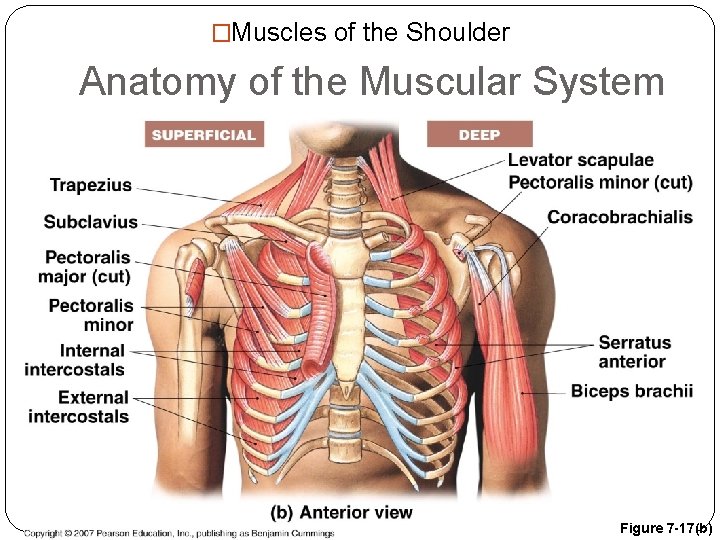
�Muscles of the Shoulder Anatomy of the Muscular System Figure 7 -17(b)
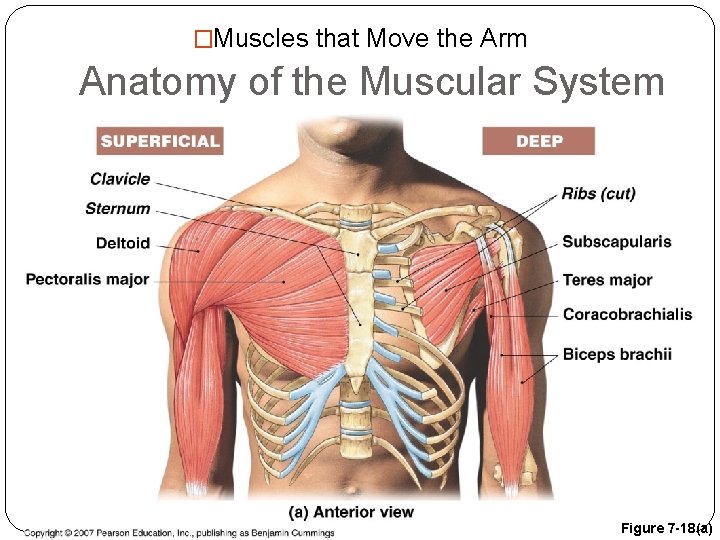
�Muscles that Move the Arm Anatomy of the Muscular System Figure 7 -18(a)
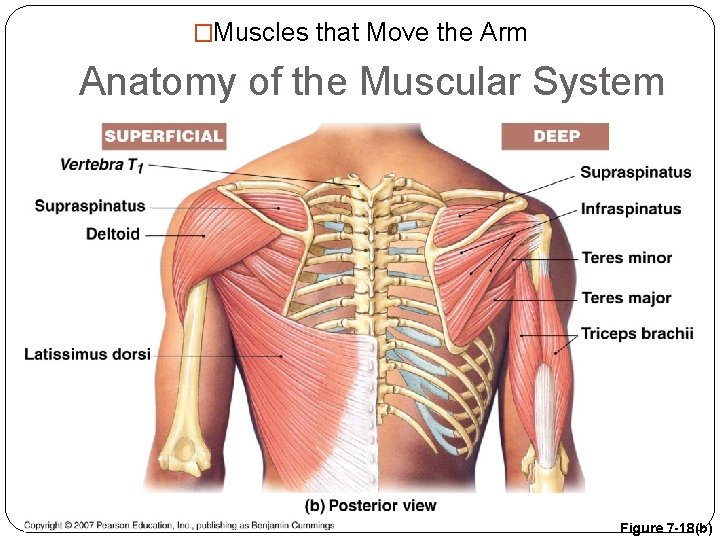
�Muscles that Move the Arm Anatomy of the Muscular System Figure 7 -18(b)
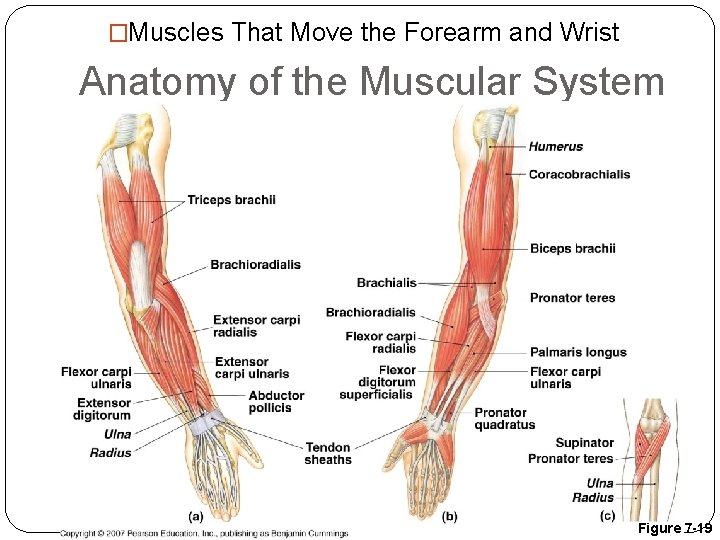
�Muscles That Move the Forearm and Wrist Anatomy of the Muscular System Figure 7 -19
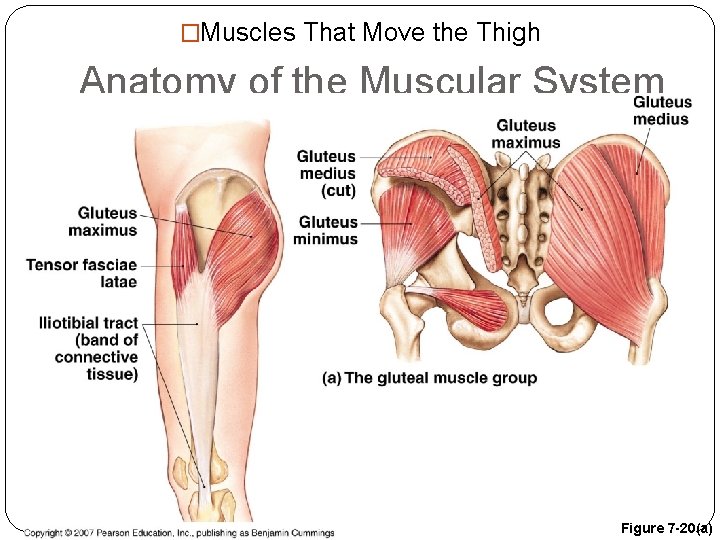
�Muscles That Move the Thigh Anatomy of the Muscular System Figure 7 -20(a)
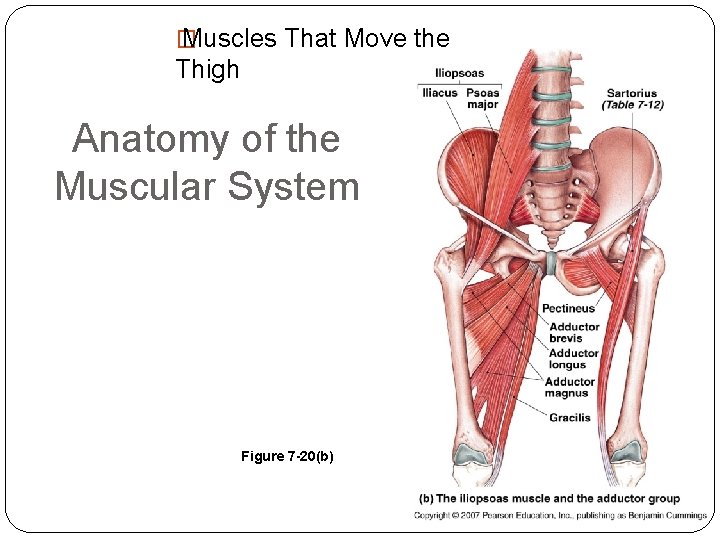
� Muscles That Move the Thigh Anatomy of the Muscular System Figure 7 -20(b)
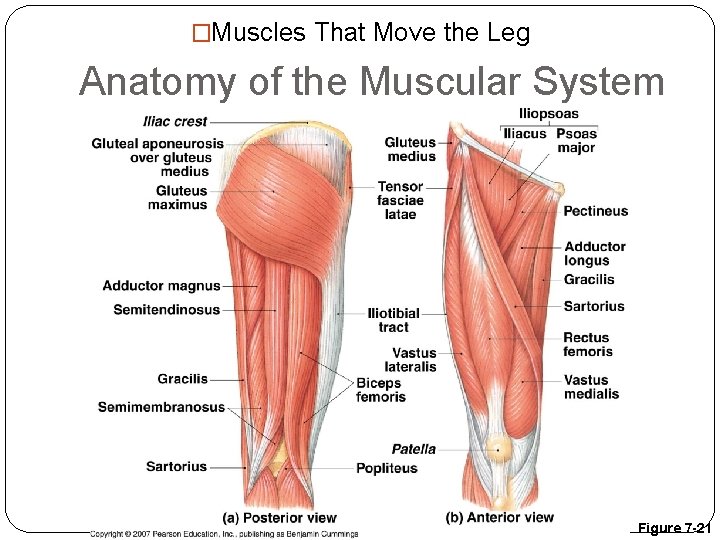
�Muscles That Move the Leg Anatomy of the Muscular System Figure 7 -21
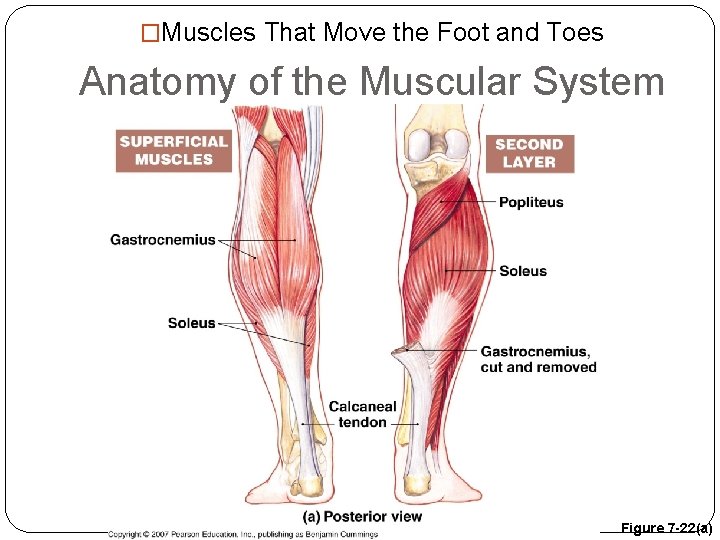
�Muscles That Move the Foot and Toes Anatomy of the Muscular System Figure 7 -22(a)
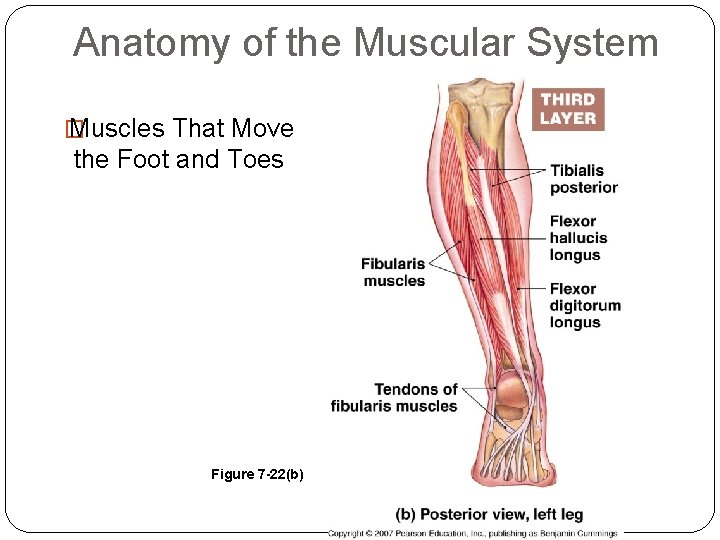
Anatomy of the Muscular System � Muscles That Move the Foot and Toes Figure 7 -22(b)
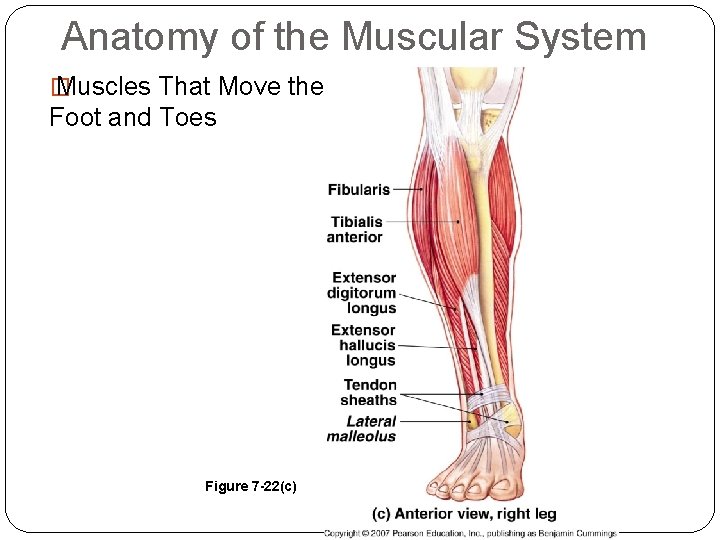
Anatomy of the Muscular System � Muscles That Move the Foot and Toes Figure 7 -22(c)
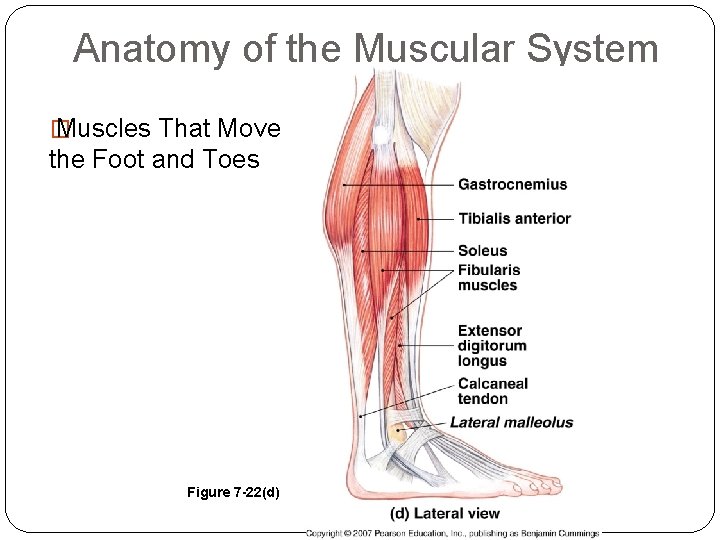
Anatomy of the Muscular System � Muscles That Move the Foot and Toes Figure 7 -22(d)