
Anatomy of the Humerus and Shoulder 6 3

- Slides: 30
Anatomy of the Humerus and Shoulder 6. 3. 1
Lesson Objective • Describe the anatomy of the humerus and shoulder
Topic Objectives • Anatomy of the humerus and shoulder – Describe the number and characteristics for the bones of the humerus and shoulder – Describe the anatomical features of the humerus and shoulder on an illustration
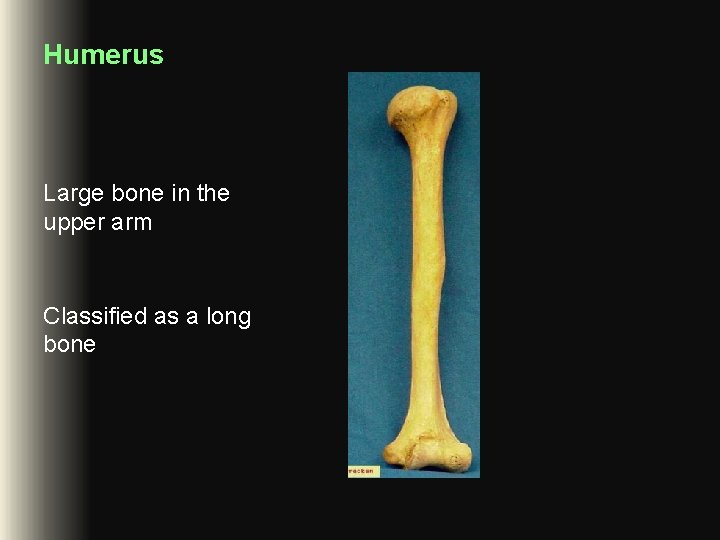
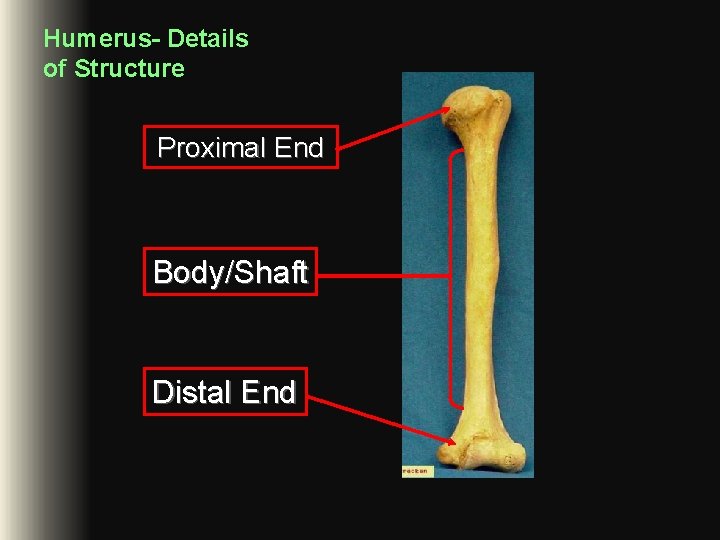
Humerus Large bone in the upper arm Classified as a long bone
Humerus- Details of Structure Proximal End Body/Shaft Distal End
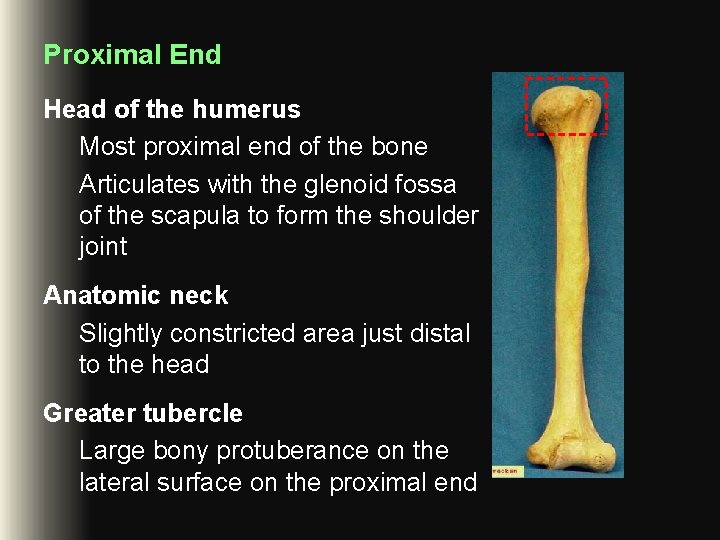
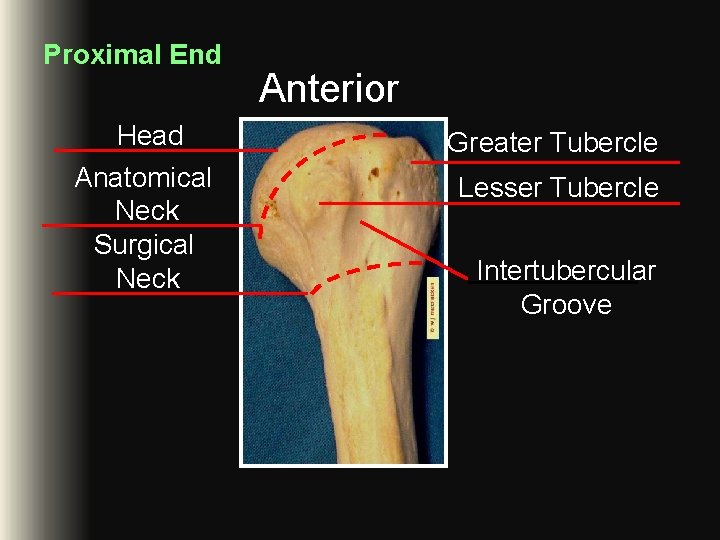
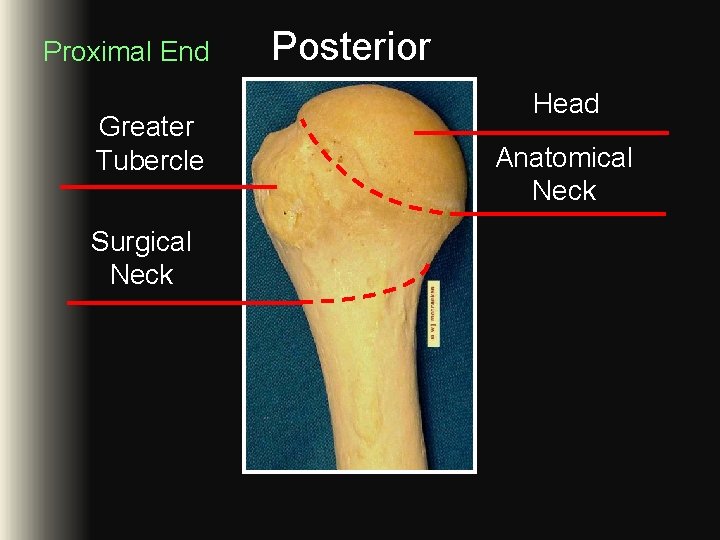
Proximal End Head of the humerus Most proximal end of the bone Articulates with the glenoid fossa of the scapula to form the shoulder joint Anatomic neck Slightly constricted area just distal to the head Greater tubercle Large bony protuberance on the lateral surface on the proximal end
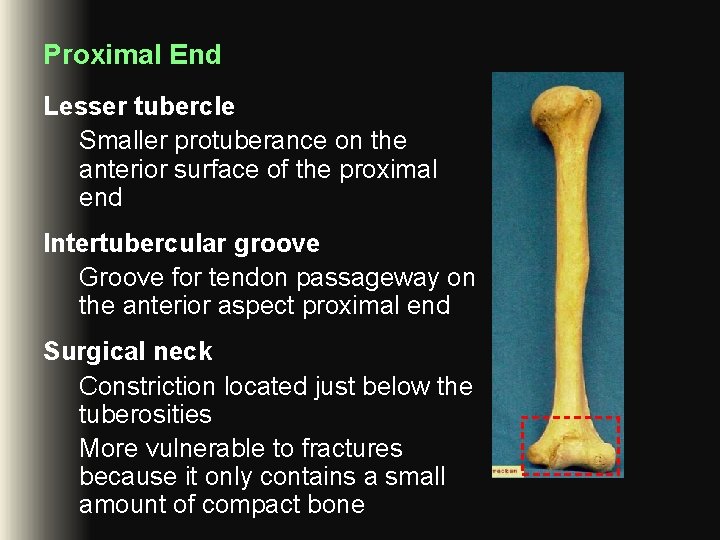
Proximal End Lesser tubercle Smaller protuberance on the anterior surface of the proximal end Intertubercular groove Groove for tendon passageway on the anterior aspect proximal end Surgical neck Constriction located just below the tuberosities More vulnerable to fractures because it only contains a small amount of compact bone
Proximal End Head Anatomical Neck Surgical Neck Anterior Greater Tubercle Lesser Tubercle Intertubercular Groove
Proximal End Greater Tubercle Surgical Neck Posterior Head Anatomical Neck
Review Question What does the term intertubercular mean? Portion on the Humerus just below the Head? Answer Between the tubercles. Anatomical Neck
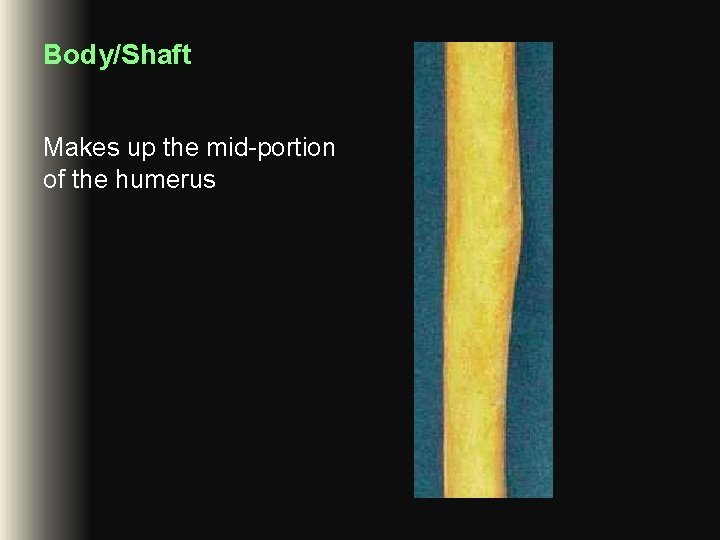
Body/Shaft Makes up the mid-portion of the humerus
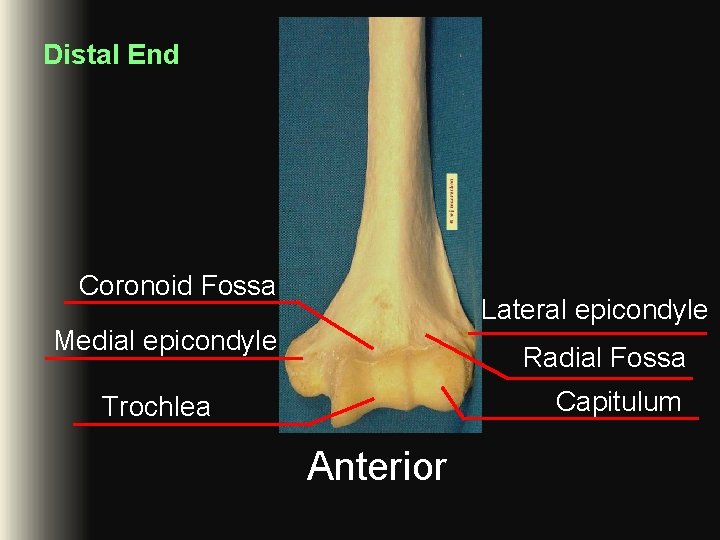
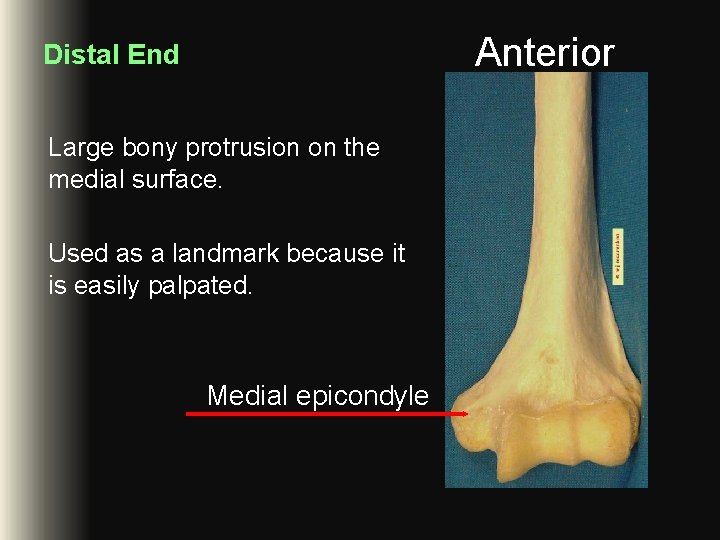
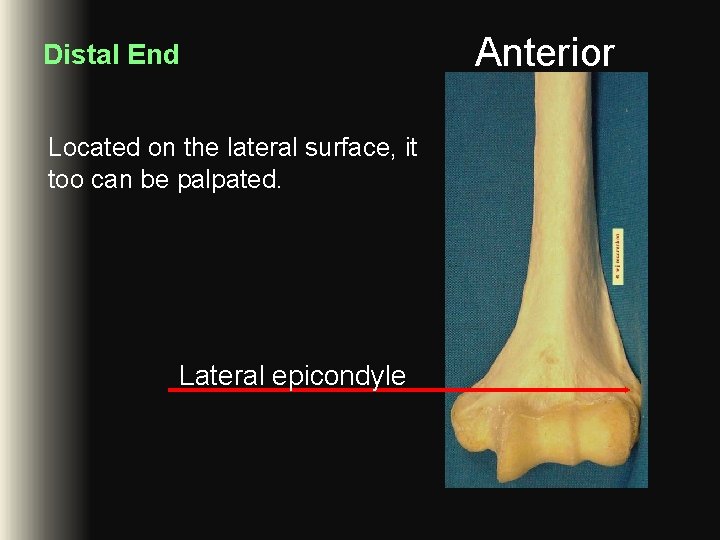
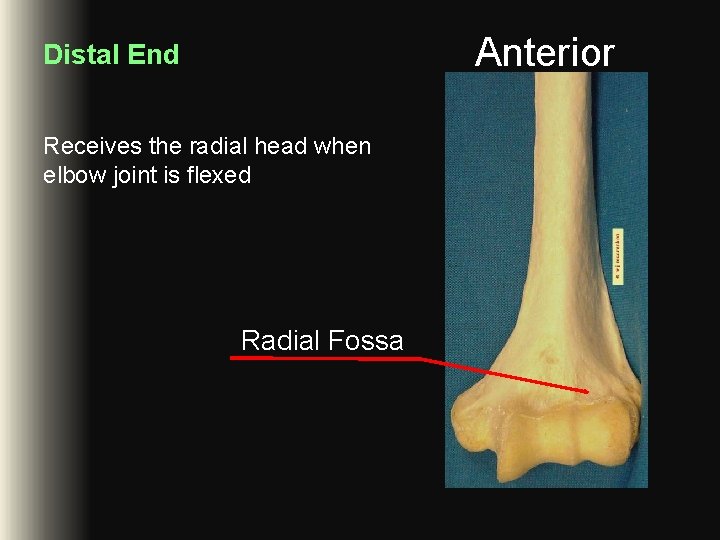
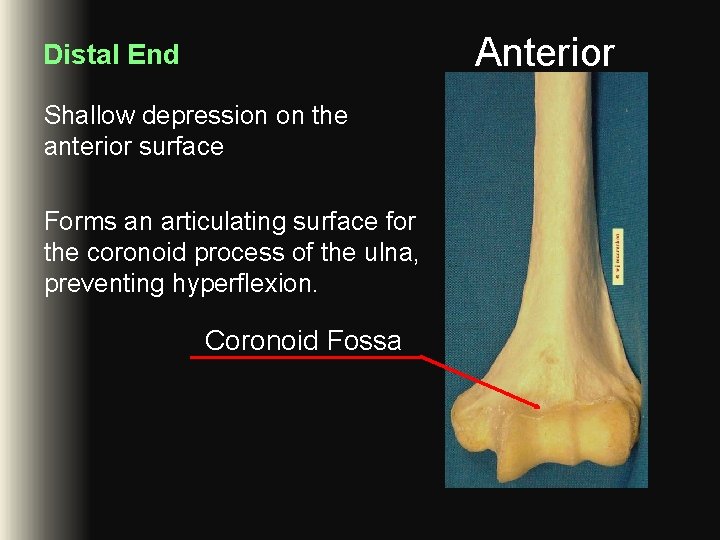
Distal End Coronoid Fossa Lateral epicondyle Medial epicondyle Radial Fossa Capitulum Trochlea Anterior
Anterior Distal End Large bony protrusion on the medial surface. Used as a landmark because it is easily palpated. Medial epicondyle
Distal End Located on the lateral surface, it too can be palpated. Lateral epicondyle Anterior
Anterior Distal End Receives the radial head when elbow joint is flexed Radial Fossa
Anterior Distal End Shallow depression on the anterior surface Forms an articulating surface for the coronoid process of the ulna, preventing hyperflexion. Coronoid Fossa
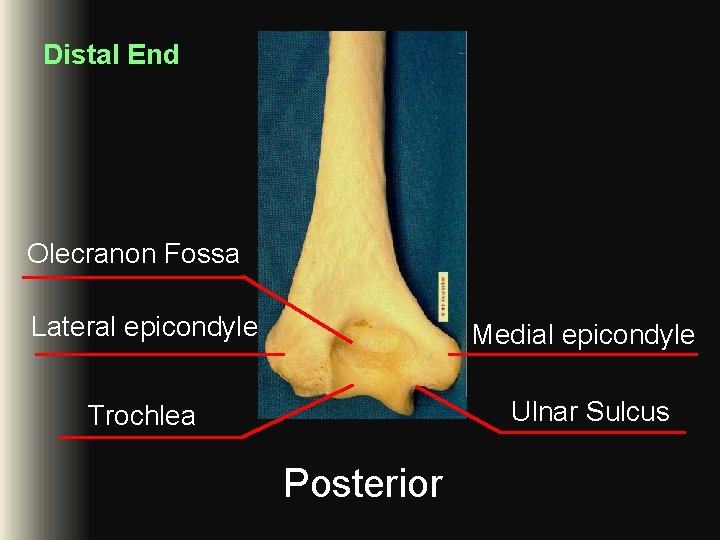
Distal End Olecranon Fossa Lateral epicondyle Medial epicondyle Trochlea Ulnar Sulcus Posterior
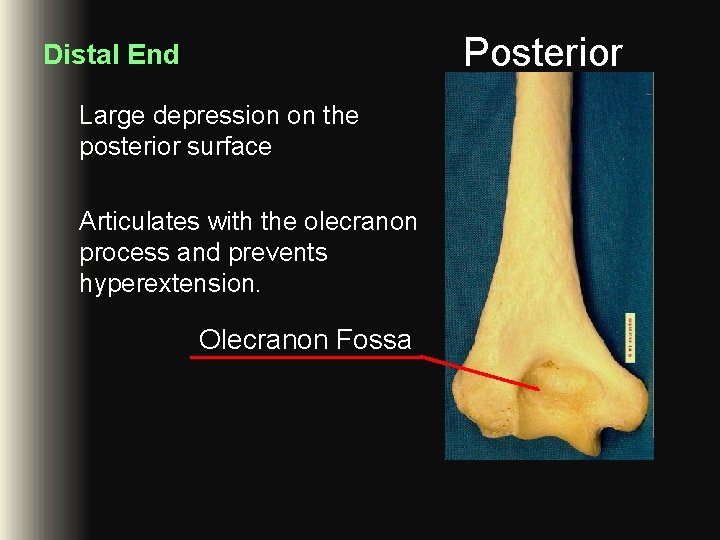
Posterior Distal End Large depression on the posterior surface Articulates with the olecranon process and prevents hyperextension. Olecranon Fossa
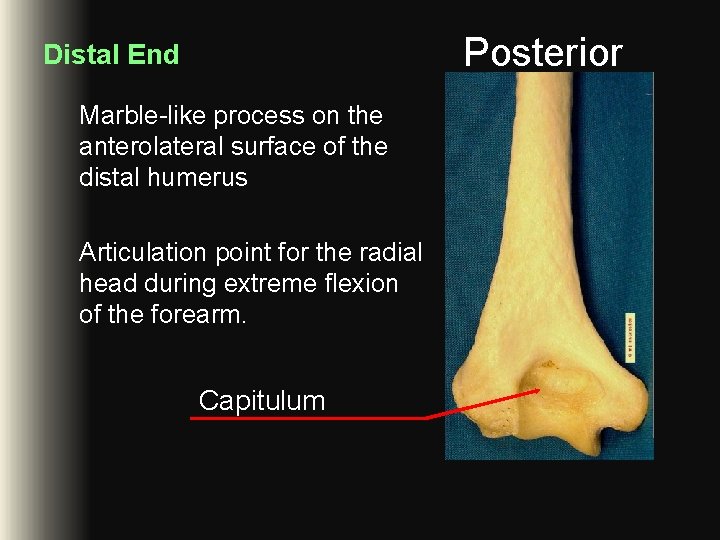
Posterior Distal End Marble-like process on the anterolateral surface of the distal humerus Articulation point for the radial head during extreme flexion of the forearm. Capitulum
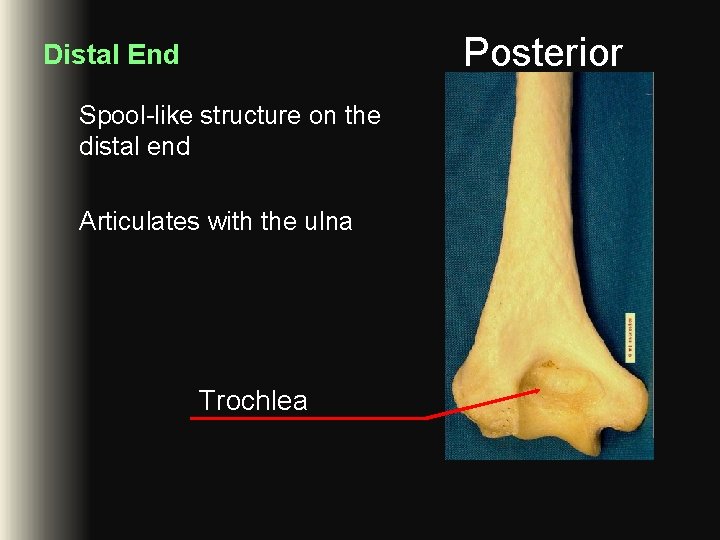
Posterior Distal End Spool-like structure on the distal end Articulates with the ulna Trochlea
Review Question Which one of the humeral epicondyles is the more prominent of the two? Deep depression locate on the distal posterior aspect of the Humerus? Answer The medial epicondyle. Olecranon Fossa
Structures of the Shoulder • Shoulder girdle consists of 2 bones – Clavicle – Scapula • Attach the upper extremity to the axial skeleton 26
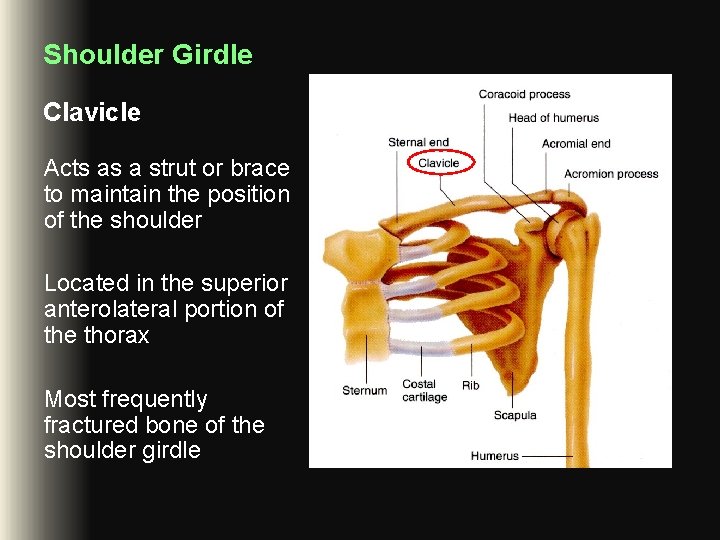
Shoulder Girdle Clavicle Acts as a strut or brace to maintain the position of the shoulder Located in the superior anterolateral portion of the thorax Most frequently fractured bone of the shoulder girdle
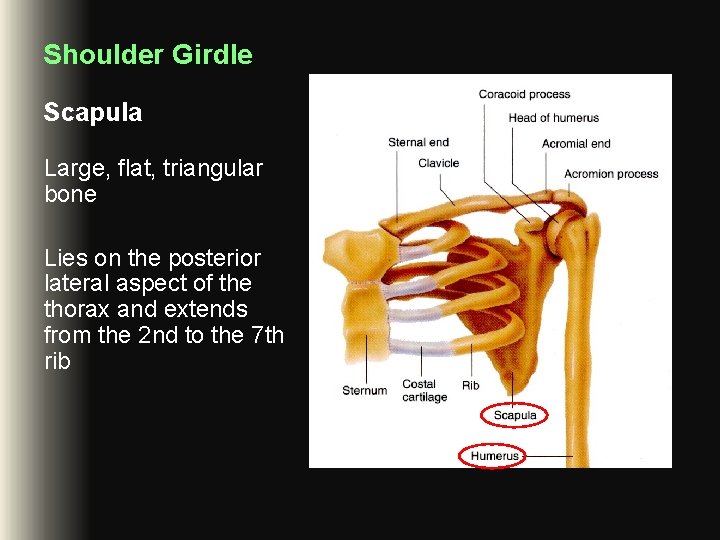
Shoulder Girdle Scapula Large, flat, triangular bone Lies on the posterior lateral aspect of the thorax and extends from the 2 nd to the 7 th rib
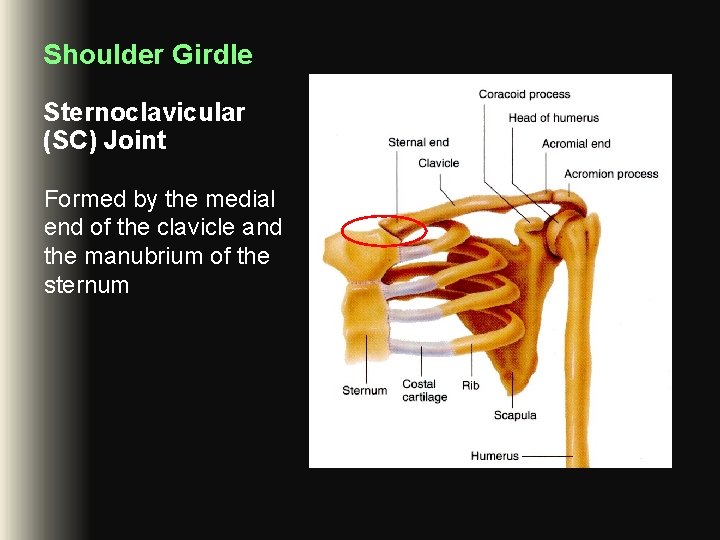
Shoulder Girdle Sternoclavicular (SC) Joint Formed by the medial end of the clavicle and the manubrium of the sternum
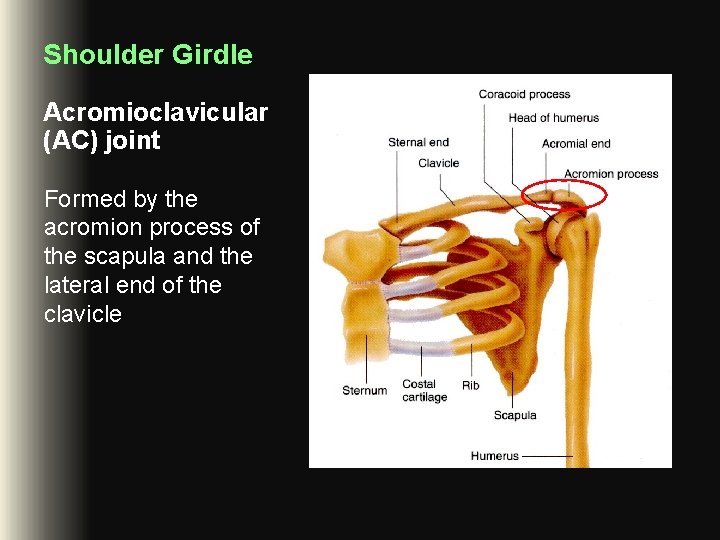
Shoulder Girdle Acromioclavicular (AC) joint Formed by the acromion process of the scapula and the lateral end of the clavicle
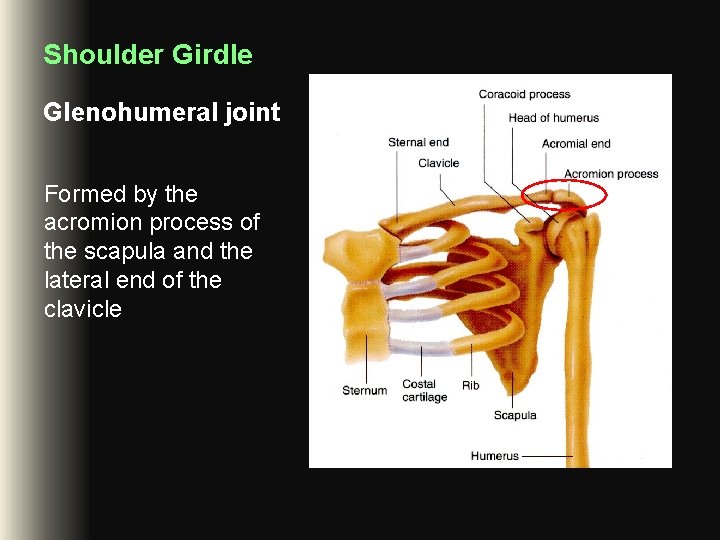
Shoulder Girdle Glenohumeral joint Formed by the acromion process of the scapula and the lateral end of the clavicle
Review Question What joint is formed by the acromion process of the scapula and the lateral end of the clavicle? Answer Acromioclavicular (AC) joint
Review Question What proximal end structure is more vulnerable to fractures because it only contains a small amount of compact bone? Answer Surgical neck
QUESTIONS?