
Anatomy of the Heart The Left Atrium Blood


Anatomy of the Heart • The Left Atrium – Blood gathers into left and right pulmonary veins – Pulmonary veins deliver to left atrium – Blood from left atrium passes to left ventricle through left atrioventricular (AV) valve – A two-cusped bicuspid valve or mitral valve
Anatomy of the Heart • The Left Ventricle – Holds same volume as right ventricle – Is larger; muscle is thicker and more powerful – Similar internally to right ventricle but does not have moderator band – Systemic circulation • Blood leaves left ventricle through aortic valve into ascending aorta • Ascending aorta turns (aortic arch) and becomes descending aorta
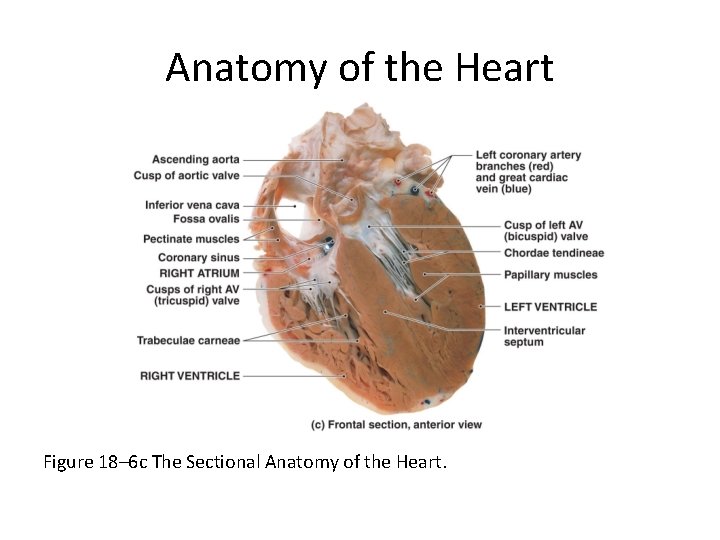
Anatomy of the Heart Figure 18– 6 c The Sectional Anatomy of the Heart.
Anatomy of the Heart • Structural Differences between the Left and Right Ventricles – Right ventricle wall is thinner, develops less pressure than left ventricle – Right ventricle is pouch-shaped, left ventricle is round
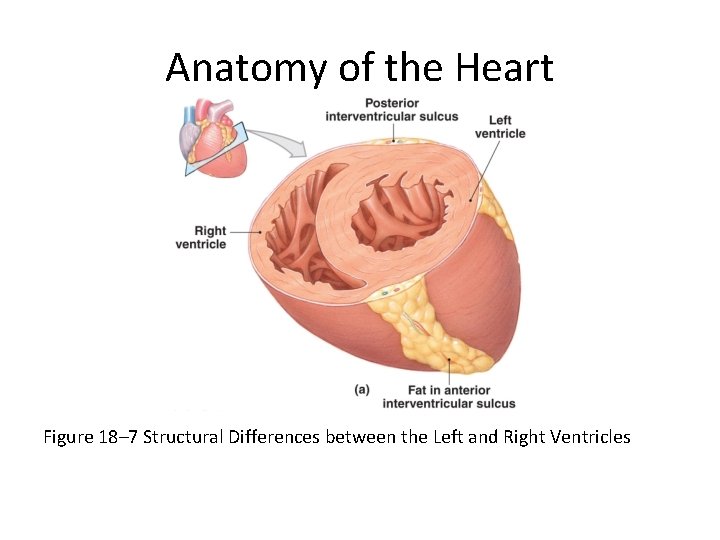
Anatomy of the Heart Figure 18– 7 Structural Differences between the Left and Right Ventricles

Anatomy of the Heart Figure 18– 7 Structural Differences between the Left and Right Ventricles
Anatomy of the Heart • The Heart Valves – Two pairs of one-way valves prevent backflow during contraction – Atrioventricular (AV) valves • Between atria and ventricles • Blood pressure closes valve cusps during ventricular contraction • Papillary muscles tense chordae tendineae: prevent valves from swinging into atria
Anatomy of the Heart • The Heart Valves – Semilunar valves • Pulmonary and aortic tricuspid valves • Prevent backflow from pulmonary trunk and aorta into ventricles • Have no muscular support • Three cusps support like tripod
Anatomy of the Heart • Aortic Sinuses – At base of ascending aorta – Sacs that prevent valve cusps from sticking to aorta – Origin of right and left coronary arteries
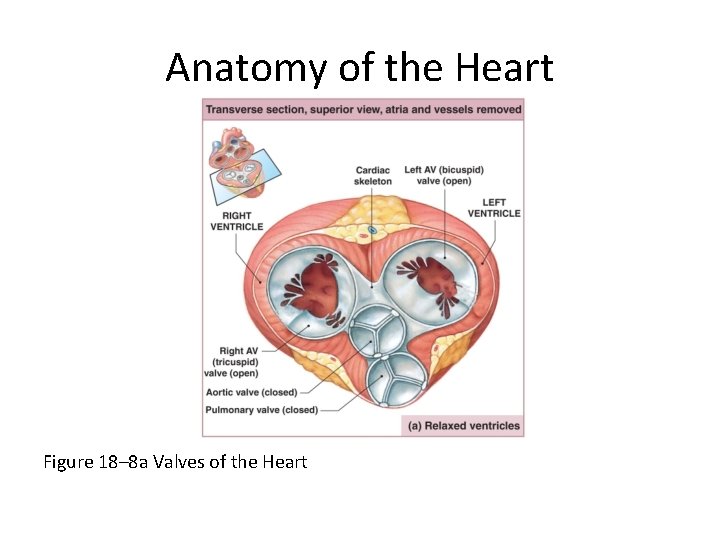
Anatomy of the Heart Figure 18– 8 a Valves of the Heart
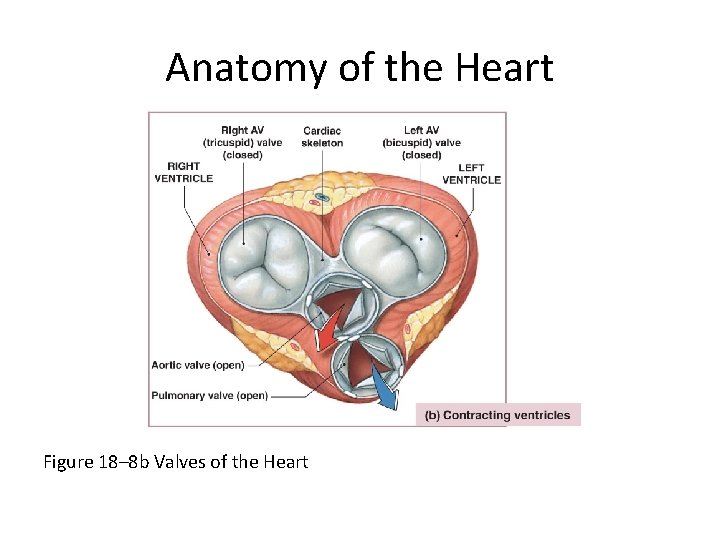
Anatomy of the Heart Figure 18– 8 b Valves of the Heart
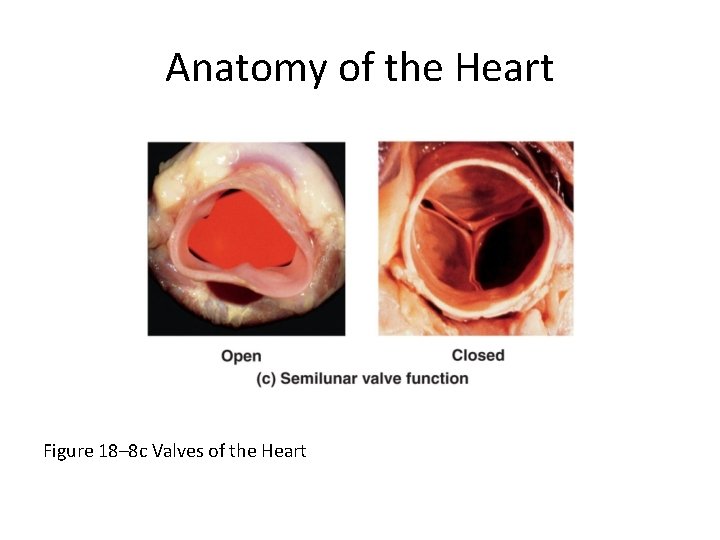
Anatomy of the Heart Figure 18– 8 c Valves of the Heart

Anatomy of the Heart • Connective Tissues and the Cardiac (Fibrous) Skeleton – Physically support cardiac muscle fibers – Distribute forces of contraction – Add strength and prevent overexpansion of heart – Elastic fibers return heart to original shape after contraction
Anatomy of the Heart • The Cardiac (Fibrous) Skeleton – Four bands around heart valves and bases of pulmonary trunk and aorta – Stabilize valves – Electrically insulate ventricular cells from atrial cells
Anatomy of the Heart • The Blood Supply to the Heart = Coronary Circulation – Coronary arteries and cardiac veins – Supplies blood to muscle tissue of heart
Anatomy of the Heart • The Coronary Arteries – Left and right – Originate at aortic sinuses – High blood pressure, elastic rebound forces blood through coronary arteries between contractions
Anatomy of the Heart • Right Coronary Artery – Supplies blood to • Right atrium • Portions of both ventricles • Cells of sinoatrial (SA) and atrioventricular nodes • Marginal arteries (surface of right ventricle) • Posterior interventricular artery
Anatomy of the Heart • Left Coronary Artery – Supplies blood to • Left ventricle • Left atrium • Interventricular septum
Anatomy of the Heart • Two main branches of left coronary artery – Circumflex artery – Anterior interventricular artery • Arterial Anastomoses – Interconnect anterior and posterior interventricular arteries – Stabilize blood supply to cardiac muscle
Anatomy of the Heart • The Cardiac Veins – Great cardiac vein • Drains blood from area of anterior interventricular artery into coronary sinus – Anterior cardiac veins • Empties into right atrium – Posterior cardiac vein, middle cardiac vein, and small cardiac vein • Empty into great cardiac vein or coronary sinus
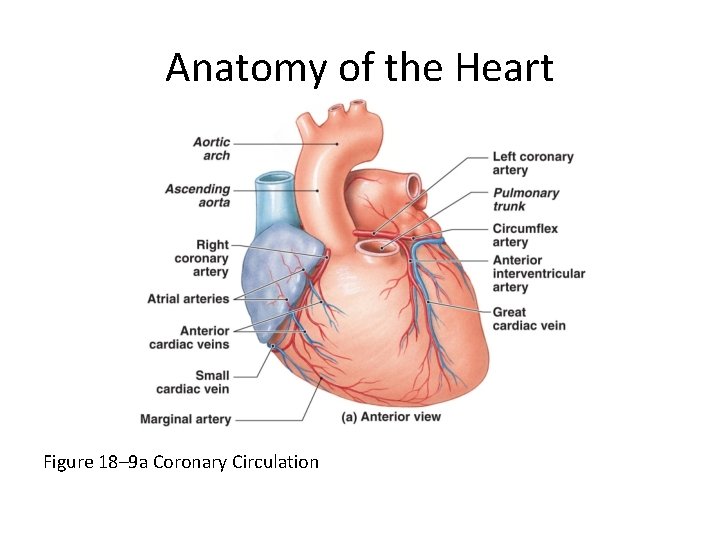
Anatomy of the Heart Figure 18– 9 a Coronary Circulation
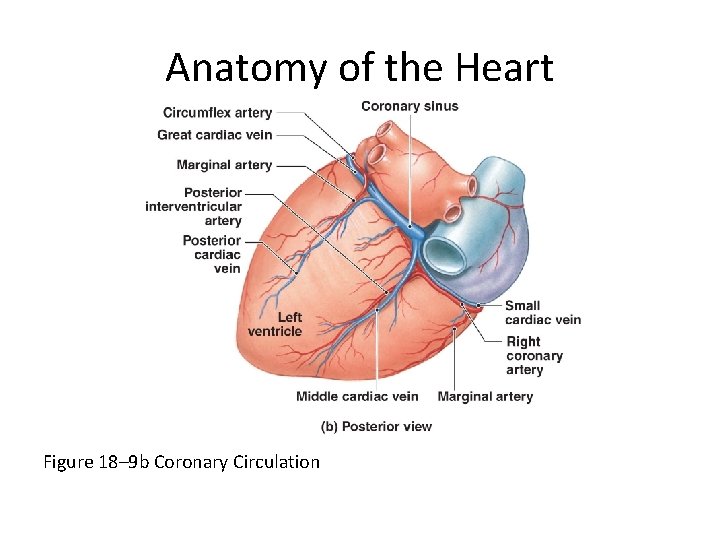
Anatomy of the Heart Figure 18– 9 b Coronary Circulation
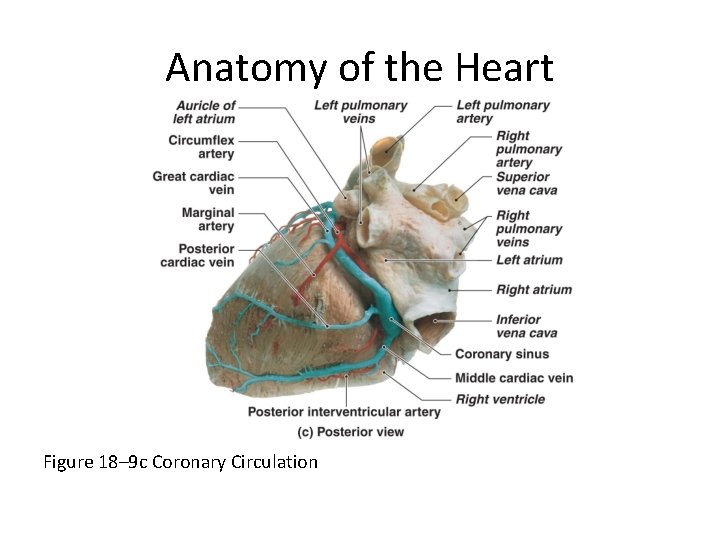
Anatomy of the Heart Figure 18– 9 c Coronary Circulation
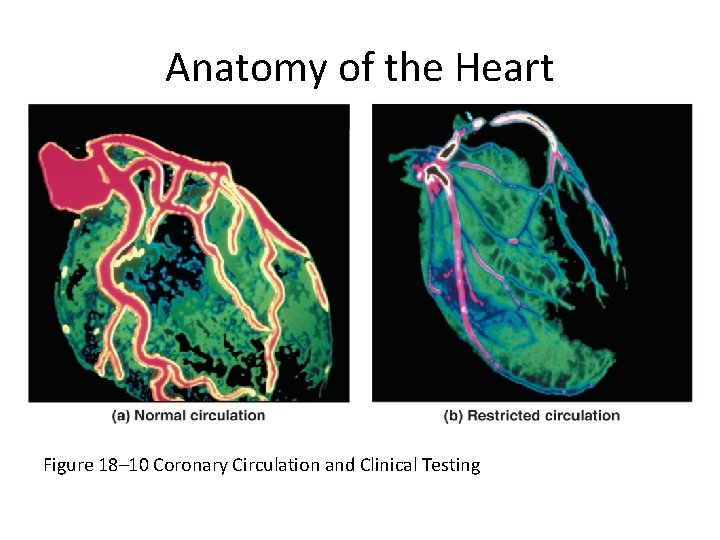
Anatomy of the Heart Figure 18– 10 Coronary Circulation and Clinical Testing
The Conducting System • Heartbeat – A single contraction of the heart – The entire heart contracts in series • First the atria • Then the ventricles
The Conducting System • Two Types of Cardiac Muscle Cells – Conducting system • Controls and coordinates heartbeat – Contractile cells • Produce contractions that propel blood
The Conducting System • The Cardiac Cycle – Begins with action potential at SA node • Transmitted through conducting system • Produces action potentials in cardiac muscle cells (contractile cells) – Electrocardiogram (ECG) • Electrical events in the cardiac cycle can be recorded on an electrocardiogram (ECG)
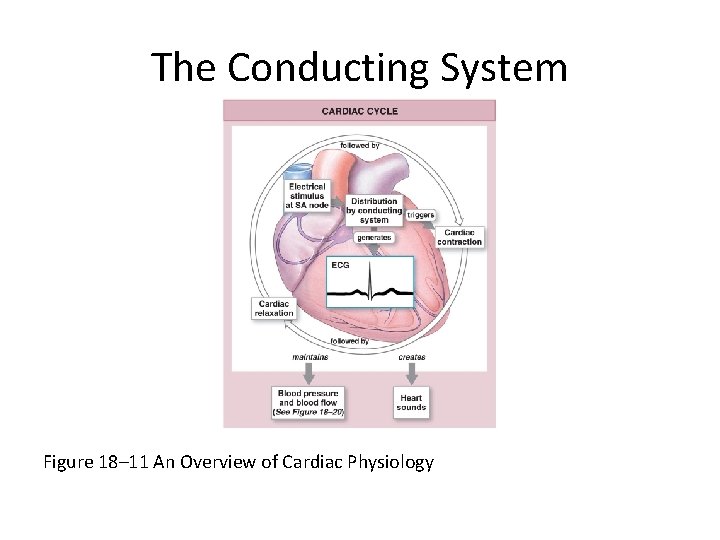
The Conducting System Figure 18– 11 An Overview of Cardiac Physiology
The Conducting System • A system of specialized cardiac muscle cells – Initiates and distributes electrical impulses that stimulate contraction • Automaticity – Cardiac muscle tissue contracts automatically
The Conducting System • Structures of the Conducting System – Sinoatrial (SA) node - wall of right atrium – Atrioventricular (AV) node - junction between atria and ventricles – Conducting cells - throughout myocardium
The Conducting System • Conducting Cells – Interconnect SA and AV nodes – Distribute stimulus through myocardium – In the atrium • Internodal pathways – In the ventricles • AV bundle and the bundle branches
The Conducting System • Prepotential – Also called pacemaker potential – Resting potential of conducting cells • Gradually depolarizes toward threshold – SA node depolarizes first, establishing heart rate
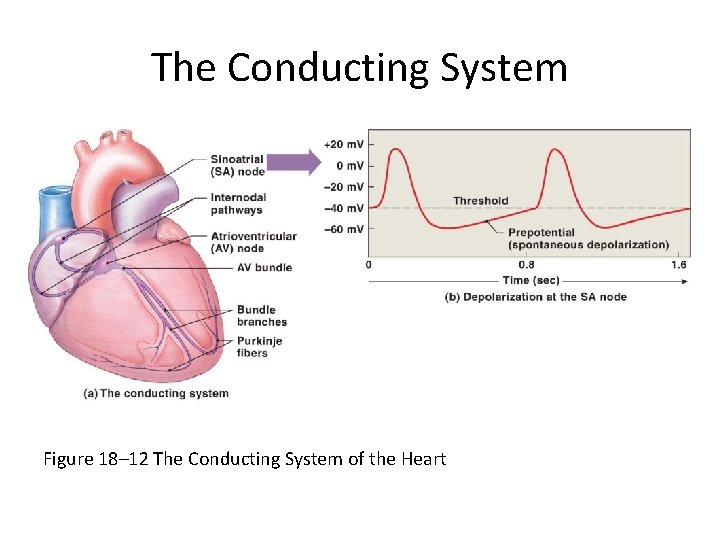
The Conducting System Figure 18– 12 The Conducting System of the Heart
The Conducting System • Heart Rate – SA node generates 80– 100 action potentials per minute – Parasympathetic stimulation slows heart rate – AV node generates 40– 60 action potentials per minute
The Conducting System • The Sinoatrial (SA) Node – In posterior wall of right atrium – Contains pacemaker cells – Connected to AV node by internodal pathways – Begins atrial activation (Step 1)
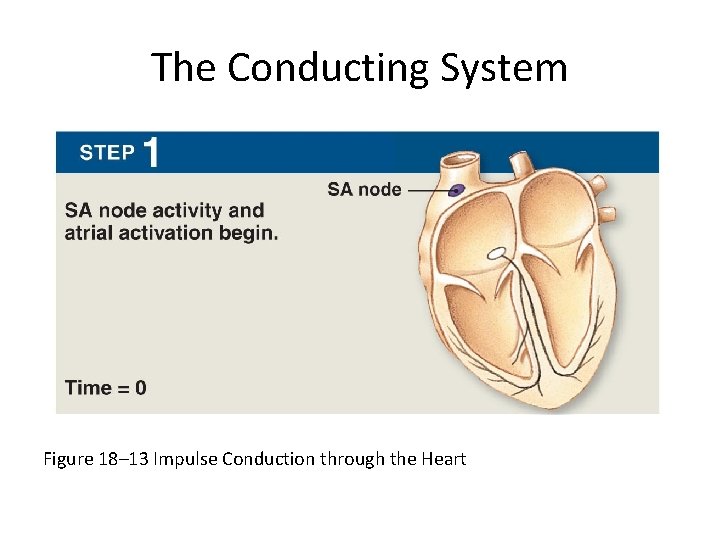
The Conducting System Figure 18– 13 Impulse Conduction through the Heart
The Conducting System • The Atrioventricular (AV) Node – In floor of right atrium – Receives impulse from SA node (Step 2) – Delays impulse (Step 3) – Atrial contraction begins
- Slides: 38