
Anatomy of the Eye Mrs Amany Ahmed Niazy

- Slides: 40
Anatomy of the Eye Mrs. Amany Ahmed Niazy Opto 435 Lecture 2
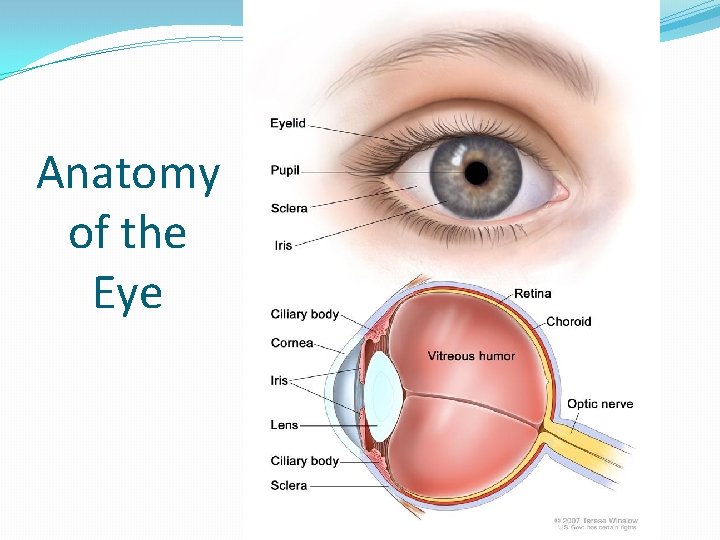
Eyeball �The eyeball lies in a pyramid-shaped bony cavity called orbit. �Each eyeball is suspended by extra ocular muscles. �A pad of fat lies behind the eyeball to provide a protective cushion. � 30 ml Volume. �Have an apex where nerves and vessels emerge.
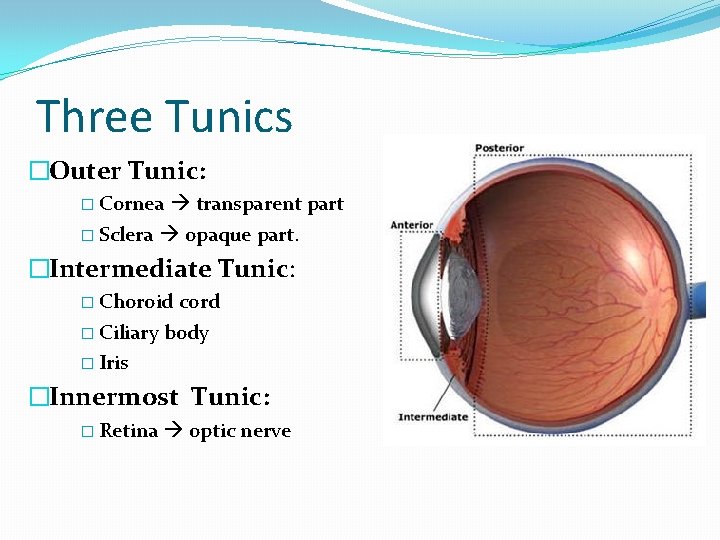
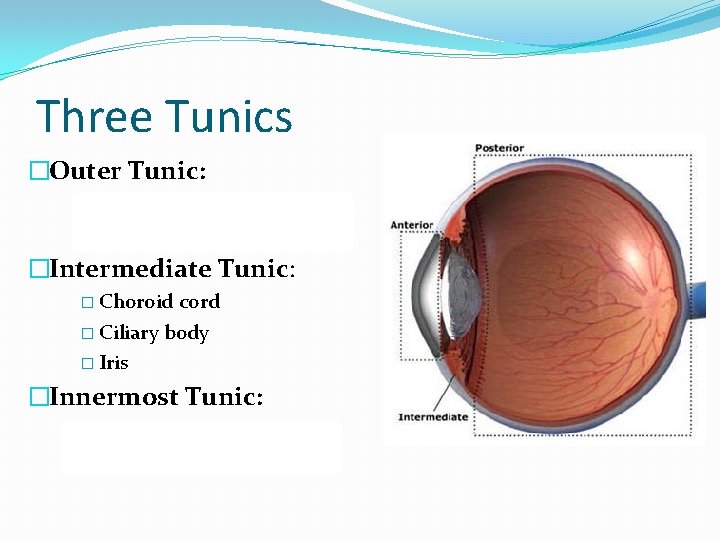
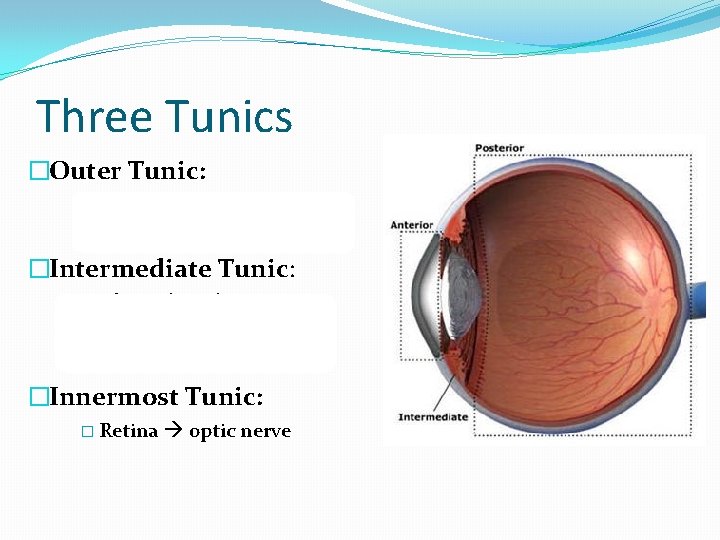
Three Tunics �Outer Tunic: � Cornea transparent part � Sclera opaque part. �Intermediate Tunic: � Choroid cord � Ciliary body � Iris �Innermost Tunic: � Retina optic nerve
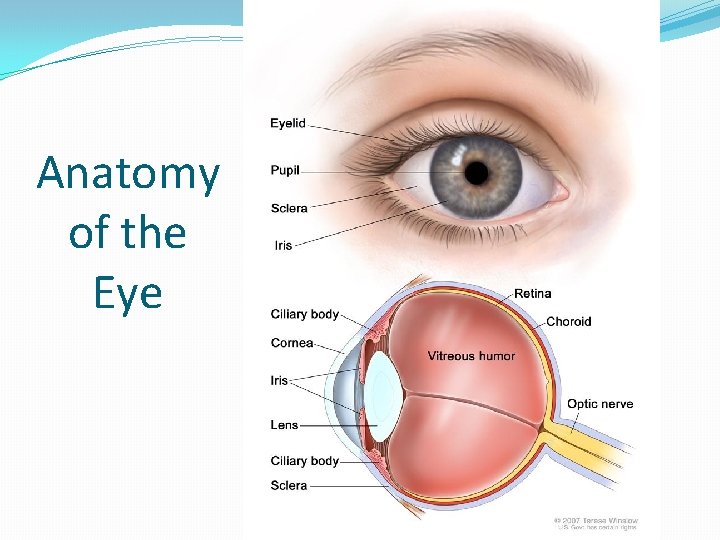
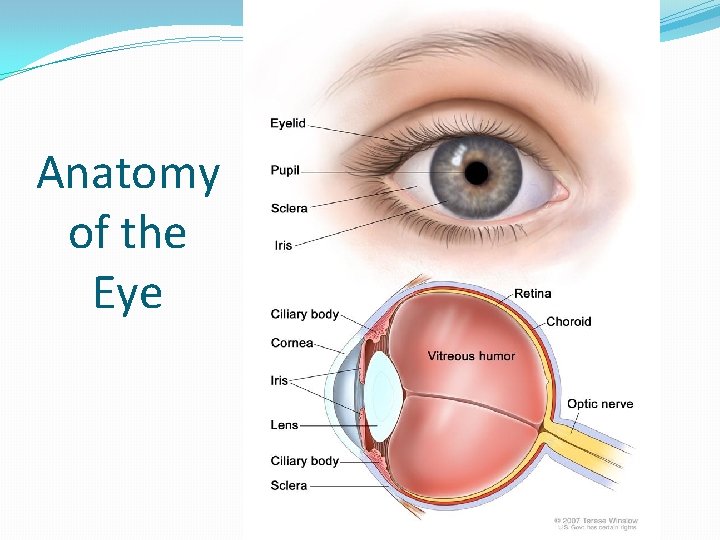
Anatomy of the Eye
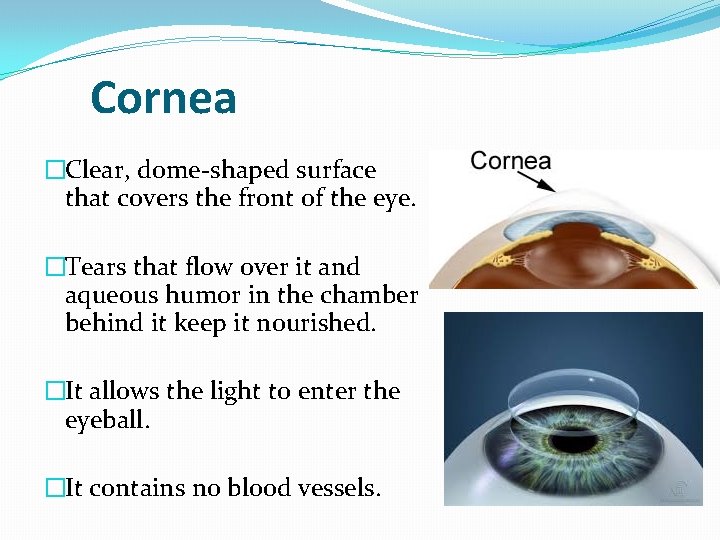
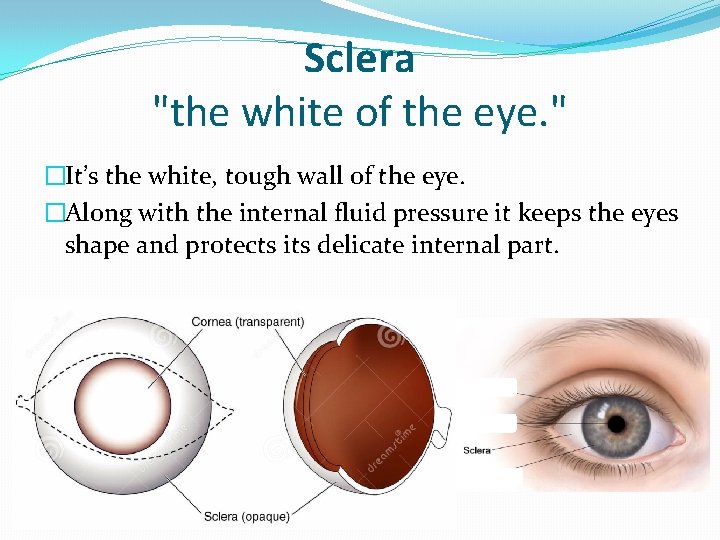
Cornea �Clear, dome-shaped surface that covers the front of the eye. �Tears that flow over it and aqueous humor in the chamber behind it keep it nourished. �It allows the light to enter the eyeball. �It contains no blood vessels.
Sclera "the white of the eye. " �It’s the white, tough wall of the eye. �Along with the internal fluid pressure it keeps the eyes shape and protects its delicate internal part.
Three Tunics �Outer Tunic: � Cornea transparent part � Sclera opaque part. �Intermediate Tunic: � Choroid cord � Ciliary body � Iris �Innermost Tunic: � Retina optic nerve
Anatomy of the Eye
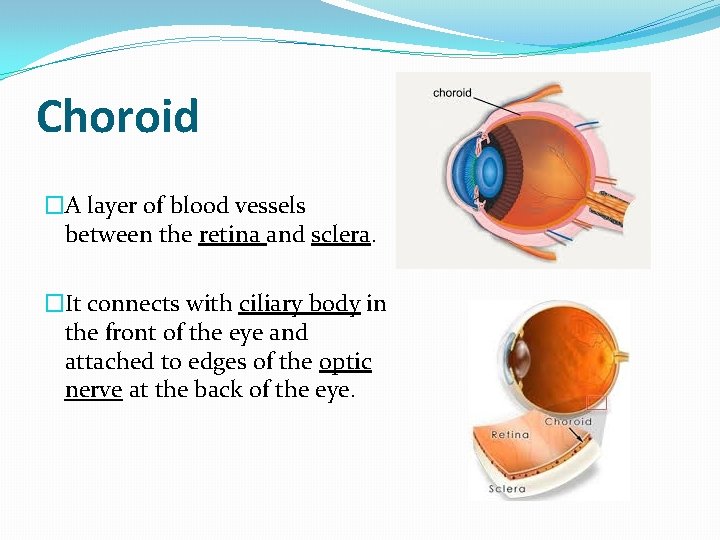
Choroid �A layer of blood vessels between the retina and sclera. �It connects with ciliary body in the front of the eye and attached to edges of the optic nerve at the back of the eye.
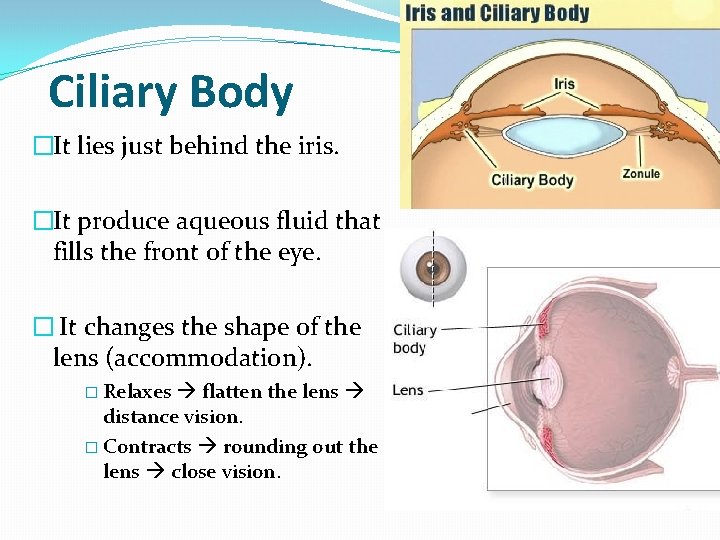
Ciliary Body �It lies just behind the iris. �It produce aqueous fluid that fills the front of the eye. � It changes the shape of the lens (accommodation). � Relaxes flatten the lens distance vision. � Contracts rounding out the lens close vision.
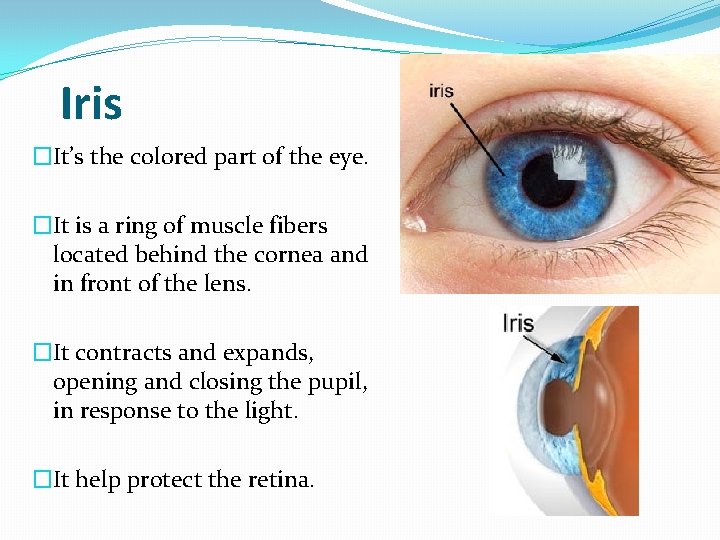
Iris �It’s the colored part of the eye. �It is a ring of muscle fibers located behind the cornea and in front of the lens. �It contracts and expands, opening and closing the pupil, in response to the light. �It help protect the retina.
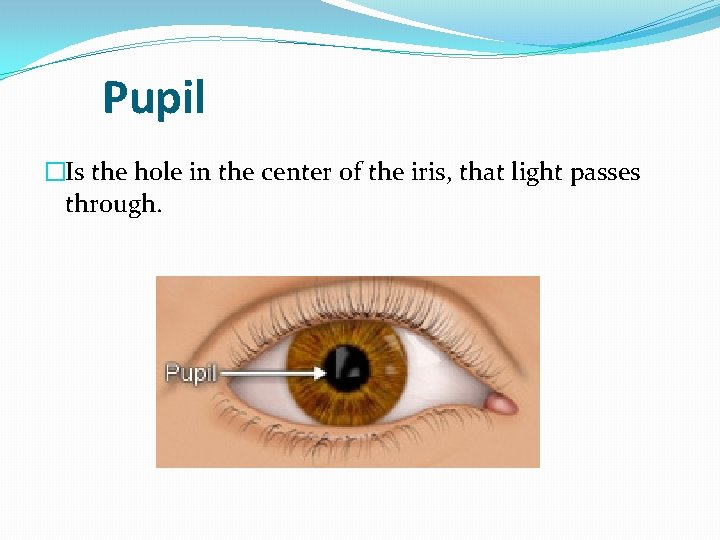
Pupil �Is the hole in the center of the iris, that light passes through.
Three Tunics �Outer Tunic: � Cornea transparent part � Sclera opaque part. �Intermediate Tunic: � Choroid cord � Ciliary body � Iris �Innermost Tunic: � Retina optic nerve
Anatomy of the Eye
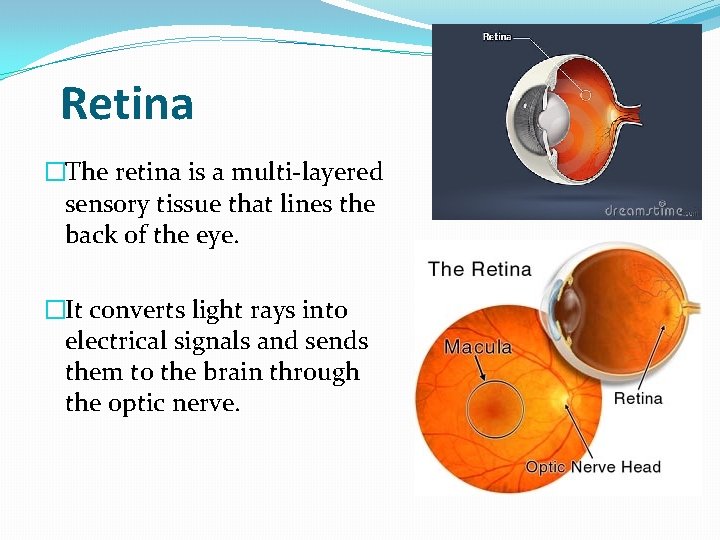
Retina �The retina is a multi-layered sensory tissue that lines the back of the eye. �It converts light rays into electrical signals and sends them to the brain through the optic nerve.
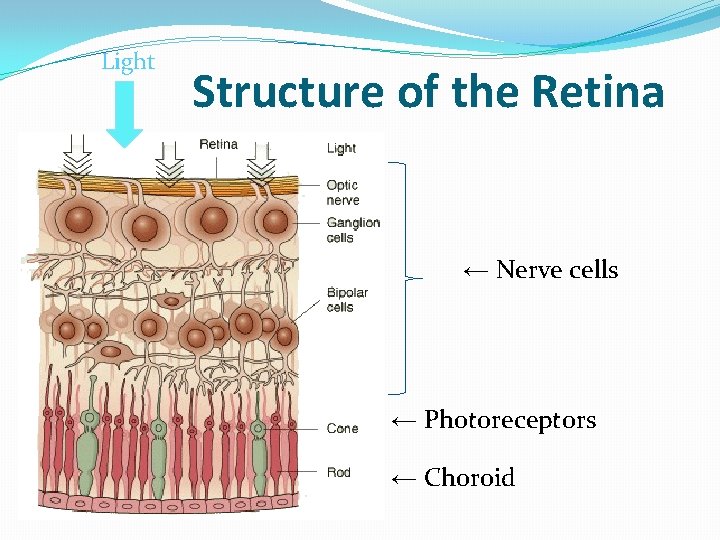
Light Structure of the Retina ← Nerve cells ← Photoreceptors ← Choroid
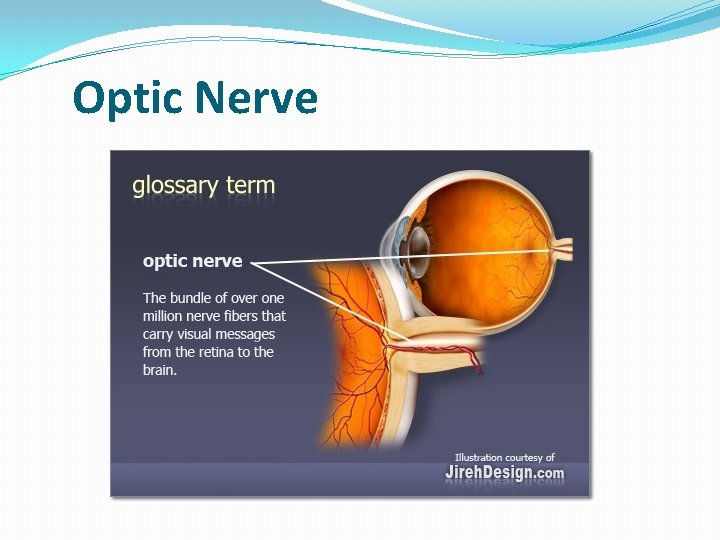
Optic Nerve
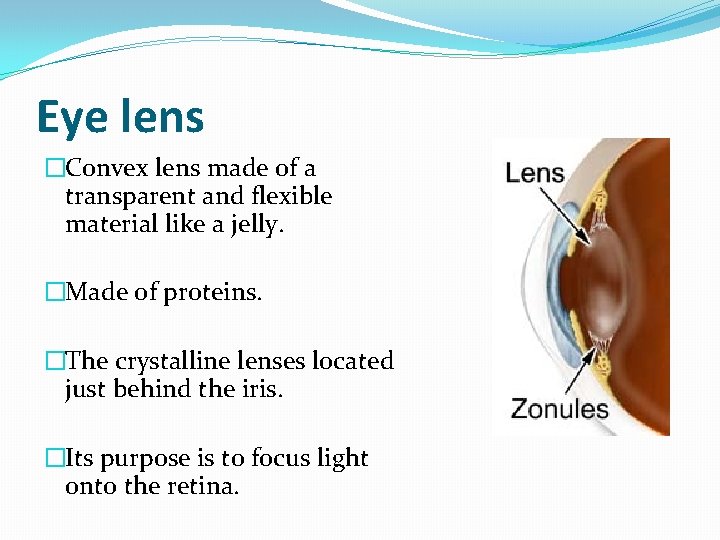
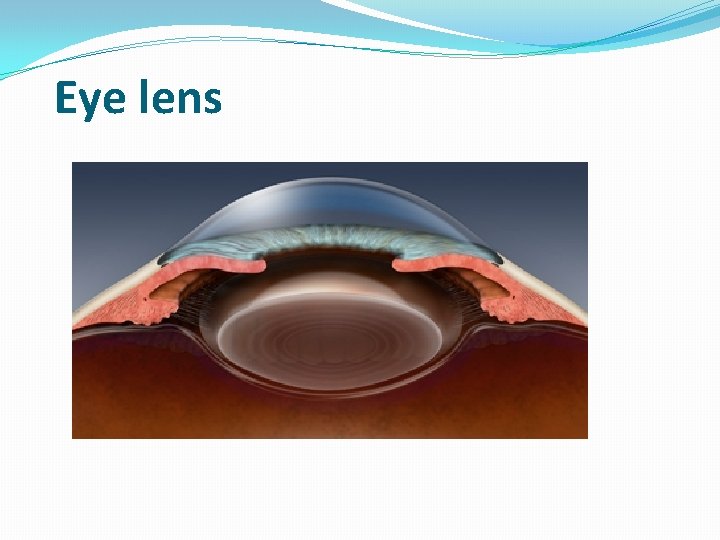
Eye lens �Convex lens made of a transparent and flexible material like a jelly. �Made of proteins. �The crystalline lenses located just behind the iris. �Its purpose is to focus light onto the retina.
Eye lens
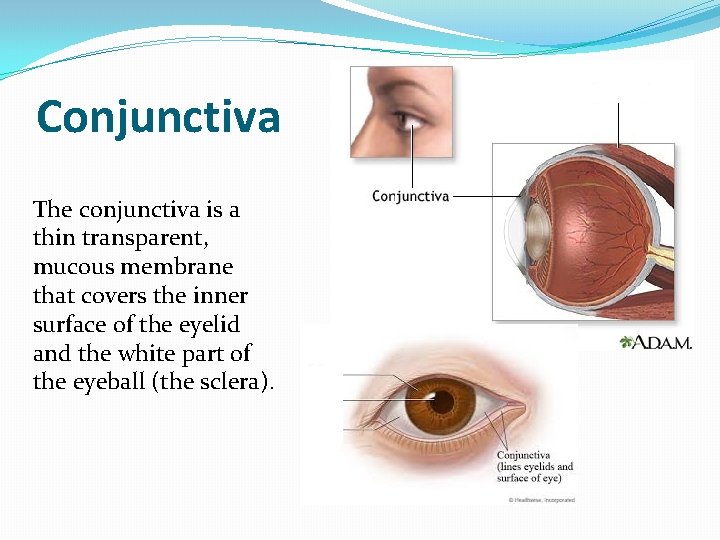
Conjunctiva The conjunctiva is a thin transparent, mucous membrane that covers the inner surface of the eyelid and the white part of the eyeball (the sclera).
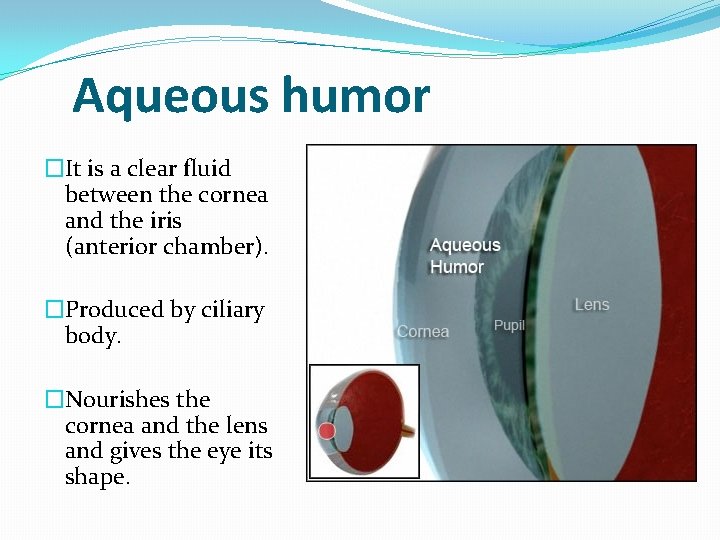
Aqueous humor �It is a clear fluid between the cornea and the iris (anterior chamber). �Produced by ciliary body. �Nourishes the cornea and the lens and gives the eye its shape.
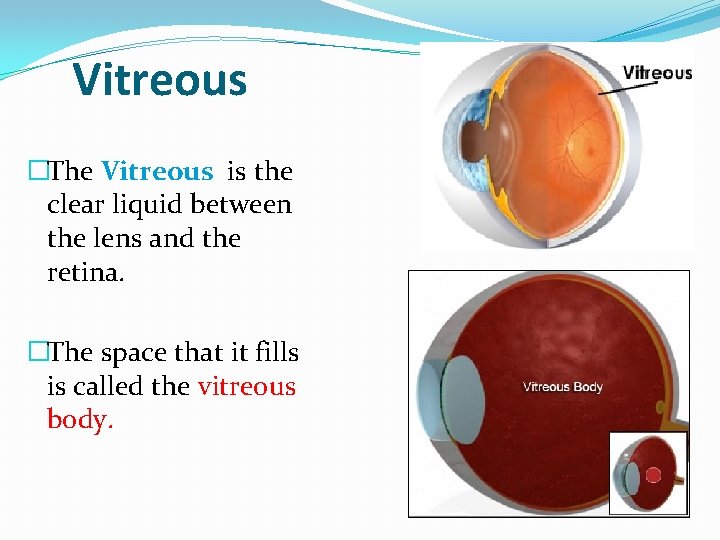
Vitreous �The Vitreous is the clear liquid between the lens and the retina. �The space that it fills is called the vitreous body.
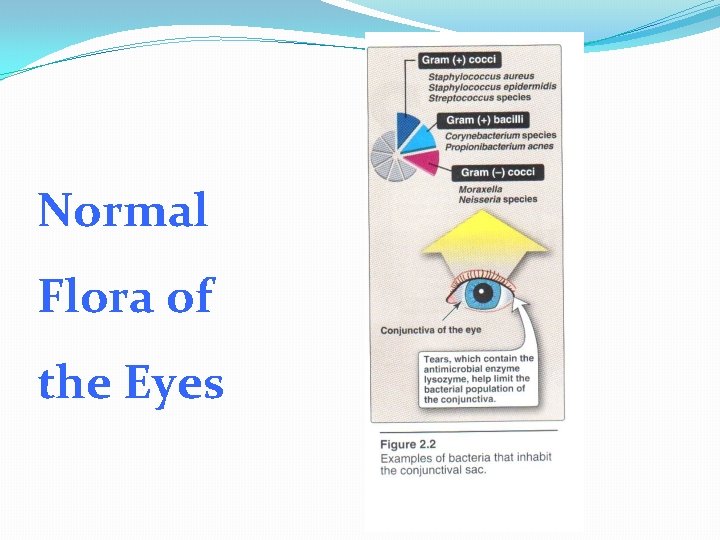
Normal Flora of the Eye �Bacterial colonization of the eyelid margin and conjunctiva is normal and beneficial for the eye. Interactions between ocular surface mucosa and resident nonpathogenic bacteria reduce opportunities for pathogenic strains to gain a foothold. �Clinically, the use of antibiotics or topical corticosteroids, or a condition such as dry eye that prevents normal tear turnover, may alter the spectrum of eyelid and conjunctival flora
Normal Flora of the Eye �They comprise of mainly bacteria which do not cause infection in normal conditions but can be a main source of infection after ocular surgery, trauma or in immune compromised
Normal Flora of the Eye �The composition of the normal ocular flora changes dynamically throughout our lives, its affected by: � Age. �Geographic location. �Immunosuppressioin. �Ocular inflammation. �Dry eye. �Contact lens wear. �Antibiotic use. �Surgery.
Normal Flora of the Eye �Following vaginal birth, the infant’s eye commonly harbors multiple bacterial species, including: � Staphylococcus aureus, �S. epidermidis, �Streptococcus spp. �Propionibacterium spp. � Escherichia coli. �With increasing age, gram-negative bacteria are more commonly isolated.
Normal Flora of the Eyes
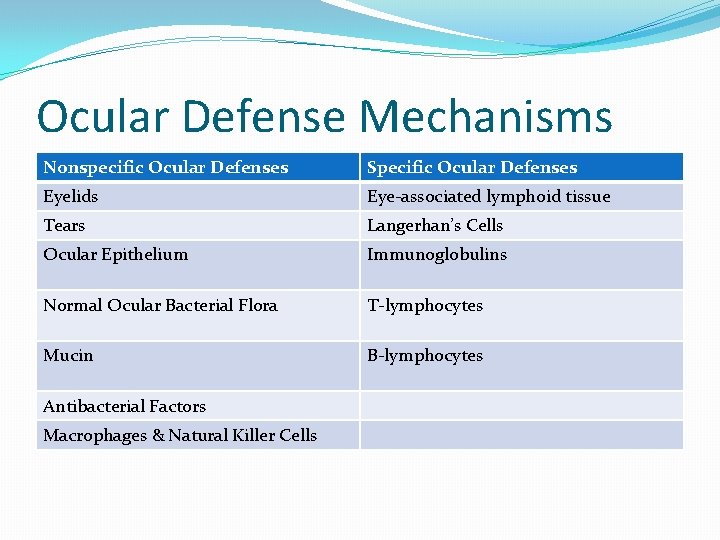
Ocular Defense Mechanisms Nonspecific Ocular Defenses Specific Ocular Defenses Eyelids Eye-associated lymphoid tissue Tears Langerhan’s Cells Ocular Epithelium Immunoglobulins Normal Ocular Bacterial Flora T-lymphocytes Mucin B-lymphocytes Antibacterial Factors Macrophages & Natural Killer Cells
Eyelids & Eyelashes �Eyelid, & bony orbit protect from external trauma & airborne particles. �Even the slightest contact with the eyelids, eyelashes, or corneal surface stimulate the blink reflex. � Once blink reflex is stimulated the lids sweep any debris, microbes and allergens in the lacrimal excretory system
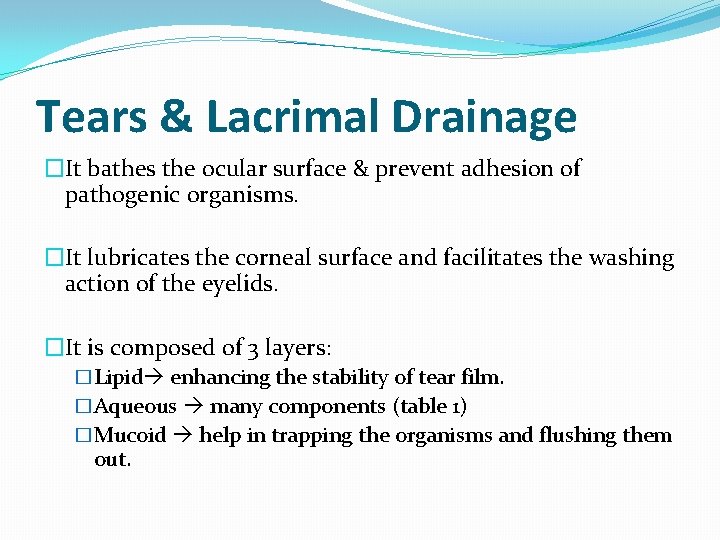
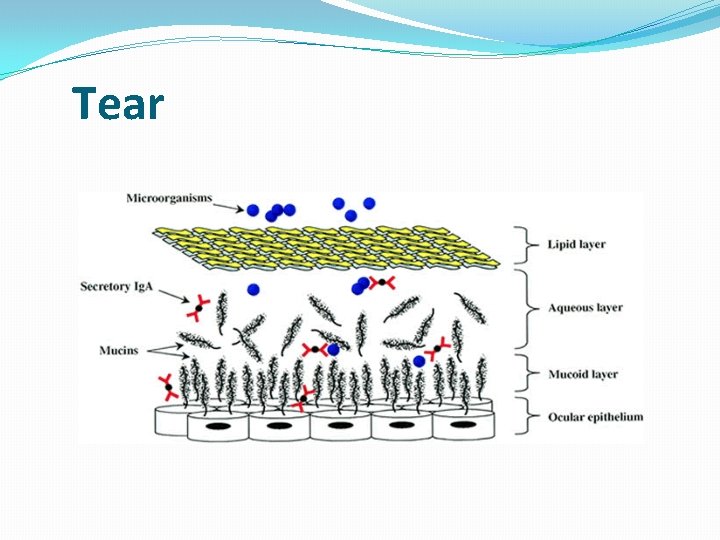
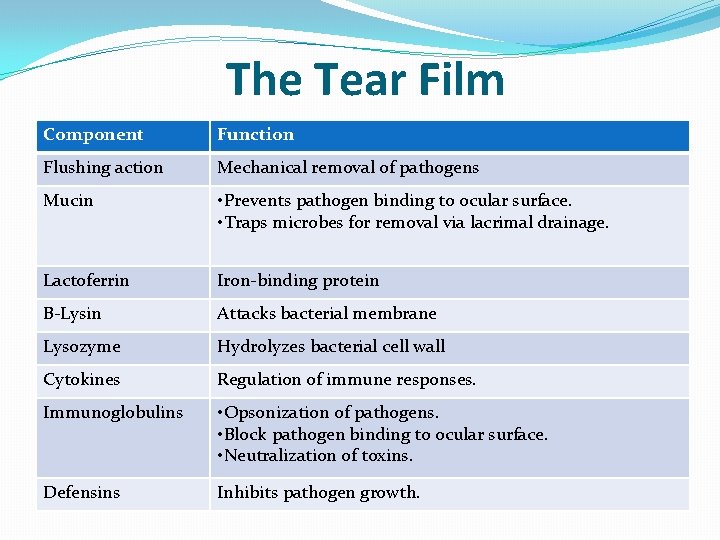
Tears & Lacrimal Drainage �It bathes the ocular surface & prevent adhesion of pathogenic organisms. �It lubricates the corneal surface and facilitates the washing action of the eyelids. �It is composed of 3 layers: �Lipid enhancing the stability of tear film. �Aqueous many components (table 1) �Mucoid help in trapping the organisms and flushing them out.
Tear
The Tear Film Component Function Flushing action Mechanical removal of pathogens Mucin • Prevents pathogen binding to ocular surface. • Traps microbes for removal via lacrimal drainage. Lactoferrin Iron-binding protein B-Lysin Attacks bacterial membrane Lysozyme Hydrolyzes bacterial cell wall Cytokines Regulation of immune responses. Immunoglobulins • Opsonization of pathogens. • Block pathogen binding to ocular surface. • Neutralization of toxins. Defensins Inhibits pathogen growth.
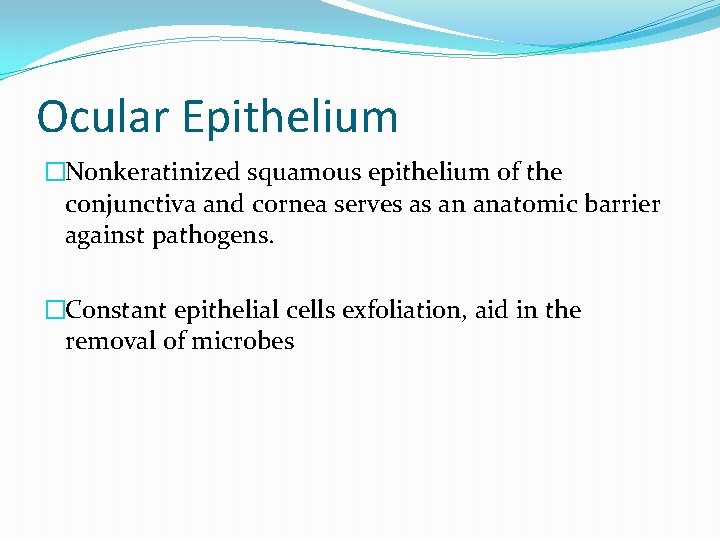
Ocular Epithelium �Nonkeratinized squamous epithelium of the conjunctiva and cornea serves as an anatomic barrier against pathogens. �Constant epithelial cells exfoliation, aid in the removal of microbes
Normal Ocular Flora �Colonization of ocular surface by microorganisms is a dynamic phenomenon. �Most humans harbor at least some normal bacteria in their periocular tissues (even if culture is negative). �Delicate balance of host-parasite relationships in the external ocular microenvironment.
Mucins �They trap pathogenic microorganisms until they are swept out of the ocular aria by blinking. (eg. prevents Candida spp from adhering to contact lenses. ) �Muccin is expressed by most specialized ocular epithelial tissues.
Antibacterial Factors Lysozyme �It’s a low-molecular-weight protein that demonstrates bacteriostatic and bactericidal activity against a wide range of primarily gram positive bacteria. �It facilitates the breakdown of bacterial cell wall. �It is one of the major components of tears.
Antibacterial Factors - Defensins �It acts as an antibiotic, and produced by leukocytes. �Defensin target is greater than lysozyme and extends to gram positive and gram negative bacteria, fungi and viruses.
Macrophages and Natural Killer Cells �Natural Killer (NK): are important in the initial nonspecific response to most virus infections. � once activated they secret antiviral cytokines. � �Macrophages: they provide first line defense against bacteria fungi and parasite. � phagocytosis (ingestion) of pathogens � killing of ingested pathogens. � recruitment of additional immune cells via secretion of cytokines. �
Keep in mind, �The blood-ocular barrier prevents the free passage of most large molecules from the bloodstream into the aqueous and vitreous humor. As a result, levels of soluble immunologic components within the fluid-filled spaces of the eye are relatively low, except in cases of intraocular infection or inflammation. �The aqueous and vitreous humor are not normally populated by immune cells, incases of intraocular infection, injury or other similar diseases, it can quickly become packed with inflammatory cells which compromise the visual field.
In summary The eye is well equipped with innate and specific defense systems. Mechanical, soluble, and cellular components work in synchronization to prevent loss of vision from infectious organisms and from the damaging effects of the host's own immune response. ocular microbiology and immunology represents a field rich in unanswered questions and is deserving of continued aggressive research Clin Microbiol Rev. Oct 2000; 13(4): 662– 685. PMCID: PMC 88956 Fungal and Parasitic Infections of the Eye. Stephen A. Klotz, 1, 2, * Christopher C. Penn, 3 Gerald J. Negvesky, 4 and Salim I. Butrus 4 Author information ► Copyright and License information