
Anatomy of the Eye III correlations with clinical



- Slides: 58
Anatomy of the Eye III: correlations with clinical exam and diagnosis
Objectives We will review aspects of the anatomy and histology of the eye n We will discuss how to describe the lesions you see with the Indirect Ophthalmoscope n we will discuss several practical ways that learning SURFACE ANATOMY and HISTOPATHOLOGY helps clinical diagnosis when examining the HIV/AIDS patient with the Indirect Ophthalmoscopy n
“Surface anatomy” Where is the lesion located in regards to the “geography” of the retina? (how do you give the lesion an “address” so you can find your way there next time, and tell other clinicians)
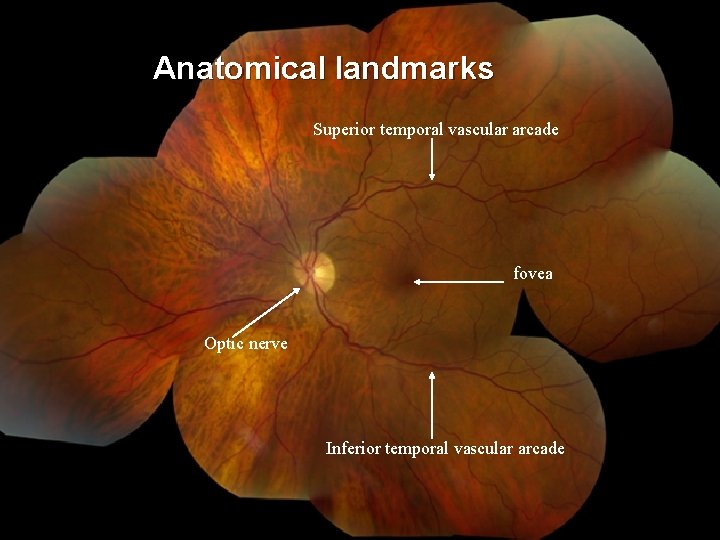
Lesions are “geographically” located in relation to the following 4 landmarks (the “address”) 1. 2. 3. 4. Optic nerve Fovea Superior and inferior temporal arcades Vortex veins (peripheral lesions)
Anatomical landmarks Superior temporal vascular arcade fovea Optic nerve Inferior temporal vascular arcade
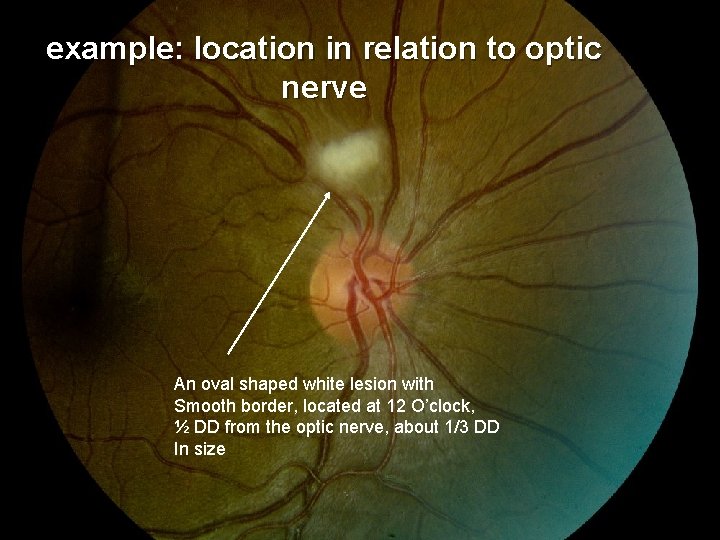
example: location in relation to optic nerve An oval shaped white lesion with Smooth border, located at 12 O’clock, ½ DD from the optic nerve, about 1/3 DD In size
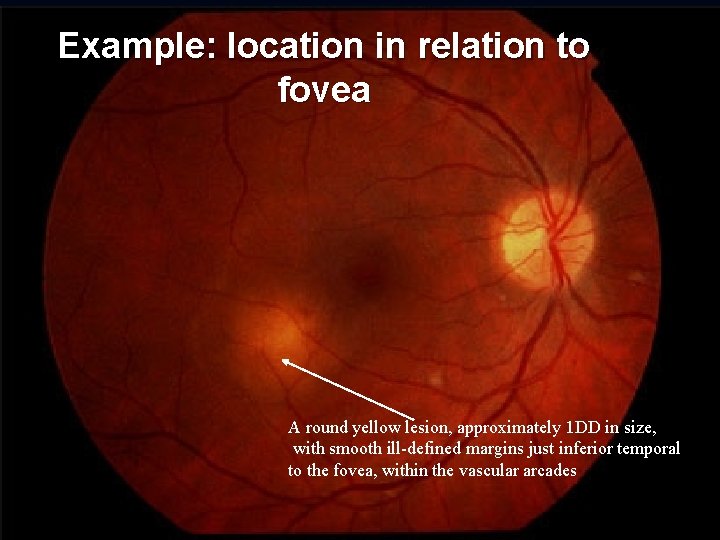
Example: location in relation to fovea A round yellow lesion, approximately 1 DD in size, with smooth ill-defined margins just inferior temporal to the fovea, within the vascular arcades
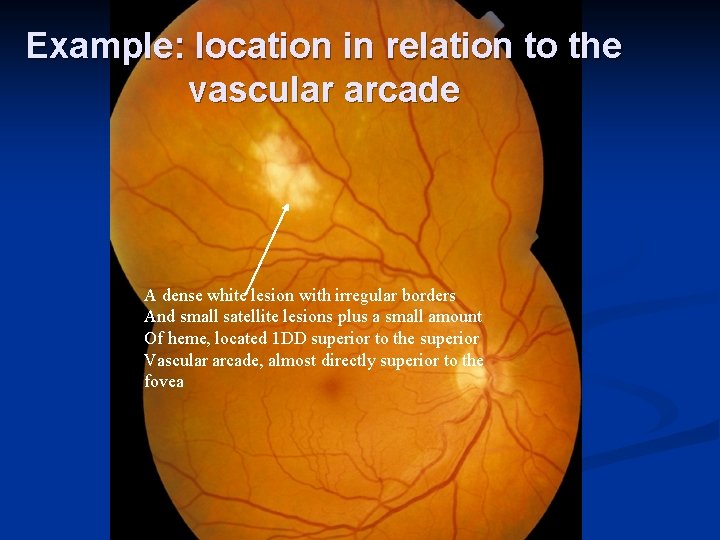
Example: location in relation to the vascular arcade A dense white lesion with irregular borders And small satellite lesions plus a small amount Of heme, located 1 DD superior to the superior Vascular arcade, almost directly superior to the fovea
The Optic nerve is the key “anatomic landmark”
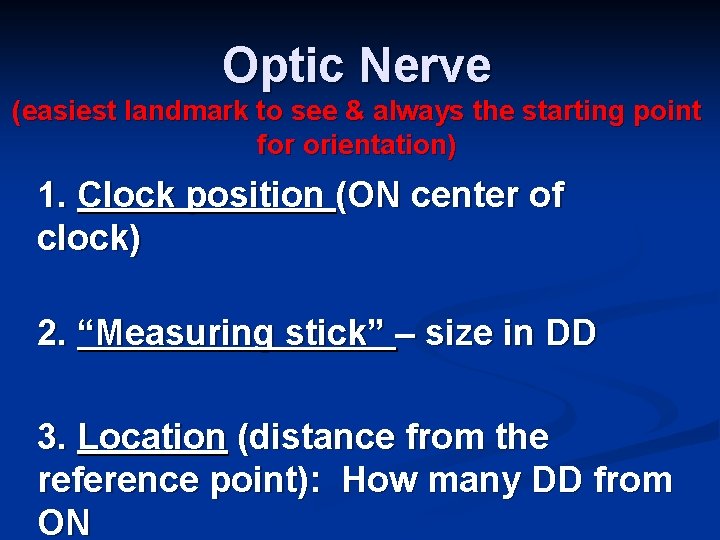
Optic Nerve (easiest landmark to see & always the starting point for orientation) 1. Clock position (ON center of clock) 2. “Measuring stick” – size in DD 3. Location (distance from the reference point): How many DD from ON
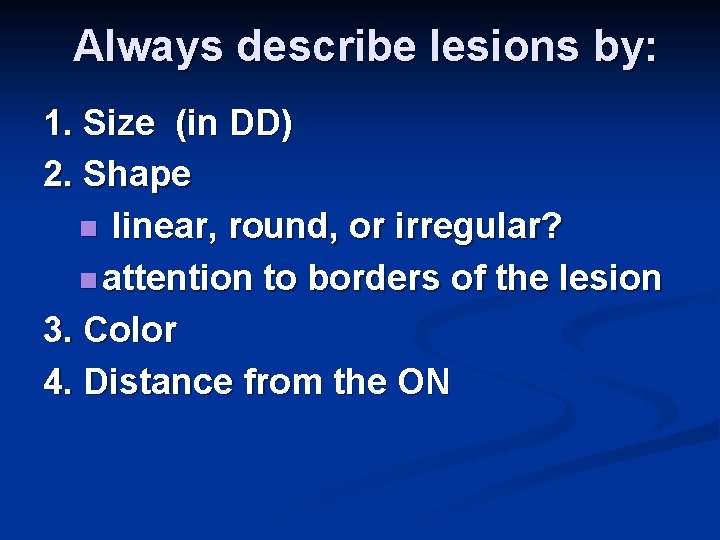
Always describe lesions by: 1. Size (in DD) 2. Shape n linear, round, or irregular? n attention to borders of the lesion 3. Color 4. Distance from the ON
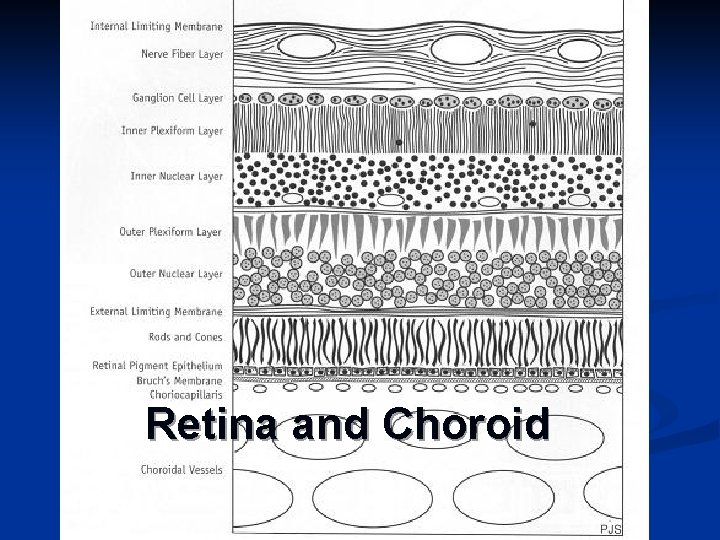
Histopathology Where is the lesion located (or where do you think it started), in relation to the CHOROID and layers of the retina, particularly the NERVE FIBER LAYER
Retina and Choroid
The NFL (nerve fiber layer) and choroid are the key “histologic landmarks”
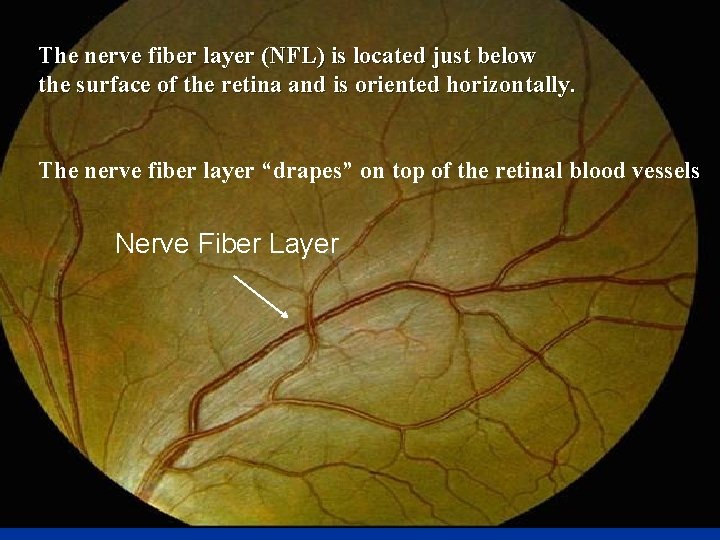
The nerve fiber layer (NFL) is located just below the surface of the retina and is oriented horizontally. The nerve fiber layer “drapes” on top of the retinal blood vessels Nerve Fiber Layer
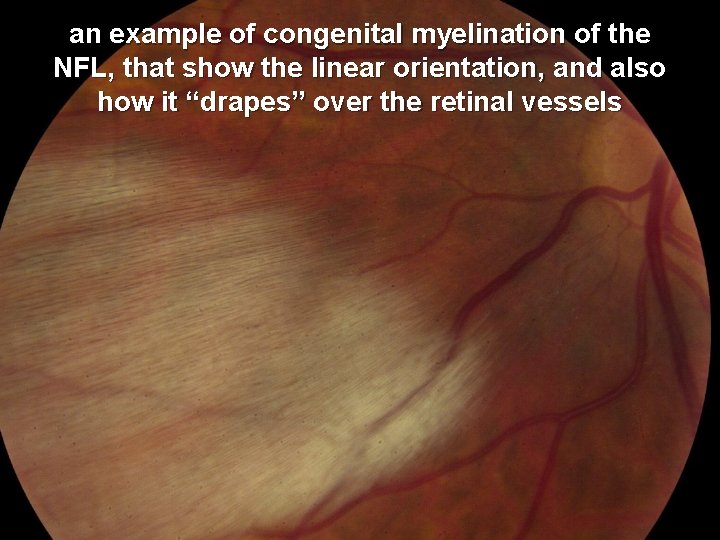
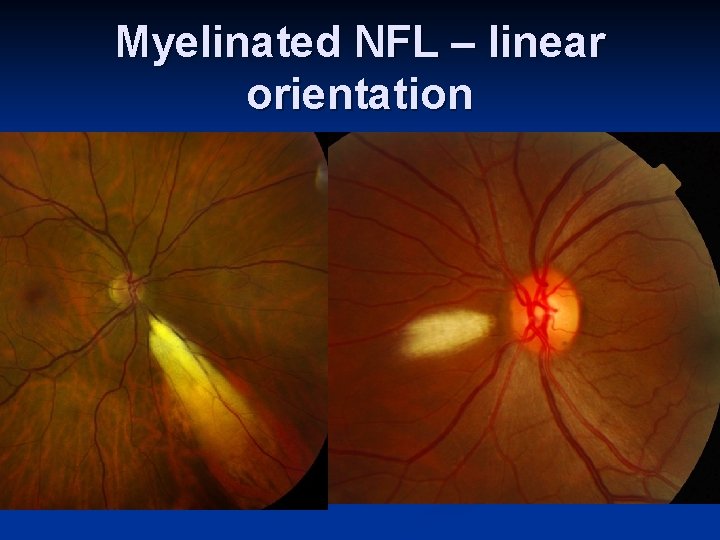
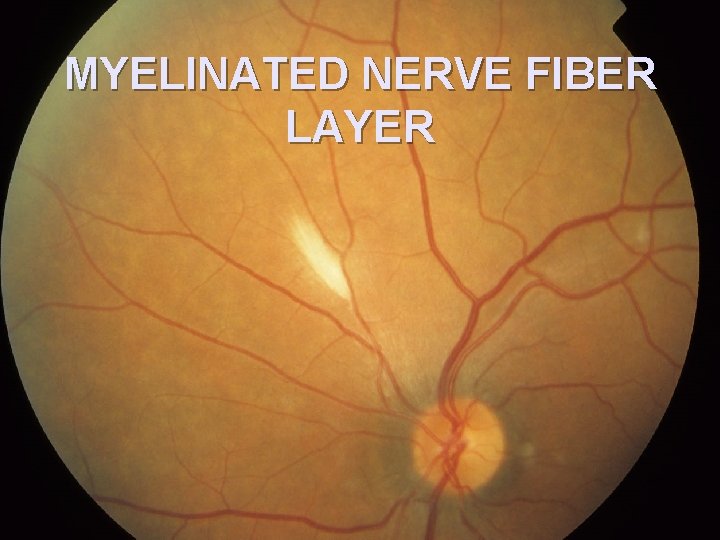
an example of congenital myelination of the NFL, that show the linear orientation, and also how it “drapes” over the retinal vessels
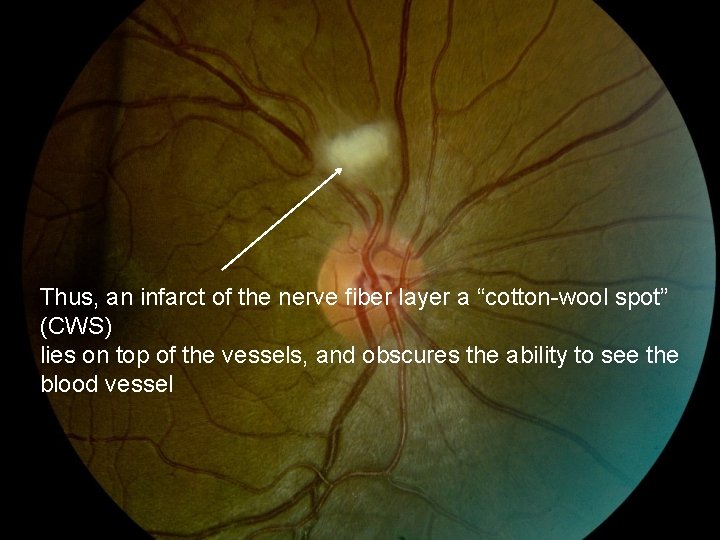
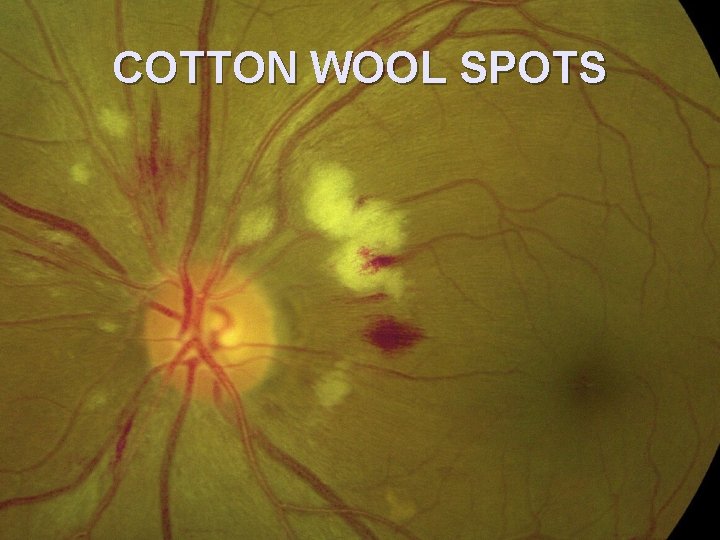
Thus, an infarct of the nerve fiber layer a “cotton-wool spot” (CWS) lies on top of the vessels, and obscures the ability to see the blood vessel
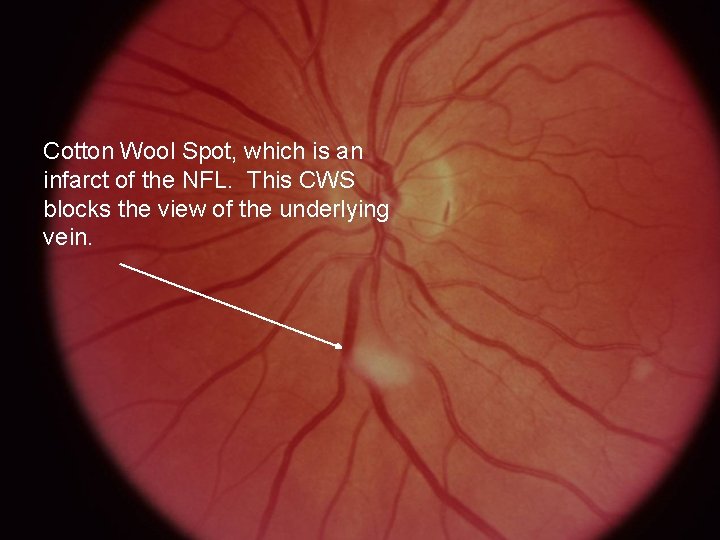
Cotton Wool Spot, which is an infarct of the NFL. This CWS blocks the view of the underlying vein.
Color & Shape the “clues” to histologic location
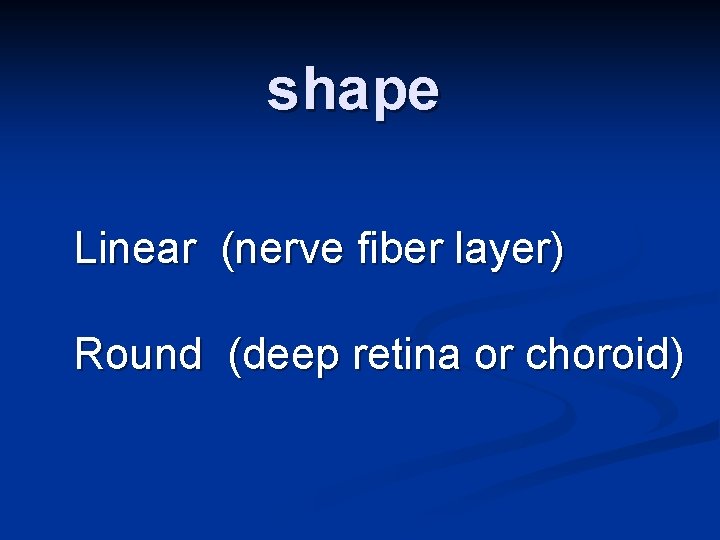
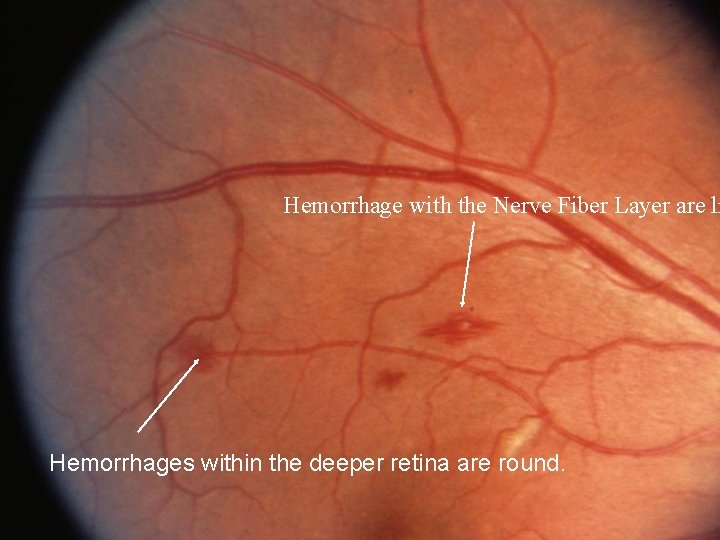
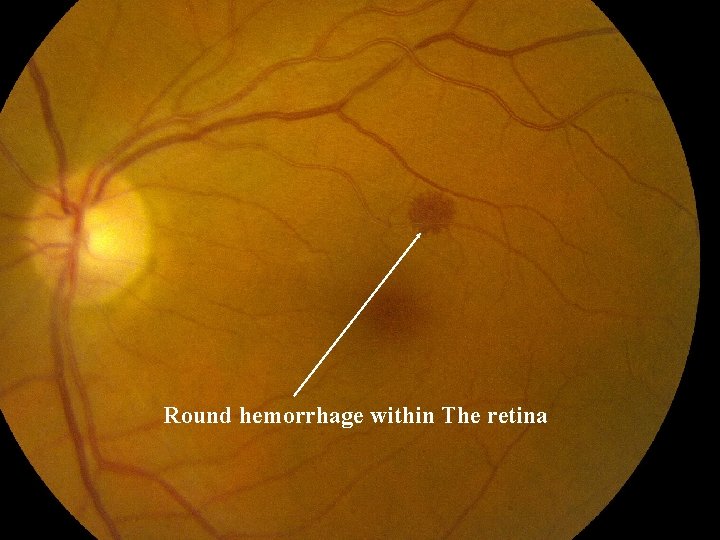
shape Linear (nerve fiber layer) Round (deep retina or choroid)
Myelinated NFL – linear orientation
Hemorrhage with the Nerve Fiber Layer are li Hemorrhages within the deeper retina are round.
Round hemorrhage within The retina
COLOR YELLOW vs. WHITE
“Yellow” confusing!!! YELLOW DOES NOT MEAN BRIGHT YELLOW – IT ONLY MEANS “A FEW DROPS” OF YELLOW MIXED WITH THE RED OR WHITE COLOR.
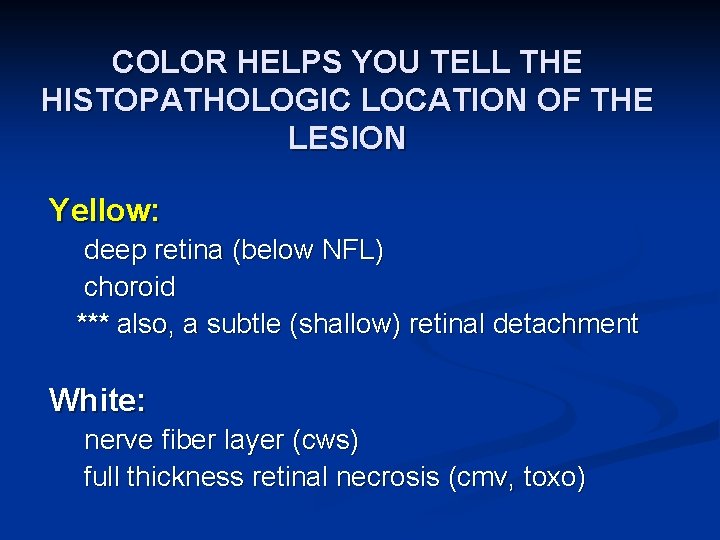
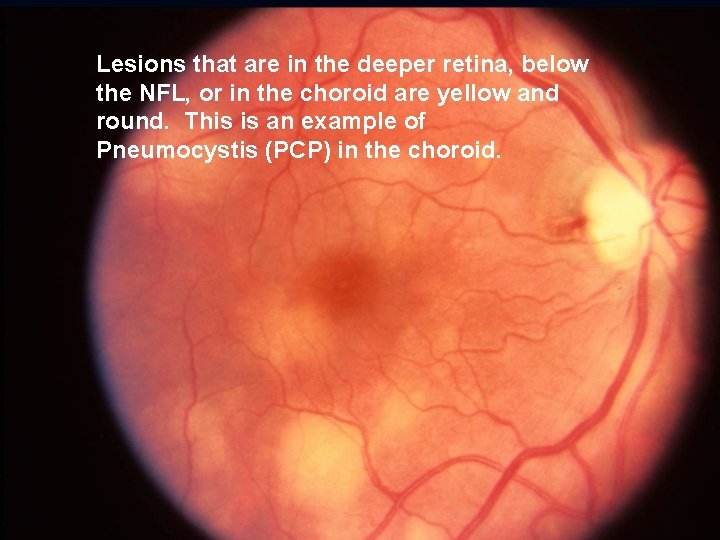
COLOR HELPS YOU TELL THE HISTOPATHOLOGIC LOCATION OF THE LESION Yellow: deep retina (below NFL) choroid *** also, a subtle (shallow) retinal detachment White: nerve fiber layer (cws) full thickness retinal necrosis (cmv, toxo)
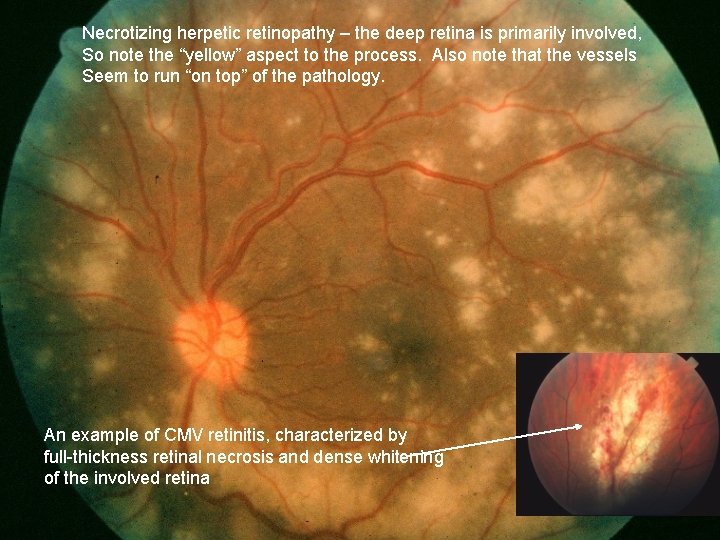
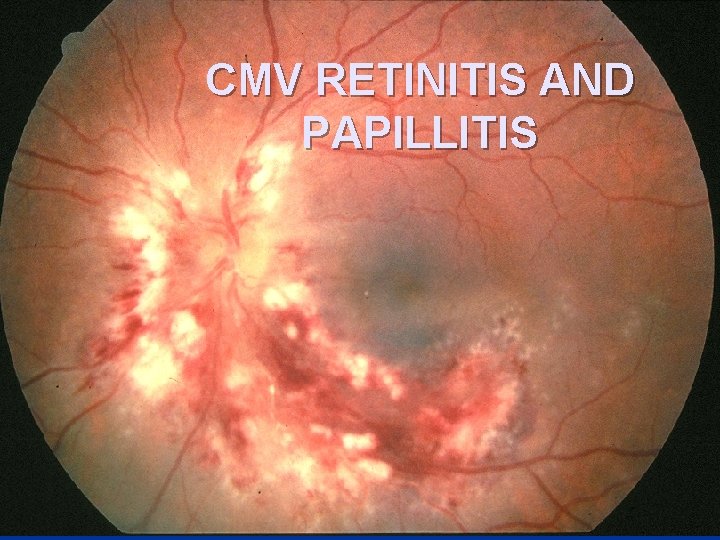
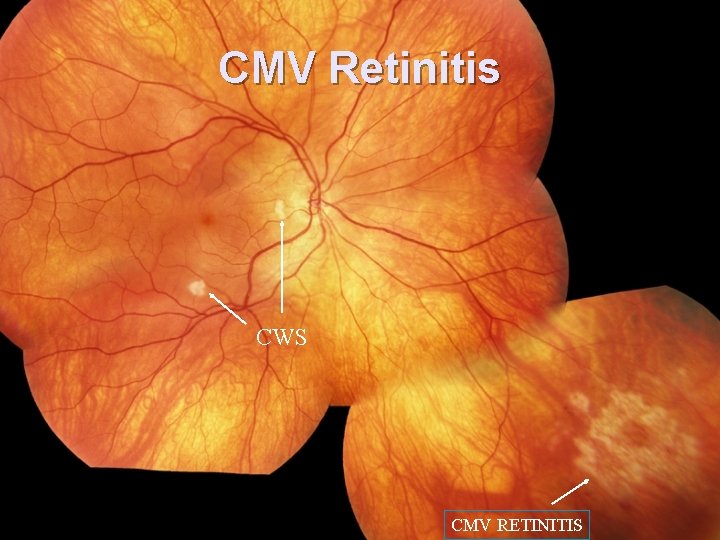
Necrotizing herpetic retinopathy – the deep retina is primarily involved, So note the “yellow” aspect to the process. Also note that the vessels Seem to run “on top” of the pathology. An example of CMV retinitis, characterized by full-thickness retinal necrosis and dense whitening of the involved retina
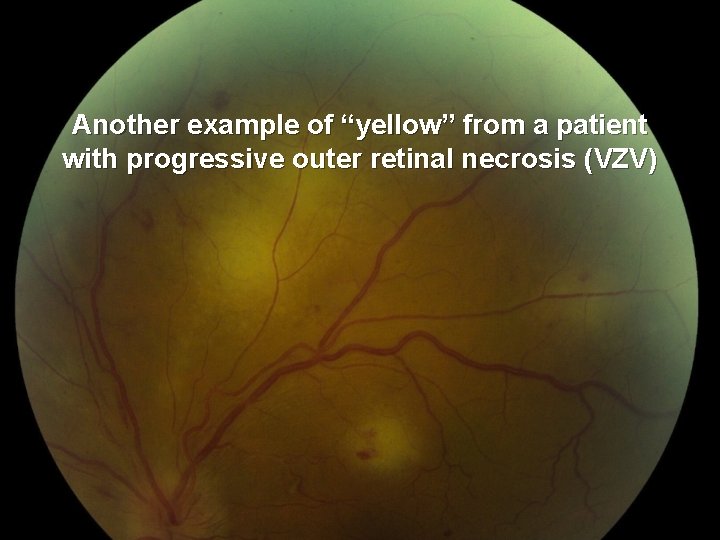
Another example of “yellow” from a patient with progressive outer retinal necrosis (VZV)
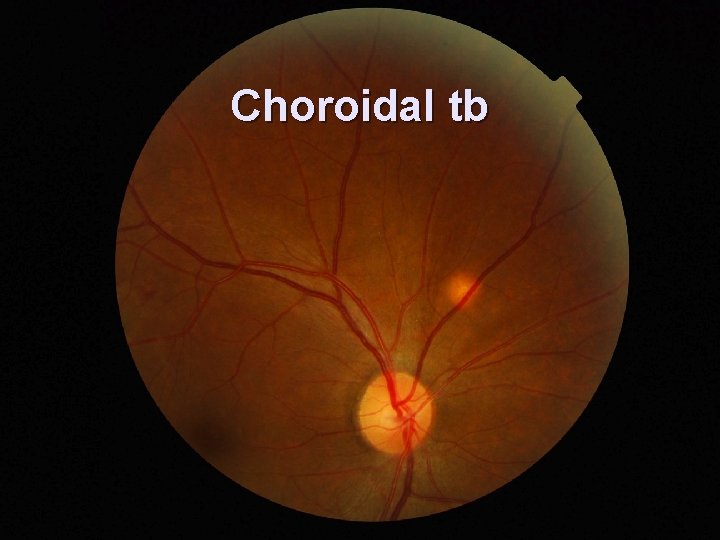
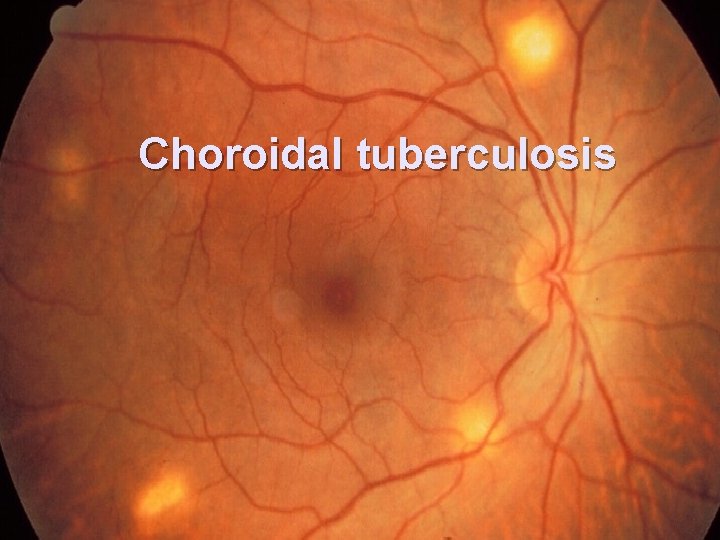
Choroidal tb
Lesions that are in the deeper retina, below the NFL, or in the choroid are yellow and round. This is an example of Pneumocystis (PCP) in the choroid.
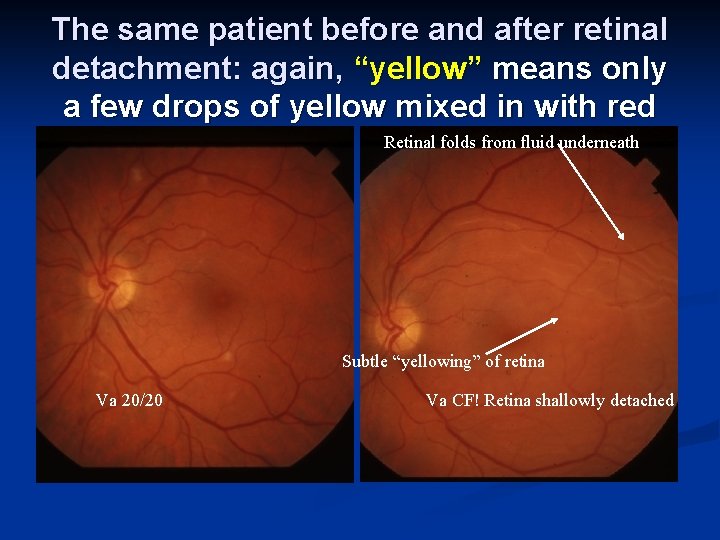
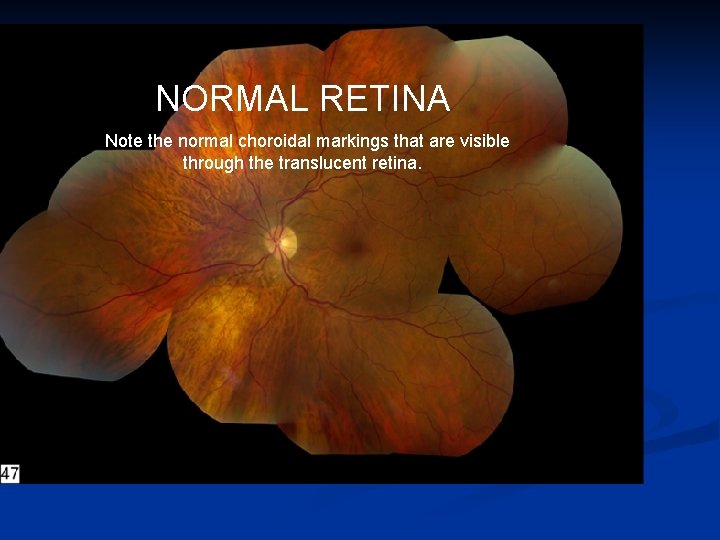
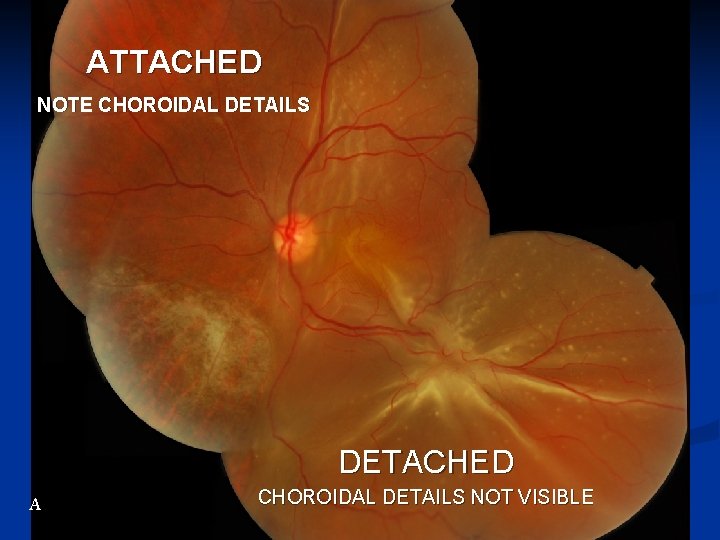
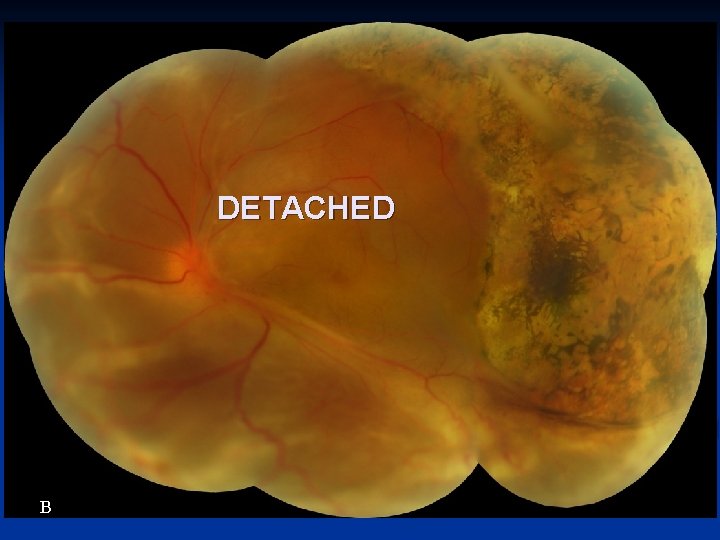
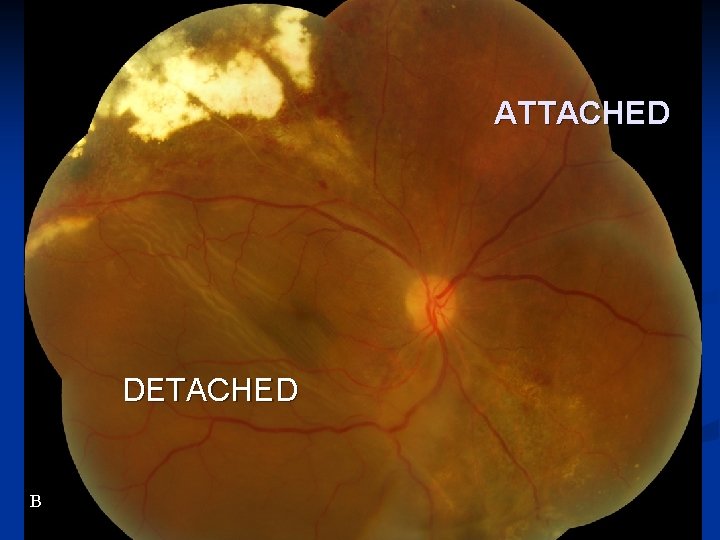
RETINAL DETACHMENT even a small amount of fluid under the retina give the retina a “hint” of yellow + we lose the ability to see the normal “choriodal markings”
The same patient before and after retinal detachment: again, “yellow” means only a few drops of yellow mixed in with red Retinal folds from fluid underneath Subtle “yellowing” of retina Va 20/20 Va CF! Retina shallowly detached
NORMAL RETINA Note the normal choroidal markings that are visible through the translucent retina.
ATTACHED NOTE CHOROIDAL DETAILS DETACHED A CHOROIDAL DETAILS NOT VISIBLE
DETACHED B
ATTACHED DETACHED B
WHITE Nerve Fiber layer Full thickness retinal necrosis
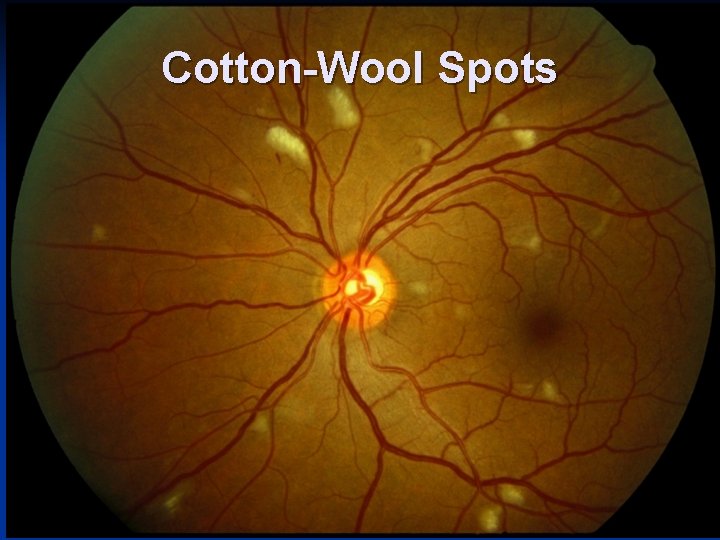
COTTON WOOL SPOTS
MYELINATED NERVE FIBER LAYER
CMV RETINITIS AND PAPILLITIS
HOW DOES IT HELP? Regarding the three most important things you must recognize (CMV retinitis, Cotton-Wool Spots, and Choroidal TB) 1. Distance from the ON 2. Size 3. Shape 4. Color
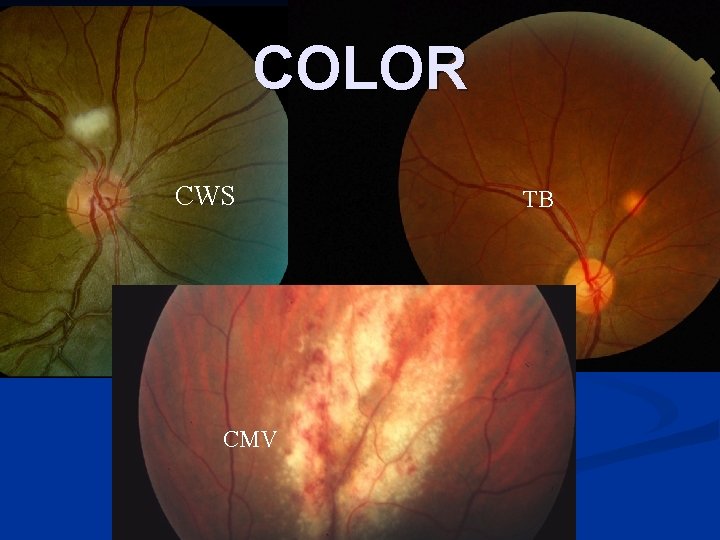
Distance from the optic nerve CWS (cotton-wool spots) – tend to be within 4 -5 disc diameters from the optic nerve (where the nerve fiber layer is thickest) n CMV retinitis – ANYWHERE !!! n TB (and any other “blood-borne” infections – tend to be in the posterior pole, near the optic nerve or macula (where the choroidal blood flow is greatest) n
Cotton-Wool Spots
CMV Retinitis CWS CMV RETINITIS
Choroidal tuberculosis
Size CWS – usually 1/2 - 1/3 Disc diameter n CMV – ANY SIZE !!! n Choroidal tb - usually ¼ to 4 -5 Disc diameters n
Shape CWS – tend to be round or oval with clearly defined borders n CMV – ANY SHAPE !!! But with characterstically irregular border and satellite lesions n Choroidal tb - tends to be round with regular but hard to exactly define border n
color CWS – bright white n CMV – bright white n Choroidal tb - yellow n
COLOR CWS CMV TB
Histopathology & infectious agents Retina: neural tissue (embryologically part of the brain). It attracts infectious agents that are neurotropic such as the herpesvirus family (VZV, HSV, and CMV) as well as syphilis and toxoplasmosis. Choroid: high-flow vascular channels, the “radiator” of the eye & receives the highest blood flow/unit volume of any tissue in the body. It is the preferred site for any infectious agent that is blood borne, such as disseminated TB, fungal sepsis, etc.
One very difficult Case
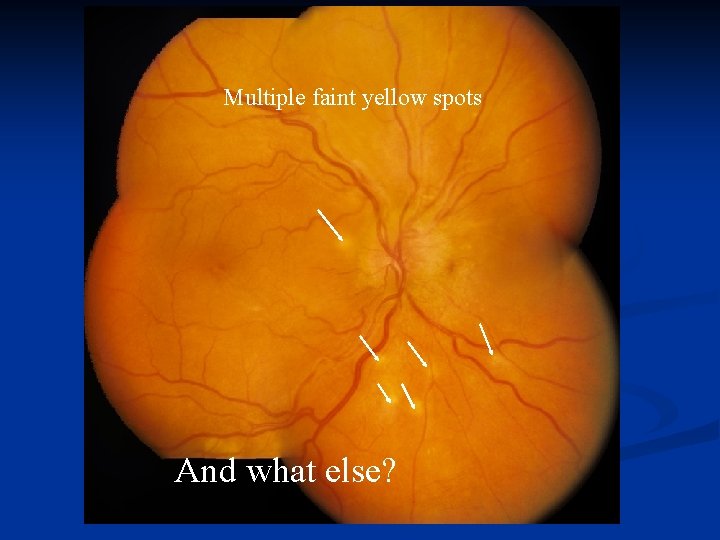
A 34 y/o woman with HIV (CD 4=5) is brought in by her husband, who tells you the patient has been acting a little more withdrawn, with some fever off and on, and sometimes has complained of HA. When you examine her eye you see:
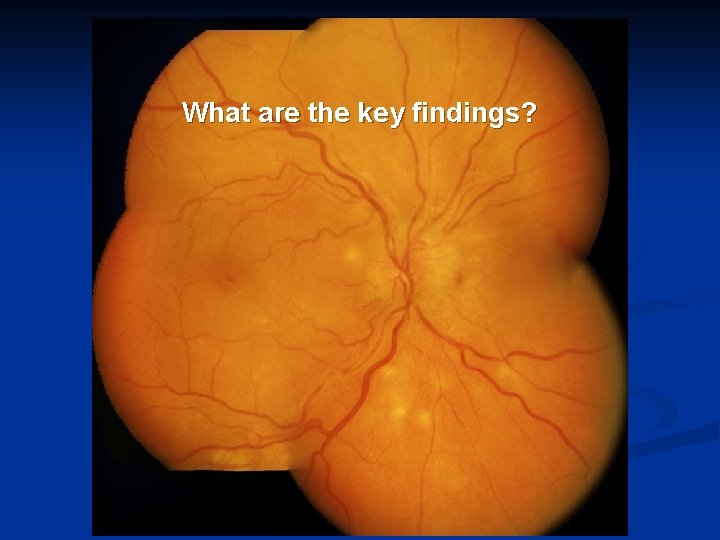
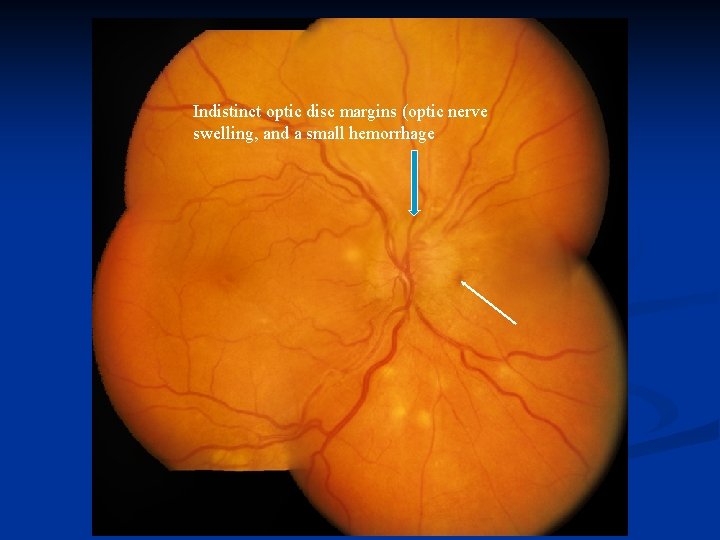
What are the key findings?
Multiple faint yellow spots And what else?
Indistinct optic disc margins (optic nerve swelling, and a small hemorrhage
What is your differential diagnosis? And why? 1. 2. Indistinct yellow spots? Blurred optic disc margins?
What is your next step in diagnostic evaluation of this patient?
The patient needs a spinal tap This actual patient (in San Francisco, 1989) had cryptococcal meningitis + choroidal seeding, but the probable diagnosis in most settings today would be disseminated TB with TB meningitis. They can look