
ANATOMY OF THE EAR EXTERNAL EAR Auricle External
- Slides: 56
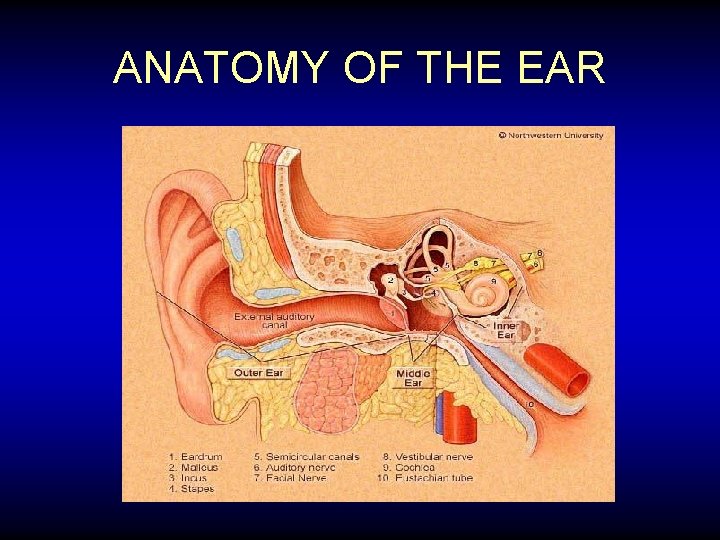
ANATOMY OF THE EAR
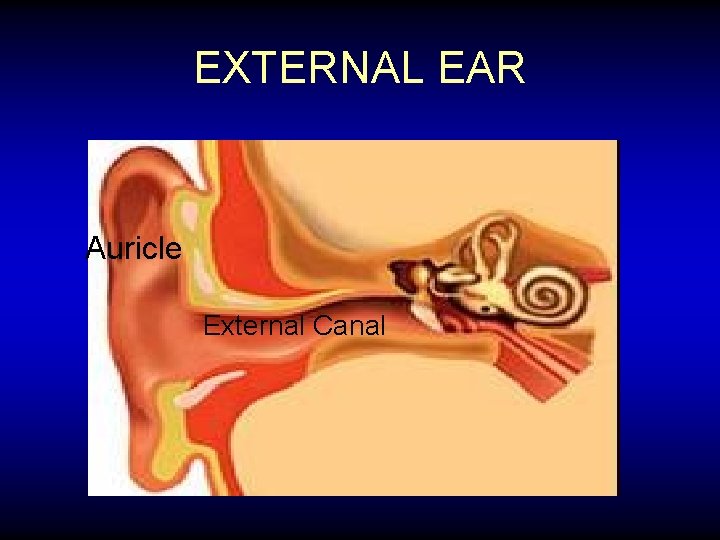
EXTERNAL EAR Auricle External Canal
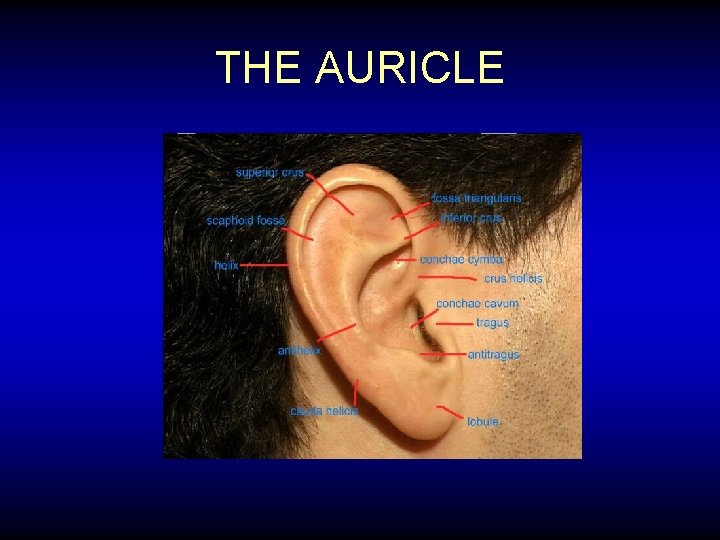
THE AURICLE
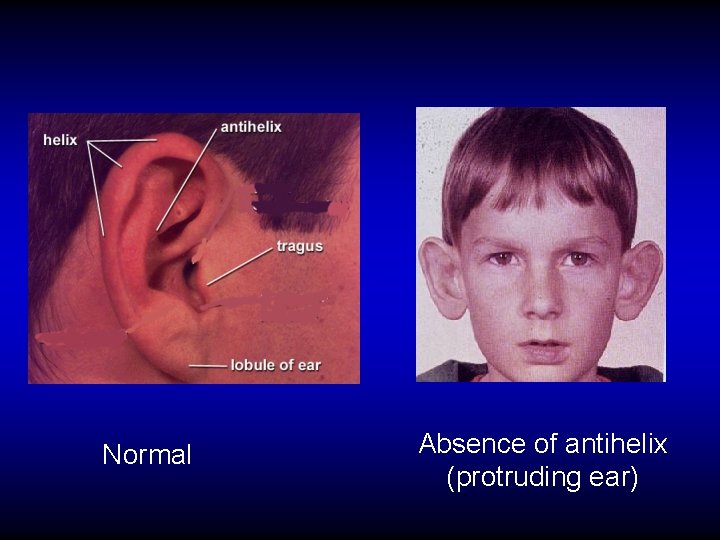
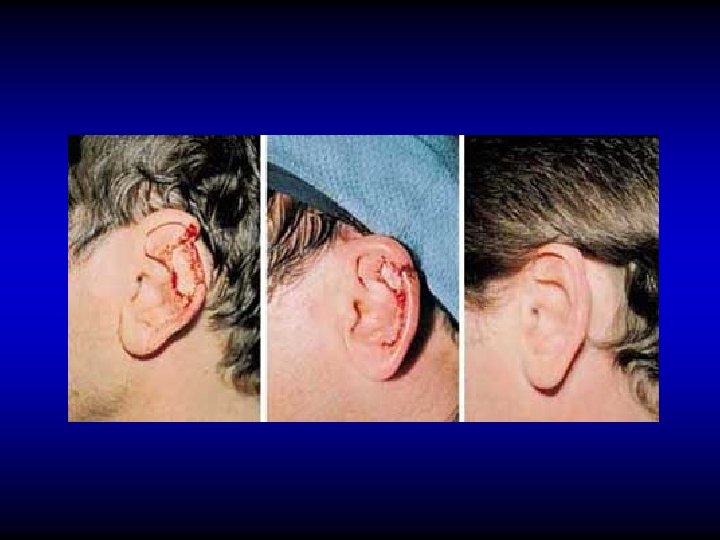
Normal Absence of antihelix (protruding ear)
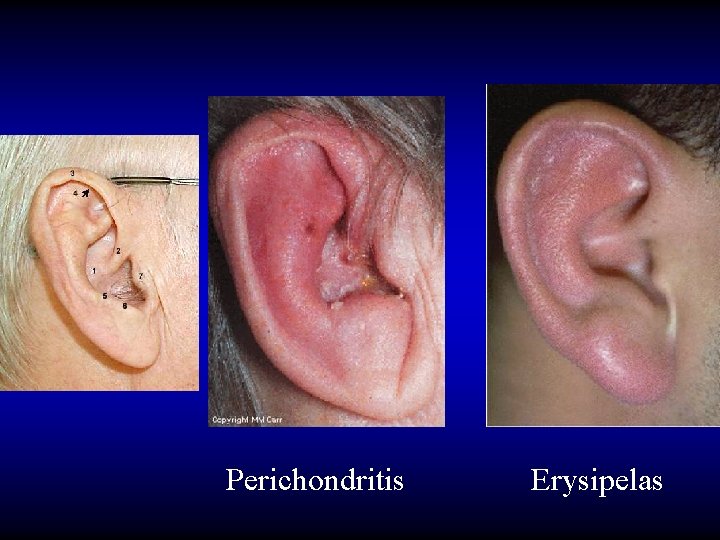
Perichondritis Erysipelas
Blood Supply • Richly supplied by branches from the external carotid
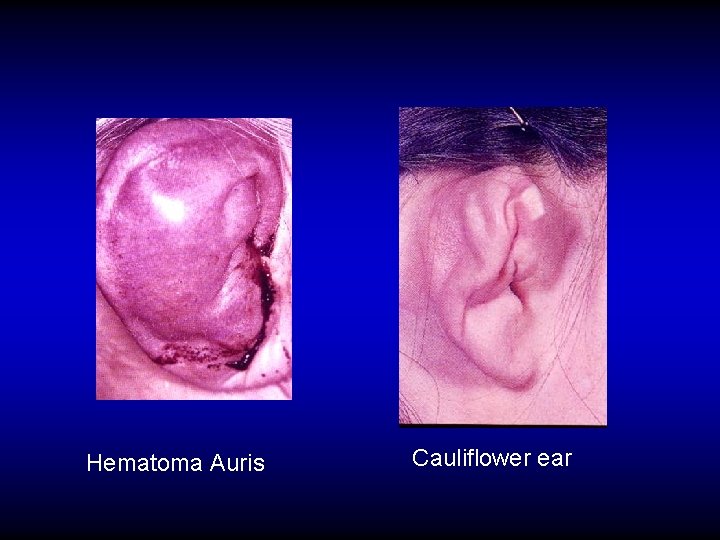
Hematoma Auris Cauliflower ear
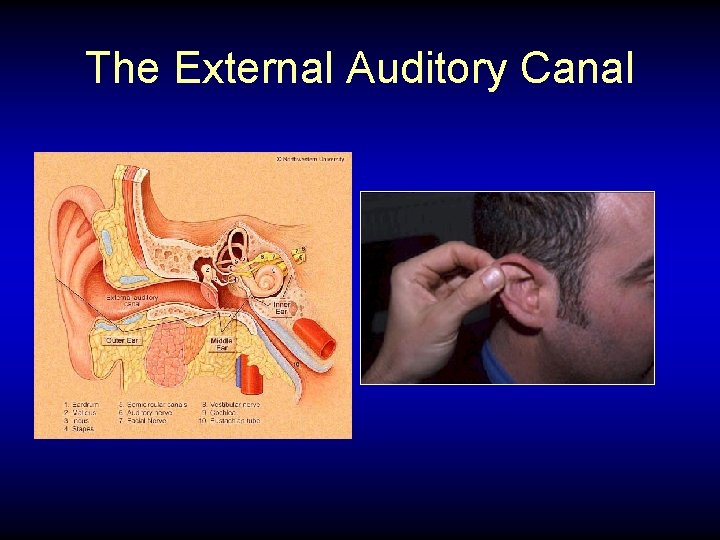
The External Auditory Canal
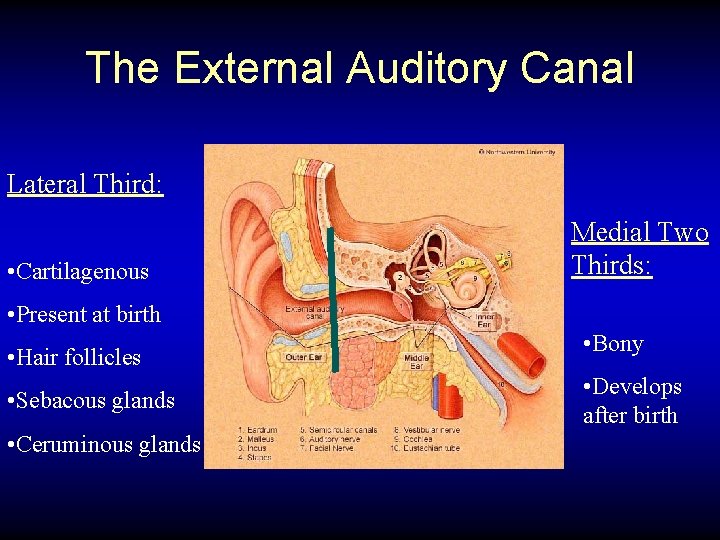
The External Auditory Canal Lateral Third: • Cartilagenous Medial Two Thirds: • Present at birth • Hair follicles • Sebacous glands • Ceruminous glands • Bony • Develops after birth
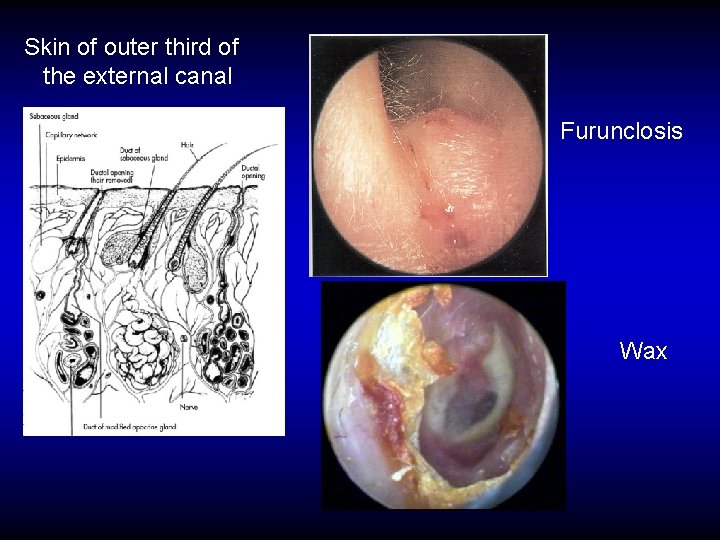
Skin of outer third of the external canal Furunclosis Wax
ANATOMY OF THE EAR • External Ear • Middle Ear Cleft • Inner Ear
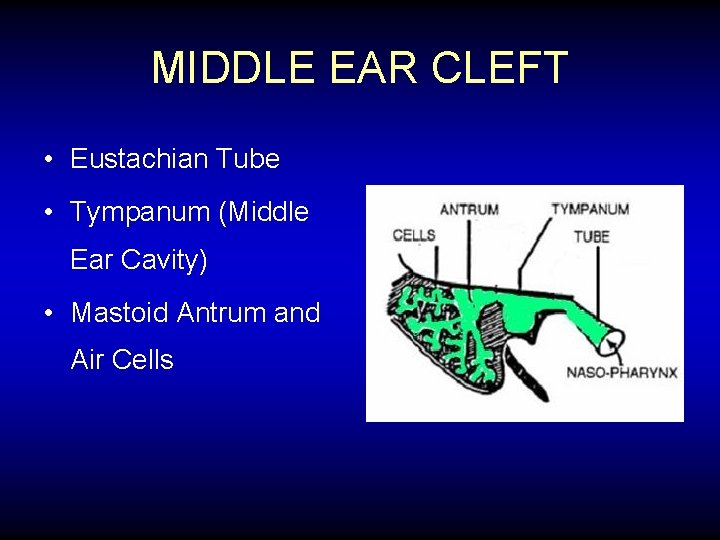
MIDDLE EAR CLEFT • Eustachian Tube • Tympanum (Middle Ear Cavity) • Mastoid Antrum and Air Cells
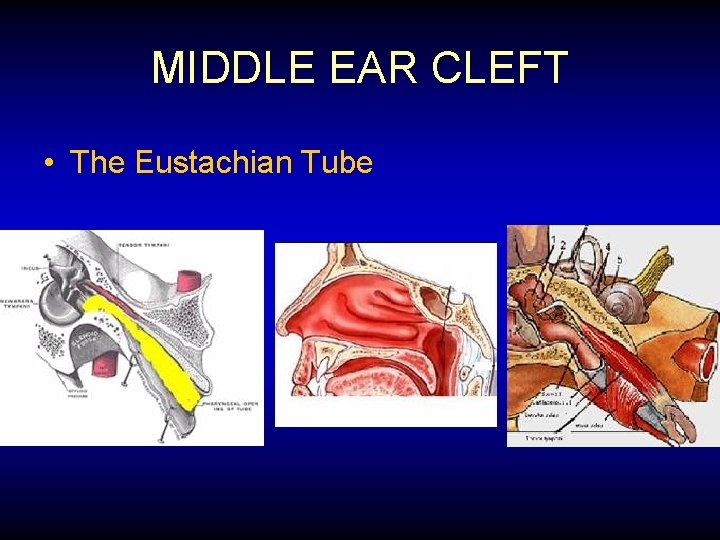
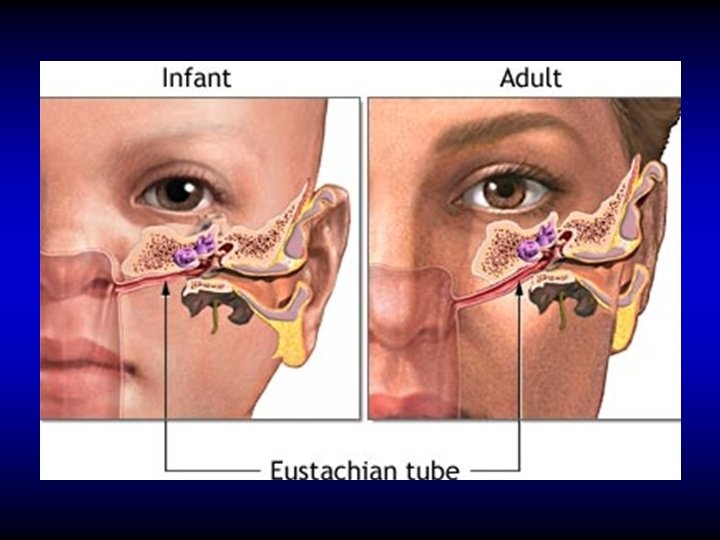
MIDDLE EAR CLEFT • The Eustachian Tube
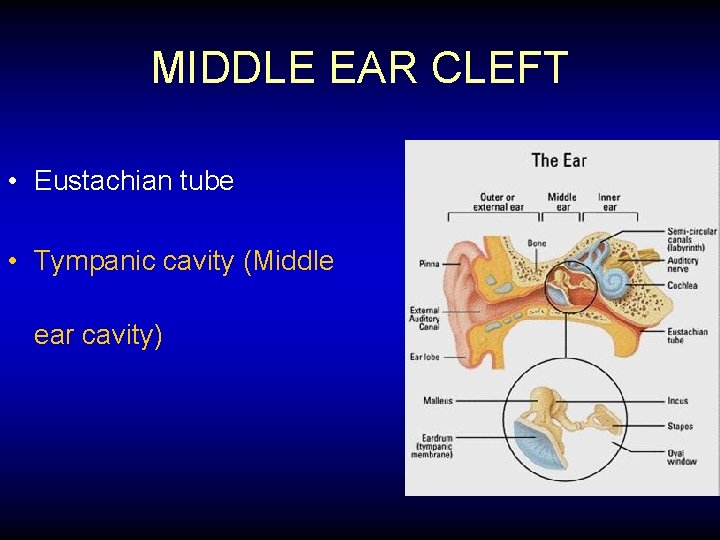
MIDDLE EAR CLEFT • Eustachian tube • Tympanic cavity (Middle ear cavity)
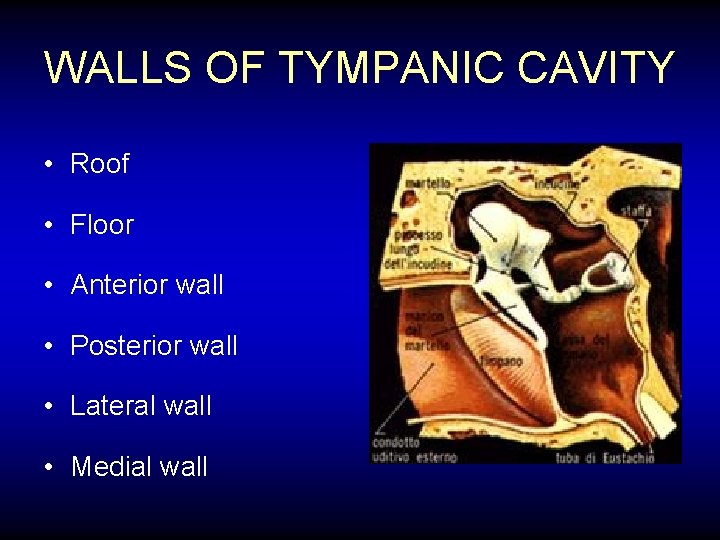
WALLS OF TYMPANIC CAVITY • Roof • Floor • Anterior wall • Posterior wall • Lateral wall • Medial wall
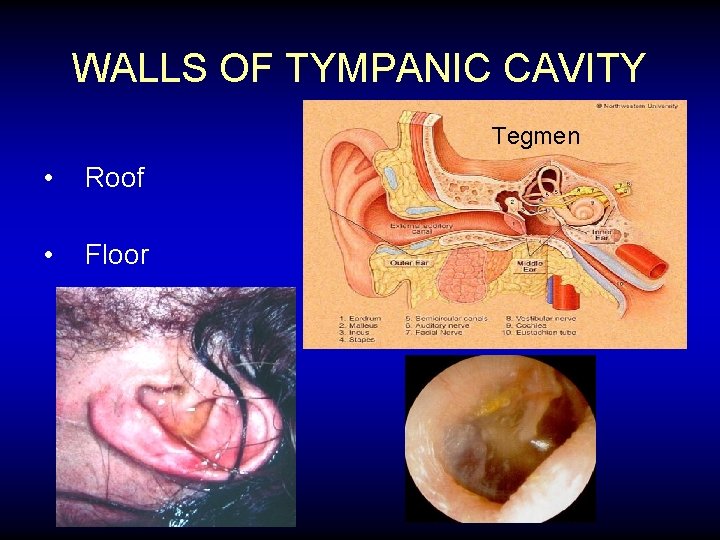
WALLS OF TYMPANIC CAVITY Tegmen • Roof • Floor
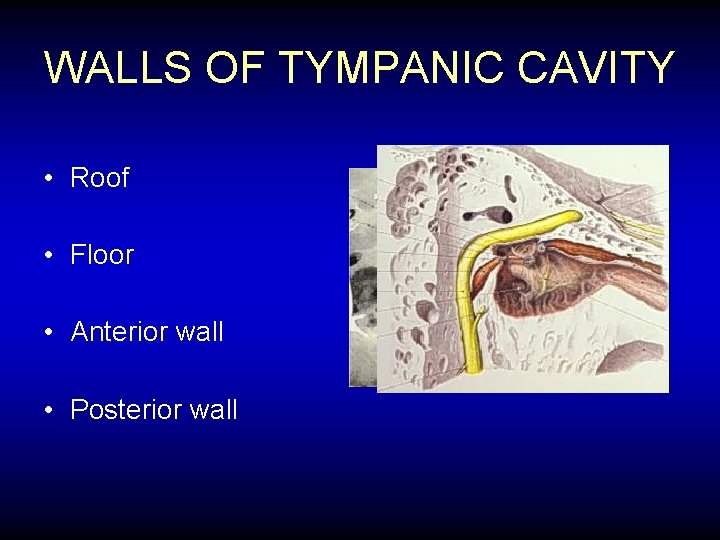
WALLS OF TYMPANIC CAVITY • Roof • Floor • Anterior wall • Posterior wall
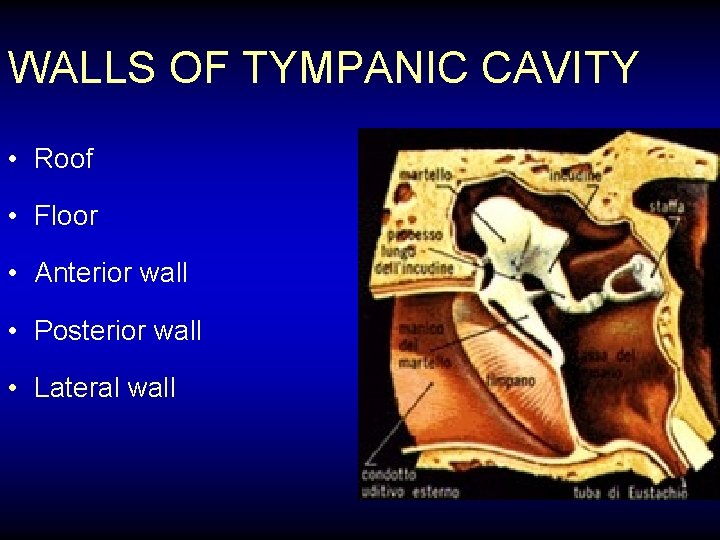
WALLS OF TYMPANIC CAVITY • Roof • Floor • Anterior wall • Posterior wall • Lateral wall
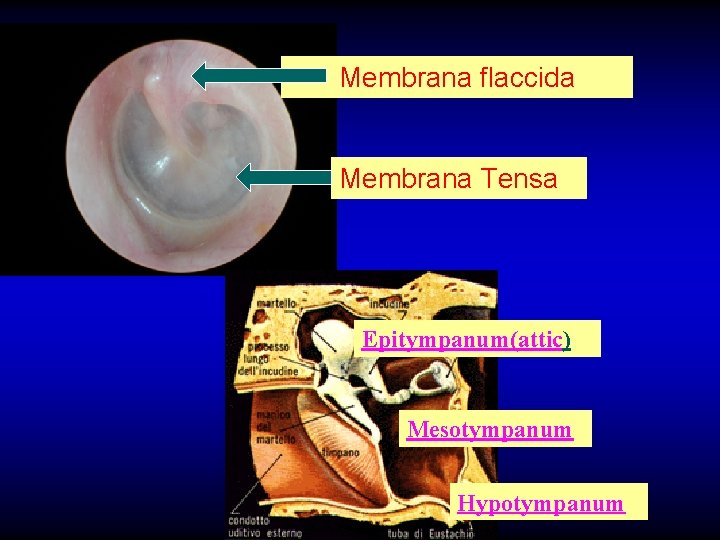
Membrana flaccida Membrana Tensa Epitympanum(attic) Mesotympanum Hypotympanum
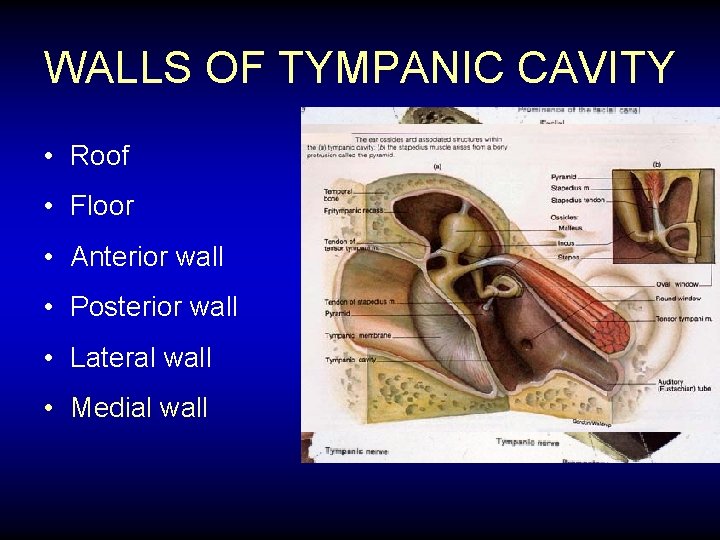
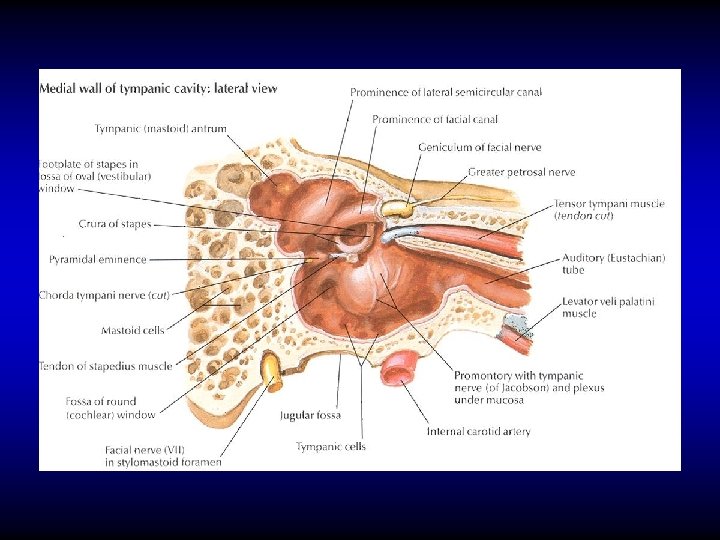
WALLS OF TYMPANIC CAVITY • Roof • Floor • Anterior wall • Posterior wall • Lateral wall • Medial wall
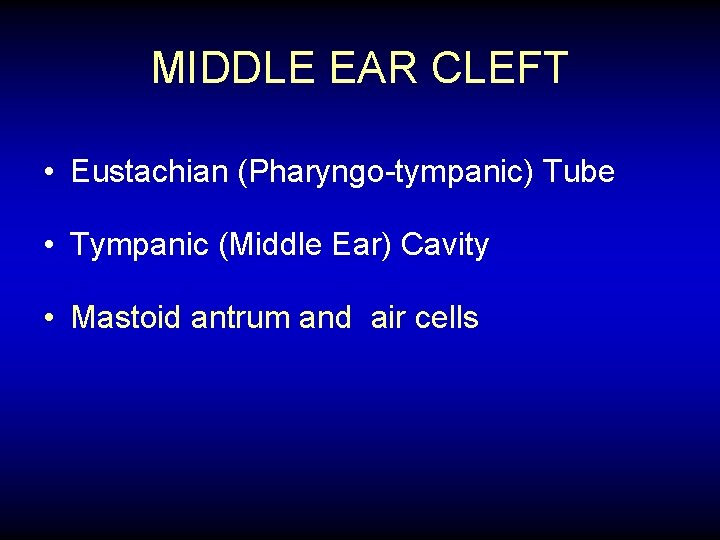
MIDDLE EAR CLEFT • Eustachian (Pharyngo-tympanic) Tube • Tympanic (Middle Ear) Cavity • Mastoid antrum and air cells
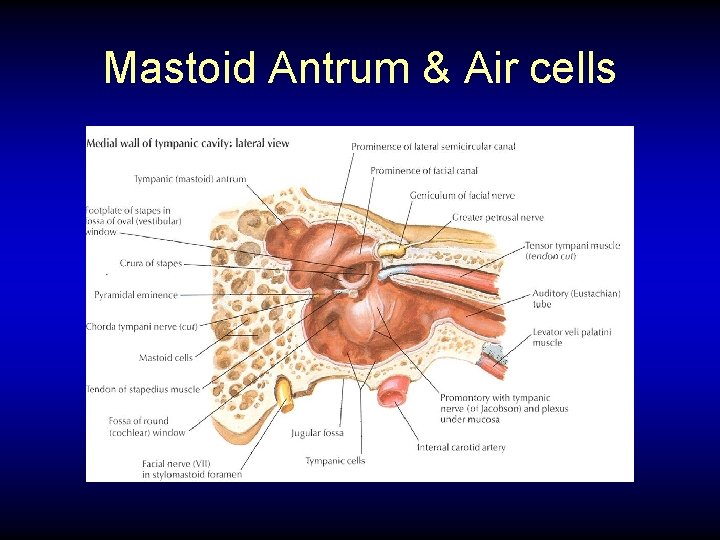
Mastoid Antrum & Air cells
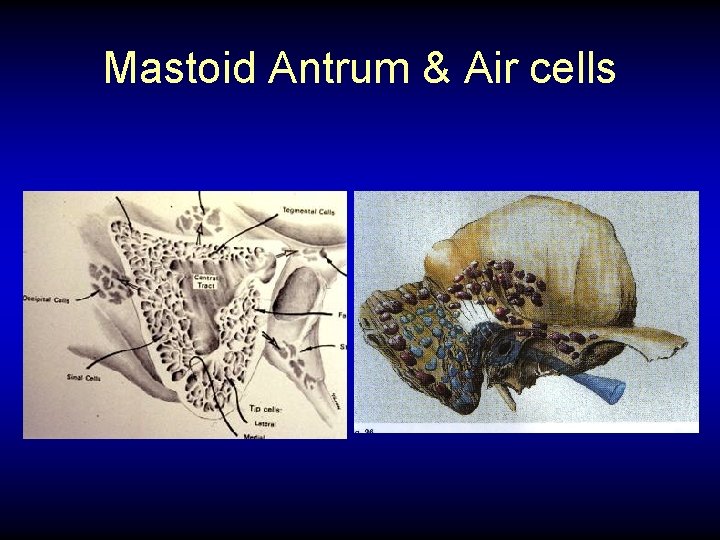
Mastoid Antrum & Air cells
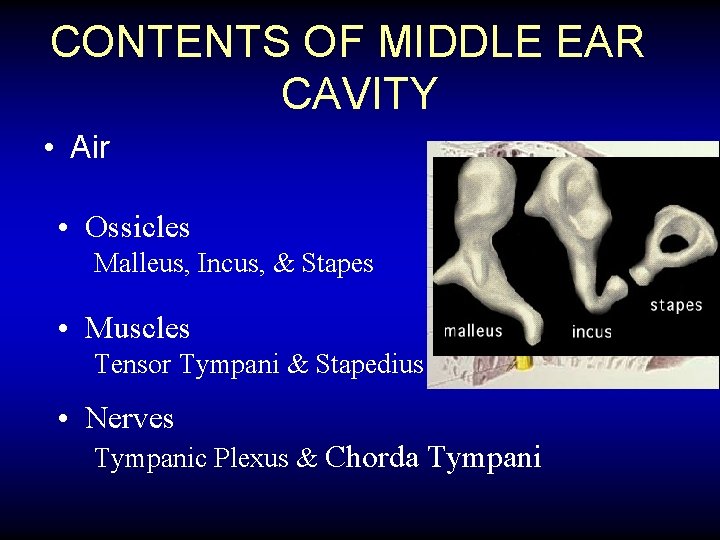
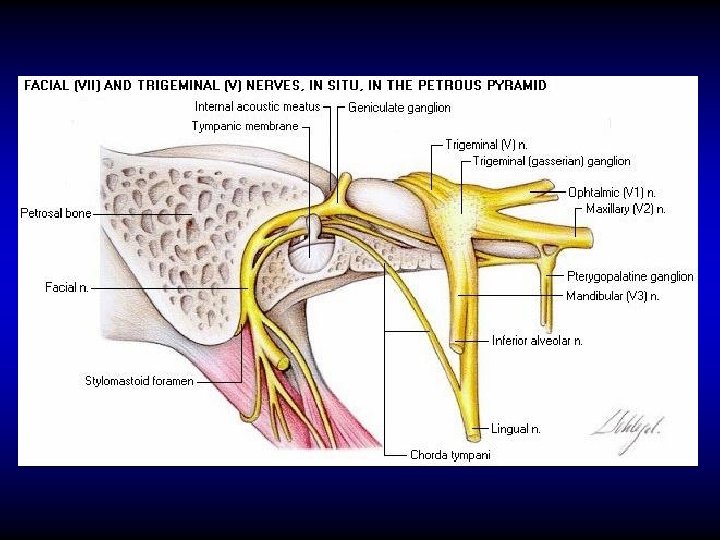
CONTENTS OF MIDDLE EAR CAVITY • Air • Ossicles Malleus, Incus, & Stapes • Muscles Tensor Tympani & Stapedius • Nerves Tympanic Plexus & Chorda Tympani
LINING OF MIDDLE EAR Mucous membrane : ciliated columnar anteriorly and cuboidal or flat elsewhere
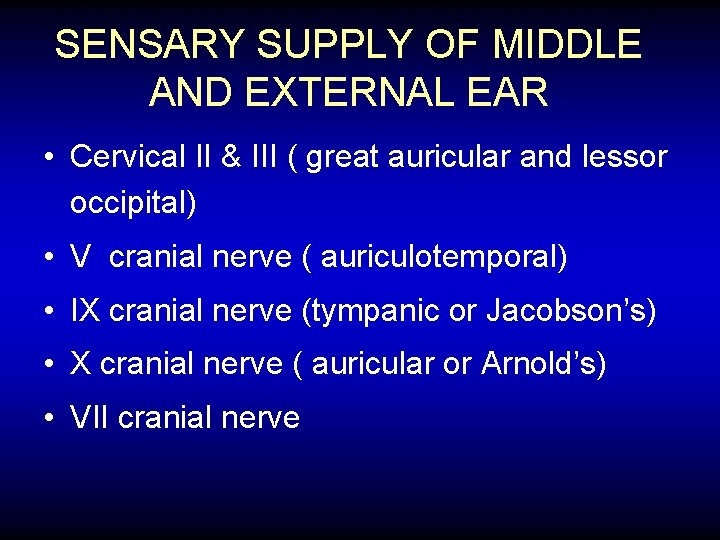
SENSARY SUPPLY OF MIDDLE AND EXTERNAL EAR • Cervical II & III ( great auricular and lessor occipital) • V cranial nerve ( auriculotemporal) • IX cranial nerve (tympanic or Jacobson’s) • X cranial nerve ( auricular or Arnold’s) • VII cranial nerve
Referred Earache • Pain in the ear due to a disease in an area supplied by a nerve that also supply the ear.
Referred Earache • Cervical II & III – Cervical spondylosis, neck injury etc. • V cranial nerve – Dental infections, sinonasal diseases etc. • IX cranial nerve – Tonsillitis, post-tonsillectomy, carcinoma etc. • X cranial nerve – Tumors of hpopharynx, larynx & esophagus
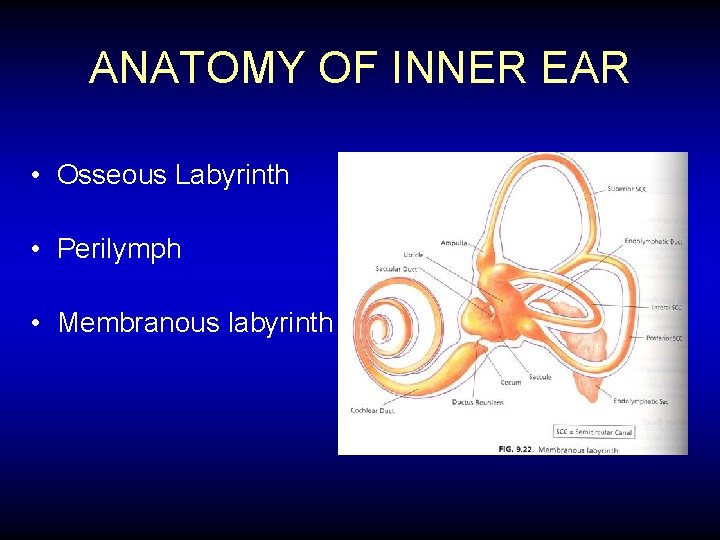
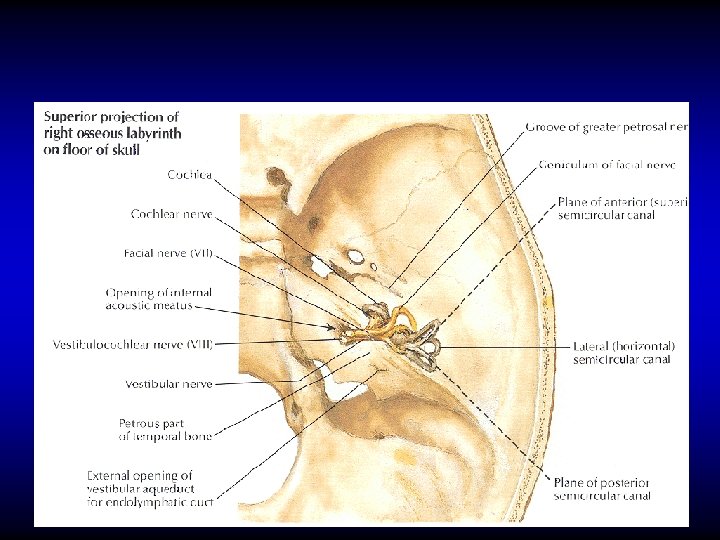
ANATOMY OF INNER EAR • Osseous Labyrinth • Perilymph • Membranous labyrinth
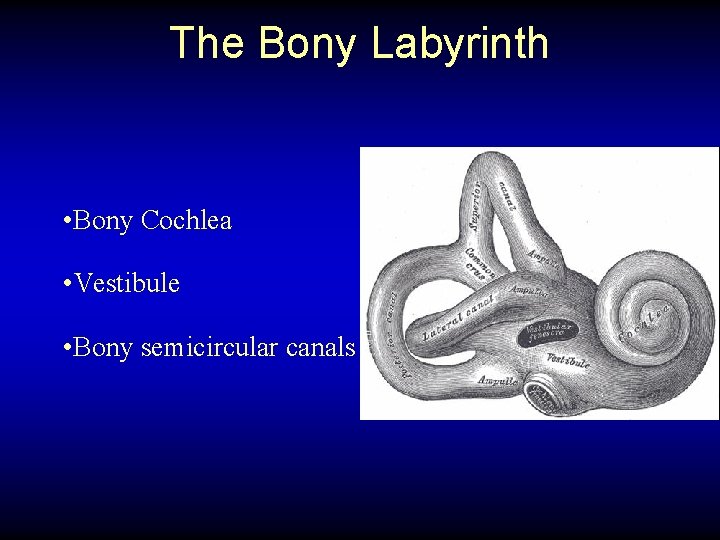
The Bony Labyrinth • Bony Cochlea • Vestibule • Bony semicircular canals
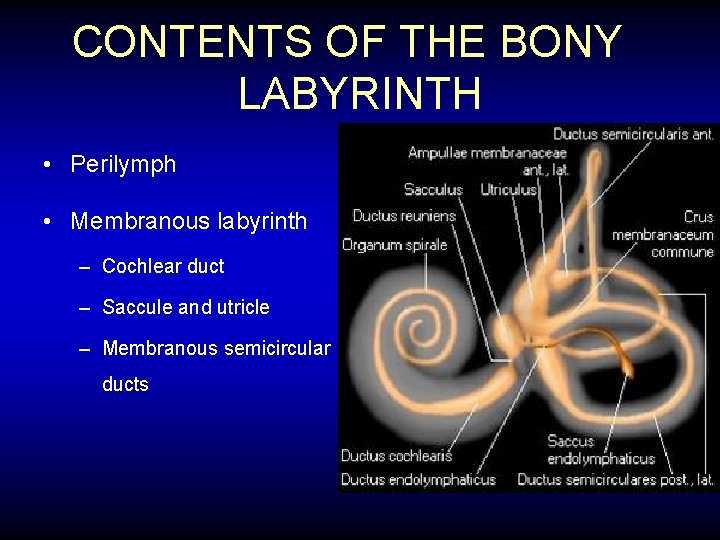
CONTENTS OF THE BONY LABYRINTH • Perilymph • Membranous labyrinth – Cochlear duct – Saccule and utricle – Membranous semicircular ducts
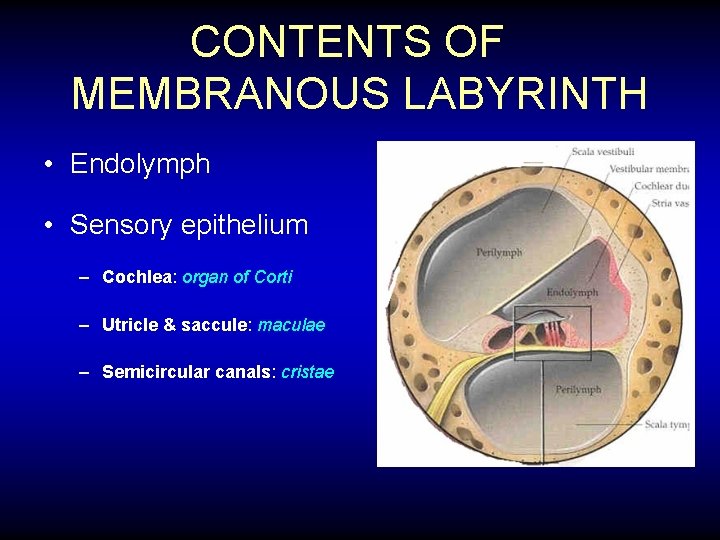
CONTENTS OF MEMBRANOUS LABYRINTH • Endolymph • Sensory epithelium – Cochlea: organ of Corti – Utricle & saccule: maculae – Semicircular canals: cristae
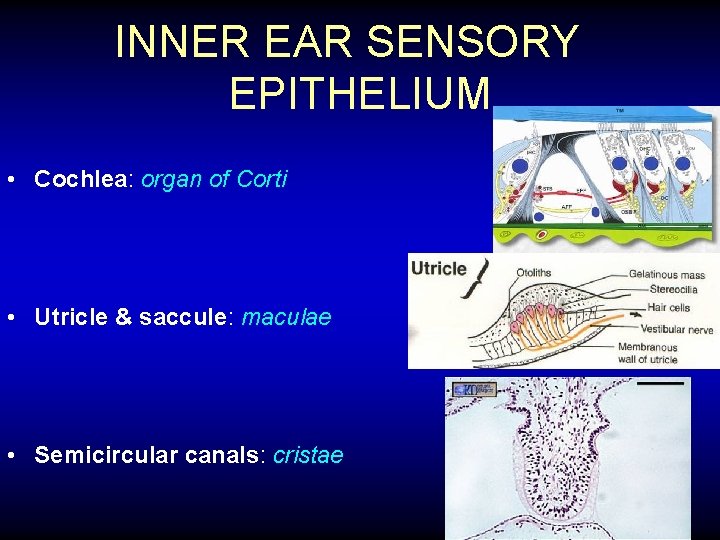
INNER EAR SENSORY EPITHELIUM • Cochlea: organ of Corti • Utricle & saccule: maculae • Semicircular canals: cristae
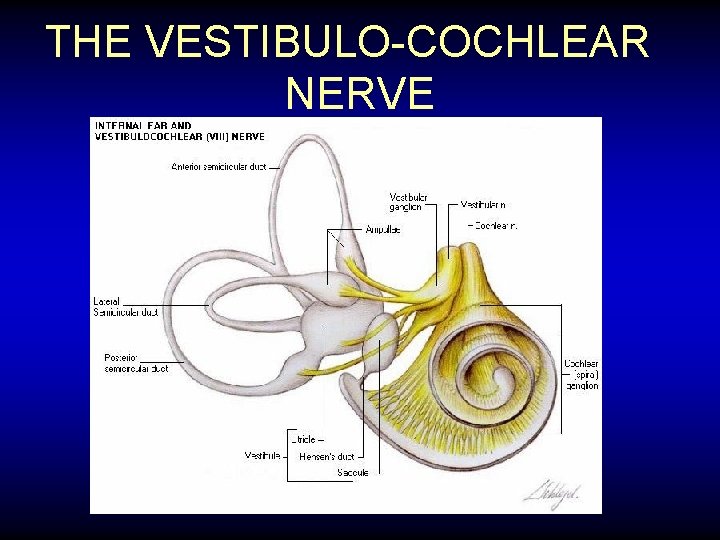
THE VESTIBULO-COCHLEAR NERVE
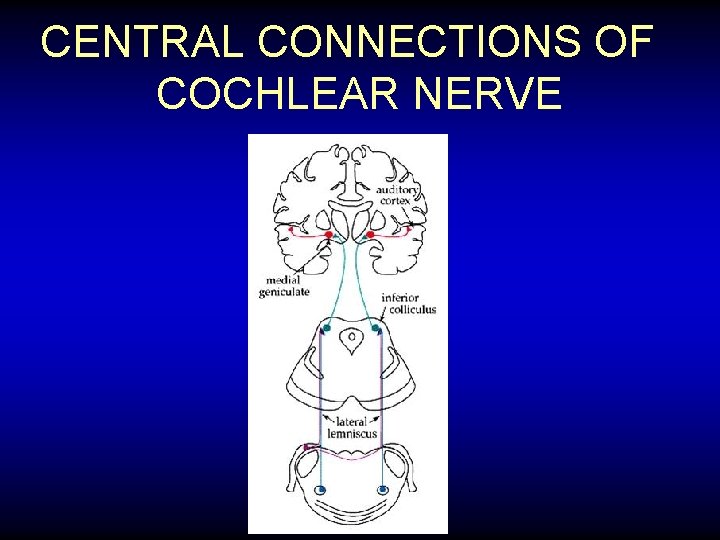
CENTRAL CONNECTIONS OF COCHLEAR NERVE
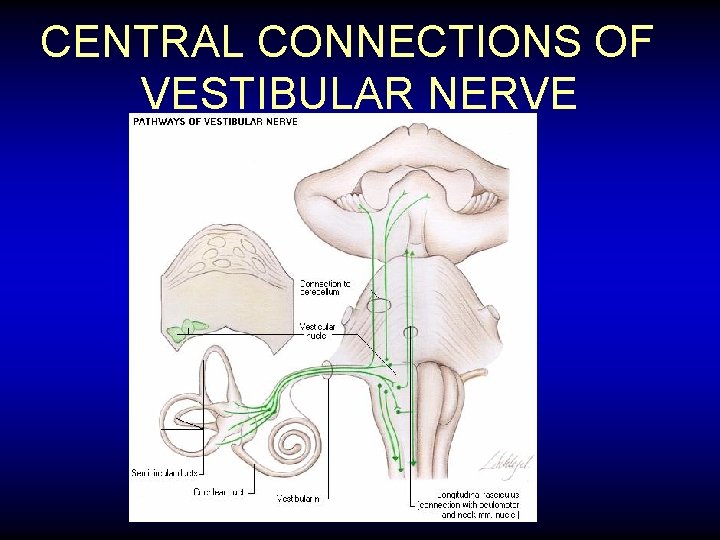
CENTRAL CONNECTIONS OF VESTIBULAR NERVE
PHYSIOLOGY OF THE EAR
FUNCIONS OF THE EXTERNAL EAR • Auditory functions: – Sound conduction – Increase sound pressure by the resonance function • Protection of the middle ear – Curvature – Cerumen
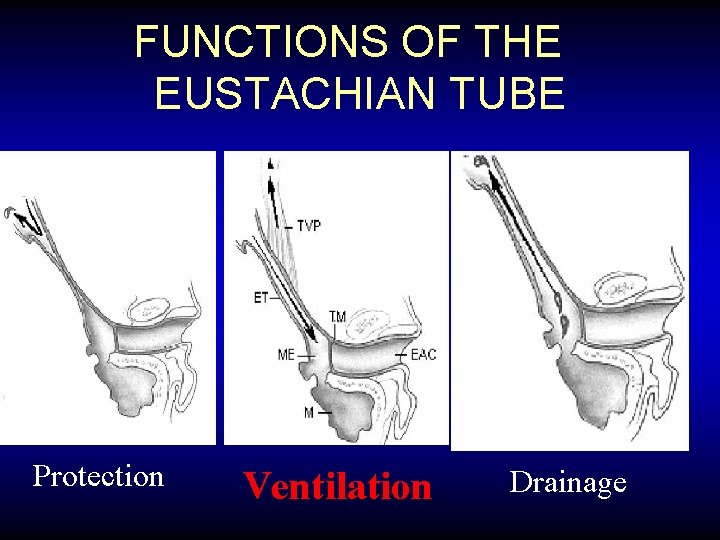
FUNCTIONS OF THE EUSTACHIAN TUBE Protection Ventilation Drainage
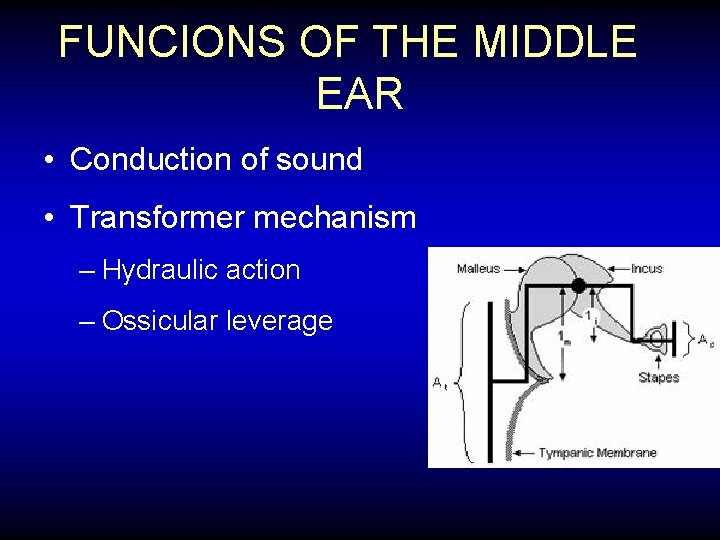
FUNCIONS OF THE MIDDLE EAR • Conduction of sound • Transformer mechanism – Hydraulic action – Ossicular leverage
FUNCIONS OF THE MIDDLE EAR • Conduction of sound • Transformer mechanism – Hydraulic action – Ossicular leverage • Protection to the inner ear – stapedial reflex
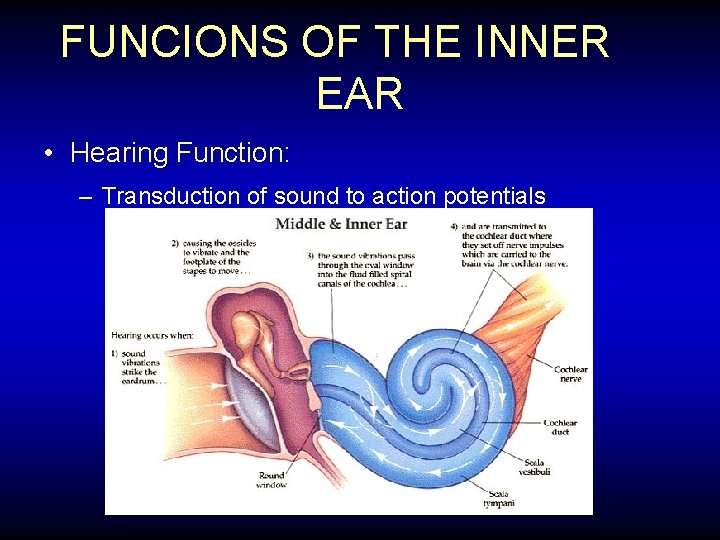
FUNCIONS OF THE INNER EAR • Hearing Function: – Transduction of sound to action potentials
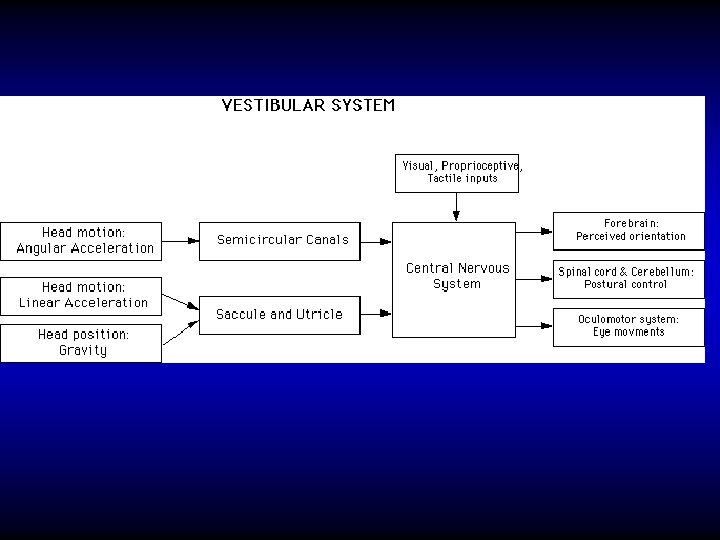
FUNCIONS OF THE INNER EAR • Hearing Function: – Transduction of sound to action potentials • Vestibular Function: – Participate in maintaining body balance
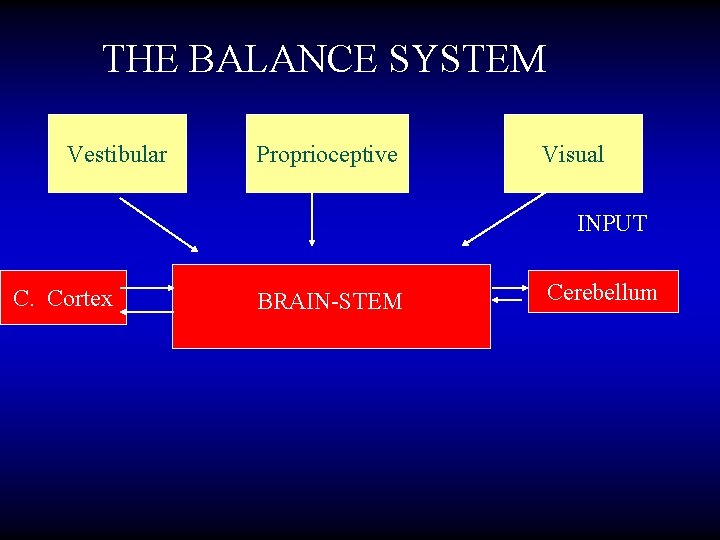
THE BALANCE SYSTEM
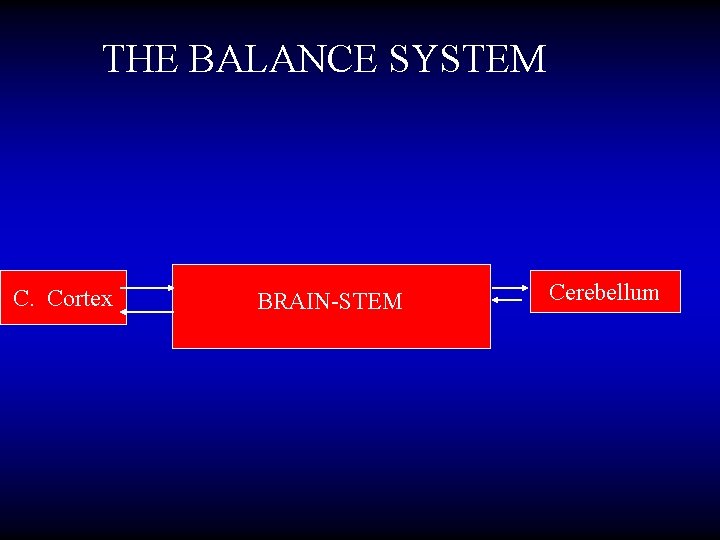
THE BALANCE SYSTEM C. Cortex BRAIN-STEM Cerebellum
THE BALANCE SYSTEM Vestibular Proprioceptive Visual INPUT C. Cortex BRAIN-STEM Cerebellum
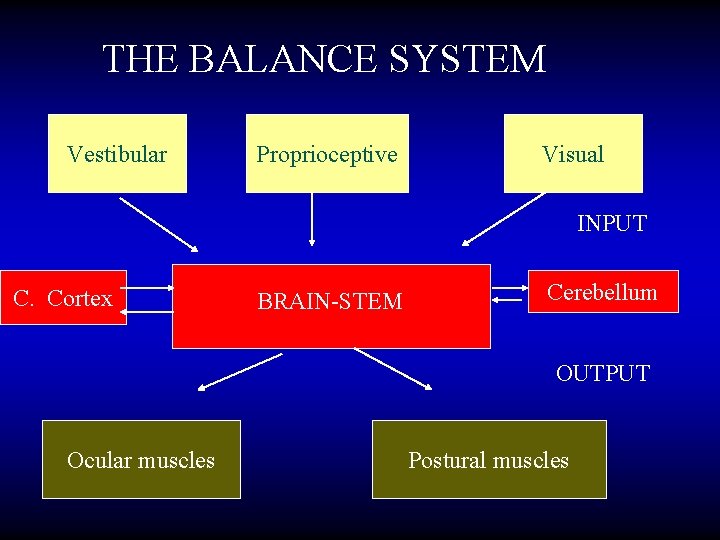
THE BALANCE SYSTEM Vestibular Proprioceptive Visual INPUT C. Cortex BRAIN-STEM Cerebellum OUTPUT Ocular muscles Postural muscles
THANK YOU