
ANATOMY OF THE CONSTITUTION Chapter 3 ARTICLE I


- Slides: 11
ANATOMY OF THE CONSTITUTION Chapter 3
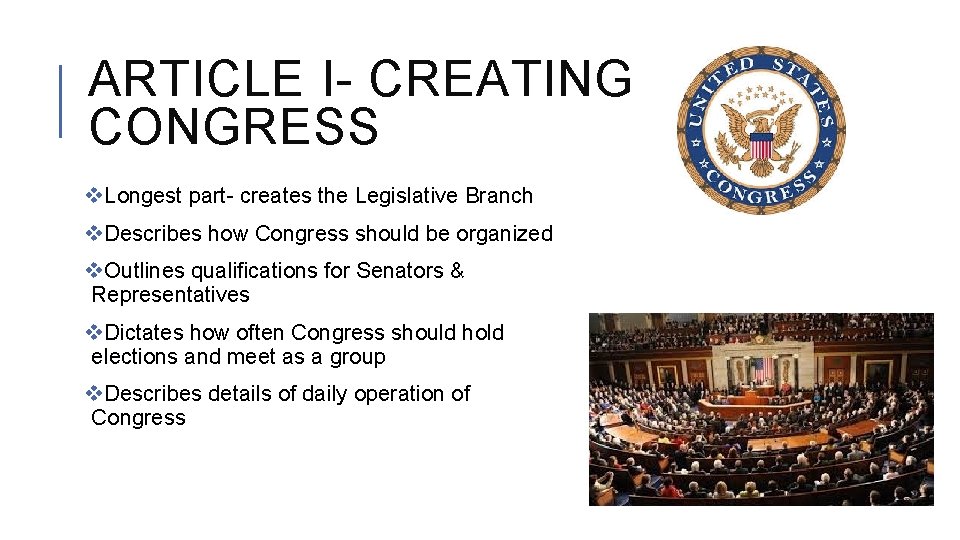
ARTICLE I- CREATING CONGRESS v. Longest part- creates the Legislative Branch v. Describes how Congress should be organized v. Outlines qualifications for Senators & Representatives v. Dictates how often Congress should hold elections and meet as a group v. Describes details of daily operation of Congress
POWERS OF CONGRESS v. Collect taxes v. Grant patents v. Borrow money & pay debt v. Create lower federal courts v. Make citizenship rules v. Declare war v. Regulate commerce v. Support an Army & Navy v. Coin money & punish counterfeiters v. Make other laws that are “necessary and proper” v. Establish post offices
PUNISH PIRATES!
ARTICLE II: CREATING THE EXECUTIVE BRANCH v. Describes qualifications to be president v. Outlines powers of the office of the President v. Explains the impeachment & removal process v. Explains the Electoral College
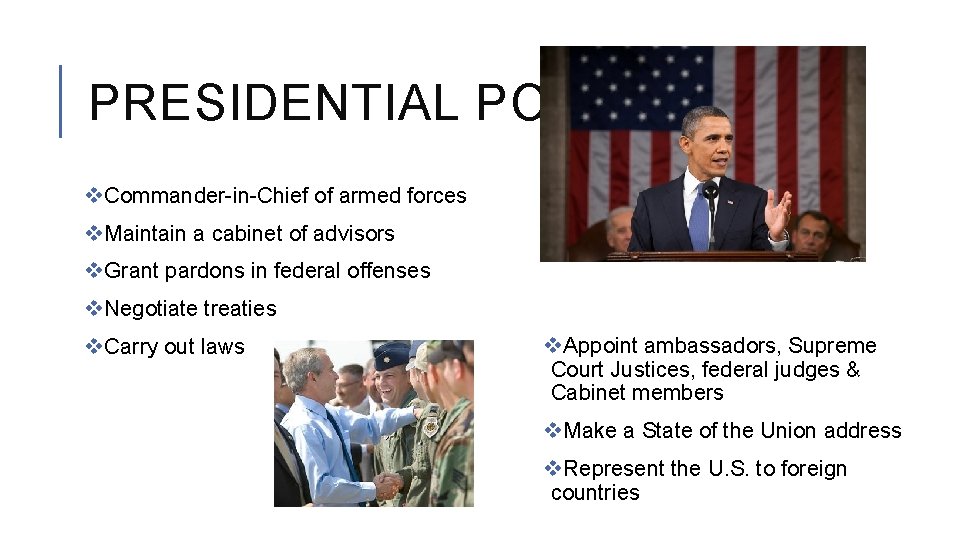
PRESIDENTIAL POWERS v. Commander-in-Chief of armed forces v. Maintain a cabinet of advisors v. Grant pardons in federal offenses v. Negotiate treaties v. Carry out laws v. Appoint ambassadors, Supreme Court Justices, federal judges & Cabinet members v. Make a State of the Union address v. Represent the U. S. to foreign countries
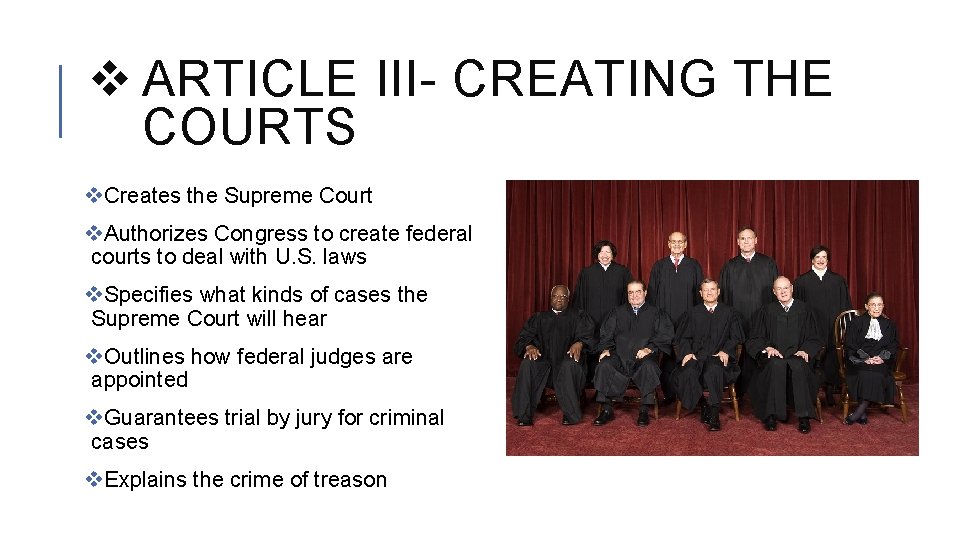
v ARTICLE III- CREATING THE COURTS v. Creates the Supreme Court v. Authorizes Congress to create federal courts to deal with U. S. laws v. Specifies what kinds of cases the Supreme Court will hear v. Outlines how federal judges are appointed v. Guarantees trial by jury for criminal cases v. Explains the crime of treason
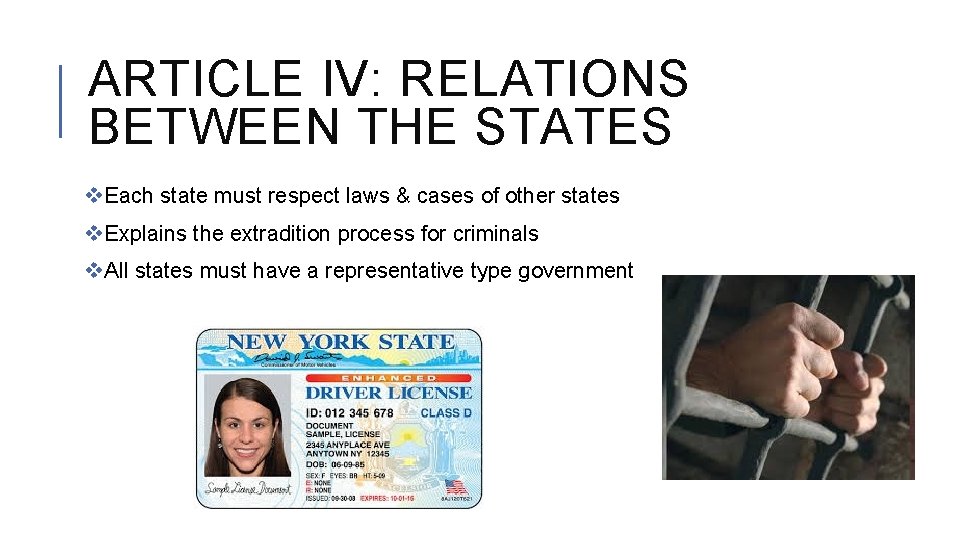
ARTICLE IV: RELATIONS BETWEEN THE STATES v. Each state must respect laws & cases of other states v. Explains the extradition process for criminals v. All states must have a representative type government
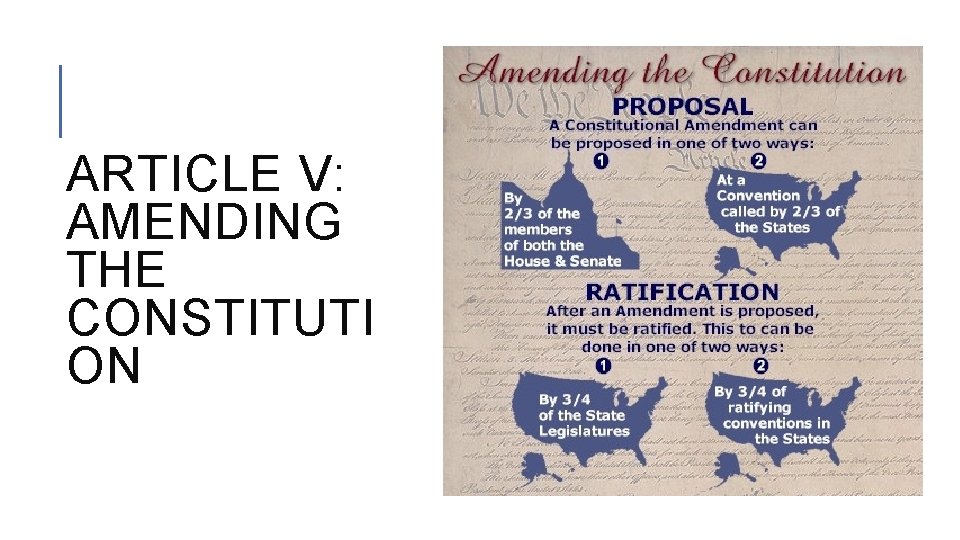
ARTICLE V: AMENDING THE CONSTITUTI ON
ARTICLE VI: SUPREMACY CLAUSE v. Laws and treaties of the U. S. government are the “supreme law of the land”
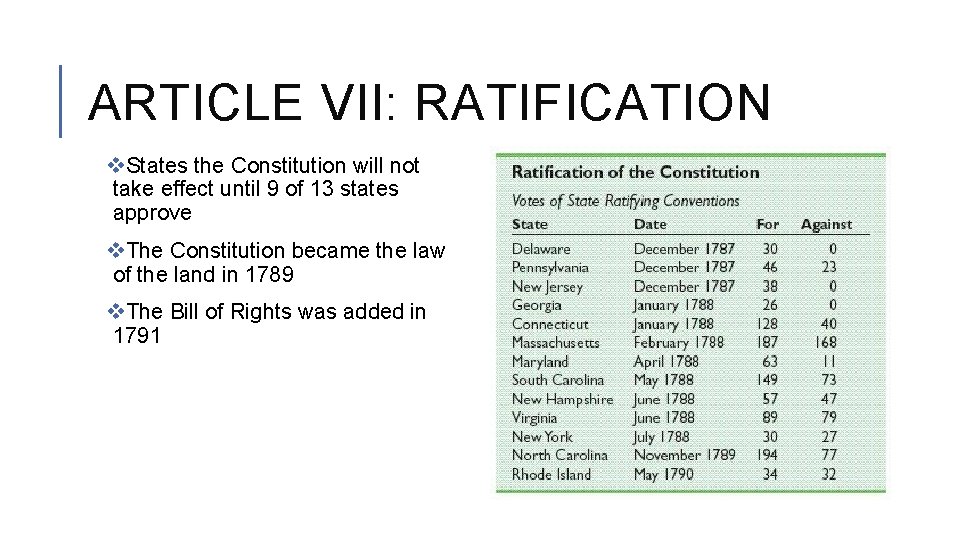
ARTICLE VII: RATIFICATION v. States the Constitution will not take effect until 9 of 13 states approve v. The Constitution became the law of the land in 1789 v. The Bill of Rights was added in 1791