
Anatomy of the Brain PART 2 By Miranda
Anatomy of the Brain PART 2 By Miranda Bassel
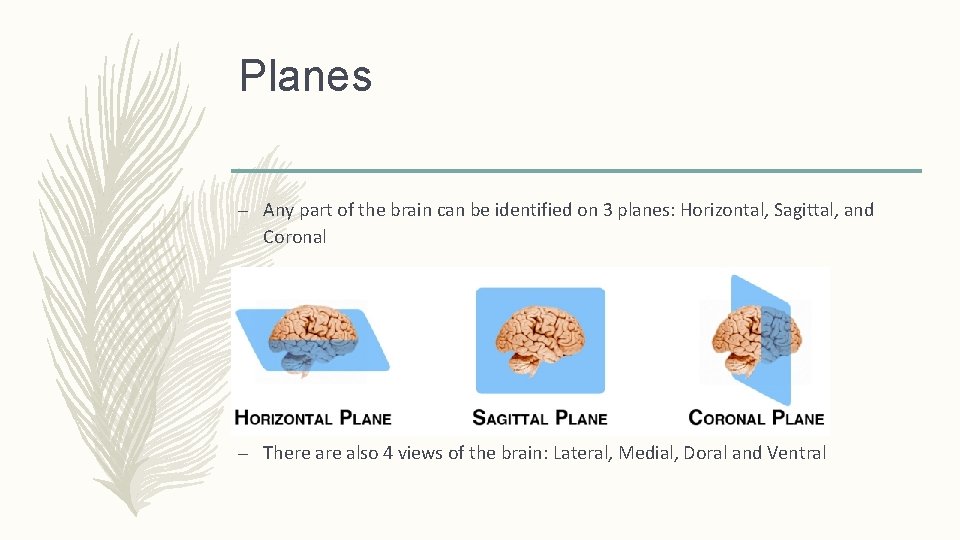
Planes – Any part of the brain can be identified on 3 planes: Horizontal, Sagittal, and Coronal – There also 4 views of the brain: Lateral, Medial, Doral and Ventral
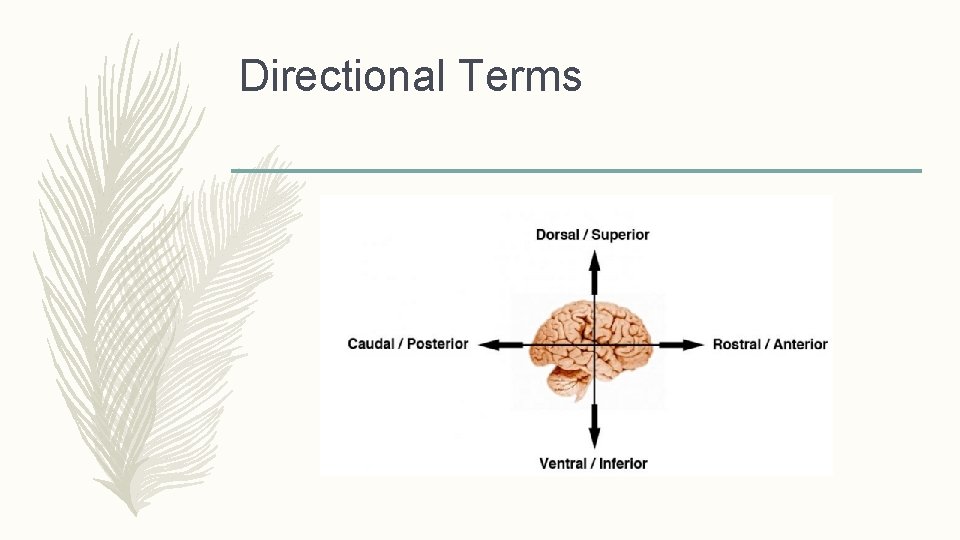
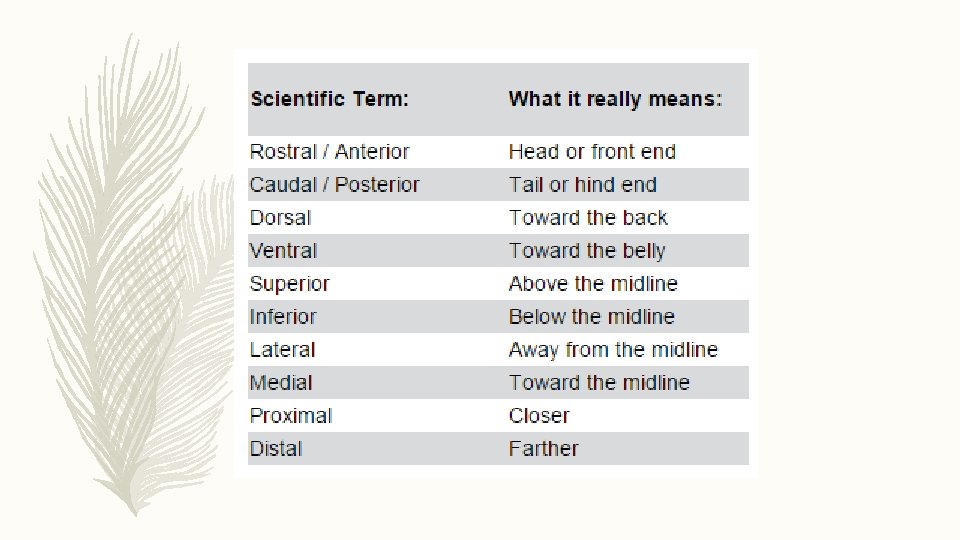
Directional Terms
What is the brain composed of? – Made up of brain cells called neurons and glial cells (supporting cells) – Nerve cells can also be called neurons – Consists of 2 different types of tissue – Gray Matter – White Matter
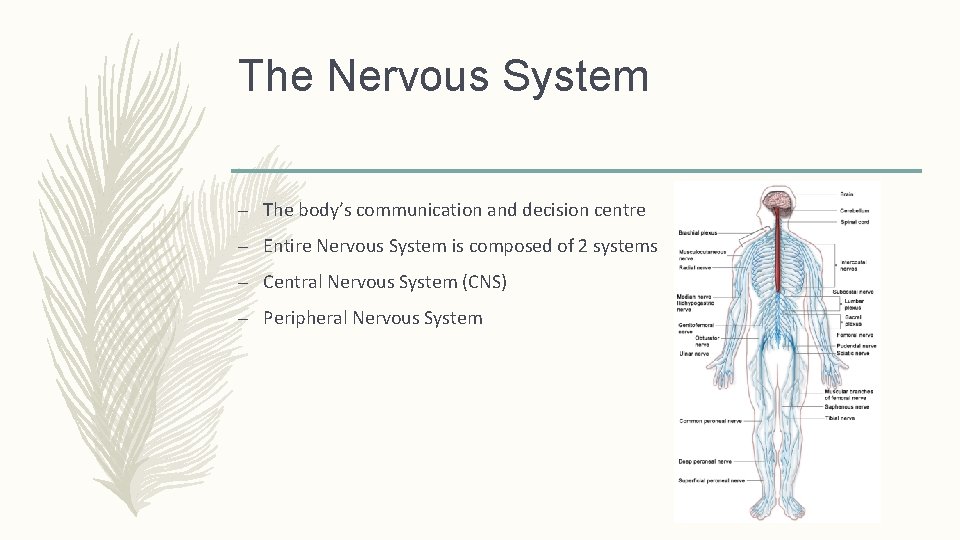
The Nervous System – The body’s communication and decision centre – Entire Nervous System is composed of 2 systems – Central Nervous System (CNS) – Peripheral Nervous System
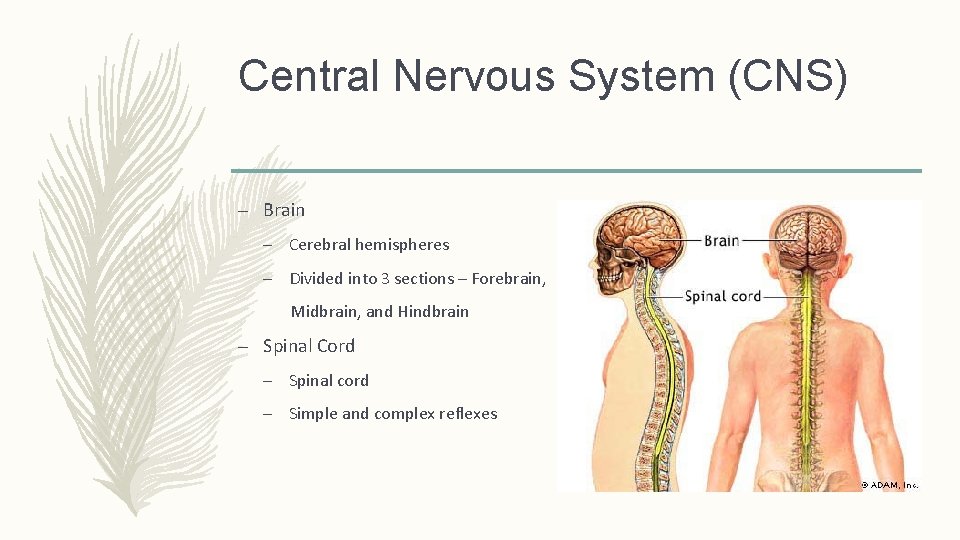
Central Nervous System (CNS) – Brain – Cerebral hemispheres – Divided into 3 sections – Forebrain, Midbrain, and Hindbrain – Spinal Cord – Spinal cord – Simple and complex reflexes
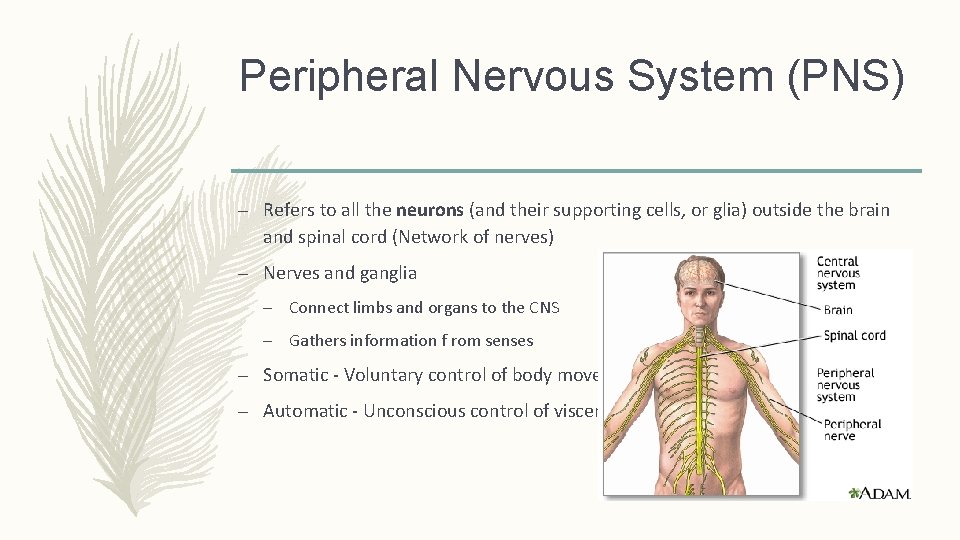
Peripheral Nervous System (PNS) – Refers to all the neurons (and their supporting cells, or glia) outside the brain and spinal cord (Network of nerves) – Nerves and ganglia – Connect limbs and organs to the CNS – Gathers information f rom senses – Somatic - Voluntary control of body movements – Automatic - Unconscious control of visceral functions
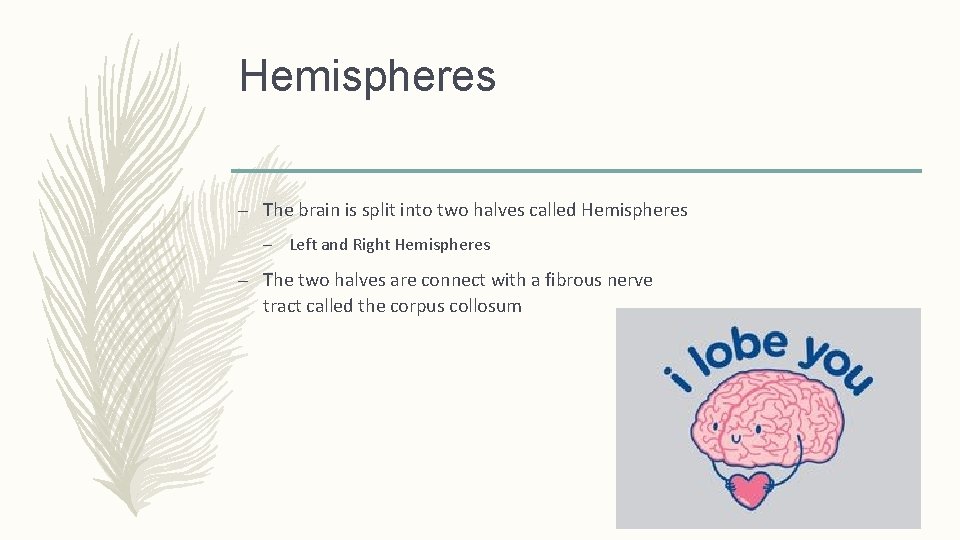
Hemispheres – The brain is split into two halves called Hemispheres – Left and Right Hemispheres – The two halves are connect with a fibrous nerve tract called the corpus collosum
Systems in the brain – Forebrain – The anterior part of the brain, – Midbrain – A small central part of the brainstem – Hindbrain – The lower part of the brainstem
The Forebrain Telencephalon & Diencephalon
Telencephalon Cerebral Cortex, basal ganglia, hippocampus, and amygdala
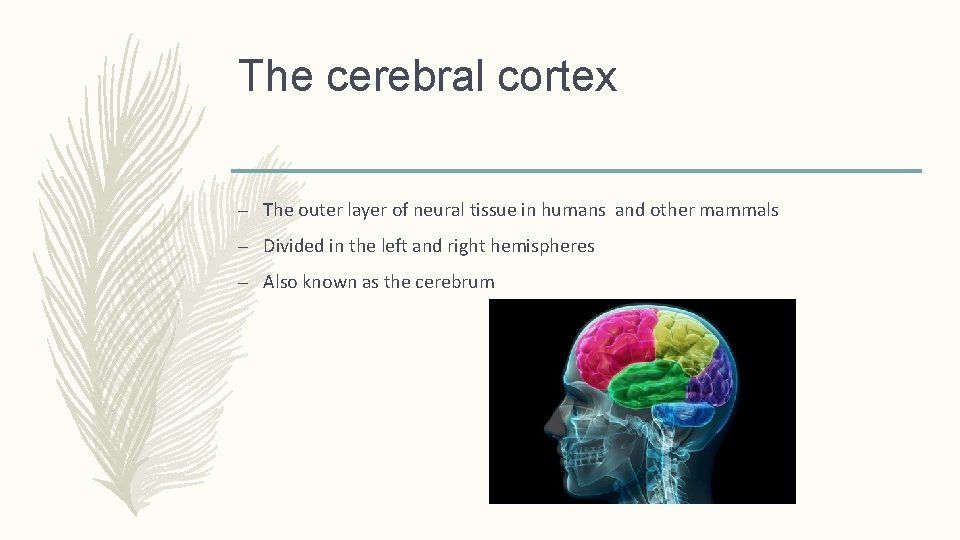
The cerebral cortex – The outer layer of neural tissue in humans and other mammals – Divided in the left and right hemispheres – Also known as the cerebrum
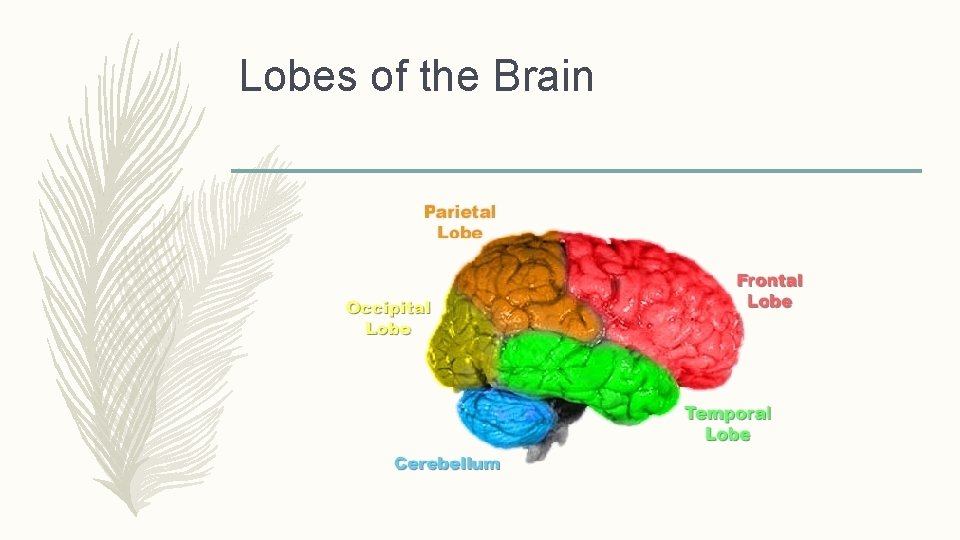
Lobes of the Brain
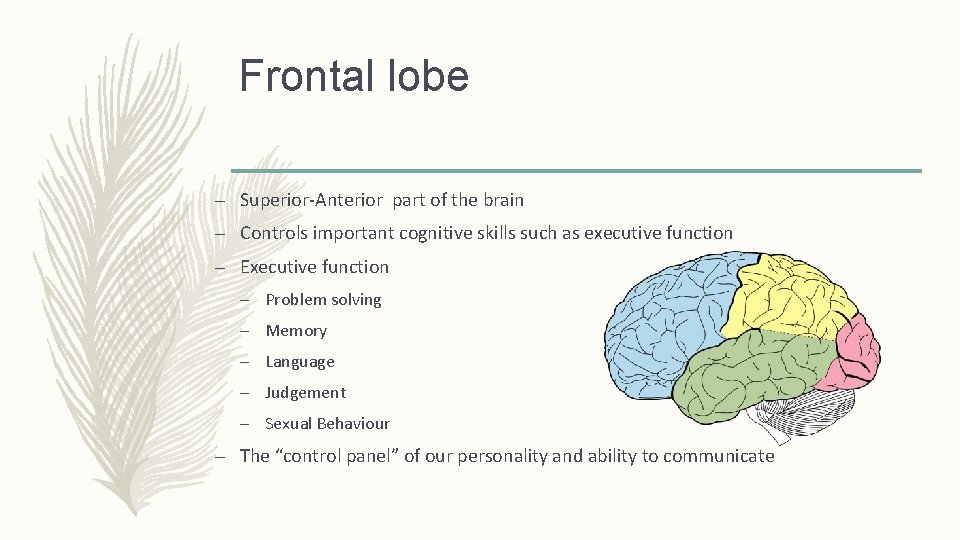
Frontal lobe – Superior-Anterior part of the brain – Controls important cognitive skills such as executive function – Executive function – Problem solving – Memory – Language – Judgement – Sexual Behaviour – The “control panel” of our personality and ability to communicate
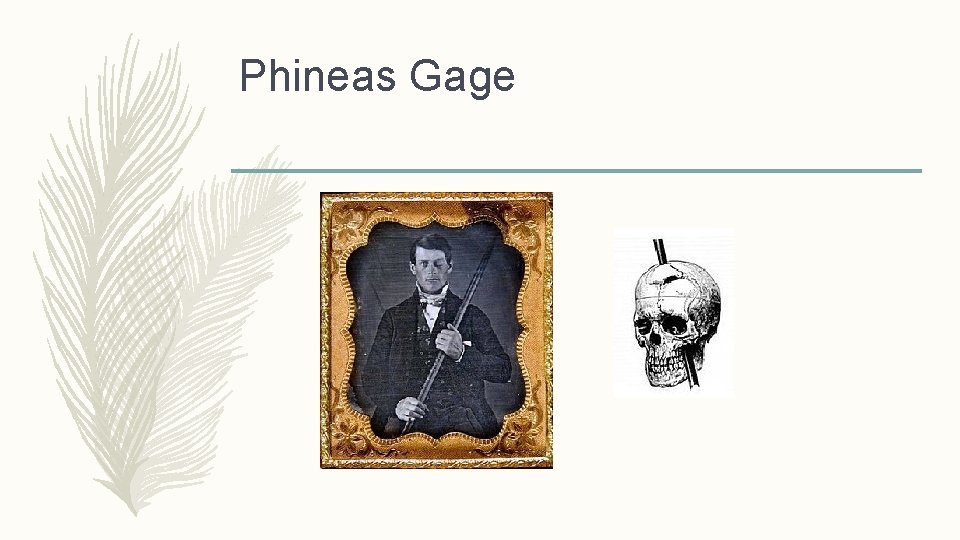
Phineas Gage
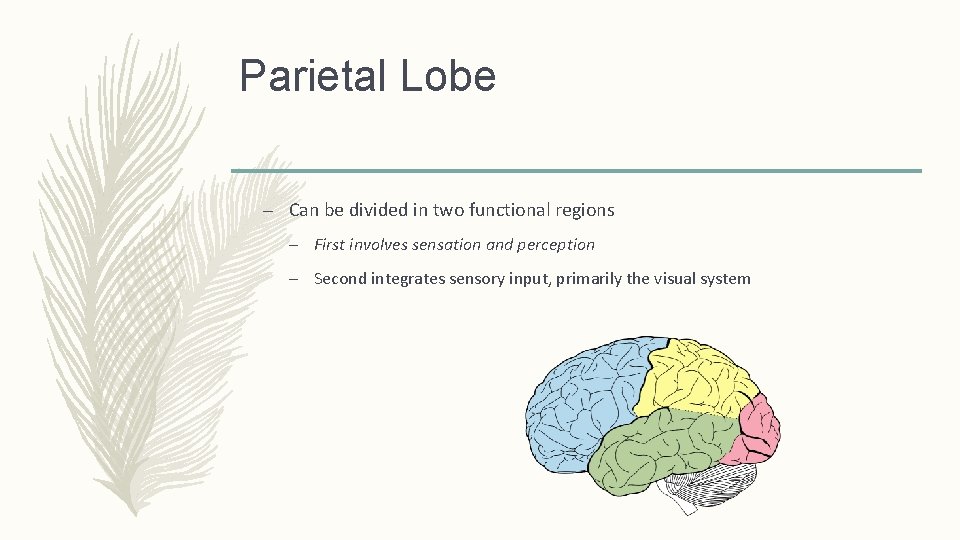
Parietal Lobe – Can be divided in two functional regions – First involves sensation and perception – Second integrates sensory input, primarily the visual system
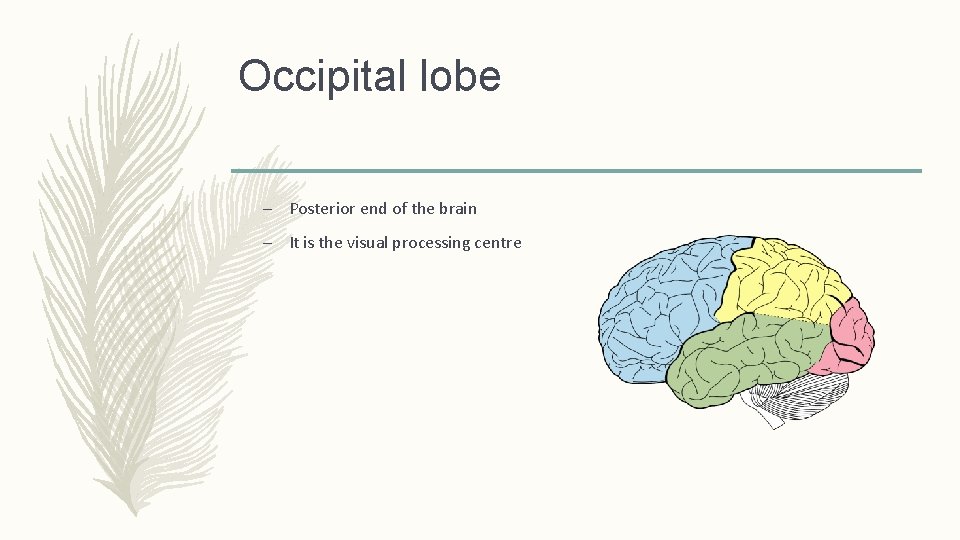
Occipital lobe – Posterior end of the brain – It is the visual processing centre
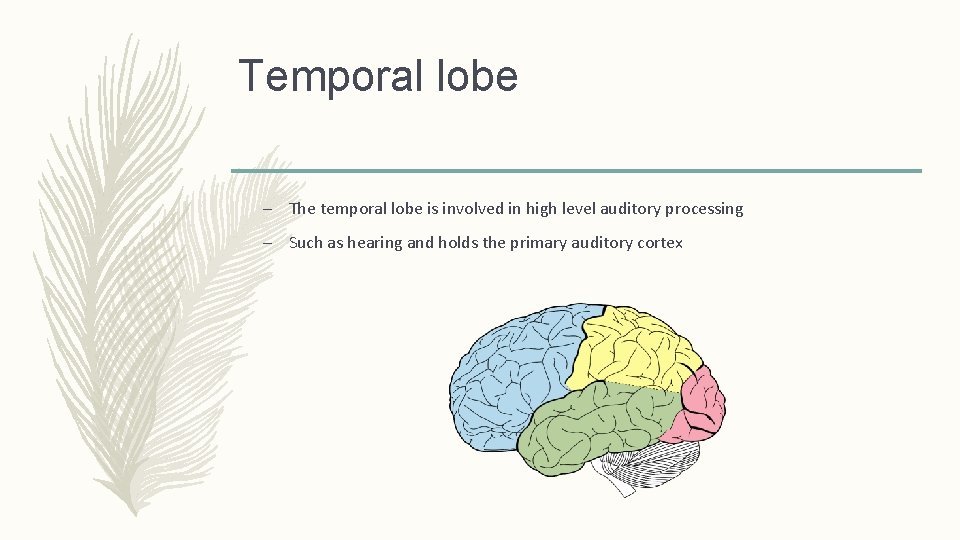
Temporal lobe – The temporal lobe is involved in high level auditory processing – Such as hearing and holds the primary auditory cortex
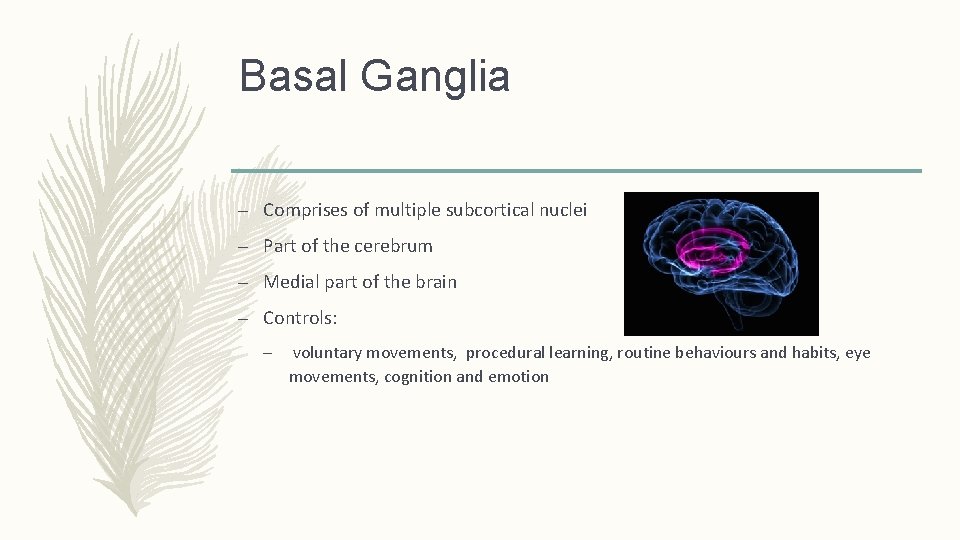
Basal Ganglia – Comprises of multiple subcortical nuclei – Part of the cerebrum – Medial part of the brain – Controls: – voluntary movements, procedural learning, routine behaviours and habits, eye movements, cognition and emotion
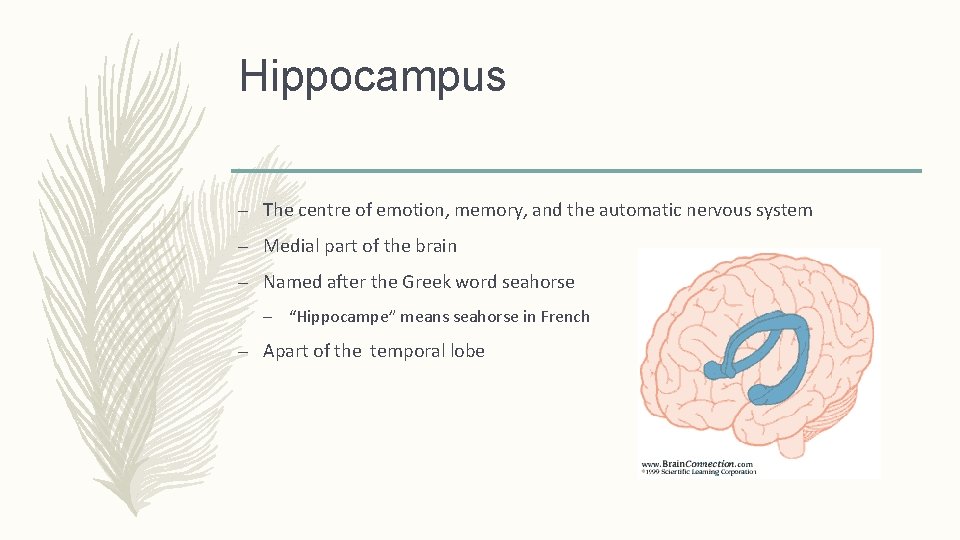
Hippocampus – The centre of emotion, memory, and the automatic nervous system – Medial part of the brain – Named after the Greek word seahorse – “Hippocampe” means seahorse in French – Apart of the temporal lobe
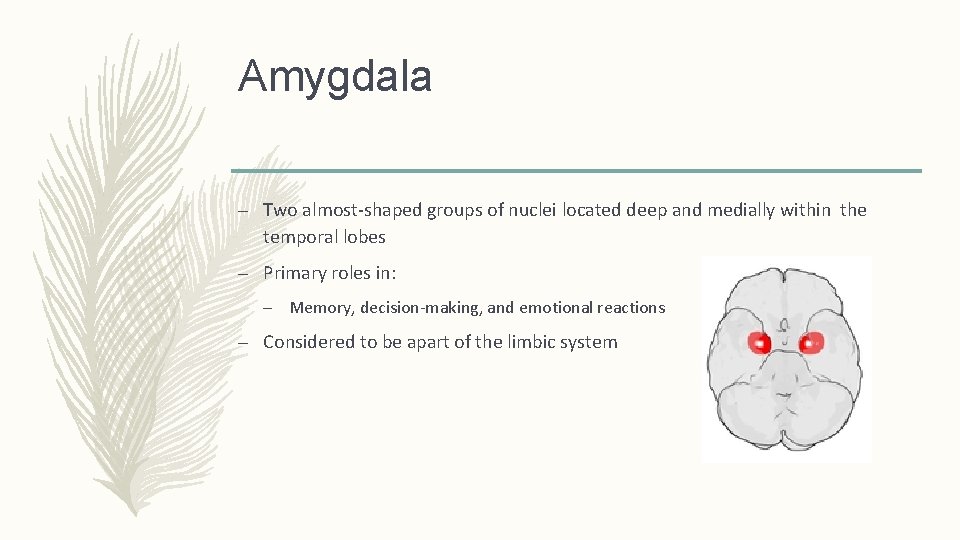
Amygdala – Two almost-shaped groups of nuclei located deep and medially within the temporal lobes – Primary roles in: – Memory, decision-making, and emotional reactions – Considered to be apart of the limbic system
Diencephalon Thalamus & hypothalamus
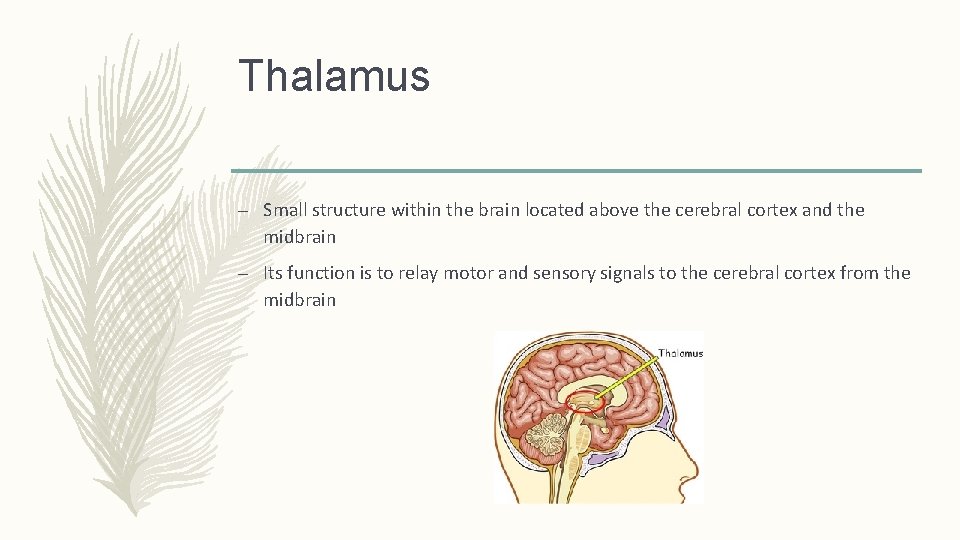
Thalamus – Small structure within the brain located above the cerebral cortex and the midbrain – Its function is to relay motor and sensory signals to the cerebral cortex from the midbrain
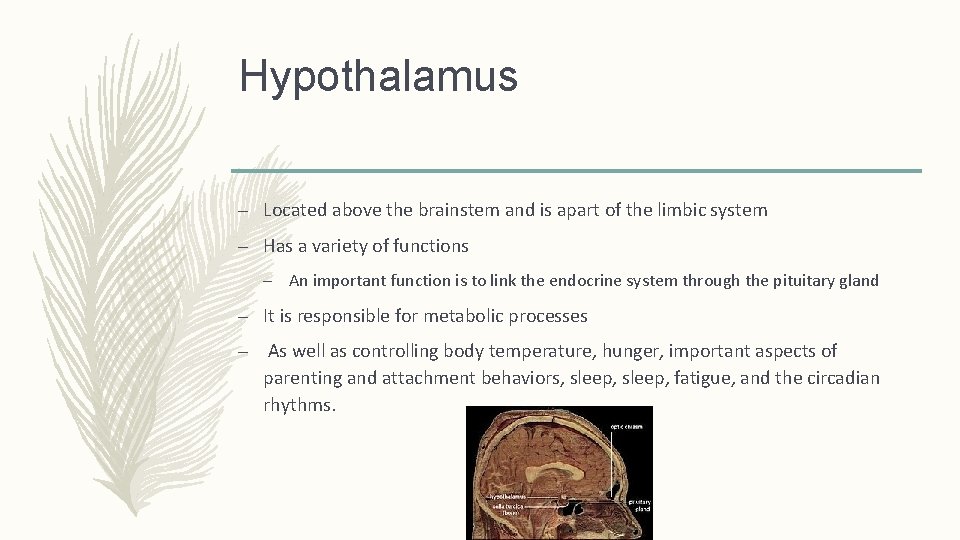
Hypothalamus – Located above the brainstem and is apart of the limbic system – Has a variety of functions – An important function is to link the endocrine system through the pituitary gland – It is responsible for metabolic processes – As well as controlling body temperature, hunger, important aspects of parenting and attachment behaviors, sleep, fatigue, and the circadian rhythms.
The Midbrain Mesencephalon
Mesencephalon Tectum and Tegmentum
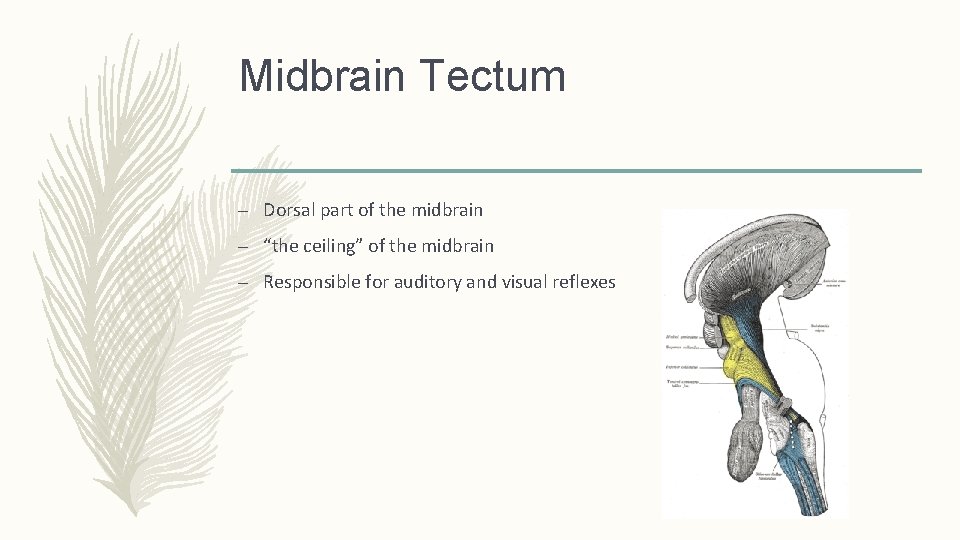
Midbrain Tectum – Dorsal part of the midbrain – “the ceiling” of the midbrain – Responsible for auditory and visual reflexes
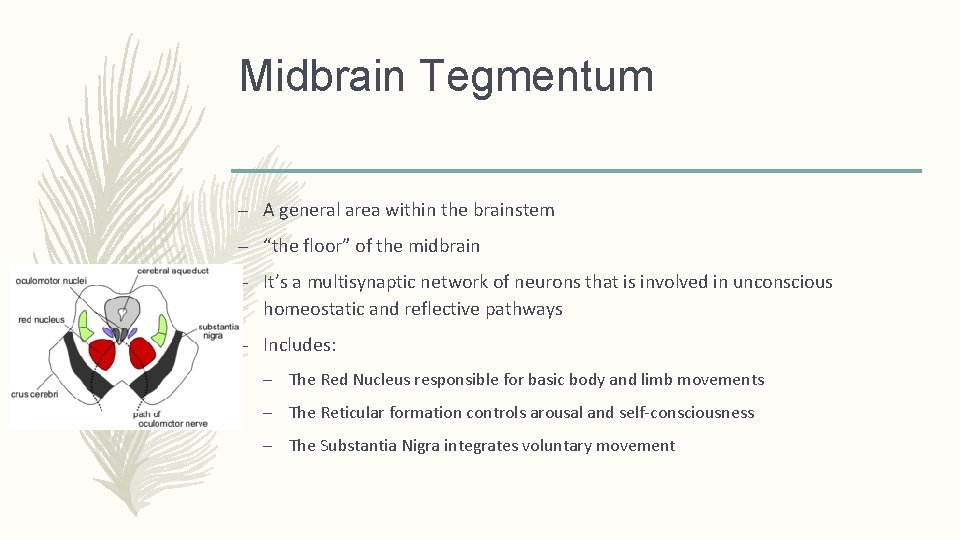
Midbrain Tegmentum – A general area within the brainstem – “the floor” of the midbrain – It’s a multisynaptic network of neurons that is involved in unconscious homeostatic and reflective pathways – Includes: – The Red Nucleus responsible for basic body and limb movements – The Reticular formation controls arousal and self-consciousness – The Substantia Nigra integrates voluntary movement
The hindbrain Metencephalon and Myelencephalon
Metencephalon Pons and cerebellum
Pons pt. 1 – A portion of the brain stem, located above the medulla oblongata and below the midbrain – Appears as a broad anterior bulge rostral to the medulla – It’s small, only approx. 2. 5 cm long – Functions include: – Tracks that conducts signals from the forebrain down to the cerebellum and medulla – Tracks that carry sensory signals up into the thalamus
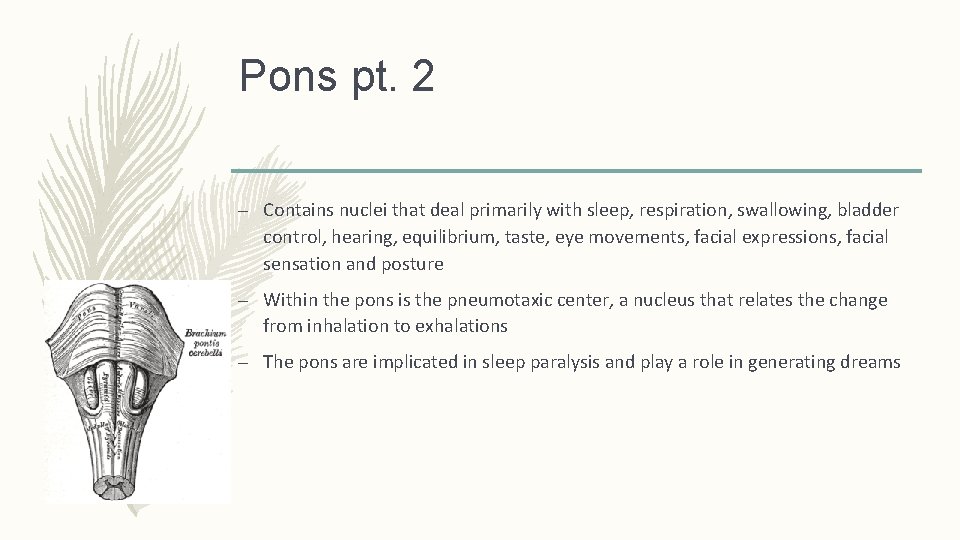
Pons pt. 2 – Contains nuclei that deal primarily with sleep, respiration, swallowing, bladder control, hearing, equilibrium, taste, eye movements, facial expressions, facial sensation and posture – Within the pons is the pneumotaxic center, a nucleus that relates the change from inhalation to exhalations – The pons are implicated in sleep paralysis and play a role in generating dreams
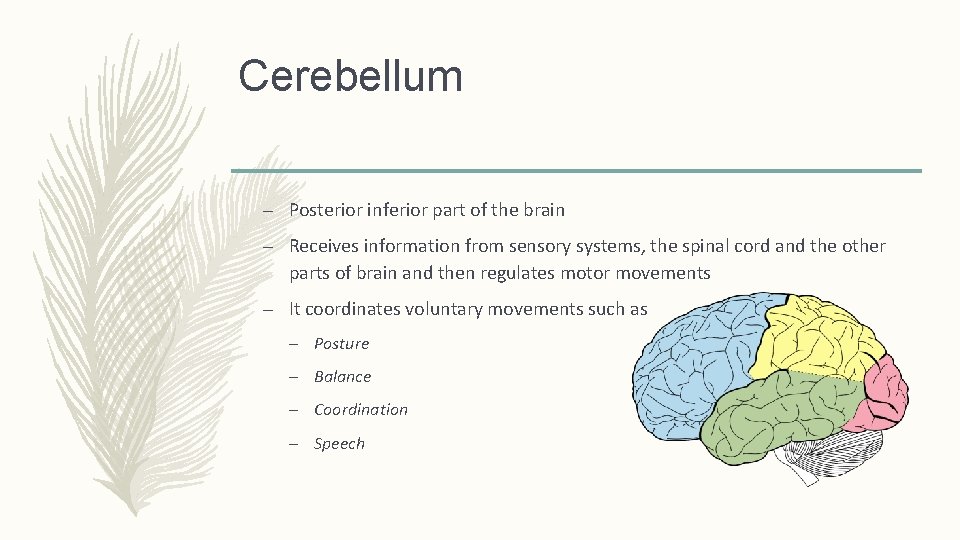
Cerebellum – Posterior inferior part of the brain – Receives information from sensory systems, the spinal cord and the other parts of brain and then regulates motor movements – It coordinates voluntary movements such as – Posture – Balance – Coordination – Speech
Myelencephalon Medulla
Medulla – Formally known as the medulla oblongata – Located in the hindbrain, anterior to the cerebellum – Responsible for multiple autonomic (involuntary) functions ranging from vomiting to sneezing – It contains the cardiac, respiratory, vomiting, and vasomotor centres – Which deals with the autonomic functions of breathing, heart rate, and blood pressure
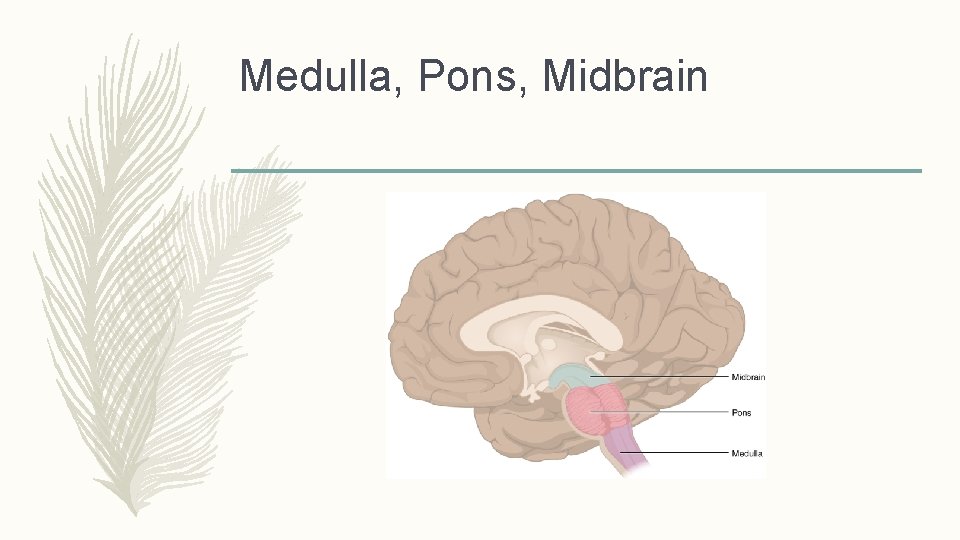
Medulla, Pons, Midbrain
Thanks for listening
- Slides: 38