
Anatomy of the Bass Guitar Headstock Neck Body
Anatomy of the Bass Guitar
Headstock Neck Body Headstock Navigational tip: As you explore this tour, use the buttons on the upper right to move Neck between the main portions of the bass Body Outlined boxes: These are links. Click on outlined boxes to zoom in on a particular part of the guitar and see more details
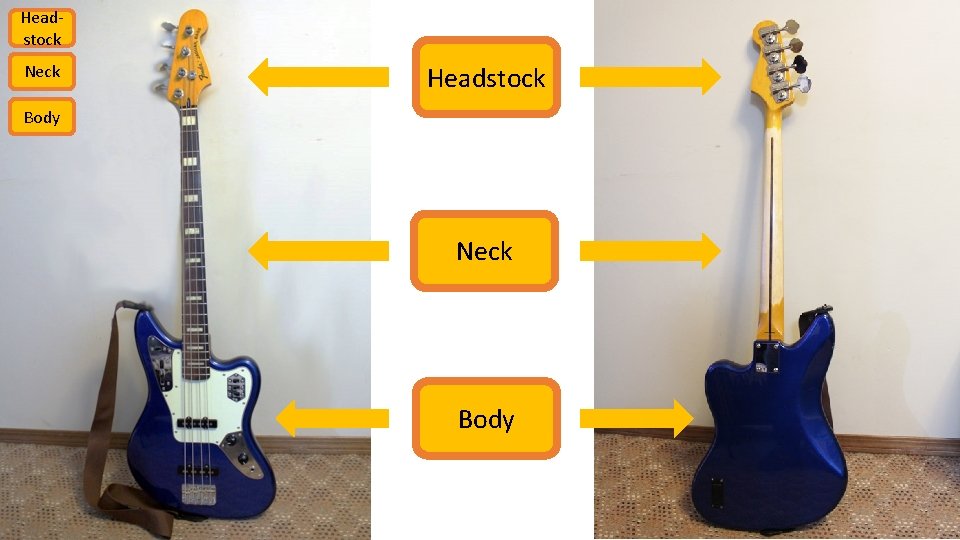
Headstock Neck Headstock Body Neck Body
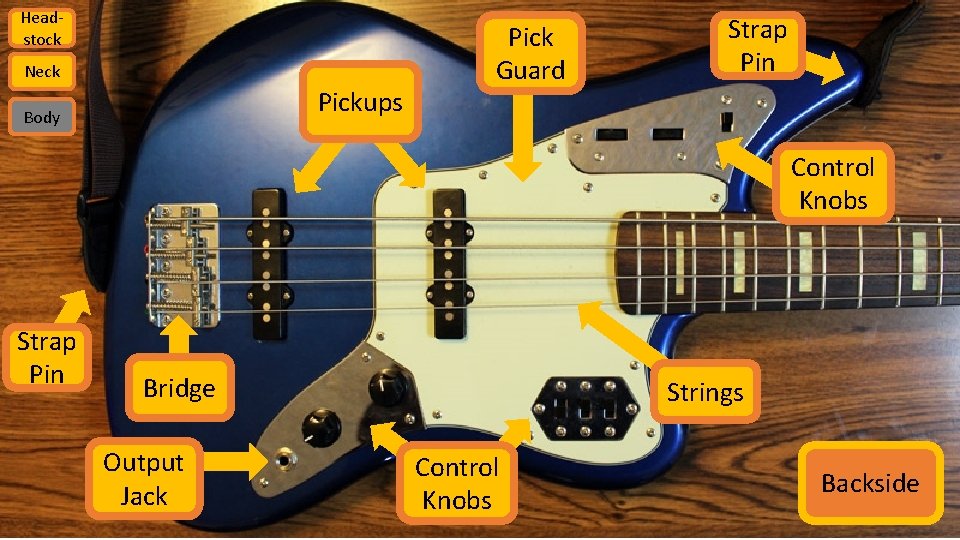
Headstock Neck Pickups Body Pick Guard Strap Pin Control Knobs Strap Pin Bridge Output Jack Strings Control Knobs Backside
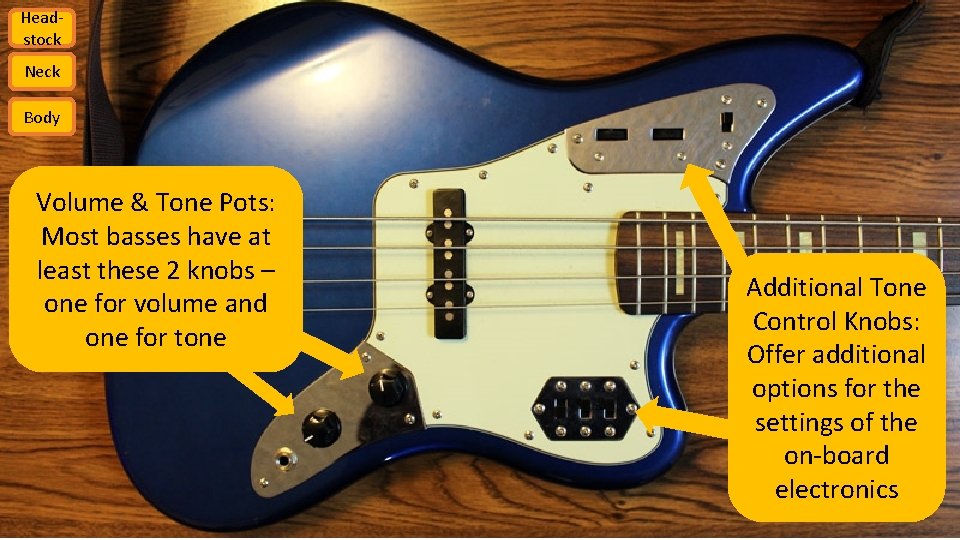
Headstock Neck Body Volume & Tone Pots: Most basses have at least these 2 knobs – one for volume and one for tone Additional Tone Control Knobs: Offer additional options for the settings of the on-board electronics
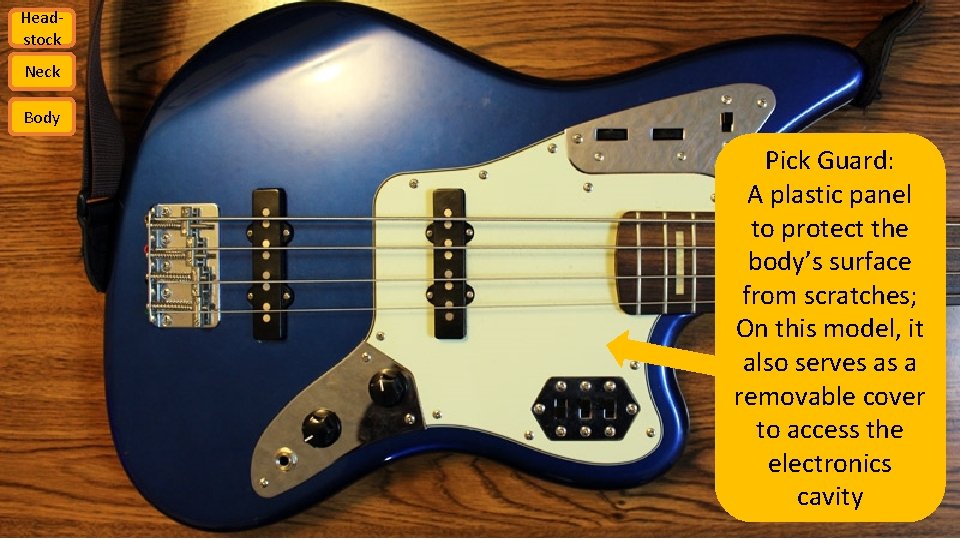
Headstock Neck Body Pick Guard: A plastic panel to protect the body’s surface from scratches; On this model, it also serves as a removable cover to access the electronics cavity
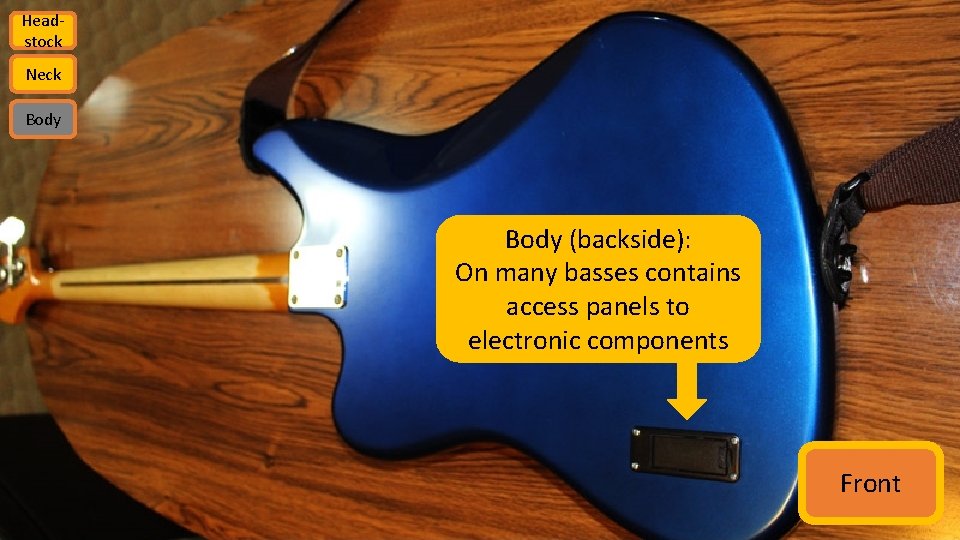
Headstock Neck Body (backside): On many basses contains access panels to electronic components Front
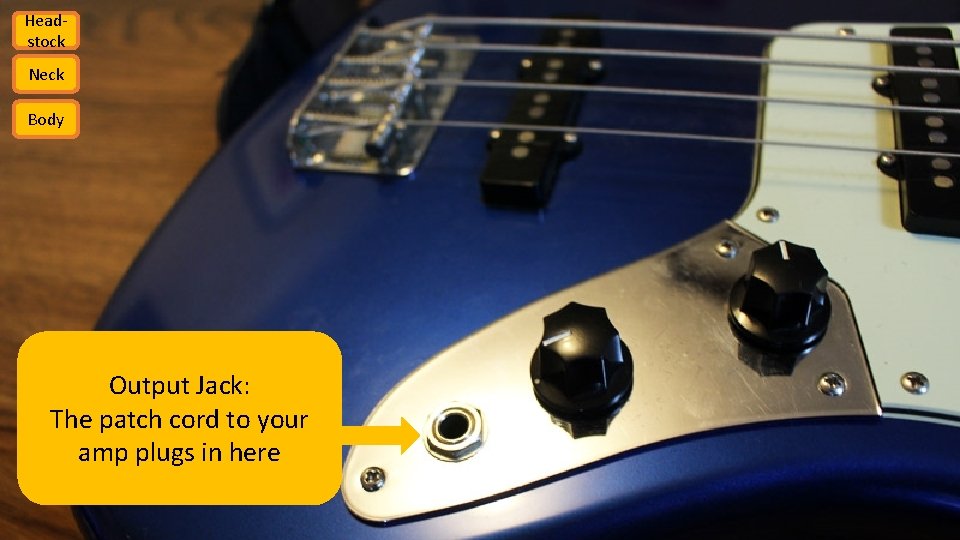
Headstock Neck Body Output Jack: The patch cord to your amp plugs in here
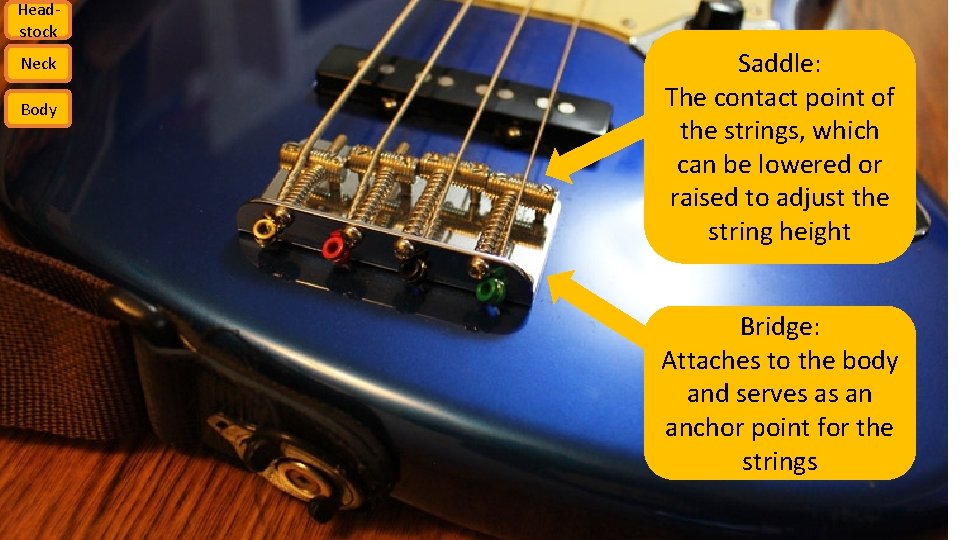
Headstock Neck Body Saddle: The contact point of the strings, which can be lowered or raised to adjust the string height Bridge: Attaches to the body and serves as an anchor point for the strings
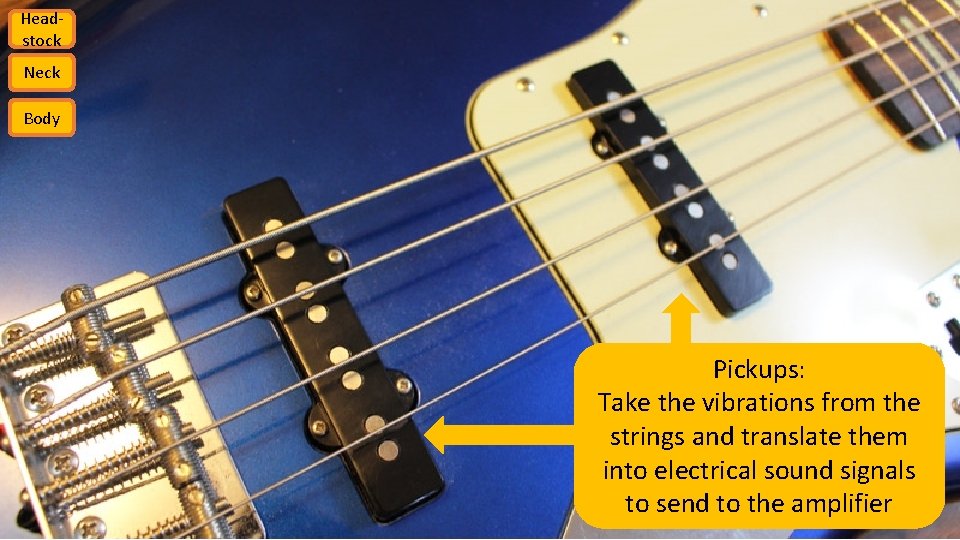
Headstock Neck Body Pickups: Take the vibrations from the strings and translate them into electrical sound signals to send to the amplifier
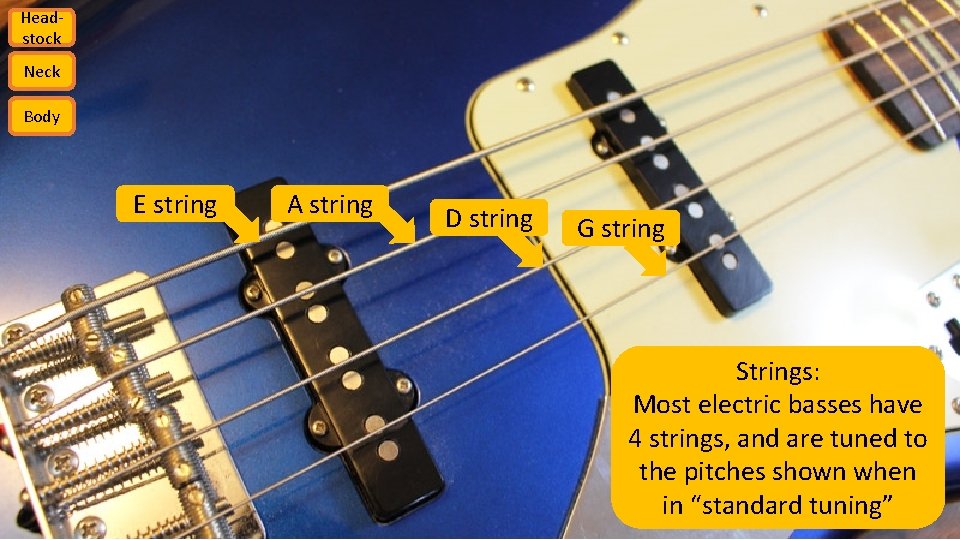
Headstock Neck Body E string A string D string G string Strings: Most electric basses have 4 strings, and are tuned to the pitches shown when in “standard tuning”
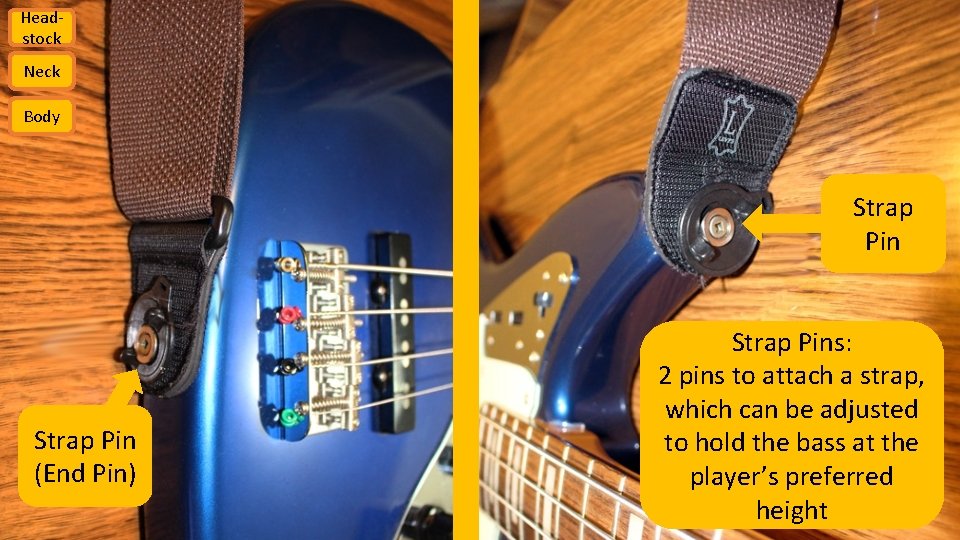
Headstock Neck Body Strap Pin (End Pin) Strap Pins: 2 pins to attach a strap, which can be adjusted to hold the bass at the player’s preferred height
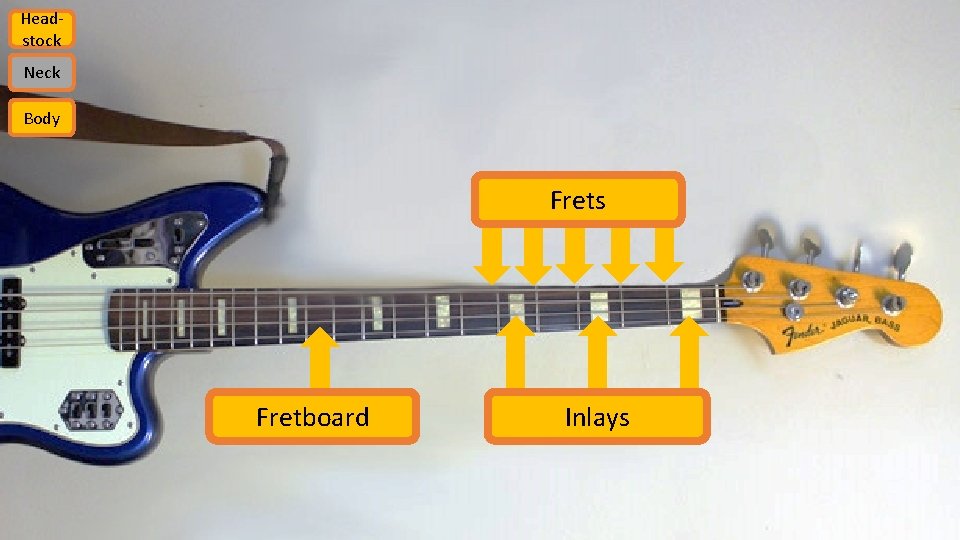
Headstock Neck Body Frets Fretboard Inlays
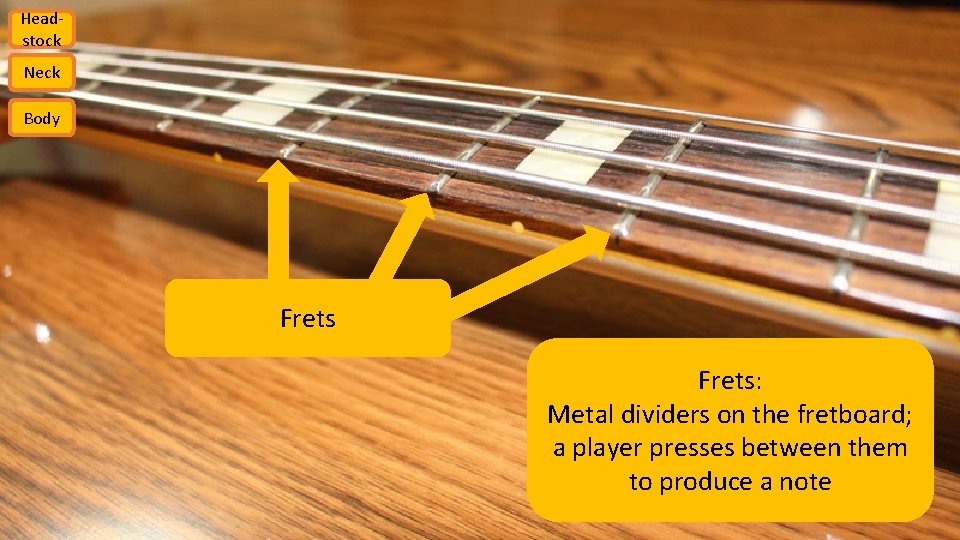
Headstock Neck Body Frets: Metal dividers on the fretboard; a player presses between them to produce a note
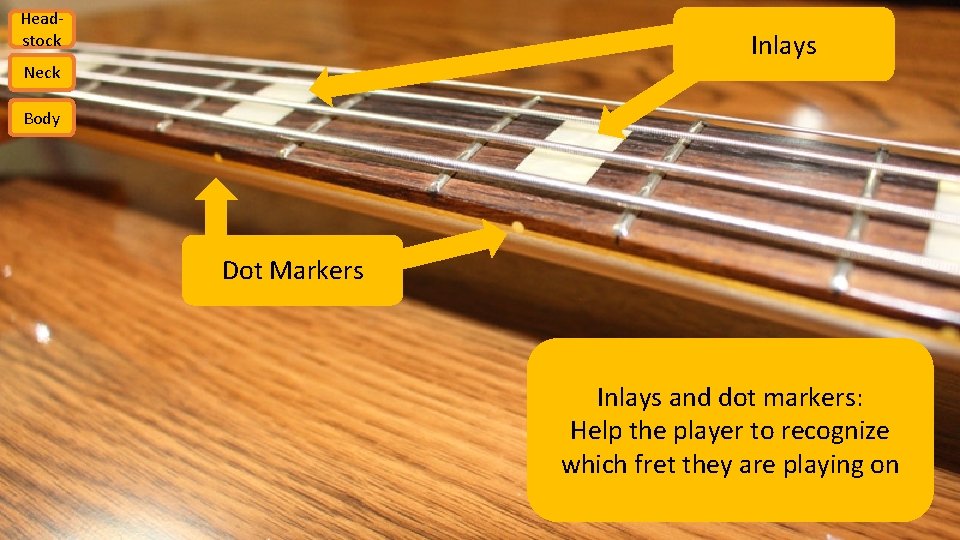
Headstock Inlays Neck Body Dot Markers Inlays and dot markers: Help the player to recognize which fret they are playing on
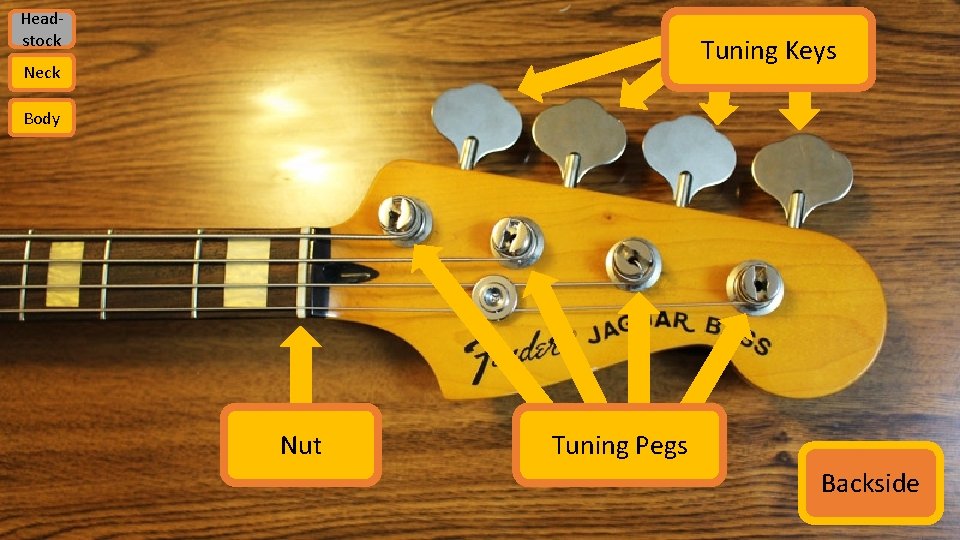
Headstock Tuning Keys Neck Body Nut Tuning Pegs Backside
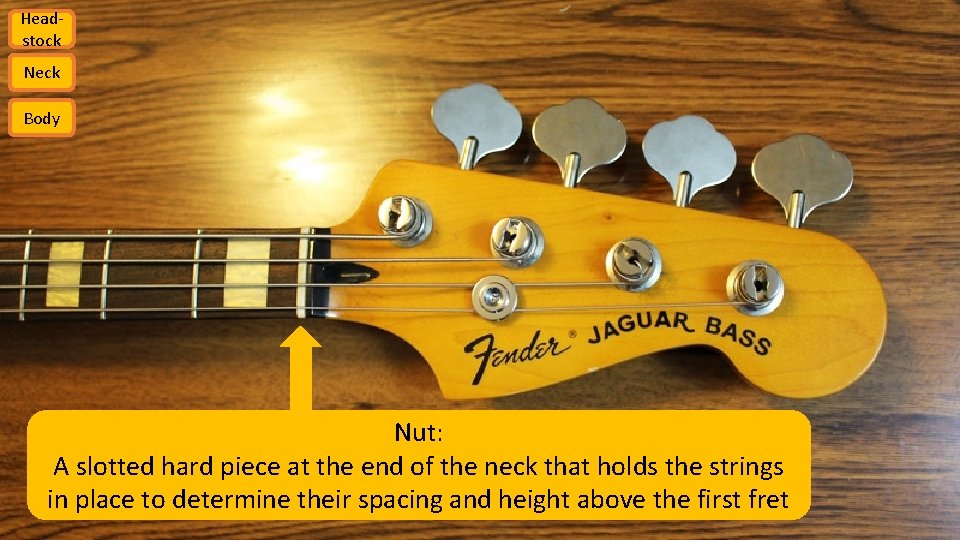
Headstock Neck Body Nut: A slotted hard piece at the end of the neck that holds the strings in place to determine their spacing and height above the first fret
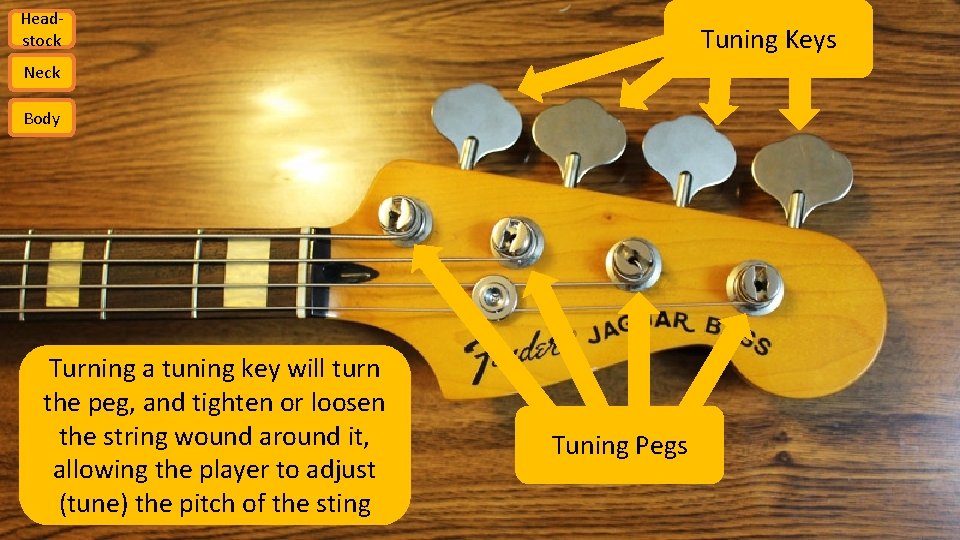
Headstock Tuning Keys Neck Body Turning a tuning key will turn the peg, and tighten or loosen the string wound around it, allowing the player to adjust (tune) the pitch of the sting Tuning Pegs
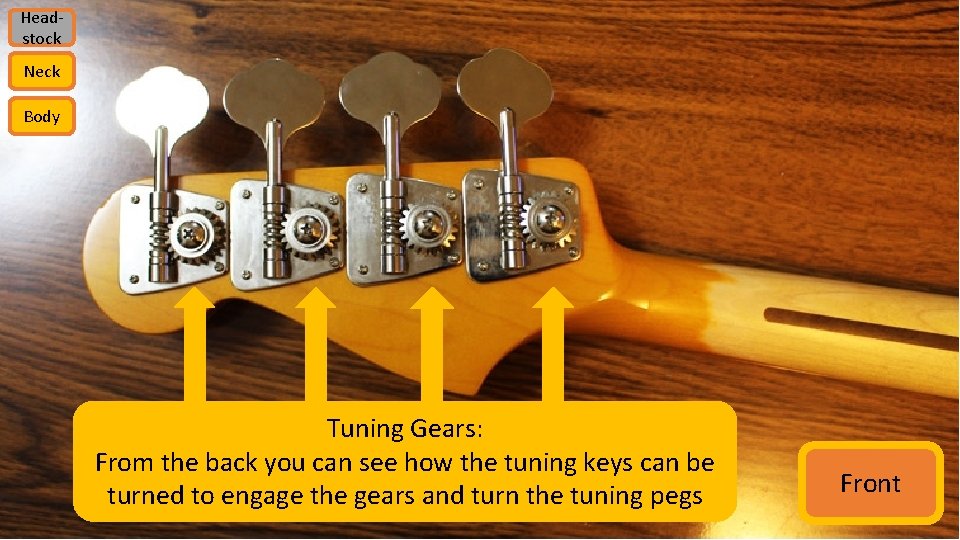
Headstock Neck Body Tuning Gears: From the back you can see how the tuning keys can be turned to engage the gears and turn the tuning pegs Front
Headstock Neck Body End of Tour (Or use the menu to keep exploring)
- Slides: 20