
ANATOMY OF LYMPHATIC SYSTEM Mario Makarevi 2 nd


- Slides: 21
ANATOMY OF LYMPHATIC SYSTEM Mario Makarević 2 nd year 2013/2014 Mentor: A. Žmegač Horvat
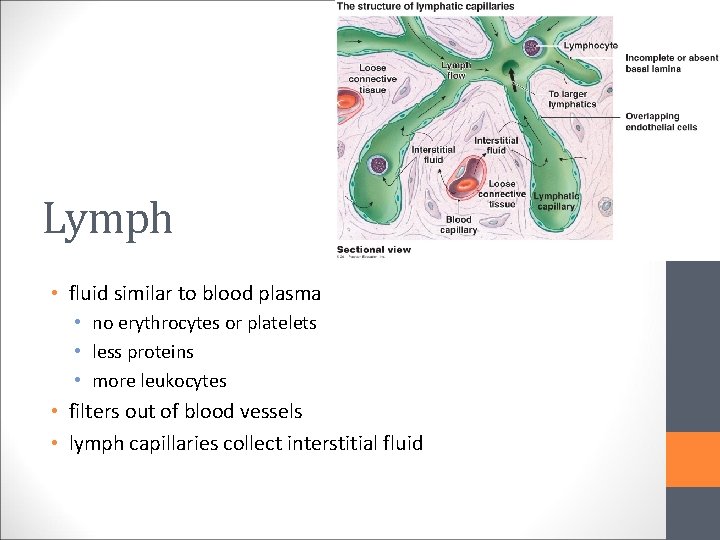
Lymph • fluid similar to blood plasma • no erythrocytes or platelets • less proteins • more leukocytes • filters out of blood vessels • lymph capillaries collect interstitial fluid
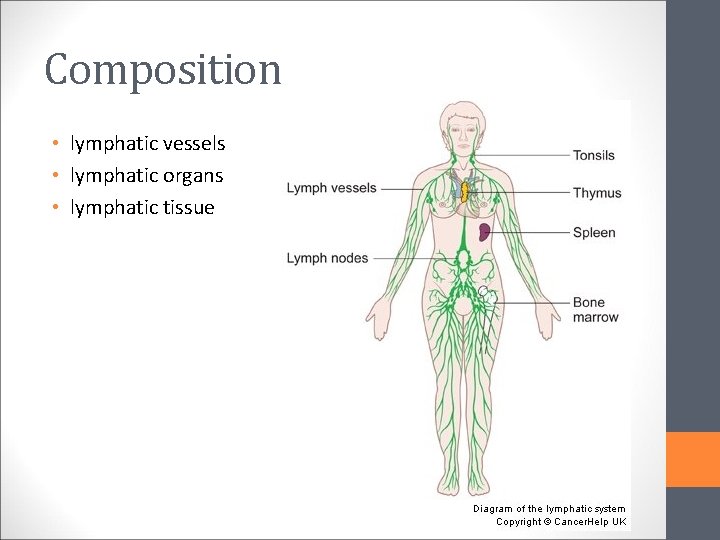
Composition • lymphatic vessels • lymphatic organs • lymphatic tissue
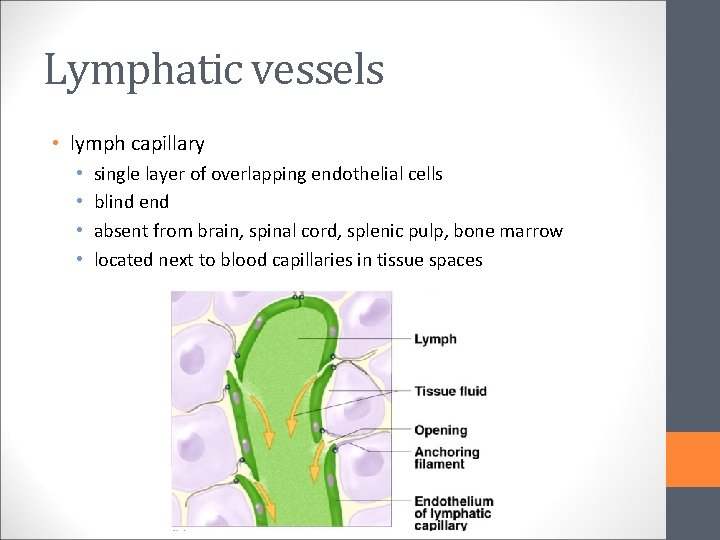
Lymphatic vessels • lymph capillary • • single layer of overlapping endothelial cells blind end absent from brain, spinal cord, splenic pulp, bone marrow located next to blood capillaries in tissue spaces
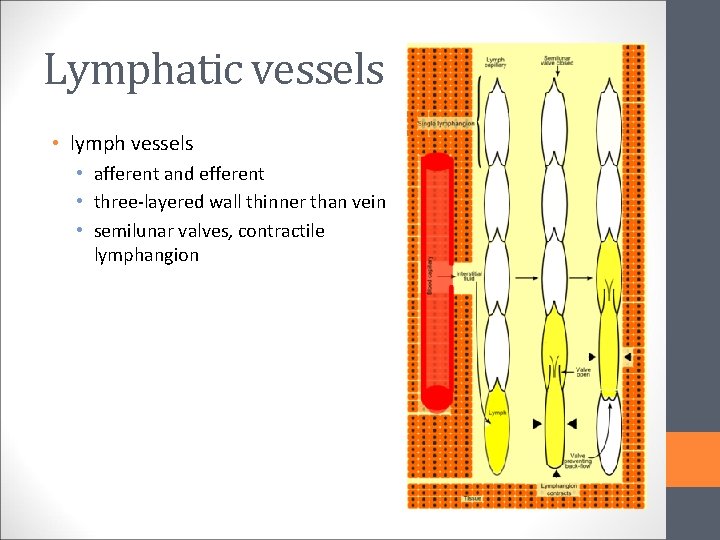
Lymphatic vessels • lymph vessels • afferent and efferent • three-layered wall thinner than vein • semilunar valves, contractile lymphangion
Lymphatic vessels • lymph trunks • confluence of many efferent lymph vessels • • • jugular lymph trunks subclavian lymph trunks bronchomediastinal lymph trunks lumbar lymph trunks intestinal lymph trunk—unpaired
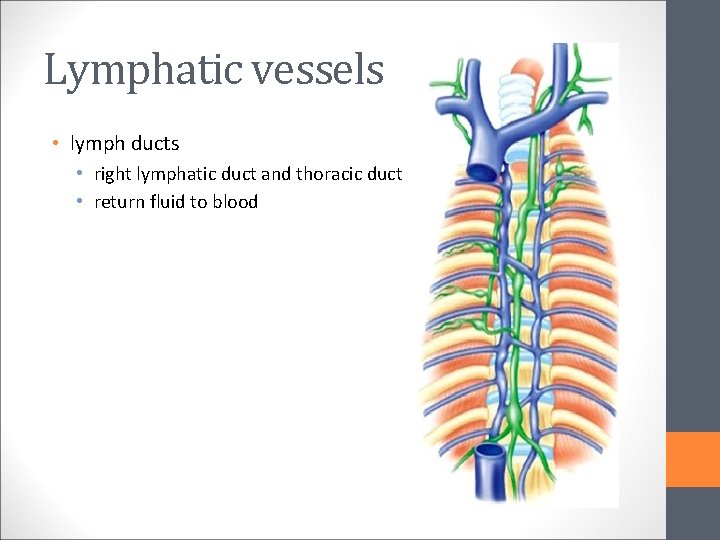
Lymphatic vessels • lymph ducts • right lymphatic duct and thoracic duct • return fluid to blood
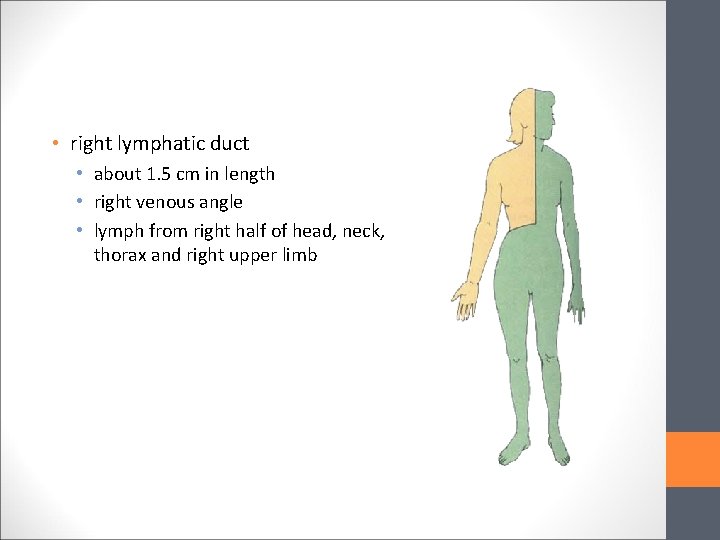
• right lymphatic duct • about 1. 5 cm in length • right venous angle • lymph from right half of head, neck, thorax and right upper limb
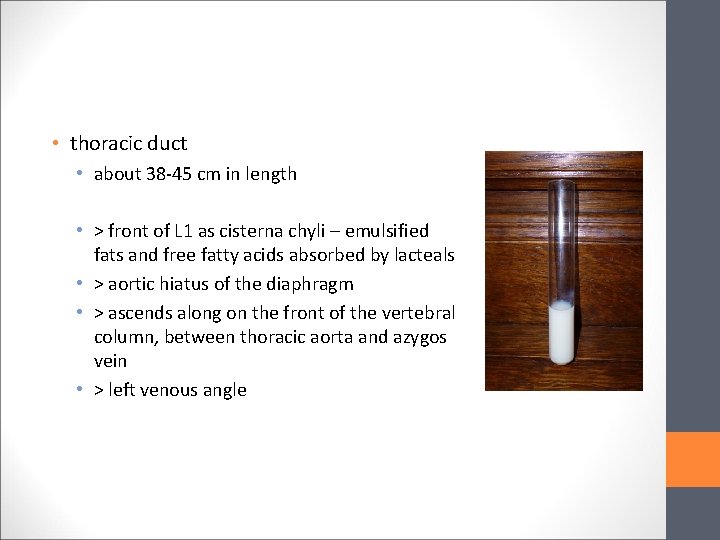
• thoracic duct • about 38 -45 cm in length • > front of L 1 as cisterna chyli – emulsified fats and free fatty acids absorbed by lacteals • > aortic hiatus of the diaphragm • > ascends along on the front of the vertebral column, between thoracic aorta and azygos vein • > left venous angle
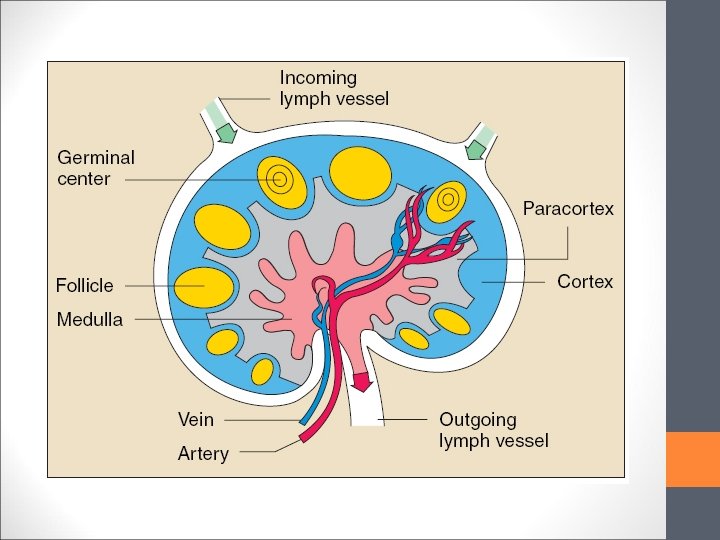
Lymph nodes collections of stationary lymph tissue from a few millimeters to about 1– 2 cm long fibrous capsule afferent lymph vessels entering at the periphery, efferent lymph vessels emerging at the hilum • cortex and medulla • •
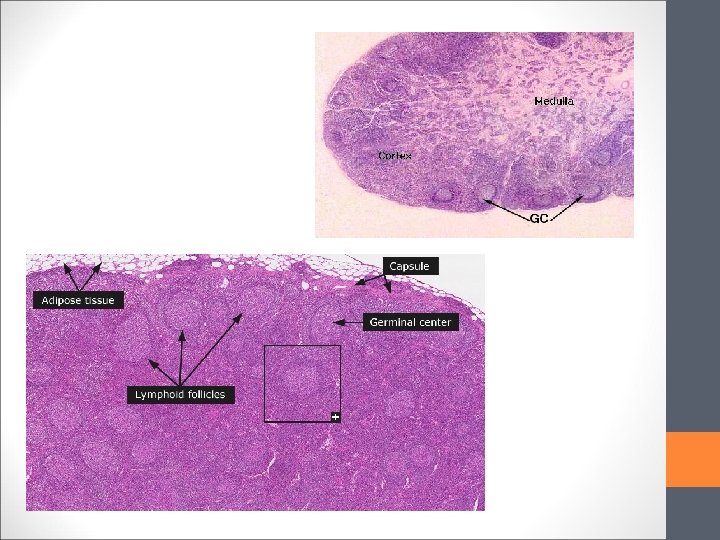
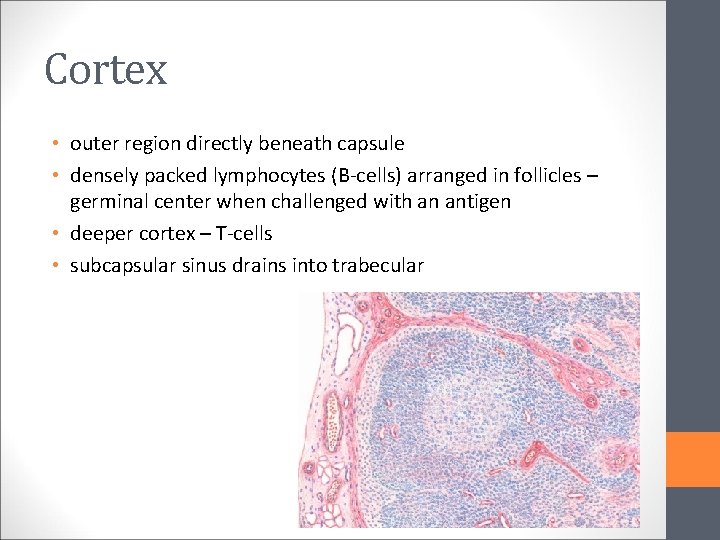
Cortex • outer region directly beneath capsule • densely packed lymphocytes (B-cells) arranged in follicles – germinal center when challenged with an antigen • deeper cortex – T-cells • subcapsular sinus drains into trabecular
Medulla • inner region • strands called medullary cords – B-cells, macrophages and plasma cells • large blood vessels • medullary sinuses
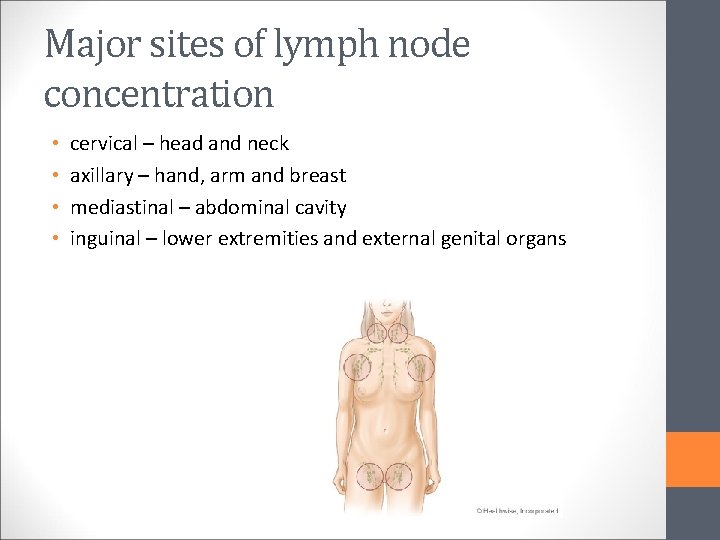
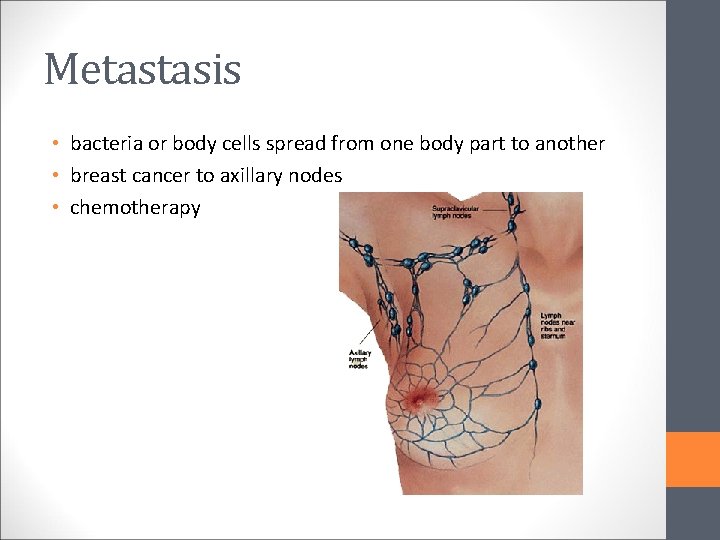
Major sites of lymph node concentration • • cervical – head and neck axillary – hand, arm and breast mediastinal – abdominal cavity inguinal – lower extremities and external genital organs
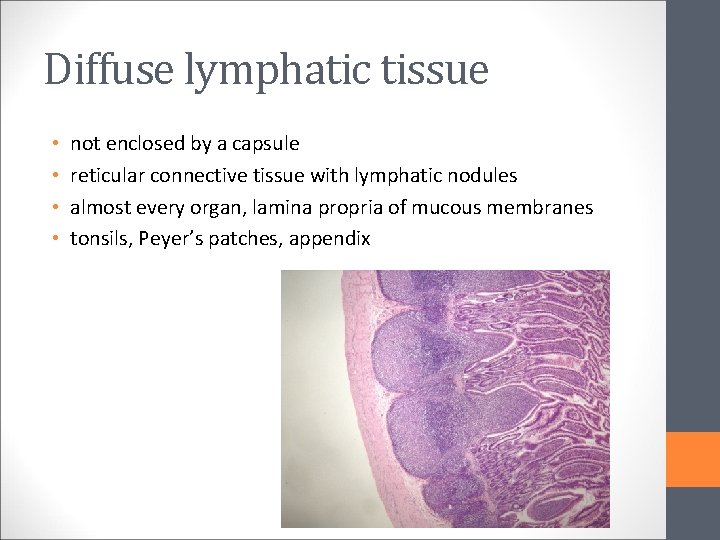
Diffuse lymphatic tissue • • not enclosed by a capsule reticular connective tissue with lymphatic nodules almost every organ, lamina propria of mucous membranes tonsils, Peyer’s patches, appendix
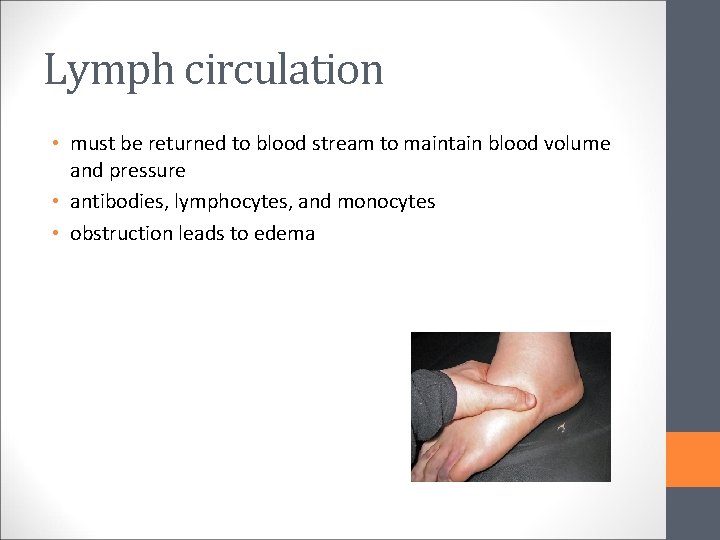
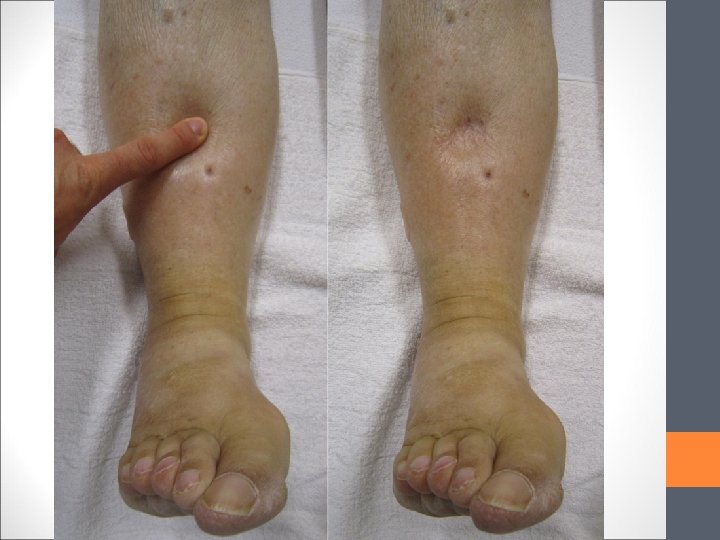
Lymph circulation • must be returned to blood stream to maintain blood volume and pressure • antibodies, lymphocytes, and monocytes • obstruction leads to edema
Lymph circulation • no central pump • slow movement • lymph is kept moving by: • contraction of adjacent skeletal muscle and arterial pulsation • contraction of smooth muscles – peristalsis
Metastasis • bacteria or body cells spread from one body part to another • breast cancer to axillary nodes • chemotherapy
Sources • http: //www. innerbody. com/image/lympov. html • http: //en. wikipedia. org/wiki/Lymphatic_system • https: //www. boundless. com/physiology/the-lymphaticsystem/ • http: //www. cea 1. com/anatomy-sistems/lymph-capillaries/