
Anatomy for Complete and Partial Dentures Lips Vermilion
- Slides: 31
Anatomy for Complete and Partial Dentures
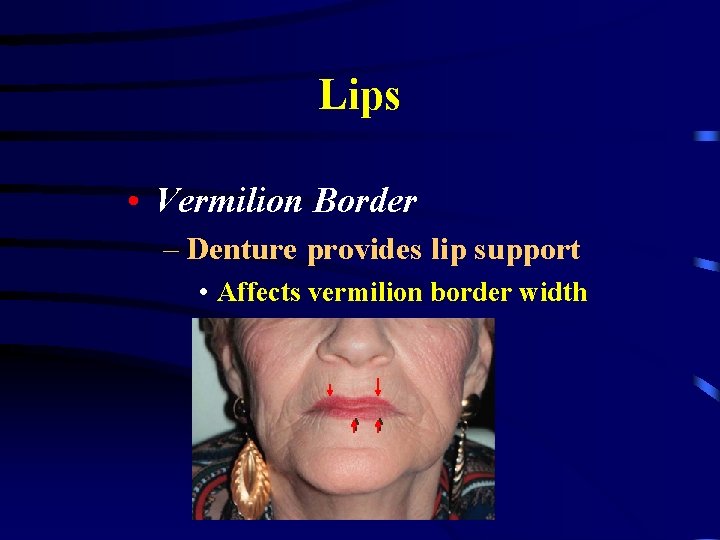
Lips • Vermilion Border – Denture provides lip support • Affects vermilion border width
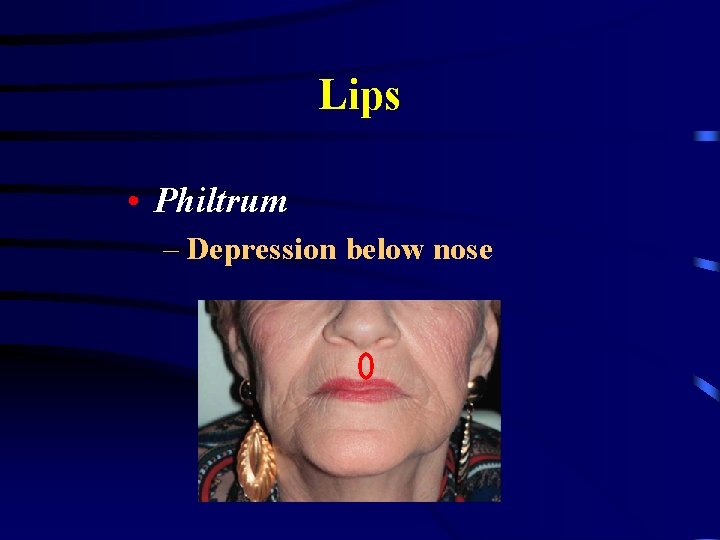
Lips • Philtrum – Depression below nose
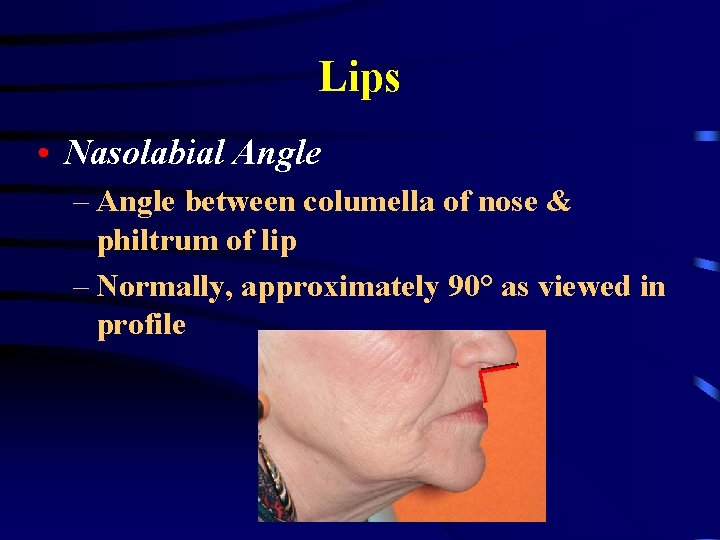
Lips • Nasolabial Angle – Angle between columella of nose & philtrum of lip – Normally, approximately 90° as viewed in profile
Lips • Tissue of the Upper Lip – Loose tissue of the upper lip can be gathered between your thumb and index finger
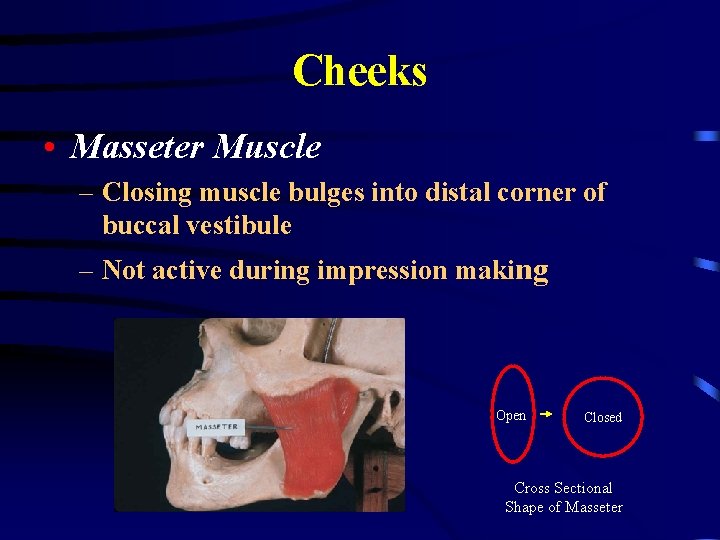
Cheeks • Masseter Muscle – Closing muscle bulges into distal corner of buccal vestibule – Not active during impression making Open Closed Cross Sectional Shape of Masseter
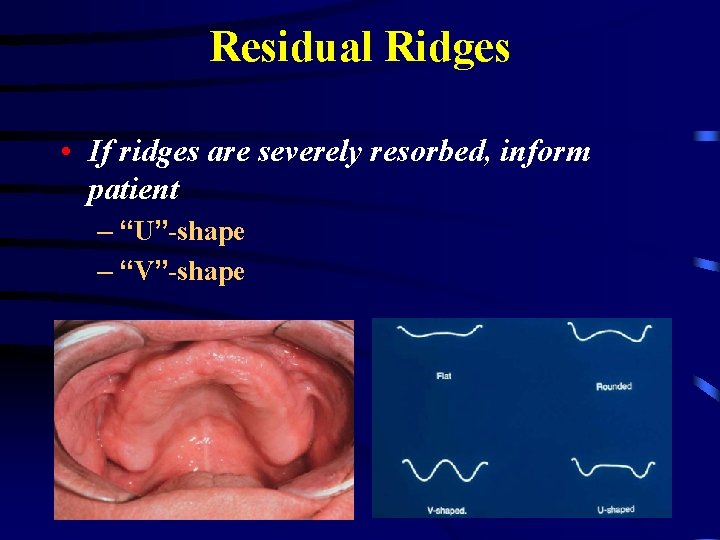
Residual Ridges • If ridges are severely resorbed, inform patient – “U”-shape – “V”-shape
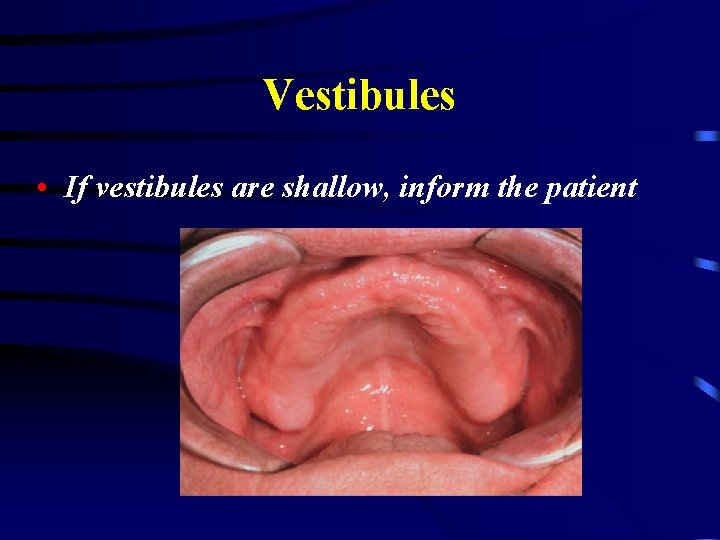
Vestibules • If vestibules are shallow, inform the patient
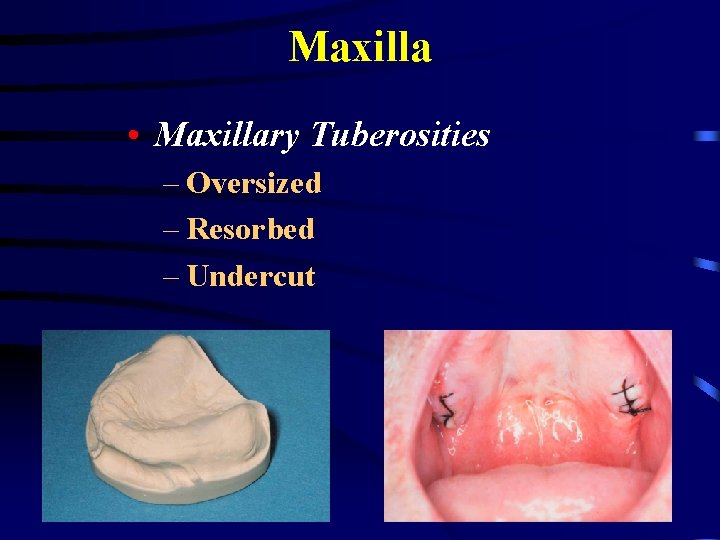
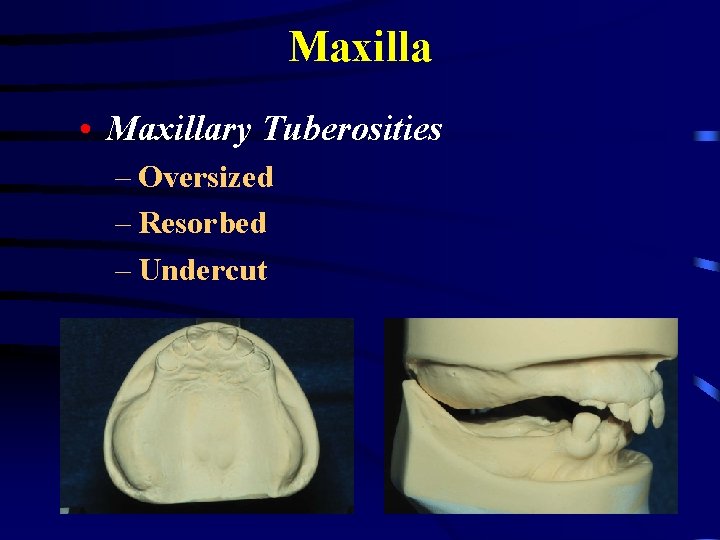
Maxilla • Maxillary Tuberosities – Oversized – Resorbed – Undercut
Maxilla • Maxillary Tuberosities – Oversized – Resorbed – Undercut
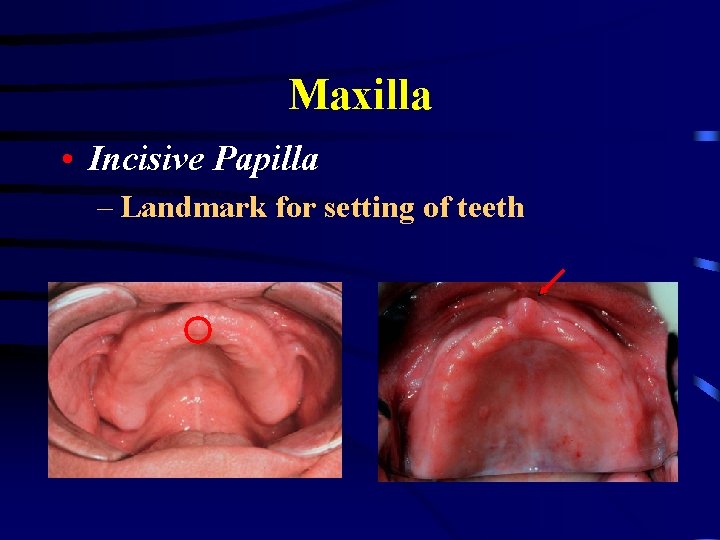
Maxilla • Incisive Papilla – Landmark for setting of teeth
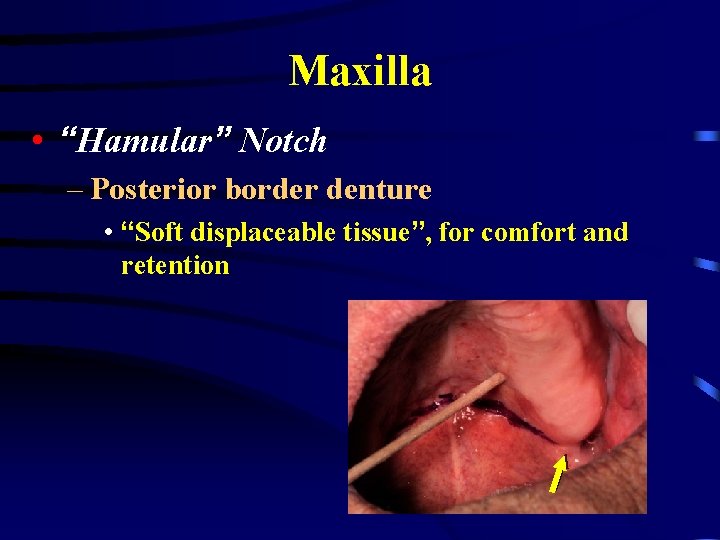
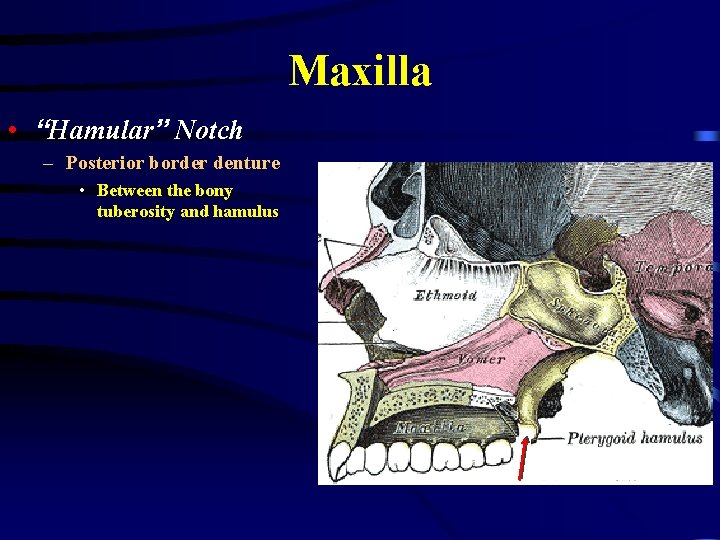
Maxilla • “Hamular” Notch – Posterior border denture • “Soft displaceable tissue”, for comfort and retention
Maxilla • “Hamular” Notch – Posterior border denture • Between the bony tuberosity and hamulus
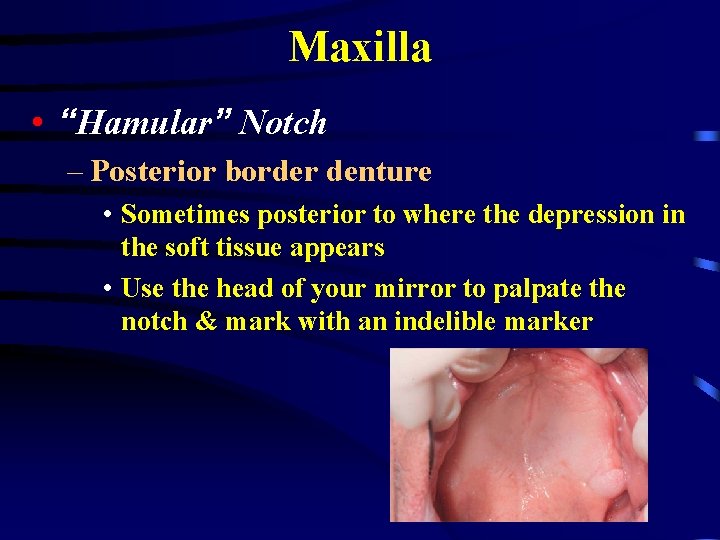
Maxilla • “Hamular” Notch – Posterior border denture • Sometimes posterior to where the depression in the soft tissue appears • Use the head of your mirror to palpate the notch & mark with an indelible marker
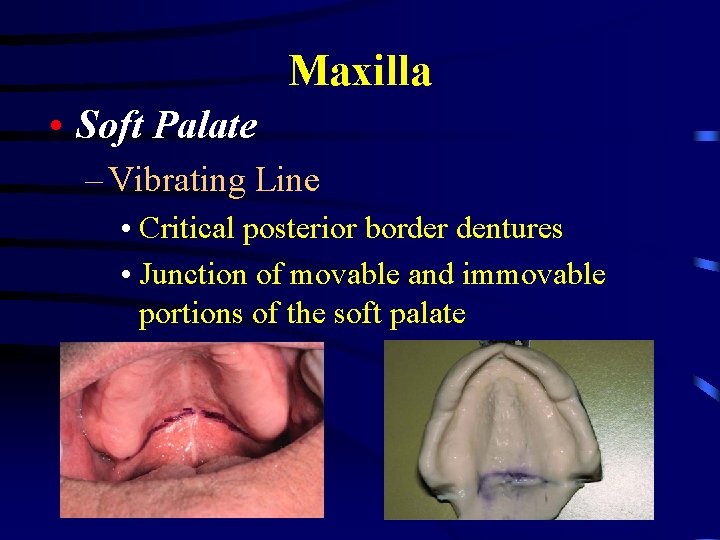
Maxilla • Soft Palate – Vibrating Line • Critical posterior border dentures • Junction of movable and immovable portions of the soft palate
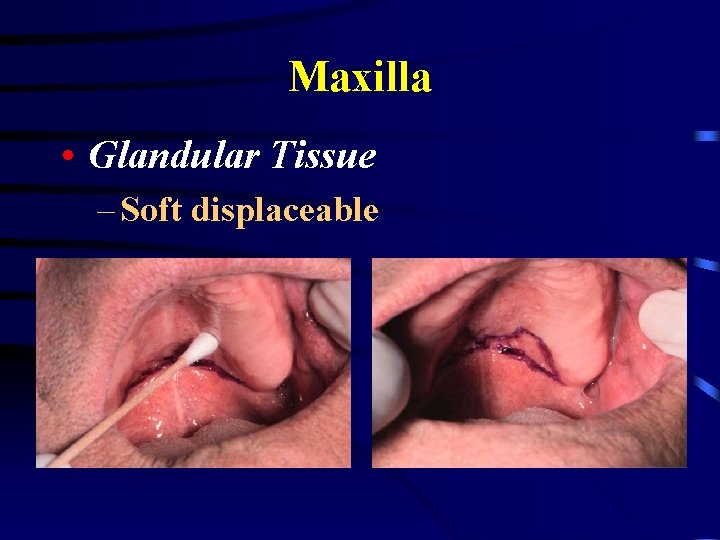
Maxilla • Glandular Tissue – Soft displaceable
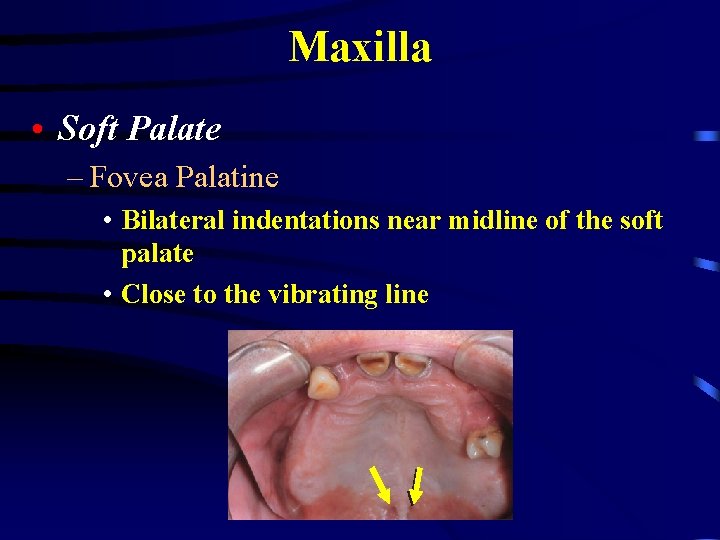
Maxilla • Soft Palate – Fovea Palatine • Bilateral indentations near midline of the soft palate • Close to the vibrating line
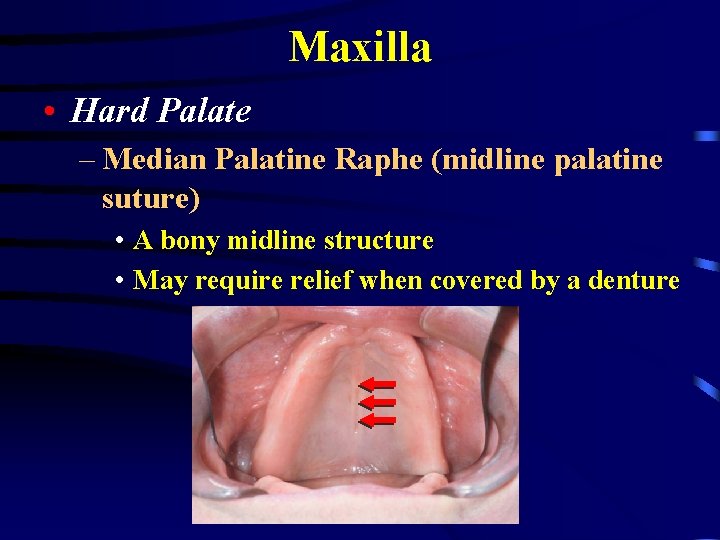
Maxilla • Hard Palate – Median Palatine Raphe (midline palatine suture) • A bony midline structure • May require relief when covered by a denture
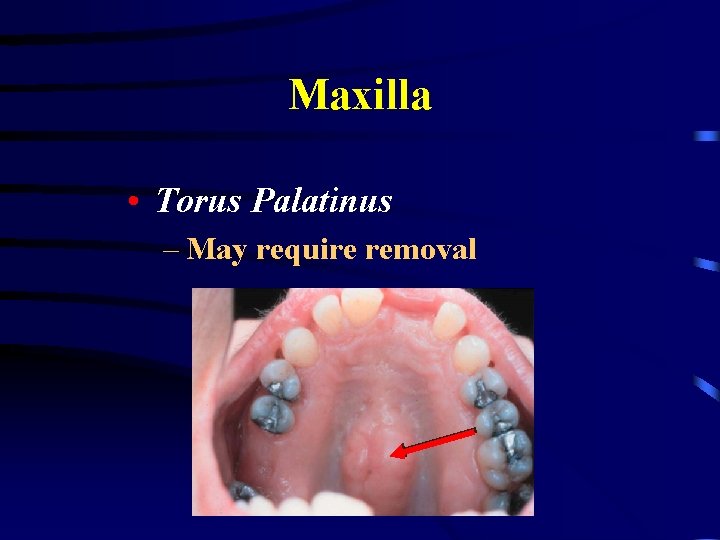
Maxilla • Torus Palatinus – May require removal
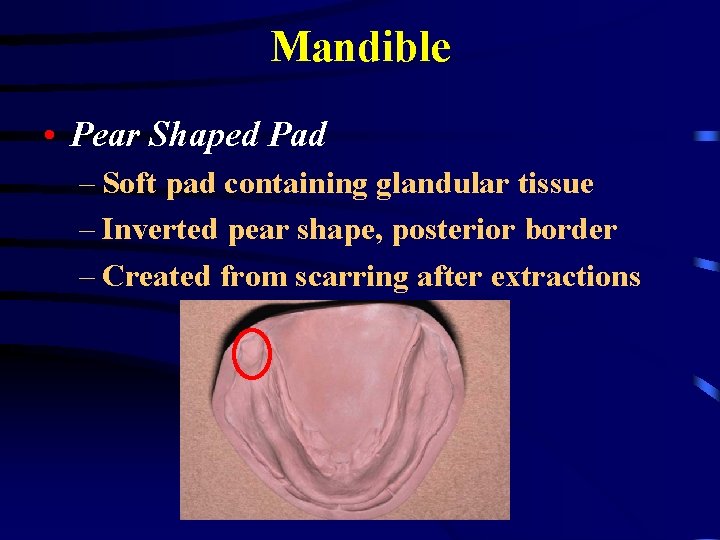
Mandible • Pear Shaped Pad – Soft pad containing glandular tissue – Inverted pear shape, posterior border – Created from scarring after extractions
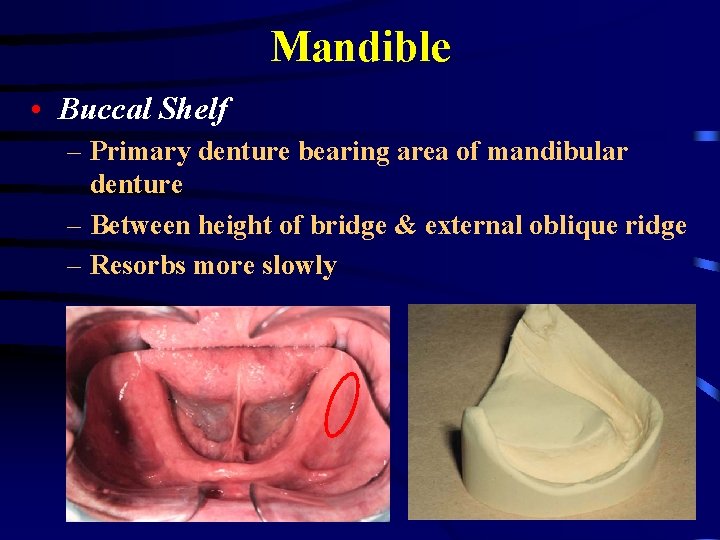
Mandible • Buccal Shelf – Primary denture bearing area of mandibular denture – Between height of bridge & external oblique ridge – Resorbs more slowly
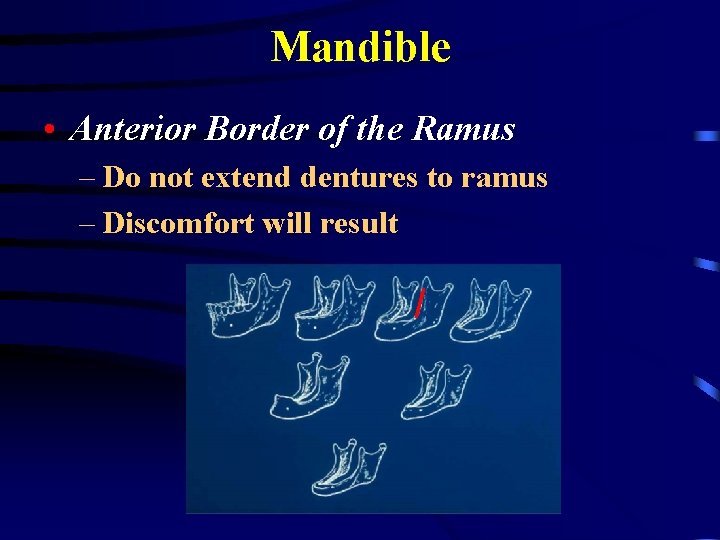
Mandible • Anterior Border of the Ramus – Do not extend dentures to ramus – Discomfort will result
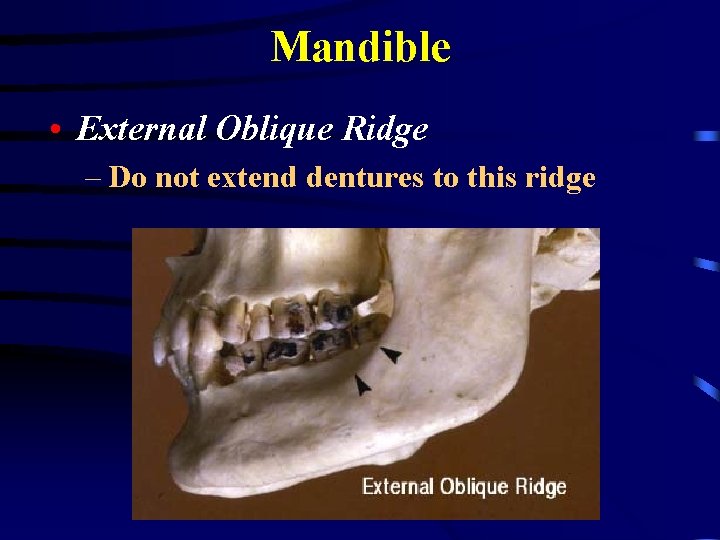
Mandible • External Oblique Ridge – Do not extend dentures to this ridge
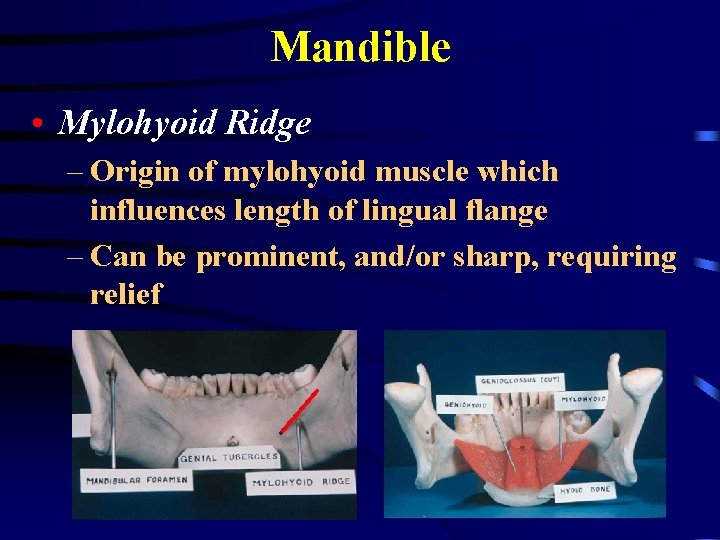
Mandible • Mylohyoid Ridge – Origin of mylohyoid muscle which influences length of lingual flange – Can be prominent, and/or sharp, requiring relief
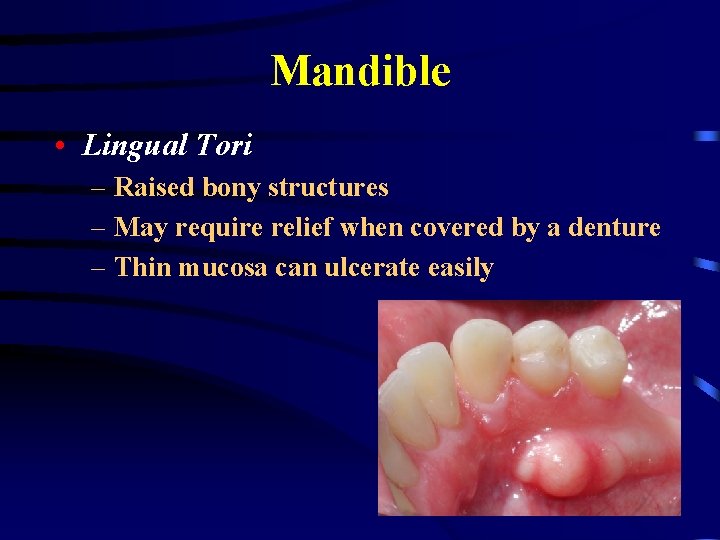
Mandible • Lingual Tori – Raised bony structures – May require relief when covered by a denture – Thin mucosa can ulcerate easily
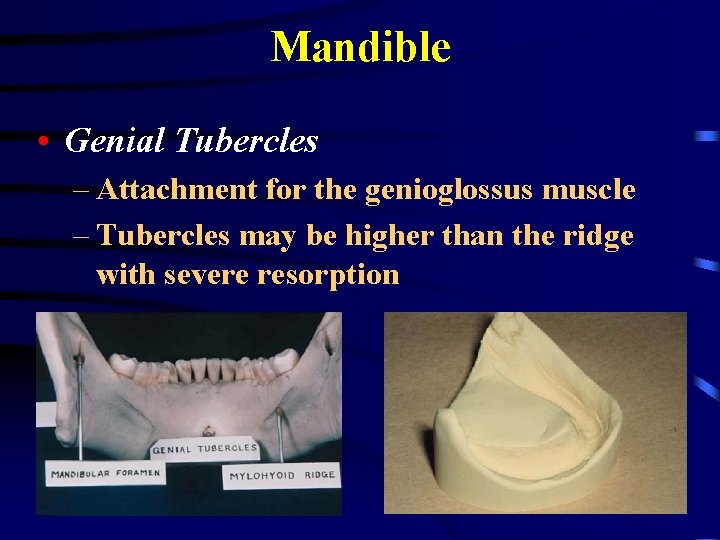
Mandible • Genial Tubercles – Attachment for the genioglossus muscle – Tubercles may be higher than the ridge with severe resorption
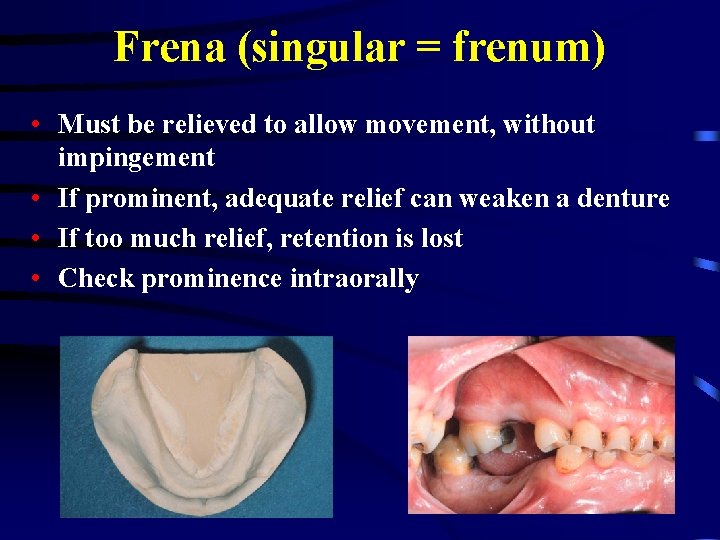
Frena (singular = frenum) • Must be relieved to allow movement, without impingement • If prominent, adequate relief can weaken a denture • If too much relief, retention is lost • Check prominence intraorally
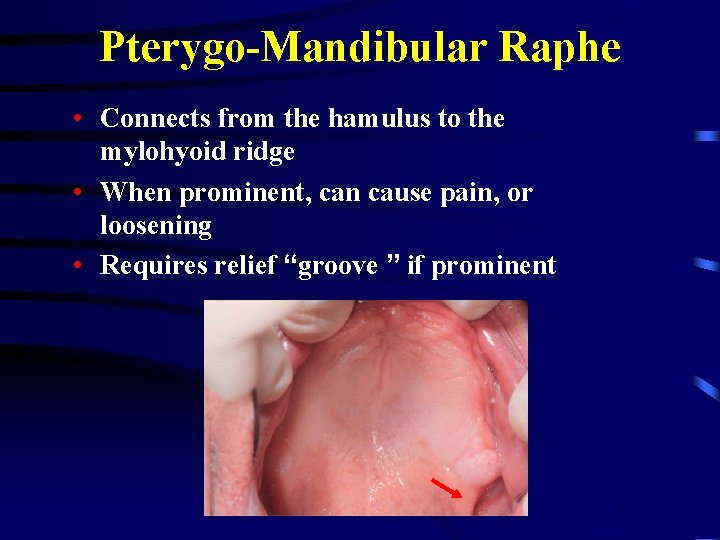
Pterygo-Mandibular Raphe • Connects from the hamulus to the mylohyoid ridge • When prominent, can cause pain, or loosening • Requires relief “groove ” if prominent
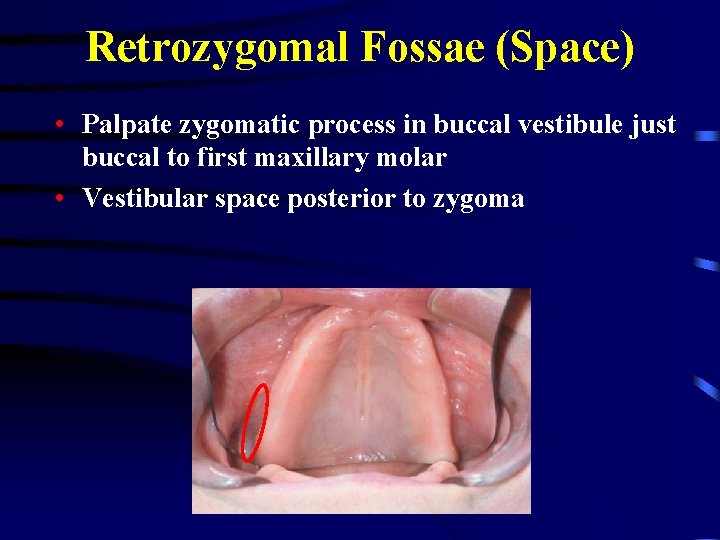
Retrozygomal Fossae (Space) • Palpate zygomatic process in buccal vestibule just buccal to first maxillary molar • Vestibular space posterior to zygoma
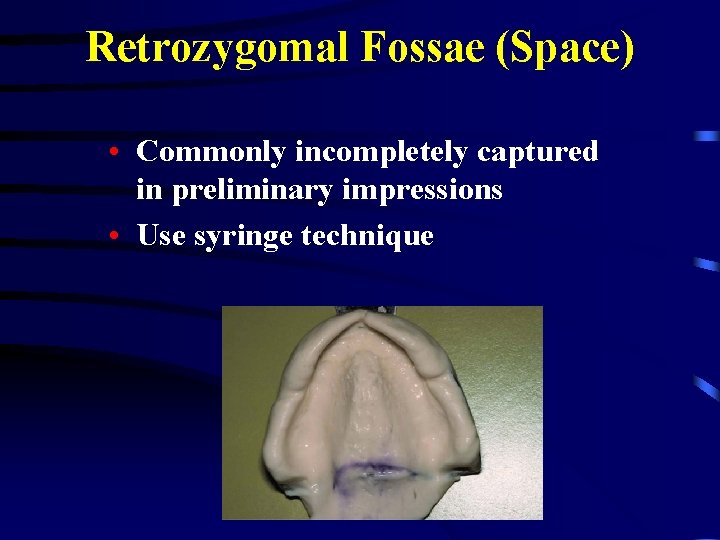
Retrozygomal Fossae (Space) • Commonly incompletely captured in preliminary impressions • Use syringe technique
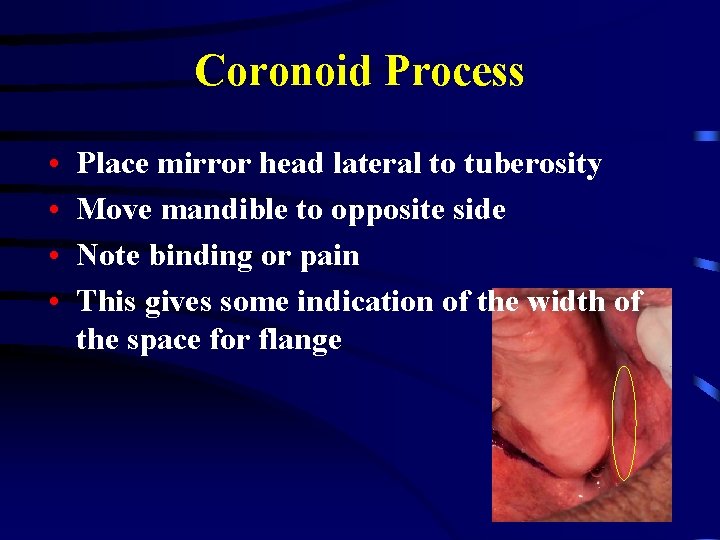
Coronoid Process • • Place mirror head lateral to tuberosity Move mandible to opposite side Note binding or pain This gives some indication of the width of the space for flange