
Anatomy diagnosis and classification of sports injuries in

- Slides: 35
Anatomy, diagnosis and classification of sports injuries in the shoulder Mr. Nnamdi Obi Specialist registrar United Kingdom
Objectives • Review anatomy of the shoulder • Review history and examination • Acute traumatic shoulder instability
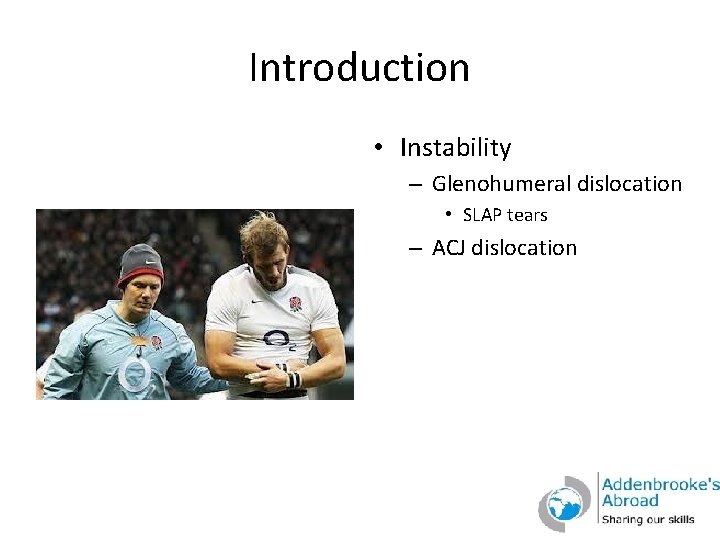
Introduction • Instability – Glenohumeral dislocation • SLAP tears – ACJ dislocation
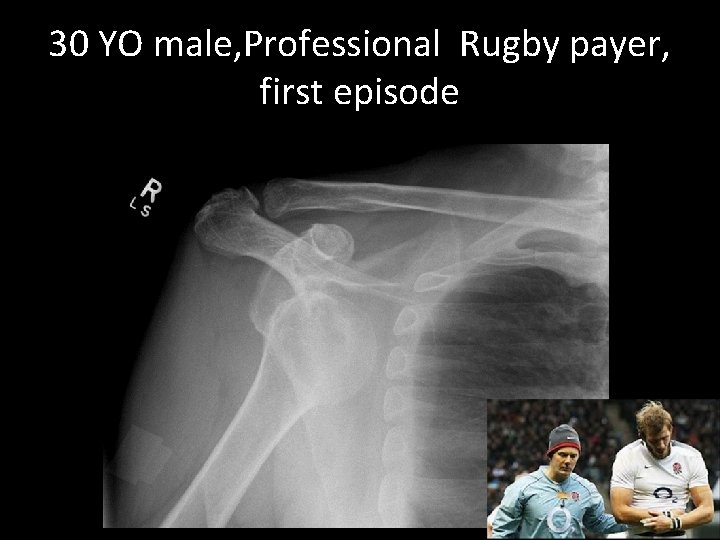
30 YO male, Professional Rugby payer, first episode
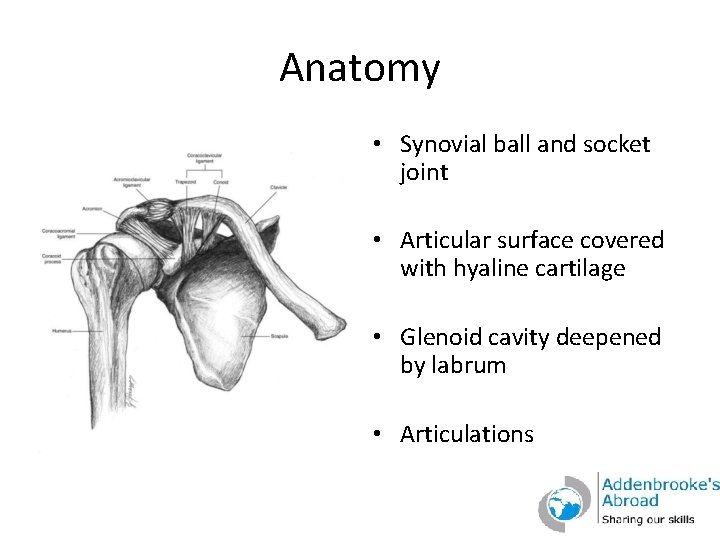
Anatomy • Synovial ball and socket joint • Articular surface covered with hyaline cartilage • Glenoid cavity deepened by labrum • Articulations
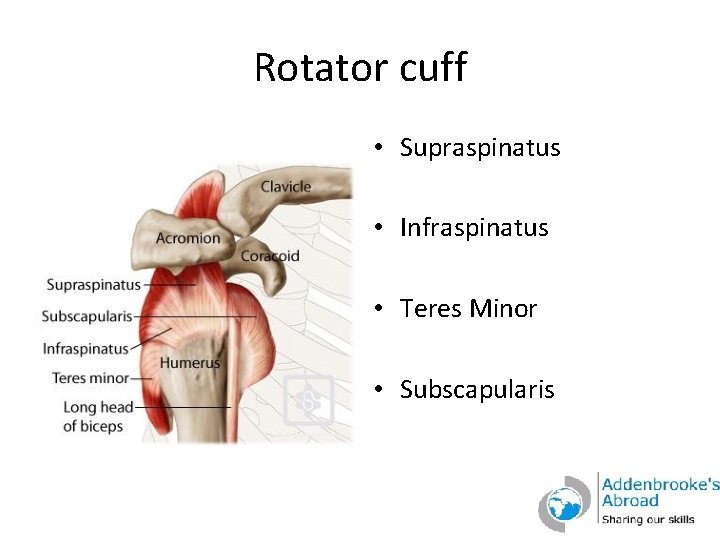
Rotator cuff • Supraspinatus • Infraspinatus • Teres Minor • Subscapularis
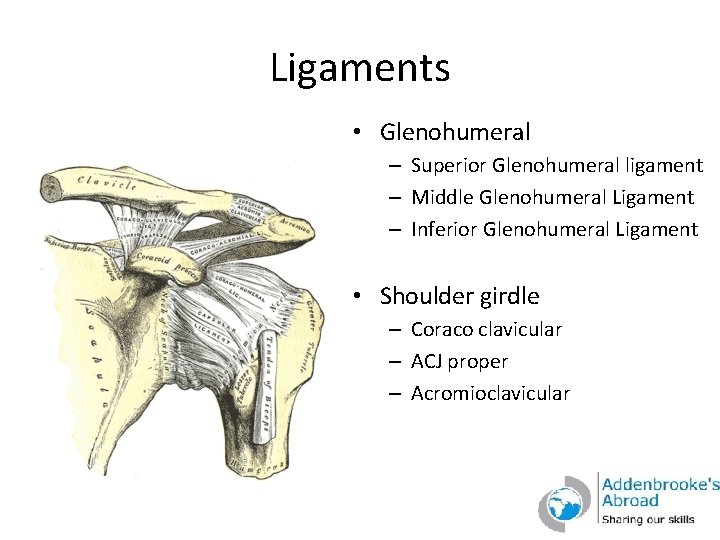
Ligaments • Glenohumeral – Superior Glenohumeral ligament – Middle Glenohumeral Ligament – Inferior Glenohumeral Ligament • Shoulder girdle – Coraco clavicular – ACJ proper – Acromioclavicular
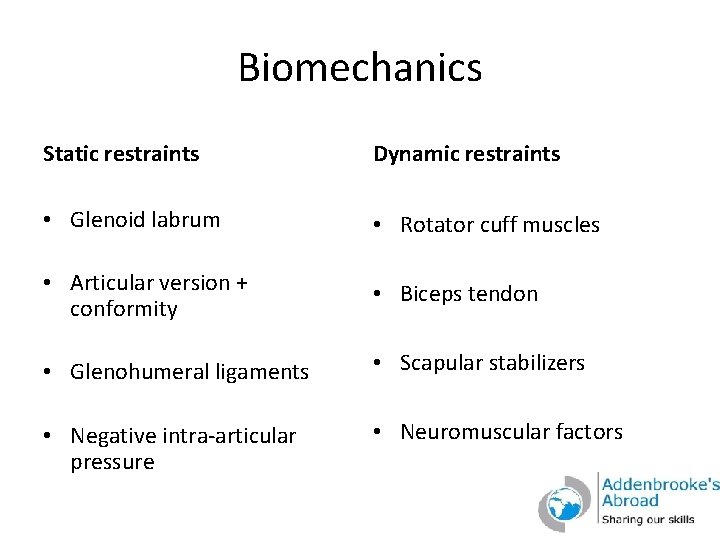
Biomechanics Static restraints Dynamic restraints • Glenoid labrum • Rotator cuff muscles • Articular version + conformity • Biceps tendon • Glenohumeral ligaments • Scapular stabilizers • Negative intra-articular pressure • Neuromuscular factors
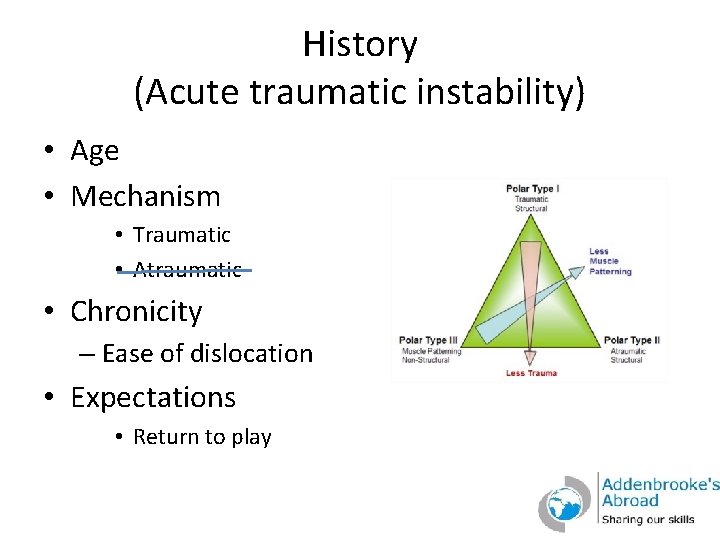
History (Acute traumatic instability) • Age • Mechanism • Traumatic • Atraumatic • Chronicity – Ease of dislocation • Expectations • Return to play
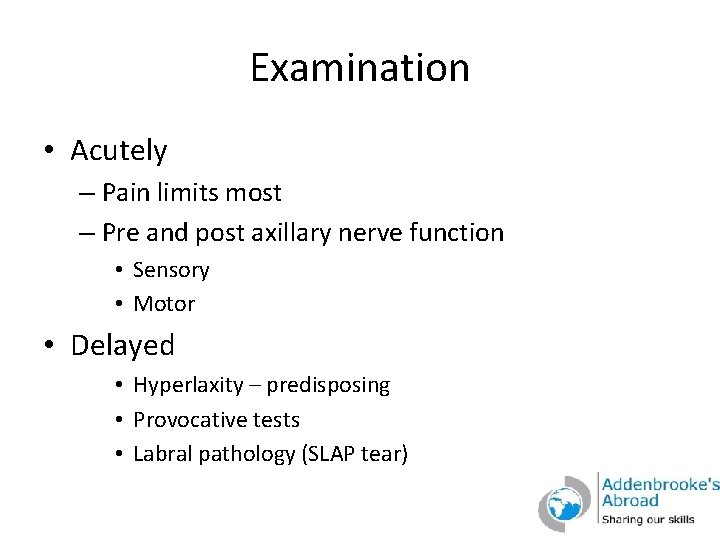
Examination • Acutely – Pain limits most – Pre and post axillary nerve function • Sensory • Motor • Delayed • Hyperlaxity – predisposing • Provocative tests • Labral pathology (SLAP tear)
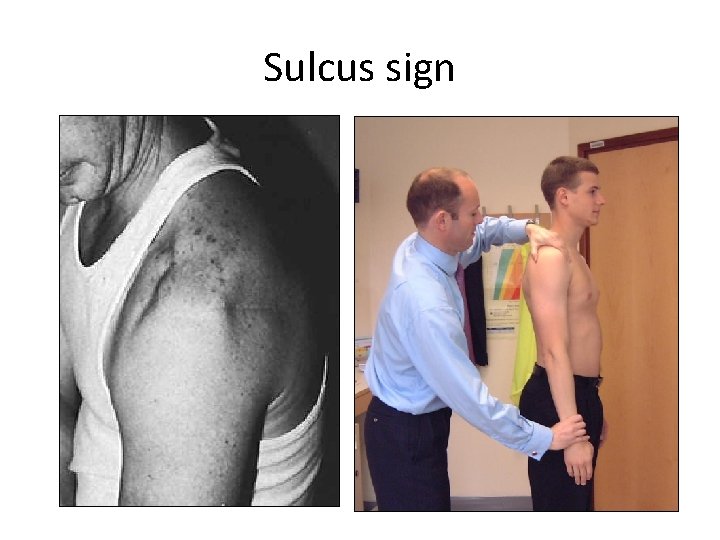
Sulcus sign
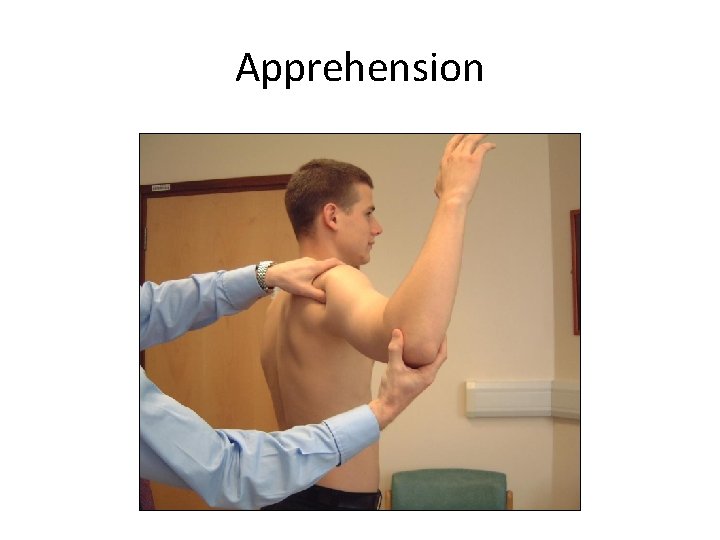
Apprehension
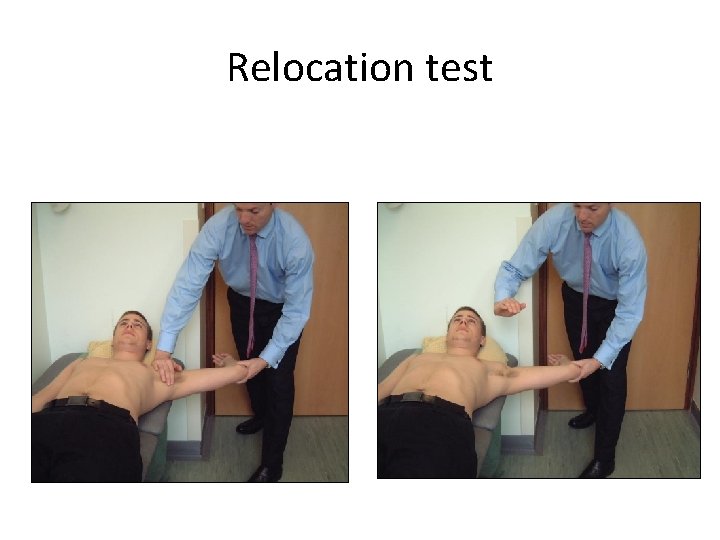
Relocation test
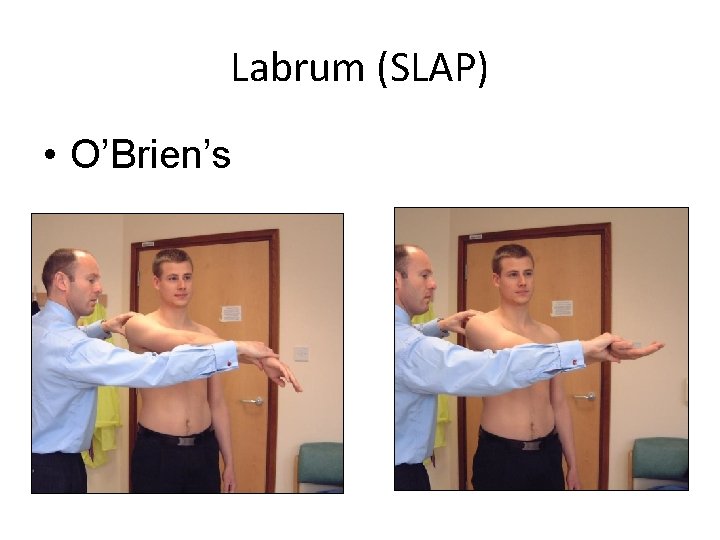
Labrum (SLAP) • O’Brien’s
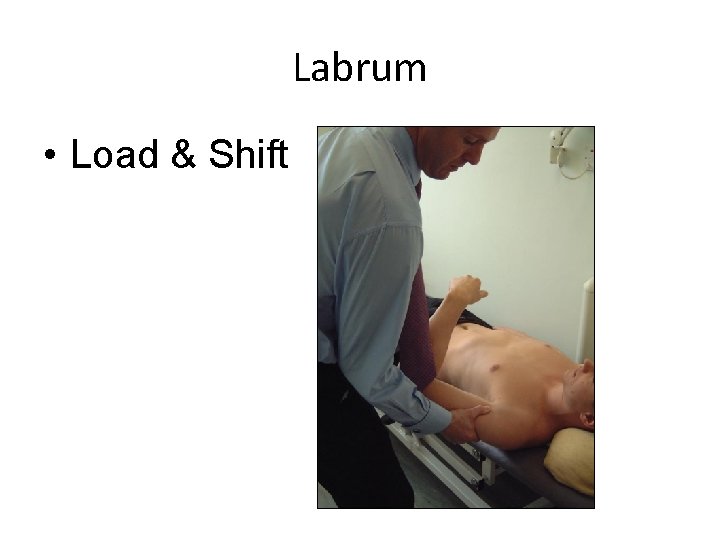
Labrum • Load & Shift
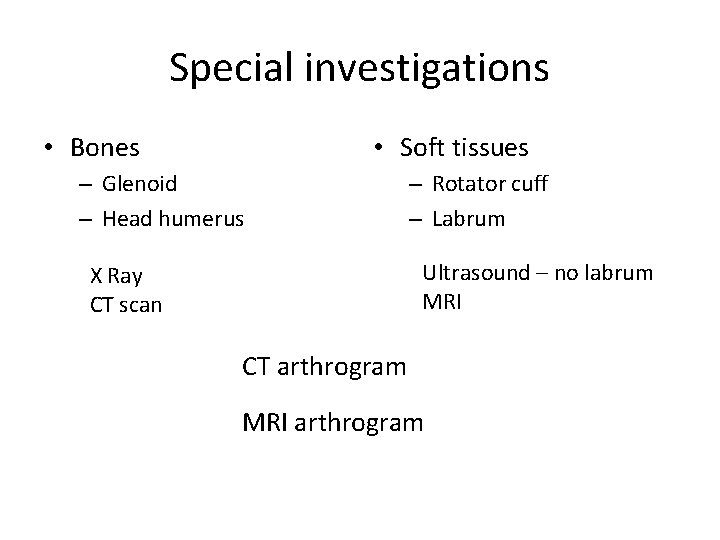
Special investigations • Bones • Soft tissues – Glenoid – Head humerus – Rotator cuff – Labrum Ultrasound – no labrum MRI X Ray CT scan CT arthrogram MRI arthrogram
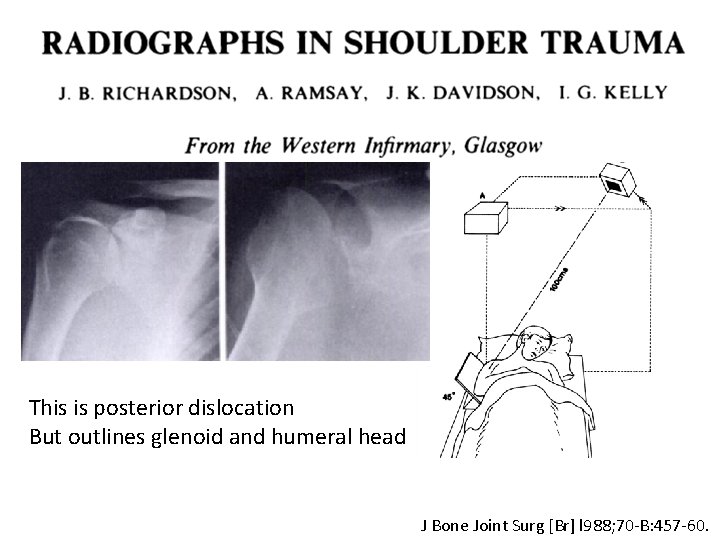
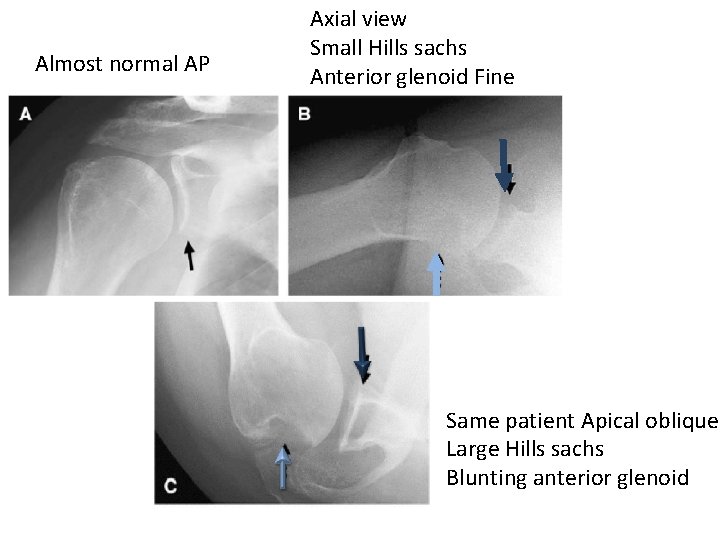
Lateral radiographs • Posterior oblique scapular projection (“Neer lateral”, Neer 1970) – Produces considerable image overlap • Transthoracic (Vastamaki and Solonen 1980) – Image overlap • Axial (Warrick 1965) – Requires shoulder abduction • Modified axial (Rockwood 1984) – Some shoulder abduction • Velpeau lateral (Wallace and Hellier 1983) – Patient needs to sit up • Apical oblique (Garth, Slappey and Ochs 1984)
This is posterior dislocation But outlines glenoid and humeral head J Bone Joint Surg [Br] l 988; 70 -B: 457 -60.
Almost normal AP Axial view Small Hills sachs Anterior glenoid Fine Same patient Apical oblique Large Hills sachs Blunting anterior glenoid
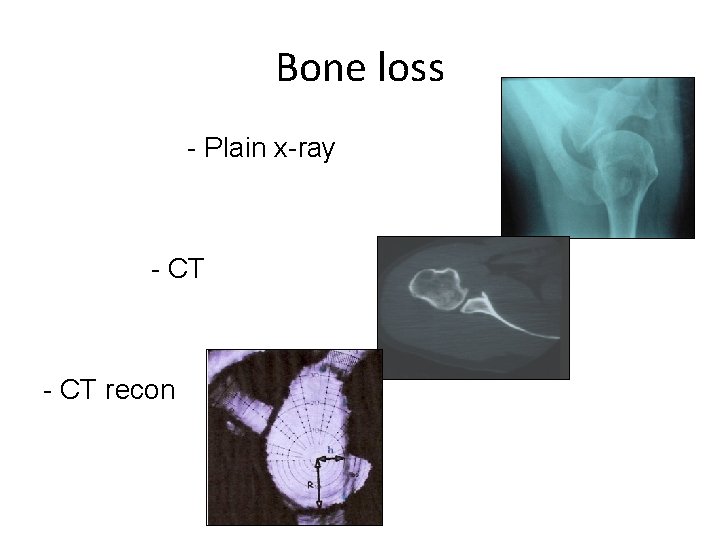
Bone loss - Plain x-ray - CT recon
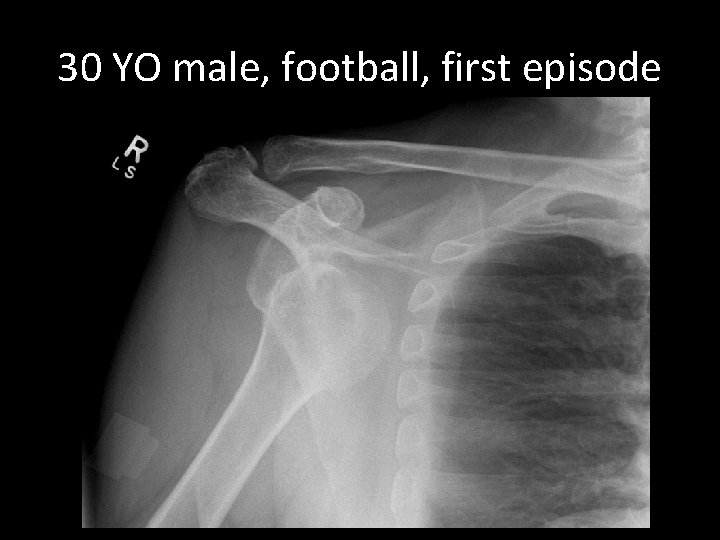
30 YO male, football, first episode
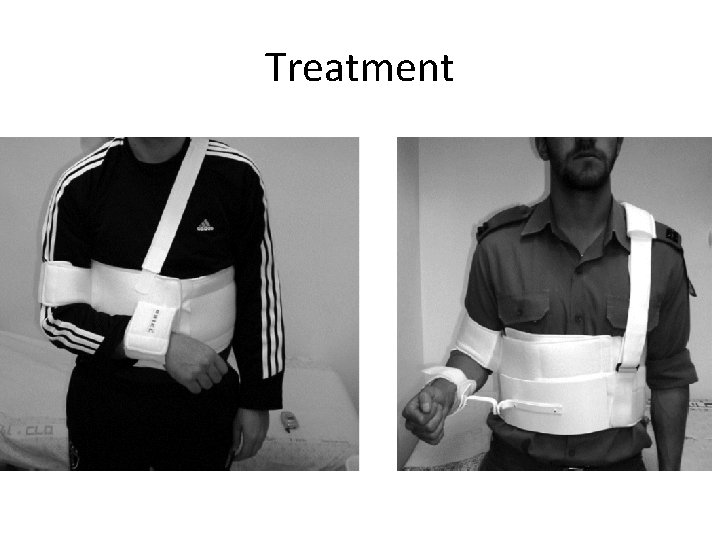
Treatment How long ?
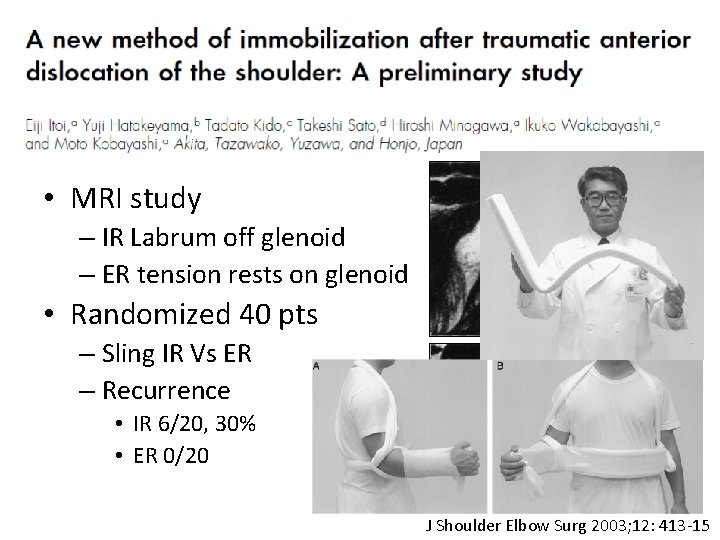
• MRI study – IR Labrum off glenoid – ER tension rests on glenoid • Randomized 40 pts – Sling IR Vs ER – Recurrence • IR 6/20, 30% • ER 0/20 J Shoulder Elbow Surg 2003; 12: 413 -15
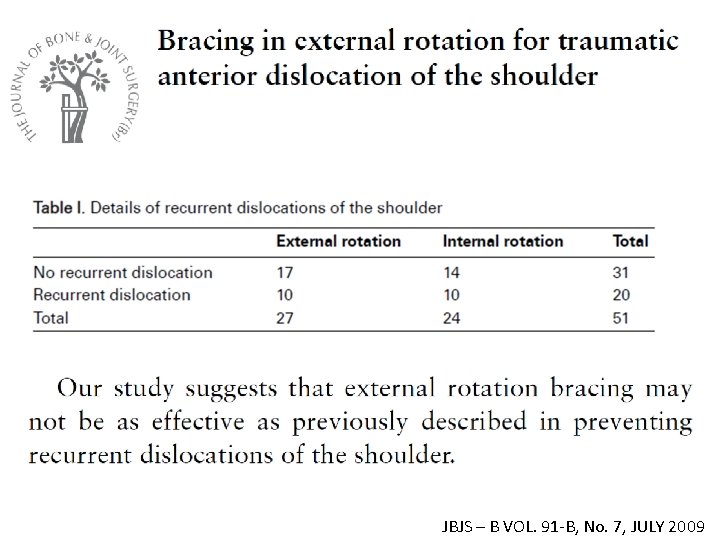
JBJS – B VOL. 91 -B, No. 7, JULY 2009
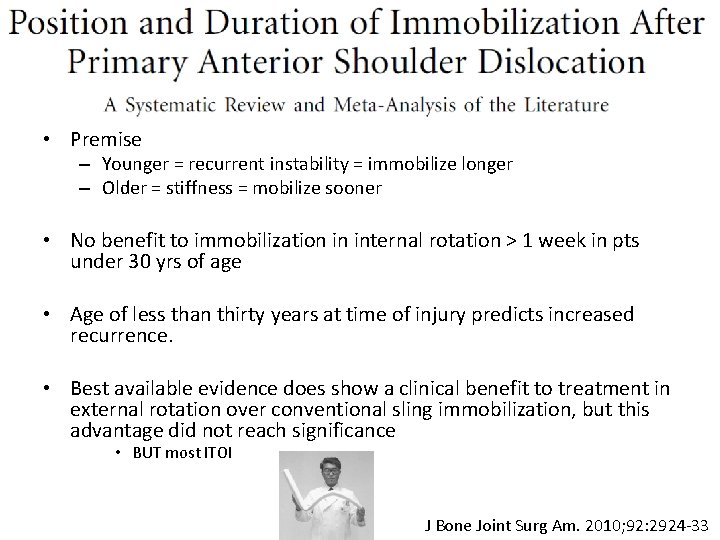
• Premise – Younger = recurrent instability = immobilize longer – Older = stiffness = mobilize sooner • No benefit to immobilization in internal rotation > 1 week in pts under 30 yrs of age • Age of less than thirty years at time of injury predicts increased recurrence. • Best available evidence does show a clinical benefit to treatment in external rotation over conventional sling immobilization, but this advantage did not reach significance • BUT most ITOI J Bone Joint Surg Am. 2010; 92: 2924 -33
Take Home • Reduce • Sling comfort • Discard in 1 week • Physiotherapy, strengthen dynamic stabilizers • Under 30 years, continue contact sport • Counsel recurrence rate • Consider surgery following first dislocation
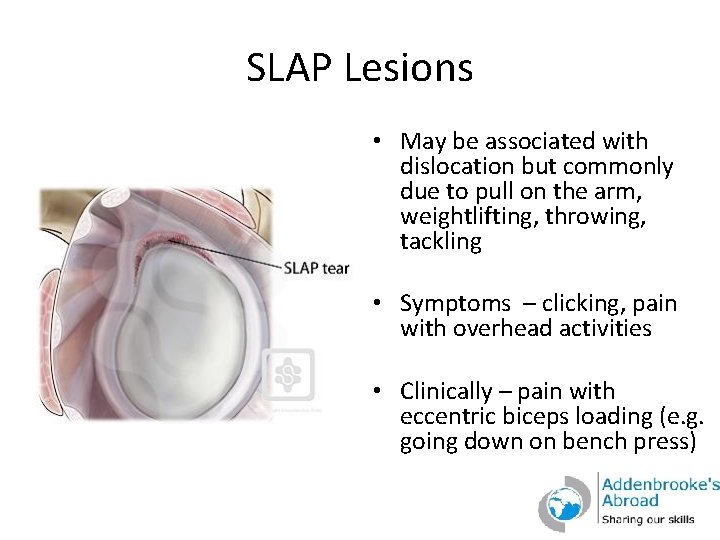
SLAP Lesions • May be associated with dislocation but commonly due to pull on the arm, weightlifting, throwing, tackling • Symptoms – clicking, pain with overhead activities • Clinically – pain with eccentric biceps loading (e. g. going down on bench press)
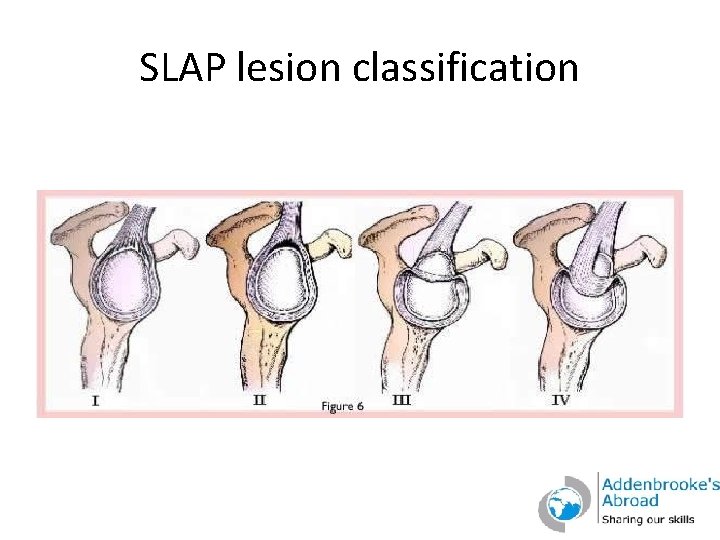
SLAP lesion classification
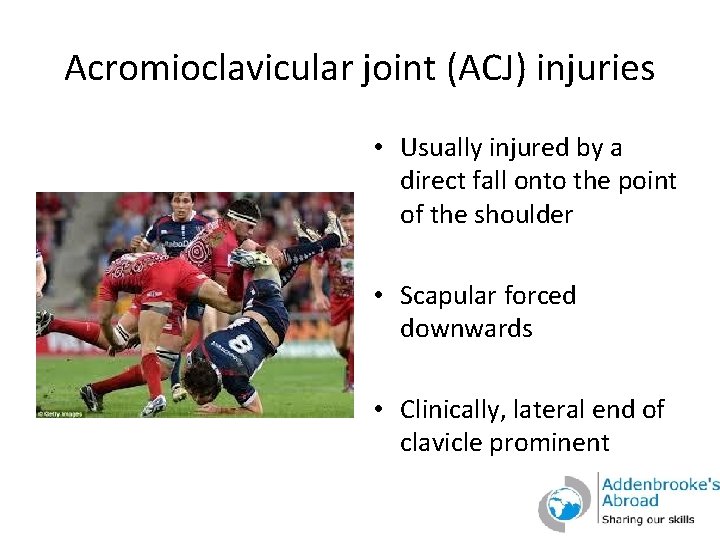
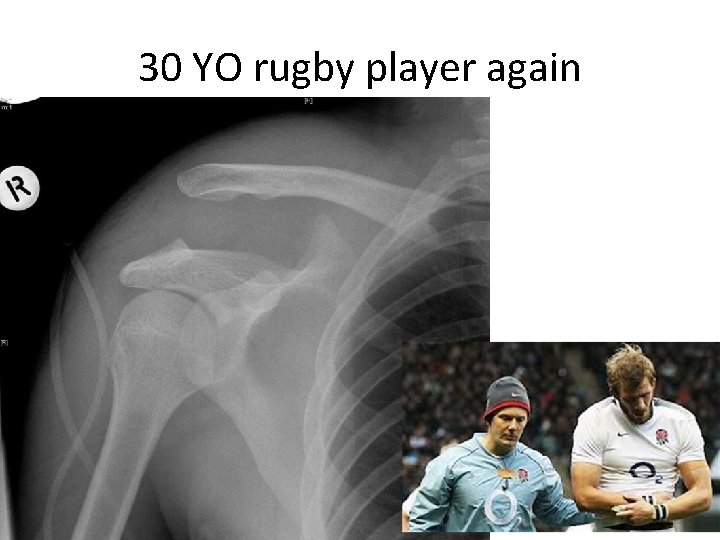
Acromioclavicular joint (ACJ) injuries • Usually injured by a direct fall onto the point of the shoulder • Scapular forced downwards • Clinically, lateral end of clavicle prominent
30 YO rugby player again
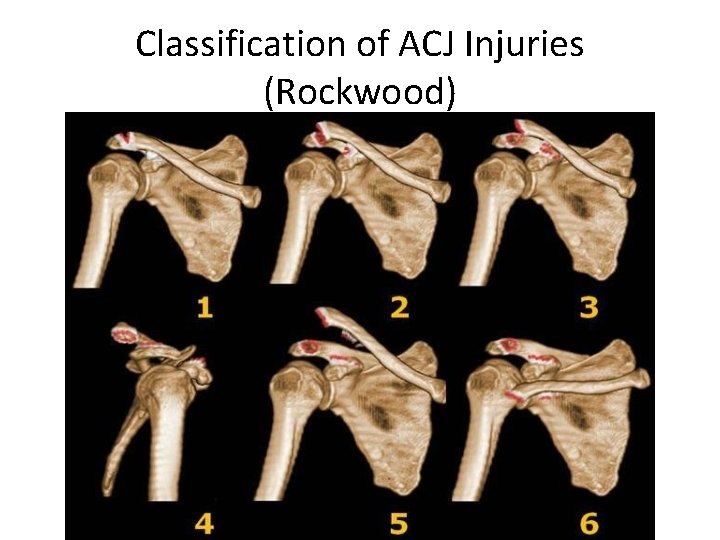
Classification of ACJ Injuries (Rockwood)
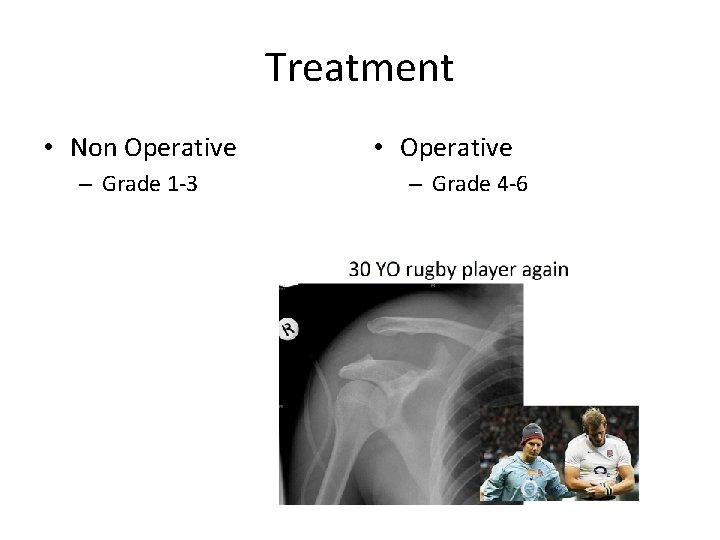
Treatment • Non Operative – Grade 1 -3 • Operative – Grade 4 -6
Conclusions • Acute instability common in athletes – Glenohumeral – ACJ • High level of function • Early return to play • Axillary or modified axillary view – Apical oblique
References • Websites: – https: //www. shoulderdoc. co. uk – https: //www. orthobullets. com
The End Email: njco@hotmail. com