
Anatomy and Physiology Understanding the Importance of CPR
- Slides: 21
Anatomy and Physiology: Understanding the Importance of CPR
Three Body Systems • Respiratory System (brings oxygen in and takes waste out) • Cardiovascular System (moves blood and oxygen around) • Nervous System (tells organs what to do and when)
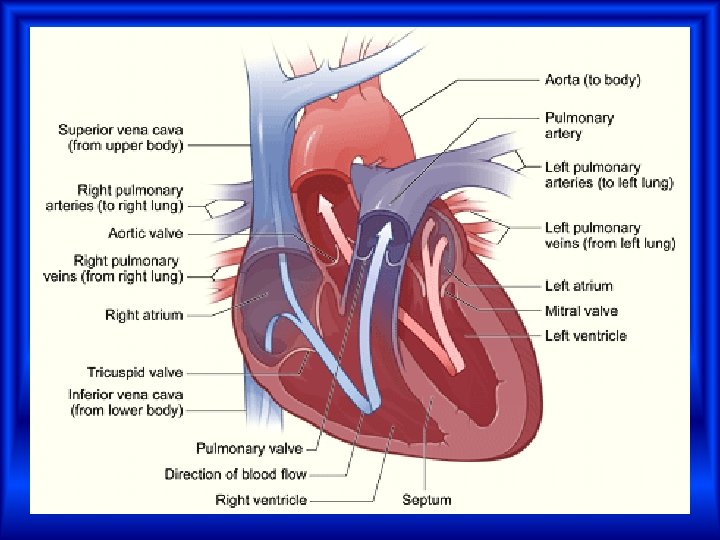
How These Systems Work Together • The respiratory, cardiovascular, and nervous systems work together to maintain life. The lungs put oxygen in the blood, and the heart delivers oxygen-rich blood to the heart itself and to the brain and other organs.
What happens when these systems fail? • If oxygen delivery to the organs stops because an airway is blocked or normal breathing or circulation stops, the brain and other organs will be gin to die within minutes.
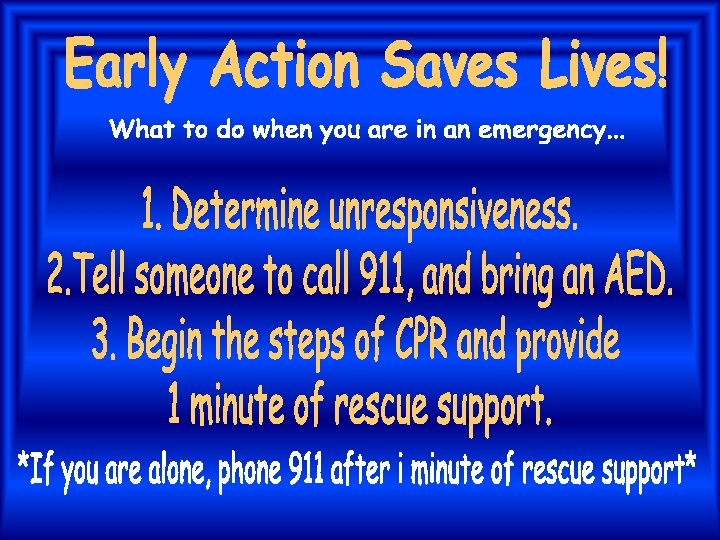
How CPR Helps The miracle of CPR is that it can help save the life of a dying person with 2 simple actions. 1. Delivering breaths to the victim’s lungs 2. Compressing the victims chest
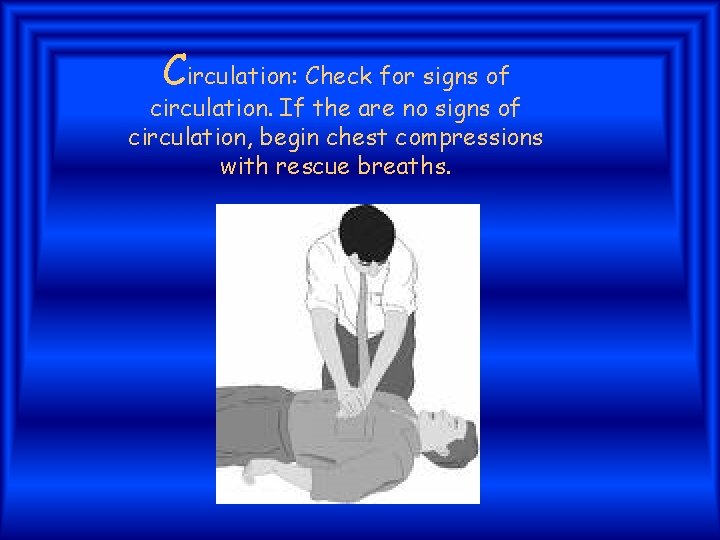
Circulation: Check for signs of circulation. If the are no signs of circulation, begin chest compressions with rescue breaths.
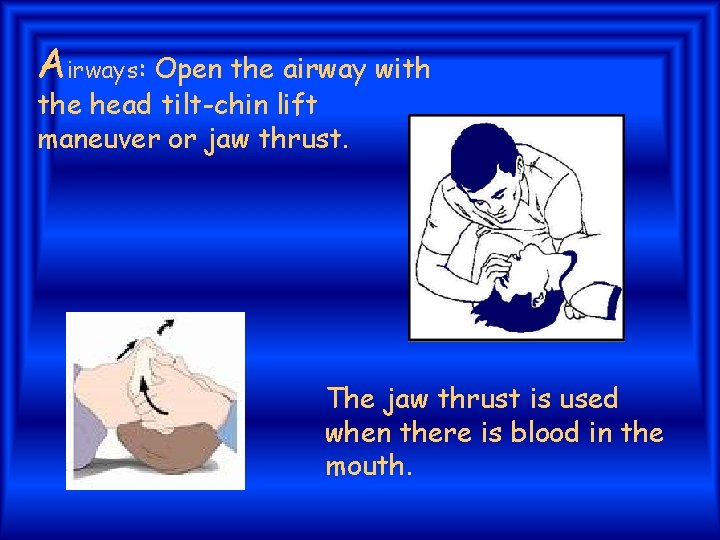
Airways: Open the airway with the head tilt-chin lift maneuver or jaw thrust. The jaw thrust is used when there is blood in the mouth.
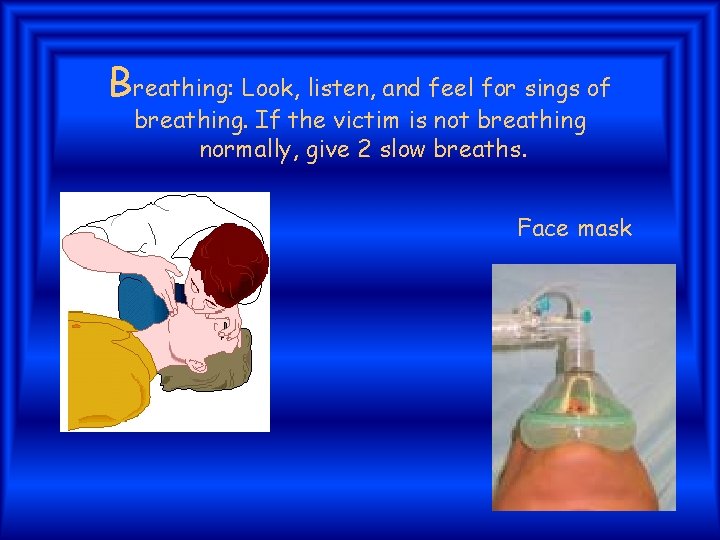
Breathing: Look, listen, and feel for sings of breathing. If the victim is not breathing normally, give 2 slow breaths. Face mask
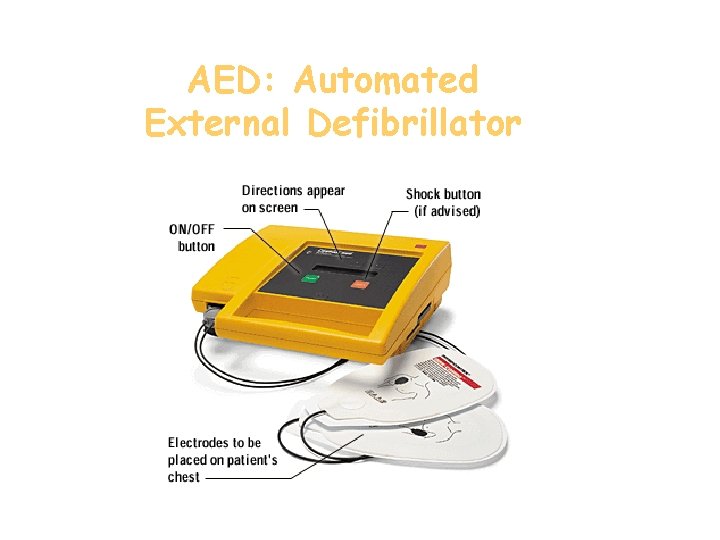
AED: Automated External Defibrillator
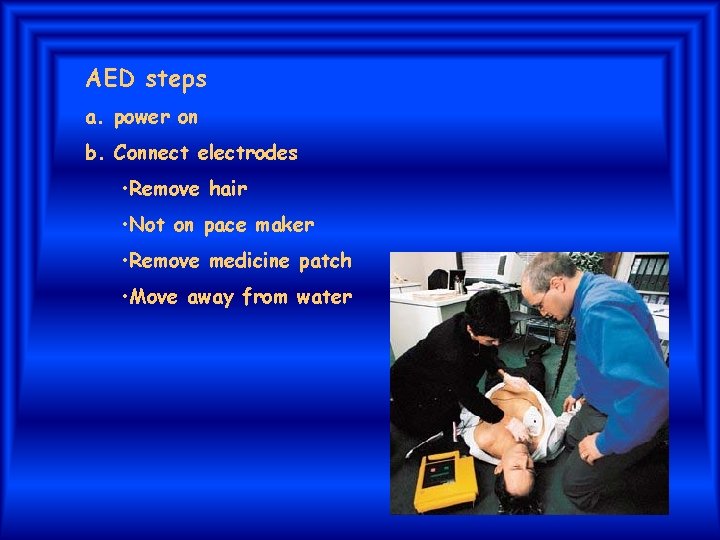
AED steps a. power on b. Connect electrodes • Remove hair • Not on pace maker • Remove medicine patch • Move away from water
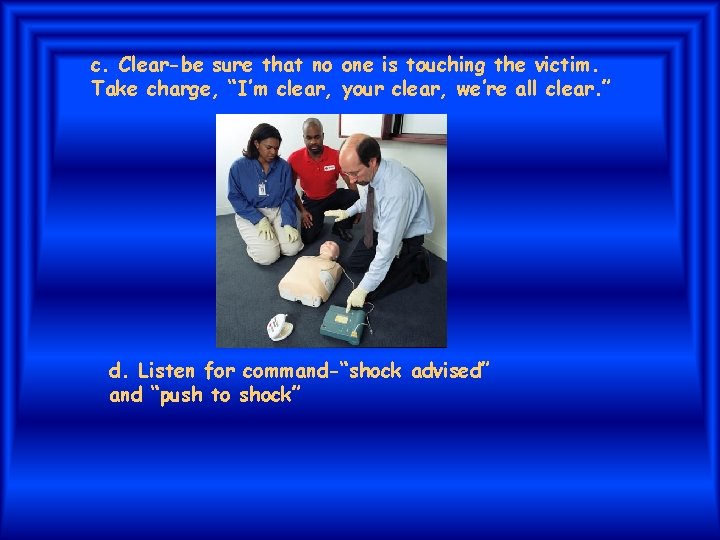
c. Clear-be sure that no one is touching the victim. Take charge, “I’m clear, your clear, we’re all clear. ” d. Listen for command-“shock advised” and “push to shock”
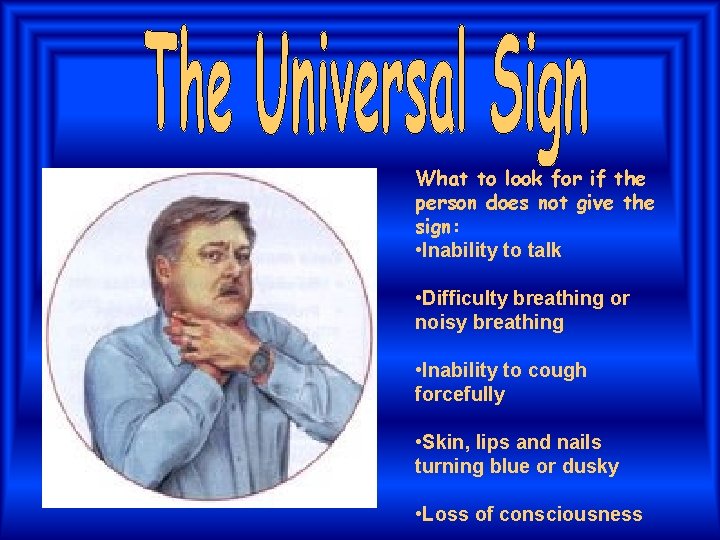
What to look for if the person does not give the sign: • Inability to talk • Difficulty breathing or noisy breathing • Inability to cough forcefully • Skin, lips and nails turning blue or dusky • Loss of consciousness
• The child/infant cannot cry or speak forcefully. • The cough and the voice are weak or the child/infant is silent. • Breathing attempts may result in highpitched sounds. • The child’s/infant’s lips and fingernails may become blue. • Within minutes the child/infant will become unresponsive from lack of oxygen.
• A Stroke occurs when oxygen and blood do not get delivered to the brain. Symptoms Of A Stroke: • Sudden Sever Headache • Sudden trouble seeing in one or both eyes • Sudden Numbness or weakness on one side of the body or face • Sudden confusion, trouble speaking or understanding • Sudden dizziness, trouble walking, or loss of balance
Three Major Signs Of A Stroke: • Facial Drop: Ask the victim to smile, if one side of the face droops or the face does not move, suspect stroke. • Arm Weakness: Have the victim extend both arms in front with eyes closed. If one arm drifts downward or the arms cannot move, this may indicate a stroke. • Speech Difficulties: Ask the victim to repeat a sentence such as “You can’t teach an old dog a new trick. ” If the victim slurs words, cannot speak, or cannot repeat the sentence accurately, a stroke may have occurred.
• A heart attach occurs when one of the heart; s major blood vessels becomes blocked so that oxygen is not delivered to heart muscle. Without oxygen the heart muscle starts to die, producing pain and other symptoms. Symptoms Of A Heart Attack • Denial • Severe pain or Pressure in the center of the chest • Sharp, stabbing pain that lasts only a second or two is rarely ever a heart attack. • Lightheaded, short of breath, or sick • May faint or have a cold sweat
• A cardiac arrest occurs when the heart stops pumping blood. Blood flow to the brain and body stops. The victim collapses and becomes unresponsive. The victim may not breathe at all or may have occasional gasping or very shallow breaths. • Signs Of Cardiac Arrest • No response: When you speak to the victim or touch the person, they do not respond. • No normal breathing: You open the airway and look, listen, and feel for breaths. The person is not breathing normally. You should give the victim 2 rescue breaths. • No sign of circulation: The victim doesn’t respond, no breathing coughing, or movement. The victim remains limp and lifeless.