
Anatomy and Physiology of the Circulatory System and
- Slides: 23
Anatomy and Physiology of the Circulatory System and Blood
I. Function of blood and circulatory system a. b. c. Distribute heat, food, and oxygen. Removal of waste. Regulation of H 2 O content.
II. Components of Blood a. Cellular Erythrocytes (RBCs) 2. Leukocytes (WBCs) 3. Thrombocytes (Platelets) Erythro = red Leuko = white Cyte = cell Thrombo = clot 1. b. Non-cellular 4. Plasma
Connected to our blood (vascular) system is the lymphatic system, a one-way system that returns excess fluid from tissues to the blood stream – also helps fight infections.
Blood Volume: 58% plasma, 42% blood cells (primarily RBCs) l Body volume = 5 -6 liters; 9 -12 pints (8% of body weight) Blood is sticky, thick (5 times as thick as water), salty taste, and ph=7. 4 l
III. Origin of Blood Cells A. B. As a child: all bones produce blood cells. As an adult only: humerus, femur, sternum, ribs, scapula, clavicle, vertebrae, ilia, and cranium.
IV. Erythrocytes/RBCs No nucleus l Life span = 120 days l Small disc shape l Carries O 2 l Surface is elastic so they can squeeze through capillaries. l
V. Leukocytes/WBCs Nucleus l Fights infection l Phagocytes – surround & engulf bacteria & viruses. l CBC = complete blood count l Elevated WBC count = infection l
VI. Plasma 92% H 2 O + salts (Na+, K+, Mg+, Cl-) l Proteins (fibrogenin, hormones, enzymes, vitamins…) l After a meal - ↑ nutrients in the plasma l After exercise - ↑ in wastes in the plasma l
VII. Platelets Small, no nucleus, irregular shape. l Initiate a blood clotting chain of reactions. l
VIII. Blood Clotting/Coagulation/Homeostasis Small vessels constrict l Platelets stick to surface of wound until plug is formed. l
IX. Blood Types l Discovered by Karl Land Stemer – 1900 A. Genetics 3 Genes: A, B, O AA + AO A BB + BO B AB OO O
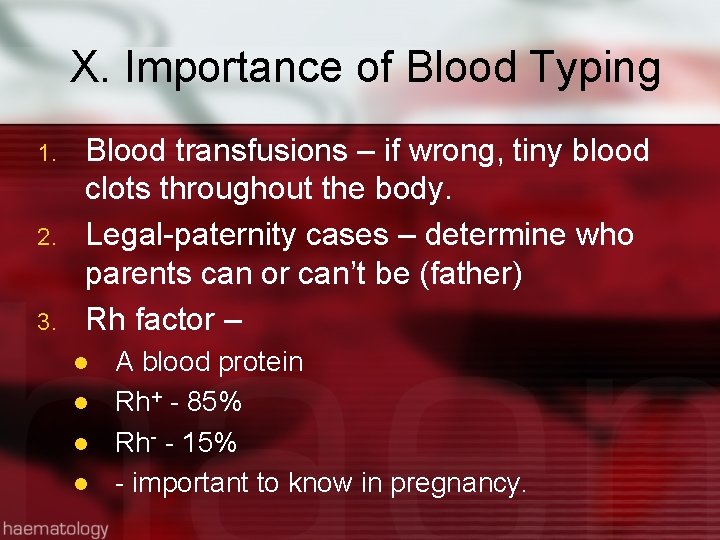
X. Importance of Blood Typing 1. 2. 3. Blood transfusions – if wrong, tiny blood clots throughout the body. Legal-paternity cases – determine who parents can or can’t be (father) Rh factor – l l A blood protein Rh+ - 85% Rh- - 15% - important to know in pregnancy.
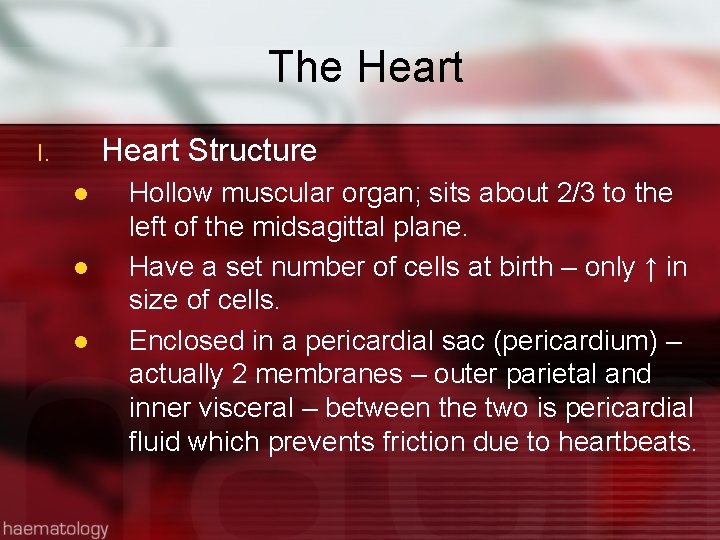
The Heart Structure I. l l l Hollow muscular organ; sits about 2/3 to the left of the midsagittal plane. Have a set number of cells at birth – only ↑ in size of cells. Enclosed in a pericardial sac (pericardium) – actually 2 membranes – outer parietal and inner visceral – between the two is pericardial fluid which prevents friction due to heartbeats.
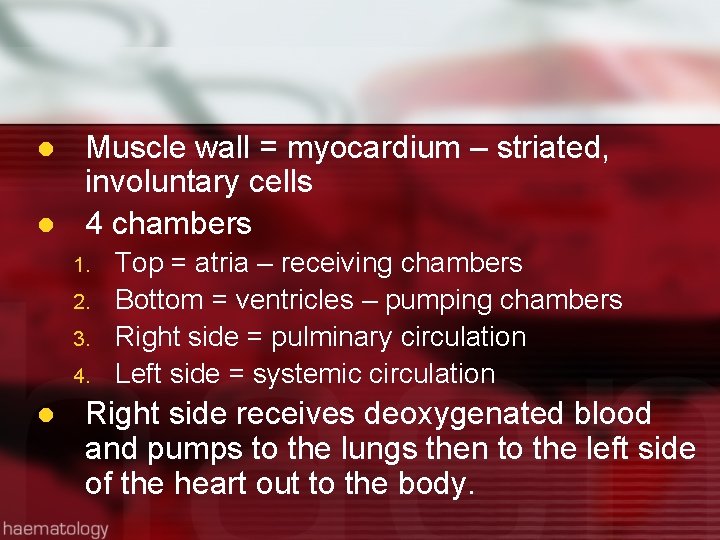
l l Muscle wall = myocardium – striated, involuntary cells 4 chambers 1. 2. 3. 4. l Top = atria – receiving chambers Bottom = ventricles – pumping chambers Right side = pulminary circulation Left side = systemic circulation Right side receives deoxygenated blood and pumps to the lungs then to the left side of the heart out to the body.
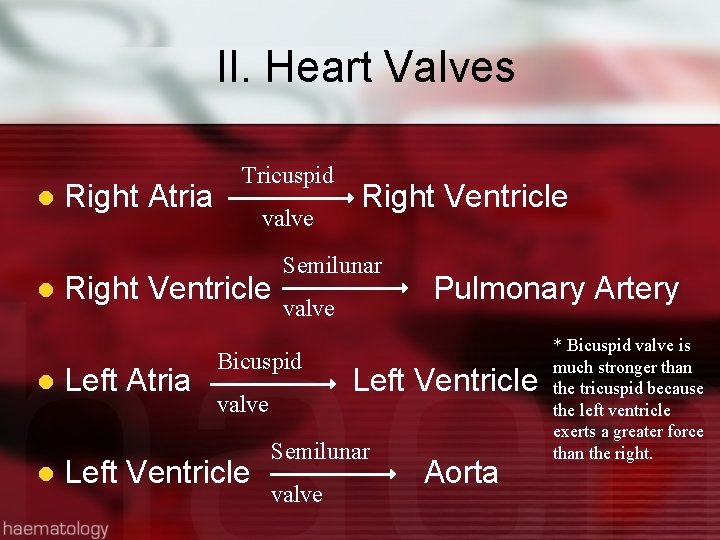
II. Heart Valves l l Right Atria Tricuspid valve Right Ventricle Left Atria Semilunar valve Bicuspid valve Left Ventricle Right Ventricle Left Ventricle Semilunar valve Pulmonary Artery Aorta * Bicuspid valve is much stronger than the tricuspid because the left ventricle exerts a greater force than the right.
III. Blood Supply to the Heart Since the heart is a muscle, it also needs blood, oxygen and nutrients. l Coronary arteries supply myocardium with blood. l If coronary artery is blocked…must bypass blockage. l
IV. Heart Conducting System 1. Specialized heart muscle cells in right atrium that set the pace of the heartbeat = pacemaker or SA node
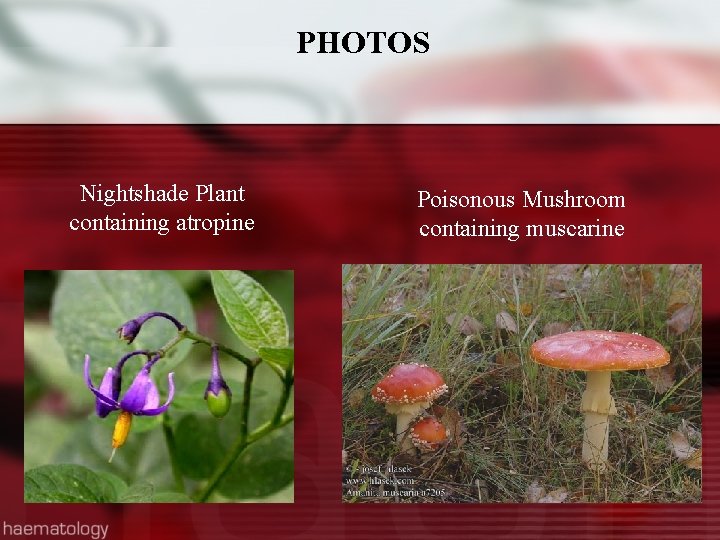
V. 1. 2. 3. Control of the Heart Hormones – thyroid, adrenal (increases heart rate) brought on by stress and fear. Nervous System – variety of receptors cause nerves to release a variety of chemicals. Chemical Influence l l Atropine – nightshade plant that increases heart rate greatly. Muscarine – poisonous mushroom - stops heart entirely.
PHOTOS Nightshade Plant containing atropine Poisonous Mushroom containing muscarine
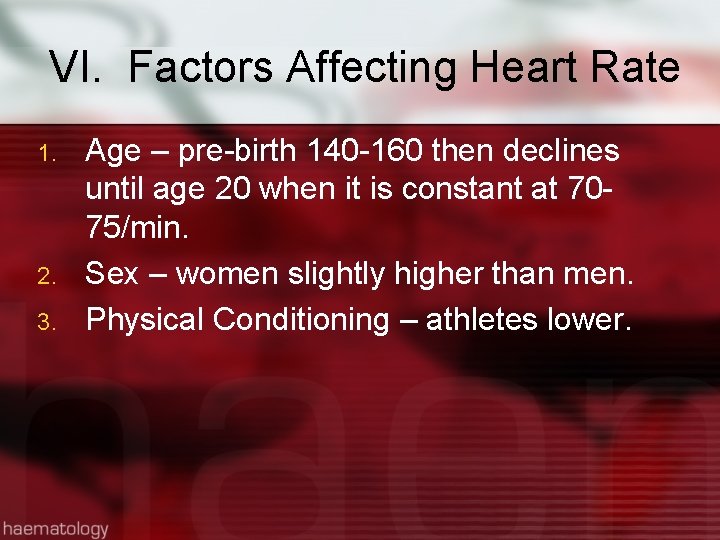
VI. Factors Affecting Heart Rate 1. 2. 3. Age – pre-birth 140 -160 then declines until age 20 when it is constant at 7075/min. Sex – women slightly higher than men. Physical Conditioning – athletes lower.
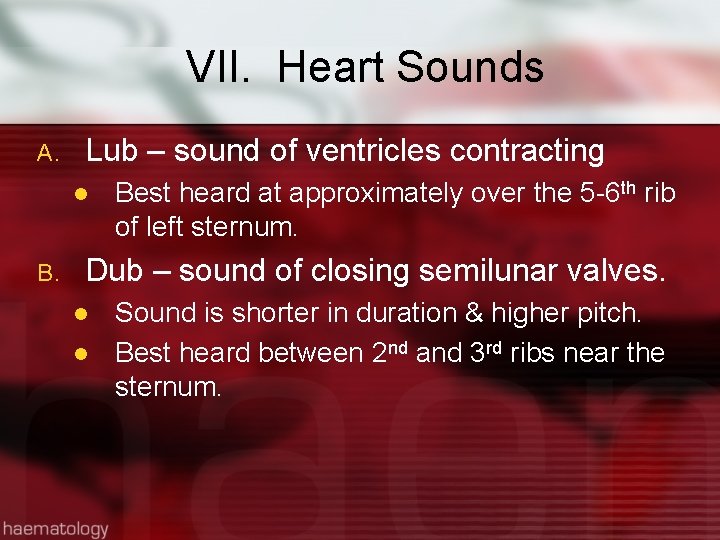
VII. Heart Sounds A. Lub – sound of ventricles contracting l B. Best heard at approximately over the 5 -6 th rib of left sternum. Dub – sound of closing semilunar valves. l l Sound is shorter in duration & higher pitch. Best heard between 2 nd and 3 rd ribs near the sternum.
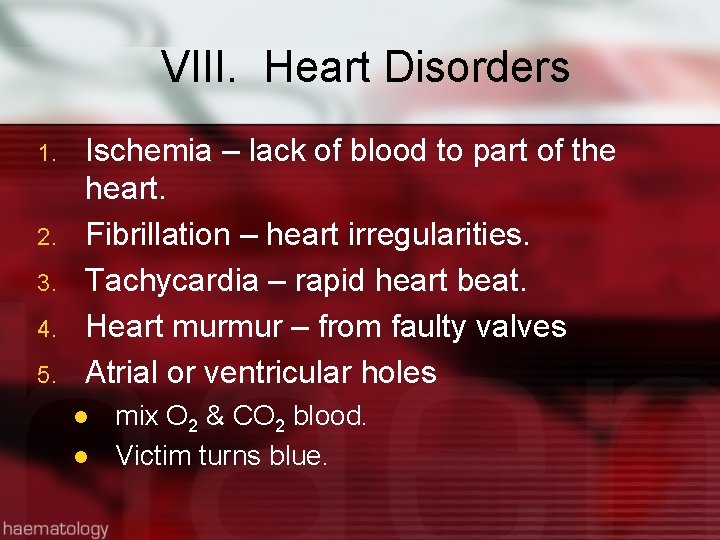
VIII. Heart Disorders 1. 2. 3. 4. 5. Ischemia – lack of blood to part of the heart. Fibrillation – heart irregularities. Tachycardia – rapid heart beat. Heart murmur – from faulty valves Atrial or ventricular holes l l mix O 2 & CO 2 blood. Victim turns blue.