
ANATOMY AND PHYSIOLOGY OF MOTOR SYSTEMS CHAPTER V













- Slides: 71
ANATOMY AND PHYSIOLOGY OF MOTOR SYSTEMS CHAPTER V
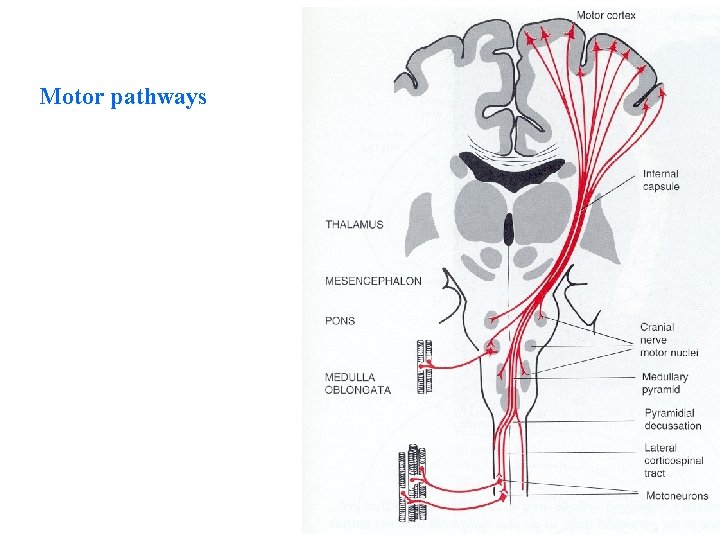
Motor pathways
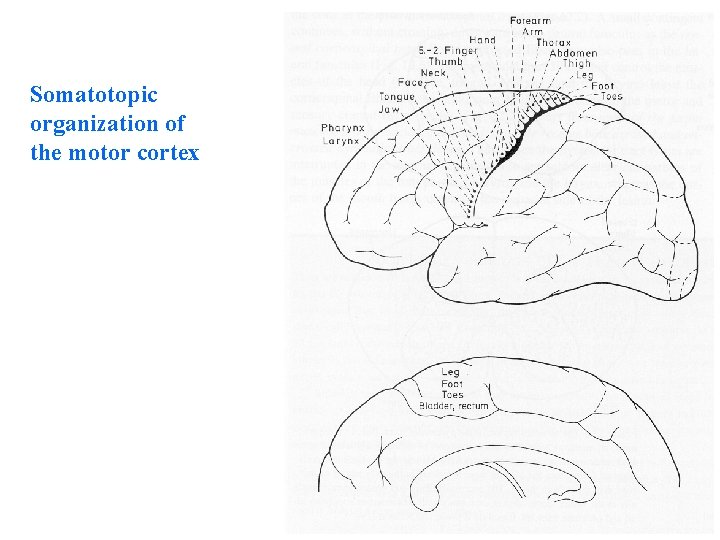
Somatotopic organization of the motor cortex
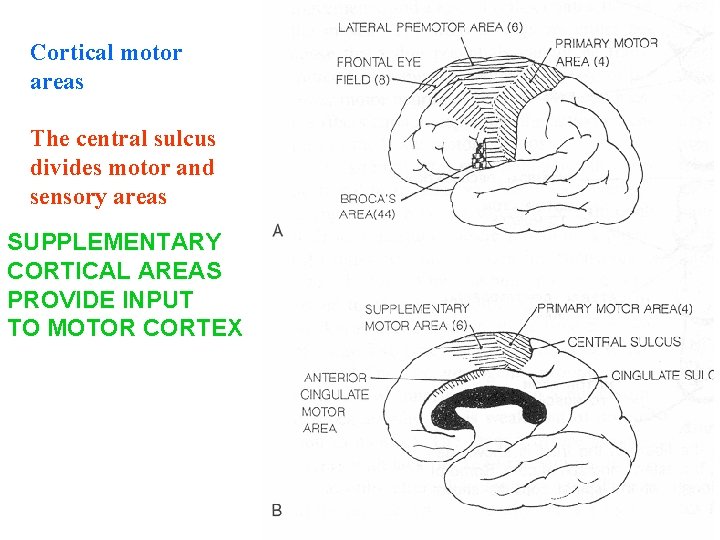
Cortical motor areas The central sulcus divides motor and sensory areas SUPPLEMENTARY CORTICAL AREAS PROVIDE INPUT TO MOTOR CORTEX
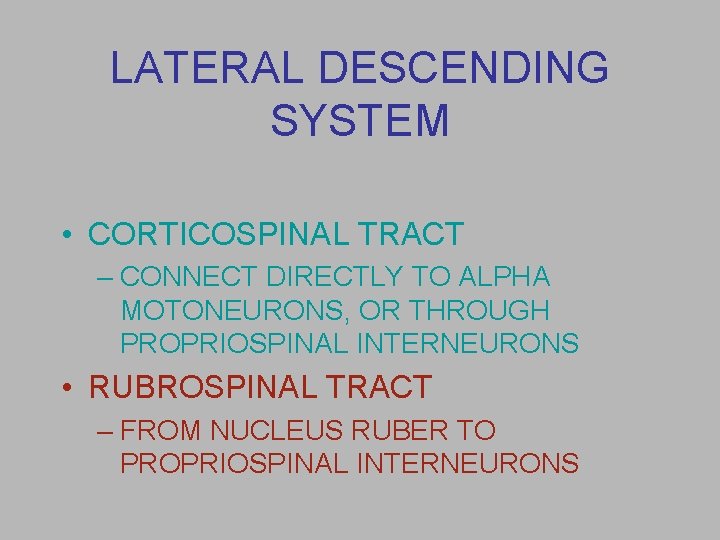
LATERAL DESCENDING SYSTEM • CORTICOSPINAL TRACT – CONNECT DIRECTLY TO ALPHA MOTONEURONS, OR THROUGH PROPRIOSPINAL INTERNEURONS • RUBROSPINAL TRACT – FROM NUCLEUS RUBER TO PROPRIOSPINAL INTERNEURONS
Descending motor pathways Lateral system
The medial descending motor pathways
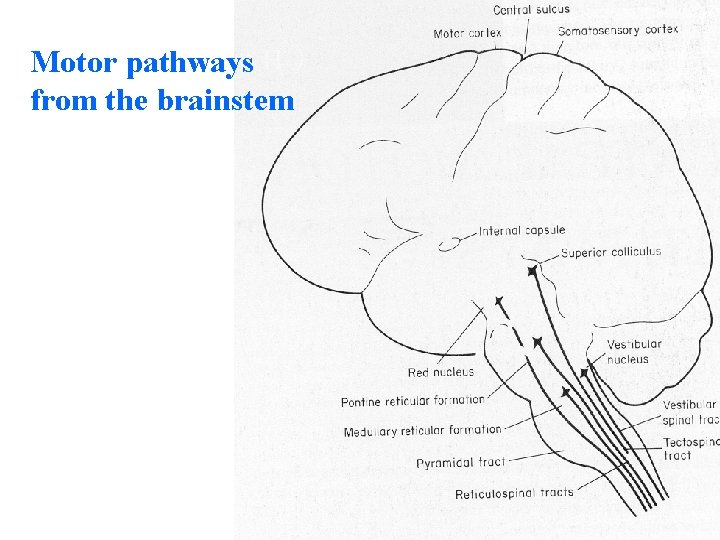
Motor pathways from the brainstem
Projections from motor cortex (MI) to the spinal cord Projection of dorsal horn to the somatosensory cortex
Connections between the basal ganglia and the primary motor cortex (MI)
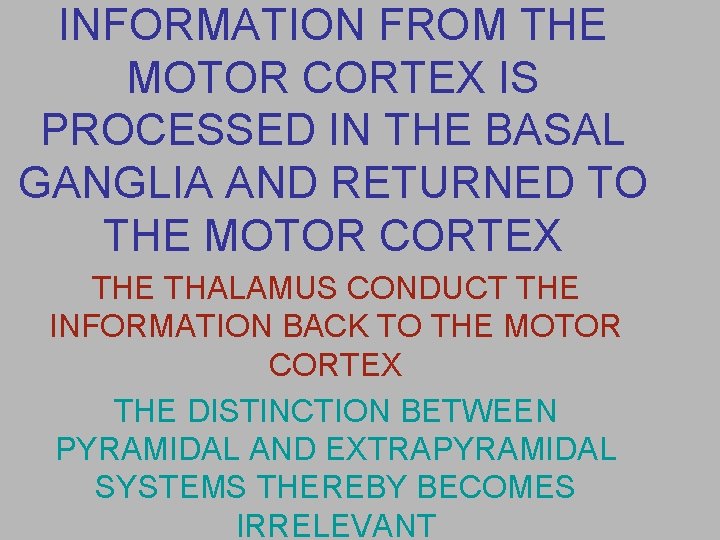
INFORMATION FROM THE MOTOR CORTEX IS PROCESSED IN THE BASAL GANGLIA AND RETURNED TO THE MOTOR CORTEX THE THALAMUS CONDUCT THE INFORMATION BACK TO THE MOTOR CORTEX THE DISTINCTION BETWEEN PYRAMIDAL AND EXTRAPYRAMIDAL SYSTEMS THEREBY BECOMES IRRELEVANT
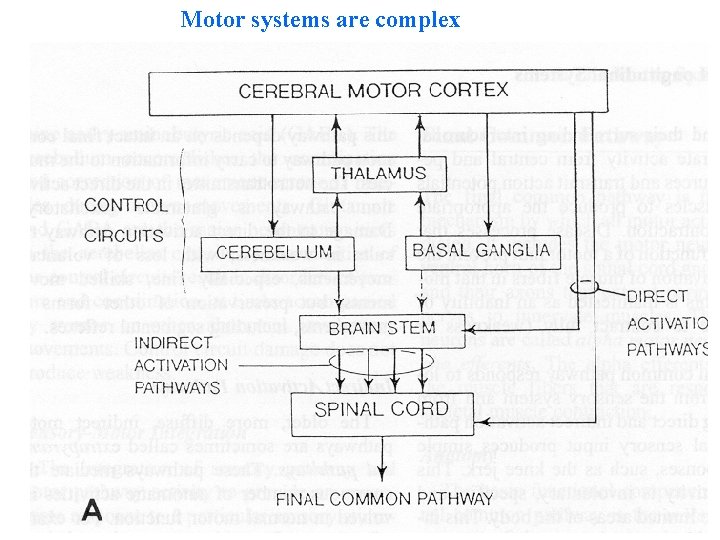
Motor systems are complex
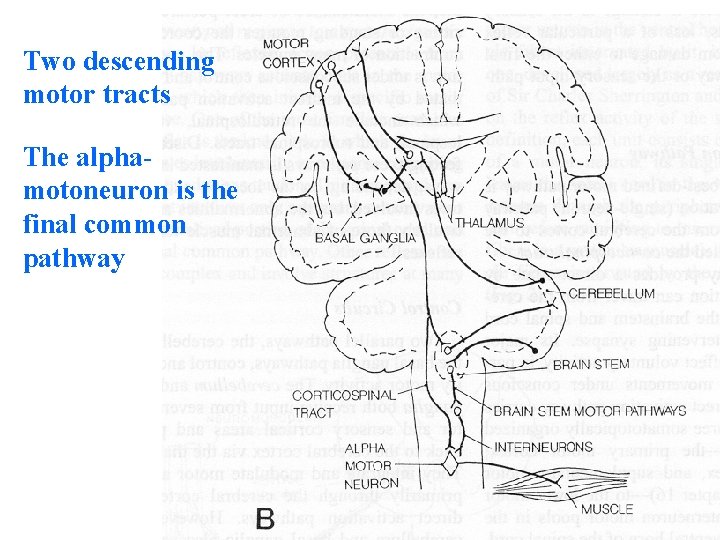
Two descending motor tracts The alphamotoneuron is the final common pathway
Anatomical localization of basal ganglia and motor thalamus
Connections between the cerebral cortex and the cerebellum
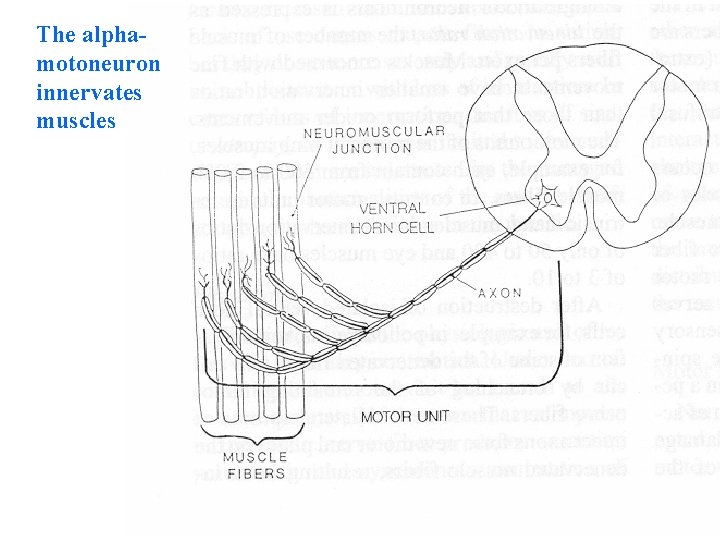
The alphamotoneuron innervates muscles
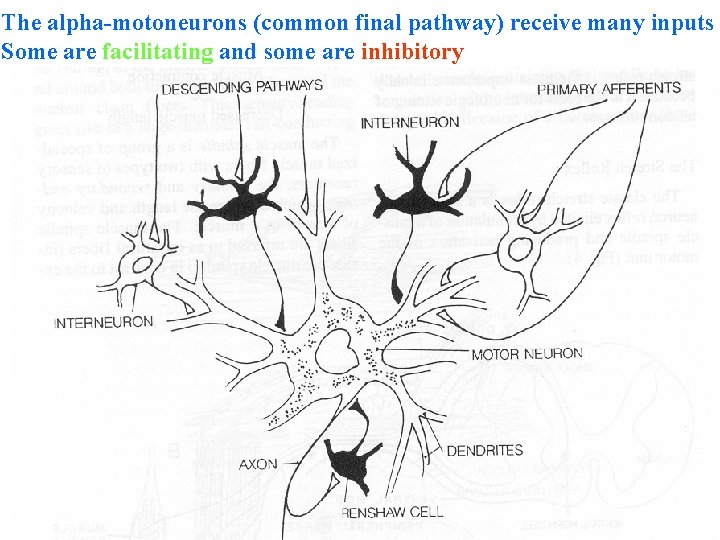
The alpha-motoneurons (common final pathway) receive many inputs Some are facilitating and some are inhibitory
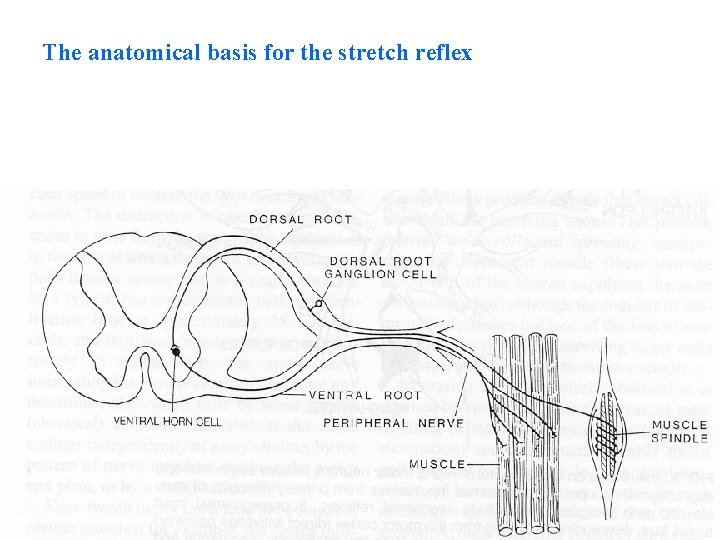
The anatomical basis for the stretch reflex
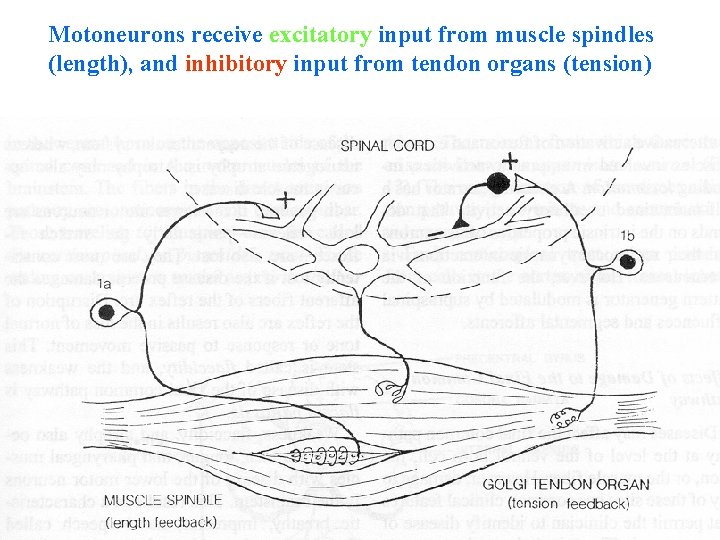
Motoneurons receive excitatory input from muscle spindles (length), and inhibitory input from tendon organs (tension)
Recording from the exposed spinal cord D and I waves
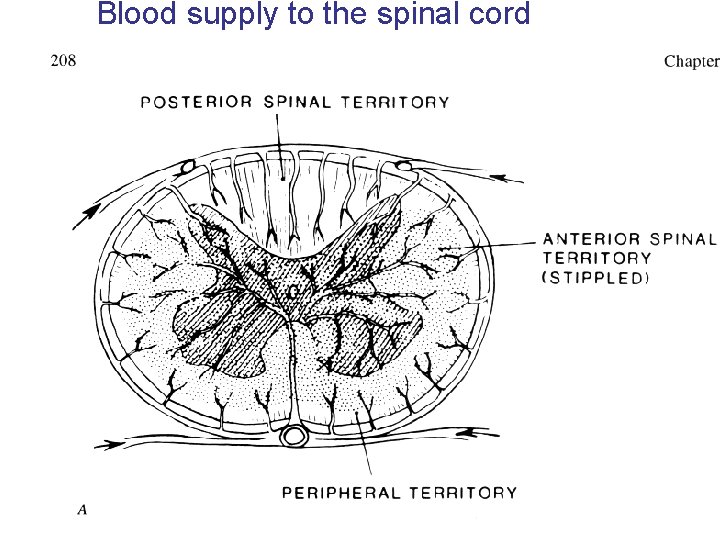
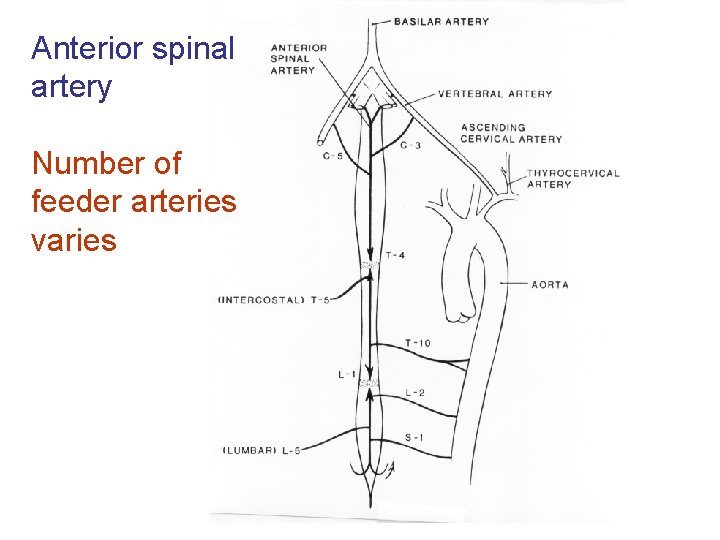
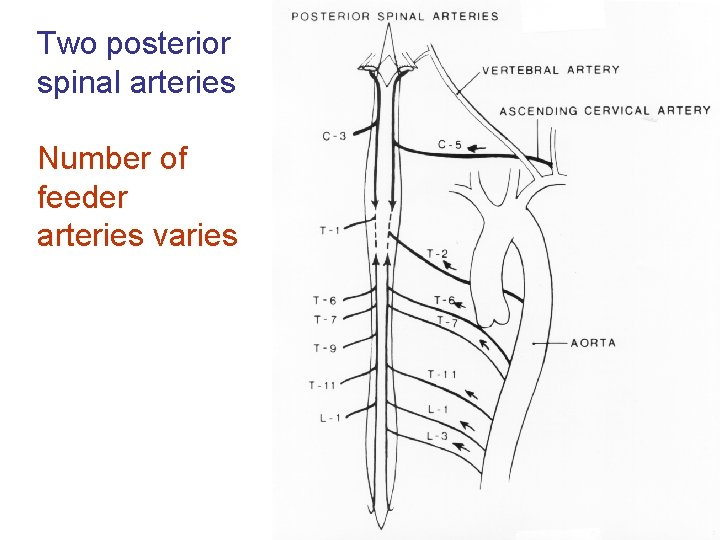
Blood supply to the spinal cord • Mainly two sources: – The anterior spinal artery – Posterior spinal artery – Segmental arteries • Dorsal and ventral portions of the spinal cord have mostly different blood supplies • Large degree of individual variability
Blood supply to the spinal cord
Anterior spinal artery Number of feeder arteries varies
Two posterior spinal arteries Number of feeder arteries varies
Activation of motor tracts • Transcranial magnetic stimulation of the motor cortex • Transcranial electrical stimulation of the motor cortex • Electrical stimulation of the spinal cord
Magnetic stimulation of the motor cortex • Non-invasive • Technically difficult to apply • Need trains of stimulation, which is difficult to achieve
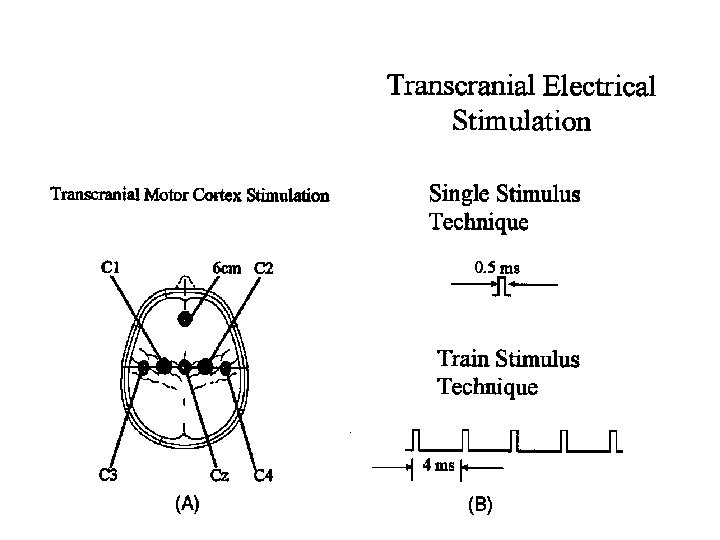
Transcranial electrical stimulation of the motor cortex • Non-invasive • Can easily produce trains of impulses • High voltage may seem a risk
Electrical stimulation of the spinal cord • Produces effective stimulation of spinal cord • Invasive • Not clear if only motor pathways are stimulated
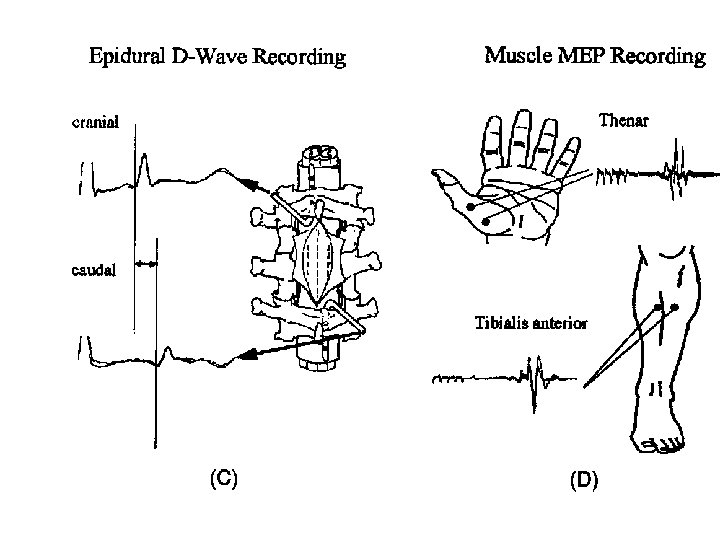
Recording of responses • Electromyographic potentials • Compound action potentials from motor nerves
Electromyographic potentials • Large potentials • Cannot be done with muscle relaxation
Compound action potentials • Can be recorded with muscle relaxation • Amplitude is small
Recording from the exposed spinal cord D and I waves
Recordings from the surface of the spinal cord in a monkey in response to stimulation of the cerebral cortex Transcranial magnetic stimulation Transcranial electrical stimulation Direct electrical D stimulation I 1
Recordings from the surface of the spinal cord in a 14 year old patient Undergoing a scoliosis operation. Transcranial electrical stimulation at different strengths (100%=750 V at Cz and 6 cm anterior)
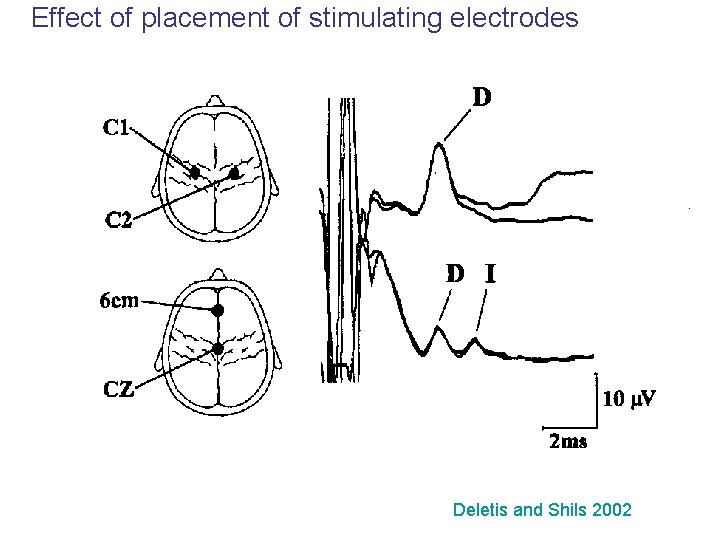
Effect of placement of stimulating electrodes Deletis and Shils 2002
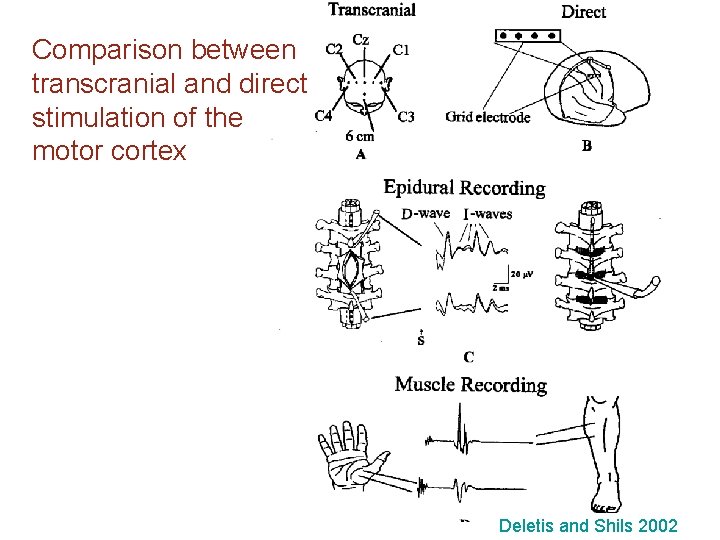
Comparison between transcranial and direct stimulation of the motor cortex Deletis and Shils 2002
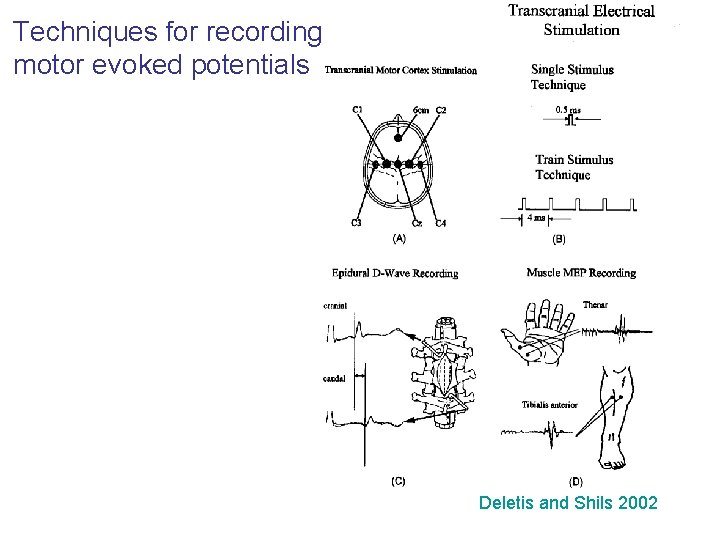
Techniques for recording motor evoked potentials Deletis and Shils 2002
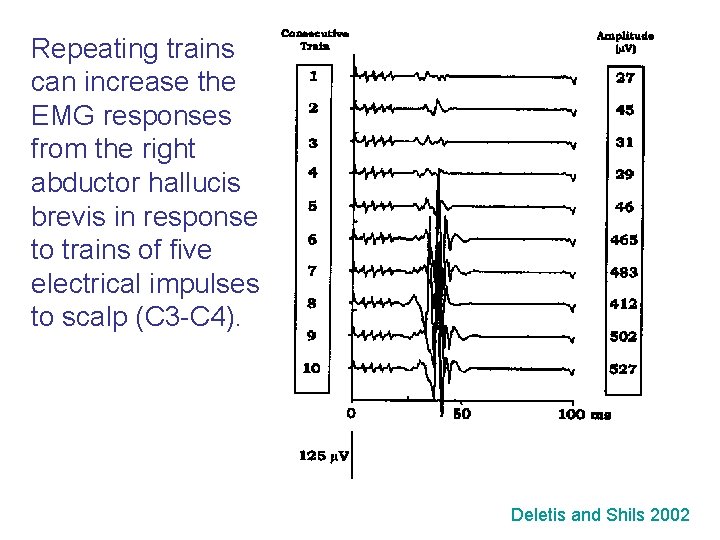
Repeating trains can increase the EMG responses from the right abductor hallucis brevis in response to trains of five electrical impulses to scalp (C 3 -C 4). Deletis and Shils 2002
Deletis and Shils 2002
Using BSM, surgeon can get anatomical guidance to enter the brainstem safely. From Morota N, Deletis V, Epstein FJ, et al: Brain stem mapping: neurophysiological localization of motor nuclei on the floor of the fourth ventricle. Neurosurgery 37: 922 -930, 1995
Corticobulbar MEPs - Recordings in IV Ventricle Mapping - Recordings
Modulation of the monosynaptic stretch reflex
The Hoffmann reflex Amplitude of Hoffmann (H) Response, and the direct muscle (M) response.
DESCENDING MOTOR ACTIVITY IS AFFECTED BY ATTENTION
DESCENDING MOTOR ACTIVITY IS AFFECTED BY ANESTHESIA
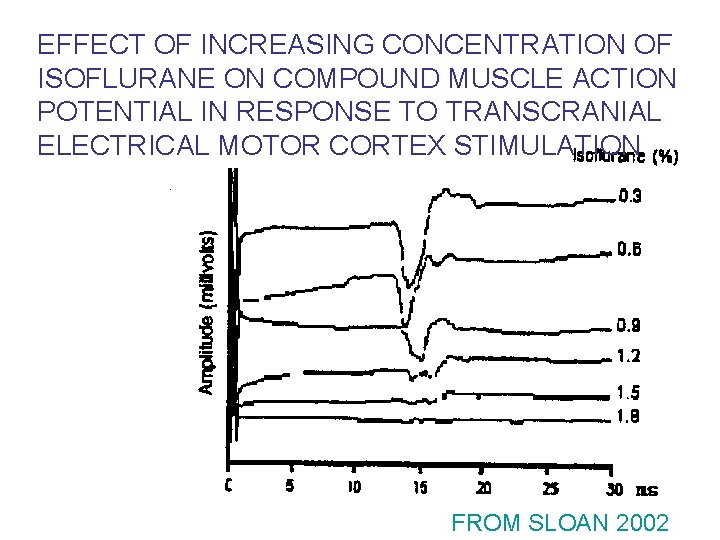
EFFECT OF INCREASING CONCENTRATION OF ISOFLURANE ON COMPOUND MUSCLE ACTION POTENTIAL IN RESPONSE TO TRANSCRANIAL ELECTRICAL MOTOR CORTEX STIMULATION FROM SLOAN 2002
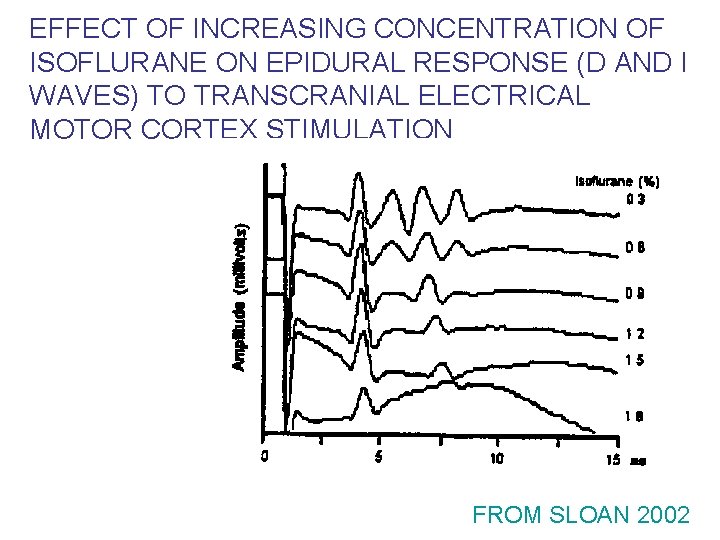
EFFECT OF INCREASING CONCENTRATION OF ISOFLURANE ON EPIDURAL RESPONSE (D AND I WAVES) TO TRANSCRANIAL ELECTRICAL MOTOR CORTEX STIMULATION FROM SLOAN 2002
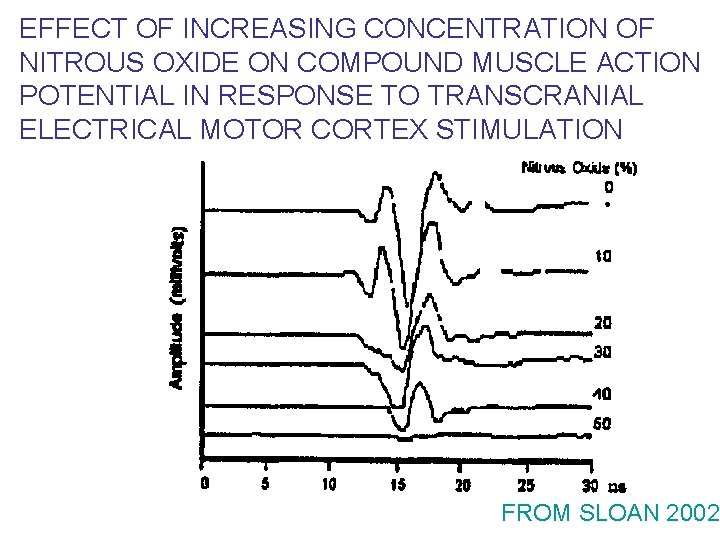
EFFECT OF INCREASING CONCENTRATION OF NITROUS OXIDE ON COMPOUND MUSCLE ACTION POTENTIAL IN RESPONSE TO TRANSCRANIAL ELECTRICAL MOTOR CORTEX STIMULATION FROM SLOAN 2002
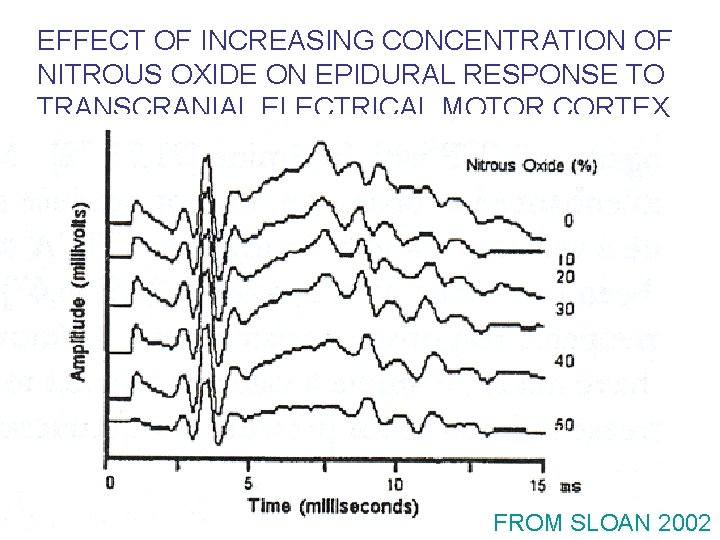
EFFECT OF INCREASING CONCENTRATION OF NITROUS OXIDE ON EPIDURAL RESPONSE TO TRANSCRANIAL ELECTRICAL MOTOR CORTEX STIMULATION FROM SLOAN 2002
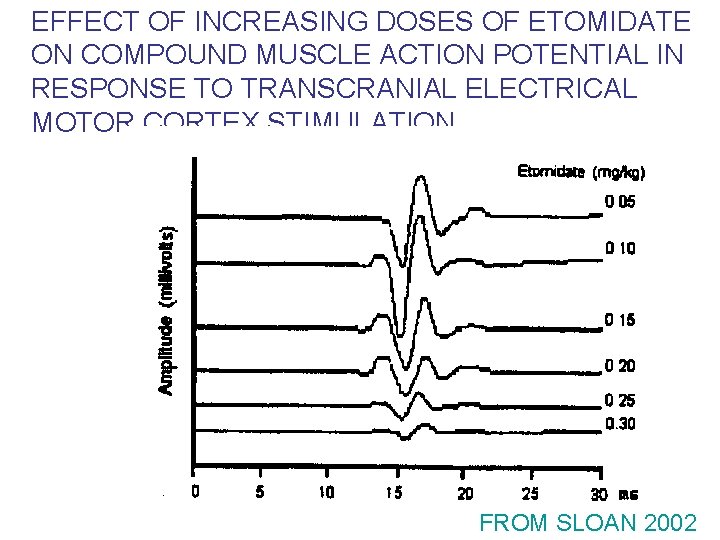
EFFECT OF INCREASING DOSES OF ETOMIDATE ON COMPOUND MUSCLE ACTION POTENTIAL IN RESPONSE TO TRANSCRANIAL ELECTRICAL MOTOR CORTEX STIMULATION FROM SLOAN 2002
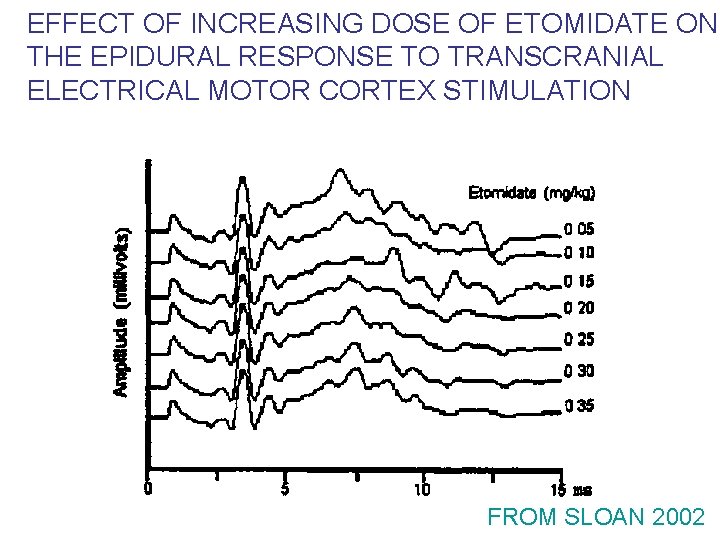
EFFECT OF INCREASING DOSE OF ETOMIDATE ON THE EPIDURAL RESPONSE TO TRANSCRANIAL ELECTRICAL MOTOR CORTEX STIMULATION FROM SLOAN 2002
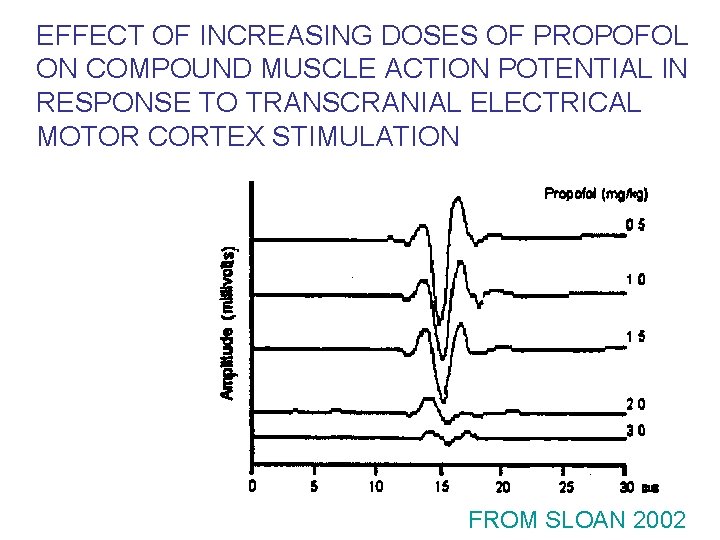
EFFECT OF INCREASING DOSES OF PROPOFOL ON COMPOUND MUSCLE ACTION POTENTIAL IN RESPONSE TO TRANSCRANIAL ELECTRICAL MOTOR CORTEX STIMULATION FROM SLOAN 2002
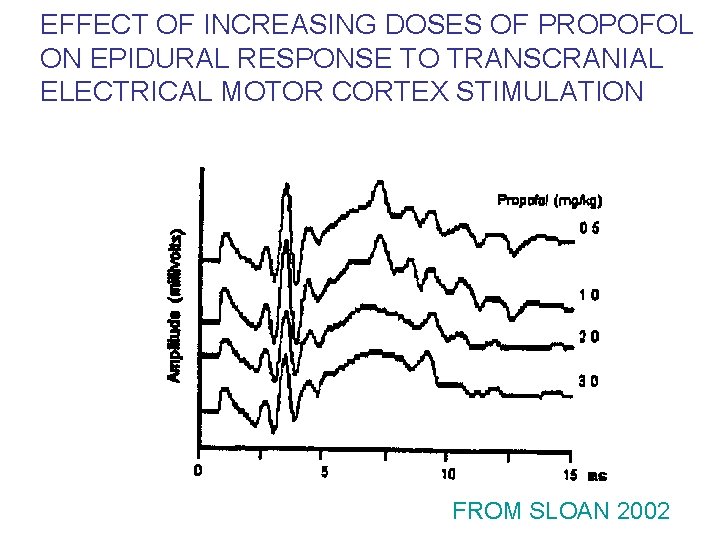
EFFECT OF INCREASING DOSES OF PROPOFOL ON EPIDURAL RESPONSE TO TRANSCRANIAL ELECTRICAL MOTOR CORTEX STIMULATION FROM SLOAN 2002
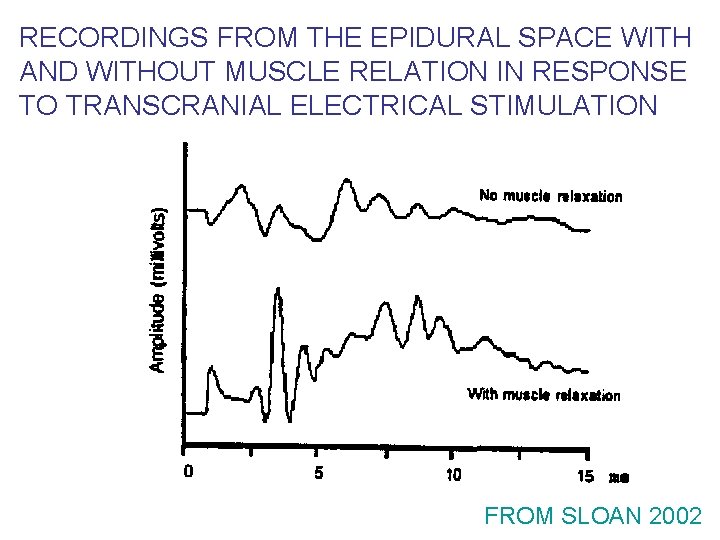
RECORDINGS FROM THE EPIDURAL SPACE WITH AND WITHOUT MUSCLE RELATION IN RESPONSE TO TRANSCRANIAL ELECTRICAL STIMULATION FROM SLOAN 2002
OPERATIONS FOR SPINAL DEFORMITIES
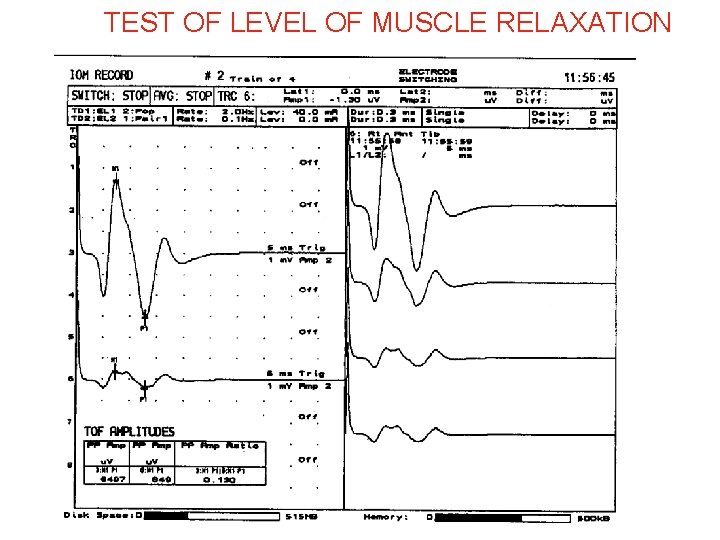
TEST OF LEVEL OF MUSCLE RELAXATION