
Anatomy and Physiology of Balance Vestibular Hair Cells

Anatomy and Physiology of Balance
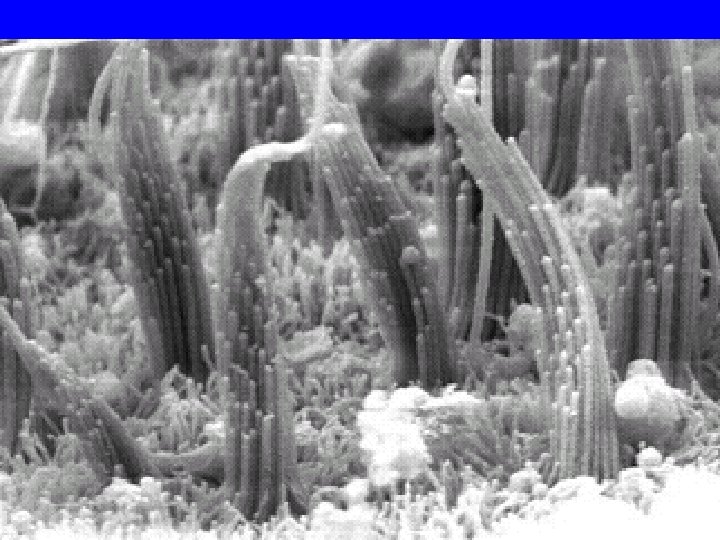
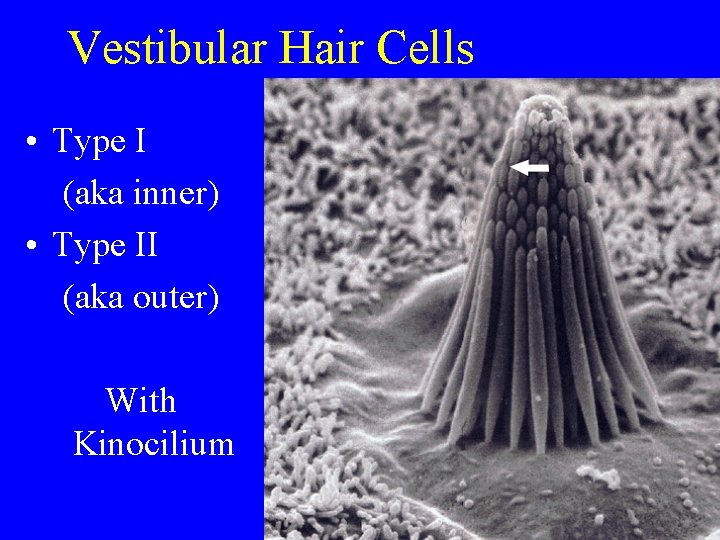
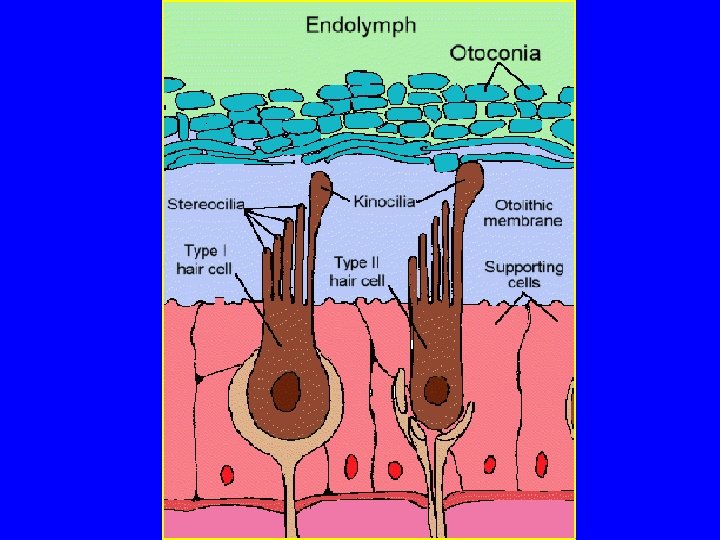
Vestibular Hair Cells • Type I (aka inner) • Type II (aka outer) With Kinocilium
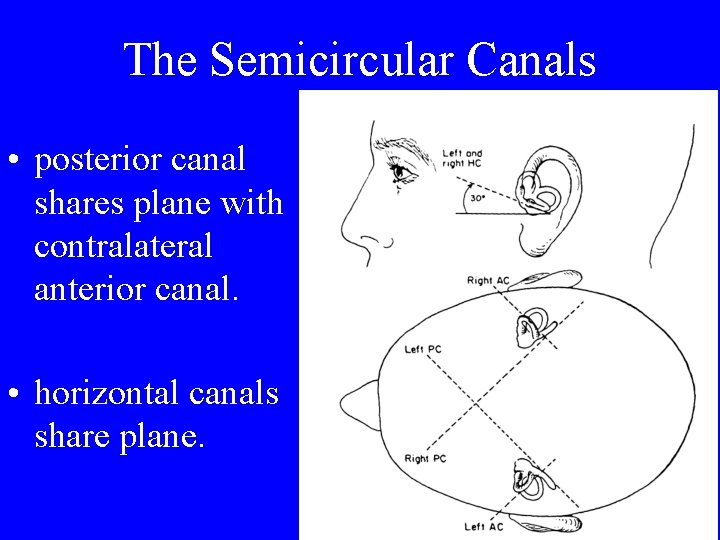
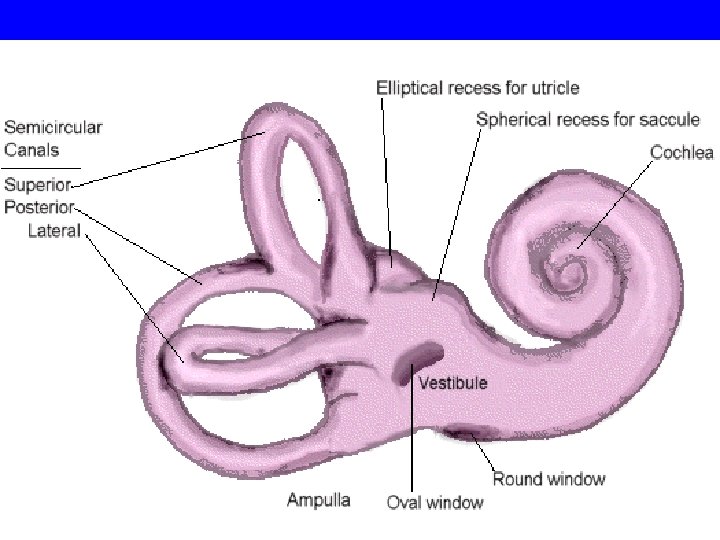
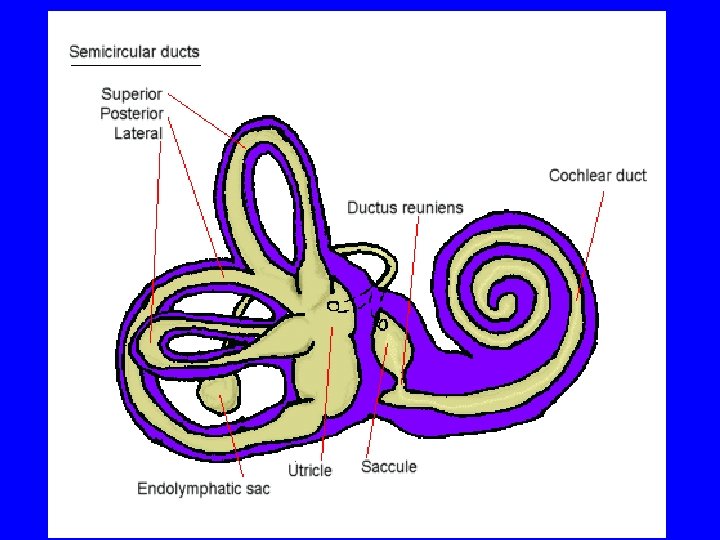
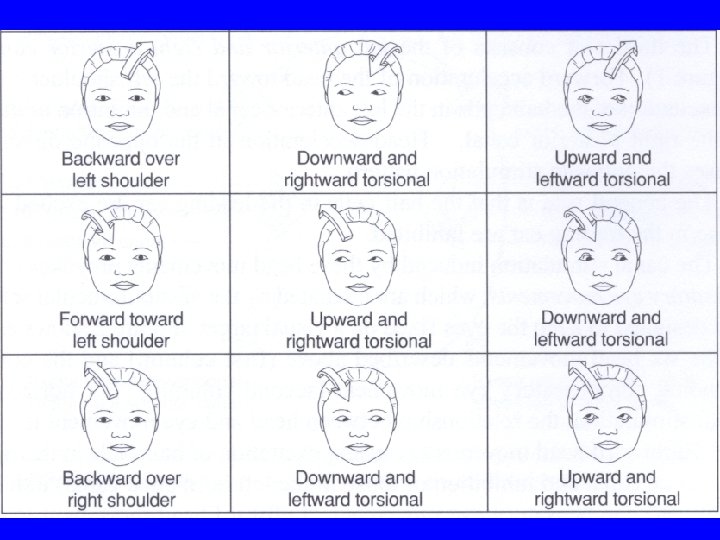
The Semicircular Canals • posterior canal shares plane with contralateral anterior canal. • horizontal canals share plane.
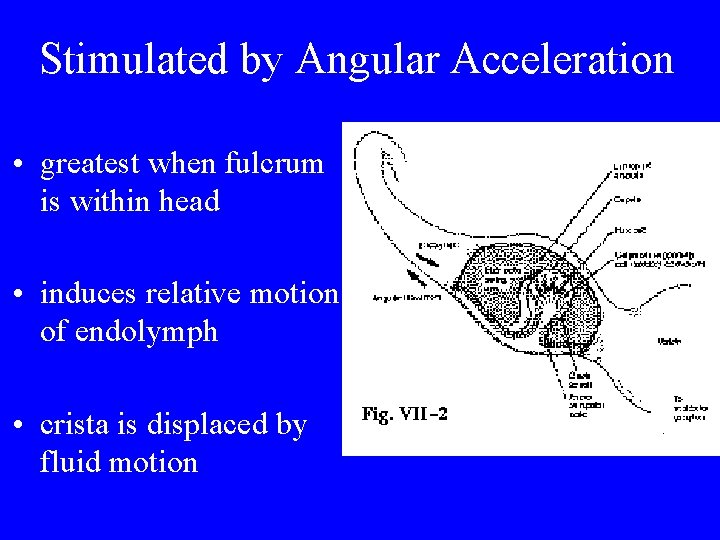
Stimulated by Angular Acceleration • greatest when fulcrum is within head • induces relative motion of endolymph • crista is displaced by fluid motion


Responses of the Cristae • All kinocilia are oriented in the same direction • Crista in each pair of canals respond inversely to each other
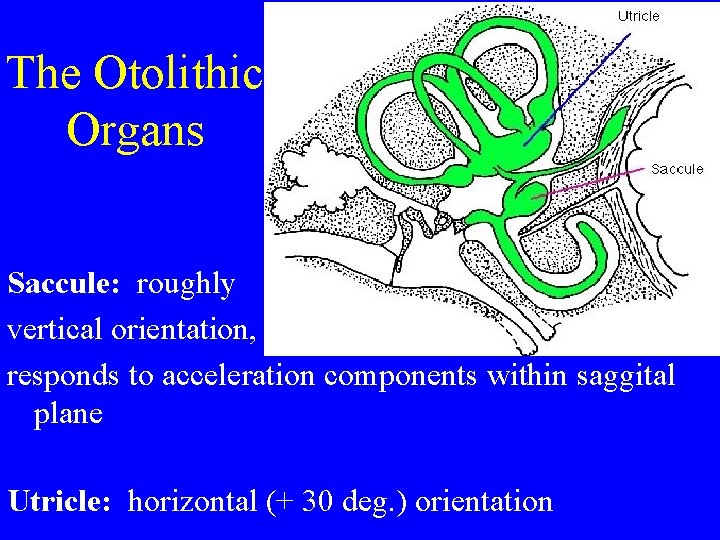
The Otolithic Organs Saccule: roughly vertical orientation, responds to acceleration components within saggital plane Utricle: horizontal (+ 30 deg. ) orientation
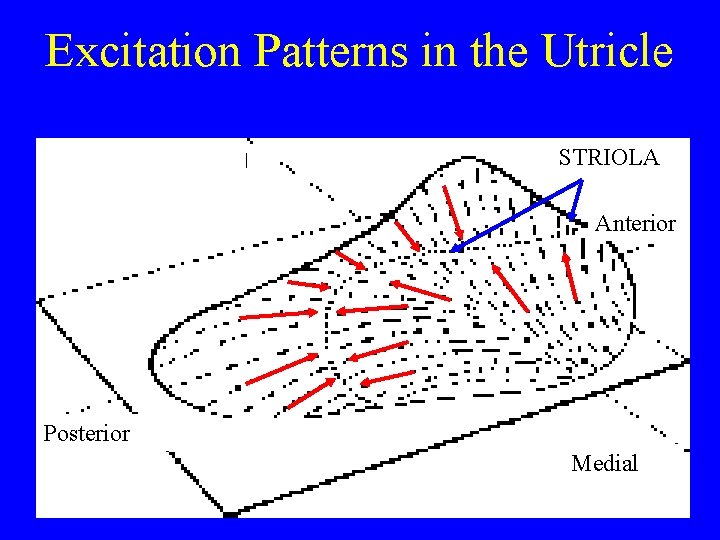
Excitation Patterns in the Utricle STRIOLA Anterior Posterior Medial
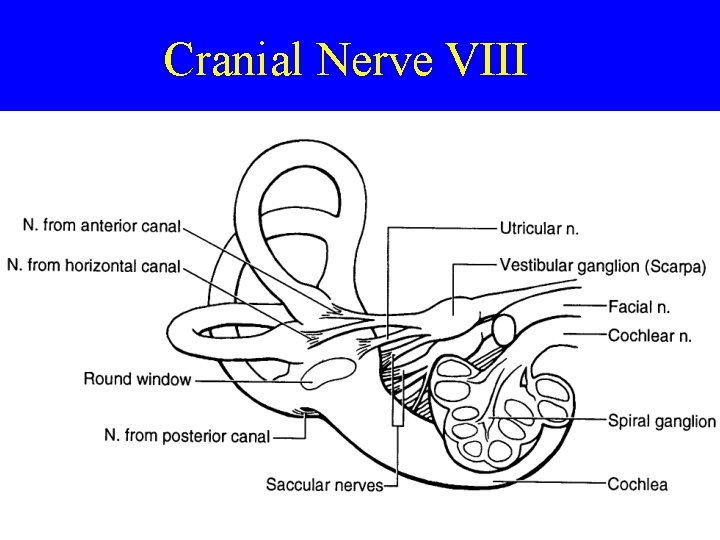
Cranial Nerve VIII
Vestibular Portion of C. N. VIII Ø superior division: utricle, anterior part of saccule, and horiz & anterior canals Ø inferior division: posterior part of saccule, and posterior canal • to vestibular nuclei • to cerebellum
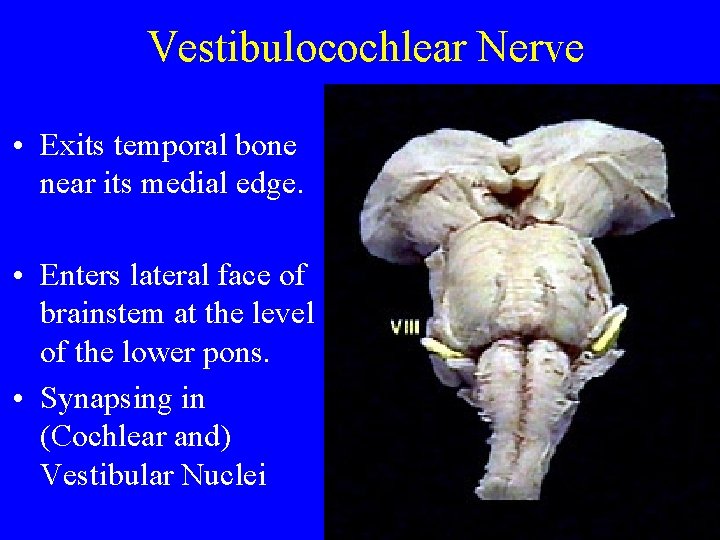
Vestibulocochlear Nerve • Exits temporal bone near its medial edge. • Enters lateral face of brainstem at the level of the lower pons. • Synapsing in (Cochlear and) Vestibular Nuclei
Responses of Vestibular Neurons: • To changes in acceleration, but onset and fade slowly • For most normal head movements firing rates are in phase with head VELOCITY.
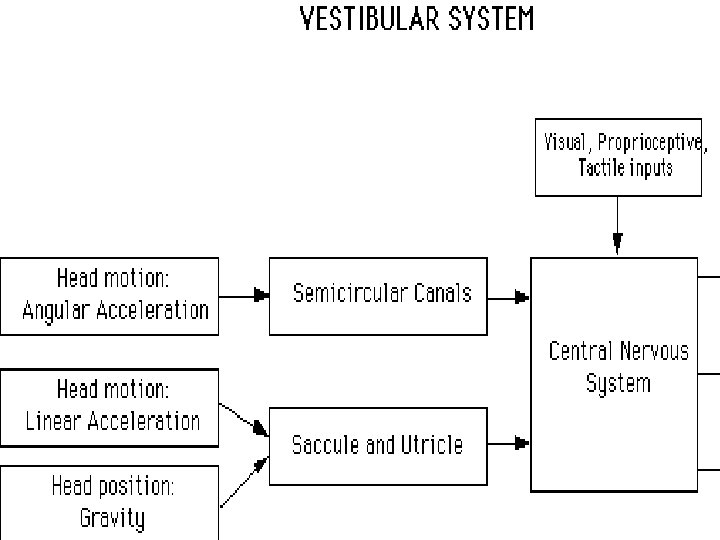
Other inputs to vestibular nuclei: • • Cerebellum: primarily inhibitory Spinal cord Pontine reticular formation Contralateral vestibular nuclei
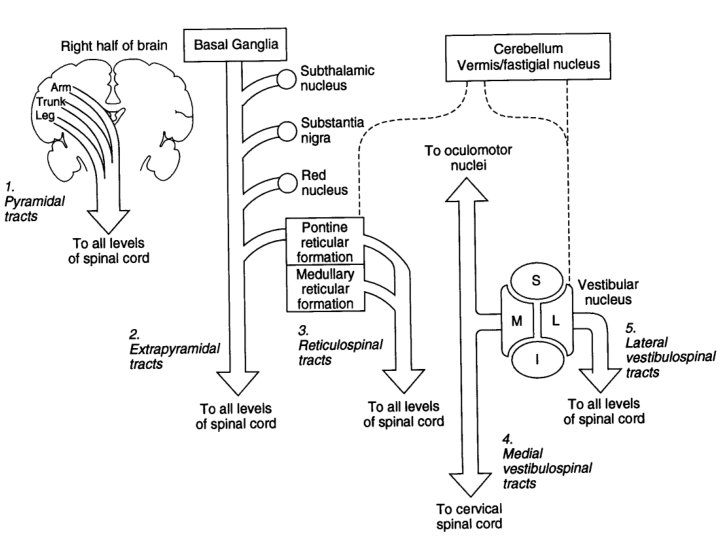
From the Vestibular Nuclei: • Vestibulo-Oculomotor Pathways: – Direct: to oculomotor nuclei. – Indirect: via reticular formation to oculomotor nuclei (III IV and VI) • Vestibulo-Spinal Pathways: – Lateral V-S-throughout spinal cord – Medial V-S-cervical & thoracic – Reticulospinal tract-via brainstem reticular formation
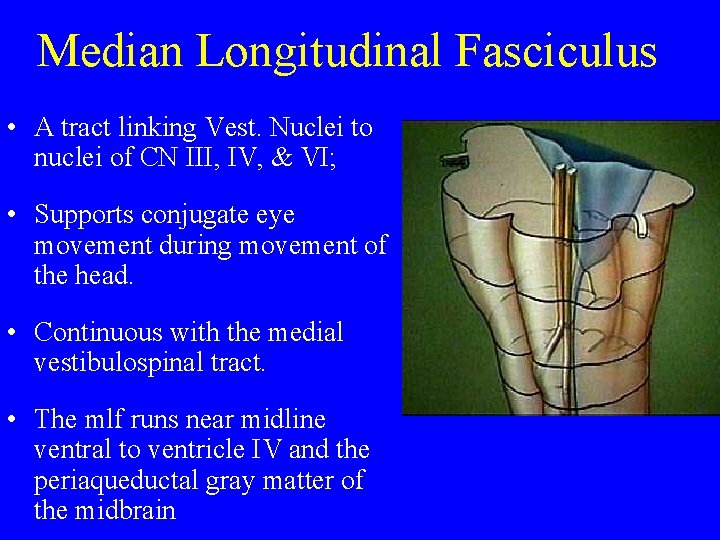
Median Longitudinal Fasciculus • A tract linking Vest. Nuclei to nuclei of CN III, IV, & VI; • Supports conjugate eye movement during movement of the head. • Continuous with the medial vestibulospinal tract. • The mlf runs near midline ventral to ventricle IV and the periaqueductal gray matter of the midbrain
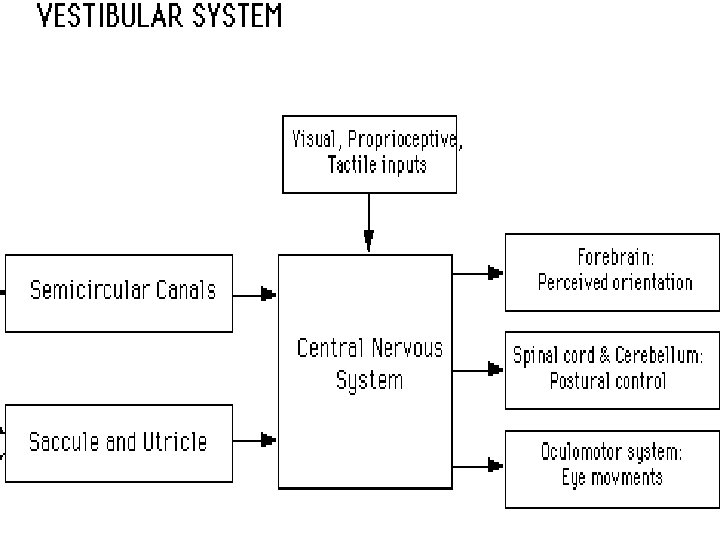
In the brainstem • Vestibular inputs undergo integration • Integrated signal is combined with original (velocity driven) signal • Processing to reset spatial map for eye musculature
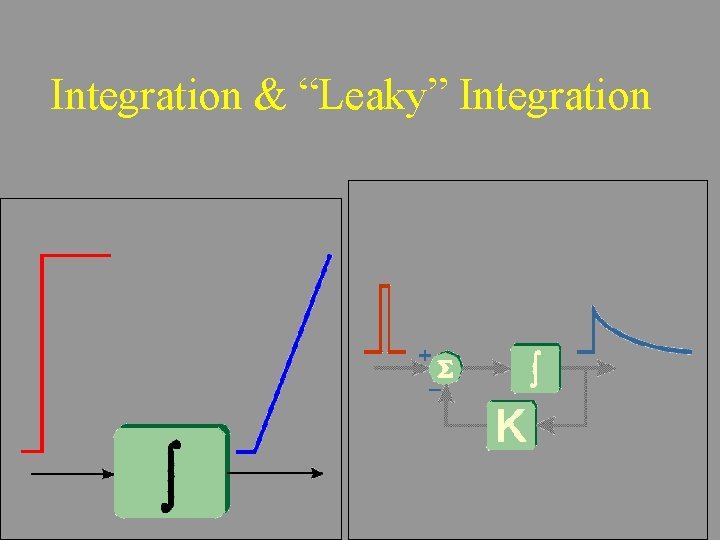
Integration & “Leaky” Integration
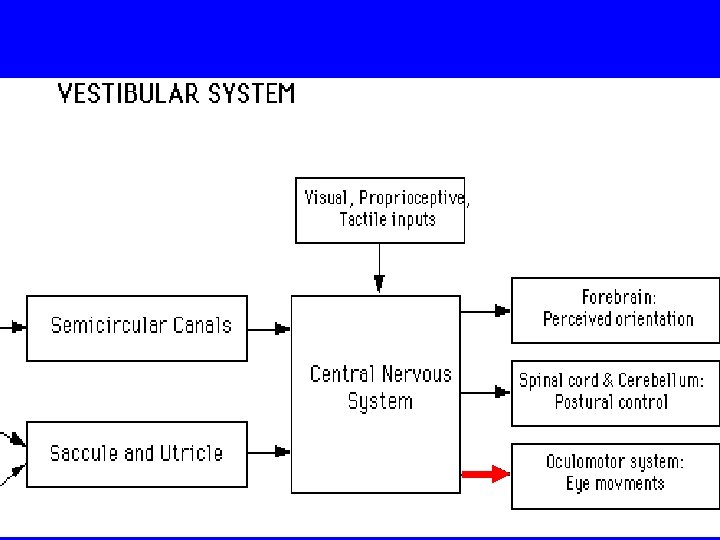

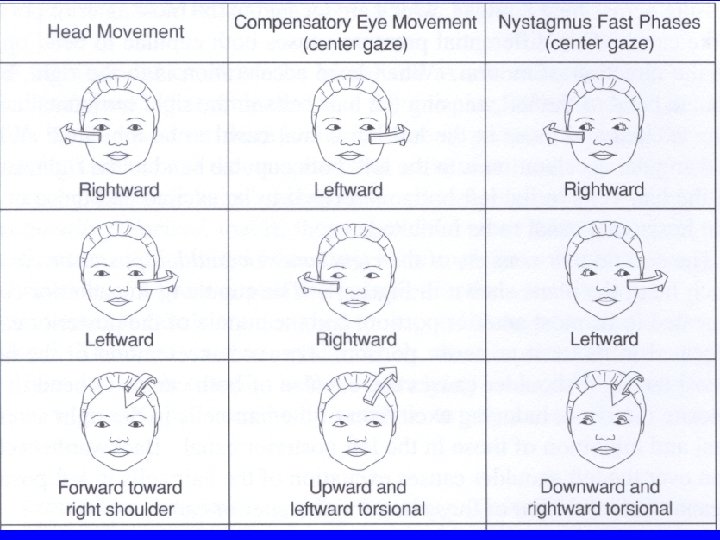
The VOR

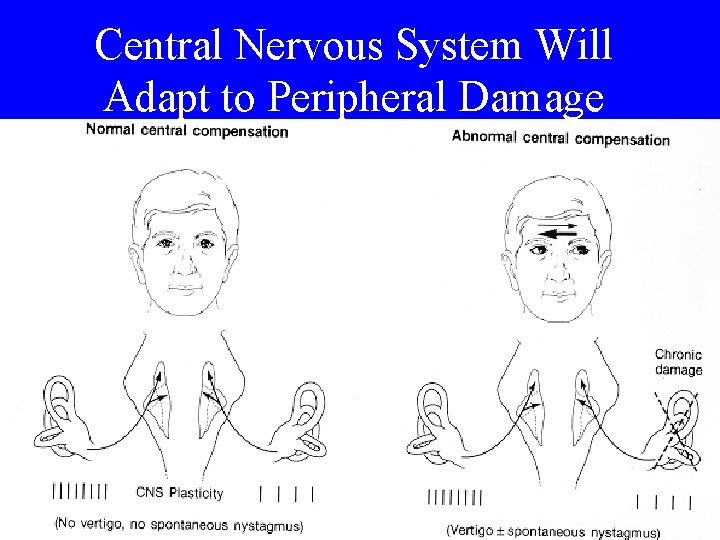
Central Nervous System Will Adapt to Peripheral Damage
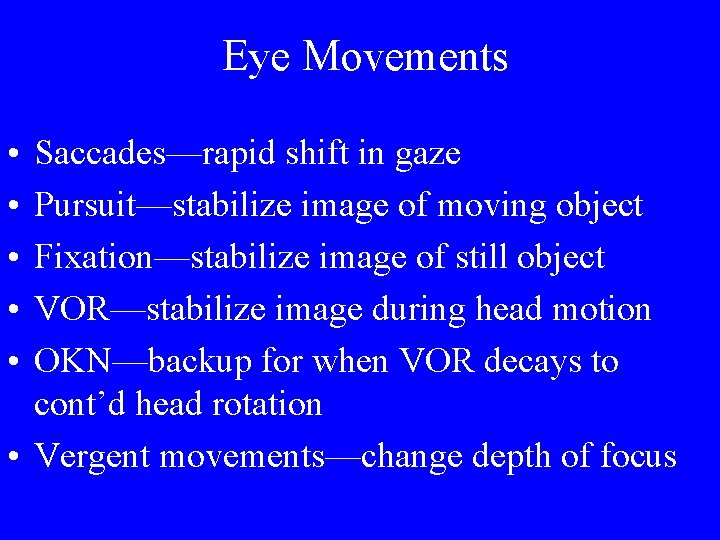
Eye Movements • • • Saccades—rapid shift in gaze Pursuit—stabilize image of moving object Fixation—stabilize image of still object VOR—stabilize image during head motion OKN—backup for when VOR decays to cont’d head rotation • Vergent movements—change depth of focus
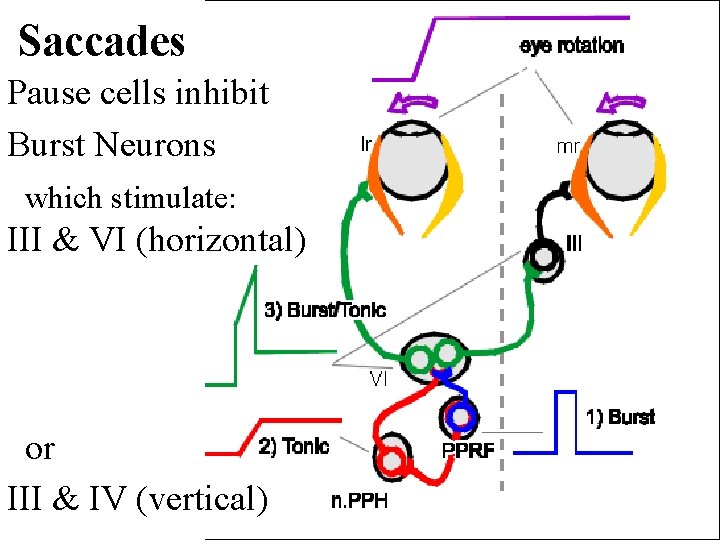
Saccades Pause cells inhibit Burst Neurons which stimulate: III & VI (horizontal) or III & IV (vertical)
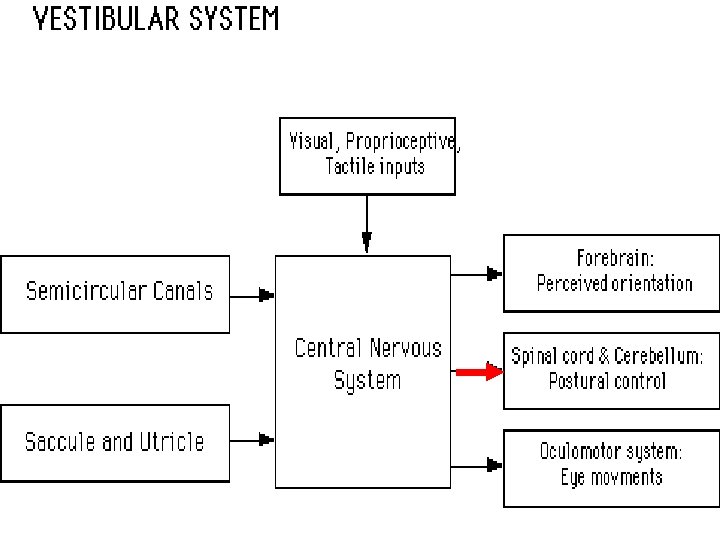
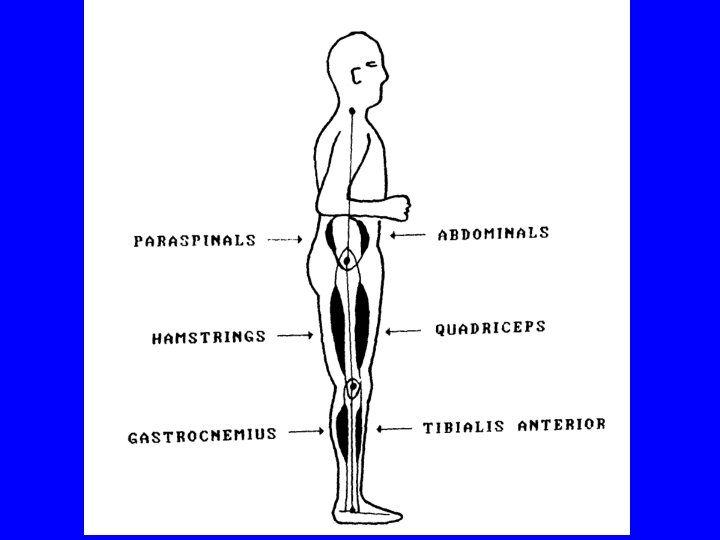
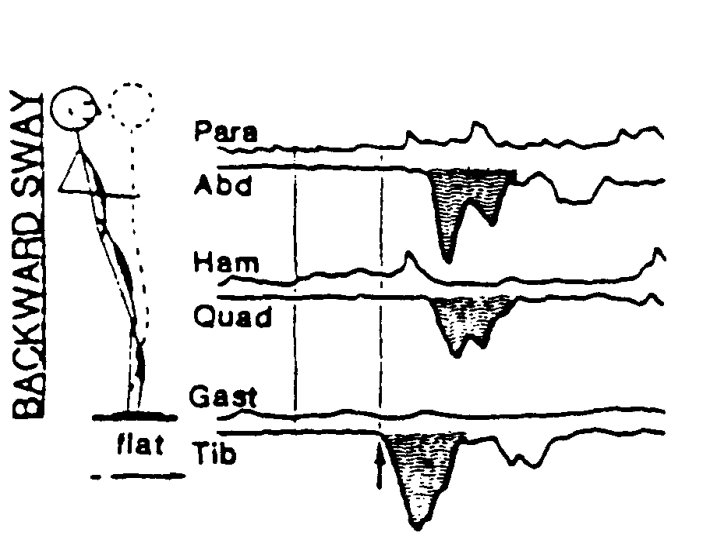
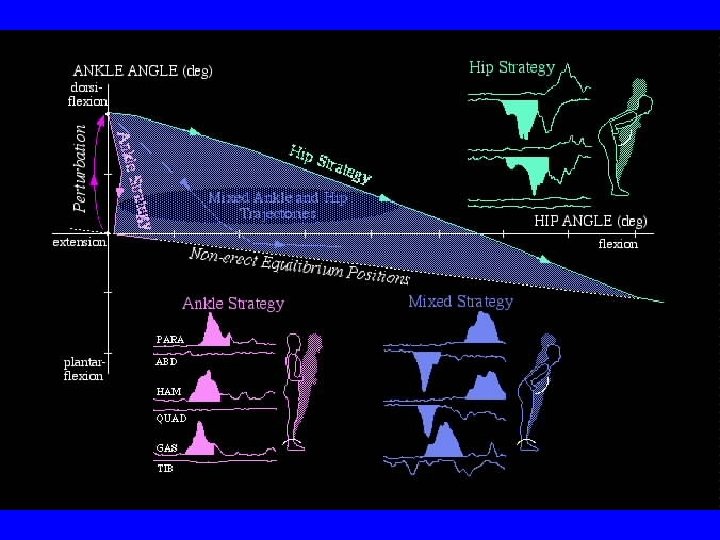
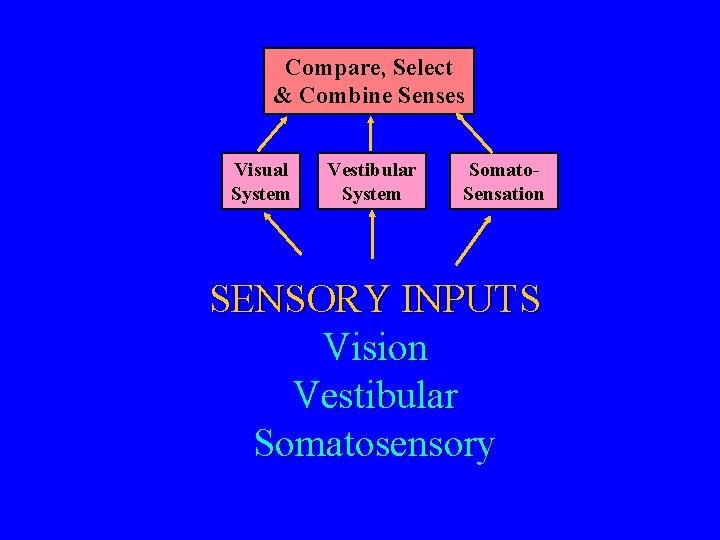
Compare, Select & Combine Senses Visual System Vestibular System Somato. Sensation SENSORY INPUTS Vision Vestibular Somatosensory
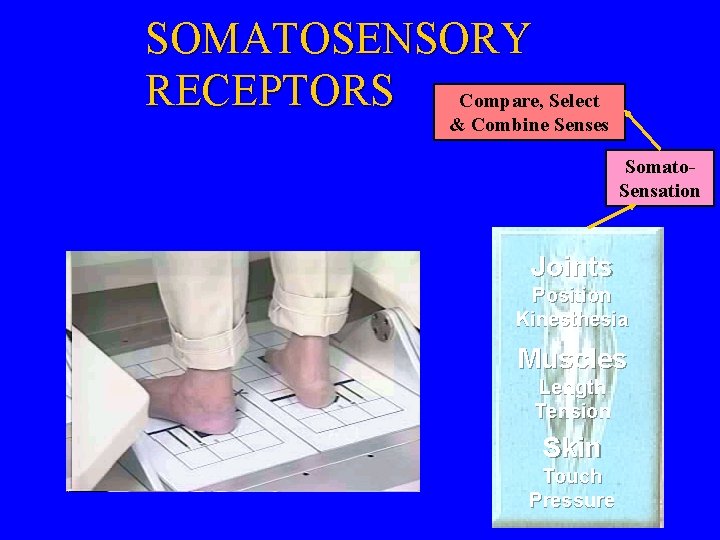
SOMATOSENSORY RECEPTORS Compare, Select & Combine Senses Somato. Sensation Joints Position Kinesthesia Muscles Length Tension Skin Touch Pressure
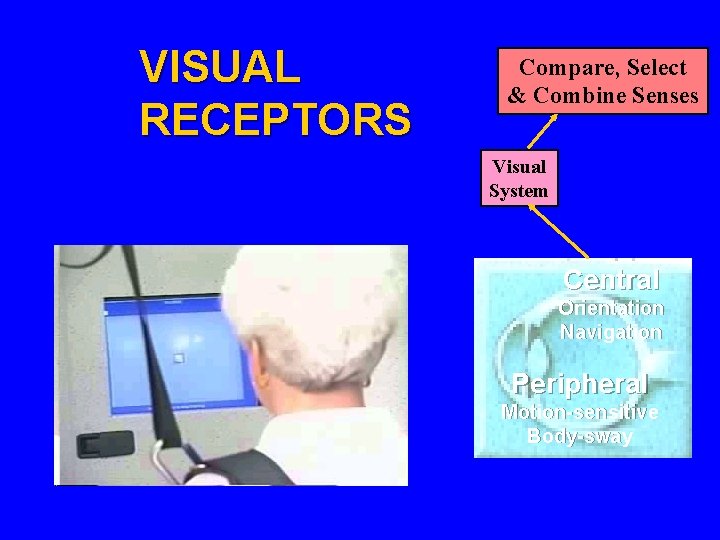
VISUAL RECEPTORS Compare, Select & Combine Senses Visual System Central Orientation Navigation Peripheral Motion-sensitive Body-sway
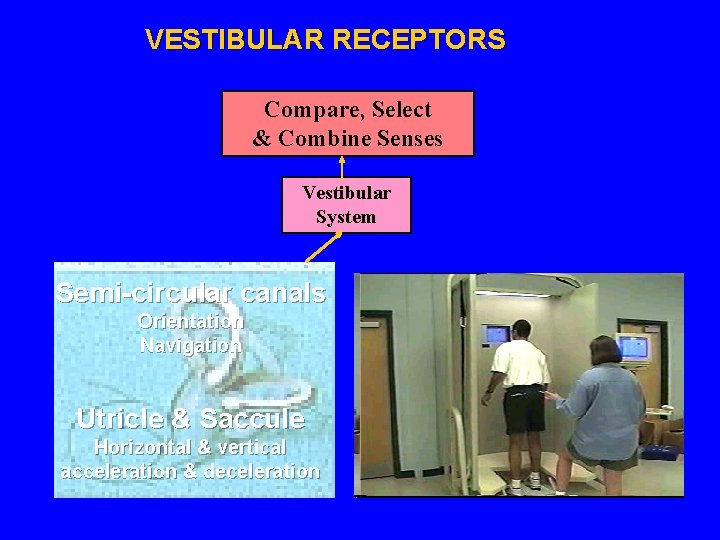
VESTIBULAR RECEPTORS Compare, Select & Combine Senses Vestibular System Semi-circular canals Orientation Navigation Utricle & Saccule Horizontal & vertical acceleration & deceleration
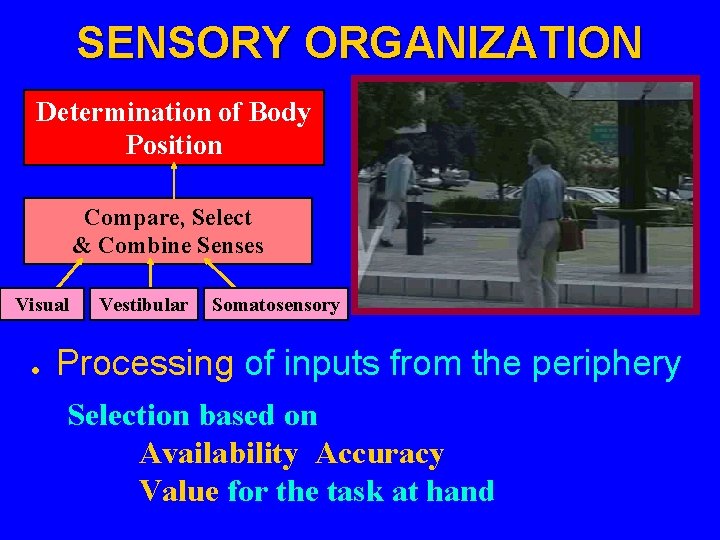
SENSORY ORGANIZATION Determination of Body Position Compare, Select & Combine Senses Visual l Vestibular Somatosensory Processing of inputs from the periphery Selection based on Availability Accuracy Value for the task at hand
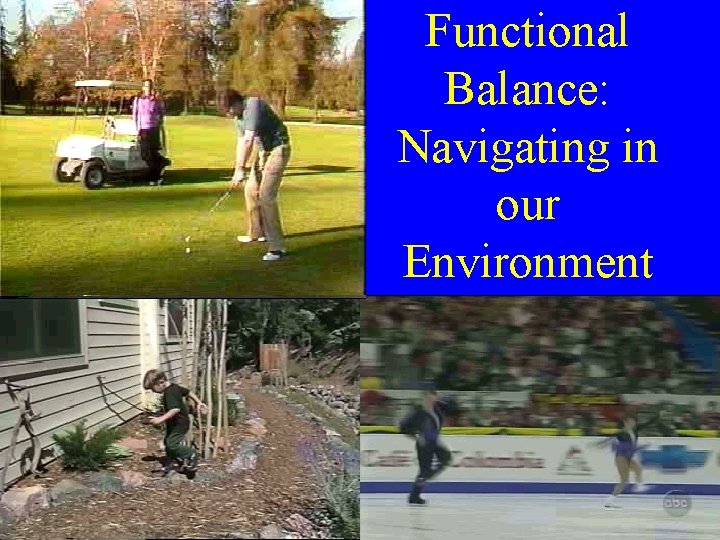
Functional Balance: Navigating in our Environment
A Quiz Vestibular Pathways Quiz
- Slides: 44