
ANATOMY AND PHYSIOLOGY OF ANIMALS OBJECTIVE 3 01
ANATOMY AND PHYSIOLOGY OF ANIMALS OBJECTIVE 3. 01: CLASSIFY ANATOMY OF BODY SYSTEMS
BODY SYSTEM STRUCTURE A. Organisms begin as a single cell created from the fertilized ovum. B. As cells divide and grow they differentiate into various tissues and serve various functions in the body.
BODY SYSTEM STRUCTURE, CONTINUED C. There are essentially 5 tissues found in the body: 1. Muscle- contractile tissue that allows for movement of the animal. 2. Connective- holds various tissues together such as bone. 3. Nerve- tissue that transmits information to various parts of the body. 4. Epithelial- tissue that covers other tissue such as skin. 5. Fluid- liquid type tissue such as blood.
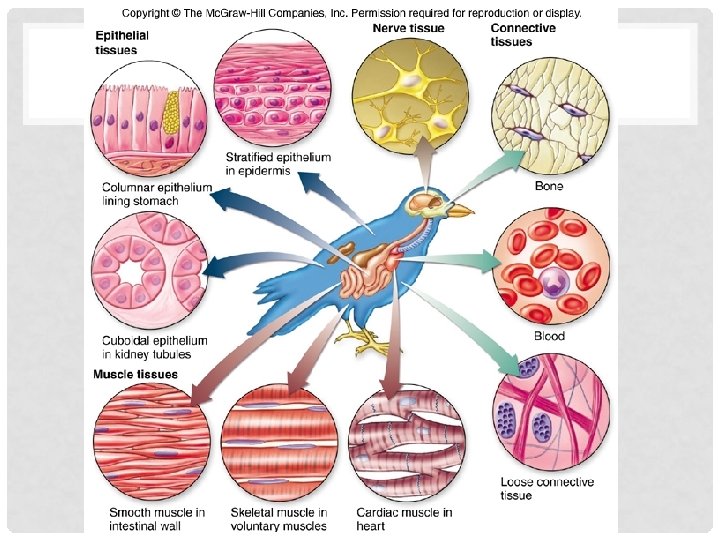
BODY SYSTEM STRUCTURE, CONTINUED D. The tissues work together to form the organs that sustain life and serve various functions. E. Each body system will have a variety of the different tissues with each depending on the other to function normally.
MAJOR SYSTEMS • Skeletal • Muscular • Respiratory • Circulatory • Nervous • Endocrine • Urinary • Digestive • Reproductive
SKELETAL SYSTEM ANATOMY A. Functions- protect vital body organs and give form or shape to body. B. Major parts include bones, cartilage, teeth and joints. C. Kinds of Bone- based on the different structure of the bone. 1. Cancellous Bone- also known as spongy bone. Soft bone tissue filled with holes that are surrounded by hard bone. Typically found at the end of long bones. 2. Compact Bone- consists of a structure known as the Haversian system. This system is a hard, protective layer of bone tissue that surrounds bone marrow.
SKELETAL SYSTEM ANATOMY, CONTINUED D. Types of Bone- classified based on the shape or structure of the bone. 1. Long- long cylindrical shaped bones that support the body. Example: femur. 2. Short- cube shaped bones. Example: carpus/knee. 3. Flat- long, wide bones that protect vital organs. Example: scapula. 4. Pnuematic- contains sinuses (spaces) that come into contact with atmosphere. Example: face bones. 5. Irregular- various shapes that protect and support the nervous system. Example: vertebrae. 6. Sesamoid- flat and round shaped bones. Located along tendons. Example: patella.
SKELETAL SYSTEM - BONES E. Components to the Skeletal System 1. Axial Skeleton- bones that are on or close to the midline of the animal. Major bones of the axial skeleton: i. ii. iv. Vertebral Column- includes 5 sections. a. Cervical vertebrae- section closest to the skull. b. Thoracic vertebrae. c. Lumbar vertebrae. d. Sacral vertebrae. e. Coccygeal vertebrae- tail section. Ribs. Sternum- breastbone. Skull.
SKELETAL SYSTEM ANATOMY, CONTINUED 2. Appendicular Skeleton- bones that project from midline of the animal. i. Pectoral Limb- front limb of the animal. Major bones of pectoral limb: a. b. c. d. e. f. Scapula- shoulder blade. Humerus- arm. Radius and ulna- forearm. Carpals- knees of the forelimb. Metacarpals- feet/hoof. Phalanges- toes.
SKELETAL SYSTEM ANATOMY, CONTINUED i. Pelvic Limb- hind limb of the animal. Major bones of pelvic limb: a. b. c. d. e. Femur- upper leg bone. Tibia and fibula- lower leg bones. Tarsals- hocks. Metatarsals- feet/hoof. Phalanges- toes.
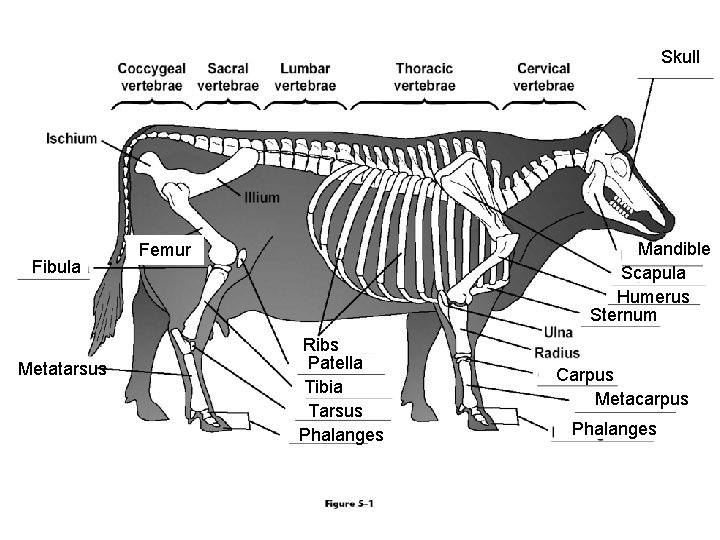
Skull Fibula Metatarsus Mandible Scapula Humerus Sternum Femur Ribs Patella Tibia Tarsus Phalanges Carpus Metacarpus Phalanges
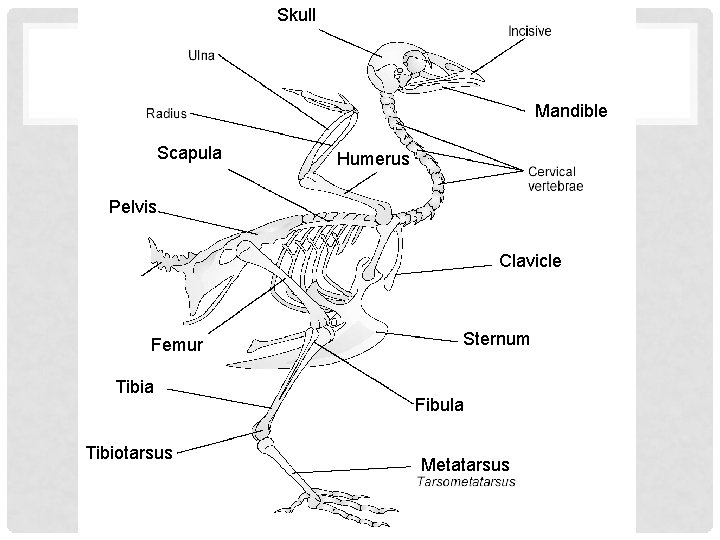
Skull Mandible Scapula Humerus Pelvis Clavicle Femur Tibia Tibiotarsus Sternum Fibula Metatarsus
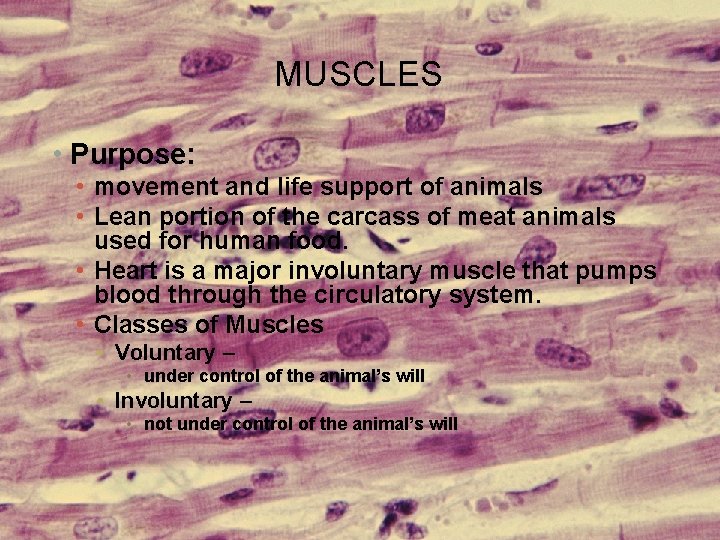
MUSCLES • Purpose: • movement and life support of animals • Lean portion of the carcass of meat animals used for human food. • Heart is a major involuntary muscle that pumps blood through the circulatory system. • Classes of Muscles • Voluntary – • under control of the animal’s will • Involuntary – • not under control of the animal’s will
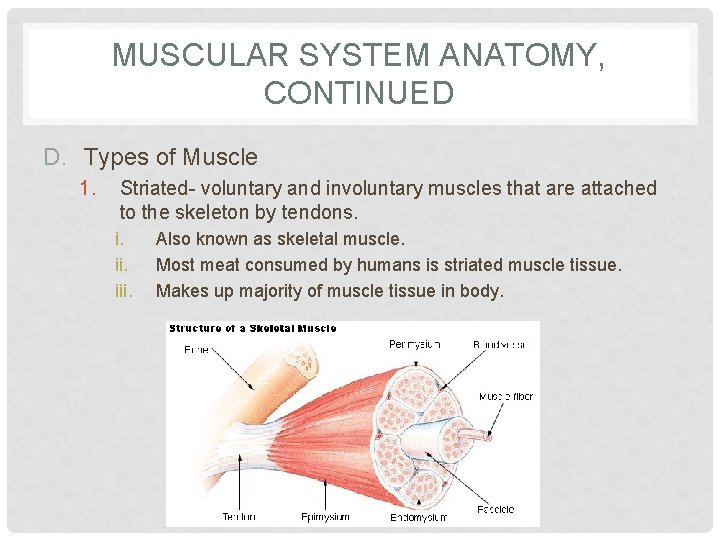
MUSCULAR SYSTEM ANATOMY, CONTINUED D. Types of Muscle 1. Striated- voluntary and involuntary muscles that are attached to the skeleton by tendons. i. iii. Also known as skeletal muscle. Most meat consumed by humans is striated muscle tissue. Makes up majority of muscle tissue in body.
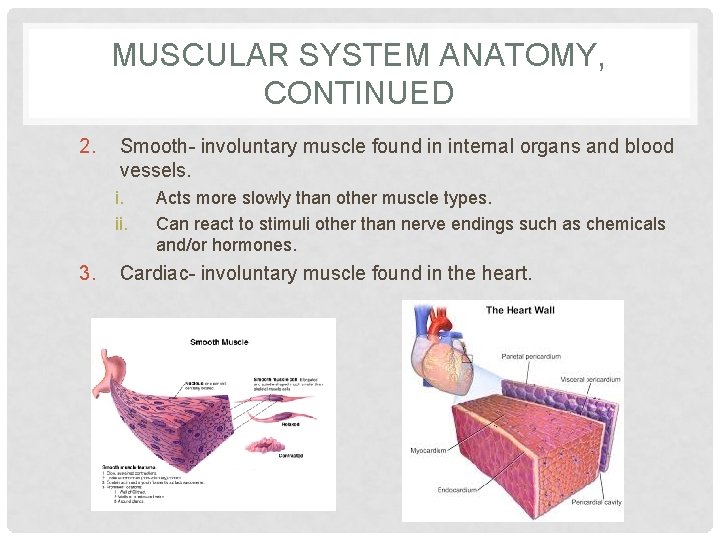
MUSCULAR SYSTEM ANATOMY, CONTINUED 2. Smooth- involuntary muscle found in internal organs and blood vessels. i. ii. 3. Acts more slowly than other muscle types. Can react to stimuli other than nerve endings such as chemicals and/or hormones. Cardiac- involuntary muscle found in the heart.
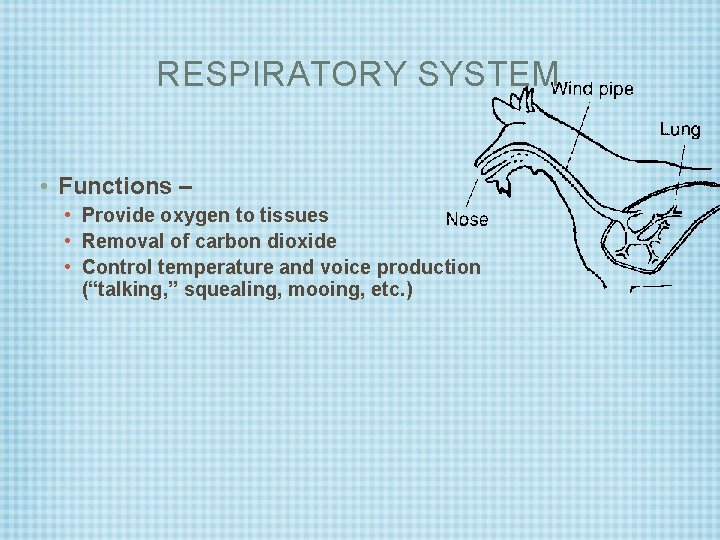
RESPIRATORY SYSTEM • Functions – • Provide oxygen to tissues • Removal of carbon dioxide • Control temperature and voice production (“talking, ” squealing, mooing, etc. )
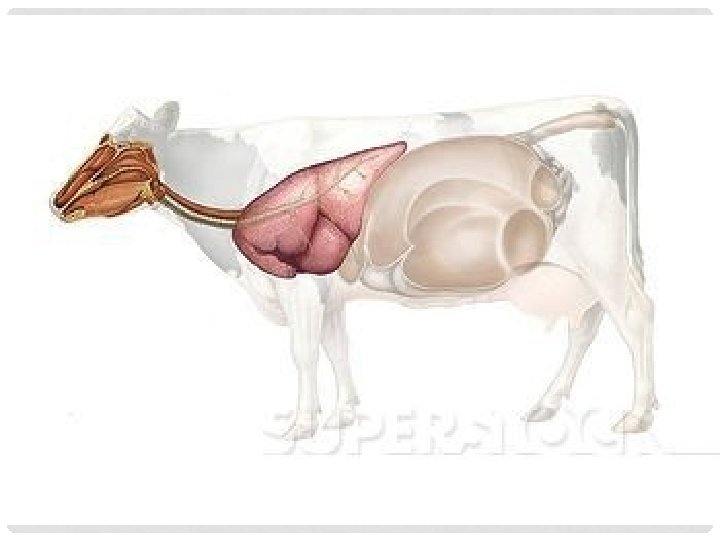
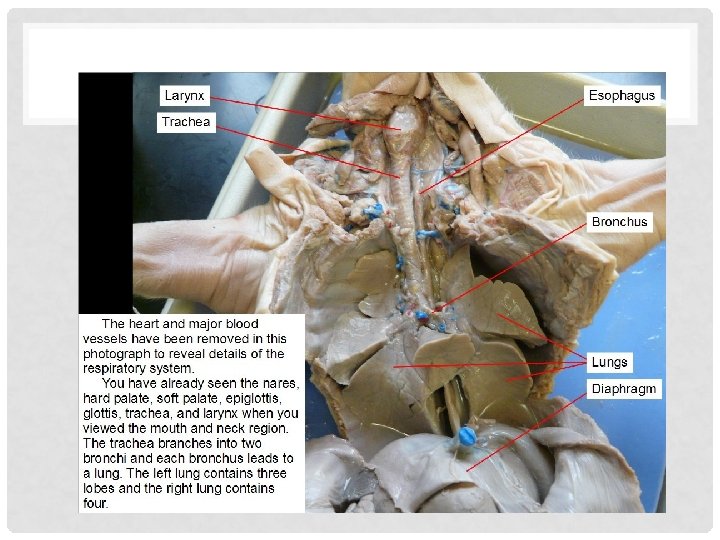
RESPIRATORY SYSTEM A. Major Organs Include 1. Nostrils- draw in air. 2. Nasal cavity- air is warmed and moistened while dust particles are filtered out. Also responsible for smell. 3. Pharynx- site where air and food passages are joined and split into respective parts. 4. Larynx- cartilage structures that contain vocal cords.
RESPIRATORY SYSTEM ANATOMY, CONTINUED 5. Trachea- tube that connects larynx to bronchi. 6. Bronchi- two branch shaped structures that connect trachea to each lung. 7. Bronchioles- smaller branches inside lungs. 8. Alveoli-thin microscopic sacs located at the terminal end to respiratory system. Location of actual carbon dioxide and oxygen exchange. 9. Lungs- large lobed organs that contain parts essential for oxygen exchange. Spongy, pinkish colored organ located between the front legs of the animal and extends to the abdominal area. 10. Diaphragm- large muscle separating the chest from the abdomen and aids in the respiration process.

CIRCULATORY SYSTEM • Functions – • Supply body tissues with nourishment • collect waste materials from body tissues. • Transports hormones and cells of the immune system
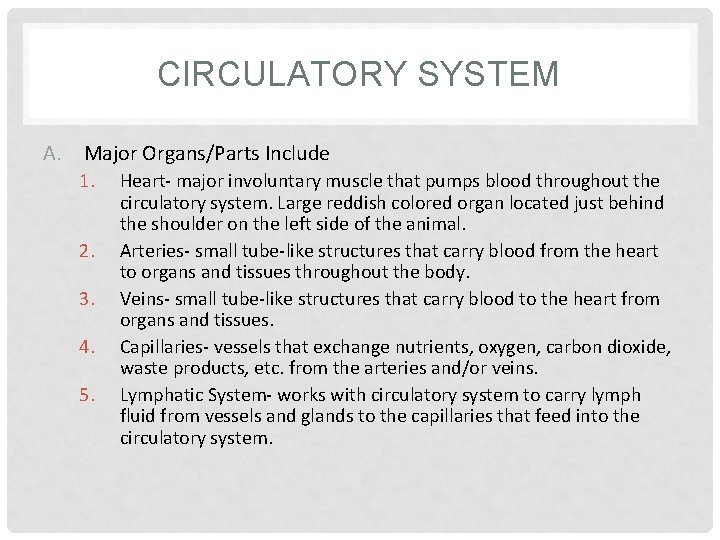
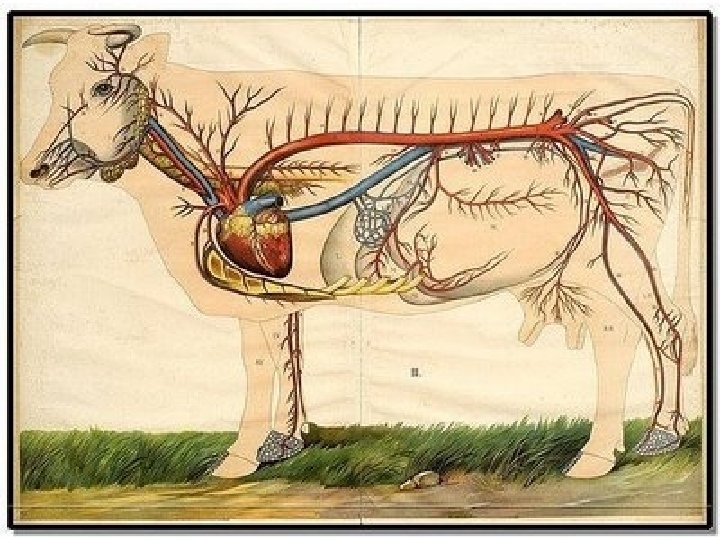
CIRCULATORY SYSTEM A. Major Organs/Parts Include 1. 2. 3. 4. 5. Heart- major involuntary muscle that pumps blood throughout the circulatory system. Large reddish colored organ located just behind the shoulder on the left side of the animal. Arteries- small tube-like structures that carry blood from the heart to organs and tissues throughout the body. Veins- small tube-like structures that carry blood to the heart from organs and tissues. Capillaries- vessels that exchange nutrients, oxygen, carbon dioxide, waste products, etc. from the arteries and/or veins. Lymphatic System- works with circulatory system to carry lymph fluid from vessels and glands to the capillaries that feed into the circulatory system.

NERVOUS SYSTEM • Functions – • Coordinate the physical movement of the body • Respond to hearing, sight, smell, taste, and touch, • React to internal and external stimuli.
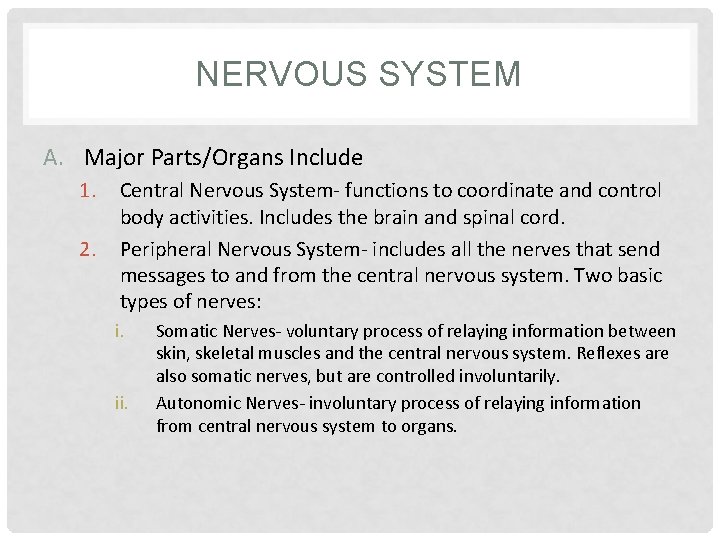
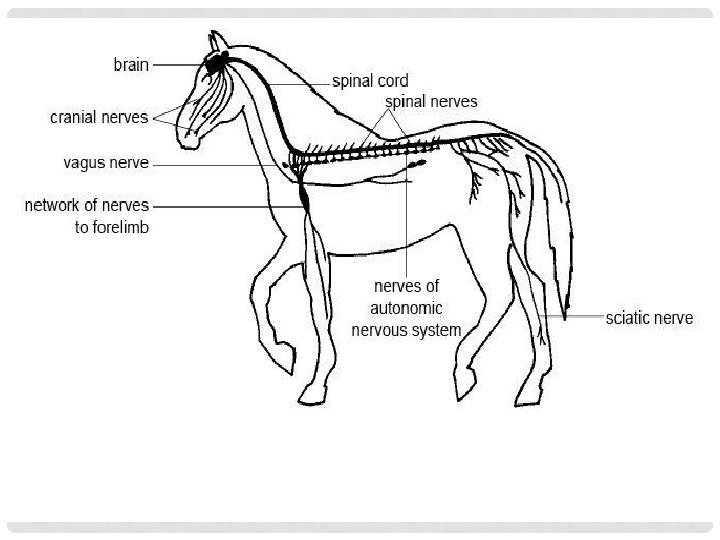
NERVOUS SYSTEM A. Major Parts/Organs Include 1. 2. Central Nervous System- functions to coordinate and control body activities. Includes the brain and spinal cord. Peripheral Nervous System- includes all the nerves that send messages to and from the central nervous system. Two basic types of nerves: i. ii. Somatic Nerves- voluntary process of relaying information between skin, skeletal muscles and the central nervous system. Reflexes are also somatic nerves, but are controlled involuntarily. Autonomic Nerves- involuntary process of relaying information from central nervous system to organs.
ENDOCRINE SYSTEM ANATOMY A. Function. A. B. C. works with the nervous system to control internal body functions. Affects and controls growth, reproductive functions (heat, lactation, birth, etc. ), shape of the animal’s body, feed efficiency and adaptation to environment. Hormones are primary substance involved in function of endocrine system.
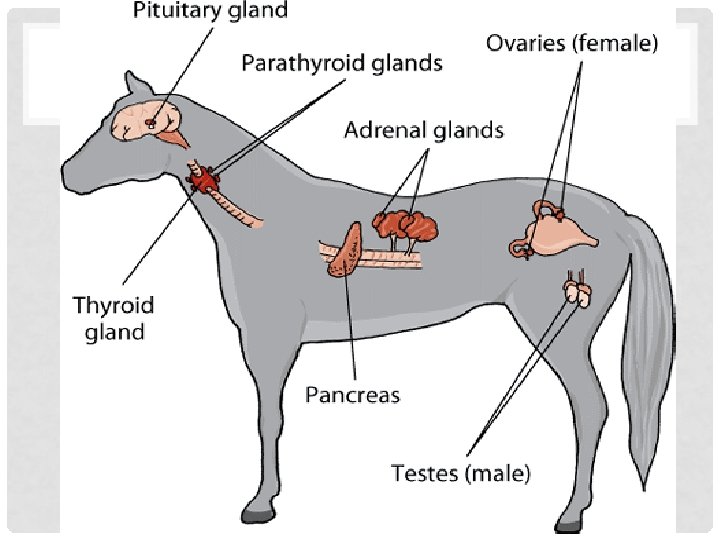
ENDOCRINE SYSTEM ANATOMY, CONTINUED B. Major Organs/Parts Include 1. Pituitary Gland- major gland of the endocrine system. Secretes hormones that regulate the other hormones involved in the endocrine system. 2. Ovaries- secrete hormones such as estrogen and progesterone that are involved in the estrus cycle, gestation and parturition. 3. Testicles- secrete hormones such as testosterone that are involved in the production of sperm, sex drive and development of male body characteristics.
ENDOCRINE SYSTEM ANATOMY, CONTINUED 4. 5. 6. Thyroid Gland- secretes the hormone thyroxin that stimulates growth and metabolism. Hypothalamus- secretes hormones involved in the reproductive cycle. Adrenal Glands- secrete hormones such as adrenaline that respond to stress.
URINARY SYSTEM ANATOMY A. Functions- filter fluid and remove waste. B. Major Organs/Parts Include 1. 2. 3. 4. Kidneys- blood passes through and waste products and water are removed. Urine is the combination of this liquid and waste products. Ureters- the liquid (urine) from the kidneys travel through tubelike structures called ureters to the bladder. Bladder- stores urine. Urethra- tube-like structure that excretes the urine waste. C. Poultry do not have a bladder or urethra. The ureters are directly connected to the cloaca where solid and liquid wastes are excreted.

DIGESTIVE SYSTEM • Functions – • Breakdown food particles into absorbable nutrients • Absorption of nutrients • Producing and removal of waste • Parts – • Mouth, esophagus, stomach/ruminant, small intestine, large intestine, and other accessory organs
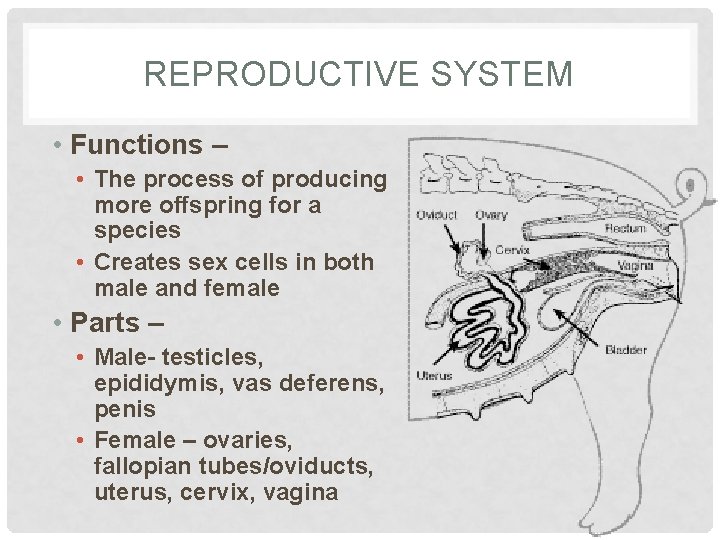
REPRODUCTIVE SYSTEM • Functions – • The process of producing more offspring for a species • Creates sex cells in both male and female • Parts – • Male- testicles, epididymis, vas deferens, penis • Female – ovaries, fallopian tubes/oviducts, uterus, cervix, vagina
ANATOMY AND PHYSIOLOGY OF ANIMALS OBJECTIVE 3. 02: SUMMARIZE PHYSIOLOGY OF BODY SYSTEMS
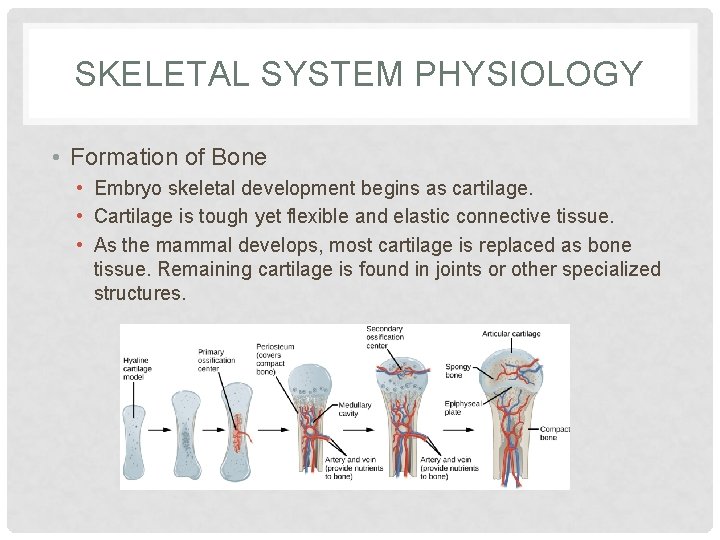
SKELETAL SYSTEM PHYSIOLOGY • Formation of Bone • Embryo skeletal development begins as cartilage. • Cartilage is tough yet flexible and elastic connective tissue. • As the mammal develops, most cartilage is replaced as bone tissue. Remaining cartilage is found in joints or other specialized structures.
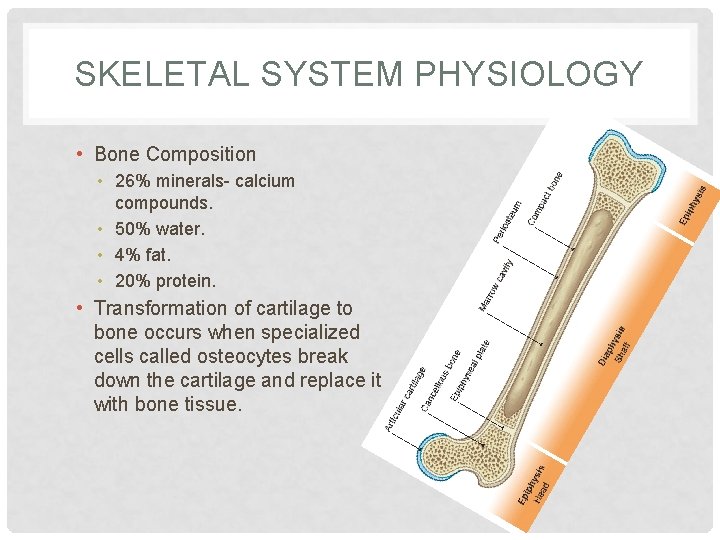
SKELETAL SYSTEM PHYSIOLOGY • Bone Composition • 26% minerals- calcium compounds. • 50% water. • 4% fat. • 20% protein. • Transformation of cartilage to bone occurs when specialized cells called osteocytes break down the cartilage and replace it with bone tissue.
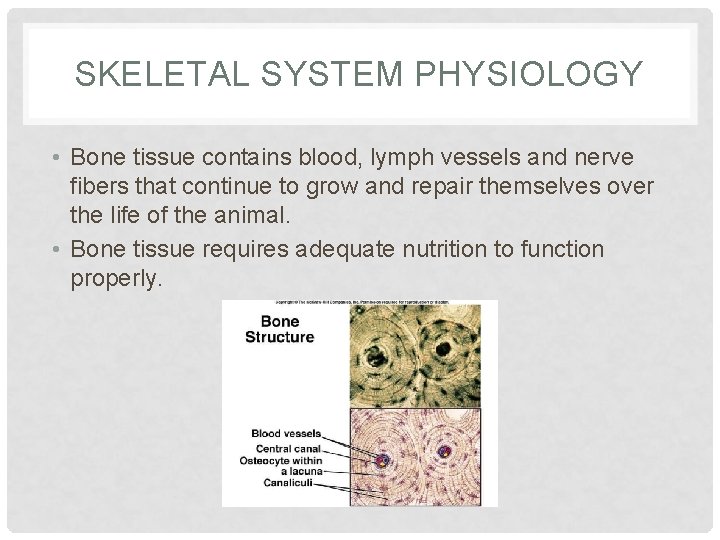
SKELETAL SYSTEM PHYSIOLOGY • Bone tissue contains blood, lymph vessels and nerve fibers that continue to grow and repair themselves over the life of the animal. • Bone tissue requires adequate nutrition to function properly.
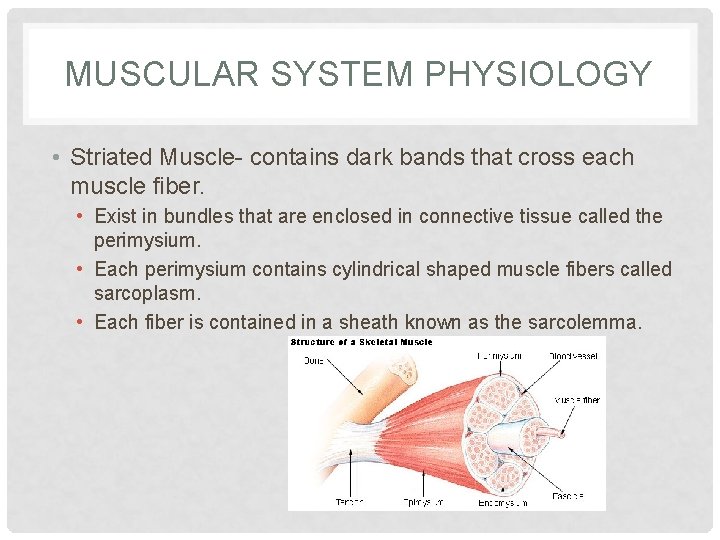
MUSCULAR SYSTEM PHYSIOLOGY • Striated Muscle- contains dark bands that cross each muscle fiber. • Exist in bundles that are enclosed in connective tissue called the perimysium. • Each perimysium contains cylindrical shaped muscle fibers called sarcoplasm. • Each fiber is contained in a sheath known as the sarcolemma.
MUSCULAR SYSTEM PHYSIOLOGY • Striated (continued) • Muscle is covered by a sheath of connective tissue called the epimysium. • Myofibrils are the components of the muscle fiber. • Myofilaments are found in the myofibril. • Nerve endings are located on every muscle fibril. • Muscle contracts when stimulated by an impulse from the nerve. • Energy for muscle contraction comes from ATP (adenosine triphosphate). • The muscle contraction process generates heat for the body.
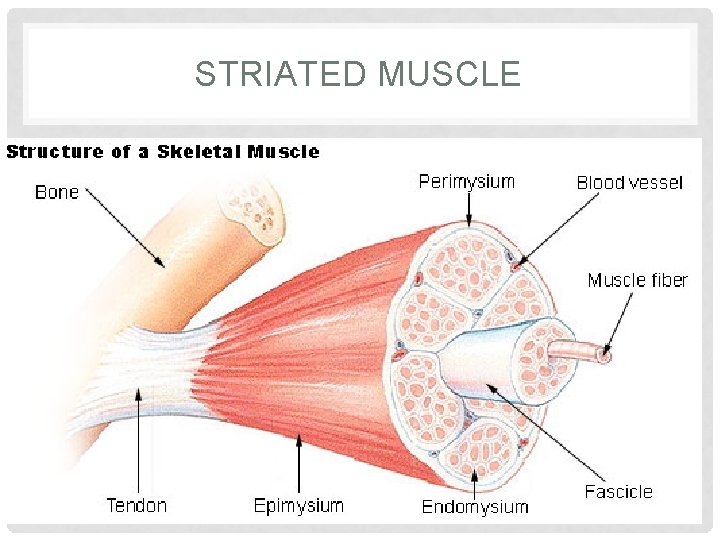
STRIATED MUSCLE
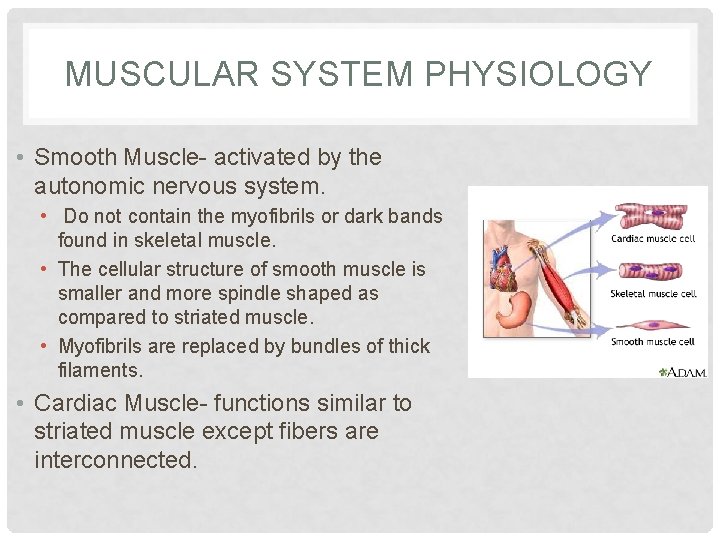
MUSCULAR SYSTEM PHYSIOLOGY • Smooth Muscle- activated by the autonomic nervous system. • Do not contain the myofibrils or dark bands found in skeletal muscle. • The cellular structure of smooth muscle is smaller and more spindle shaped as compared to striated muscle. • Myofibrils are replaced by bundles of thick filaments. • Cardiac Muscle- functions similar to striated muscle except fibers are interconnected.
RESPIRATORY PHYSIOLOGY • Animal breathes by using diaphragm and rib muscles to enlarge the chest cavity. • Air enters the body through the mouth and nasal cavity. • Passes through pharynx and larynx. • Larynx contains vocal cords. • As air passes over the vocal cords, sound is produced by the animal.

RESPIRATORY PHYSIOLOGY • The heart pumps the oxygen rich red blood cells to other tissues throughout the body. • The bloodstream then picks up carbon dioxide from tissues, carries it to the alveoli where the gas is again exchanged and excreted through the trachea into the atmosphere.
RESPIRATORY PHYSIOLOGY • Air continues down through trachea, bronchi, and bronchioles to clusters of air sacs called alveoli in the lungs. • Alveoli are surrounded by minute blood vessels called capillaries. • The capillaries pick up oxygen through the thin walls of the alveoli. • The oxygen goes into the bloodstream and locks onto red blood cells in the bloodstream.
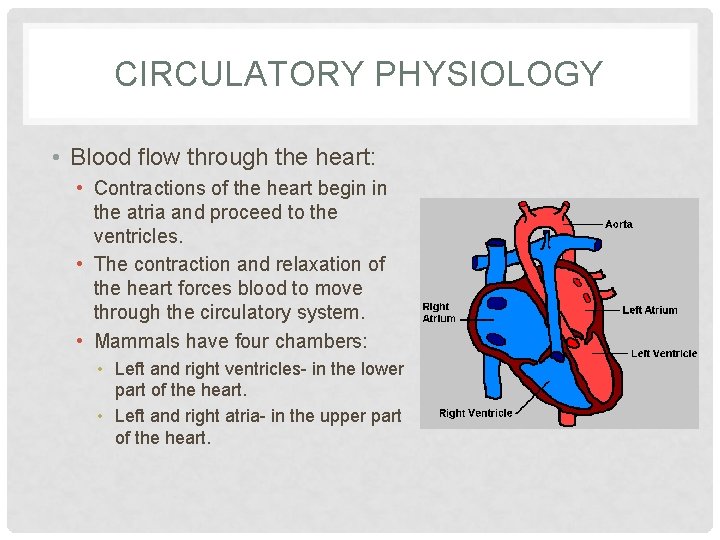
CIRCULATORY PHYSIOLOGY • Blood flow through the heart: • Contractions of the heart begin in the atria and proceed to the ventricles. • The contraction and relaxation of the heart forces blood to move through the circulatory system. • Mammals have four chambers: • Left and right ventricles- in the lower part of the heart. • Left and right atria- in the upper part of the heart.
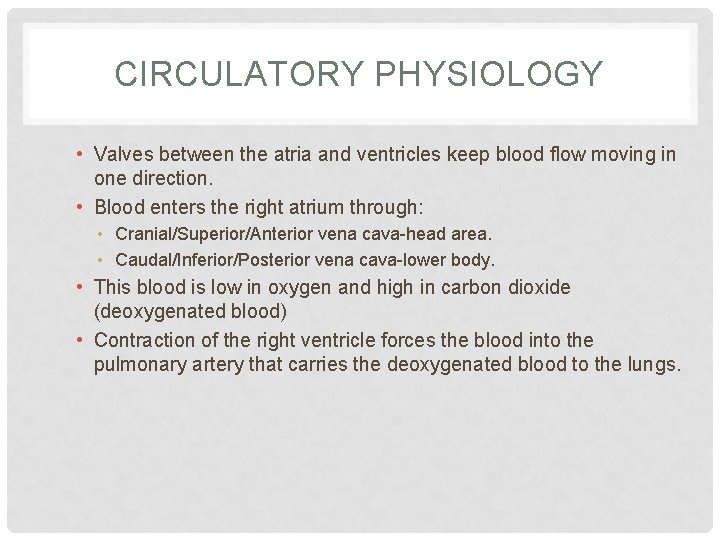
CIRCULATORY PHYSIOLOGY • Valves between the atria and ventricles keep blood flow moving in one direction. • Blood enters the right atrium through: • Cranial/Superior/Anterior vena cava-head area. • Caudal/Inferior/Posterior vena cava-lower body. • This blood is low in oxygen and high in carbon dioxide (deoxygenated blood) • Contraction of the right ventricle forces the blood into the pulmonary artery that carries the deoxygenated blood to the lungs.
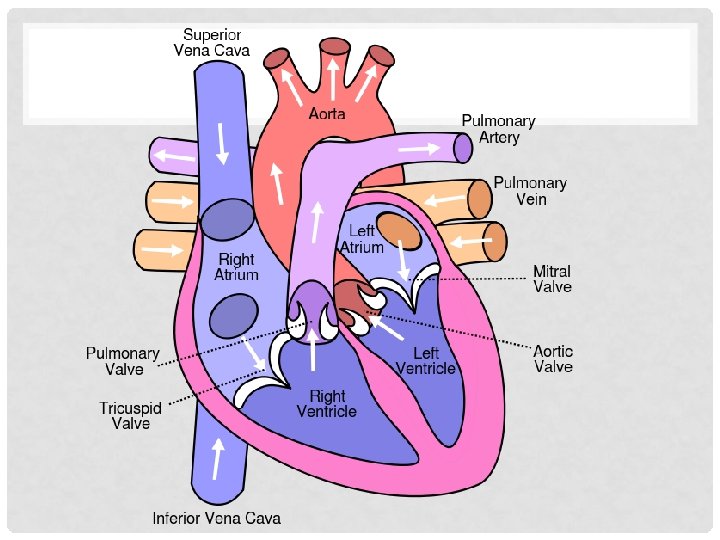
CIRCULATORY PHYSIOLOGY • Gas exchange takes place in the lungs and then the blood is sent back to the heart through the pulmonary veins. • Pulmonary veins enter the left atrium of the heart. • Then the left atrium contracts and forces blood into the left ventricle. • Then goes to the aorta that carries oxygenated blood to the body. • http: //www. sumanasinc. com/webcontent/animations/content/hum an_heart. html
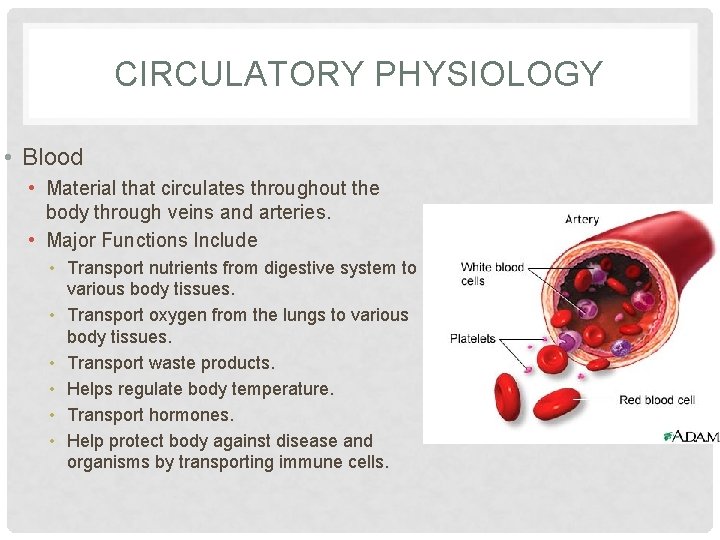
CIRCULATORY PHYSIOLOGY • Blood • Material that circulates throughout the body through veins and arteries. • Major Functions Include • Transport nutrients from digestive system to various body tissues. • Transport oxygen from the lungs to various body tissues. • Transport waste products. • Helps regulate body temperature. • Transport hormones. • Help protect body against disease and organisms by transporting immune cells.
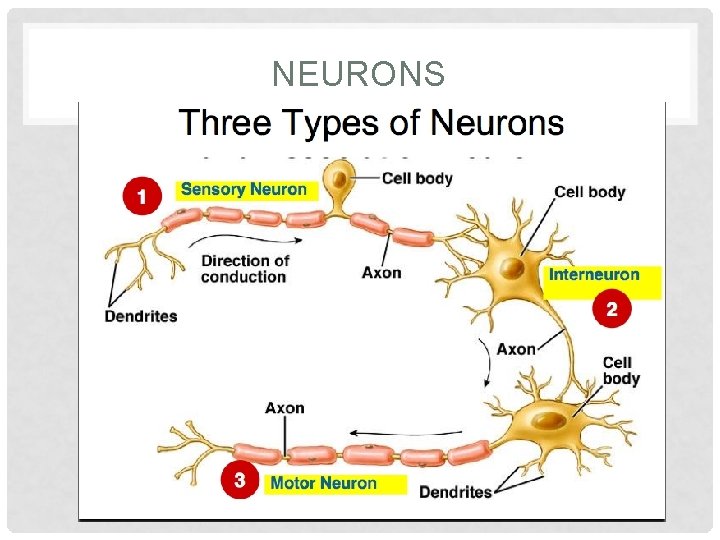
NERVOUS SYSTEM PHYSIOLOGY • Neurons are cells that conduct impulses in the nervous system. • Neurons control different parts of the reaction to stimuli based on their type and function: • Sensory Neurons- carry impulses from internal and external stimuli to the brain and spinal cord. • Interneurons- processes the impulses received from sensory neurons inside of the brain and spinal cord. • Motor Neurons- carry the impulses away from the brain and spinal cord.
NEURONS
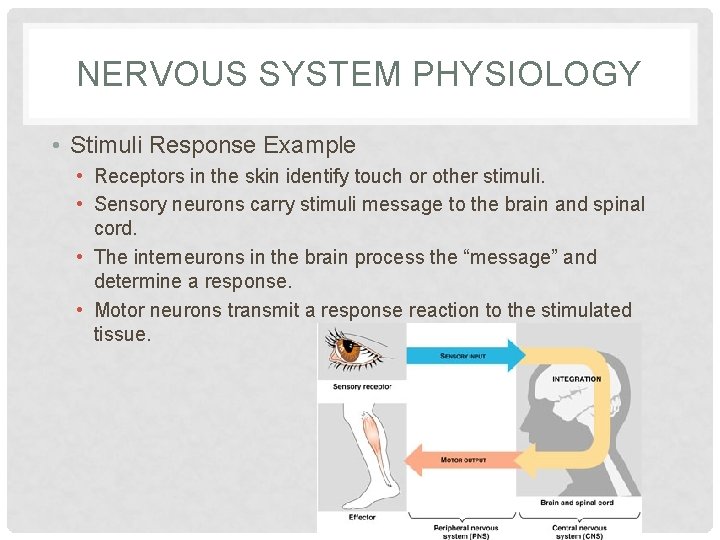
NERVOUS SYSTEM PHYSIOLOGY • Stimuli Response Example • Receptors in the skin identify touch or other stimuli. • Sensory neurons carry stimuli message to the brain and spinal cord. • The interneurons in the brain process the “message” and determine a response. • Motor neurons transmit a response reaction to the stimulated tissue.
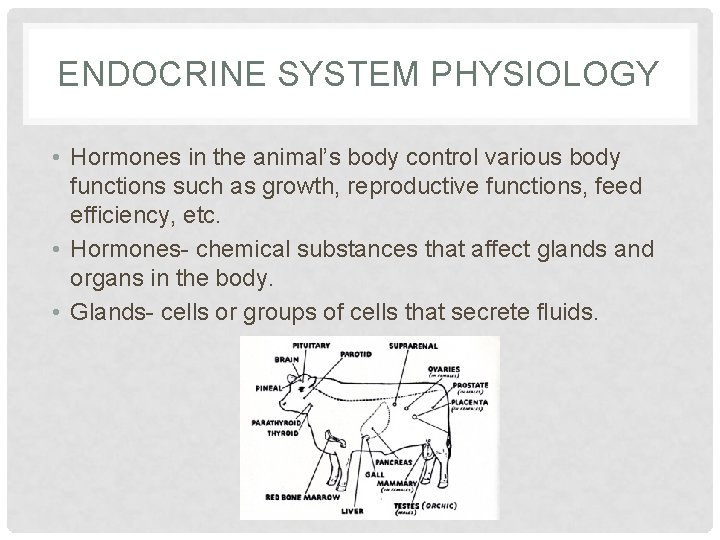
ENDOCRINE SYSTEM PHYSIOLOGY • Hormones in the animal’s body control various body functions such as growth, reproductive functions, feed efficiency, etc. • Hormones- chemical substances that affect glands and organs in the body. • Glands- cells or groups of cells that secrete fluids.
ENDOCRINE SYSTEM PHYSIOLOGY • Hormones are passed into the bloodstream as the blood passes through various glands in the animal’s body. • The hormones then travel to the “target” organ in the body which stimulates a response. • Example: estrogen stimulates heat behavior “response. ”
URINARY SYSTEM PHYSIOLOGY • Blood in the animal’s body passes through the kidneys. Waste products are removed and water is collected to form liquid waste (urine). • The urine containing the waste products travels through the ureters to the bladder. • Urine is stored in the bladder until it is full. • The urethra then excretes the urine.
- Slides: 56