
Anatomy and Physiology I Muscles that Move the
- Slides: 32
Anatomy and Physiology I Muscles that Move the Vertebral Skeleton Muscles that Aid in Breathing Muscles of the Abdominal Wall Muscles that Move the Scapula Instructor: Mary Holman
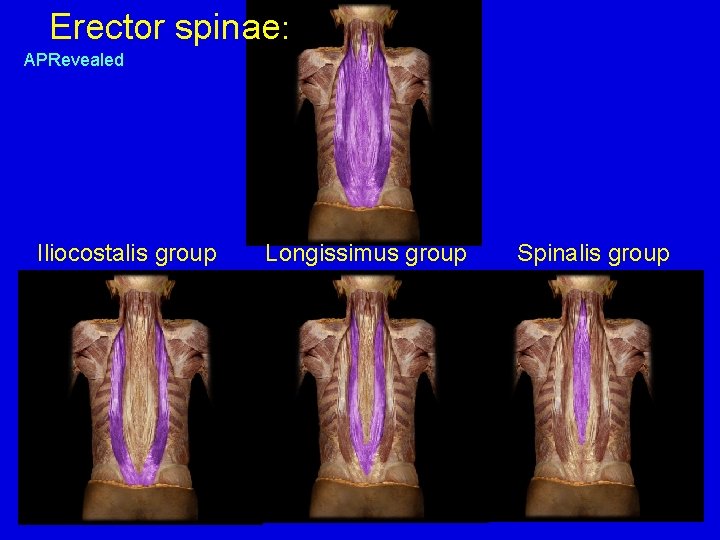
Muscles that move the Vertebral Column Erector spinae: Iliocostalis group - lateral Longissimus group - intermediate Spinalis group - medial
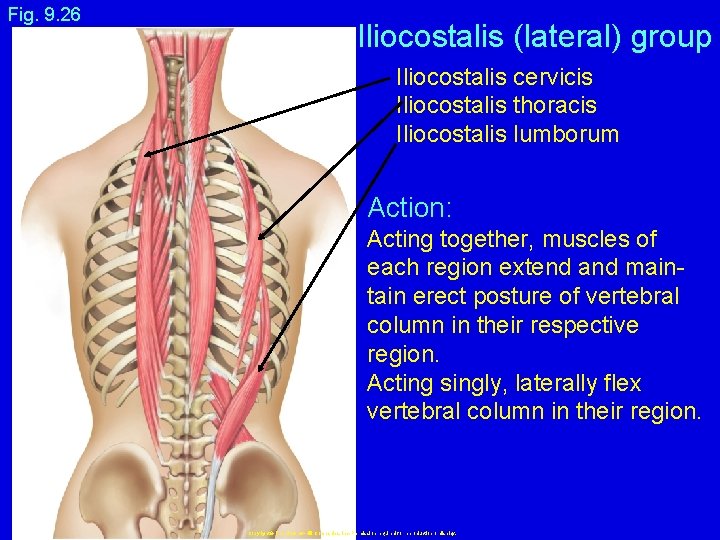
Fig. 9. 26 Iliocostalis (lateral) group Iliocostalis cervicis Iliocostalis thoracis Iliocostalis lumborum Action: Acting together, muscles of each region extend and maintain erect posture of vertebral column in their respective region. Acting singly, laterally flex vertebral column in their region. Copyright © The Mc. Graw-Hill Companies, Inc. Permission required for reproduction or display.
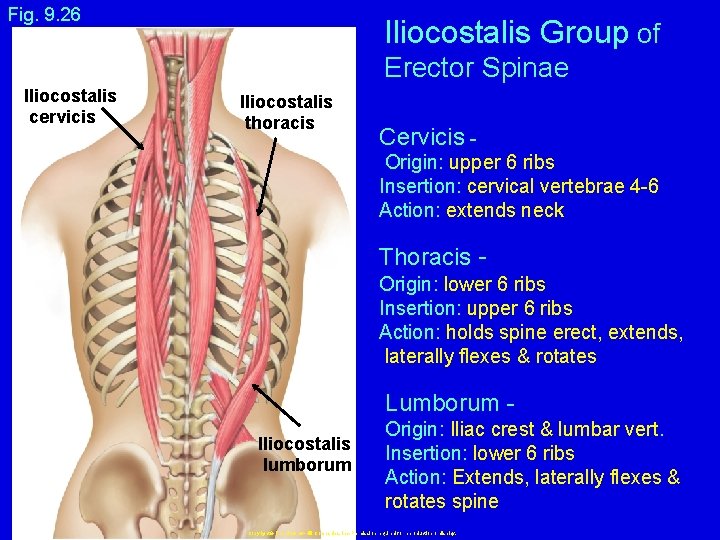
Fig. 9. 26 Iliocostalis Group of Erector Spinae Iliocostalis cervicis Iliocostalis thoracis Cervicis Origin: upper 6 ribs Insertion: cervical vertebrae 4 -6 Action: extends neck Thoracis Origin: lower 6 ribs Insertion: upper 6 ribs Action: holds spine erect, extends, laterally flexes & rotates Lumborum Iliocostalis lumborum Origin: Iliac crest & lumbar vert. Insertion: lower 6 ribs Action: Extends, laterally flexes & rotates spine Copyright © The Mc. Graw-Hill Companies, Inc. Permission required for reproduction or display.
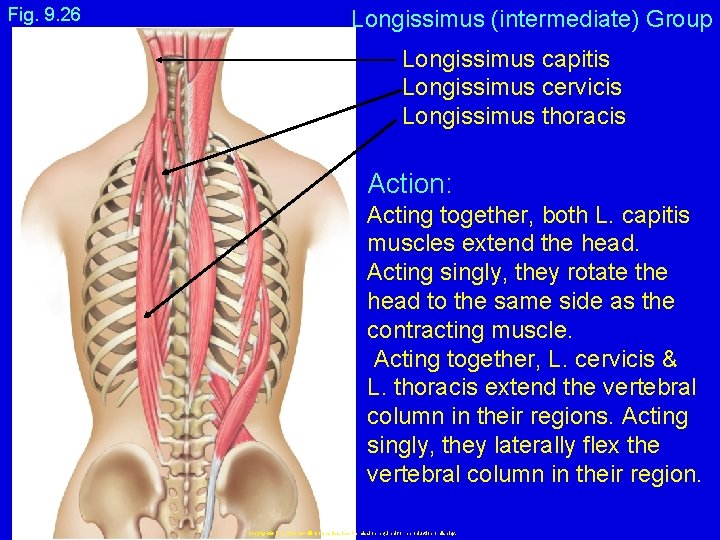
Fig. 9. 26 Longissimus (intermediate) Group Longissimus capitis Longissimus cervicis Longissimus thoracis Action: Acting together, both L. capitis muscles extend the head. Acting singly, they rotate the head to the same side as the contracting muscle. Acting together, L. cervicis & L. thoracis extend the vertebral column in their regions. Acting singly, they laterally flex the vertebral column in their region. Copyright © The Mc. Graw-Hill Companies, Inc. Permission required for reproduction or display.
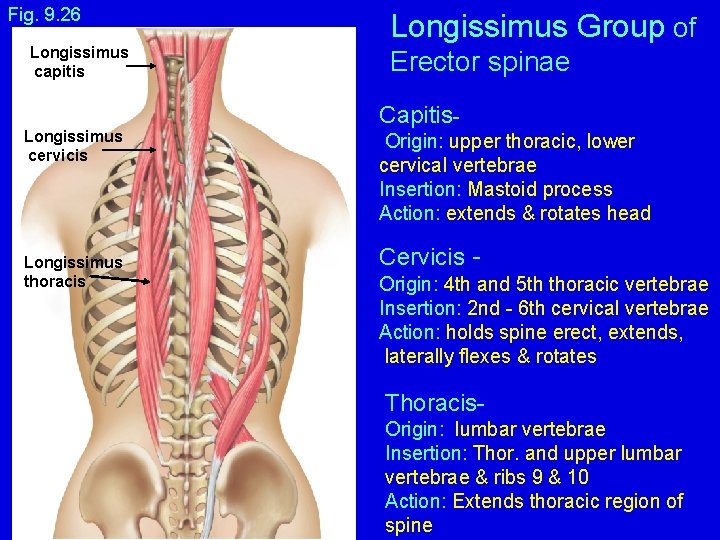
Fig. 9. 26 Longissimus capitis Longissimus cervicis Longissimus thoracis Longissimus Group of Erector spinae Capitis. Origin: upper thoracic, lower cervical vertebrae Insertion: Mastoid process Action: extends & rotates head Cervicis Origin: 4 th and 5 th thoracic vertebrae Insertion: 2 nd - 6 th cervical vertebrae Action: holds spine erect, extends, laterally flexes & rotates Thoracis. Origin: lumbar vertebrae Insertion: Thor. and upper lumbar vertebrae & ribs 9 & 10 Action: Extends thoracic region of spine
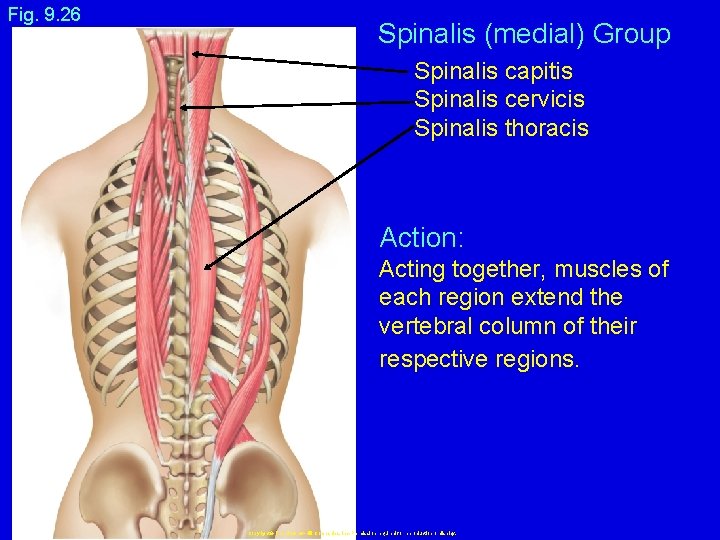
Fig. 9. 26 Spinalis (medial) Group Spinalis capitis Spinalis cervicis Spinalis thoracis Action: Acting together, muscles of each region extend the vertebral column of their respective regions. Copyright © The Mc. Graw-Hill Companies, Inc. Permission required for reproduction or display.
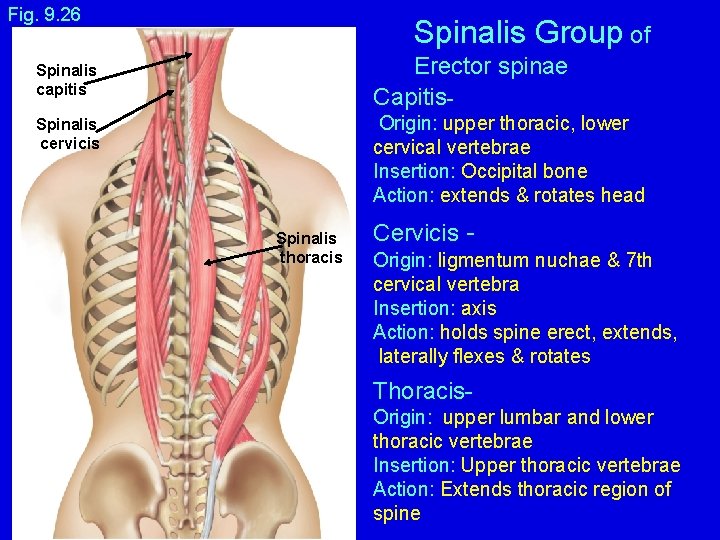
Fig. 9. 26 Spinalis Group of Erector spinae Capitis- Spinalis capitis Origin: upper thoracic, lower cervical vertebrae Insertion: Occipital bone Action: extends & rotates head Spinalis cervicis Spinalis thoracis Cervicis Origin: ligmentum nuchae & 7 th cervical vertebra Insertion: axis Action: holds spine erect, extends, laterally flexes & rotates Thoracis. Origin: upper lumbar and lower thoracic vertebrae Insertion: Upper thoracic vertebrae Action: Extends thoracic region of spine
Erector spinae: APRevealed Iliocostalis group Longissimus group Spinalis group
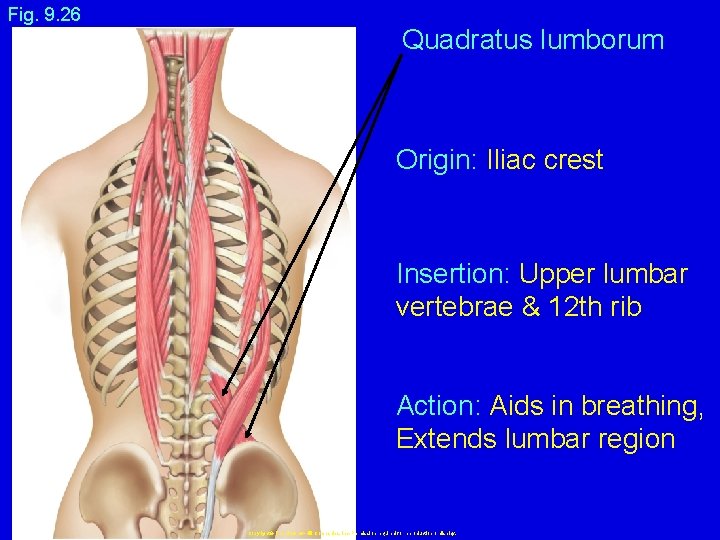
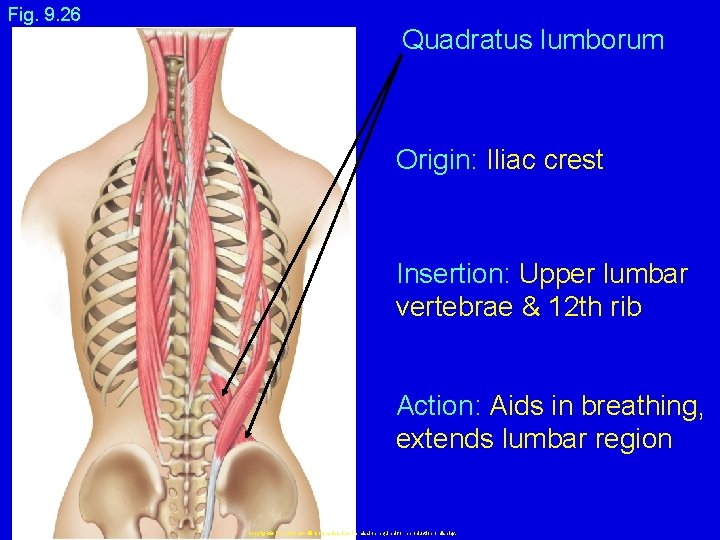
Fig. 9. 26 Quadratus lumborum Origin: Iliac crest Insertion: Upper lumbar vertebrae & 12 th rib Action: Aids in breathing, Extends lumbar region Copyright © The Mc. Graw-Hill Companies, Inc. Permission required for reproduction or display.
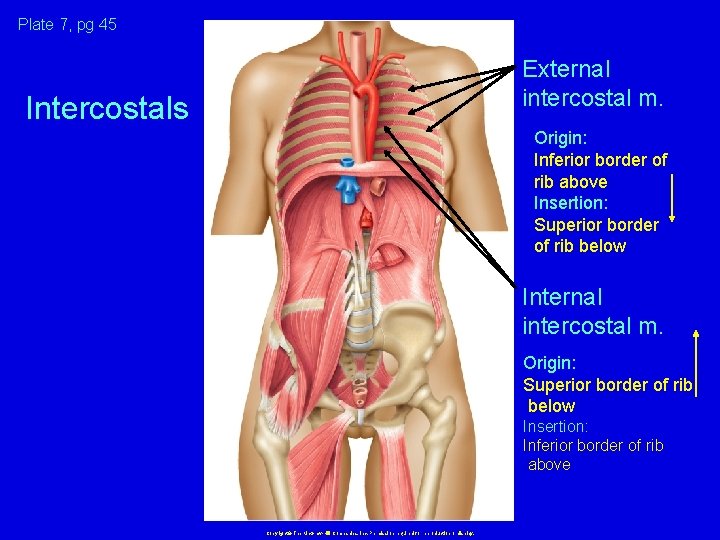
Muscles Used in Breathing • Diaphragm • External Intercostals • Internal Intercostals • Quadratus lumborum
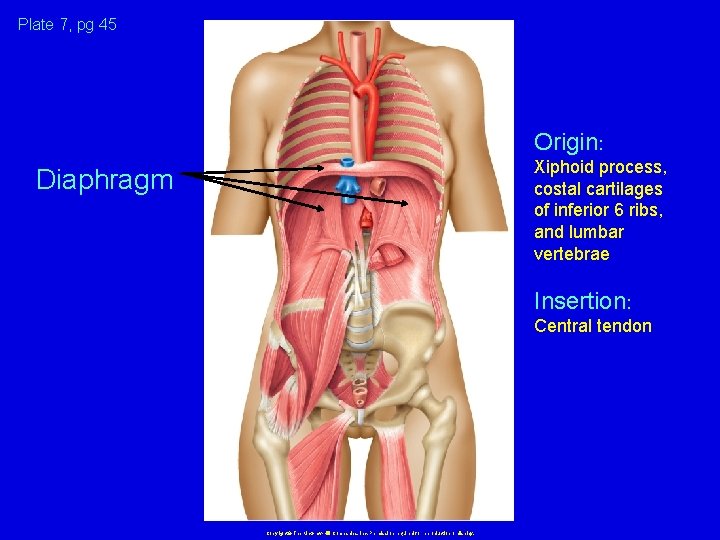
Plate 7, pg 45 Origin: Xiphoid process, costal cartilages of inferior 6 ribs, and lumbar vertebrae Diaphragm Insertion: Central tendon Copyright © The Mc. Graw-Hill Companies, Inc. Permission required for reproduction or display.
Plate 7, pg 45 External intercostal m. Intercostals Origin: Inferior border of rib above Insertion: Superior border of rib below Internal intercostal m. Origin: Superior border of rib below Insertion: Inferior border of rib above Copyright © The Mc. Graw-Hill Companies, Inc. Permission required for reproduction or display.
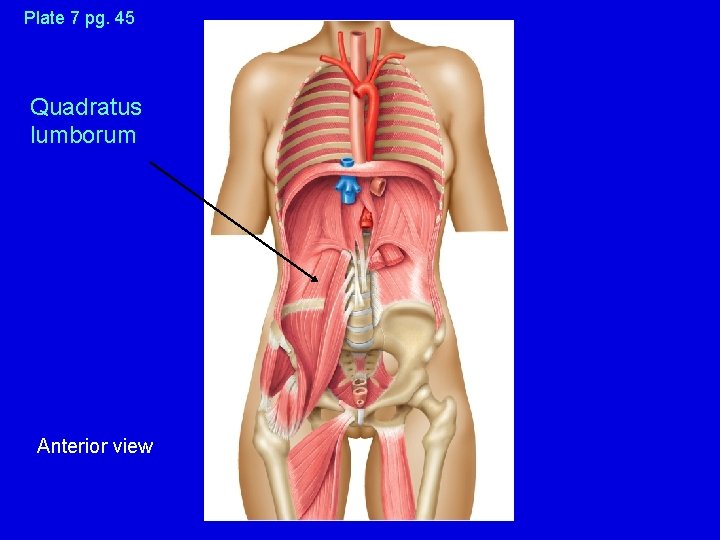
Fig. 9. 26 Quadratus lumborum Origin: Iliac crest Insertion: Upper lumbar vertebrae & 12 th rib Action: Aids in breathing, extends lumbar region Copyright © The Mc. Graw-Hill Companies, Inc. Permission required for reproduction or display.
Plate 7 pg. 45 Quadratus lumborum Anterior view
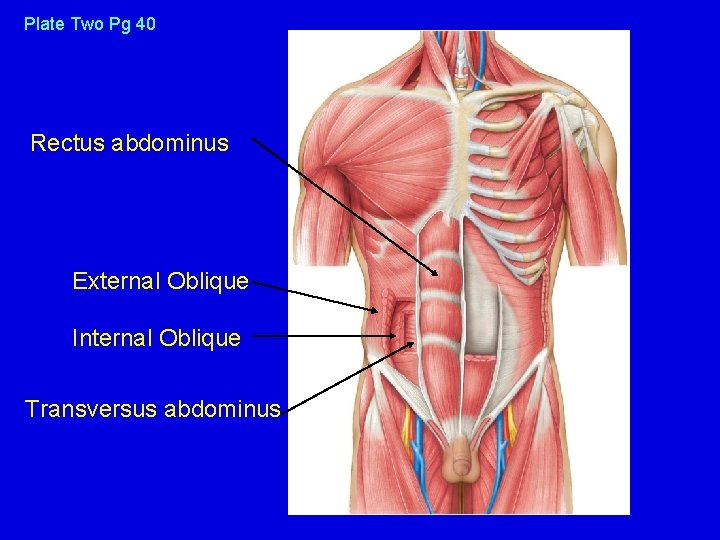
Muscles of the Abdominal Wall Rectus abdominis External oblique Internal oblique Transversus abdominis
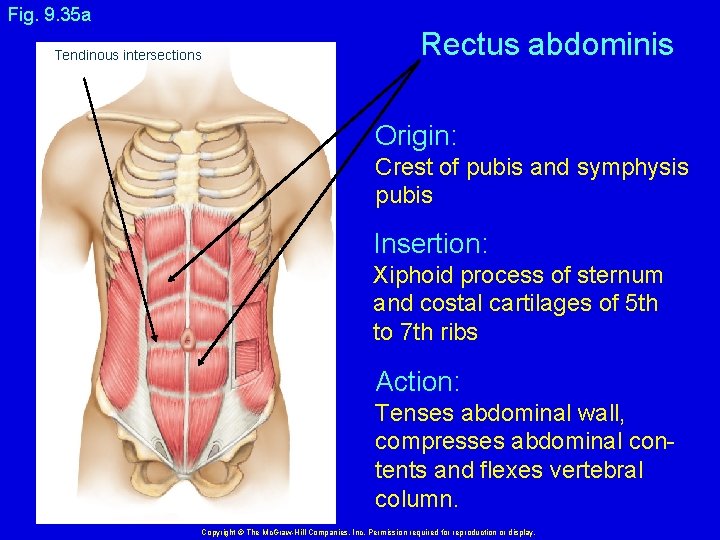
Fig. 9. 35 a Tendinous intersections Rectus abdominis Origin: Crest of pubis and symphysis pubis Insertion: Xiphoid process of sternum and costal cartilages of 5 th to 7 th ribs Action: Tenses abdominal wall, compresses abdominal contents and flexes vertebral column. Copyright © The Mc. Graw-Hill Companies, Inc. Permission required for reproduction or display.
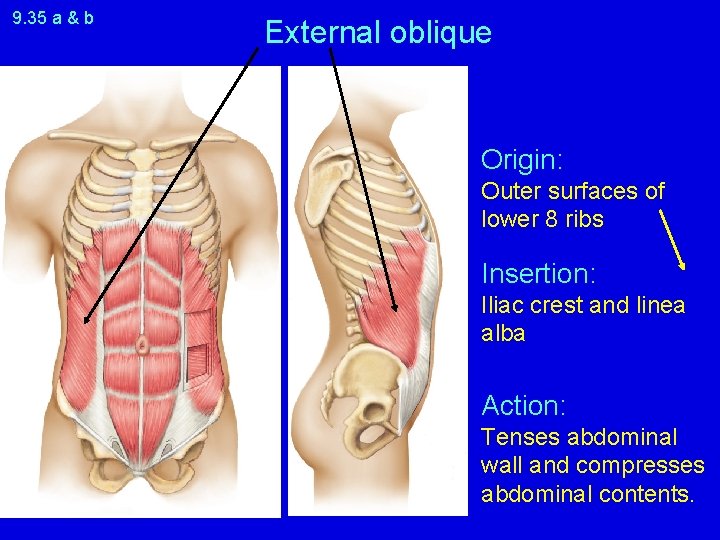
9. 35 a & b External oblique Origin: Outer surfaces of lower 8 ribs Insertion: Iliac crest and linea alba Action: Tenses abdominal wall and compresses abdominal contents.
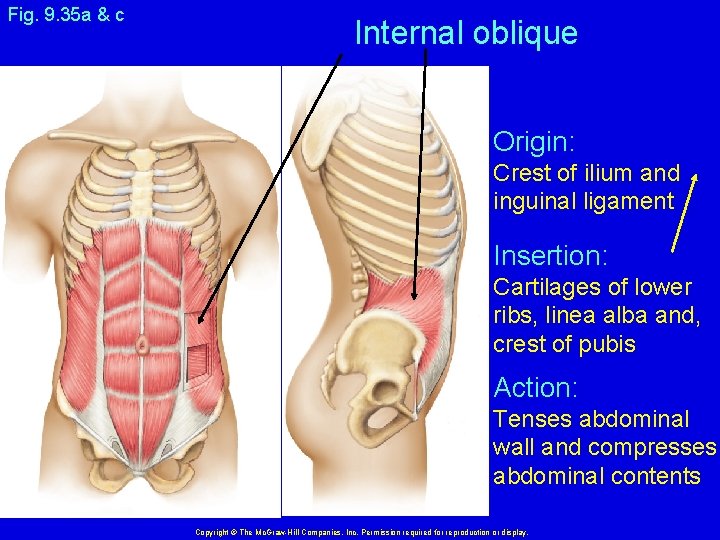
Fig. 9. 35 a & c Internal oblique Origin: Crest of ilium and inguinal ligament Insertion: Cartilages of lower ribs, linea alba and, crest of pubis Action: Tenses abdominal wall and compresses abdominal contents Copyright © The Mc. Graw-Hill Companies, Inc. Permission required for reproduction or display.
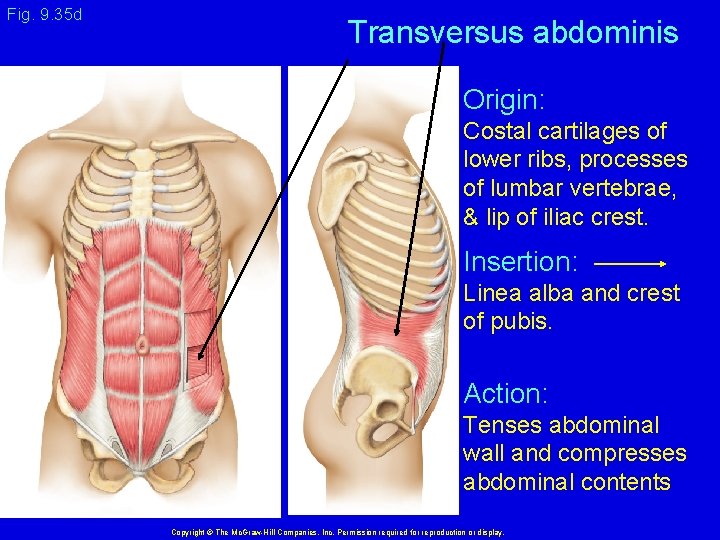
Fig. 9. 35 d Transversus abdominis Origin: Costal cartilages of lower ribs, processes of lumbar vertebrae, & lip of iliac crest. Insertion: Linea alba and crest of pubis. Action: Tenses abdominal wall and compresses abdominal contents Copyright © The Mc. Graw-Hill Companies, Inc. Permission required for reproduction or display.
Plate Two Pg 40 Rectus abdominus External Oblique Internal Oblique Transversus abdominus
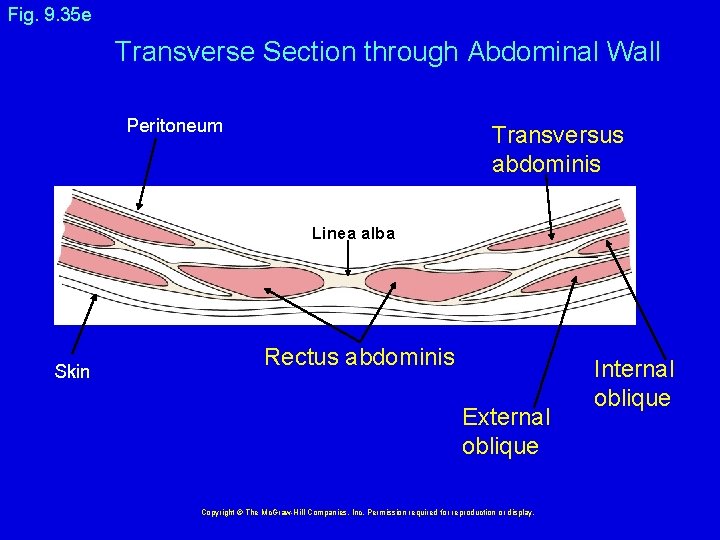
Fig. 9. 35 e Transverse Section through Abdominal Wall Peritoneum Transversus abdominis Linea alba Skin Rectus abdominis External oblique Copyright © The Mc. Graw-Hill Companies, Inc. Permission required for reproduction or display. Internal oblique
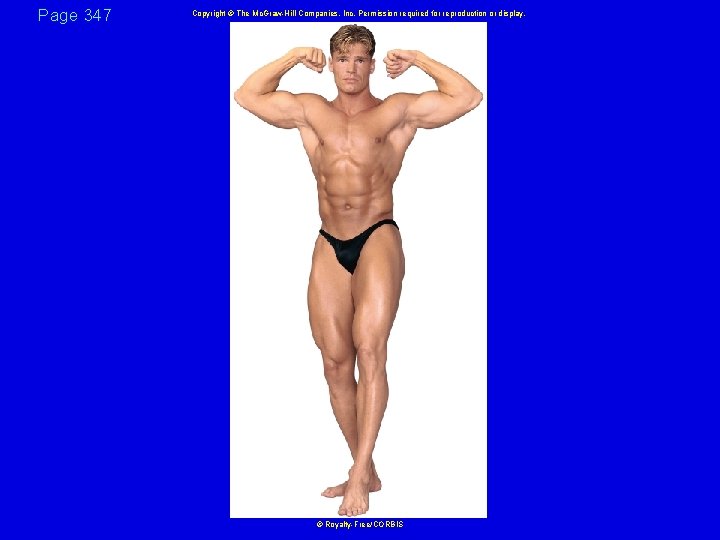
Page 347 Copyright © The Mc. Graw-Hill Companies, Inc. Permission required for reproduction or display. © Royalty-Free/CORBIS
Muscles that Move the Pectoral Girdle
Muscles that Move the Pectoral Girdle Anterior Thoracic Muscles • Pectoralis minor • Serratus anterior Posterior Thoracic Muscles • Trapezius • Levator scapulae • Rhomboideus major • Rhomboideus minor
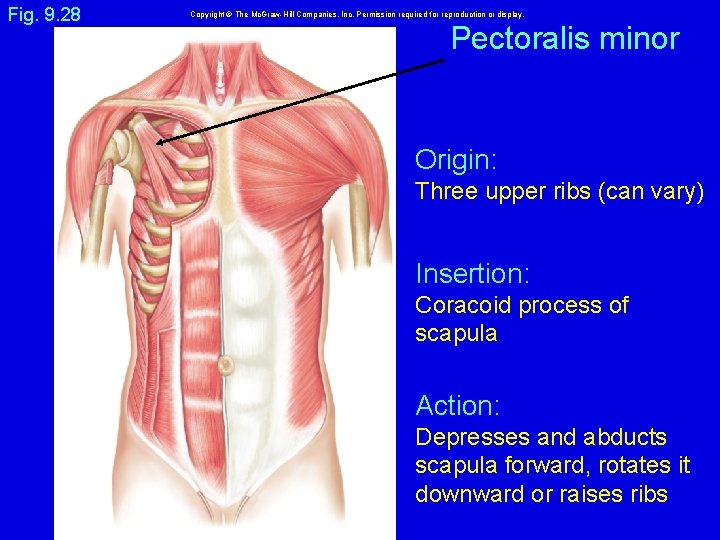
Fig. 9. 28 Copyright © The Mc. Graw-Hill Companies, Inc. Permission required for reproduction or display. Pectoralis minor Origin: Three upper ribs (can vary) Insertion: Coracoid process of scapula Action: Depresses and abducts scapula forward, rotates it downward or raises ribs
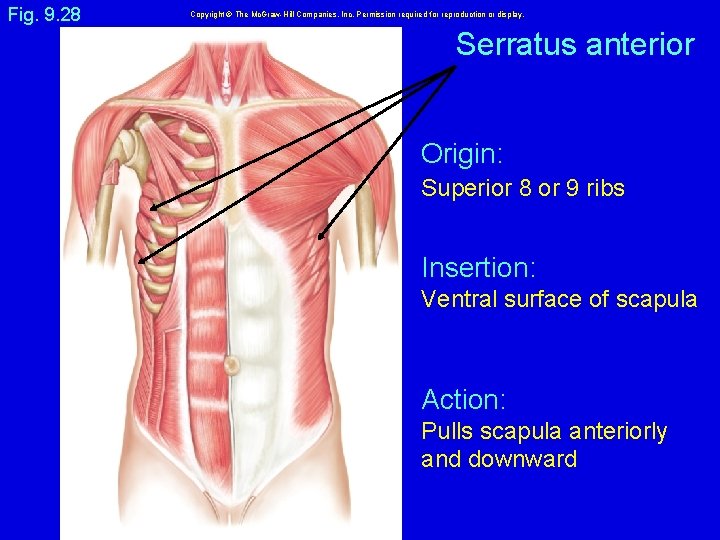
Fig. 9. 28 Copyright © The Mc. Graw-Hill Companies, Inc. Permission required for reproduction or display. Serratus anterior Origin: Superior 8 or 9 ribs Insertion: Ventral surface of scapula Action: Pulls scapula anteriorly and downward
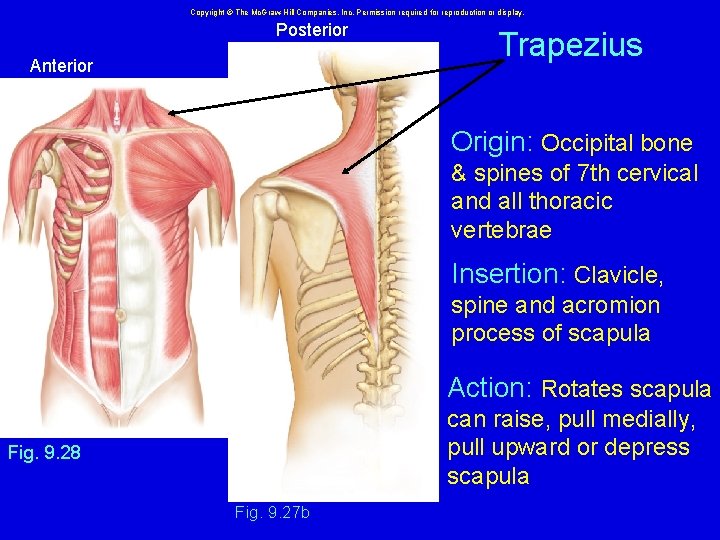
Copyright © The Mc. Graw-Hill Companies, Inc. Permission required for reproduction or display. Posterior Anterior Trapezius Origin: Occipital bone & spines of 7 th cervical and all thoracic vertebrae Insertion: Clavicle, spine and acromion process of scapula Action: Rotates scapula can raise, pull medially, pull upward or depress scapula Fig. 9. 28 Fig. 9. 27 b
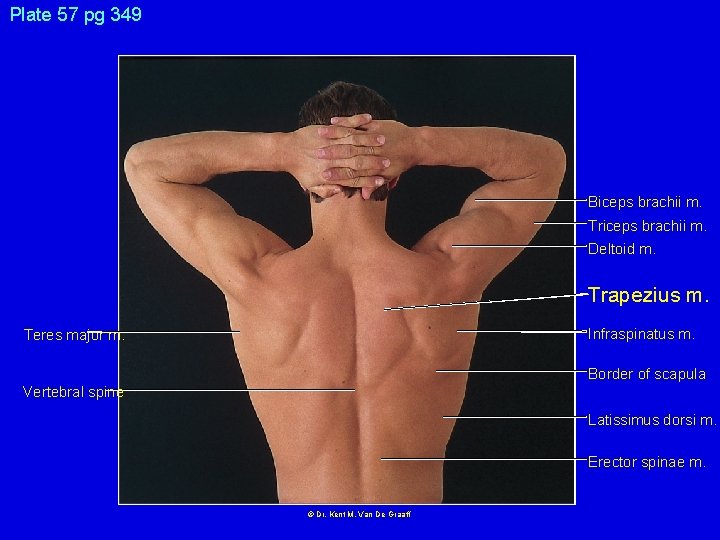
Plate 57 pg 349 Biceps brachii m. Triceps brachii m. Deltoid m. Trapezius m. Infraspinatus m. Teres major m. Border of scapula Vertebral spine Latissimus dorsi m. Erector spinae m. © Dr. Kent M. Van De Graaff
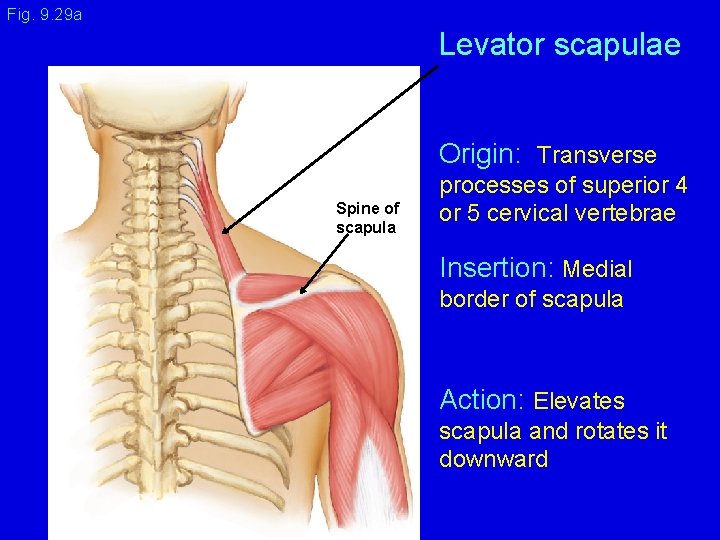
Fig. 9. 29 a Levator scapulae Origin: Transverse Spine of scapula processes of superior 4 or 5 cervical vertebrae Insertion: Medial border of scapula Action: Elevates scapula and rotates it downward
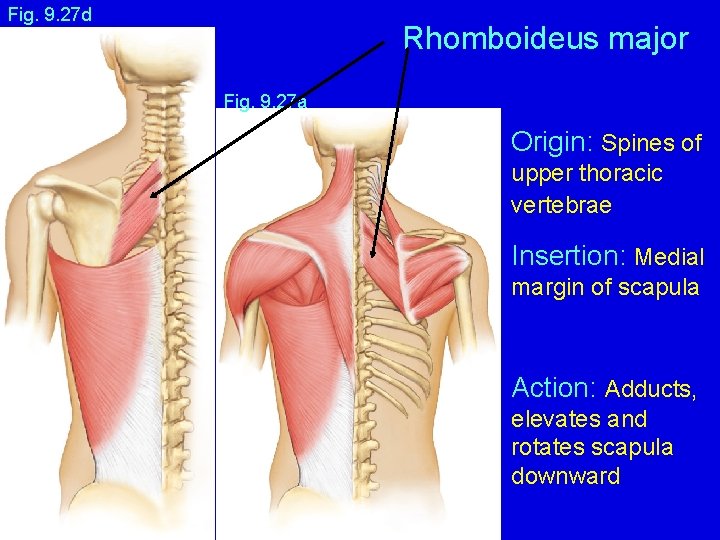
Fig. 9. 27 d Rhomboideus major Fig. 9. 27 a Origin: Spines of upper thoracic vertebrae Insertion: Medial margin of scapula Action: Adducts, elevates and rotates scapula downward
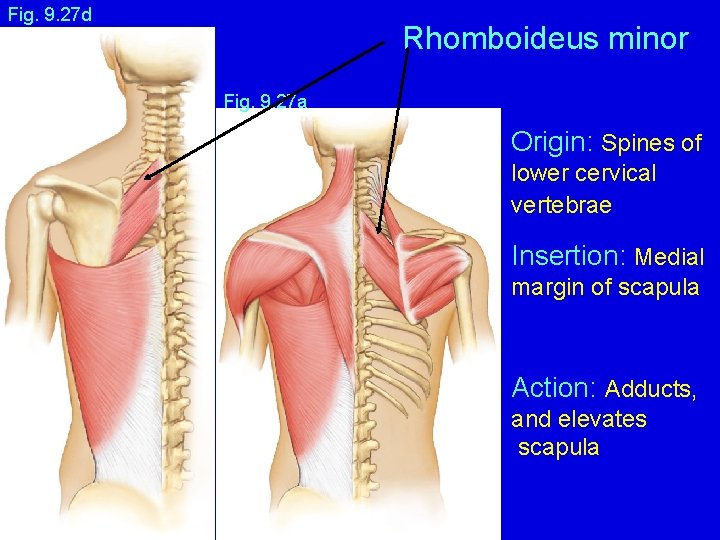
Fig. 9. 27 d Rhomboideus minor Fig. 9. 27 a Origin: Spines of lower cervical vertebrae Insertion: Medial margin of scapula Action: Adducts, and elevates scapula