
Anatomy and Physiology Epithelial cells Cells that make
- Slides: 9
Anatomy and Physiology
Epithelial cells • Cells that make up a sheet that line body surfaces and cavities • 3 types of cells – Squamous – Cuboidal – Columnar
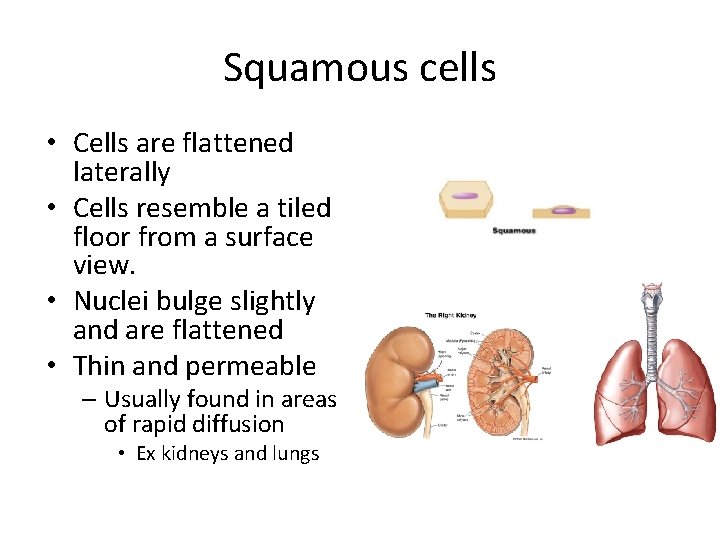
Squamous cells • Cells are flattened laterally • Cells resemble a tiled floor from a surface view. • Nuclei bulge slightly and are flattened • Thin and permeable – Usually found in areas of rapid diffusion • Ex kidneys and lungs
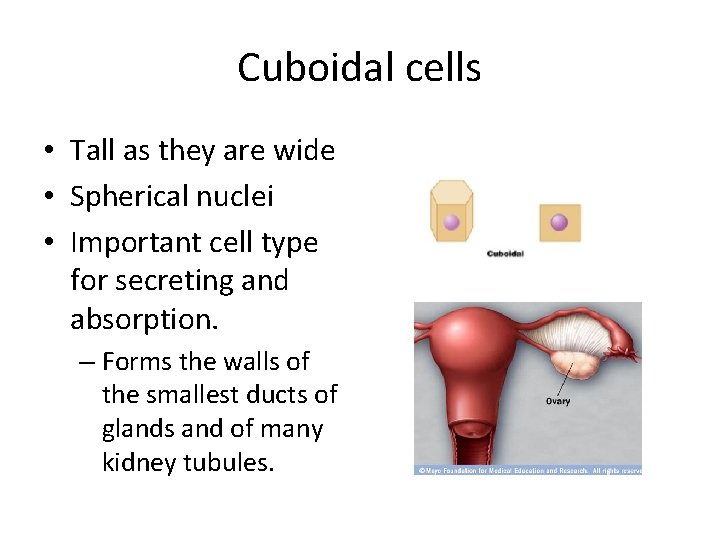
Cuboidal cells • Tall as they are wide • Spherical nuclei • Important cell type for secreting and absorption. – Forms the walls of the smallest ducts of glands and of many kidney tubules.
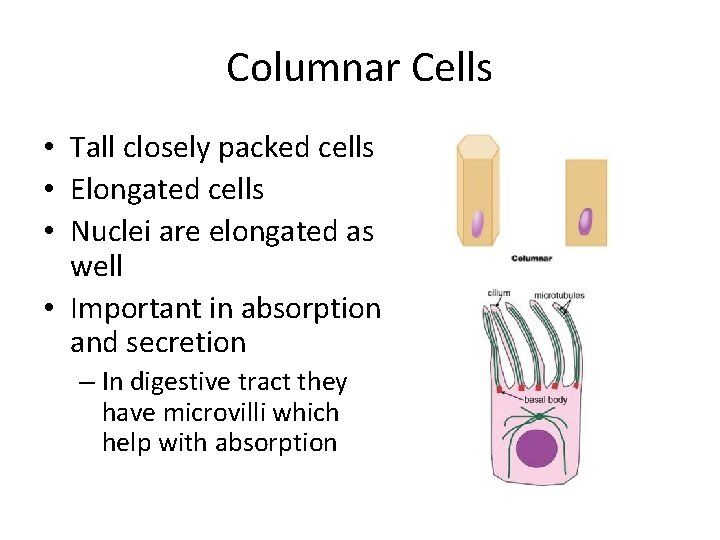
Columnar Cells • Tall closely packed cells • Elongated cells • Nuclei are elongated as well • Important in absorption and secretion – In digestive tract they have microvilli which help with absorption
Simple vs Stratified epithelium • Simple epithelium – This is a single layer of epithelial cells of a specific type • Stratified epithelium – Multiple layers of either the same or multiple cell types
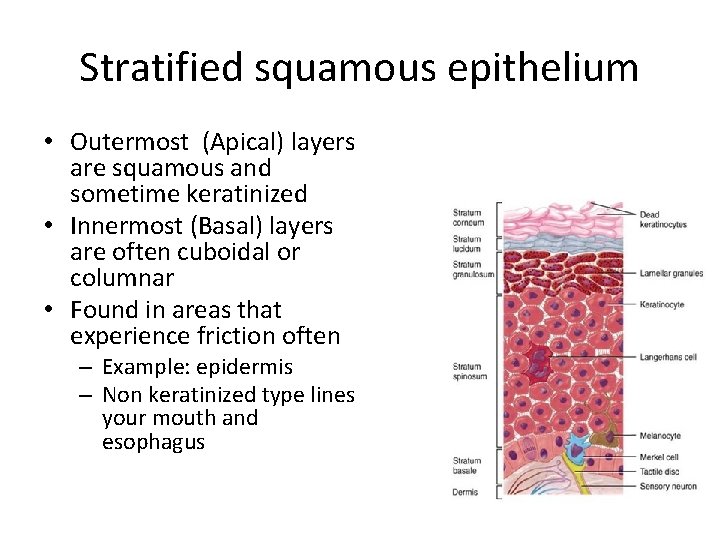
Stratified squamous epithelium • Outermost (Apical) layers are squamous and sometime keratinized • Innermost (Basal) layers are often cuboidal or columnar • Found in areas that experience friction often – Example: epidermis – Non keratinized type lines your mouth and esophagus
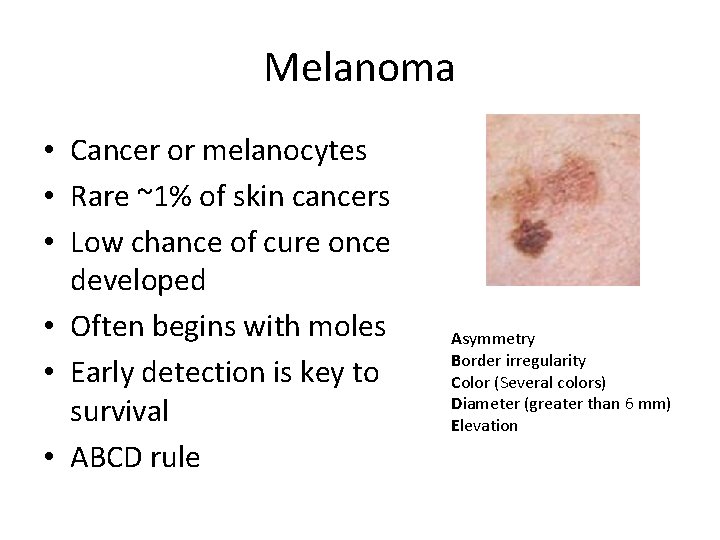
Melanoma • Cancer or melanocytes • Rare ~1% of skin cancers • Low chance of cure once developed • Often begins with moles • Early detection is key to survival • ABCD rule Asymmetry Border irregularity Color (Several colors) Diameter (greater than 6 mm) Elevation
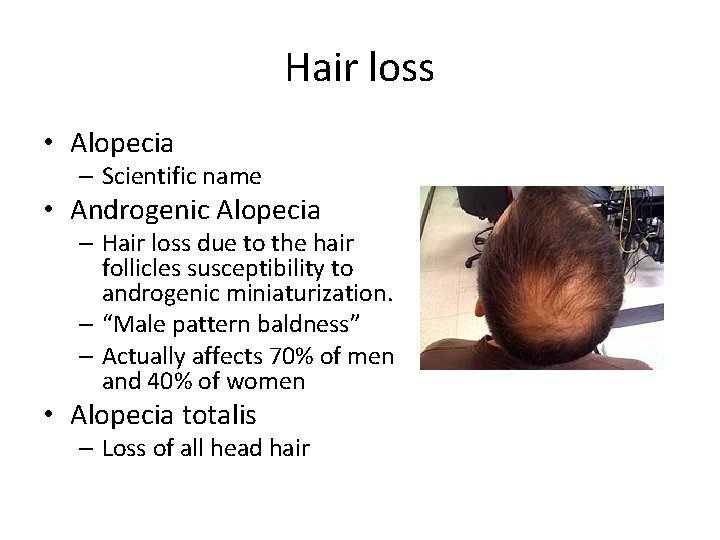
Hair loss • Alopecia – Scientific name • Androgenic Alopecia – Hair loss due to the hair follicles susceptibility to androgenic miniaturization. – “Male pattern baldness” – Actually affects 70% of men and 40% of women • Alopecia totalis – Loss of all head hair