
ANATOMY AND PHYSIOLOGY Chapter 15 The Digestive System


- Slides: 69
ANATOMY AND PHYSIOLOGY Chapter 15 The Digestive System
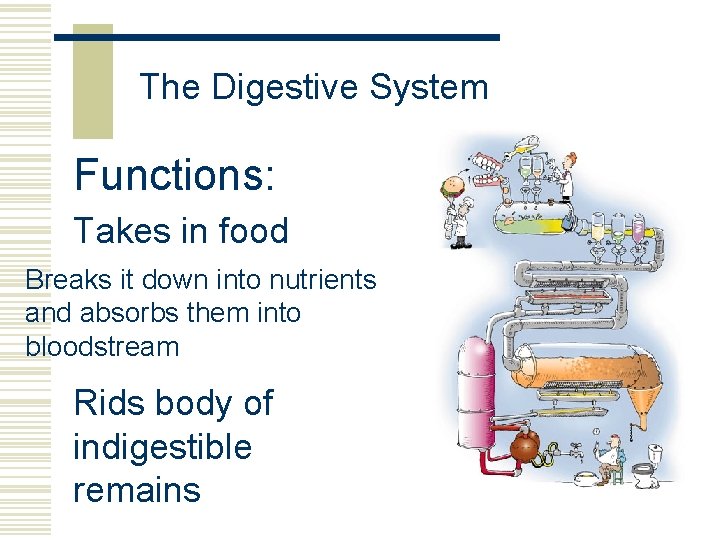
The Digestive System Functions: Takes in food Breaks it down into nutrients and absorbs them into bloodstream Rids body of indigestible remains
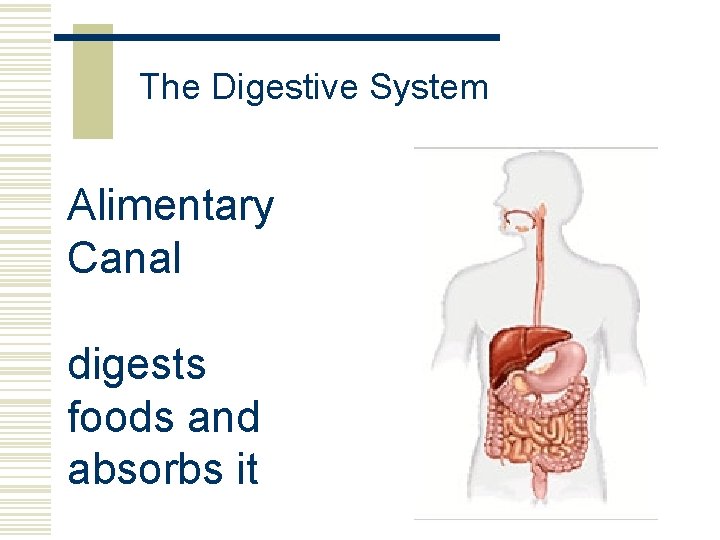
The Digestive System Alimentary Canal digests foods and absorbs it
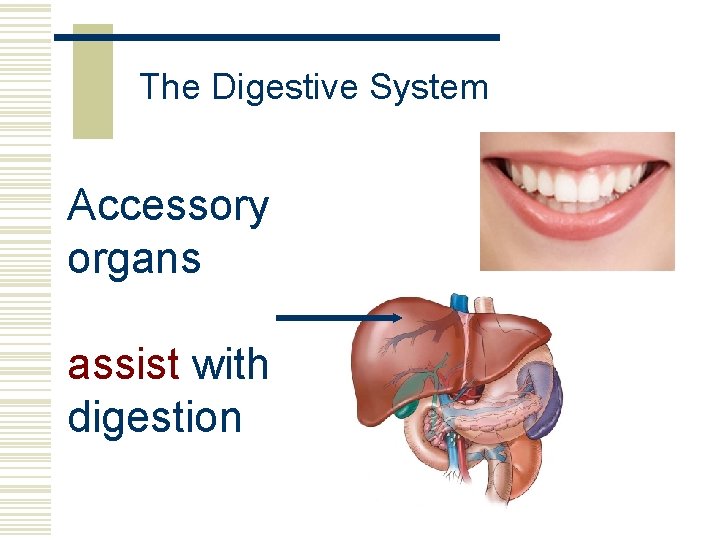
The Digestive System Accessory organs assist with digestion
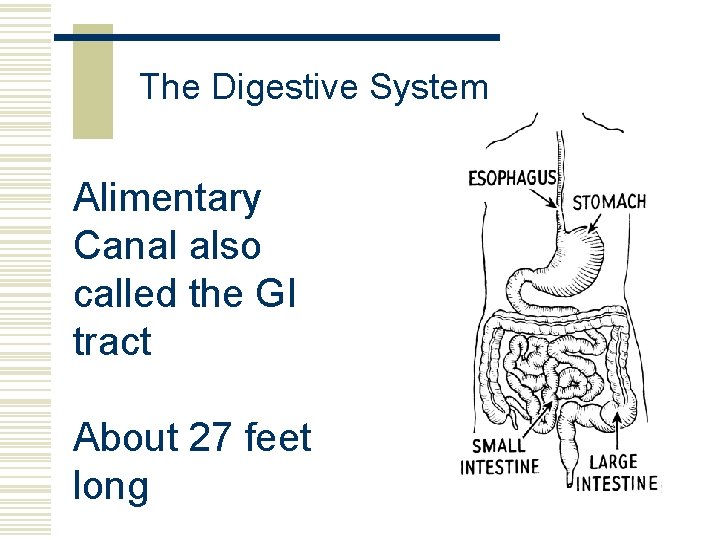
The Digestive System Alimentary Canal also called the GI tract About 27 feet long
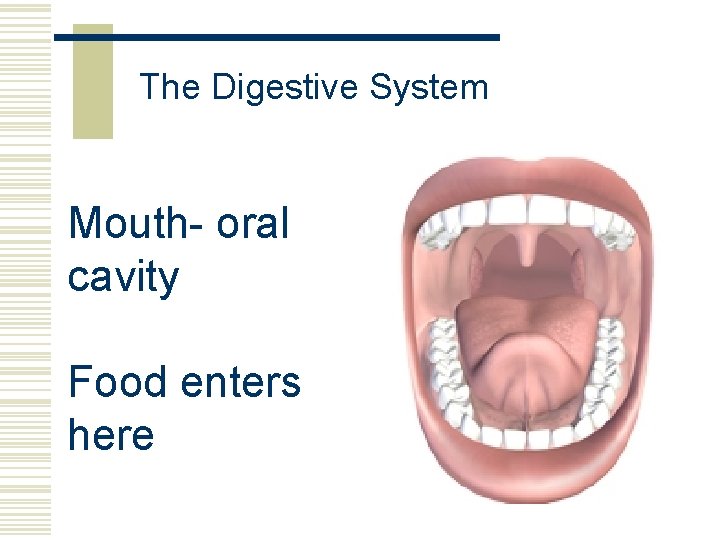
The Digestive System Mouth- oral cavity Food enters here
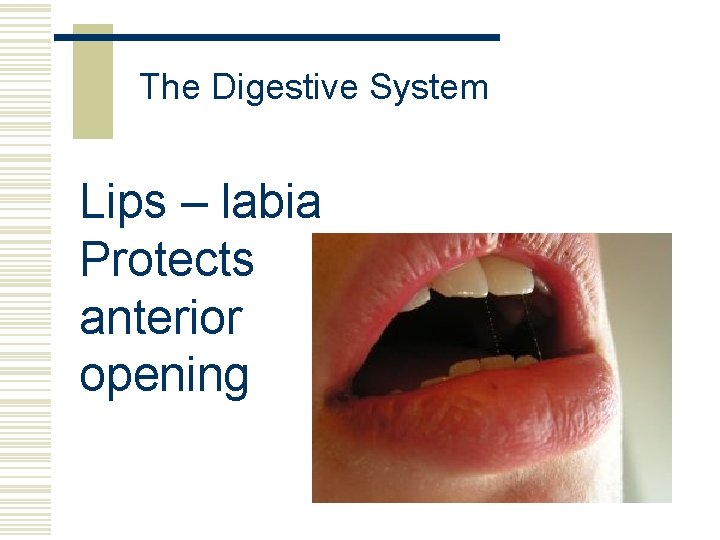
The Digestive System Lips – labia Protects anterior opening
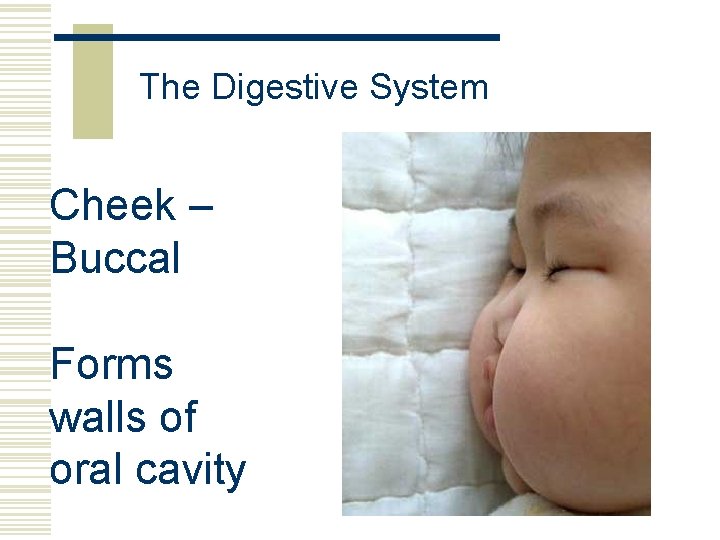
The Digestive System Cheek – Buccal Forms walls of oral cavity
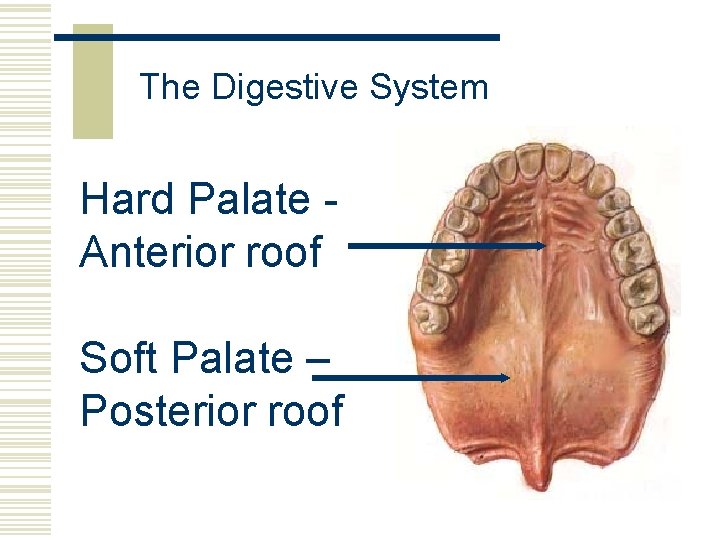
The Digestive System Hard Palate Anterior roof Soft Palate – Posterior roof
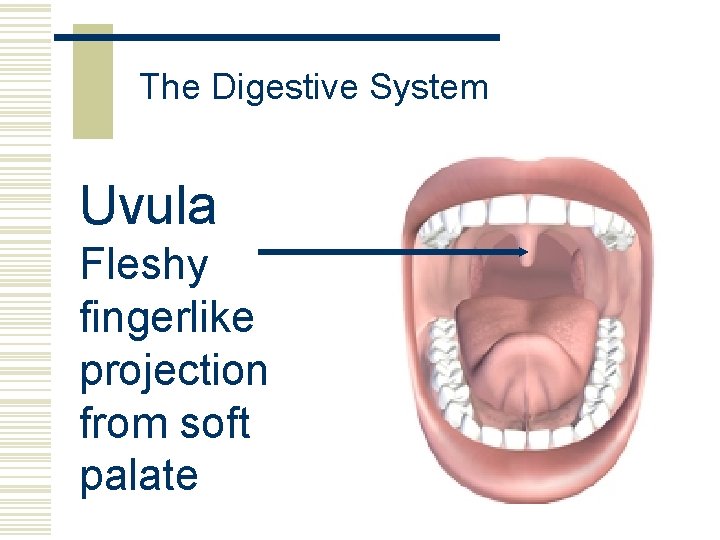
The Digestive System Uvula Fleshy fingerlike projection from soft palate
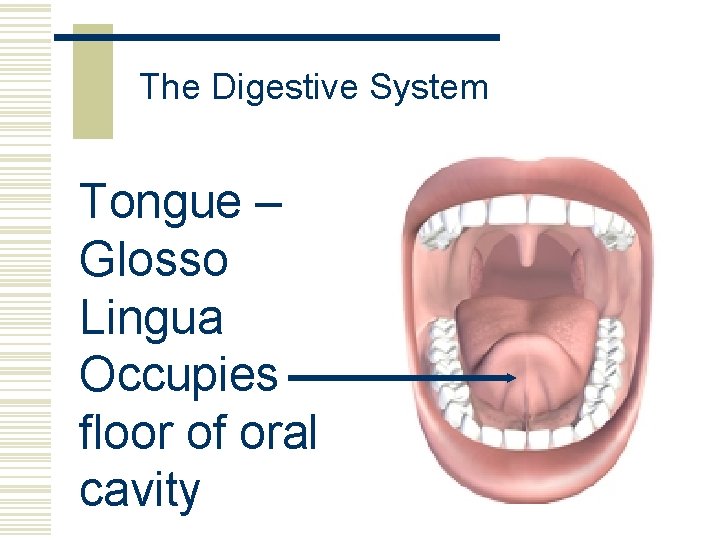
The Digestive System Tongue – Glosso Lingua Occupies floor of oral cavity
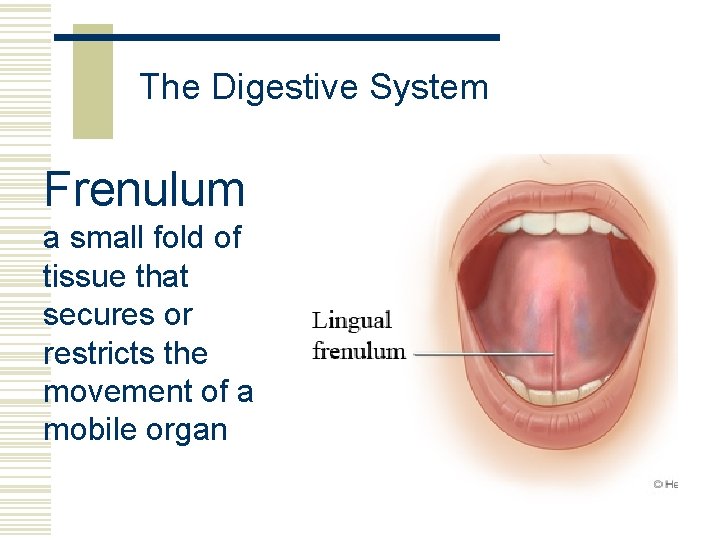
The Digestive System Frenulum a small fold of tissue that secures or restricts the movement of a mobile organ
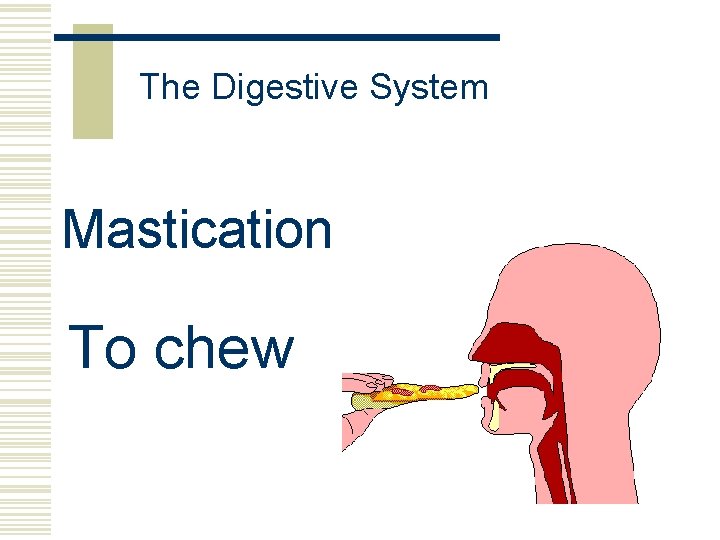
The Digestive System Mastication To chew
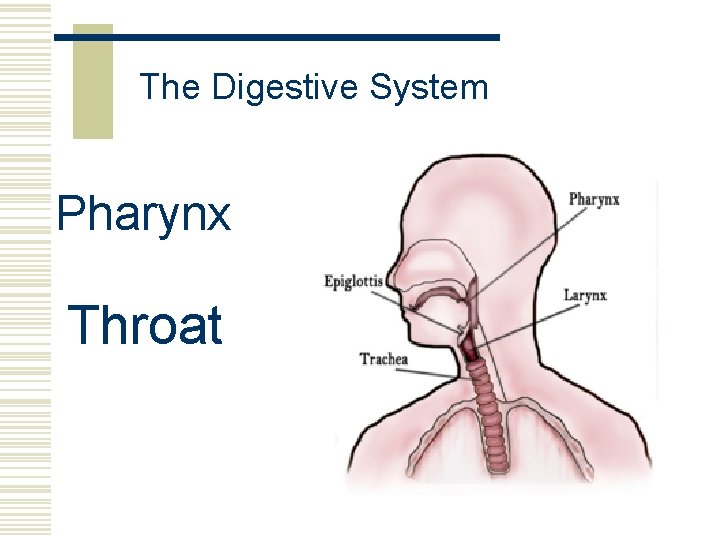
The Digestive System Pharynx Throat
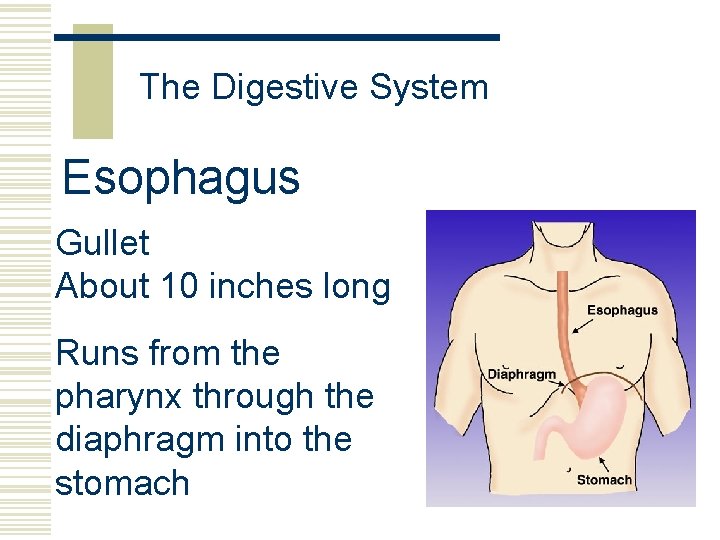
The Digestive System Esophagus Gullet About 10 inches long Runs from the pharynx through the diaphragm into the stomach
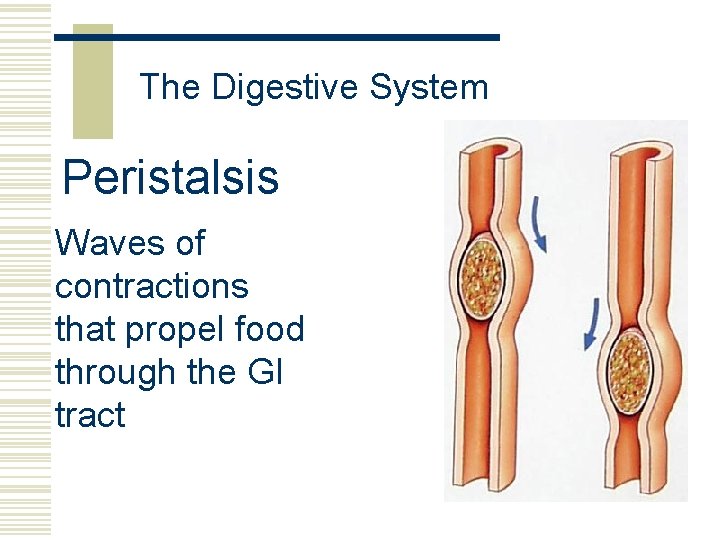
The Digestive System Peristalsis Waves of contractions that propel food through the GI tract
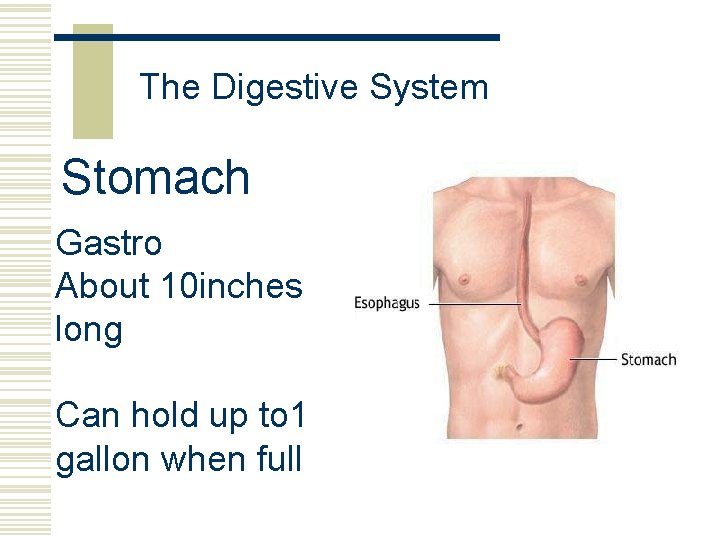
The Digestive System Stomach Gastro About 10 inches long Can hold up to 1 gallon when full
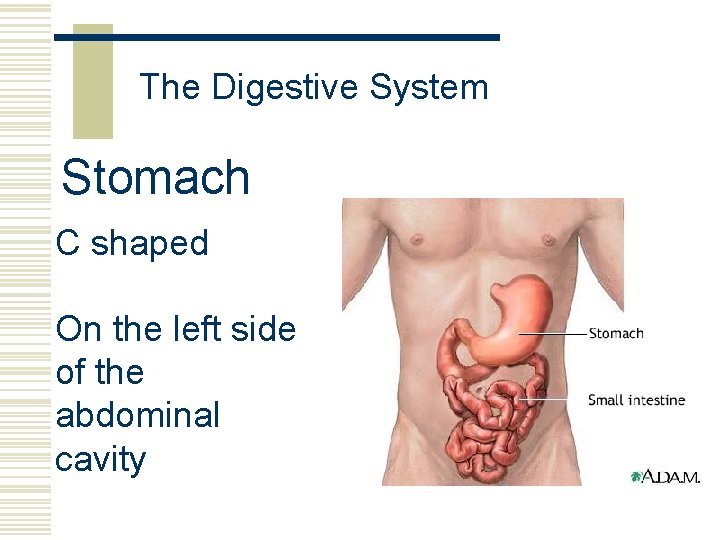
The Digestive System Stomach C shaped On the left side of the abdominal cavity
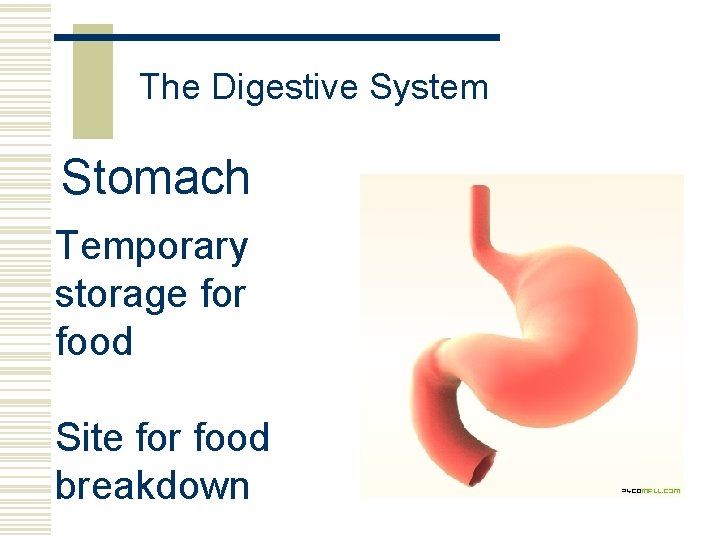
The Digestive System Stomach Temporary storage for food Site for food breakdown
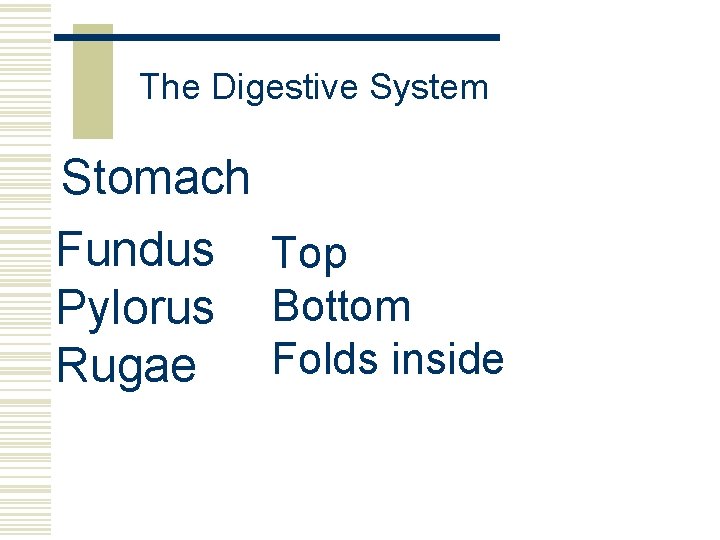
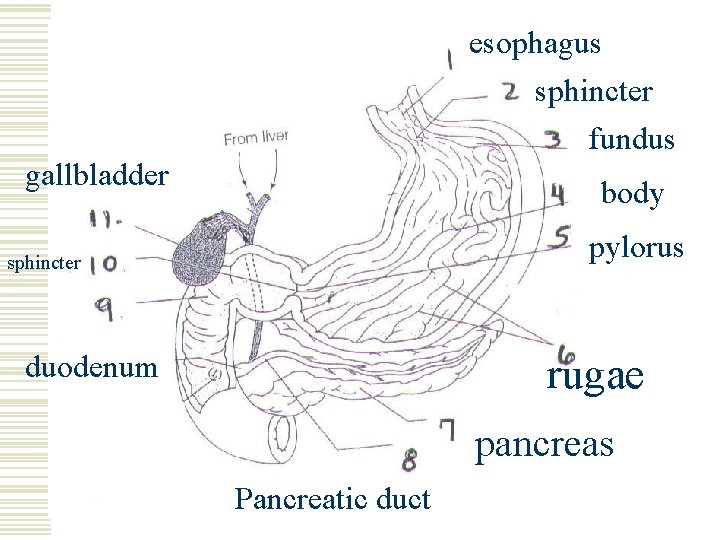
The Digestive System Stomach Fundus Top Pylorus Bottom Folds inside Rugae
The Digestive System Stomach Fundus Pylorus Rugae
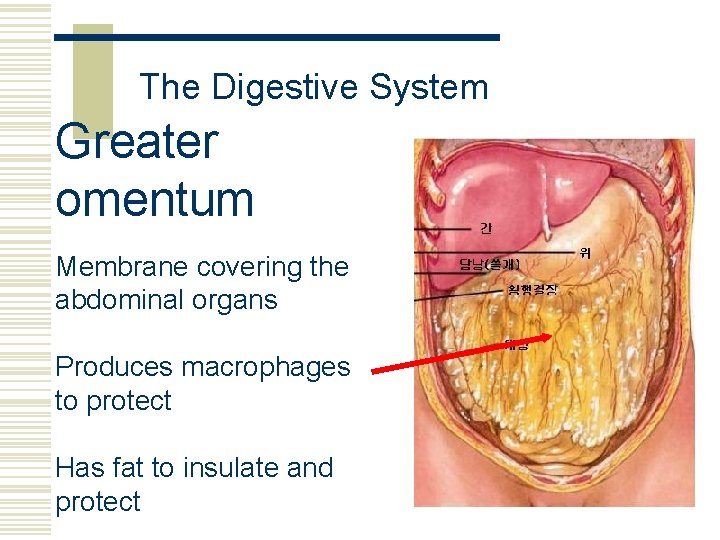
The Digestive System Greater omentum Membrane covering the abdominal organs Produces macrophages to protect Has fat to insulate and protect
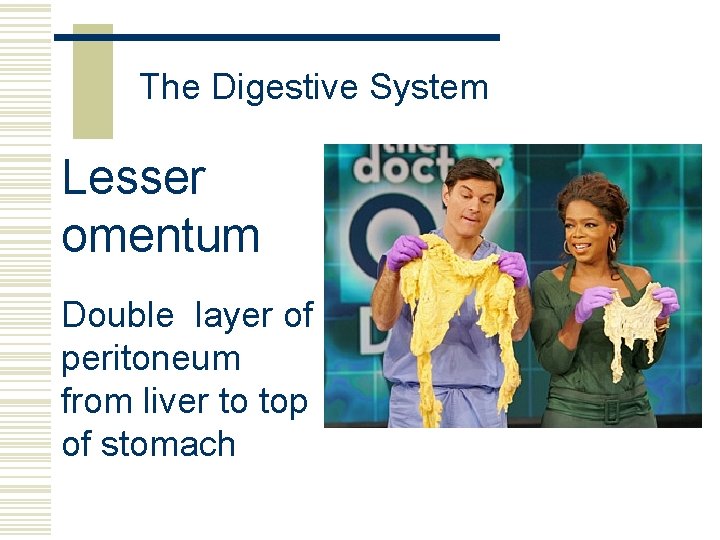
The Digestive System Lesser omentum Double layer of peritoneum from liver to top of stomach
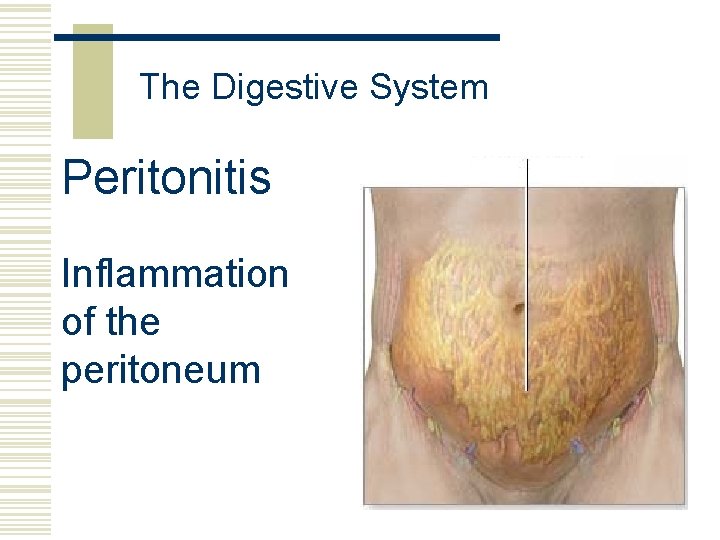
The Digestive System Peritonitis Inflammation of the peritoneum
esophagus sphincter fundus gallbladder body pylorus sphincter duodenum rugae pancreas Pancreatic duct
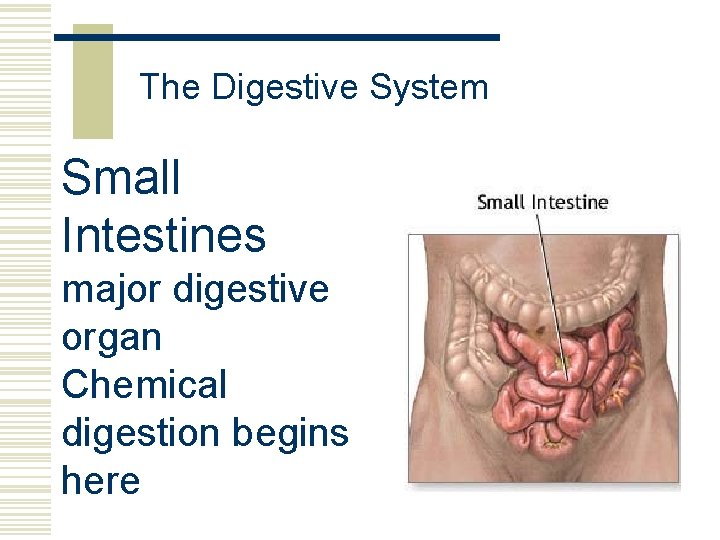
The Digestive System Small Intestines major digestive organ Chemical digestion begins here
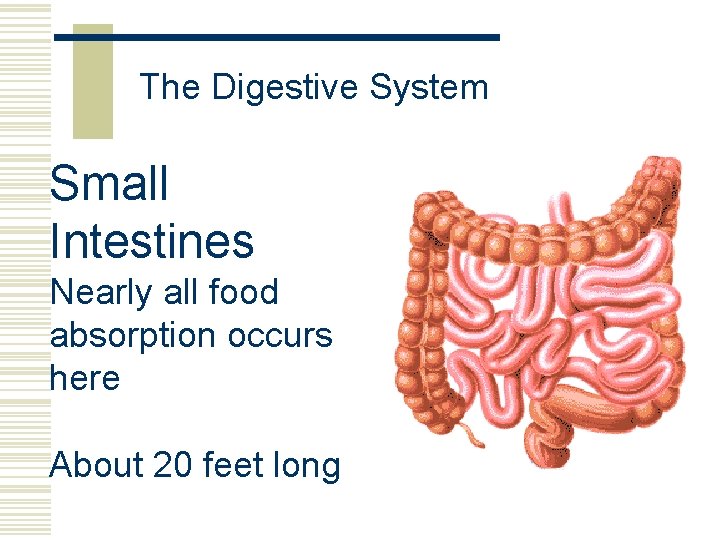
The Digestive System Small Intestines Nearly all food absorption occurs here About 20 feet long
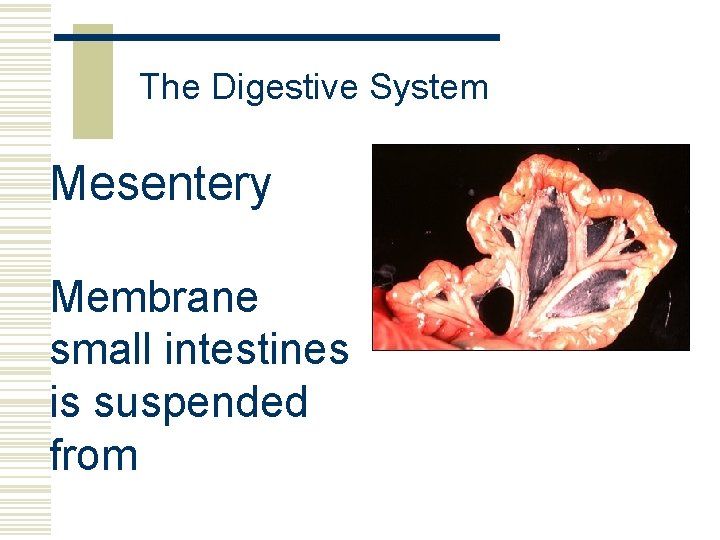
The Digestive System Mesentery Membrane small intestines is suspended from
The Digestive System Small intestines Duodenum 1 st 10 inches Jejunum 2 nd 8 feet Ileum rd 3 12 feet
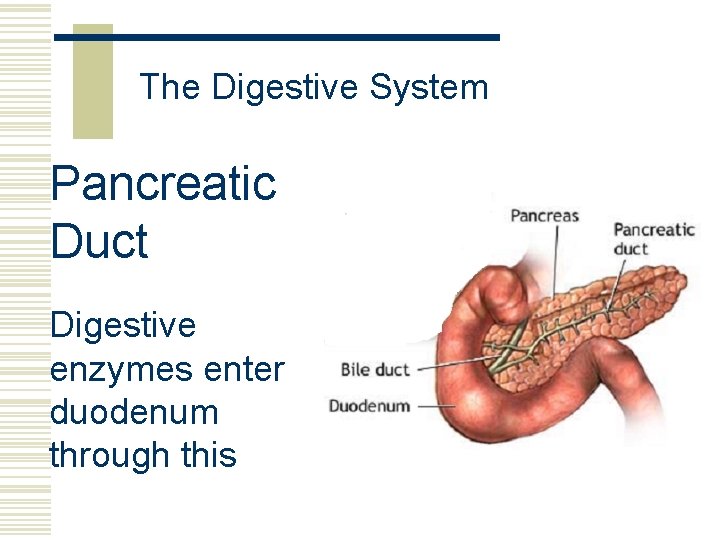
The Digestive System Pancreatic Duct Digestive enzymes enter duodenum through this
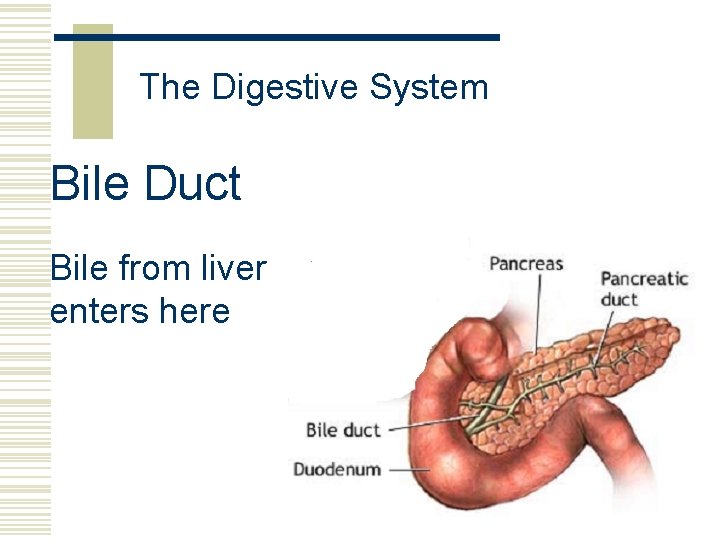
The Digestive System Bile Duct Bile from liver enters here
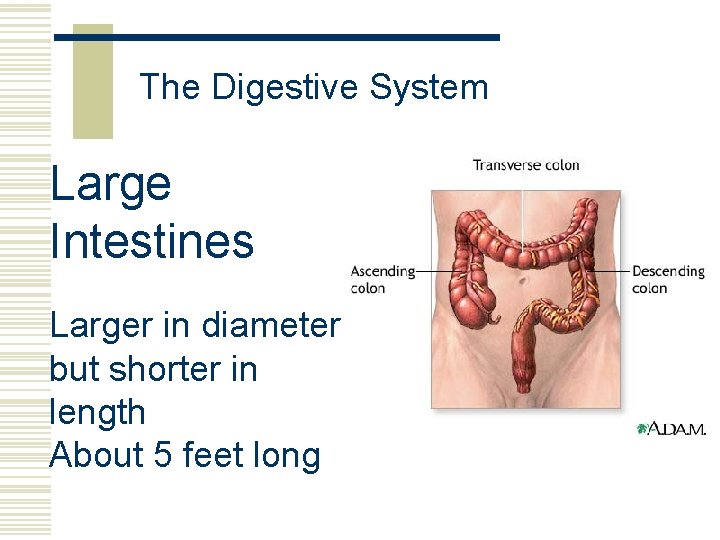
The Digestive System Large Intestines Larger in diameter but shorter in length About 5 feet long
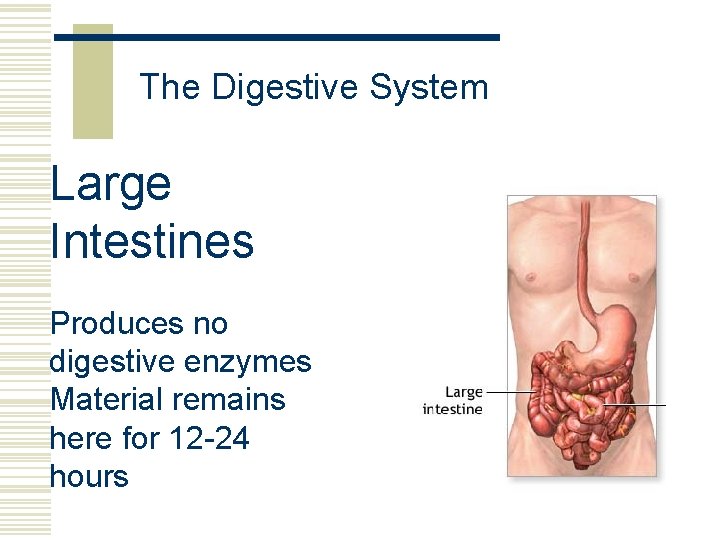
The Digestive System Large Intestines Produces no digestive enzymes Material remains here for 12 -24 hours
The Digestive System Large Intestines Absorbs vitamin K and B (which are made by bacteria in the large intestines), some ions and most of the reaming water
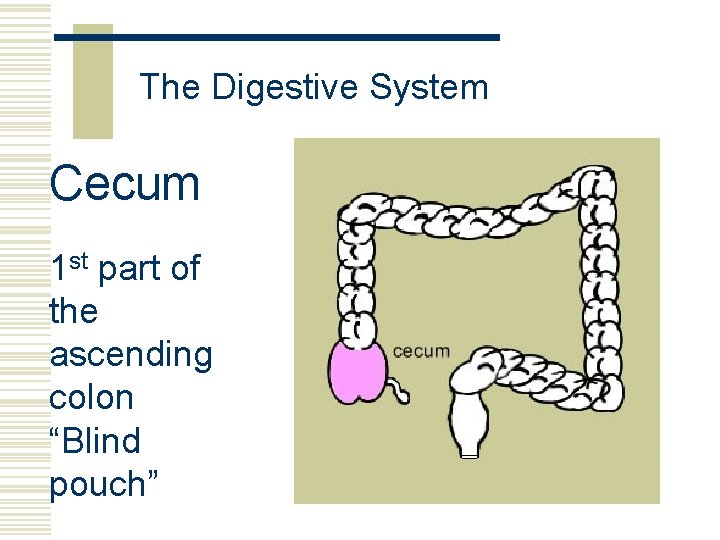
The Digestive System Cecum 1 st part of the ascending colon “Blind pouch”
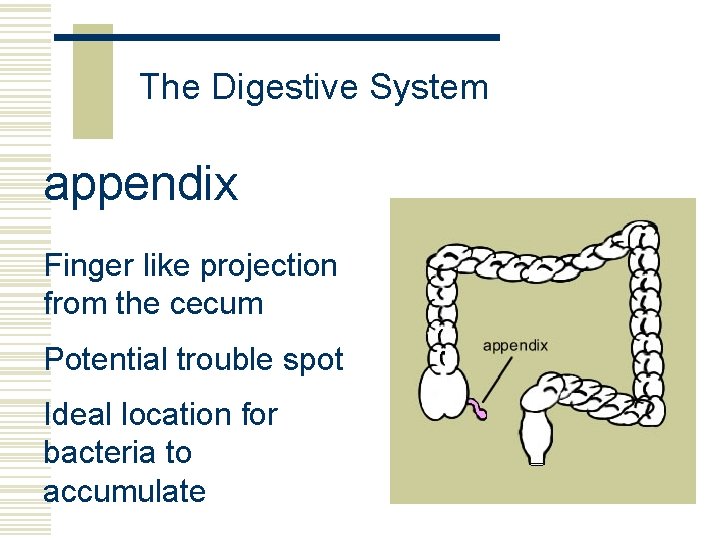
The Digestive System appendix Finger like projection from the cecum Potential trouble spot Ideal location for bacteria to accumulate
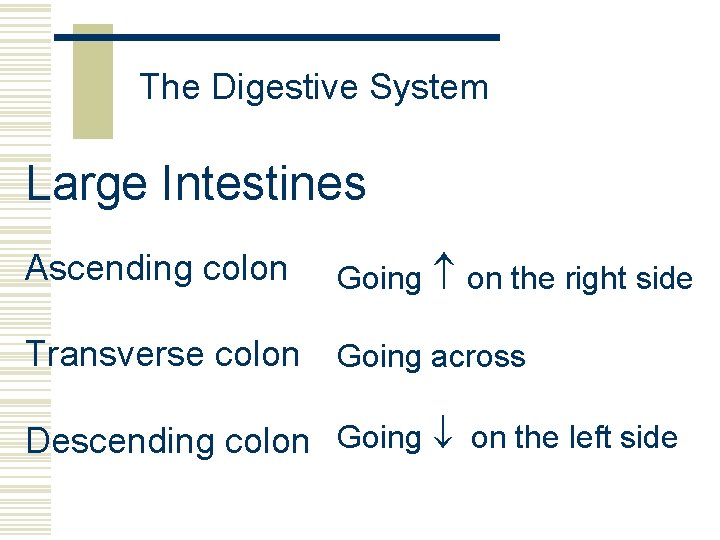
The Digestive System Large Intestines Ascending colon Going on the right side Transverse colon Going across Descending colon Going on the left side
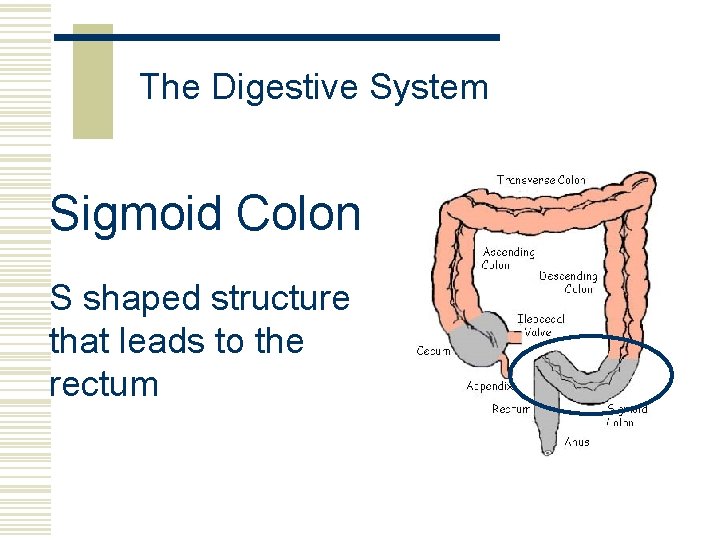
The Digestive System Sigmoid Colon S shaped structure that leads to the rectum
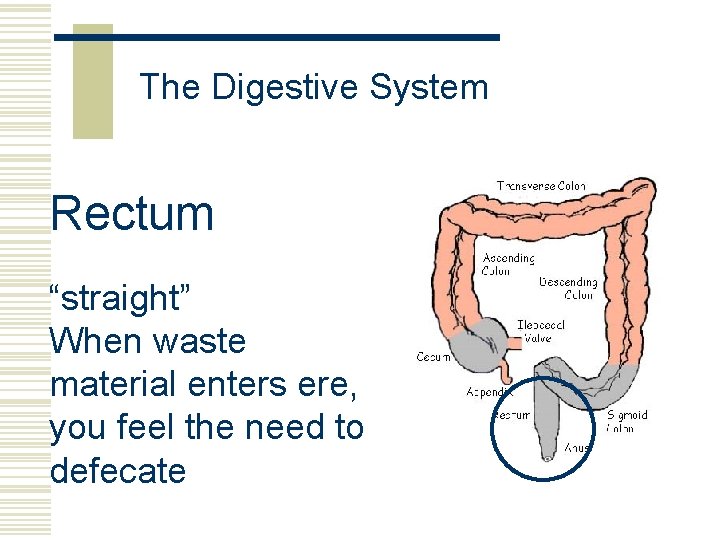
The Digestive System Rectum “straight” When waste material enters ere, you feel the need to defecate
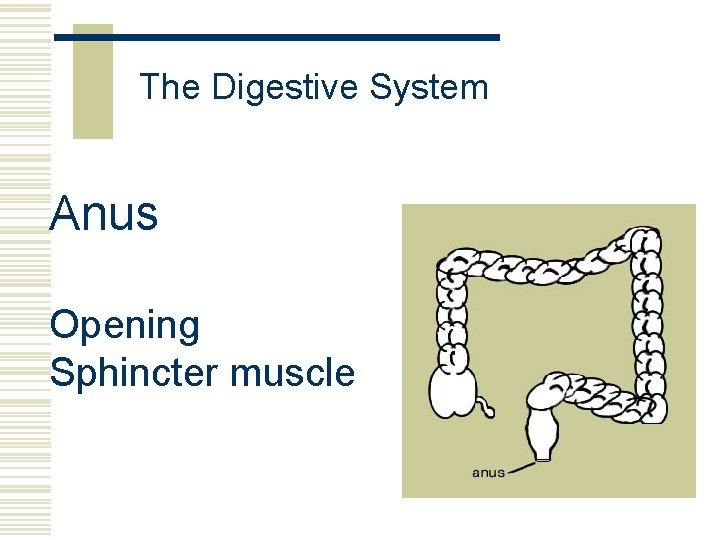
The Digestive System Anus Opening Sphincter muscle
The Digestive System Flatus Gas Made by bacteria in the large intestines Aggravated by certain foods
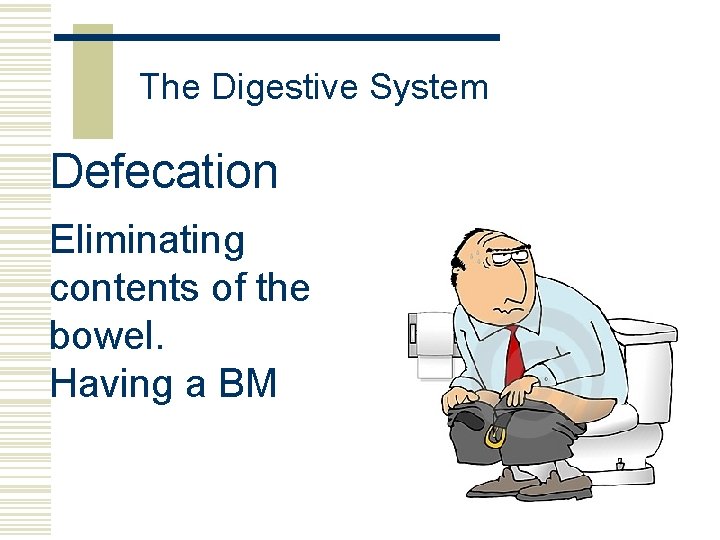
The Digestive System Defecation Eliminating contents of the bowel. Having a BM
The Digestive System Feces Stool, waste material
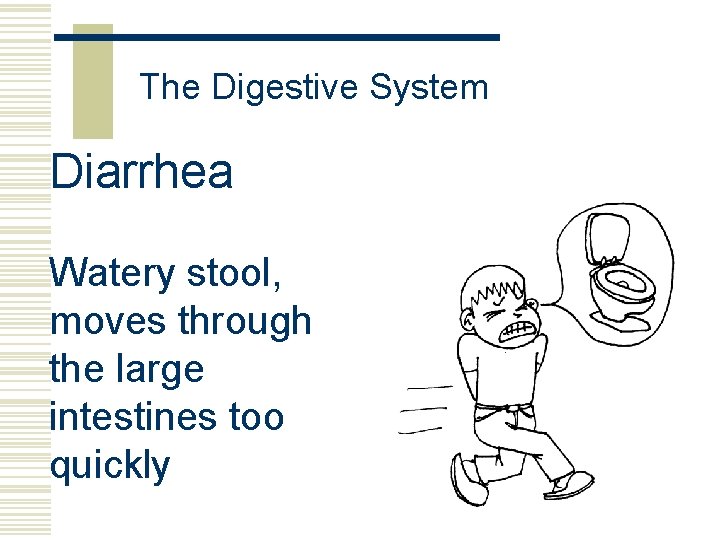
The Digestive System Diarrhea Watery stool, moves through the large intestines too quickly
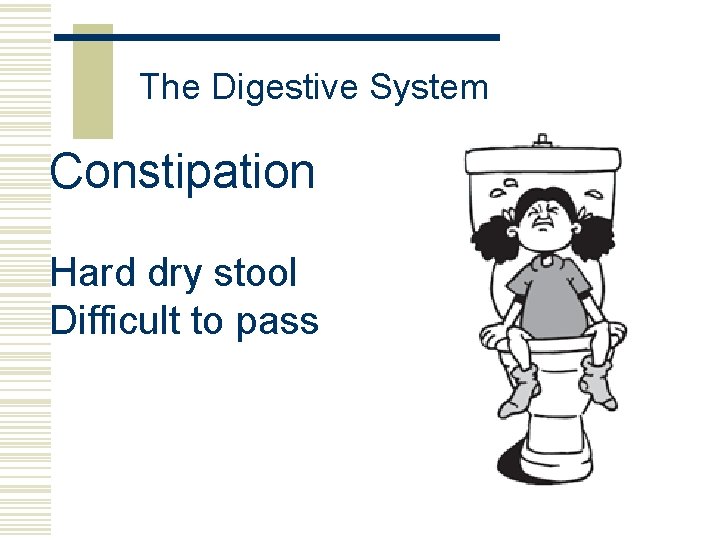
The Digestive System Constipation Hard dry stool Difficult to pass
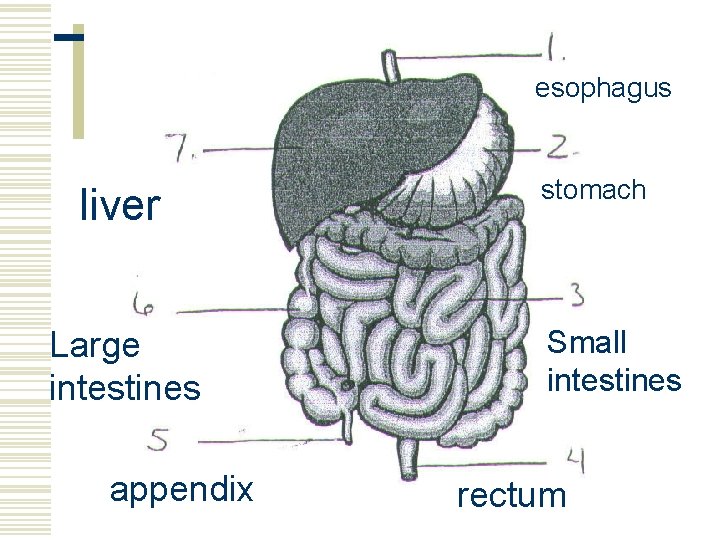
esophagus liver Large intestines appendix stomach Small intestines rectum
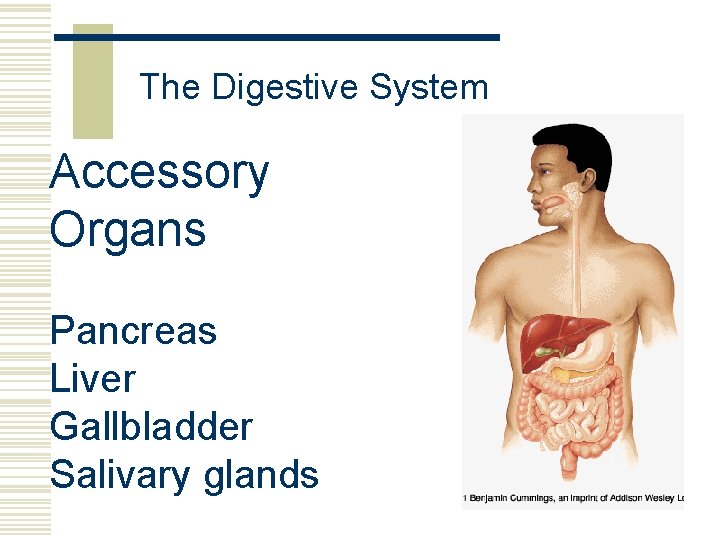
The Digestive System Accessory Organs Pancreas Liver Gallbladder Salivary glands
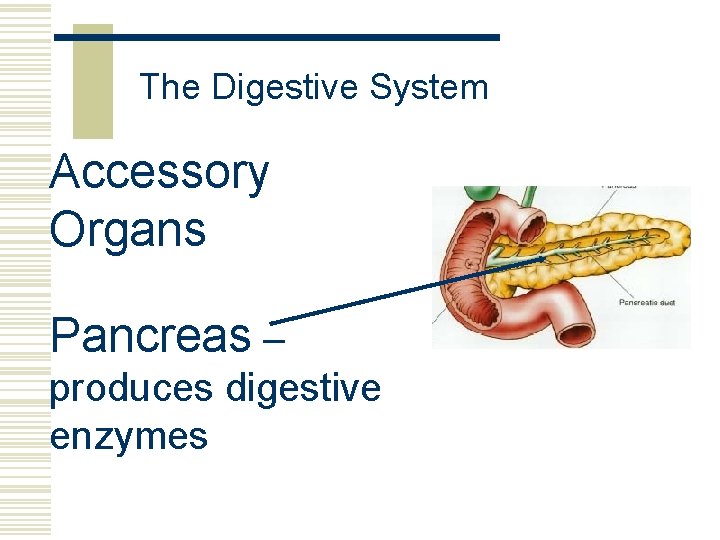
The Digestive System Accessory Organs Pancreas – produces digestive enzymes
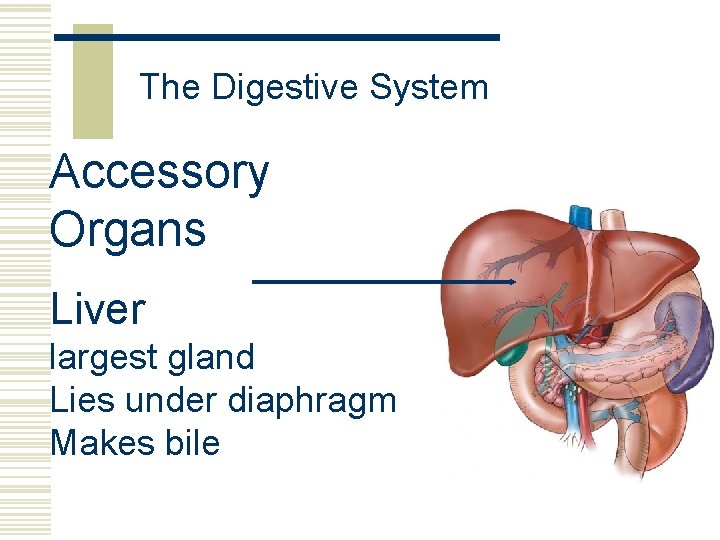
The Digestive System Accessory Organs Liver largest gland Lies under diaphragm Makes bile
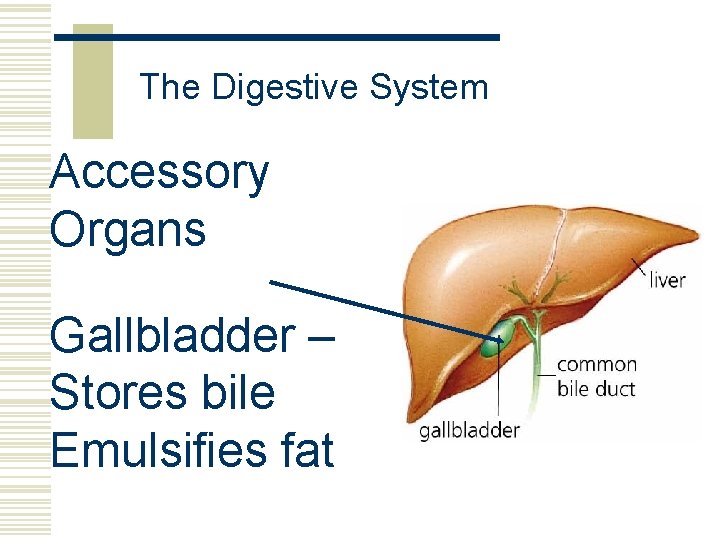
The Digestive System Accessory Organs Gallbladder – Stores bile Emulsifies fat
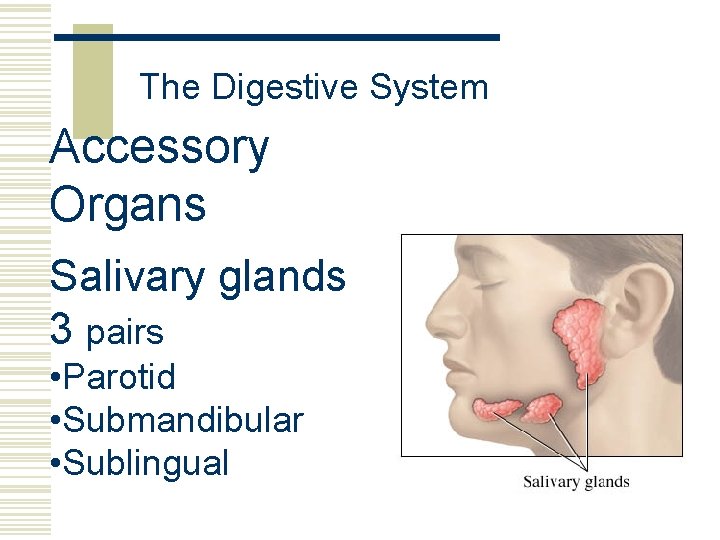
The Digestive System Accessory Organs Salivary glands 3 pairs • Parotid • Submandibular • Sublingual
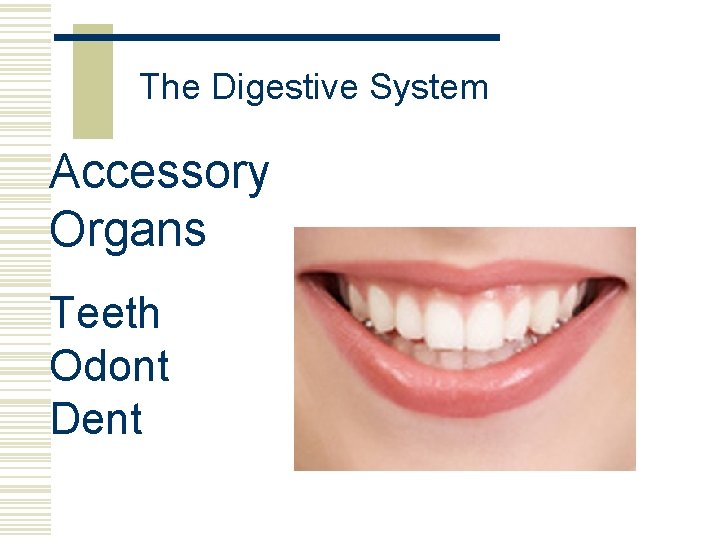
The Digestive System Accessory Organs Teeth Odont Dent
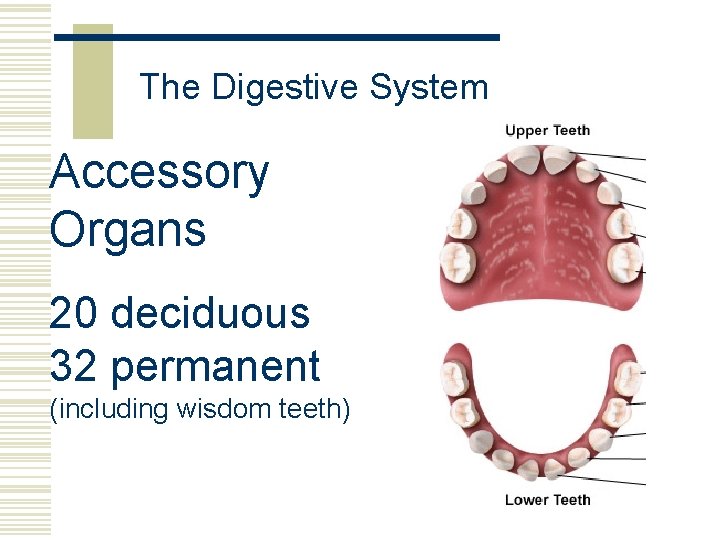
The Digestive System Accessory Organs 20 deciduous 32 permanent (including wisdom teeth)
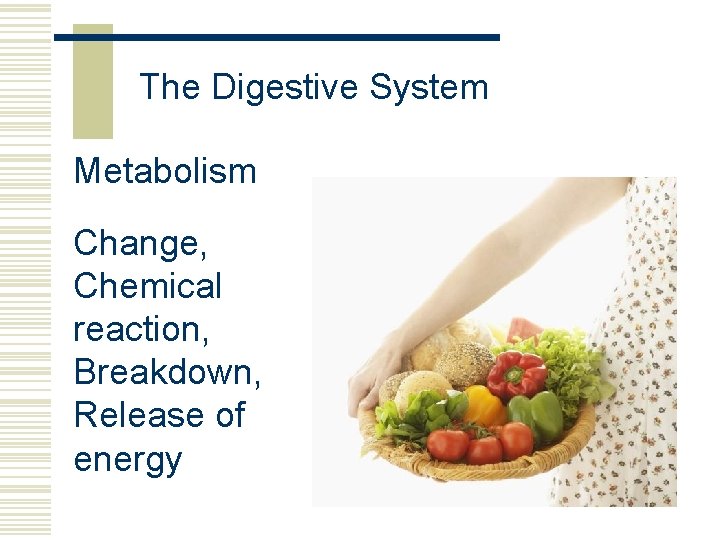
The Digestive System Metabolism Change, Chemical reaction, Breakdown, Release of energy
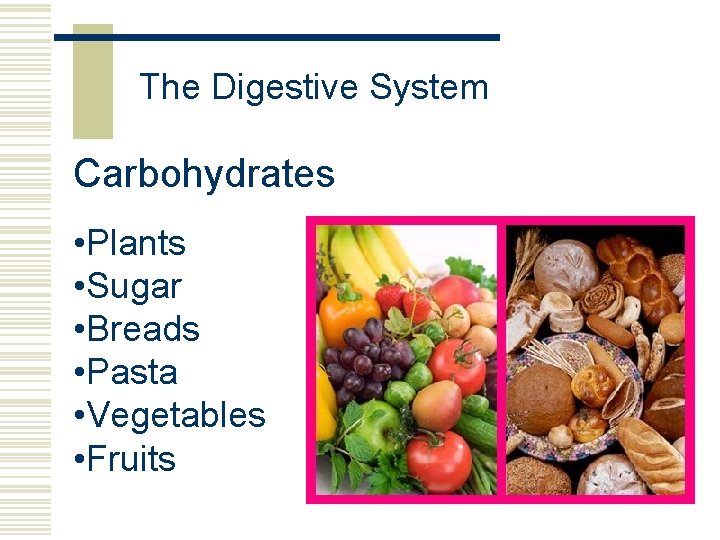
The Digestive System Carbohydrates • Plants • Sugar • Breads • Pasta • Vegetables • Fruits
The Digestive System Proteins • Meats • Dairy products • Amino acids • Makes more proteins • makes ATP
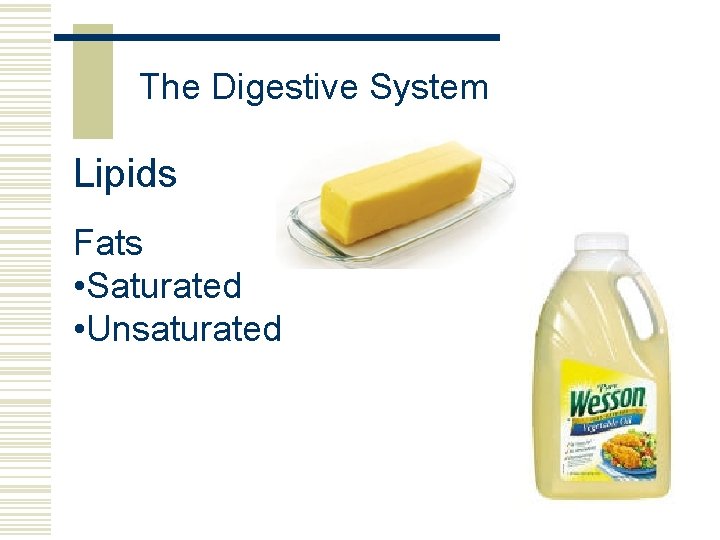
The Digestive System Lipids Fats • Saturated • Unsaturated
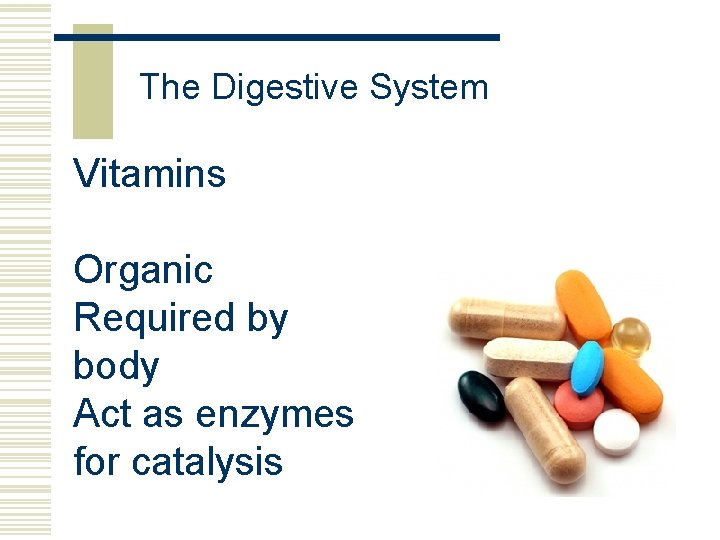
The Digestive System Vitamins Organic Required by body Act as enzymes for catalysis
The Digestive System Minerals • Calcium • Phosphorous Body needs adequate supply • Potassium • Sodium of 7 minerals • Sulfur • Chloride They are: • Magnesium
The Digestive System Minerals Need a trace amount of about 12 others: Iron Iodine Zinc Fluoride Selenium Copper Chromium Manganese Molybdenum
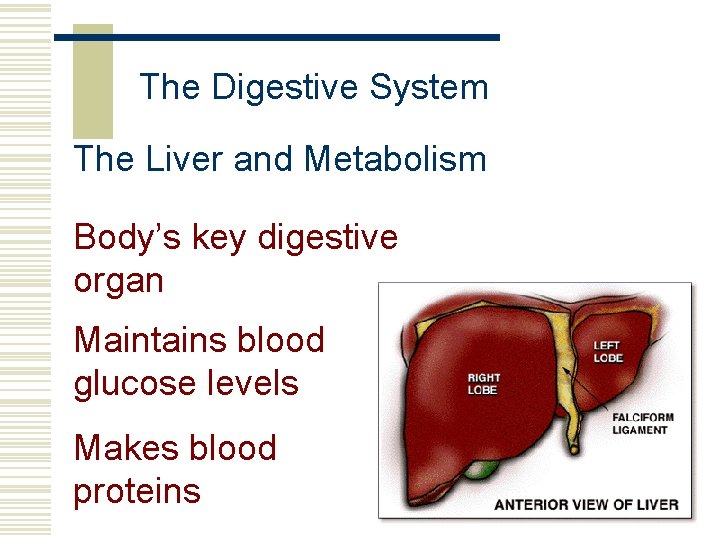
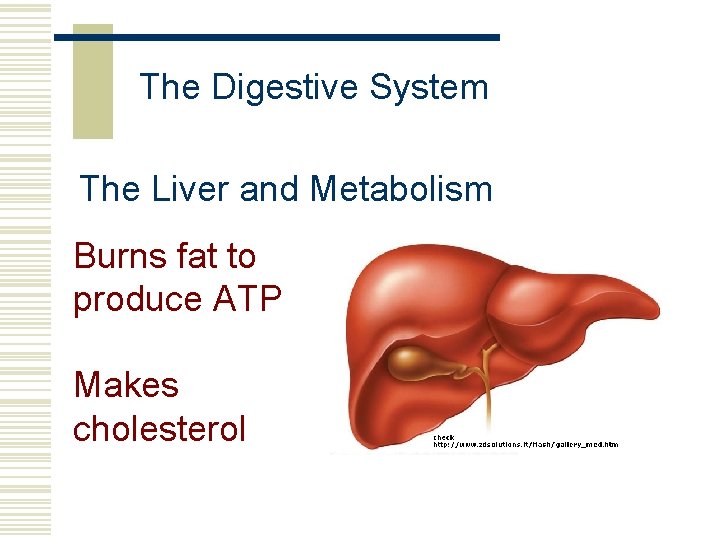
The Digestive System The Liver and Metabolism Body’s key digestive organ Maintains blood glucose levels Makes blood proteins
The Digestive System The Liver and Metabolism Burns fat to produce ATP Makes cholesterol
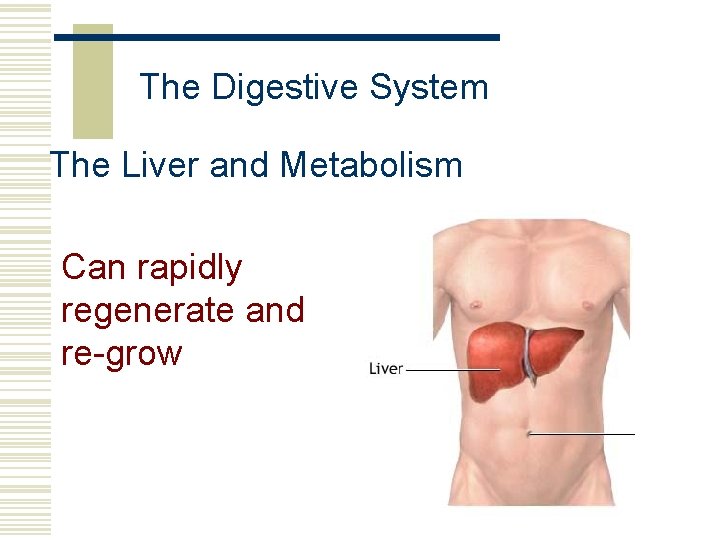
The Digestive System The Liver and Metabolism Can rapidly regenerate and re-grow
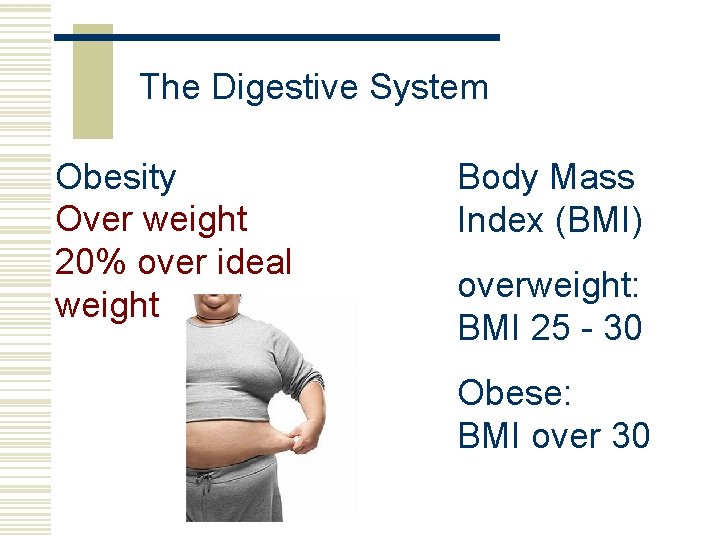
The Digestive System Obesity Over weight 20% over ideal weight Body Mass Index (BMI) overweight: BMI 25 - 30 Obese: BMI over 30
Want to see what your BMI is? http: //www. cdc. gov/healthyweight/assessing/bmi/
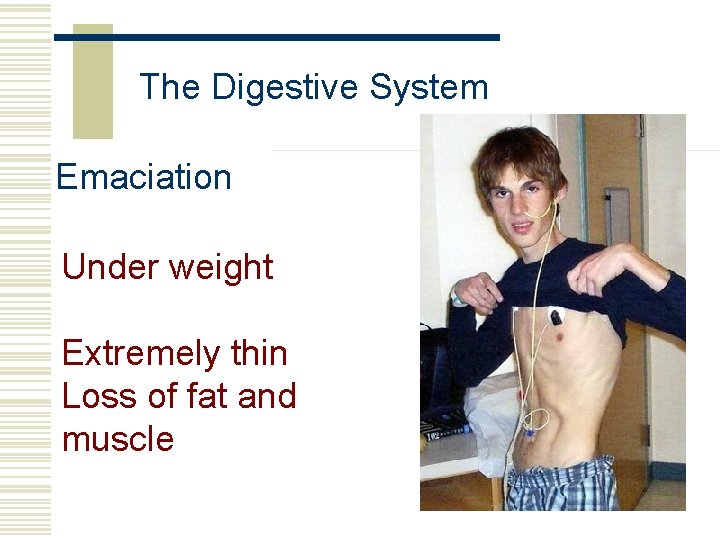
The Digestive System Emaciation Under weight Extremely thin Loss of fat and muscle
The Digestive System Total body fat of 18 -20% is normal 1 out of every 3 Americans are overweight
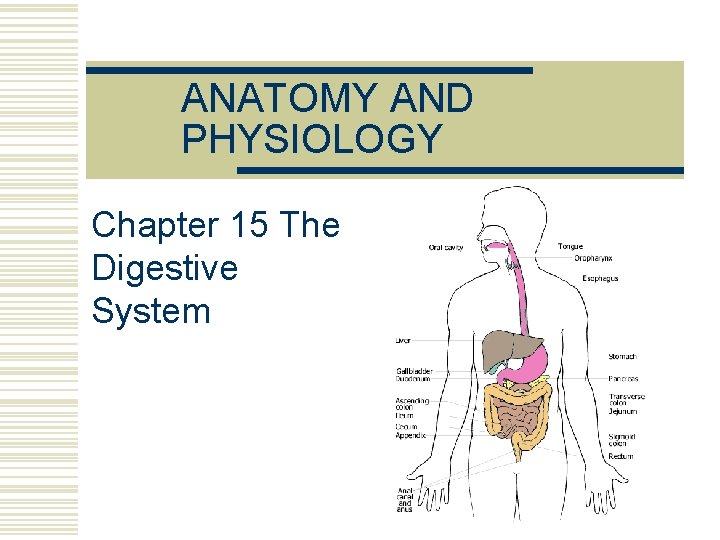
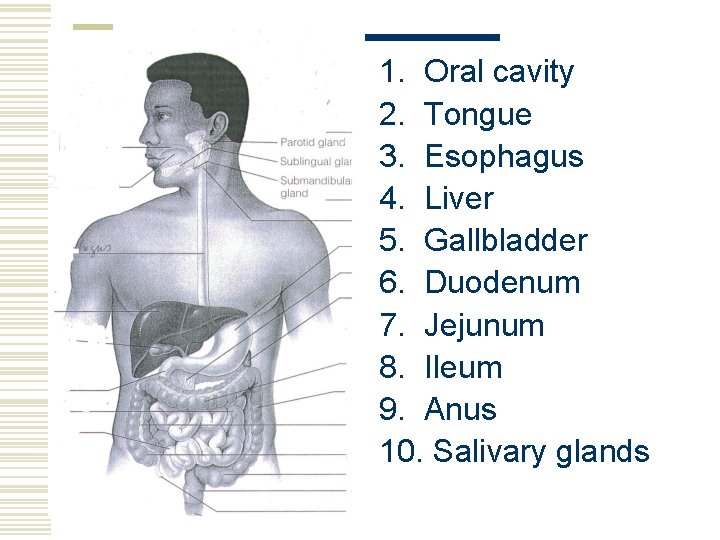
1. Oral cavity 2. Tongue 3. Esophagus 4. Liver 5. Gallbladder 6. Duodenum 7. Jejunum 8. Ileum 9. Anus 10. Salivary glands
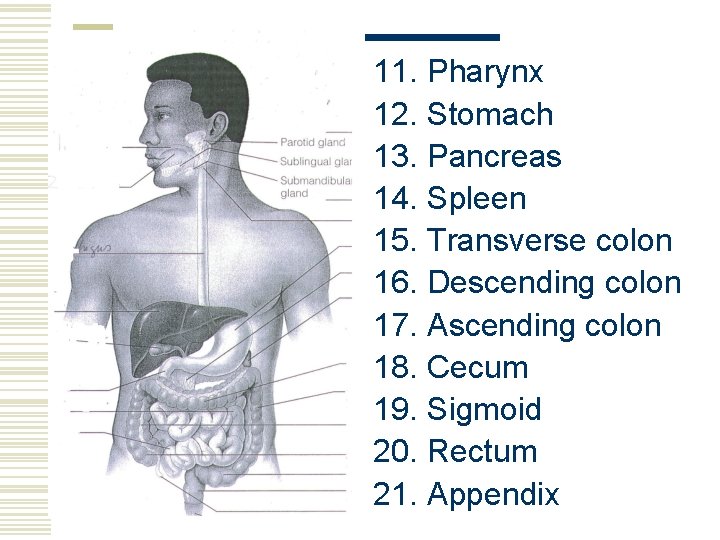
11. Pharynx 12. Stomach 13. Pancreas 14. Spleen 15. Transverse colon 16. Descending colon 17. Ascending colon 18. Cecum 19. Sigmoid 20. Rectum 21. Appendix